
Artware Fineart has dated this piece to the 19th Century.
Ordoyno, Thomas 'Flora Nottinghamiensis', 1807 and 'By paths of Nottinghamshire History'.
n 1807 Mr.
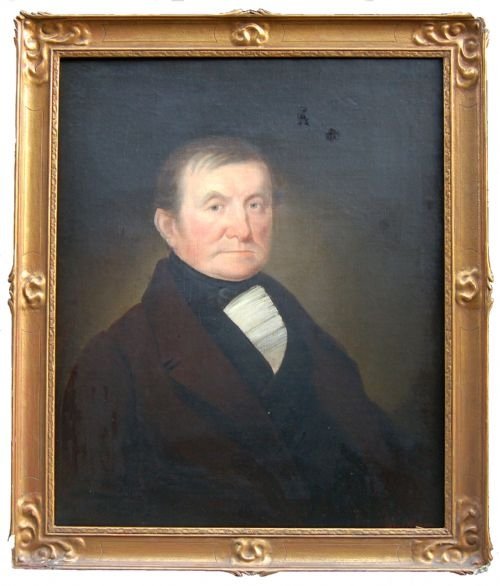
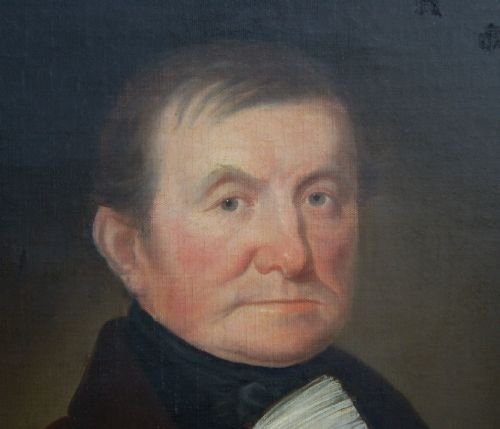
’ The work consists of 344 pages, and is arranged after the Linnean system of classification. The list of plants, with their stations, is very full; and the work bears evidence of the intelligence and industry of its author. It is interesting to observe in the preface the remark that, since the appearance of Deering’s work, ‘the busy hand of human industry . . . has altered the face of nature, and expelled many of these inoffensive tribes from the habitations which they formerly occupied.’ Thomas Ordoyno, author of 'Flora Nottinghamiensis' (1807), the seminal work on the flora of Nottinghamshire. He was a prominent figure in the community, living in a mansion at the village of Coddington and owning several properties in Newark.He married Ann Brown on 19 Jun 1792 in Newark Upon Trent, Nottingham, England and had two children ; Thomas Ordoyne christened 19 Jun 1792 and Ann Ordoyne.
The surname Ordoyno was once prominent in Newark, spawning a string of male descendants who made a considerable impact on the town and region in the 18th Century. The name is of Dutch origin and he has traced its first appearance in England to the 1630s when a Jarrett Vandennen came over from Holland to work as a dyke engineer draining the fens near Axholme in Lincolnshire. Vandennen changed his name to Ordoyno, although Jarrett (or more recently Garratt) remained a family name for some generations to come. The first local occurrence of the name dates from 1723 when the birth of a Garratt Ordoyno was registered at Coddington. In the last quarter of the 18th Century Jacob and Garratt Ordoyno had established a successful business as nursery and seedsmen in Newark and Coddington, finding a ready market with local farmers and market gardeners. In 1785 Jacob Ordoyno bought some land behind the Malt Shovel public house on Northgate for use as a nursery. In November 1795, following the death of Garratt Ordoyno, his place in the business was taken by his son, also called Garratt.
This younger Garratt (1772-1855) is listed as a member of the Newark Volunteers in 1804 and is thought to have continued in the family nursery business until Jacob's death in 1812. At that time the business is thought to have been sold to a Joseph Withers. Garratt jnr. remained in Coddington as a farmer. In the 1829 Charity Commissioners' report for Nottinghamshire he is listed as a trustee of the charity which Jacob had founded in Coddington (in 1809) whereby the interest on £20 was distributed either in money or coals to the poor of the parish. The same document tells us that at that time Garratt had been the parson's churchwarden in Coddington for 30 years.
Artware Fineart has dated this piece to the 19th Century.
You can view the stock and full dealer information on the Artware Fineart Profile Page
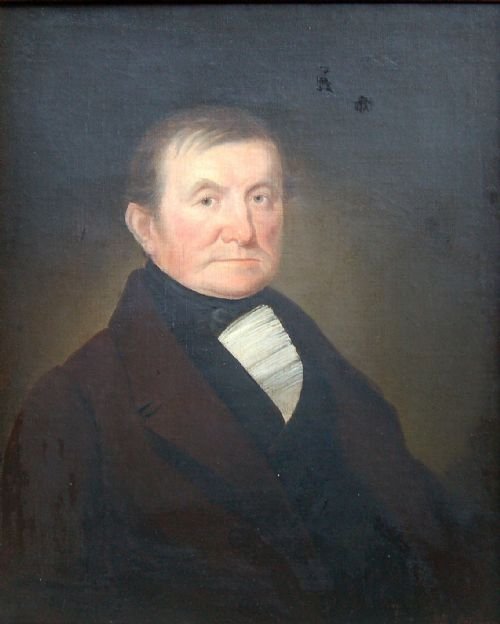
Portrait of Thomas Ordoyno 1776 -, English School 19th Century