5,400  PAGES BROWSED TODAY PAGES TODAY 0 ANTIQUES UPLOADED TODAYNEW ARRIVALS
LATEST STOCK
Sort Order
Items Per Page
Browse Categories
Sort order
Items per page
ID #SA568713
SOLD
Email
Save
Early Lucien Vidi Brass Cased Aneroid Barometer Retailed by Ej Dent
Jason Clarke Antiques
sold SA568713
Sorry, but this item has been sold.
Jason Clarke Antiques

Jason Clarke Antiques

Sellingantiques Verified Since Jul 2015
View Dealers Stock Page
Id #SA568713
PDF SHARE
SAVE

Early Lucien Vidi Brass Cased Aneroid Barometer Retailed by Ej Dent

19th century
Description

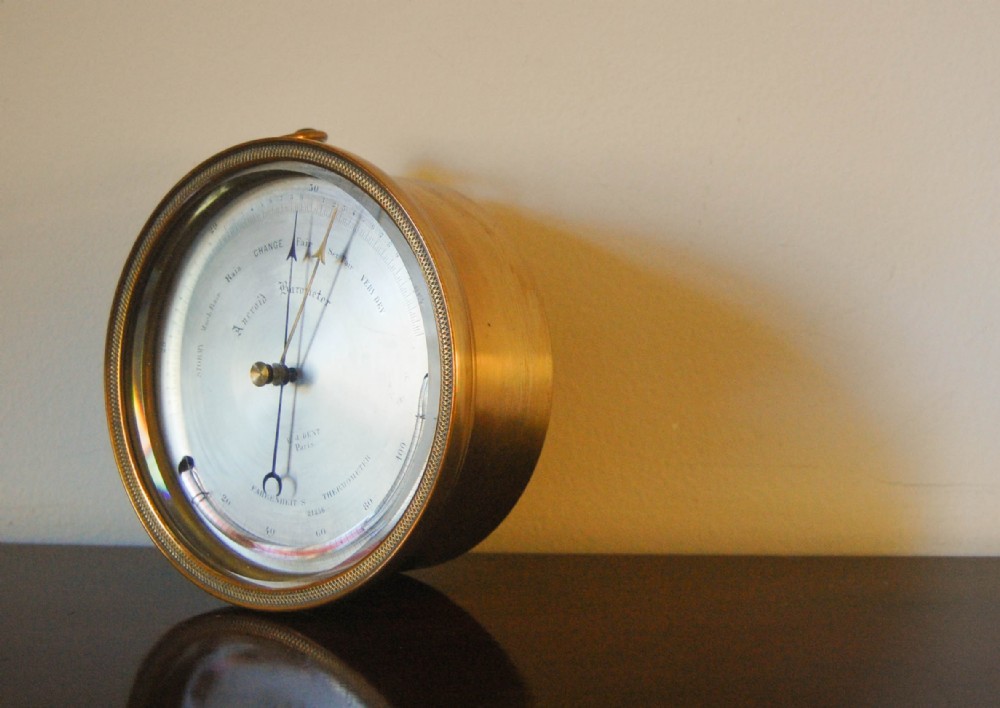
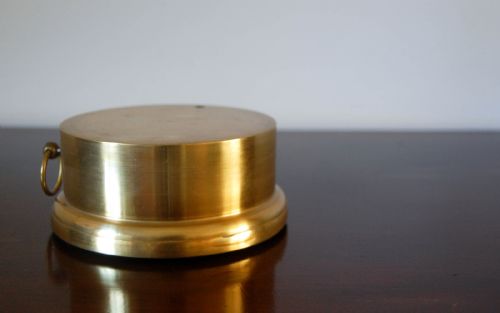
For sale an early Lucien Vidi brass cased aneroid barometer retailed by EJ Dent.

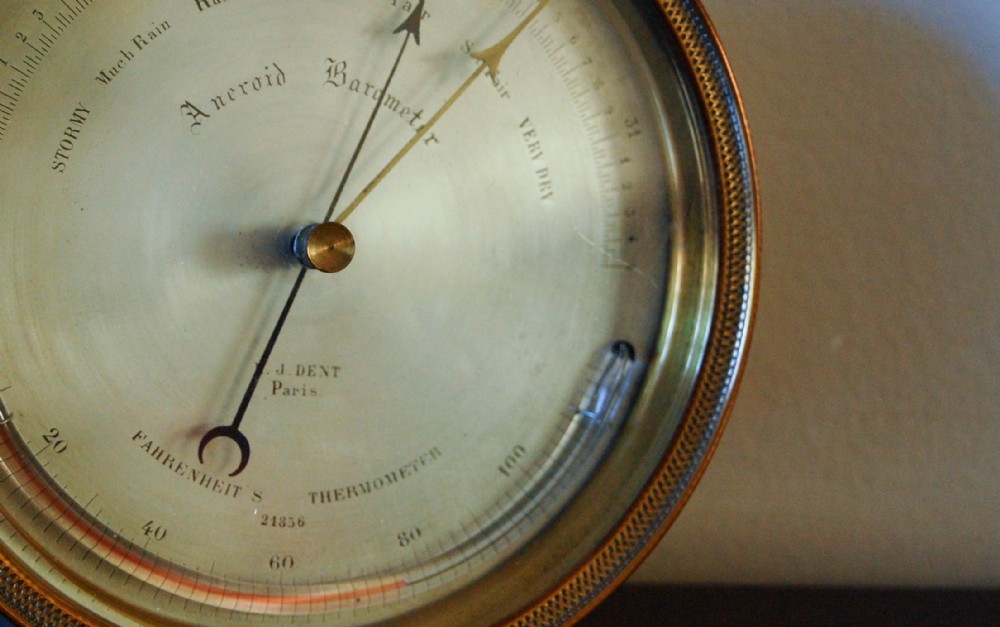
This early barometer has a 4.5 inch silvered dial and curved Fahrenheit thermometer to the bottom section. The dial is engraved with the words, “aneroid barometer” to the top and “Fahreheit’s scale” to the bottom above the serial number “21856”. Below the recording knob is engraved the retailers name, “EJ Dent, Paris”. The weather indications are standard for Vidi barometers and are the predecessor to the later Admiral Fitzroy readings that are more commonly seen today. The mechanism is enclosed in a quality pressed brass case and bezel.
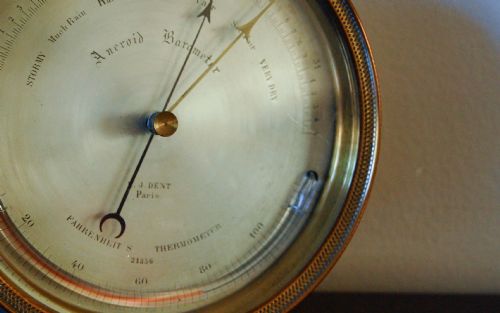
The maker, Lucien Vidi (1805 – 1866) was a French Physicist who invented the aneroid barometer in 1843 and held the patent rights for his invention until 1855. Until Vidi’s ground-breaking invention, barometric pressure was always read by means of a mercury tube such as can be seen installed in stick or wheel barometers, however their portability made them difficult to use for field experiments. The aneroid (meaning without liquid) had been considered as a possible solution since the seventeenth century by the likes of Gottfried Wilhelm Von Leibniz and Nicolas Conte, although neither had any practicable success.
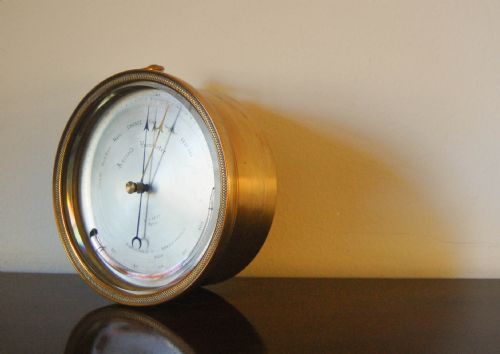
Vidi, was born in 1805 in Nantes and initially trained as a lawyer but left the industry in 1830 to follow a career in steam engineering and much like his competitor, Eugene Bourdon, saw the requirement for improvements to steam pressure gauges which at that period utilised mercury. By 1843, Vidi had succeeded in manufacturing a metallic barometer which consisted of a metallic corrugated disc with the air exhausted from within it and before his eventual patent (no: 10157) in October 1844, he, (on the advice of Pierre de Fontainmoreau) approached the retired English optician, Andrew Pritchard to manufacture and test his invention. During testing, his device was taken to the top of St Paul’s Cathedral dome in order to measure height by means of changes in barometric pressure and was certified as a complete success by Pritchard & Fontainmoreau shortly after.
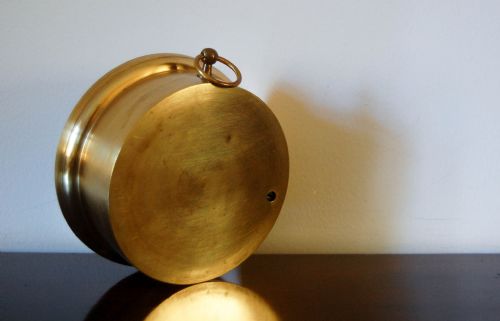
On returning to France in 1845, Vidi ordered the manufacture of 100 instruments from the leading French watchmaker, Redier of Paris but was unhappy with the quality and refused to take receipt of the product. Vidi was successfully sued by Redier and so Vidi afterwards began to manufacture the instrument in his own workshop although initial sales failed to materialise, perhaps due to the negative publicity of the legal case against him.
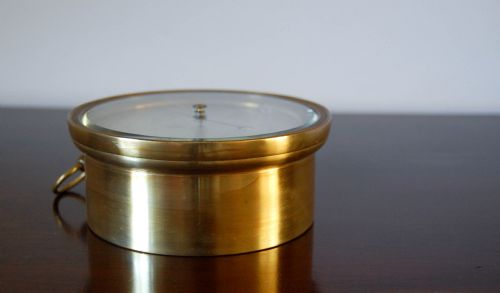
It is unusual given his initial journey to Britain that Vidi did not begin manufacture in the UK but given the poor reception of his invention in France, he again travelled to London and managed to secure a deal with the famous clockmaker EJ Dent to retail them on his behalf. Initially sceptical, Dent was persuaded when a British naval officer bought an example and promptly ordered thirty more. Nearing bankruptcy at this point, he is thought by Vidi’s biographer, Auguste Laurant, to have gone on to supply Dent with five thousand examples in the first few years whilst his sales in France numbered less than one hundred pieces.
Throughout the 1840’s in Britain, Vidi’s device faced detailed scrutiny against mercurial barometer readings which were found to be identical and to establish the portability of the device and its usefulness as an altimeter it was also taken on numerous train journeys, namely, London to Chester in 1848 and from Preston to Carlisle. The Royal Observatory also undertook tests at varying temperatures and found little difference between the aneroid and it mercurial counterpart.

A Fellow of the Meteorological Society who took part in these investigations is quoted as saying:

“We found the movement of the aneroid was always consistent. It was a delightful companion and highly useful,

Physical Dimensions
Height
12cm (4.72")
Width
12cm (4.72")
Depth
5cm (1.97")
Declaration

Jason Clarke Antiques has dated this piece to the 1850s.

Reference Numbers
Sellingantiques Reference
SA568713
Dealers Internal Reference
508
Description
For sale an early Lucien Vidi brass cased aneroid barometer retailed by EJ Dent.

This early barometer has a 4.5 inch silvered dial and curved Fahrenheit thermometer to the bottom section.

The dial is engraved with the words, “aneroid barometer” to the top and “Fahreheit’s scale” to the bottom above the serial number “21856”.
Jason Clarke Antiques

Below the recording knob is engraved the retailers name, “EJ Dent, Paris”. The weather indications are standard for Vidi barometers and are the predecessor to the later Admiral Fitzroy readings that are more commonly seen today. The mechanism is enclosed in a quality pressed brass case and bezel.

fig 1. Early Lucien Vidi Brass Cased Aneroid Barometer Retailed by EJ Dent
fig 1. Early Lucien Vidi Brass Cased Aneroid Barometer Retailed by Ej Dent

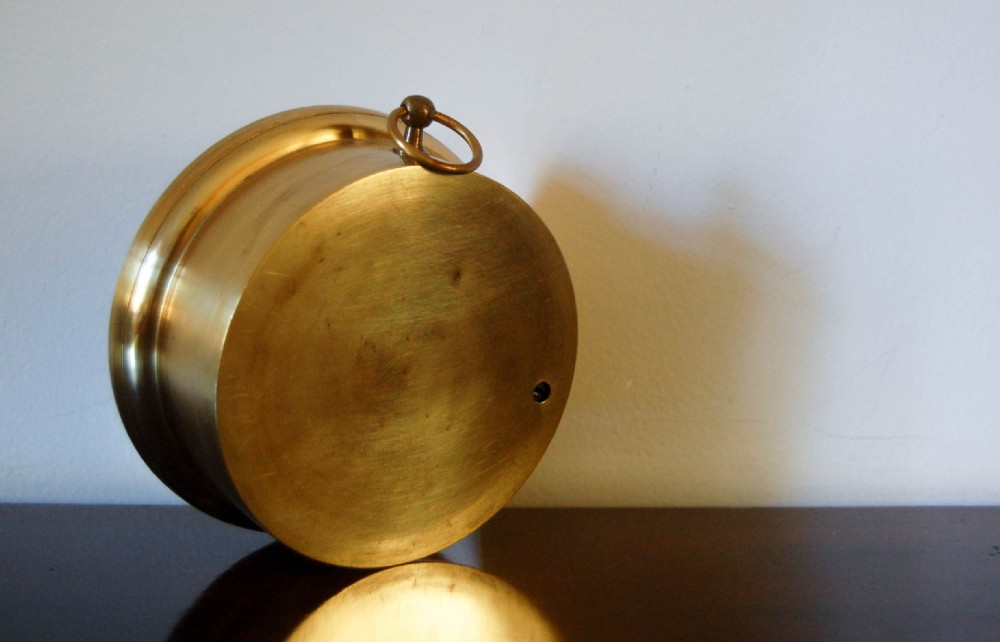
The maker, Lucien Vidi (1805 – 1866) was a French Physicist who invented the aneroid barometer in 1843 and held the patent rights for his invention until 1855. Until Vidi’s ground-breaking invention, barometric pressure was always read by means of a mercury tube such as can be seen installed in stick or wheel barometers, however their portability made them difficult to use for field experiments. The aneroid (meaning without liquid) had been considered as a possible solution since the seventeenth century by the likes of Gottfried Wilhelm Von Leibniz and Nicolas Conte, although neither had any practicable success.

fig 2. Early Lucien Vidi Brass Cased Aneroid Barometer Retailed by EJ Dent
fig 2. Early Lucien Vidi Brass Cased Aneroid Barometer Retailed by Ej Dent

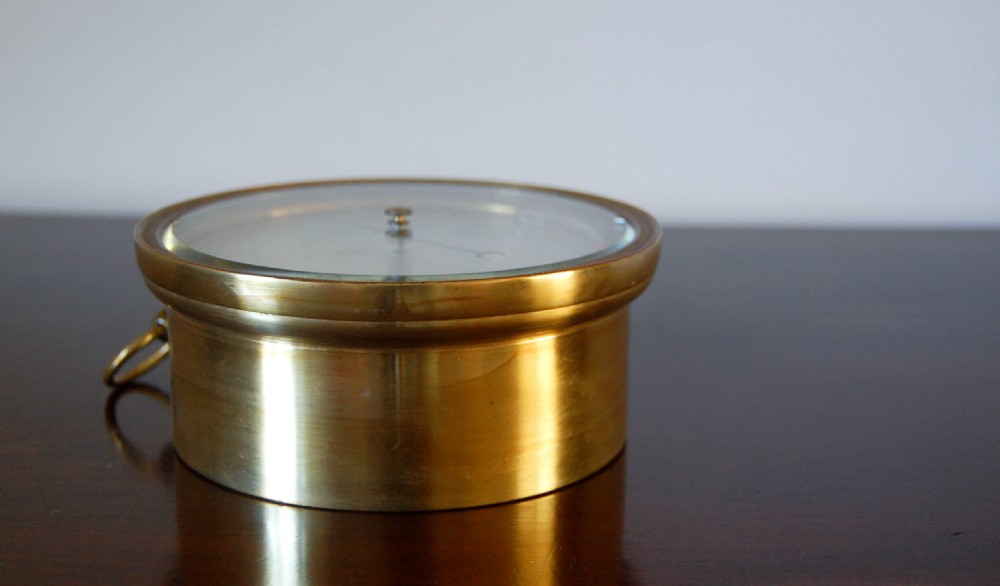
Vidi, was born in 1805 in Nantes and initially trained as a lawyer but left the industry in 1830 to follow a career in steam engineering and much like his competitor, Eugene Bourdon, saw the requirement for improvements to steam pressure gauges which at that period utilised mercury. By 1843, Vidi had succeeded in manufacturing a metallic barometer which consisted of a metallic corrugated disc with the air exhausted from within it and before his eventual patent (no: 10157) in October 1844, he, (on the advice of Pierre de Fontainmoreau) approached the retired English optician, Andrew Pritchard to manufacture and test his invention. During testing, his device was taken to the top of St Paul’s Cathedral dome in order to measure height by means of changes in barometric pressure and was certified as a complete success by Pritchard & Fontainmoreau shortly after.

fig 3. Early Lucien Vidi Brass Cased Aneroid Barometer Retailed by EJ Dent
fig 3. Early Lucien Vidi Brass Cased Aneroid Barometer Retailed by Ej Dent

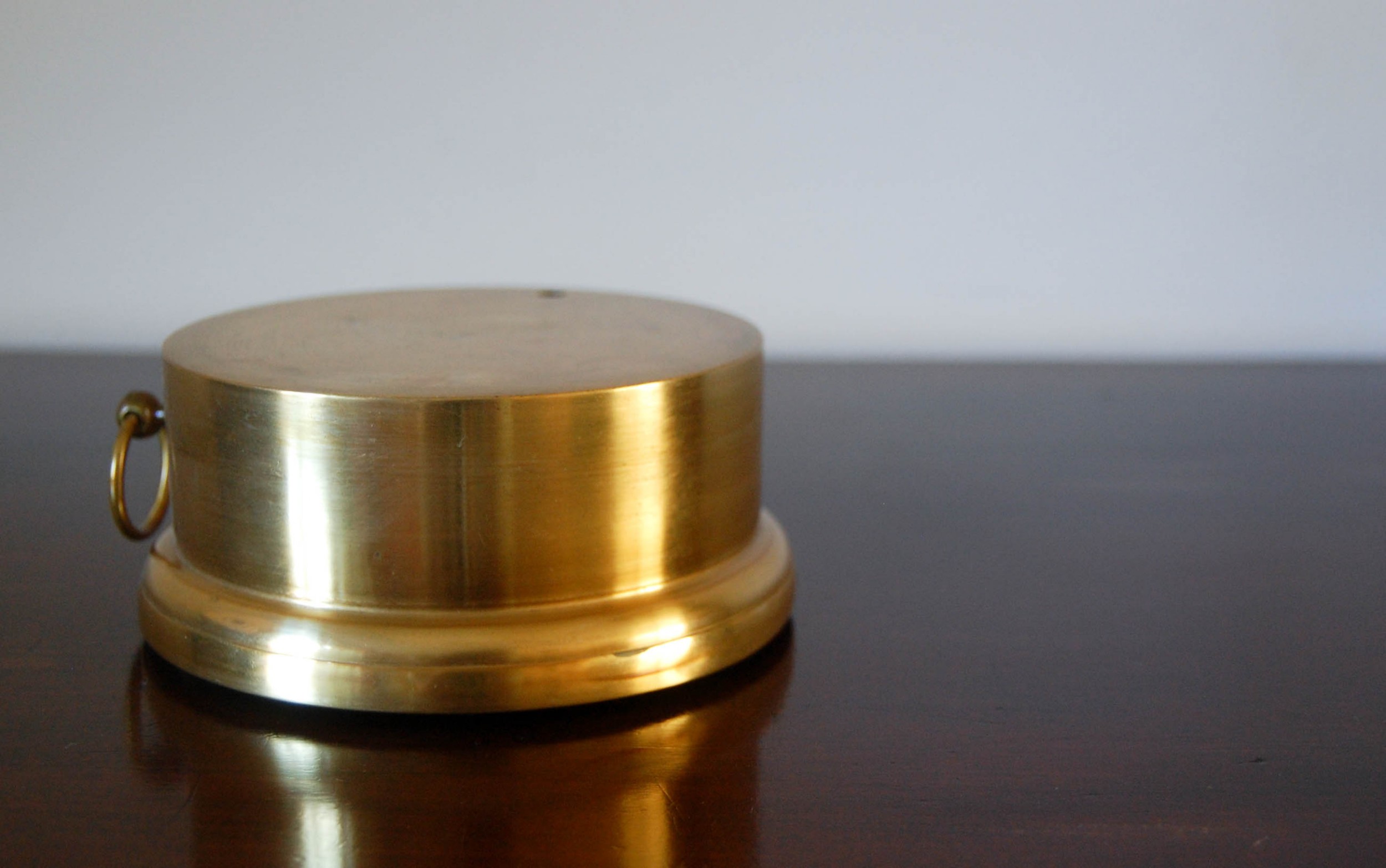
On returning to France in 1845, Vidi ordered the manufacture of 100 instruments from the leading French watchmaker, Redier of Paris but was unhappy with the quality and refused to take receipt of the product. Vidi was successfully sued by Redier and so Vidi afterwards began to manufacture the instrument in his own workshop although initial sales failed to materialise, perhaps due to the negative publicity of the legal case against him.

fig 4. Early Lucien Vidi Brass Cased Aneroid Barometer Retailed by EJ Dent
fig 4. Early Lucien Vidi Brass Cased Aneroid Barometer Retailed by Ej Dent

It is unusual given his initial journey to Britain that Vidi did not begin manufacture in the UK but given the poor reception of his invention in France, he again travelled to London and managed to secure a deal with the famous clockmaker EJ Dent to retail them on his behalf. Initially sceptical, Dent was persuaded when a British naval officer bought an example and promptly ordered thirty more. Nearing bankruptcy at this point, he is thought by Vidi’s biographer, Auguste Laurant, to have gone on to supply Dent with five thousand examples in the first few years whilst his sales in France numbered less than one hundred pieces.

fig 5. Early Lucien Vidi Brass Cased Aneroid Barometer Retailed by EJ Dent
fig 5. Early Lucien Vidi Brass Cased Aneroid Barometer Retailed by Ej Dent

Throughout the 1840’s in Britain, Vidi’s device faced detailed scrutiny against mercurial barometer readings which were found to be identical and to establish the portability of the device and its usefulness as an altimeter it was also taken on numerous train journeys, namely, London to Chester in 1848 and from Preston to Carlisle. The Royal Observatory also undertook tests at varying temperatures and found little difference between the aneroid and it mercurial counterpart.

A Fellow of the Meteorological Society who took part in these investigations is quoted as saying:

“We found the movement of the aneroid was always consistent. It was a delightful companion and highly useful,

Height
12cm (4.72")
Width
12cm (4.72")
Depth
5cm (1.97")
Date of Manufacture

Jason Clarke Antiques has dated this piece to the 1850s.

Reference Numbers
Sellingantiques Ref
SA568713
Dealers Internal Ref
508
Jason Clarke Antiques
Sellingantiques verified Since Jul 2015
Dealer Profile

You can view the stock and full dealer information on the Jason Clarke Antiques Profile Page

PDF SHARE
SAVE
Early Lucien Vidi Brass Cased Aneroid Barometer Retailed by EJ Dent
1 / 6
Archive I Early Lucien Vidi Brass Cased Aneroid Barometer Retailed by EJ Dent

Early Lucien Vidi Brass Cased Aneroid Barometer Retailed by Ej Dent
Archive II Early Lucien Vidi Brass Cased Aneroid Barometer Retailed by EJ Dent View II
Archive III Early Lucien Vidi Brass Cased Aneroid Barometer Retailed by EJ Dent View III
Archive IV Early Lucien Vidi Brass Cased Aneroid Barometer Retailed by EJ Dent View IV
Archive V Early Lucien Vidi Brass Cased Aneroid Barometer Retailed by EJ Dent View V
Archive VI Early Lucien Vidi Brass Cased Aneroid Barometer Retailed by EJ Dent View VI
Enlarged Archival View
Telephone 07815 046645
Location
Newbury
Berkshire
United Kingdom
Verified Since Jul 2015
Items For Sale 80
Items Sold 607
Jason Clarke Antiques
Verified Since Jul 2015
View Dealer Info
Location: Newbury, Berkshire, United Kingdom
Verified
Jul 2015
For Sale
80
Sold
607
Early Lucien Vidi Brass Cased Aneroid Barometer Retailed by EJ Dent
Ref: SA568713
Early Lucien Vidi Brass Cased Aneroid Barometer Retailed by EJ Dent
Detail View 1
Detail View 2
Detail View 3
Detail View 4
Detail View 5
Archival Detail
Every single antique dealer on our platform is individually approved by our internal team. We verify their professional trade history, ethical standards, and photographic quality to ensure a secure, high-standard buying environment. Upon joining, every dealer agrees to a strict 9-point code of conduct. While issues can occasionally arise, our dealers typically resolve them swiftly and directly with the buyer. In fact, since our founding in 2002, Sellingantiques has only had to step in to help resolve an issue on roughly five occasions—a true testament to the quality of our dealers and their dedication to your happiness.
Our dealers are highly experienced in packing and shipping fragile, high-value antiques. Because you are in direct contact with the dealer, you will be able to easily go through all available shipping and insurance options together to ensure your item arrives safely.
Antiques are the ultimate green purchase. By choosing historical pieces over newly manufactured goods, you completely eliminate the carbon footprint of modern mass production while preserving exceptional, timeless craftsmanship.
items
Add keywords to the filter
Price
£100
£250000
Era
Movements
Material
Origin
Stock Location
Freshness
Online Payments
Categories