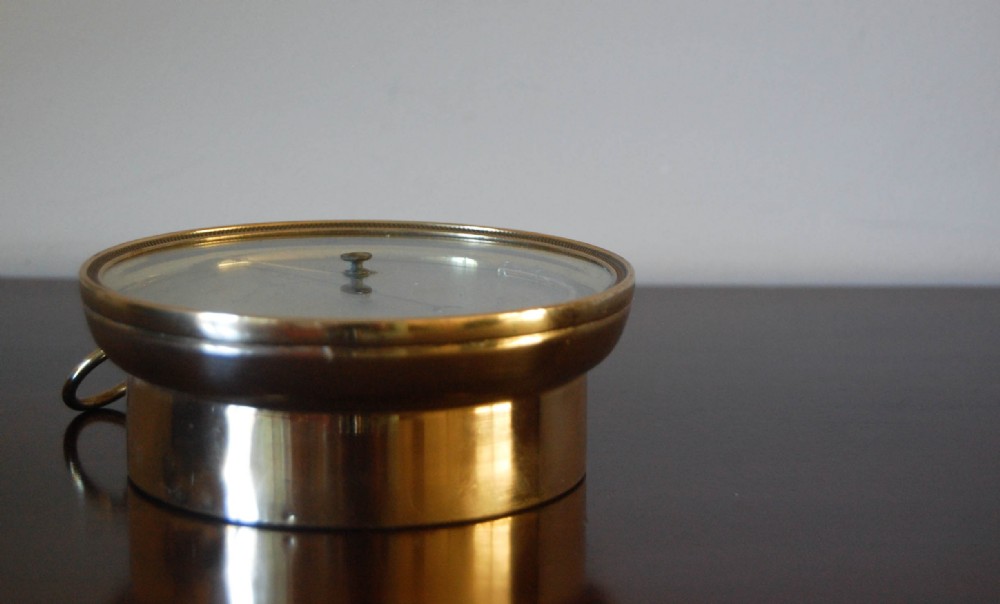
It was listed by Jason Clarke Antiques. Sold pieces stay on Sellingantiques as a record of what has passed through, and the next one is rarely far away.
Jason Clarke Antiques has dated this piece to the Victorian era.
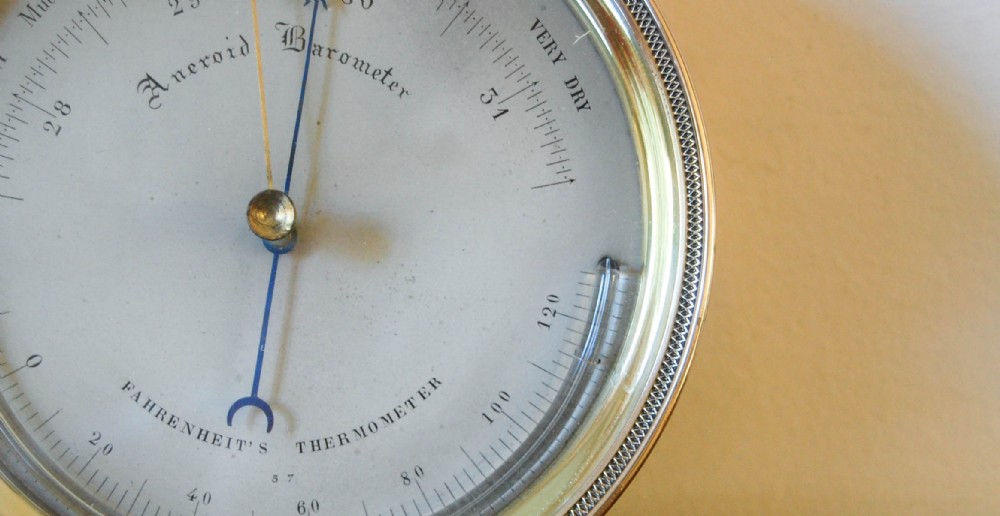
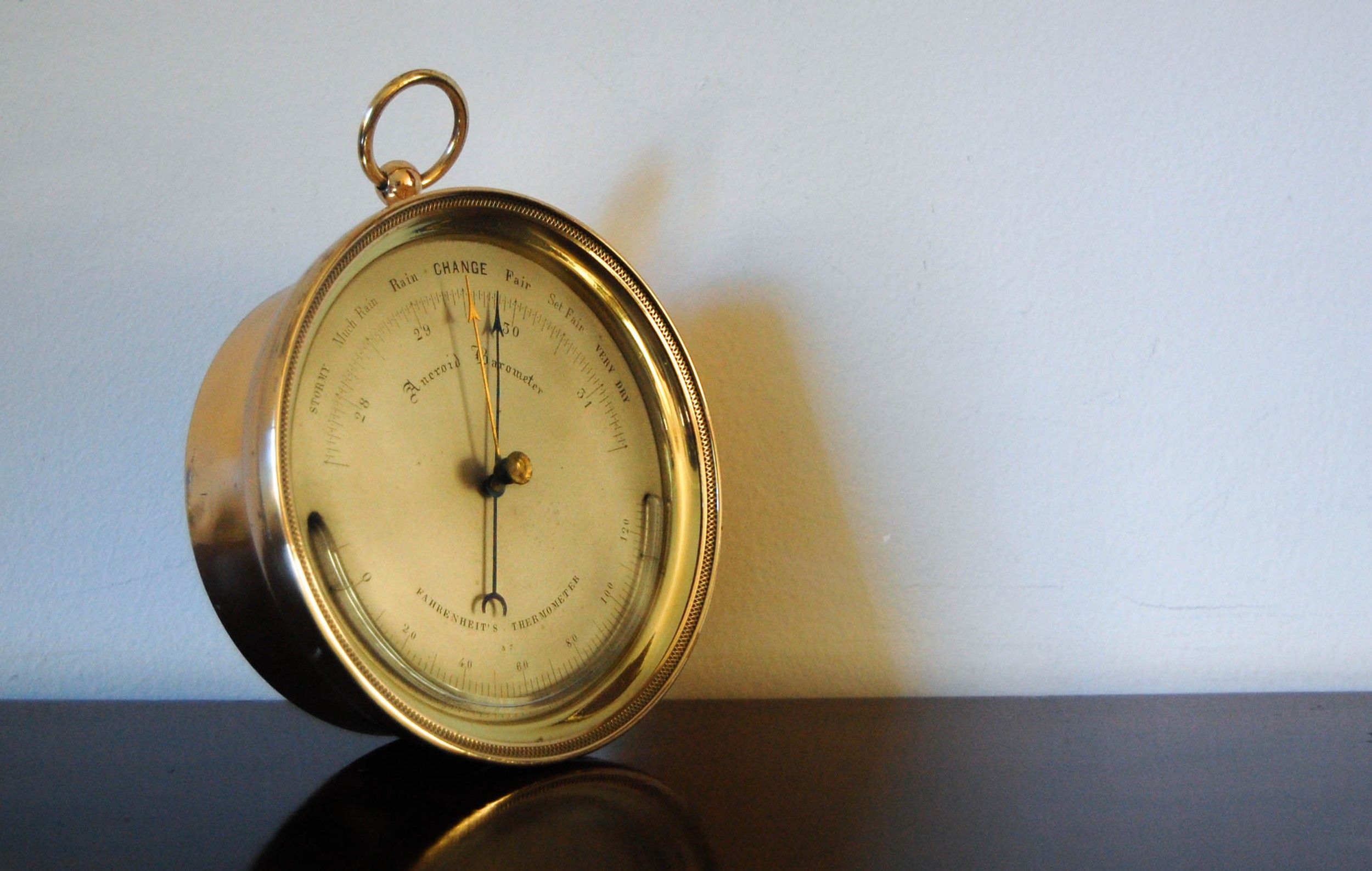
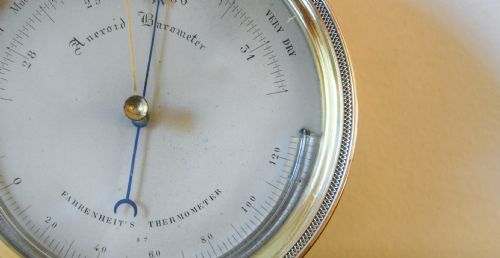
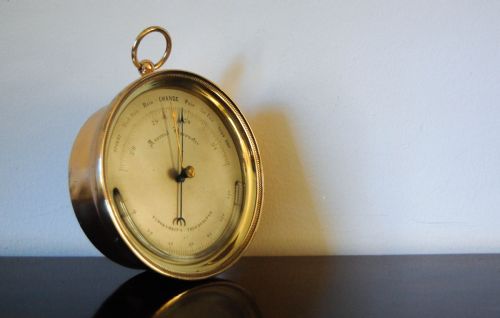
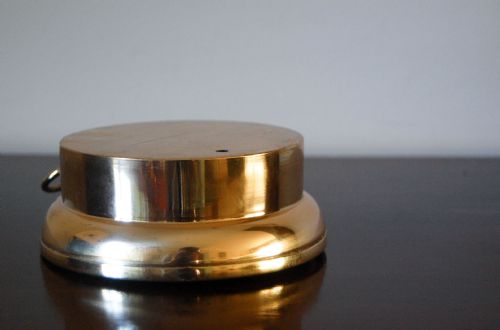
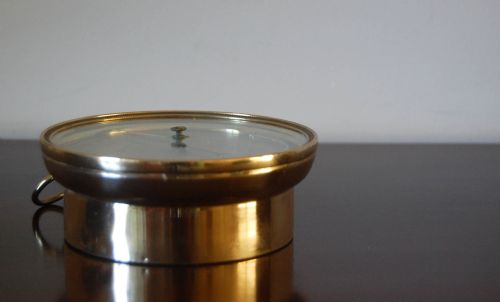
This phenomenally rare and early barometer has a 4.5 inch silvered dial and curved Fahrenheit thermometer to the bottom section.
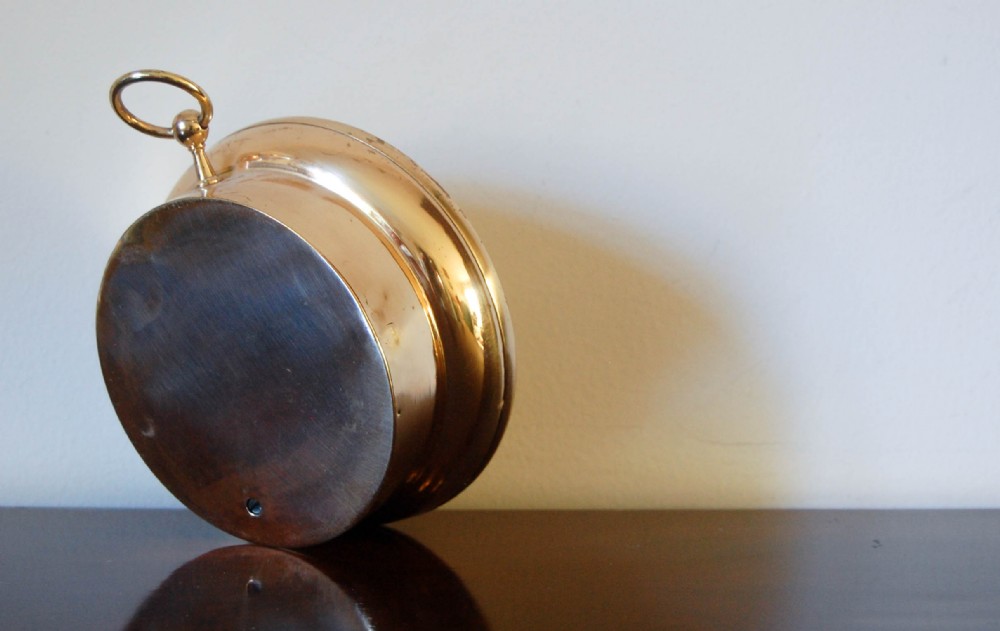
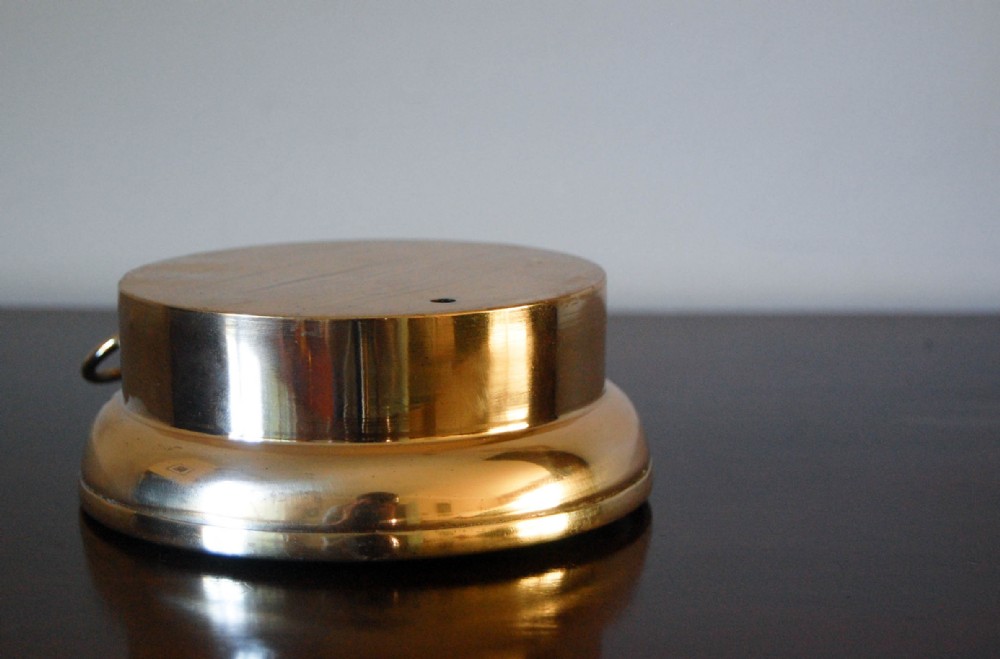
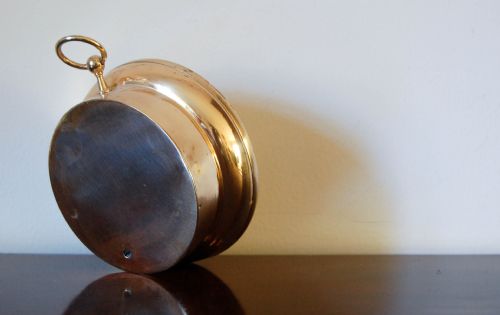
The weather indications are standard for Vidi barometers and are the predecessor to the later Admiral Fitzroy readings that are more commonly seen today. The mechanism is enclosed in a quality pressed brass case and bezel.
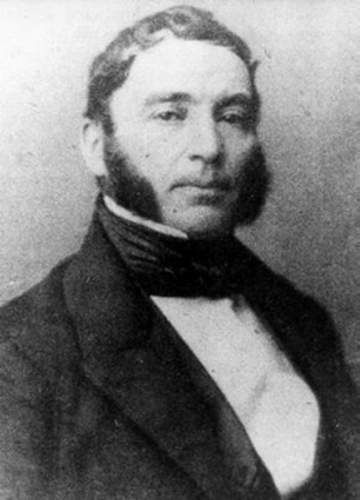
Lucien Vidi (1805 – 1866) was a French Physicist who invented the aneroid barometer in 1843 and held the patent rights for his invention until 1855. Until Vidi’s ground-breaking invention, barometric pressure was always read by means of a mercury tube such as can be seen installed in stick or wheel barometers, however their portability made them difficult to use for field experiments. The aneroid (meaning without liquid) had been considered as a possible solution since the seventeenth century by the likes of Gottfried Wilhelm Von Leibniz and Nicolas Conte, although neither had any practicable success.
Vidi, was born in 1805 in Nantes and initially trained as a lawyer but left the industry in 1830 to follow a career in steam engineering and much like his competitor, Eugene Bourdon, saw the requirement for improvements to steam pressure gauges which at that period utilised mercury. By 1843, Vidi had succeeded in manufacturing a metallic barometer which consisted of a metallic corrugated disc with the air exhausted from within it and before his eventual patent (no: 10157) in October 1844, he, (on the advice of Pierre de Fontainmoreau) approached the retired English optician, Andrew Pritchard to manufacture and test his invention. During testing, his device was taken to the top of St Paul’s Cathedral dome in order to measure height by means of changes in barometric pressure and was certified as a complete success by Pritchard & Fontainmoreau shortly after.
On returning to France in 1845, Vidi ordered the manufacture of 100 instruments from the leading French watchmaker, Redier of Paris but was unhappy with the quality and refused to take receipt of the product. Vidi was successfully sued by Redier and so Vidi afterwards began to manufacture the instrument in his own workshop although initial sales failed to materialise, perhaps due to the negative publicity of the legal case against him.
It is unusual given his initial journey to Britain that Vidi did not begin manufacture in the UK but given the poor reception of his invention in France, he again travelled to London and managed to secure a deal with the famous clockmaker EJ Dent to retail them on his behalf. Initially sceptical, Dent was persuaded when a British naval officer bought an example and promptly ordered thirty more. Nearing bankruptcy at this point, he is thought by Vidi’s biographer, Auguste Laurant, to have gone on to supply Dent with five thousand examples in the first few years whilst his sales in France numbered less than one hundred pieces.
Throughout the 1840’s in Britain, Vidi’s device faced detailed scrutiny against mercurial barometer readings which were found to be identical and to establish the portability of the device and its usefulness as an altimeter it was also taken on numerous train journeys, namely, London to Chester in 1848 and from Preston to Carlisle. The Royal Observatory also undertook tests at varying temperatures and found little difference between the aneroid and it mercurial counterpart.
A Fellow of the Meteorological Society who took part in these investigations is quoted as saying:
“We found the movement of the aneroid was always consistent. It was a delightful companion and highly useful, its indications preventing many an excursion which would
Jason Clarke Antiques has dated this piece to the Victorian era.
You can view the stock and full dealer information on the Jason Clarke Antiques Profile Page
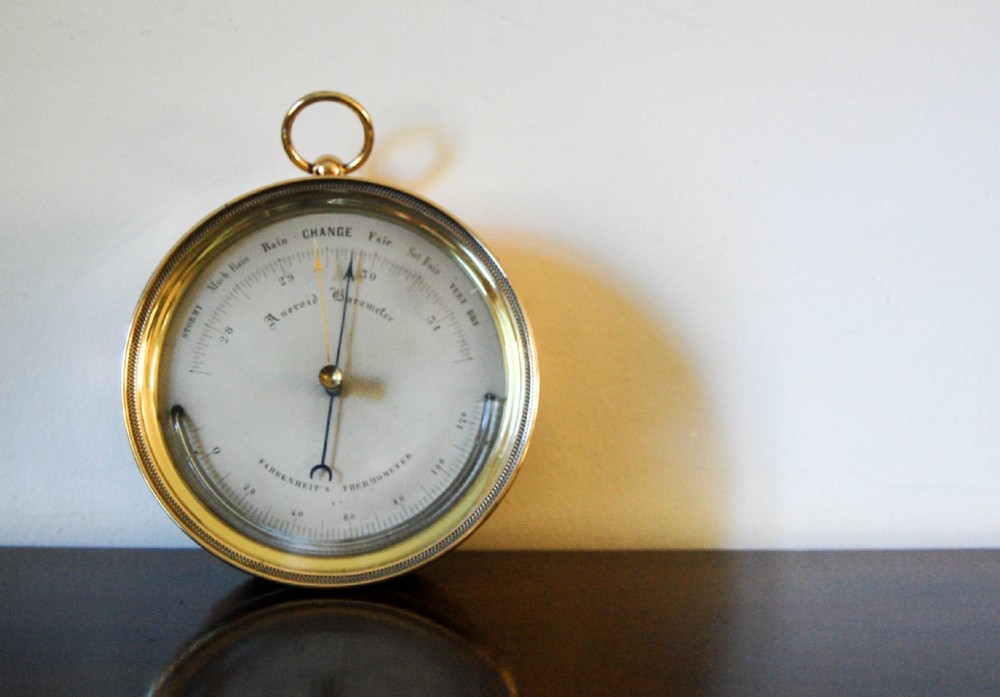
Earliest Known Aneroid Barometer by Lucien Vidi - Serial Number 57