It was listed by Jason Clarke Antiques. Sold pieces stay on Sellingantiques as a record of what has passed through, and the next one is rarely far away.
Jason Clarke Antiques has dated this piece to the 1860s.
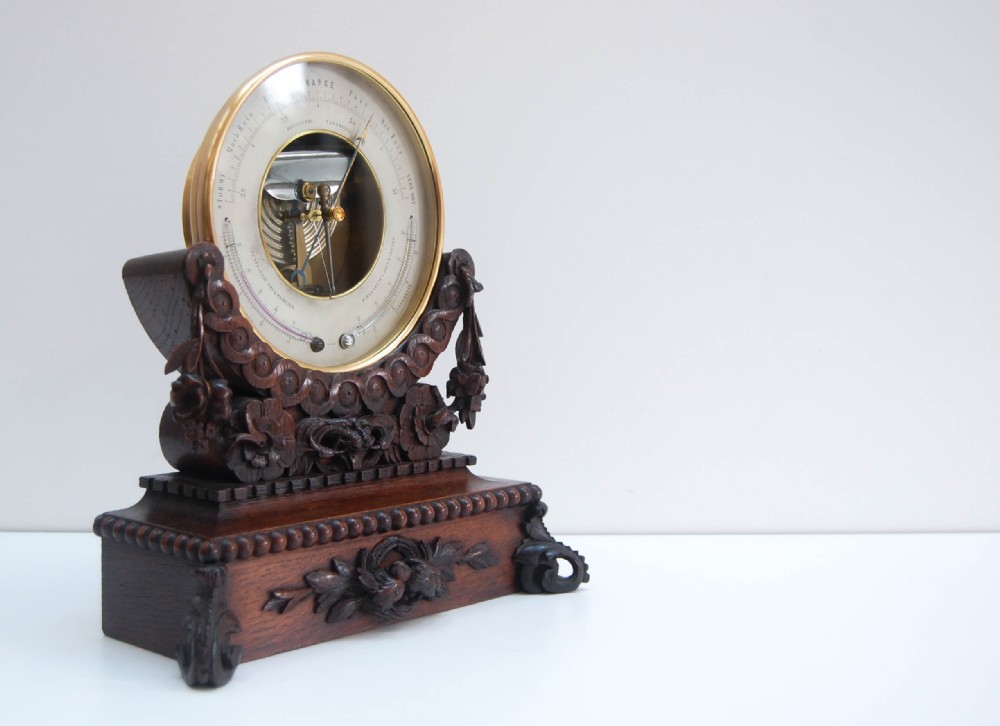
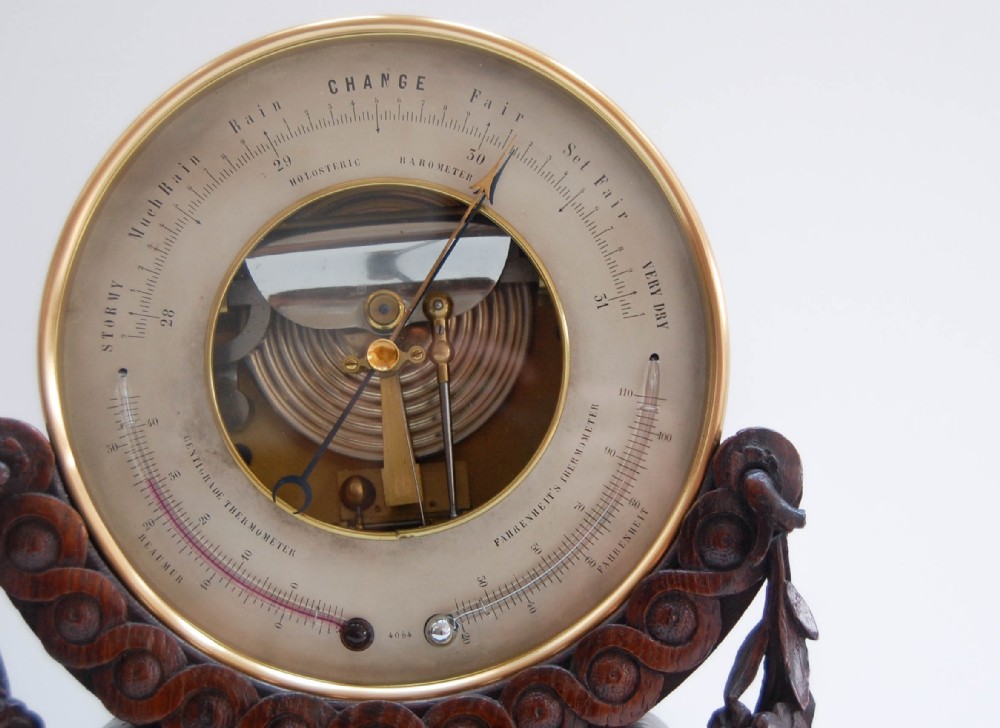
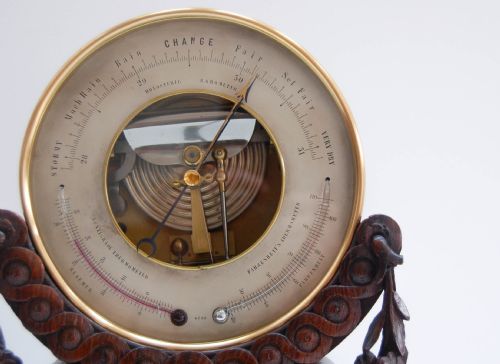
The 6.5” silvered dial is arranged with an engraved scale plate to the top half showing 28 to 31 inches of barometric pressure and uses the typical Vidie style description of “Stormy” through to “Very Dry”. It is further engraved with the PNHB trade mark name, “Holosteric barometer”. Thought to be an amalgam of the Greek words Holos and Stereo referencing its wholly solid design without the need for mercury. The bottom half of the dial is arranged with two thermometers. The left hand side showing scales for Reaumur and Centigrade readings and Fahrenheit scale to the right. Between the two the thermometers is engraved the serial number 4094. With a glass front, blue steel indicator hand and brass pointer with brass knurled knob, the centre of the dial is see through at a diameter of 3.5” to allow the superbly crafted movement and bellows to be viewed.
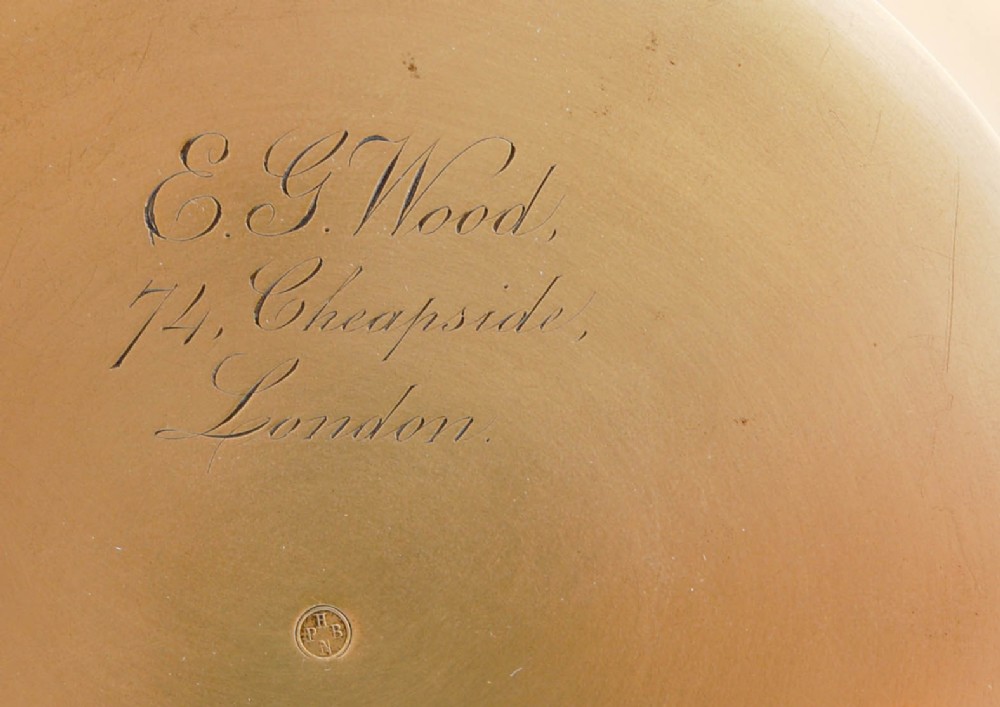
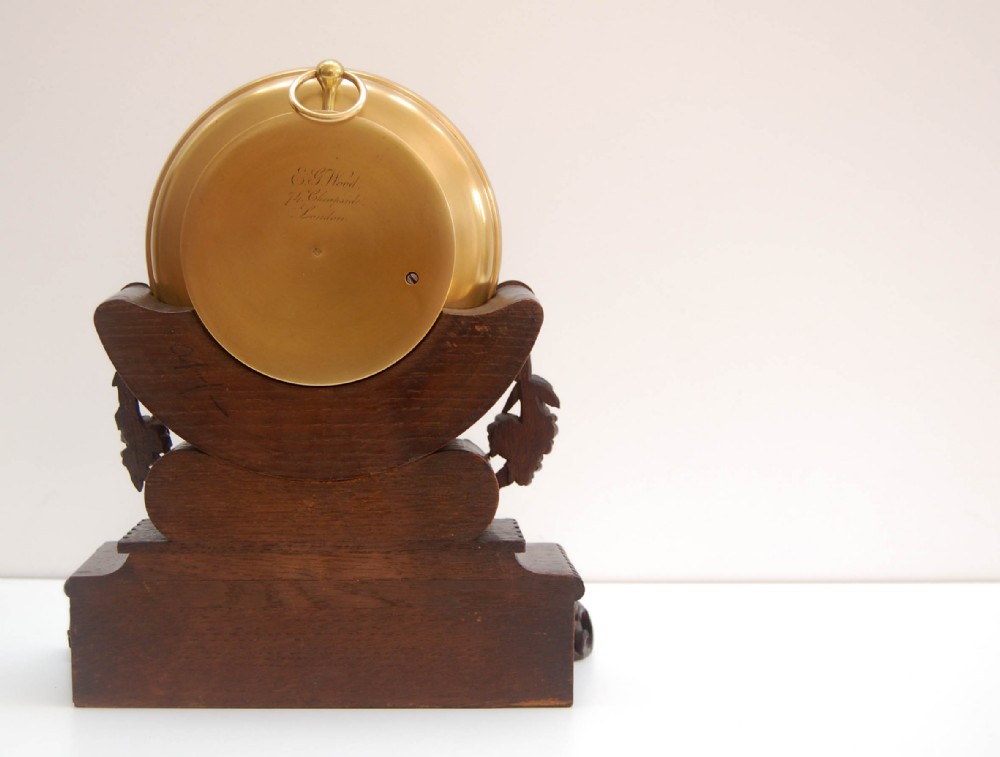
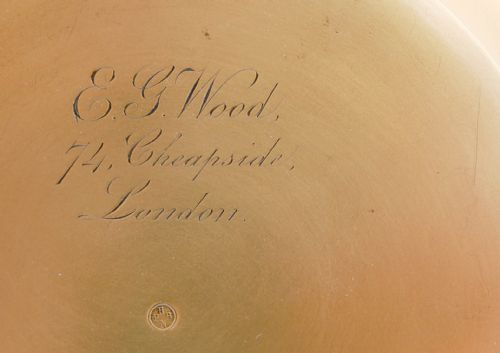
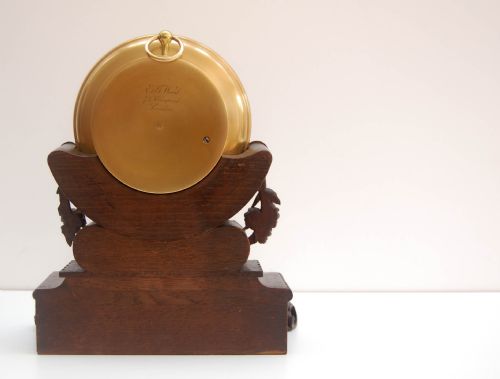
The brass graduated case comes complete with brass hanging ring and is stamped to the back with the makers stamp of “PNHB” and the retailer, “EG Wood, 74 Cheapside, London”.
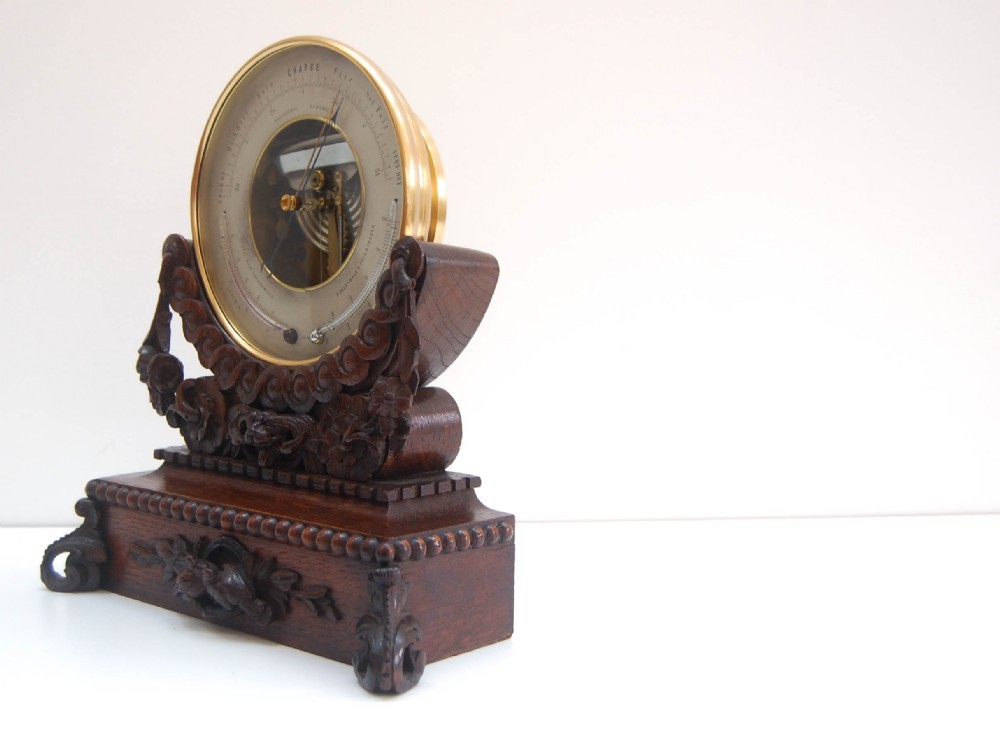
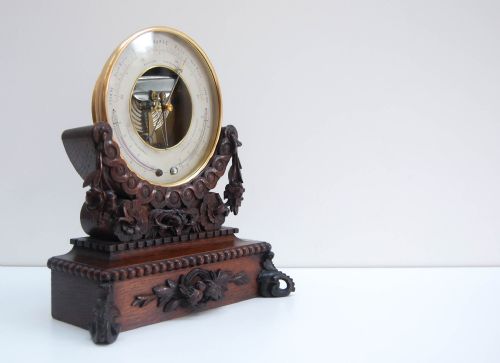
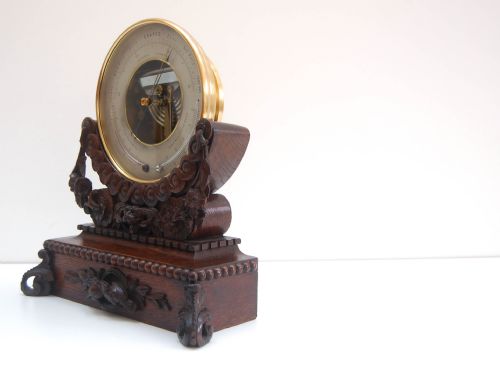
The oak base is graduated in the same way as the brass case of the barometer in order to receive it on the stand and is carved with a classical Etruscan scroll pattern with floral drapes either side terminating into a stylised animal head. Below the solid base is carved with a gadroon edge pattern and floral design to the centre. The front edges have floral scrolls either side which provide character to the square edges not often seen on these types of barometer.
The retailer of this fine instrument was Edward George Wood (1811-1896) an optician and scientific instrument maker most notable for his involvement in the early photographic industry and for developments to the magic lantern. From 1833 to 1843, Wood seems to have worked alone or with his brothers, Henry & George Wood from premises in King Street and Shepperton Street in London. It is possible that Wood, initially supplied the trade with finished parts for constructing instruments as I can find no examples of his work with the early addresses. This assumption can be evidenced by recent research by Brian Stevenson through an 1844 newspaper advertisement announcing that Messrs Horne, Thornwaite & Wood have acceded to the business of Edward Palmer, “having been assistants and manufacturers to him since his first establishment in Newgate Street in 1837”. Palmer was a highly successful instrument maker and retailer of the period.
Given the above, we know that in 1844, Wood entered the successful partnership of Horne, Thornwaite and Wood, trading at Palmer’s old address of 123 Newgate, London and later expanding into 121 Newgate. The company exhibited numerous devices at The Great Exhibition and won a Prize Medal for photographic equipment. Nothing is known of Wood’s reasoning but in 1854, the partnership was dissolved with Wood leaving to form a company under his own name, established at 117 Cheapside and the other partners continuing under the name of Horne & Thornwaite where they maintained a successful business, gaining royal approval from Queen Victoria and signing their instruments with, “philosophical instrument maker’s to Her Majesty”.
In 1862, as well as exhibiting at the famous London Exhibition, Wood found the time to move his business to his better known address of 74 Cheapside and it remained there until his death in 1895. He did however, return to business with his old partners for a brief period in 1886 until 1893 whilst his own business was maintained under family ownership. The business seems to have diversified into electrical engineering during its later existence and was finally bought out by Dollond
Jason Clarke Antiques has dated this piece to the 1860s.
You can view the stock and full dealer information on the Jason Clarke Antiques Profile Page
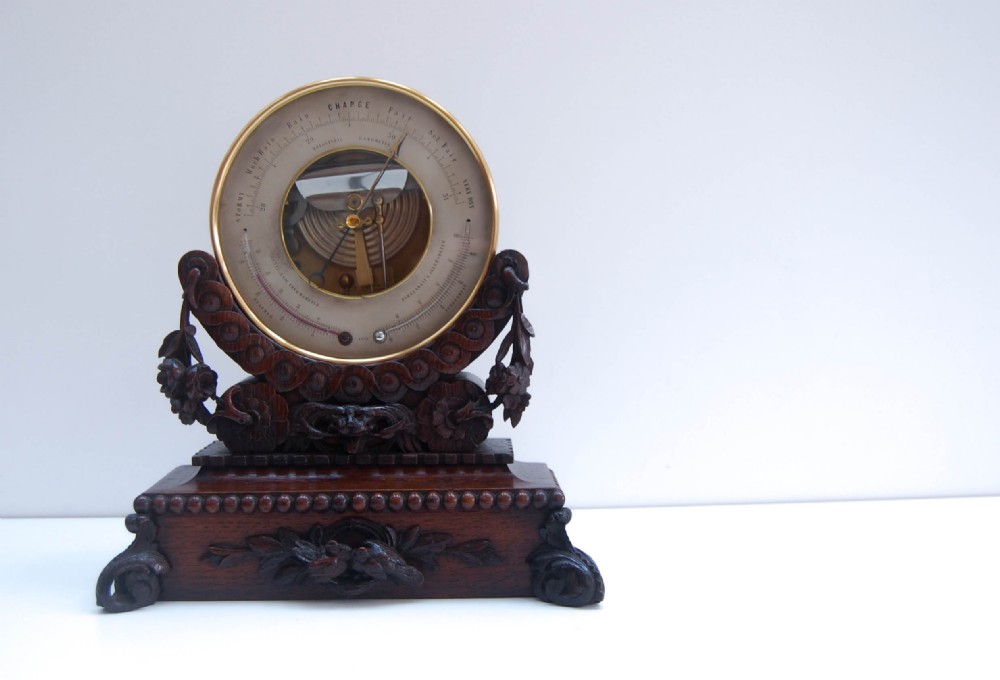
Naudet Barometer on Stand Retailed by Eg Wood Cheapside London - Formerly Edwin Banfield Collection