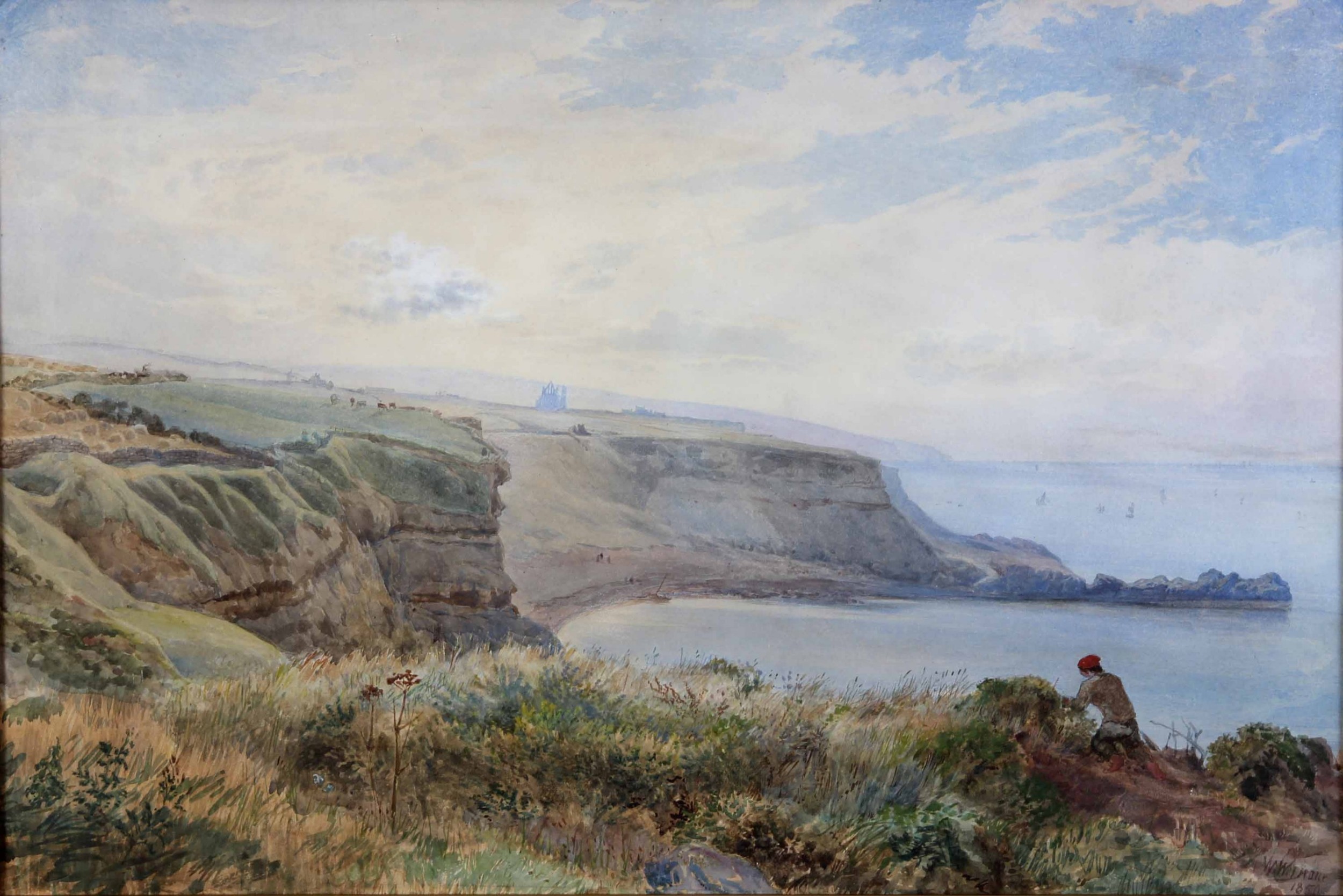
William Greenwood Fine Art has dated this piece to the 19th Century.
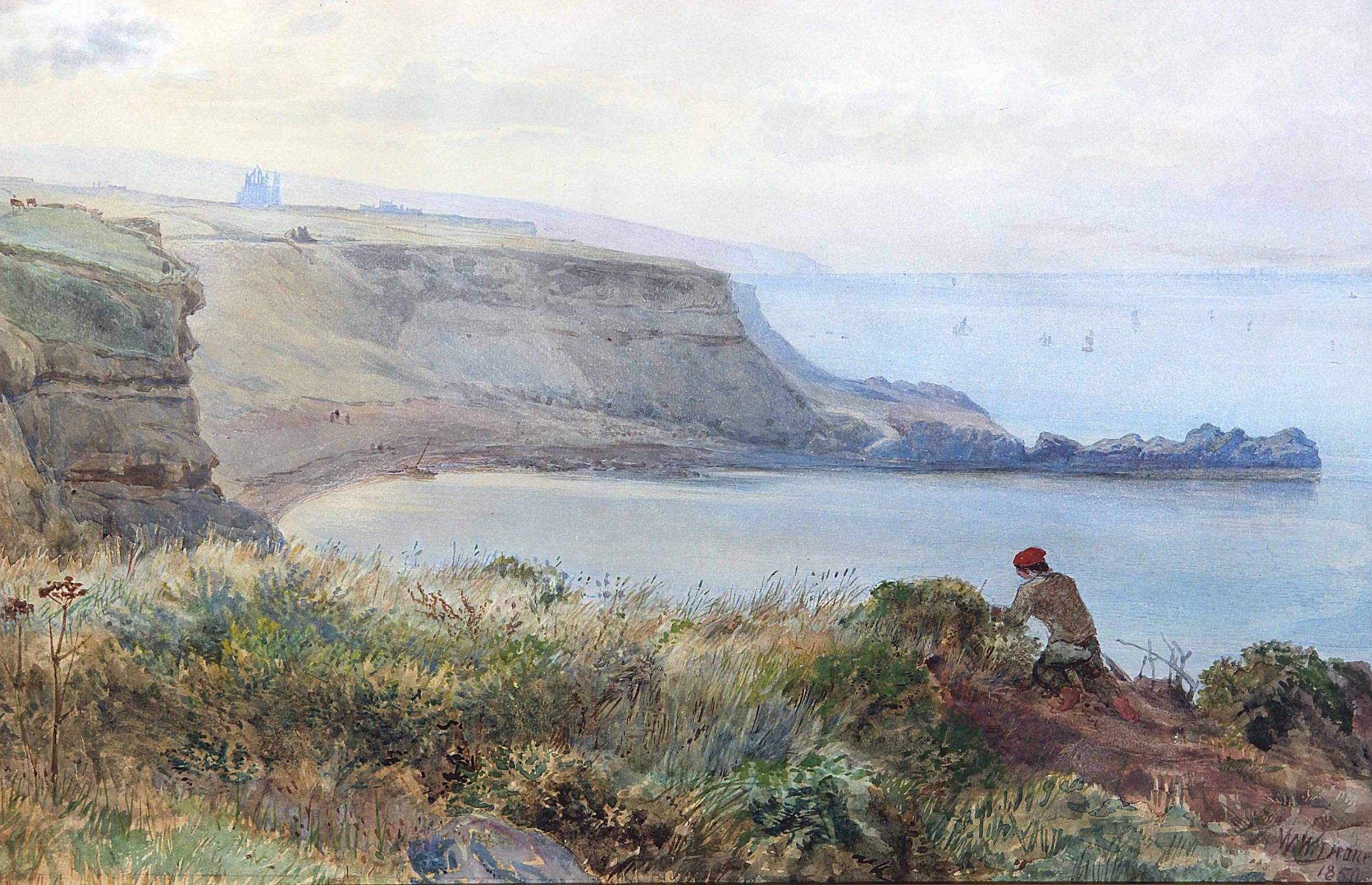
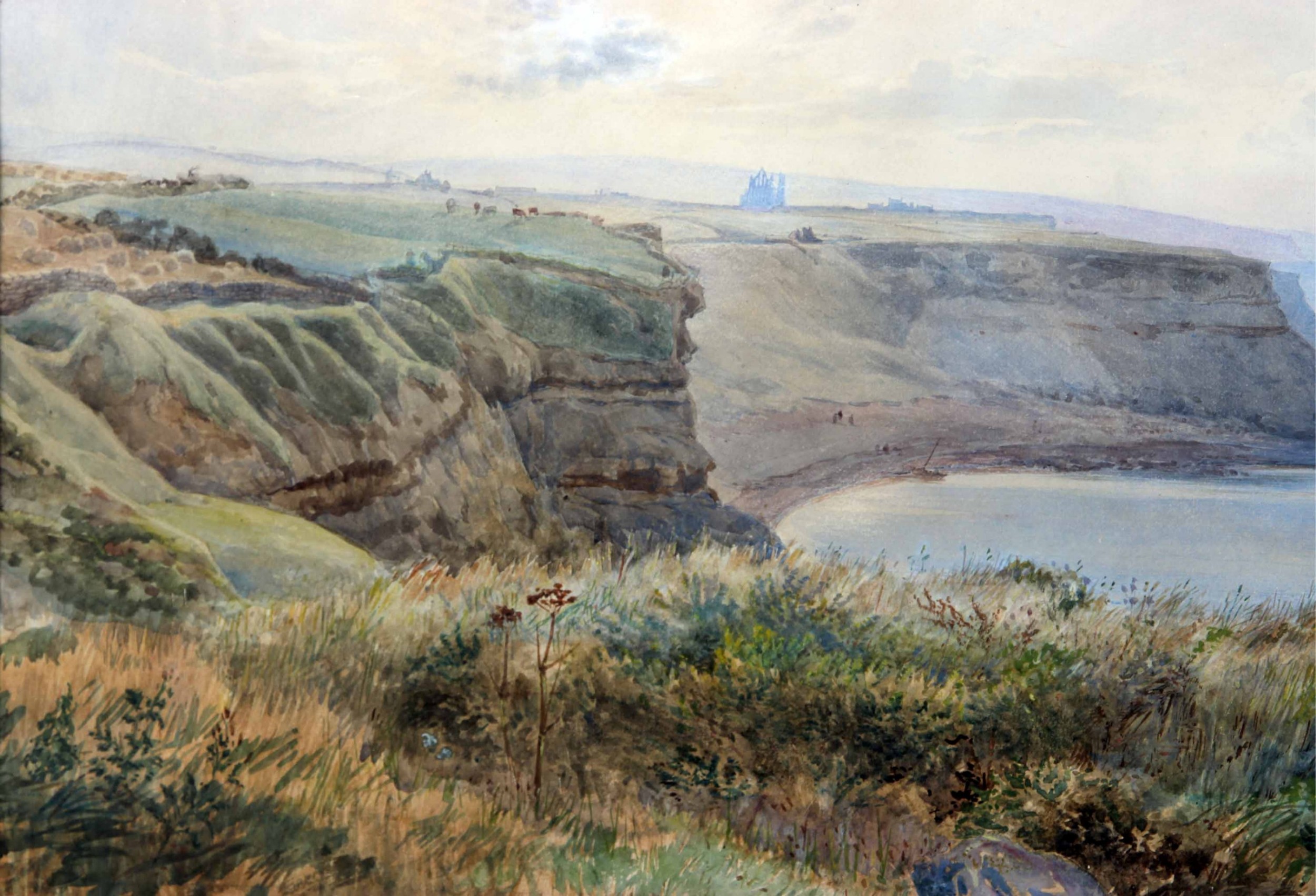
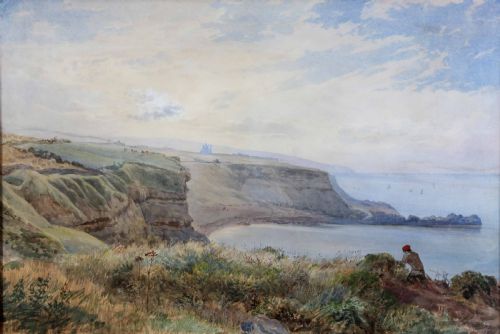
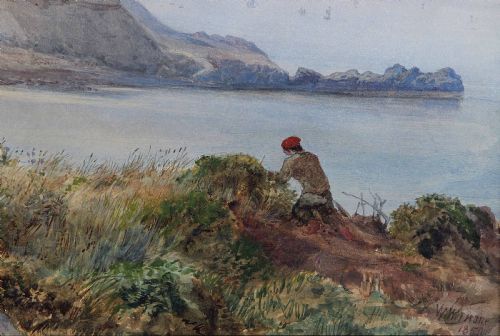
Title: " Whitby".
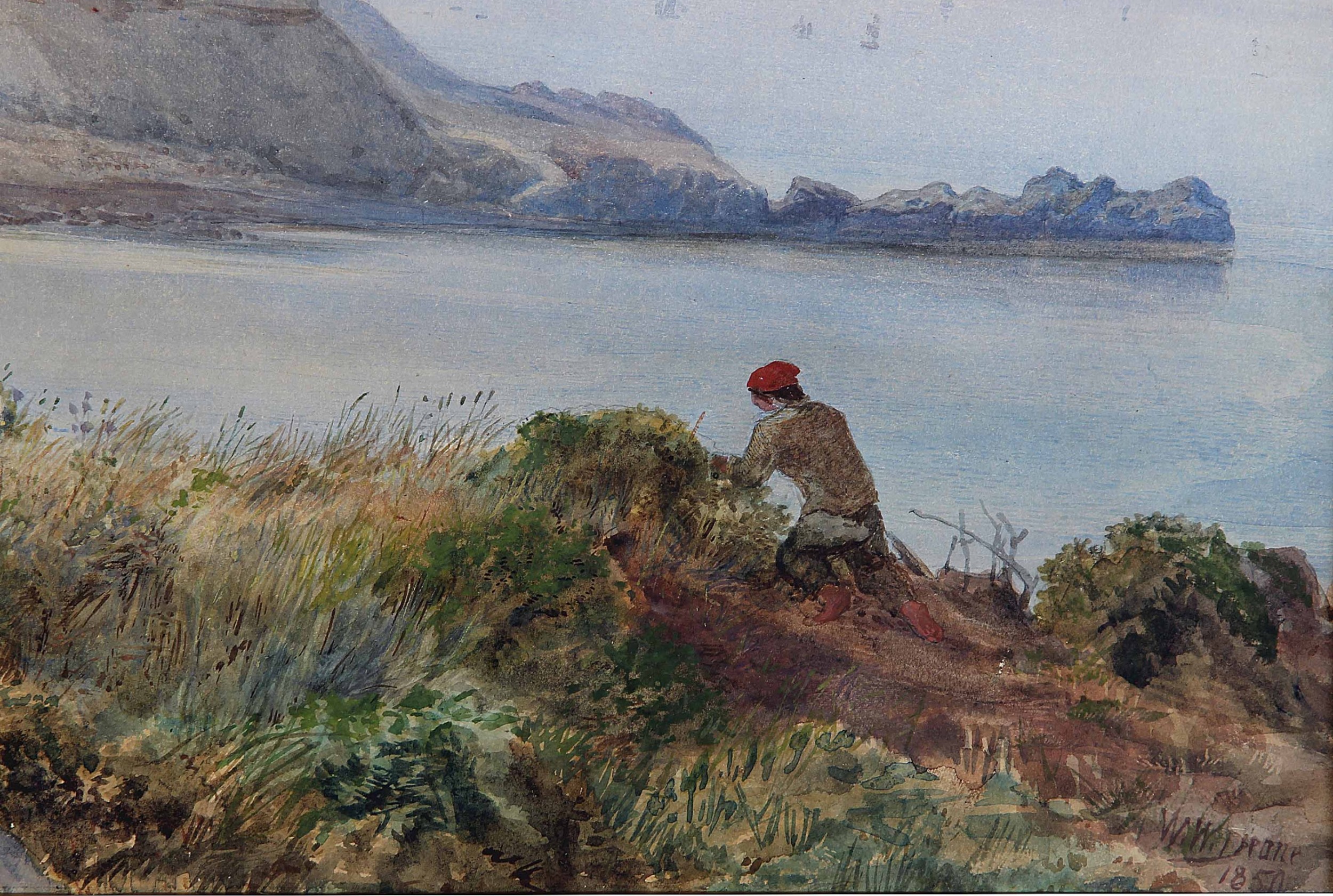
Signed and dated 1859.
Watercolour. Size: 18"x 27". Framed size: 27"x 36".
In very good ready to hang condition. Free UK delivery.
A really good atmospheric painting.
W. W. Deane went to the Islington proprietary school, and gained prizes for mathematics, perspective, and French. He showed early a taste for drawing, but as his elder brother Dennis Wood Deane had become an artist, his father decided to make him an architect, and articled him on 7 September 1842 for four years to Herbert Williams, a surveyor; on 13 January 1844 he became an architectural student of the Royal Academy, and in December 1844 gained the silver medal. On 21 July 1845 he gained the students' book prize for a design at the Royal Institute of British Architects.
On quitting Williams in 1846, Deane went as an assistant to David Mocatta for a short time. In 1848 he became an associate of the Royal Institute of British Architects. Some of his designs were exhibited in the Royal Academy from 1844. About this time he took up with private theatricals, and played at Miss Kelly's theatre, which he subsequently decorated. In 1850 he went with his brother Dennis to Italy, and while at Rome he became a friend of George Hemming Mason. He returned to London in the spring of 1852 with his folios full of measured drawings and water-colour sketches, gave lessons in water-colour drawing to young architects, and started as an architect in partnership with Alfred Bailey, a surveyor. They eventually settled at 13 Great James Street, Bedford Row, and he separated from Bailey in 1855. During his architectural career he gained a premium in competition, and built Langham Chambers, which elicited the praise of Owen Jones. He also built some houses in London and the country, but virtually relinquished practical architecture in 1856 for drawing on wood, and making designs and perspectives for architects.[1]At this time he was the centre of a circle of young architects and artists who admired his ability, versatility, and conversation. After his return from Italy he spent most of his summers sketching in the country, in 1856 in Normandy, in 1857 in Belgium, and in 1859 at Whitby. On his mother's death in September 1859 he inherited a small sum of money, and determined to devote himself to painting, the original desire of his youth. He removed to 17 Maitland Park Terrace, Haverstock Hill, in 1860, and spent a good part of the year sketching in Cumberland. He was elected an associate of the Institute of Painters in Water Colours in 1862.
William Greenwood Fine Art has dated this piece to the 19th Century.
You can view the stock and full dealer information on the William Greenwood Fine Art Profile Page
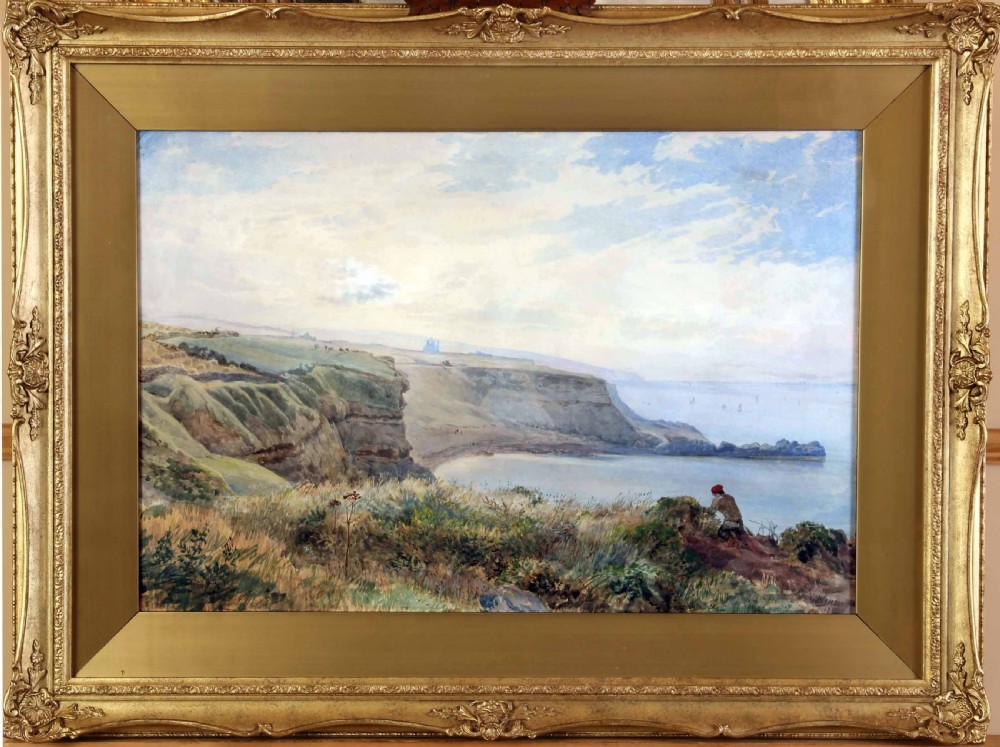

William Wood Deane Ows "Whitby". Good Large Watercolour.