It was listed by Artware Fineart. Sold pieces stay on Sellingantiques as a record of what has passed through, and the next one is rarely far away.
Artware Fineart has dated this piece to the 19th Century.
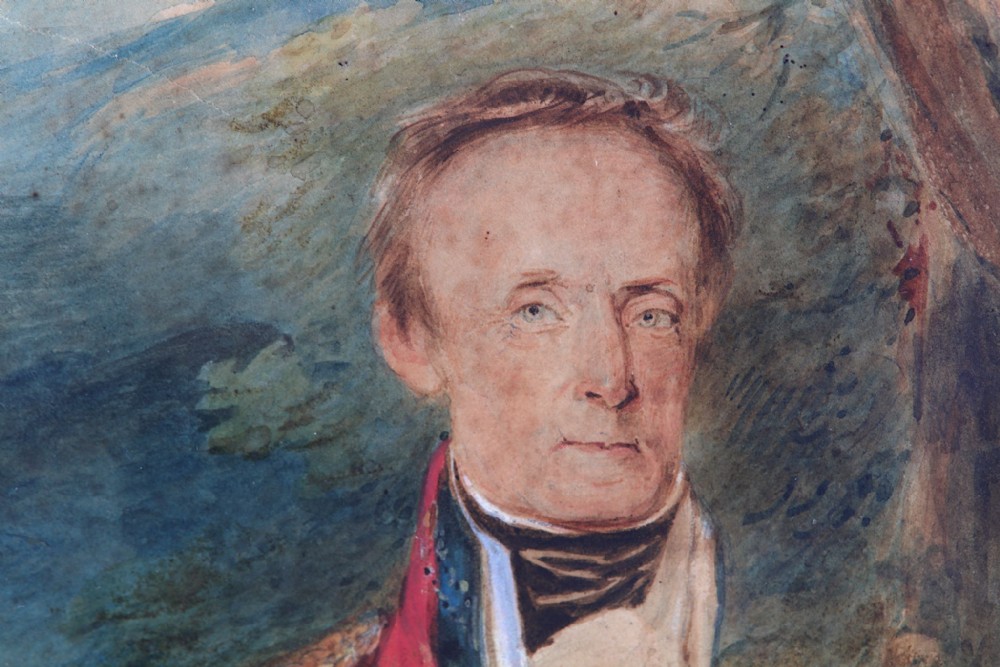
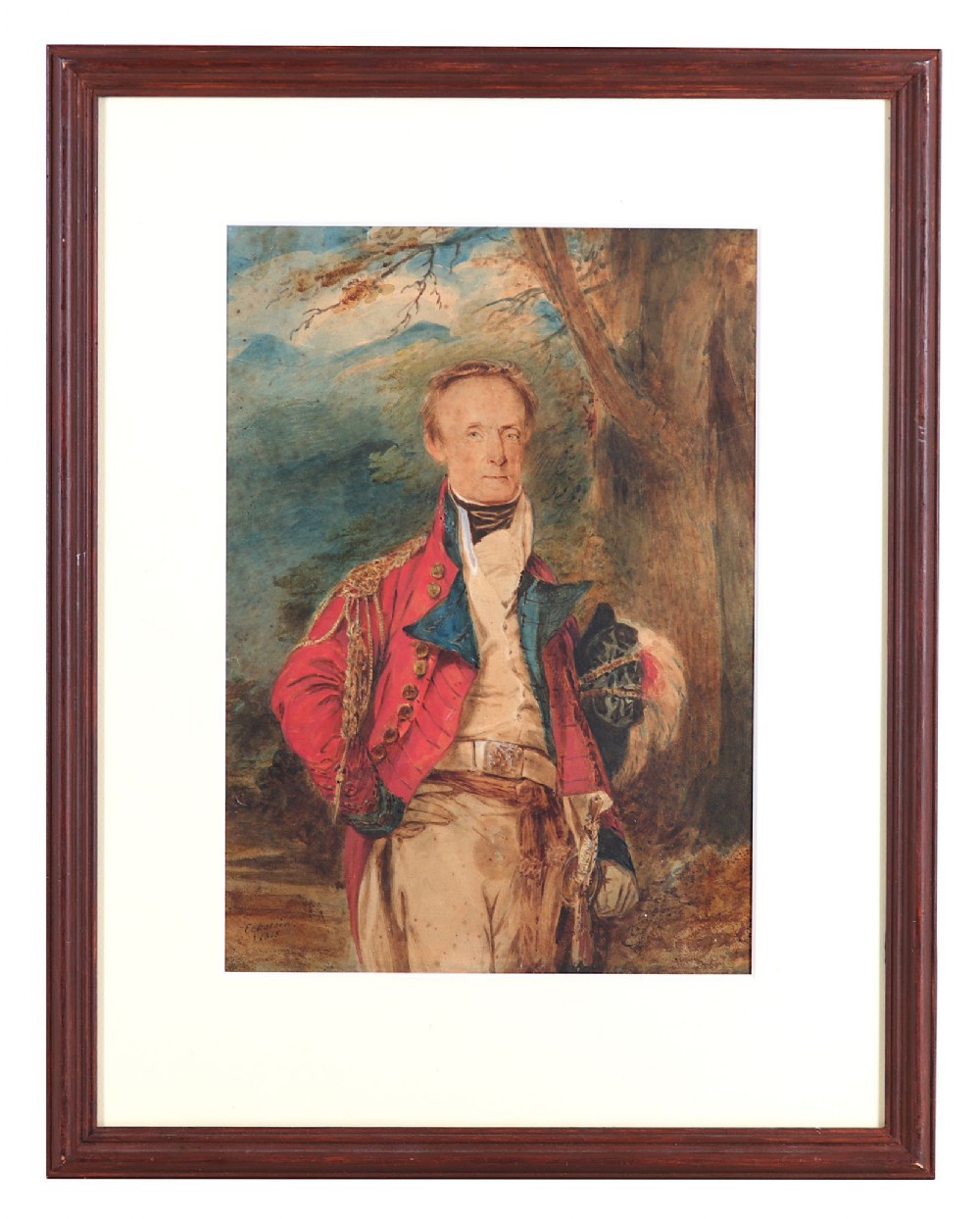
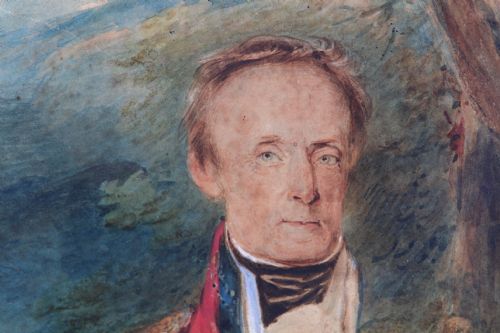
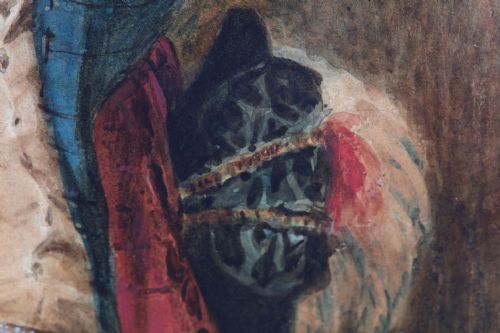
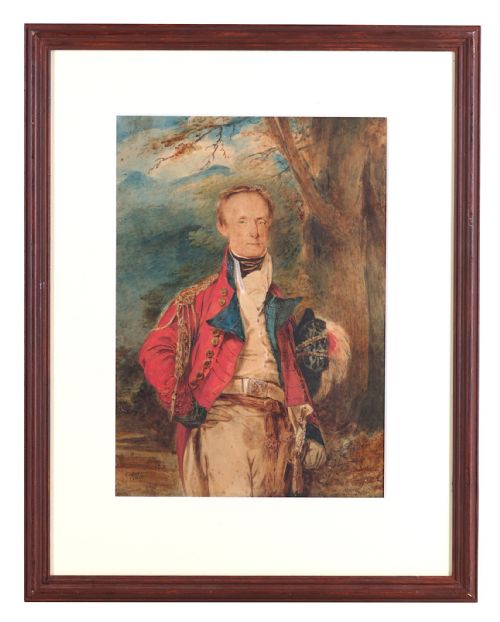
Portrait of General Sir Sir Charles Wale, K.C.B. 1763–1845
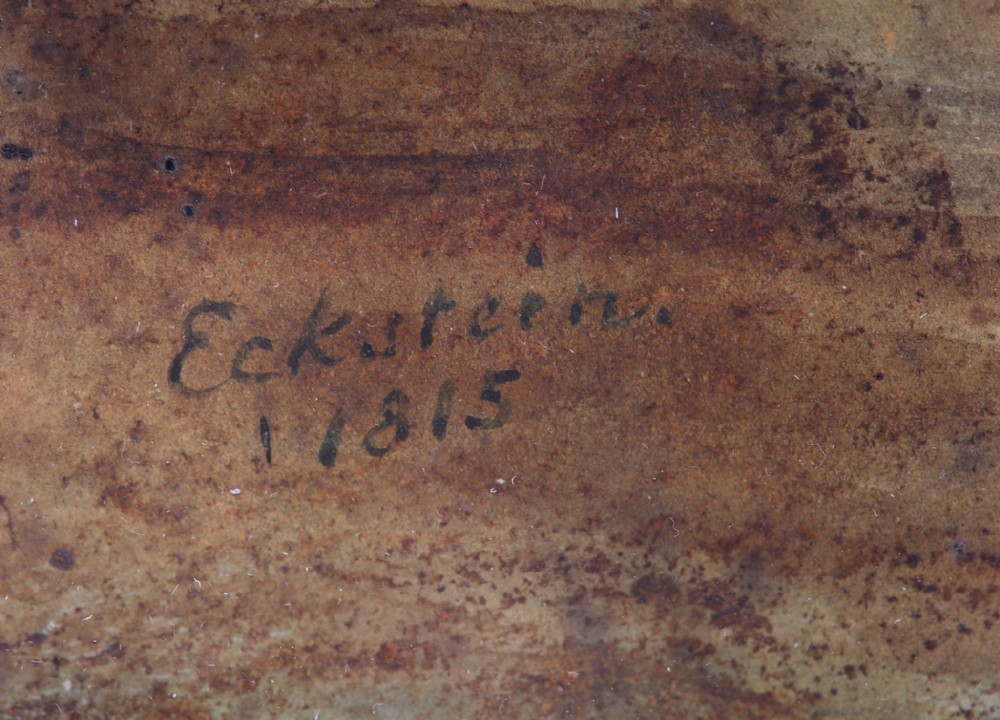
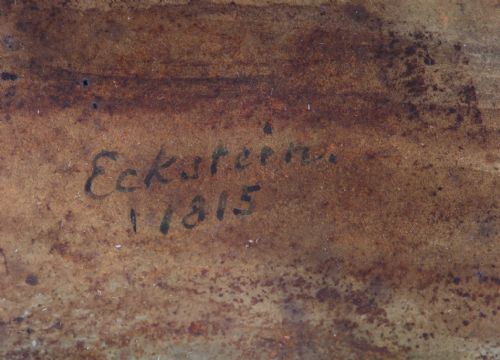
Signed/Inscribed:
"John Eckstein 1815"
pencil and watercolour
31 x 21.50 cm. (12.1/4 x 8.3/4 in.)
Sir Charles Wale, (1763–1845), army officer, was born on 5 August 1763, the second son of Thomas Wale (1701–1796) of Shelford, Cambridgeshire, and his wife, Louisa Rudolphina, daughter of Nicholas Rahten of Lüneburg, Hanover.
Several members of the family acted as sheriff of that county. A Sir Thomas Wale was knight of the Garter in Edward III's reign, and another Thomas was killed at Agincourt in 1415. A branch of the family migrated to Ireland late in the twelfth century and founded Walestown. The branch to which Sir Charles belonged acquired Shelford in the seventeenth century. His father, Thomas Wale, an eighteenth-century squire, kept a notebook, extracts from which were printed by the Revd H. J. Wale in My Grandfather's Pocket-Book (1883).
Charles Wale was sent up to London in 1778 to learn arithmetic and fencing. In September 1779, much against his father's wish, he accepted a commission in a regiment which was then being raised by Colonel Keating, the 88th foot. He went out with it to Jamaica, but on 13 April 1780 his father purchased him ('cost £150') a lieutenancy in the 97th which went to Gibraltar with Admiral Darby's fleet in April 1781, and served throughout the latter part of the defence.
Wale obtained a company in the 12th foot on 25 June 1783, but was placed on half pay soon afterwards. On 23 May 1786 he exchanged to the 46th, and served with it in Ireland and the Channel Islands. He married in 1793 and retired on half pay, becoming adjutant of the Cambridgeshire militia on 4 December. On 1 March 1794 he was made major, and on 1 January 1798 lieutenant-colonel in the army. He returned to full pay on 6 August 1799 as captain in the 20th, and served with it in the expedition to The Helder in the autumn. On 16 January 1800 he was promoted major in the 85th, and on 9 October to lieutenant-colonel of the 67th. He joined it in Jamaica, and brought it home at the end of 1801. In 1805 he went out with it to Bengal, but returned to England and exchanged to the 66th on 16 June 1808.
Wale did not serve long with the 66th. He had been made colonel on 25 April 1808, and in March 1809 he was appointed a brigadier-general in the West Indies. He commanded the reserve in the expedition under Sir George Beckwith, which took Guadeloupe in February 1810, and was wounded in the action of 3 February. On 4 June 1811 he was promoted major-general, and on 21 February 1812 was appointed governor of Martinique, and remained so until it was restored to France in 1815. He was made KCB on 2 January 1815, promoted lieutenant-general on 19 July 1821, and general on 28 June 1838, and made colonel of the 33rd foot on 25 February 1831. In politics he was 'of the high Conservative party' (GM). He was Colonel of the Duke of Wellington's Regiment (West Riding ) from 1831 - 1845.
Wale was three times married: first, in 1793, to Louisa, daughter of the Revd Castel Sherrard of Huntington; second, in 1803, to Isabella, daughter of the Revd Thomas Johnson of Stockton-on-Tees; third, in 1815, to Henrietta, daughter of the Revd Thomas Brent of Croscombe, Somerset. Wale died at Shelford, Cambridgeshire, on 19 March 1845. He was survived by his third wife, seven sons, and five daughters.
Wale's eighth son, Frederick Wale (1822–1858), army officer in the East India Company, entered the East India Company's service in 1840, and was posted to the 48th Bengal native infantry on 9 January 1841; lieutenant 23 February 1842, captain 1 October 1852. He was appointed brigade major at Peshawar on 19 August 1853, and was serving there when hi
Artware Fineart has dated this piece to the 19th Century.
You can view the stock and full dealer information on the Artware Fineart Profile Page

John Eckstein, 1735 - 1817 Portrait of General Sir Sir Charles Wale, K.c.b. 1763–1845