Jason Clarke Antiques has dated this piece to the 1860s.
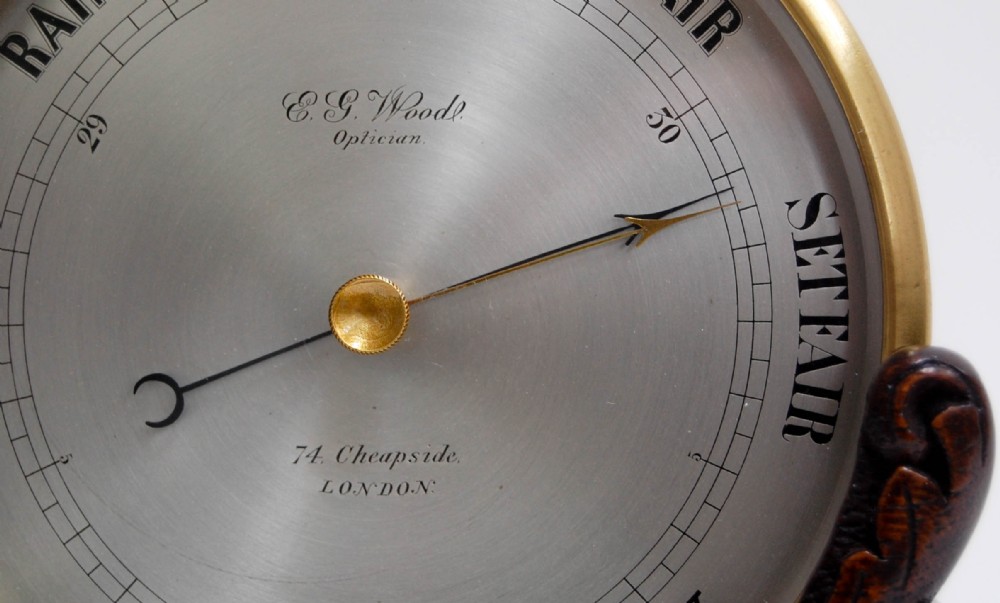
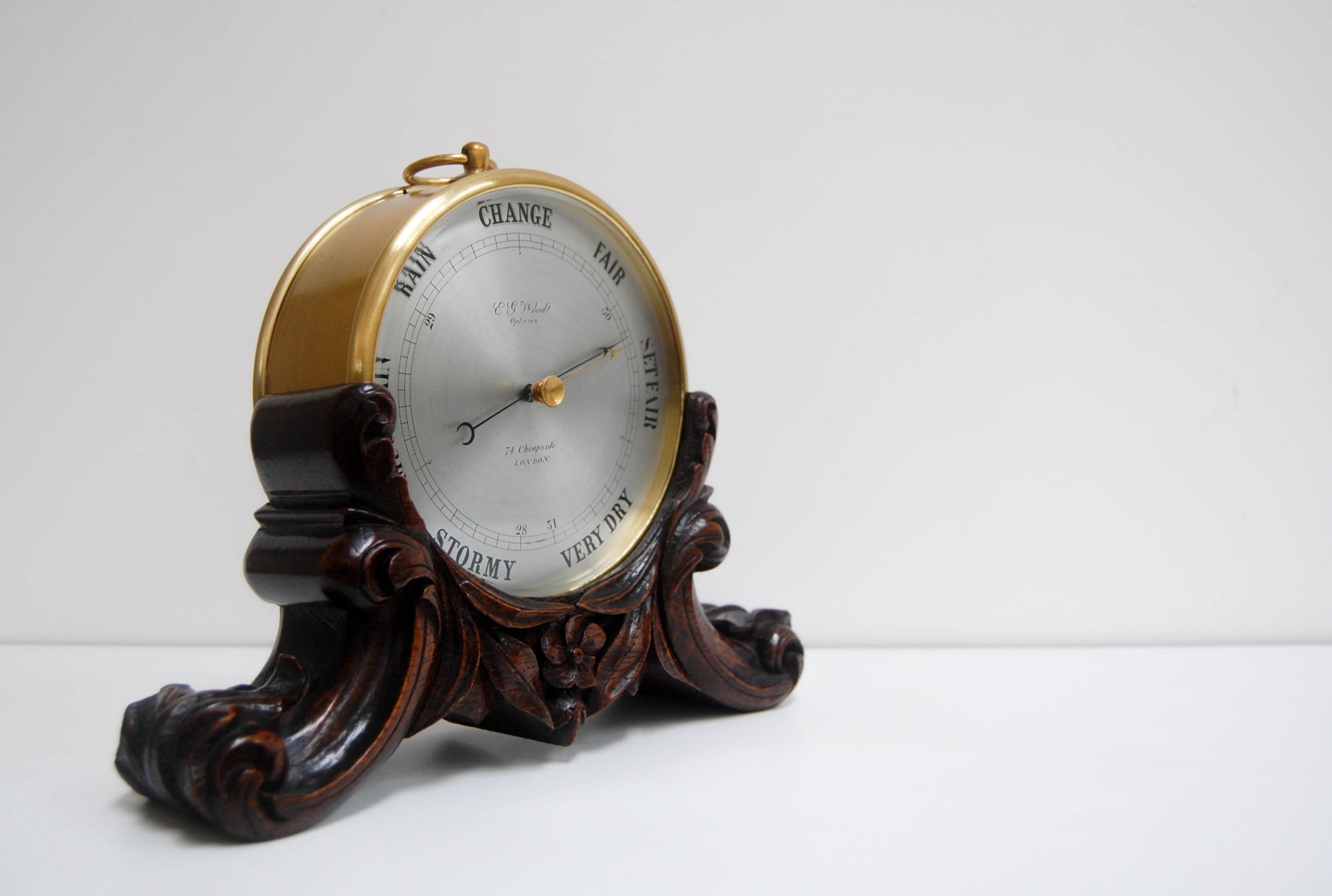
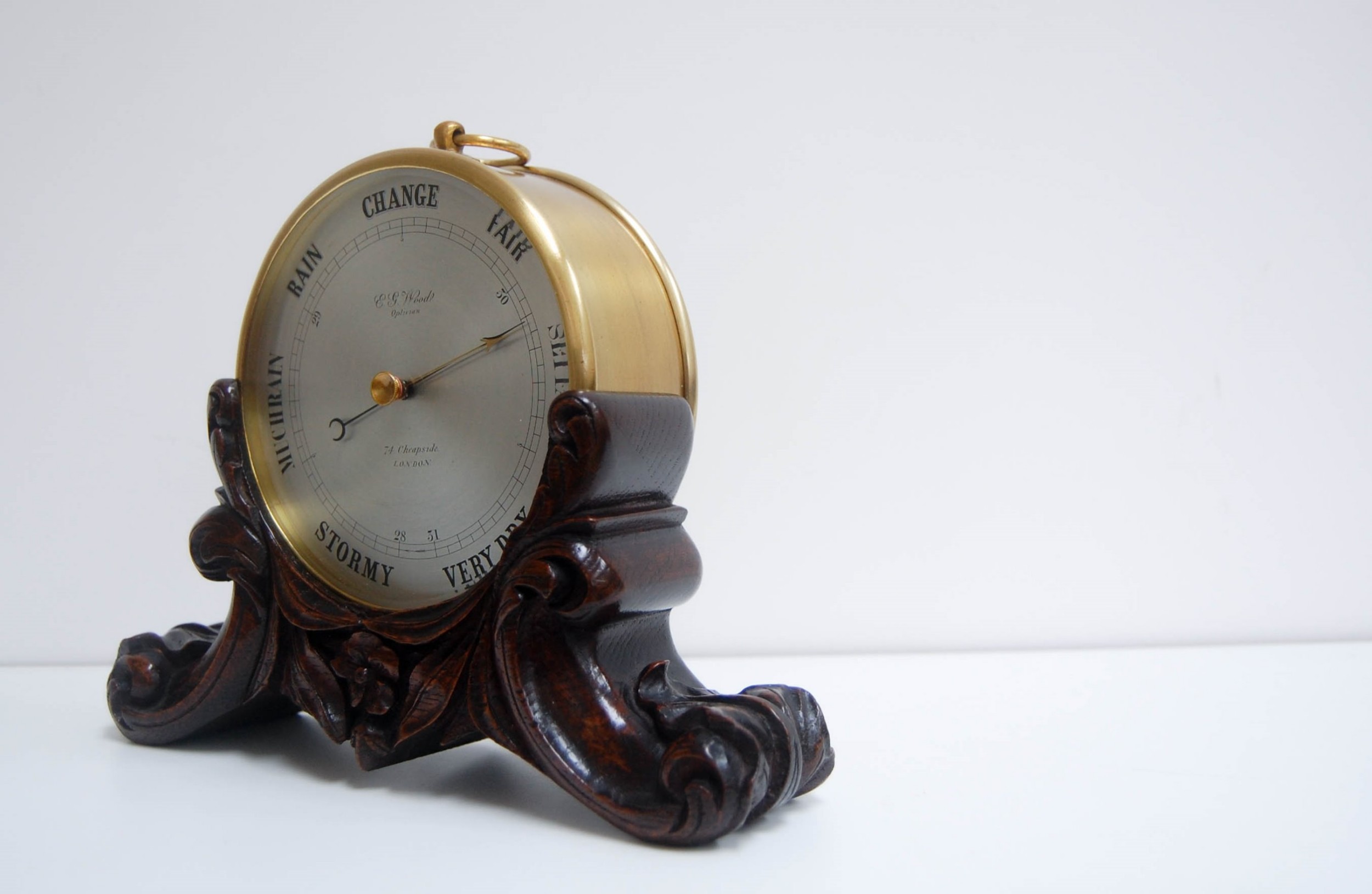
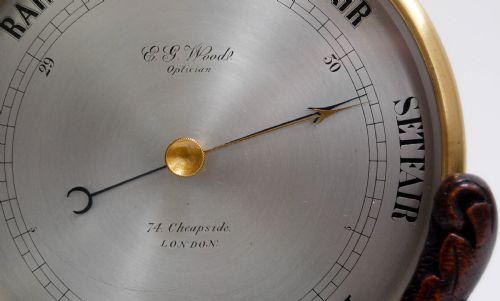
This rare example of a bourdon barometer has a five inch silvered dial showing 28 to 31 inches of barometric pressure and is engraved to the famous optician and scientific instrument maker “EG Wood” at “74 Cheapside, London”.
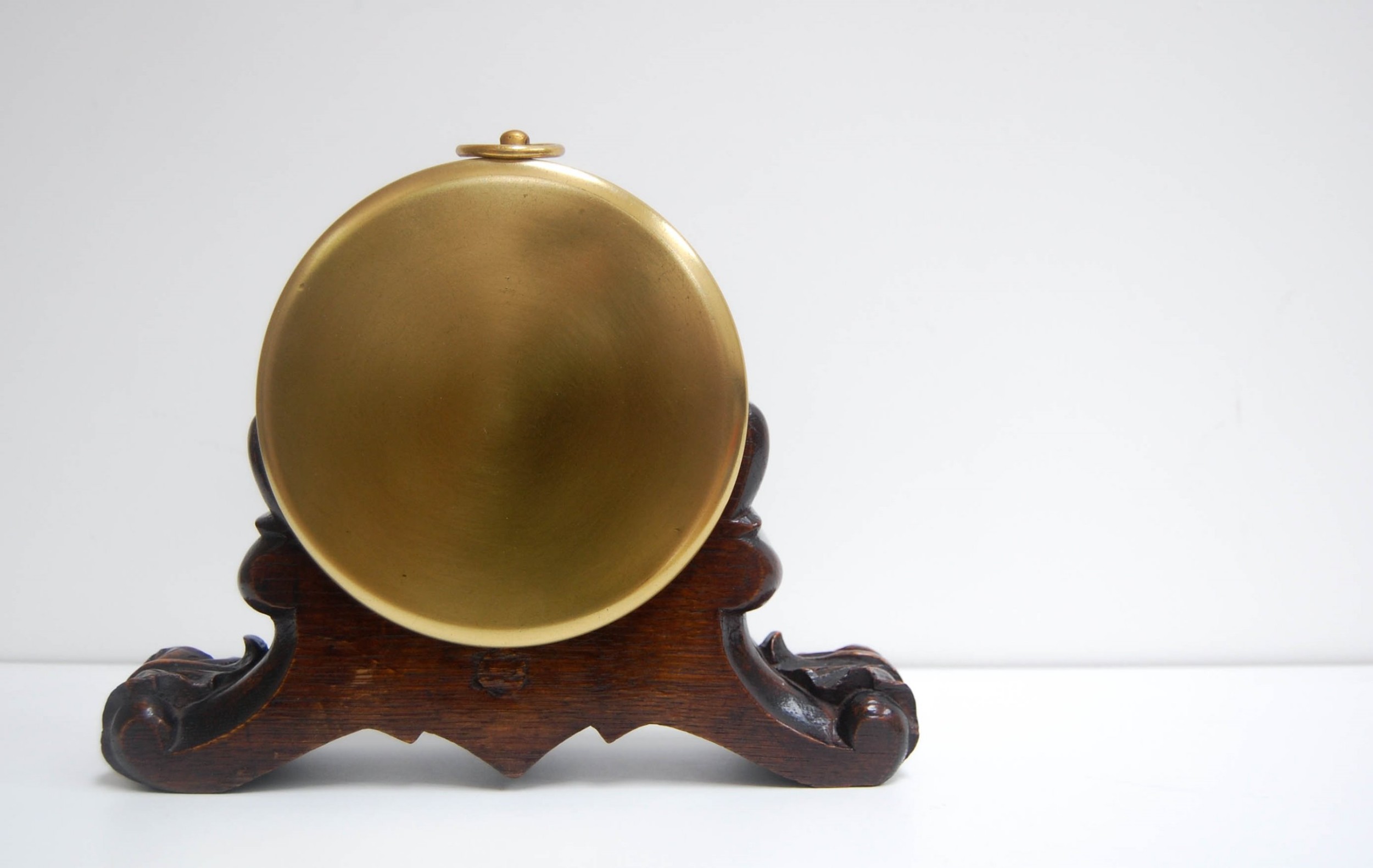
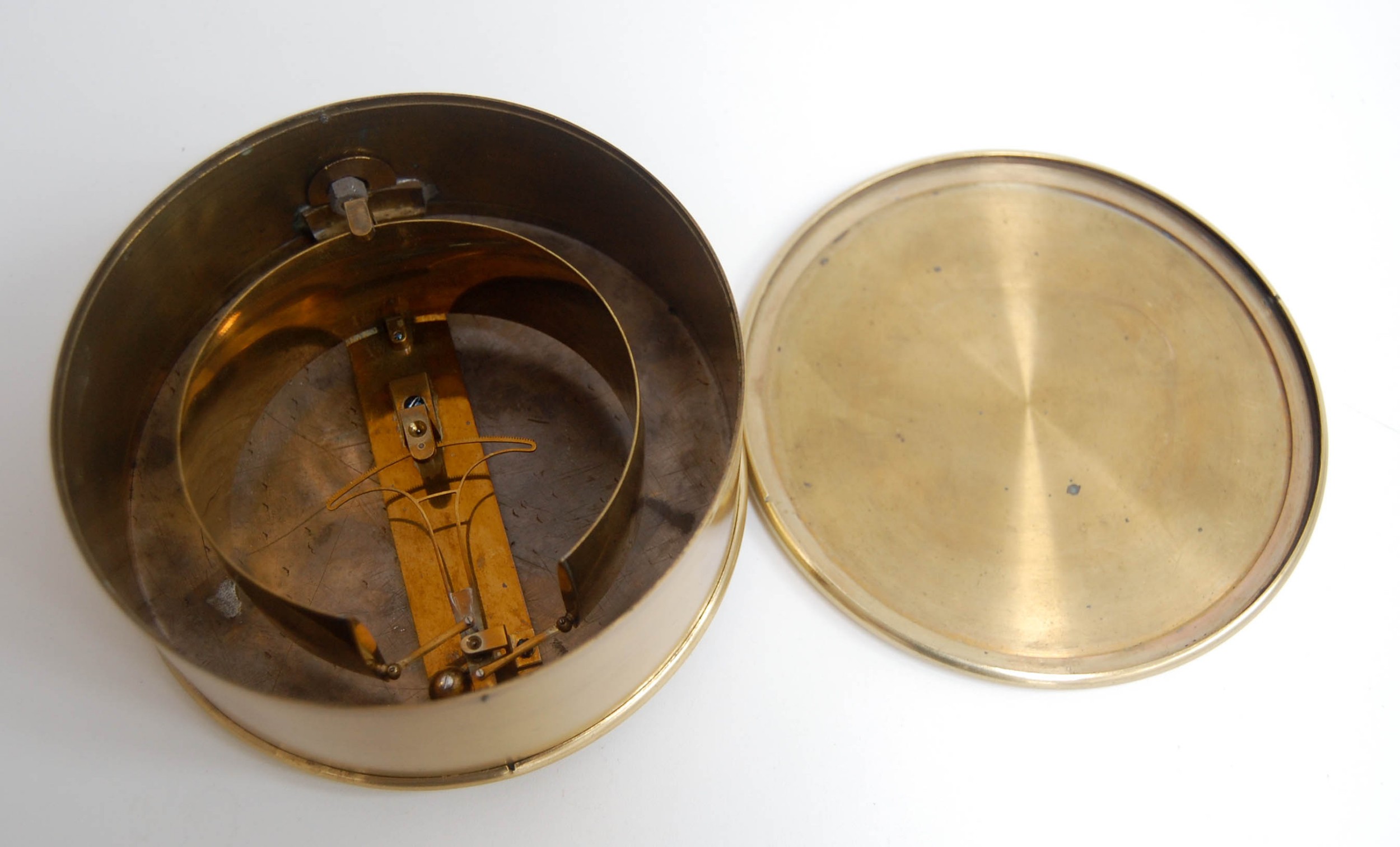
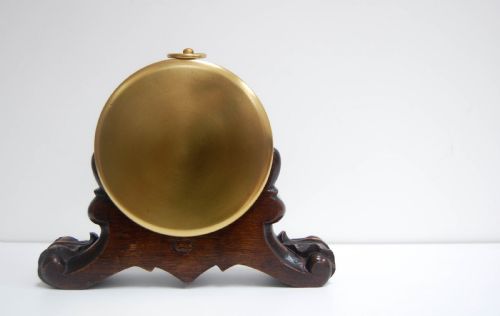
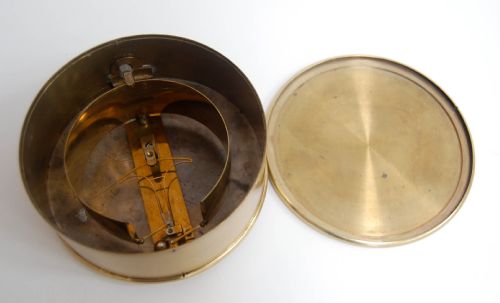
Unlike most aneroid barometers of the period, the brass drum case has a removable back with two slots which is secured by means of two pins affixed to the drum. To remove the back, the slots are aligned with the pins and the back lifts off.
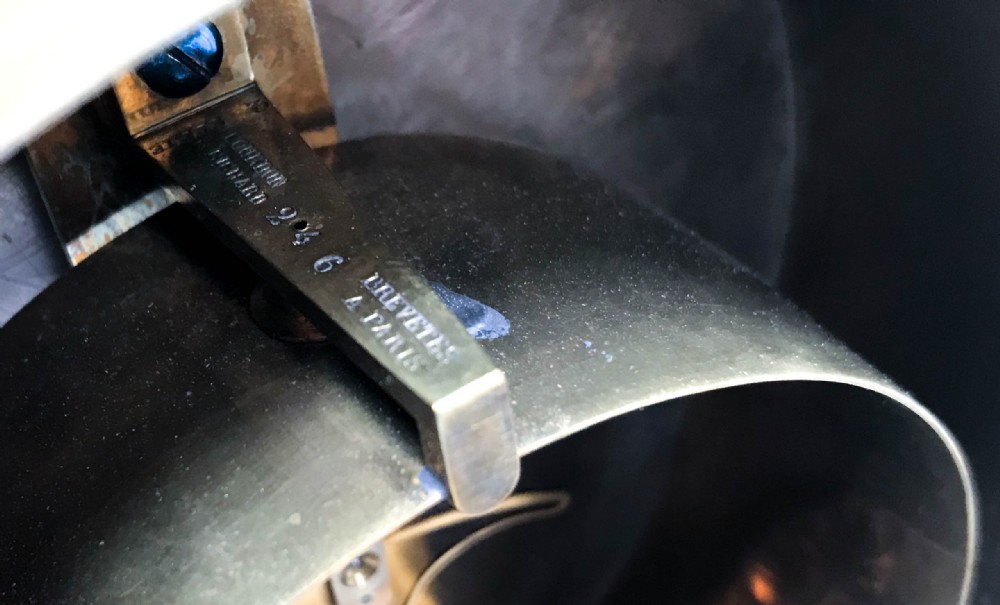
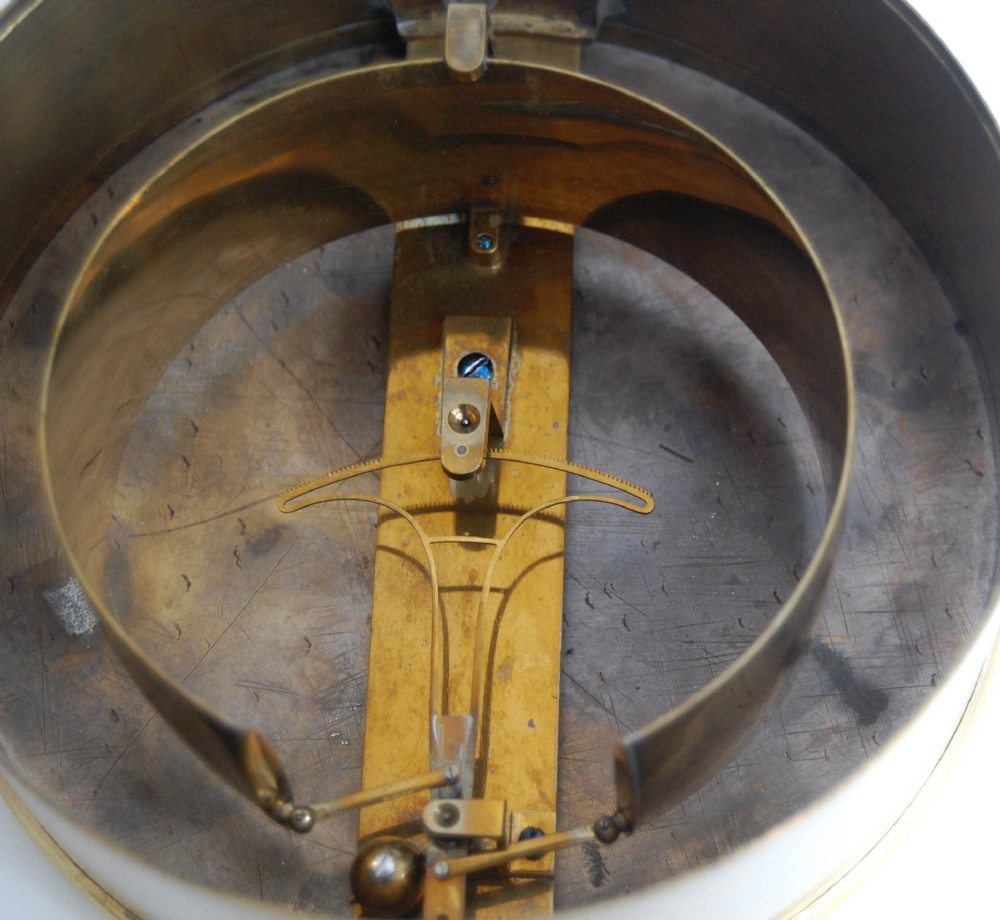
The movement has Bourdon’s tell-tale crescent shaped flattened vacuum tube with fan shaped rack operated by twin levers and is stamped to the top of the mechanism with the name, “Bourdon Richard, Brevete a Paris” It also contains the serial stamp, “Serie 2 No. 246”.
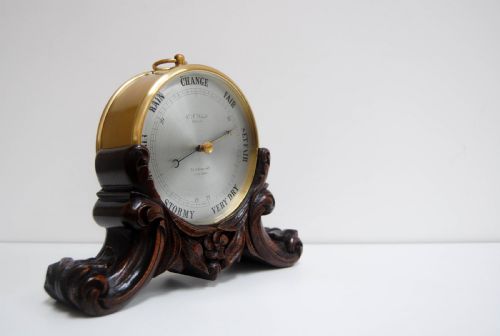
The Series 2 represented a slight improvement to Bourdon’s Series 1 movement and this example is an extremely early example of that change being numbered at only 246. It still maintains the early anchor shaped rack rather than the later “tear-dropped” version and non-adjustable lever mechanism.
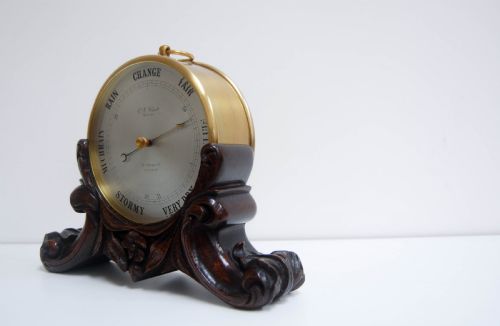
The barometer is mounted on its original and superbly carved oak base which is of somewhat smaller proportions than most bases of the period. It is devised of a floral central motif and outswept C scrolled legs which have developed a superb patina over the last one hundred and fifty years.
The French engineer Eugene Bourdon (1808-1884) was an early competitor to Lucien Vidie (inventor of the bellows movement) registering his crescent shaped mechanism design in 1849; it was originally produced under licence with Felix Richard (Bourdon & Richard), and continued to be produced by his son Jules Richard from 1876 and latterly by Richard Freres from 1882 (Jules & Max Richard) renowned for their developments to the barograph in France. Bourdon’s designs for both barometers and pressure gauges were met with approval at The Great Exhibition in 1851 winning him a council medal alongside his competitor Vidie. Bourdon’s movement however were slightly more fragile than Vidie’s and although they continued to be produced until the turn of the century, they were less well received. As early as 1863, Admiral Fitzroy, Chief of the Meteorological Department of the Board of Trade commented that, “they are not so well adapted for travellers, nor for the measurements of considerable elevations, as Vidie aneroids”, which in some part contributed to the lack of uptake in the UK. Bourdon continued to work on numerous other designs and eventually became more renowned for his work on pressure gauges. He was a prolific inventor and died in 1884 whilst undertaking experiments on the effects of wind on steam locomotives. A fall from a moving carriage resulted in a head injury from which he died a few days following the accident and was buried in Pere Lachaise cemetery, Paris. His barometer movements are today prized for their workmanship, beauty and for their rarity.
The retailer of this fine instrument was Edward George Wood (1811-1896) an optician and scientific instrument maker most notable for his involvement in the early photographic industry and for developments to the magic lantern. From 1833 to 1843, Wood seems to have worked alone or with his brothers, Henry & George Wood from premises in King Street and Shepperton Street in London. It is possible that Wood, initially supplied the trade with finished parts for constructing instruments as I can find no examples of his work with the early addresses. This assumption can be evidenced by recent research by Brian Stevenson through an 1844 newspaper advertisement announcing that Messrs Horne, Thornwaite & Wood have acceded to the business of Edward Palmer, “having been assistants and manufacturers to him since his first establishment in Newgate Street in 1
Jason Clarke Antiques has dated this piece to the 1860s.
You can view the stock and full dealer information on the Jason Clarke Antiques Profile Page
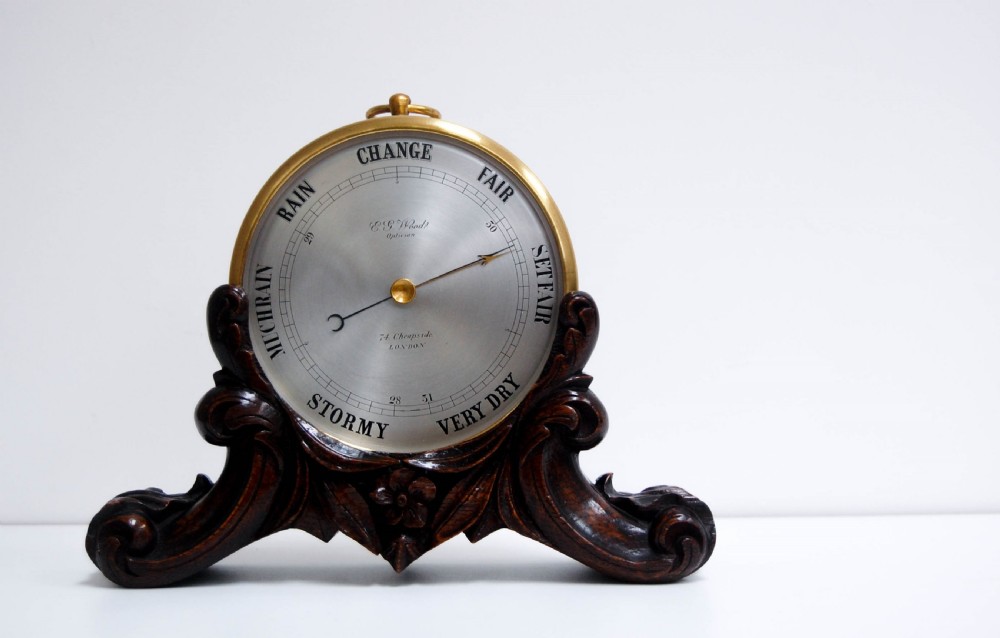
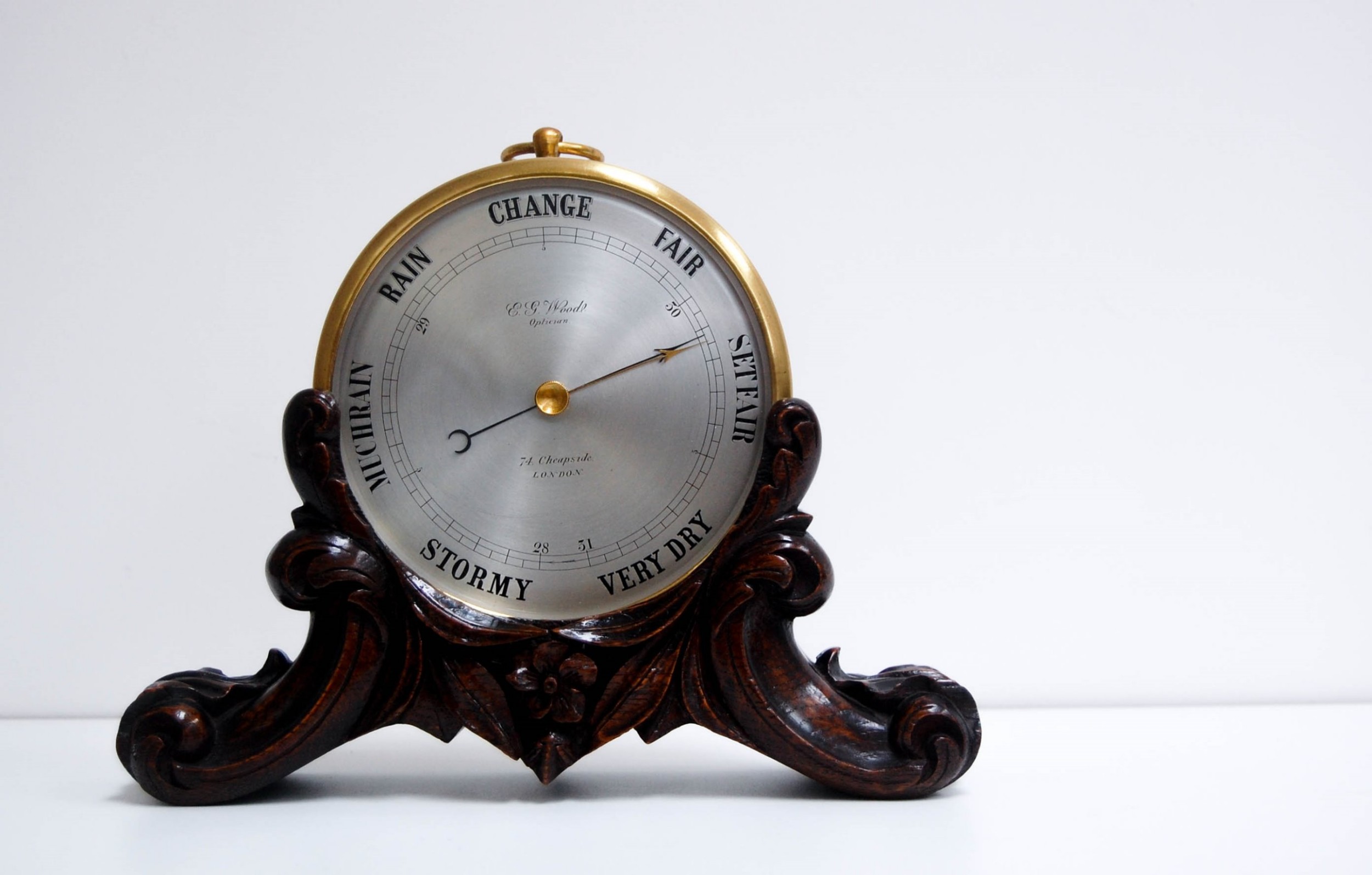
Bourdon & Richard Aneroid Barometer on Stand Retailed by Eg Wood, 74 Cheapside, London