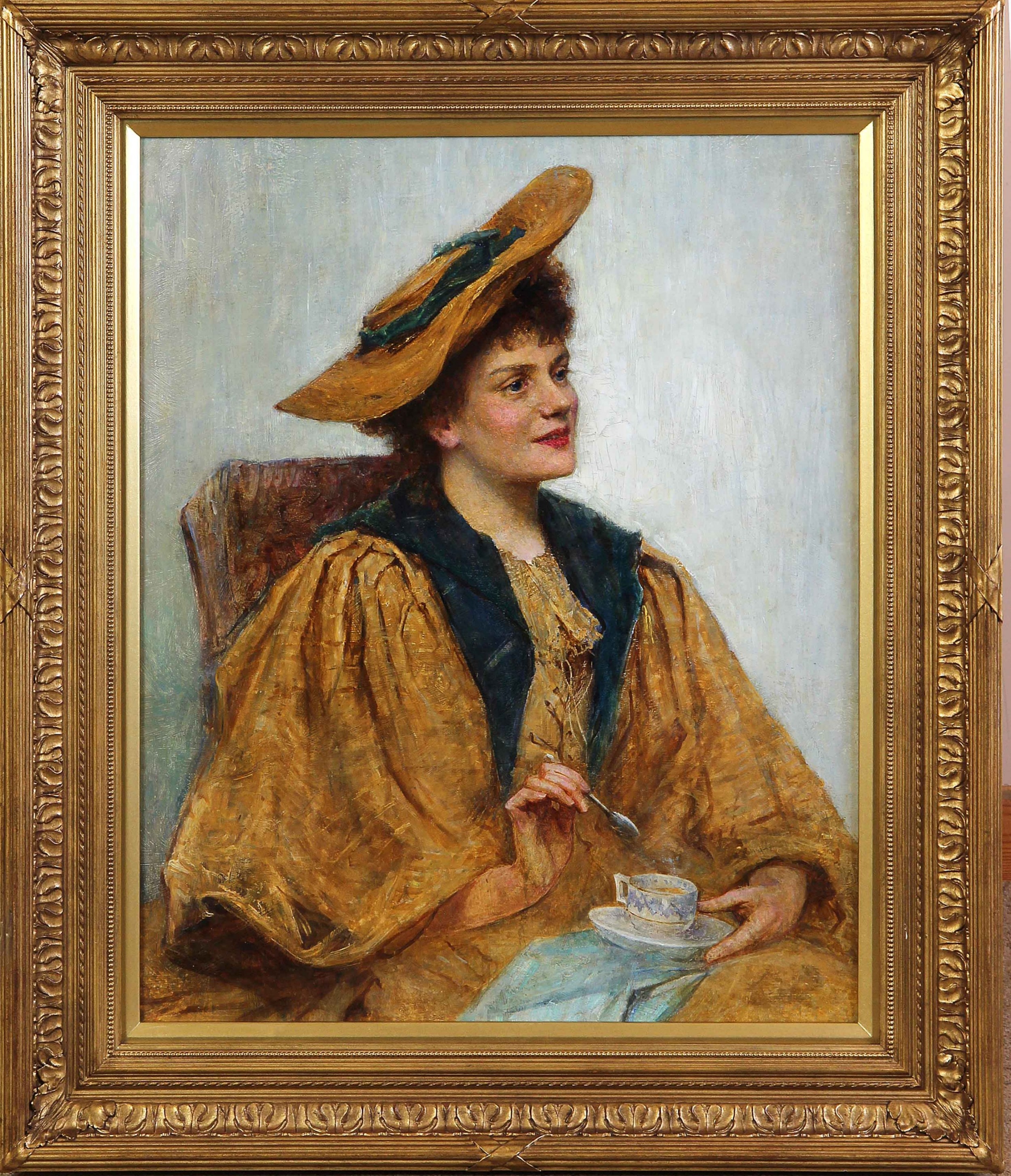
William Greenwood Fine Art has dated this piece to the 1900s.
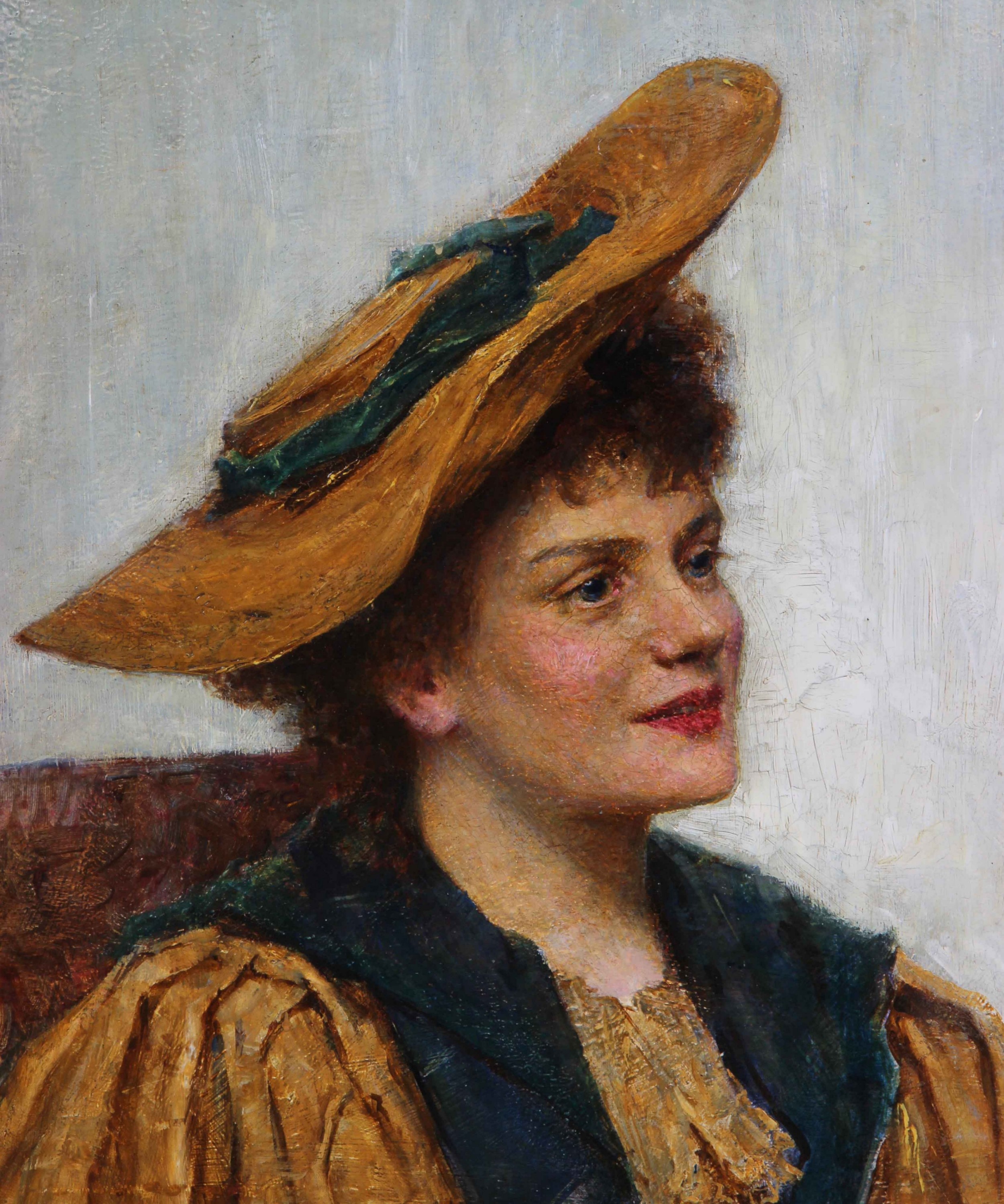
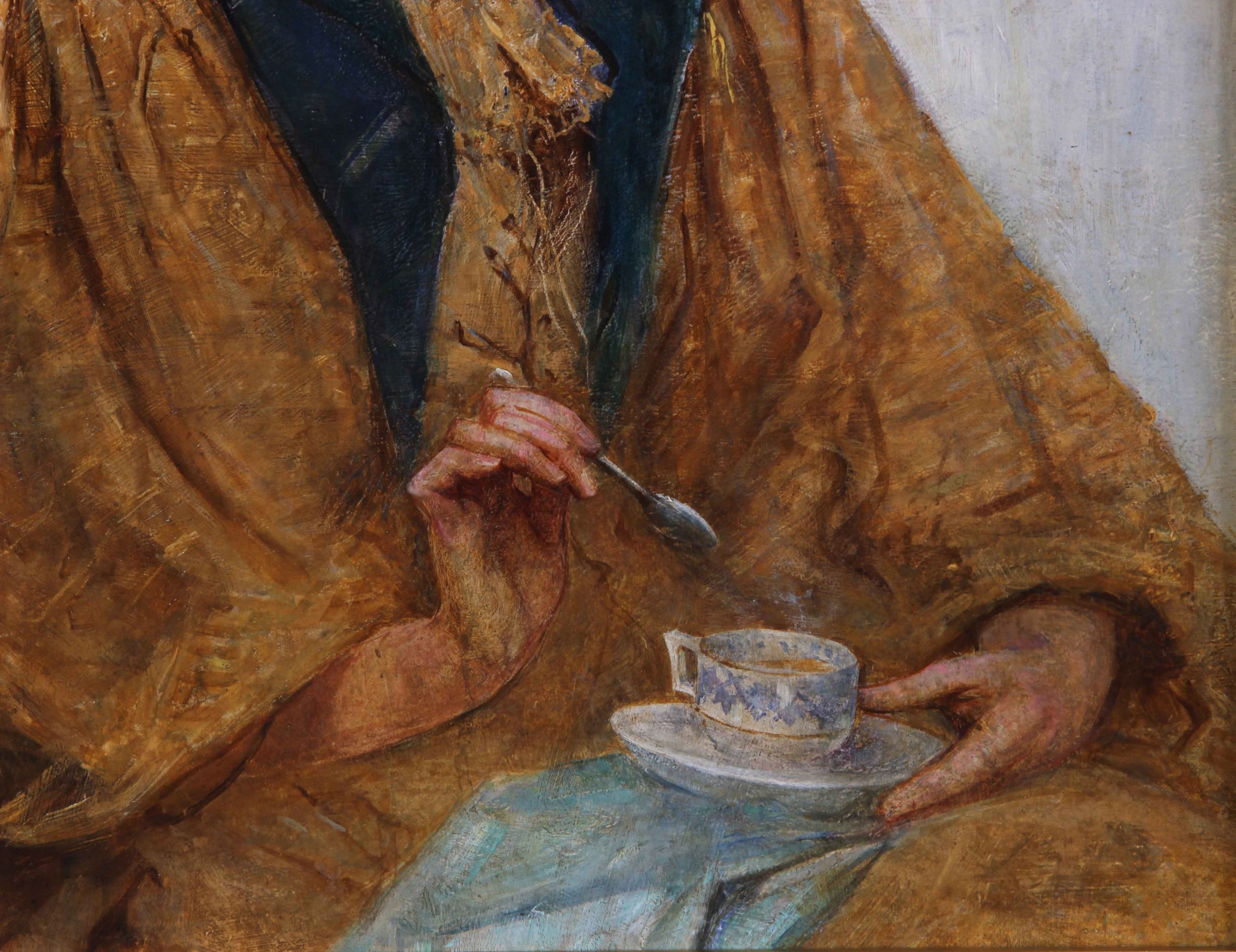
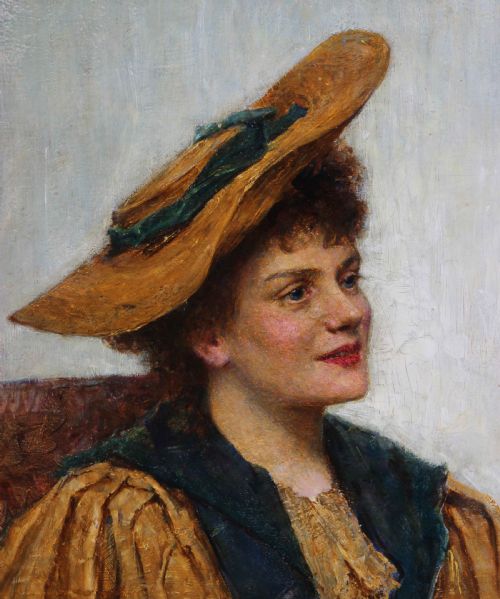
Title: "Elegant Lady taking Tea".
Unsigned. Circa 1900.
Size: 26 1/2"x 21 1/2". Framed size: 34 1/2"x 29 1/2".
Now cleaned and framed.
In very good ready to hang condition. Free UK delivery.
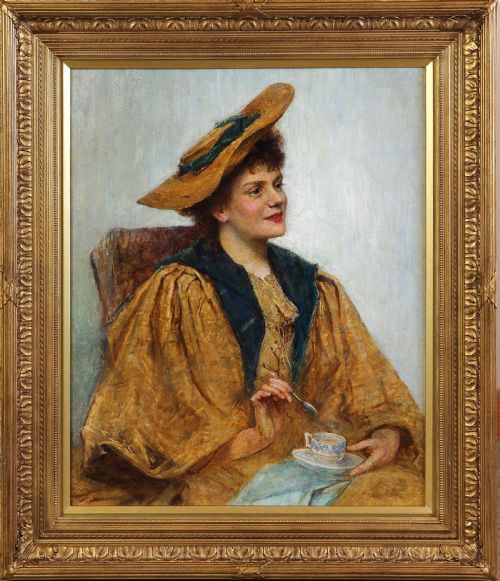
A beautiful and charming portrait.
Gwendolen "Gwen" Mary John was a Welsh artist who worked in France for most of her career. She is noted especially for her portraits of anonymous female sitters.
Following the mother’s premature death in 1884, the family moved to Tenby in Pembrokeshire, Wales.
Although she painted and drew from an early age, Gwen John's earliest surviving work dates from her nineteenth year. From 1895–98, she studied at the Slade School of Art, where her younger brother, Augustus, had begun his studies in 1894. During this period they shared living quarters, and further reduced their expenses by subsisting on a diet of nuts and fruit. Even as a student, Augustus' brilliant draughtsmanship and personal glamour made him a celebrity, and stood in contrast to Gwen's quieter gifts and reticent demeanour. Augustus greatly admired his sister's work, but urged her to take a "more athletic attitude to life" and cautioned her against what he saw as the "unbecoming and unhygienic negligence" of her mode of living. She refused his advice, and demonstrated throughout her life a marked disregard for her physical well-being. In 1898 she made her first visit to Paris with two friends from the Slade, and while there she studied under James McNeill Whistler at the Académie Carmen. She returned to London in 1899, and spent the next four years in austere circumstances. When she exhibited her work for the first time in 1900, at the New English Art Club (NEAC), her address was a derelict building where she was living illegally. In the autumn of 1903, she travelled to France with her friend Dorelia McNeill (who would later become Augustus John's second wife). Upon landing in Bordeaux, they set off on a walking tour with their art equipment in hand, intending to reach Rome. Sleeping in fields and living on money earned along the way by selling portrait sketches, they made it as far as Toulouse. In 1904 the two went to Paris, where John found work as an artist's model; in that same year, she began modelling for the sculptor Auguste Rodin, and became his lover. Her devotion to the much older Rodin, who was the most famous artist of his time, continued unabated for the next ten years, as documented in her thousands of fervent letters to him. Although quiet in manner, Gwen John was strong-willed and passionate, given to fierce attachments to both men and women that were sometimes disturbing to them. Rodin, despite his genuine feeling for her, eventually resorted to the use of concièrges and secretaries to keep her at a distance.She stopped exhibiting at the NEAC in 1911, but gained an important patron in John Quinn, an American art collector who, from 1910 until his death in 1924, purchased the majority of the works that Gwen John sold. As an obligation to the Dominican Sisters of Charity at Meudon, she began a series of painted portraits of Mère Marie Poussepin (1653–1744), who founded their order. These paintings, based on a prayer card, established a format—the female figure in three-quarter length seated pose—which became characteristic of her mature style. She painted numerous variants on such subjects as Young Woman in a Spotted Blue Dress, Girl Holding a Cat, and The Convalescent. The identities of many of her models are unknown, but one of them, Jeanne Foster, wrote of John: "She takes down my hair and does it like her own ... she has me sit as she does, and I feel the absorption as I sit for her.
William Greenwood Fine Art has dated this piece to the 1900s.
You can view the stock and full dealer information on the William Greenwood Fine Art Profile Page
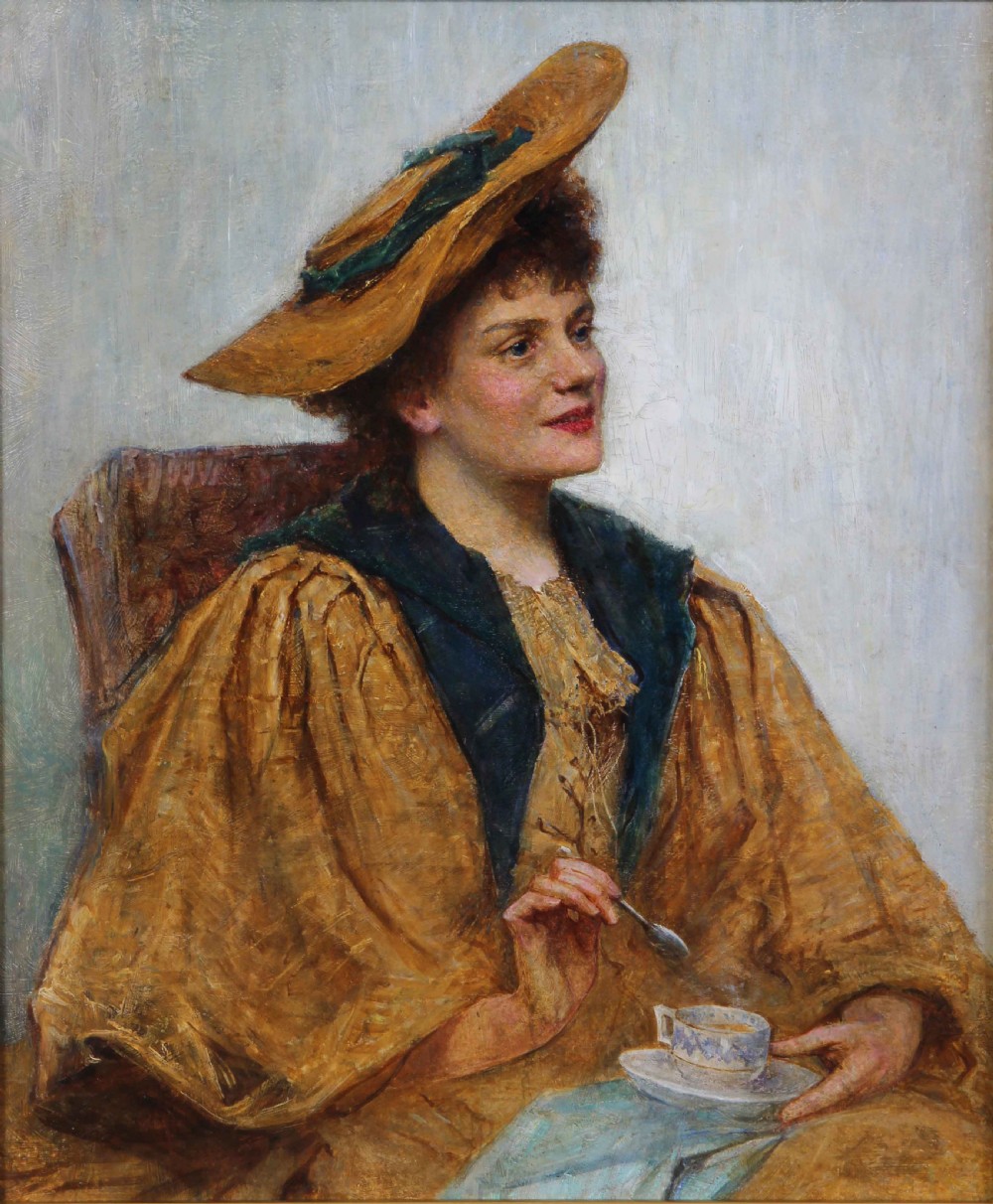
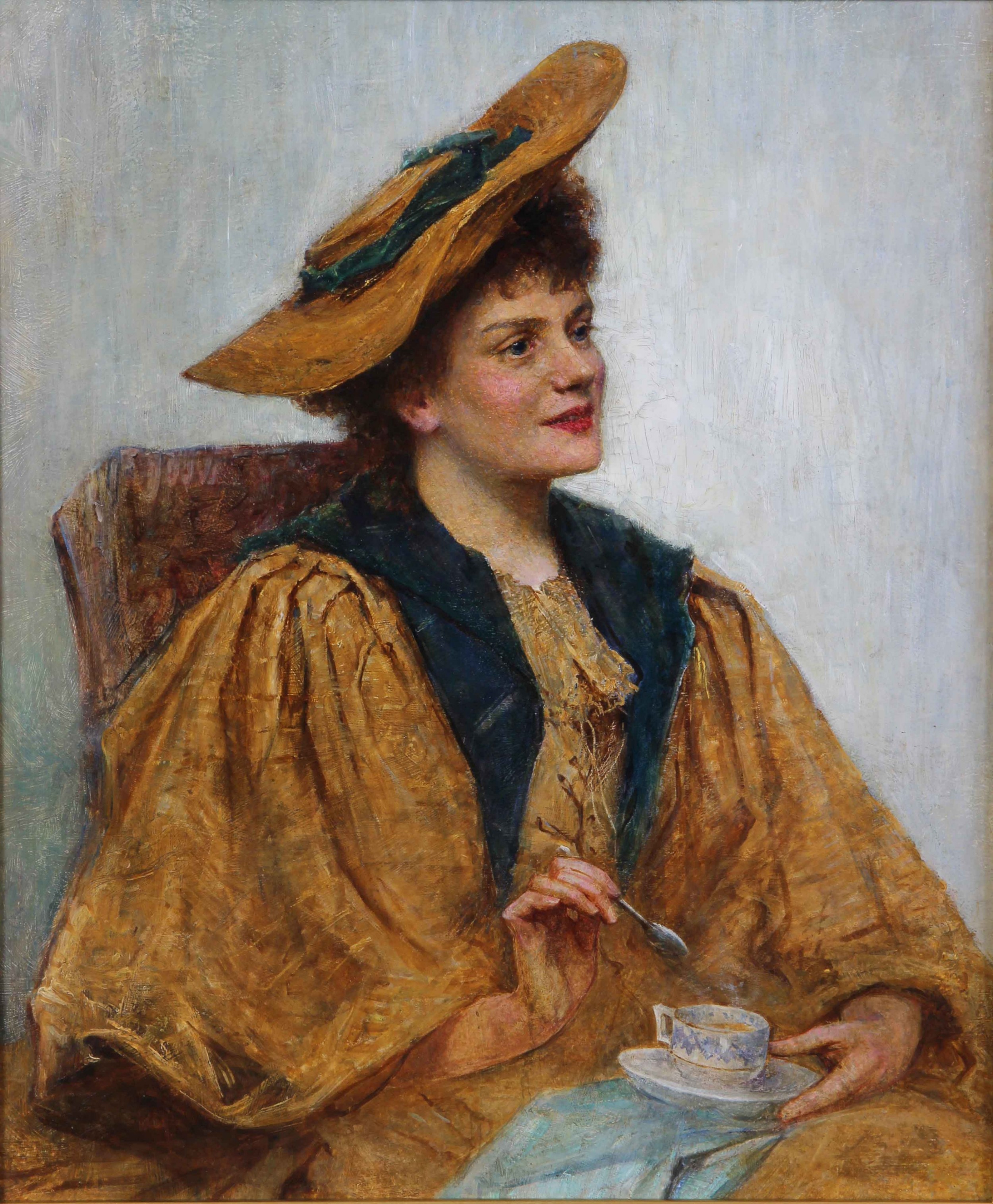
Gwen Mary John. "Taking Tea". Beautiful Oil Portrait.