

It was listed by Artware Fineart. Sold pieces stay on Sellingantiques as a record of what has passed through, and the next one is rarely far away.
Artware Fineart has dated this piece to the 18th Century.
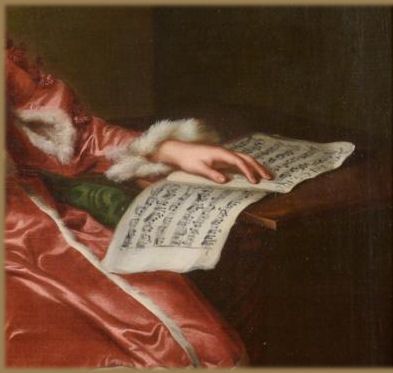
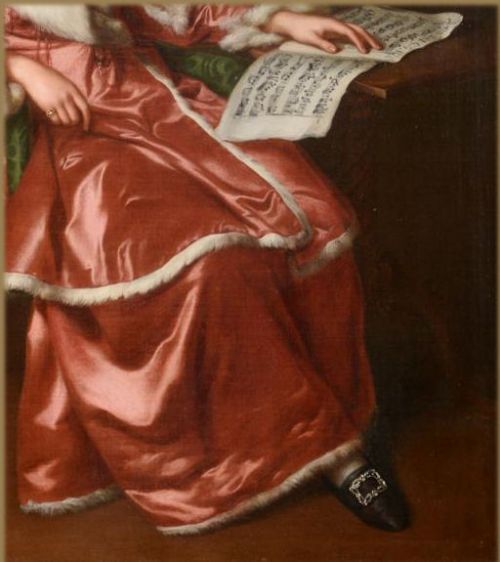
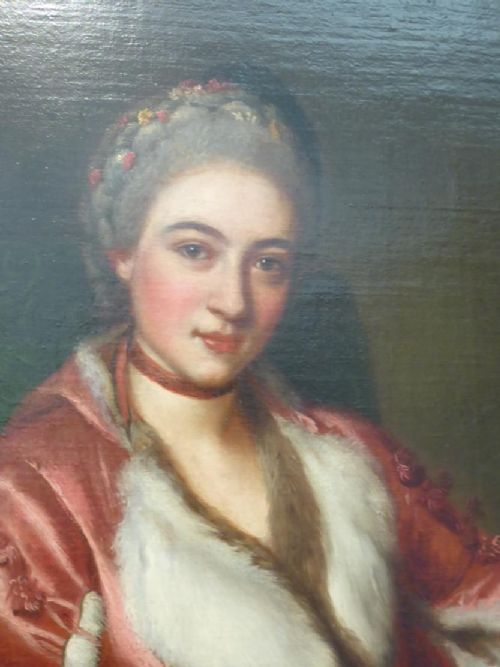
HSH Yekaterina Smaragda Kantemir , Later Golitsyna
oil on canvas
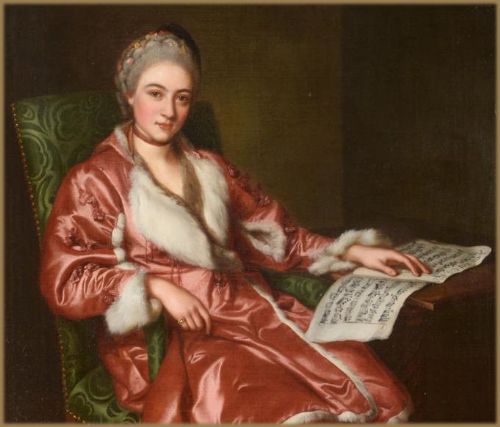
72 x 54 cm. (28 x 21in.)
Smaragda (1720–1761), reckoned one of the great beauties of her time, she was the wife of Prince Dmitriy Mikhailovich Golitsyn, marrying him on the 6 November 1751 in St Petersberg, she was also a friend of the empress Elizabeth.
Smaragda was born in St Petersberg , Russia in 1720 and died in Versailles, Yvelines, Île-de-France, France. She was the youngest daughter and forth child of Dimitrie or Demetrius Cantemir 1673–1723 also known by other spellings, who was a Moldavian soldier, statesman, and man of letters. He was twice voivode of Moldavia (March–April 1693 and 1710–1711). During his second term, he allied his state with Russia in their war against Moldavia's Ottoman overlords; Russia's defeat forced Cantemir's family into exile and the replacement of the native voivodes by the Greek phanariots. Cantemir was also a prolific writer, variously a philosopher, historian, composer, musicologist, linguist, ethnographer, and geographer. His son Antioch, Russia's ambassador to Great Britain and France and a friend of Montesquieu and Voltaire, would go on to be known as "the father of Russian poetry". Cantemir was married twice: to Princess Kassandra Cantacuzene (1682–1713), daughter of Prince ?erban Cantacuzino and supposed descendant of the Byzantine Kantakouzenoi, in 1699, and to Princess Anastasia Trubetskaya (1700–1755) in 1717.
Cantemir's children were rather prominent in Russian history. His elder daughter Maria Cantemir (1700–1754) so attracted Peter the Great that he allegedly planned to divorce his wife Catherine to be with her. Upon Catherine's own ascension to the throne, however, Maria was forced to enter a convent. Cantemir's son Antioch (1708–1744) was the Russian ambassador at London and Paris, a friend of Voltaire and Montesquieu, and so influential a poet, satirist, and essayist as to be considered "the father of Russian poetry". Another son Constantin (1703–1747) was implicated in the Golitsyn conspiracy against the empress Anna and was exiled to Siberia.
Smaragda's husband Prince Dmitry Mikhailovich Golitsyn who was born 15 May 1721 in Turku, and died 19 September 1793 in Vienna he was a Russian diplomat from the noble Golitsyn family. From 1761 to 1792 he was Russian ambassador to Austria and France during the reign of Catherine the Great. Primarily remembered for the splendid Golitsyn Hospital he opened in Moscow, he should also be noted as a great friend and patron of Mozart. He was also a well known Eighteenth-century Russian Drawings Collector.
Smaragda was painted by a number of artists including Louis-Michel van Loo
Artist Biography
Dance, Nathaniel [afterwards Sir Nathaniel Holland, baronet] (1735–1811), painter and politician, was born on 18 May 1735 in Chiswell Street, London, the third son of George Dance the elder (c. 1694–1768) and his wife, Elizabeth Gould (d. 1762). His father was clerk of works for the City of London, and his brother George Dance the younger (1741–1825) was also an architect; James Dance (1721–1774), the eldest son, was an actor and writer, and another brother, William Dance (fl. 1780), was a miniature painter. Nathaniel Dance was educated at Merchant Taylors' School, London (his father was a freeman of that company), from 1743 until 1748. From about 1752 he trained as an artist for approximately two years under the painter Francis Hayman, whom he evidently admired; it was during this period that he came to know the young Thomas Gainsborough. He was in Rome from May 1754, but his activities there remain obscure until summer 1758; however, it is possible that he undertook some further training during this time.
Artware Fineart has dated this piece to the 18th Century.
You can view the stock and full dealer information on the Artware Fineart Profile Page
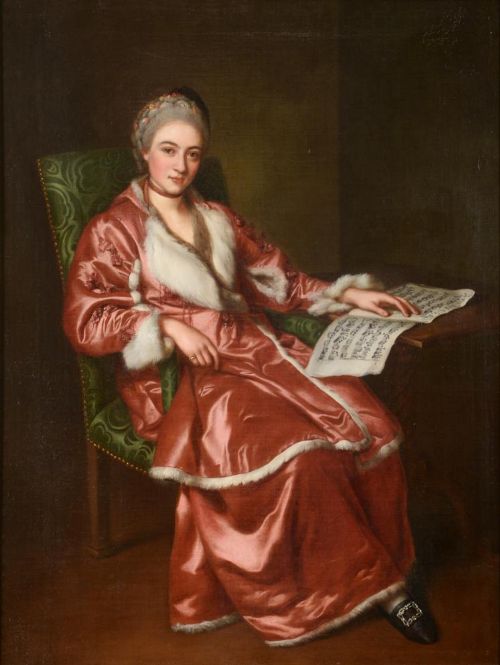
Sir Nathaniel Dance-holland, 1735 - 1811 Portrait of Her Serene Highness Yekaterina Smaragda Kantemir , Later Ekaterina Dmitrievna Golitsyna 1720-1761 H.s.h. Yekaterina Smaragda Kantemir , Later Golitsyna
