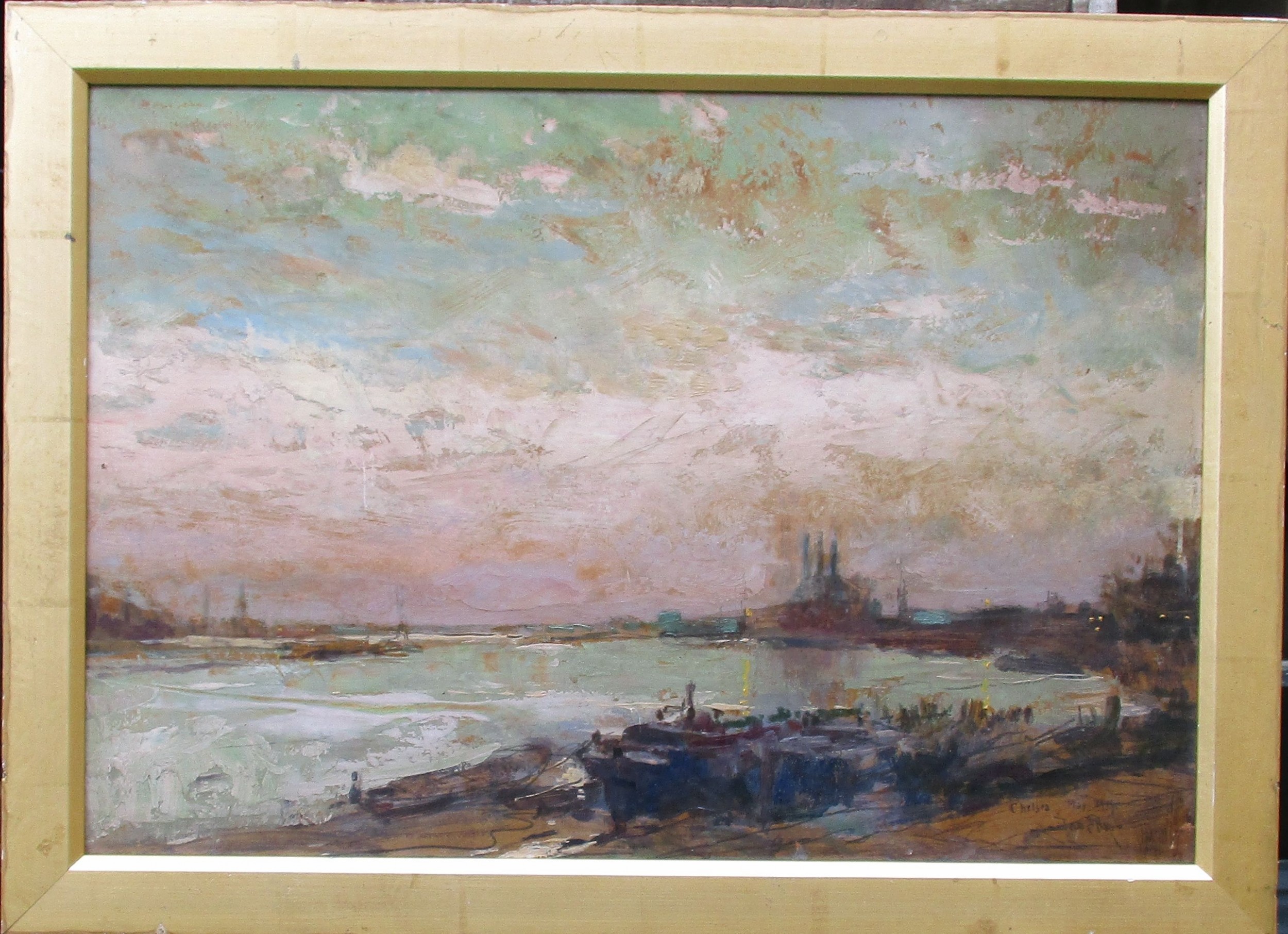
Skippings Fine Arts has dated this piece to the 1910s.

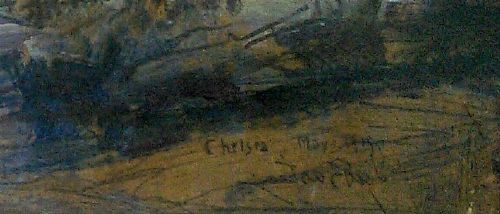
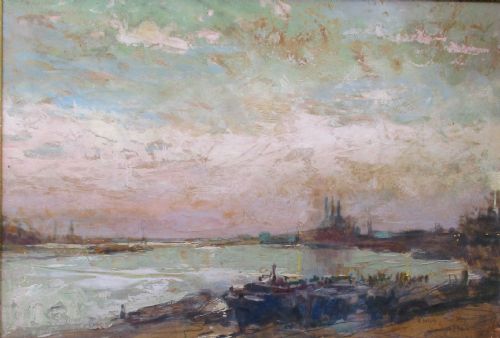
The oil on (very thin) board presented here is signed at the lower right in mirror image/reverse writing, perhaps a sign that it was destined for publication. The size of the painting is 38 x 55 cm, measured without the frame.
Bastien attended the Académie Royale des Beaux-Arts in Ghent, where he studied with Jean Delvin. He then enrolled in the Académie Royale des Beaux-Arts in Brussels.] He won the Prix Godecharle there in 1897. He
traveled to Paris, where he enrolled in the École des Beaux-Arts . He was there when hostilities broke out in what would become the First World War.
After serving in the 'Garde Civique' like many other Belgians, Bastien fled to Great Britain after the fall of Antwerp in October 1914.
Despite his age (43) Bastien had volunteered for the Belgian Army. He was eventually transferred to the 'Section Artistique' in Nieuwpoort along with many of his pre-war artist friends and acquaintances. From 1915, he made many drawings and sketches of the situation on and behind the Belgian lines on the Yser river. The British war-time magazine 'the Illustrated War News', among others, regularly published
his work, quite often in distinctive and semi-panoramic, multi-color two-page spreads. In 1917, on personal request by Lord Beaverbrook who owned several of Bastien's pre-war paintings, he was seconded to the
Canadian Army until September 1918.
In July/August 1918, Lieutenant Bastien was attached as a war artist to the Canadian 22nd Battalion. Some of the work he created in this period is part of the Beaverbrook Collection of War Art at theCanadian War Museum in Ottawa.
Skippings Fine Arts has dated this piece to the 1910s.
Modern french & continental pictures selected by a former french auction house expert
You can view the stock and full dealer information on the Skippings Fine Arts Profile Page
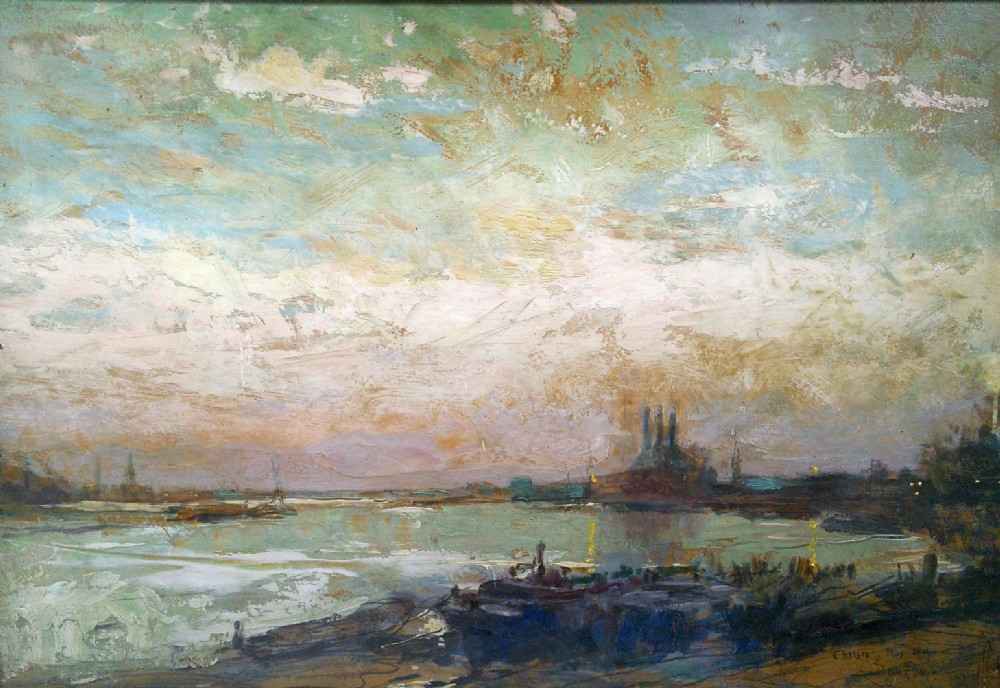
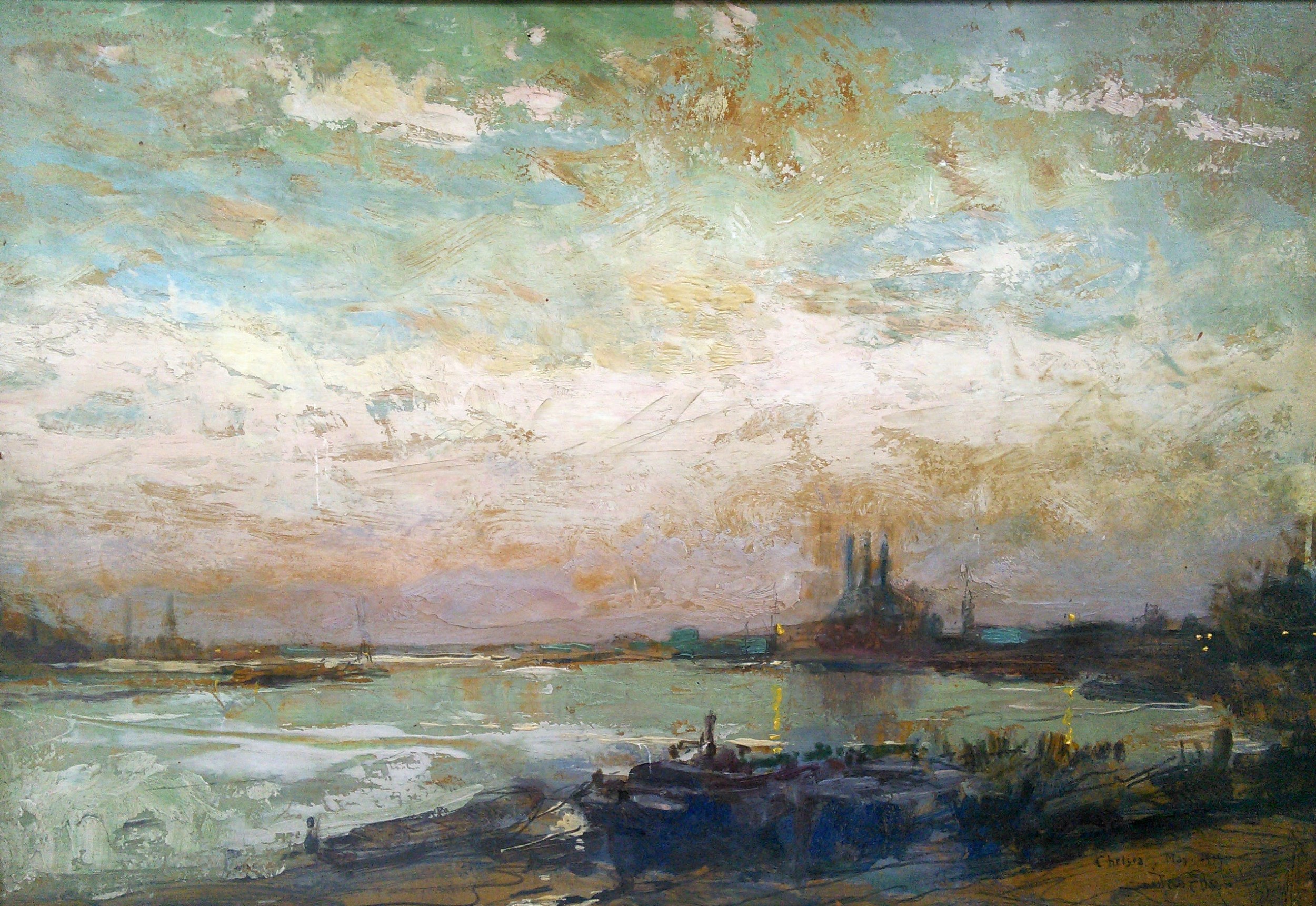
Antique Chelsea Harbour London Oil Painting 1915 Alfred Bastien (1873-1955) Belgian War Artist Ww1