37,006  PAGES BROWSED TODAY PAGES TODAY 90  ANTIQUES UPLOADED TODAY NEW ARRIVALS
ID #SA521025
SOLD
Email
Save
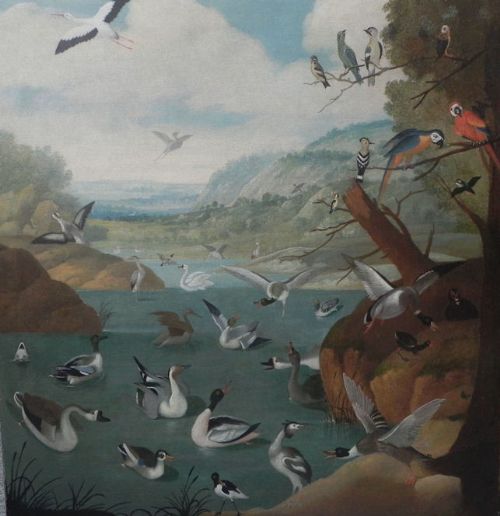
Carl Wilhelm De Hamilton , 1668 - 1754 The Parliament of the Birds
Artware Fineart
sold SA521025
Sorry, but this item has been sold.

Artware Fineart

Sellingantiques Verified Since Sep 2008
View Dealers Stock Page
Id #SA521025
PDF SHARE
SAVE

Carl Wilhelm De Hamilton , 1668 - 1754 The Parliament of the Birds

17th century
Description

Carl Wilhelm de Hamilton , 1668 - 1754

The Parliament of the Birds

oil on canvas

99.06 x 101.60 cm. (39 x 40 in.)

The "Parlement of Foules" (also known as the "Parliament of Fowls", "Parlement of Briddes", "Assembly of Fowls", "Assemble of Foules", or "The Parliament of Birds") is a poem by Geoffrey Chaucer (1343?-1400) made up of approximately 700 lines. The poem is in the form of a dream vision in rhyme royal stanza and is interesting in that it is the first reference to the idea that St. Valentine's Day was a special day for lovers. The poem begins with the narrator reading Cicero’s Somnium Scipionis in the hope of learning some “certeyn thing.” When he falls asleep Scipio Africanus appears and guides him up through the celestial spheres to Venus’s temple. The narrator then passes through Venus’s dark temple with its friezes of doomed lovers and out into the bright sunlight where Nature is convening a parliament at which the birds all choose their mates. There three tercel eagles make their case for the hand of a formel eagle until the birds of the lower estates begin to protest and launch into a comic parliamentary debate, which Nature herself finally ends. None of the tercels wins the formel, for Nature allows her to put off her decision for another year (indeed, female birds of prey often become sexually mature at one year of age, males only at two years). Nature allows the other birds, however, to pair off. The dream ends with a song welcoming the new summer. The dreamer awakes, still unsatisfied, and returns to his books, hoping still to learn the thing for which he seeks. William Caxton's early print of 1478 is also considered authoritative, for it reproduces the text of a manuscript now considered lost. The stemma and genealogy of these authorities was studied by John Koch in 1881, and later established by Eleanor Prescott Hammond in 1902, dividing them into two main groups, A and B (last five MSS), although the stemma is by no means definitive. Concerning the author of the poem, there is no doubt that it was written by Geoffrey Chaucer, for so he tells us twice in his works.The first time is in the Introduction (Prologue) to The Legend of Good Women: "He made the book that hight the Hous of Fame, / And eke the Deeth of Blaunche the Duchesse, / And the Parlement of Foules, as I gesse" (Larry D. Benson, The Riverside Chaucer, 1987: 600).The second allusion is found in the Retractation to The Canterbury Tales: "the book of the Duchesse; the book of Seint Valentynes day of the Parlement of Briddes" (Benson 1987: 328).A more difficult question is that of date. Early criticism of the poem, as far as the first decades of the 20th century, relied mainly on the different interpretations of the text — comparing the fight for the female eagle with royal betrothals of the age — to produce a date of composition for the poem. Fred N. Robinson (Complete Works of Geoffrey Chaucer, 1957: 791) mentioned that "if the theories of allegory in the Parliament are rejected, the principal evidence usually relied on for dating the poem about 1381-2 disappears." Later criticism, however, is much more objective on the reasons why the poem has been dated in 1382, the main reason given in lines 117-118 of the poem itself: "As wisly as I sawe the [Venus], northe northe west / When I begane my sweuene for to write" for according to John M. Manly (1913: 279-90) Venus is never strictly in the position "north-north-west,"but it can be easily thought to be so when it reaches its extreme northern point". Manly adds that this condition was met in May 1374, 1382, and 1390. The third date is easily discarded since we know that the poem is already mentioned as composed in the Prologue to The Legend of Good Women. Derek Brewer (1960: 104) then argues that the date of 1382, as opposed to that of 1374, is much more likely for the composition of the p

Physical Dimensions
Height
99cm (38.98")
Width
101cm (39.76")
Depth
2cm (0.79")
Declaration

Artware Fineart has dated this piece to the Before 1700 period.

Reference Numbers
Sellingantiques Reference
SA521025
Dealers Internal Reference
3491
Description
Carl Wilhelm de Hamilton , 1668 - 1754

The Parliament of the Birds

oil on canvas

99.06 x 101.60 cm. (39 x 40 in.)

The "Parlement of Foules" (also known as the "Parliament of Fowls", "Parlement of Briddes", "Assembly of Fowls", "Assemble of Foules", or "The Parliament of Birds") is a poem by Geoffrey Chaucer (1343?-1400) made up of approximately 700 lines.

The poem is in the form of a dream vision in rhyme royal stanza and is interesting in that it is the first reference to the idea that St.
Artware Fineart

Valentine's Day was a special day for lovers. The poem begins with the narrator reading Cicero’s Somnium Scipionis in the hope of learning some “certeyn thing.” When he falls asleep Scipio Africanus appears and guides him up through the celestial spheres to Venus’s temple. The narrator then passes through Venus’s dark temple with its friezes of doomed lovers and out into the bright sunlight where Nature is convening a parliament at which the birds all choose their mates. There three tercel eagles make their case for the hand of a formel eagle until the birds of the lower estates begin to protest and launch into a comic parliamentary debate, which Nature herself finally ends. None of the tercels wins the formel, for Nature allows her to put off her decision for another year (indeed, female birds of prey often become sexually mature at one year of age, males only at two years). Nature allows the other birds, however, to pair off. The dream ends with a song welcoming the new summer. The dreamer awakes, still unsatisfied, and returns to his books, hoping still to learn the thing for which he seeks. William Caxton's early print of 1478 is also considered authoritative, for it reproduces the text of a manuscript now considered lost. The stemma and genealogy of these authorities was studied by John Koch in 1881, and later established by Eleanor Prescott Hammond in 1902, dividing them into two main groups, A and B (last five MSS), although the stemma is by no means definitive. Concerning the author of the poem, there is no doubt that it was written by Geoffrey Chaucer, for so he tells us twice in his works.The first time is in the Introduction (Prologue) to The Legend of Good Women: "He made the book that hight the Hous of Fame, / And eke the Deeth of Blaunche the Duchesse, / And the Parlement of Foules, as I gesse" (Larry D. Benson, The Riverside Chaucer, 1987: 600).The second allusion is found in the Retractation to The Canterbury Tales: "the book of the Duchesse; the book of Seint Valentynes day of the Parlement of Briddes" (Benson 1987: 328).A more difficult question is that of date. Early criticism of the poem, as far as the first decades of the 20th century, relied mainly on the different interpretations of the text — comparing the fight for the female eagle with royal betrothals of the age — to produce a date of composition for the poem. Fred N. Robinson (Complete Works of Geoffrey Chaucer, 1957: 791) mentioned that "if the theories of allegory in the Parliament are rejected, the principal evidence usually relied on for dating the poem about 1381-2 disappears." Later criticism, however, is much more objective on the reasons why the poem has been dated in 1382, the main reason given in lines 117-118 of the poem itself: "As wisly as I sawe the [Venus], northe northe west / When I begane my sweuene for to write" for according to John M. Manly (1913: 279-90) Venus is never strictly in the position "north-north-west,"but it can be easily thought to be so when it reaches its extreme northern point". Manly adds that this condition was met in May 1374, 1382, and 1390. The third date is easily discarded since we know that the poem is already mentioned as composed in the Prologue to The Legend of Good Women. Derek Brewer (1960: 104) then argues that the date of 1382, as opposed to that of 1374, is much more likely for the composition of the p

Height
99cm (38.98")
Width
101cm (39.76")
Depth
2cm (0.79")
Date of Manufacture

Artware Fineart has dated this piece to the Before 1700 period.

Reference Numbers
Sellingantiques Ref
SA521025
Dealers Internal Ref
3491
Artware Fineart
Sellingantiques verified Since Sep 2008
Dealer Profile

You can view the stock and full dealer information on the Artware Fineart Profile Page
PDF SHARE
SAVE
Carl Wilhelm de Hamilton , 1668 - 1754
The Parliament of the Birds
1 / 3
Archive I Carl Wilhelm de Hamilton , 1668 - 1754
The Parliament of the Birds
Carl Wilhelm De Hamilton , 1668 - 1754 The Parliament of the Birds

Archive II Carl Wilhelm de Hamilton , 1668 - 1754
The Parliament of the Birds
 View II
Archive III Carl Wilhelm de Hamilton , 1668 - 1754
The Parliament of the Birds
 View III
Enlarged Archival View
Telephone 07958 699 645
Location
18 La Gare
51 Surrey Row
London
SE1 0BZ
United Kingdom
Verified Since Sep 2008
Items For Sale 243
Items Sold 223
Artware Fineart
Verified Since Sep 2008
View Dealer Info
Location: 18 La Gare , 51 Surrey Row , London , SE1 0BZ , United Kingdom
Verified
Sep 2008
For Sale
243
Sold
223
Carl Wilhelm de Hamilton , 1668 - 1754
The Parliament of the Birds
Carl Wilhelm de Hamilton , 1668 - 1754 The Parliament of the Birds
Ref: SA521025
Carl Wilhelm de Hamilton , 1668 - 1754
The Parliament of the Birds
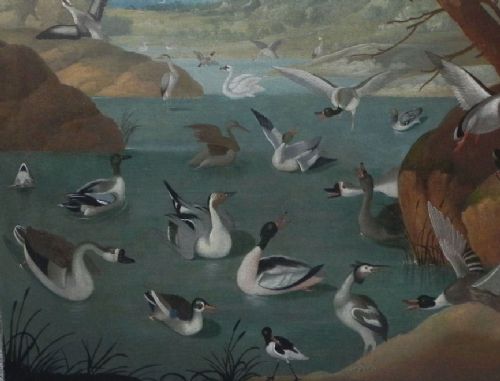
Detail View 1
Detail View 2
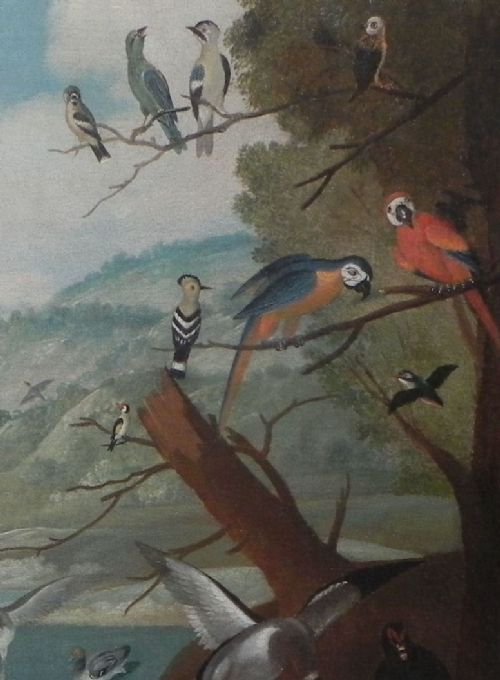
Archival Detail
Every single antique dealer on our platform is individually approved by our internal team. We verify their professional trade history, ethical standards, and photographic quality to ensure a secure, high-standard buying environment. Upon joining, every dealer agrees to a strict 9-point code of conduct. While issues can occasionally arise, our dealers typically resolve them swiftly and directly with the buyer. In fact, since our founding in 2002, Sellingantiques has only had to step in to help resolve an issue on roughly five occasions—a true testament to the quality of our dealers and their dedication to your happiness.
Our dealers are highly experienced in packing and shipping fragile, high-value antiques. Because you are in direct contact with the dealer, you will be able to easily go through all available shipping and insurance options together to ensure your item arrives safely.
Antiques are the ultimate green purchase. By choosing historical pieces over newly manufactured goods, you completely eliminate the carbon footprint of modern mass production while preserving exceptional, timeless craftsmanship.
items
Add keywords to the filter
Price
£100
£250000
Era
Movements
Material
Origin
Stock Location
Freshness
Online Payments
Categories