984  PAGES BROWSED TODAY PAGES TODAY • 0 ANTIQUES UPLOADED TODAYNEW ARRIVALS
GIFTS
LATEST STOCK
Sort Order
Items Per Page
Browse Categories
Sort order
Items per page
ID #SA485964
SOLD
Email Phone
Save
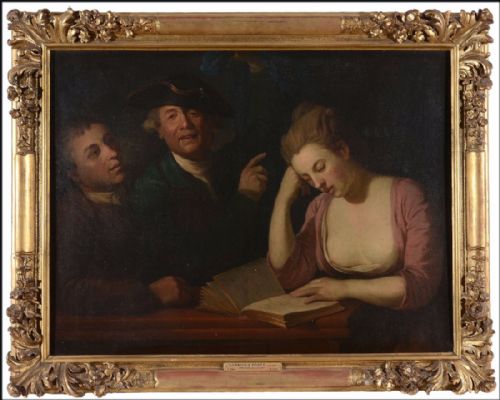
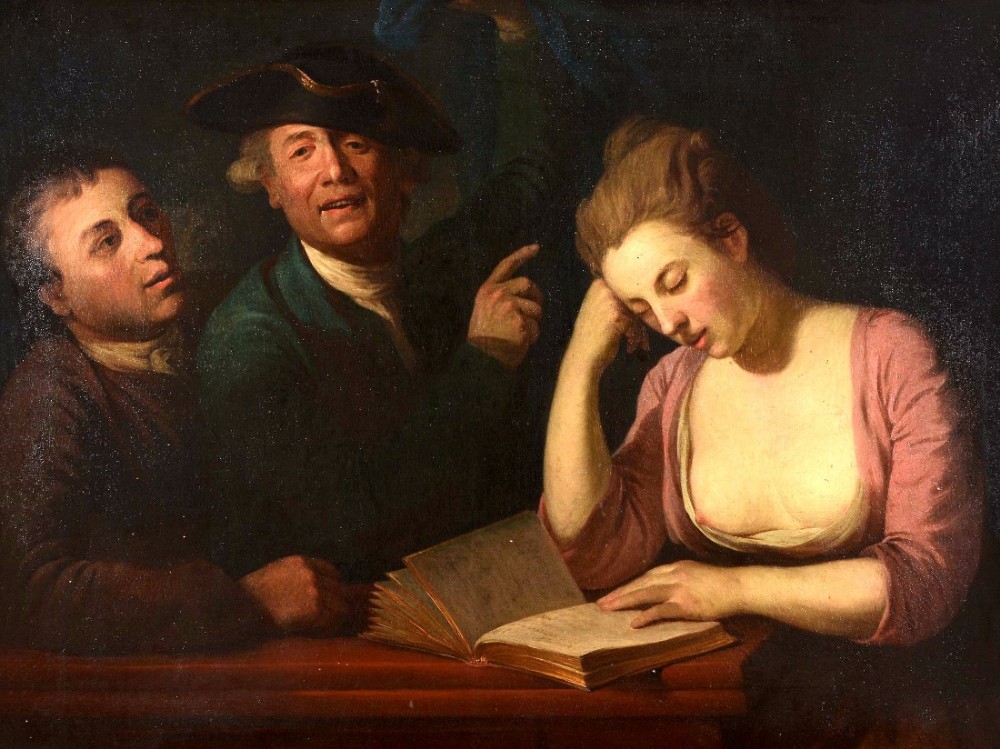
Attributed to Joseph Wright of Derby, Ara, 1734-1797 Portrait of Samuel Foote 1720-1777 with David Garrick 1717-1779 & His Wife Eva Maria Veigel 1724–1822
Sold by Artware Fineart
sold SA485964
Sorry, but this item has been sold.

Artware Fineart

Sellingantiques Verified Since Sep 2008
Browse dealers 243 items
Id #SA485964
PDF SHARE
SAVE

Attributed to Joseph Wright of Derby, Ara, 1734-1797 Portrait of Samuel Foote 1720-1777 with David Garrick 1717-1779 & His Wife Eva Maria Veigel 1724–1822

18th century
Sold 7 January 2019 · Artware Fineart
This “Attributed to Joseph Wright of Derby, Ara, 1734-1797 Portrait of Samuel Foote 1720-1777 with David Garrick 1717-1779 & His Wife Eva Maria Veigel 1724–1822” found a buyer.

It was listed by Artware Fineart. Sold pieces stay on Sellingantiques as a record of what has passed through, and the next one is rarely far away.

Description

Attributed to Joseph Wright of Derby, ARA, 1734-1797

Thought to be a Portrait of Samuel Foote 1720-1777 with David Garrick 1717-1779 & his wife Eva Maria Veigel 1724–1822

oil on canvas

32.1/4 x 43.1/2in. (82 x 110cm.)
Provenance

The Marquess of Linlithgow, Bryngwyn Hall

Notes

The sitters in this portrait were leading lights of theatre and entertainment in the 18th century, they collaborated both on and off stage and appeared in other portraits.
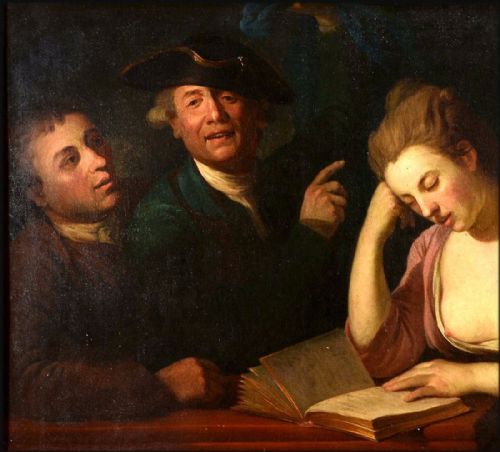
David Garrick, (1717–1779), actor and playwright, was born on 19 February 1717 at The Angel inn in Hereford, the third of the seven children of Peter Garrick (1685–1737), an army officer, and his wife, Arabella (d. 1740), the daughter of Anthony Clough, a vicar-choral of Lichfield Cathedral. His paternal grandfather, David de la Garrique, was among the many Huguenots to leave France after the revocation of the edict of Nantes in 1685. There was a distinct community of émigré Huguenots in London at the end of the seventeenth century, and the sparse journal kept by David de la Garrique (rewritten initially as Garric, and then as Garrick) from 1685 to 1701 bears witness to his devoutness. Imprecisely described as a merchant, he seems to have been prosperous enough to have purchased for his son Peter a commission in a regiment of foot in April 1706. It was his army service that took Peter Garrick to the garrison at Lichfield, Staffordshire, where the growing family lived close to the cathedral, in Bird (later Beacon) Street.
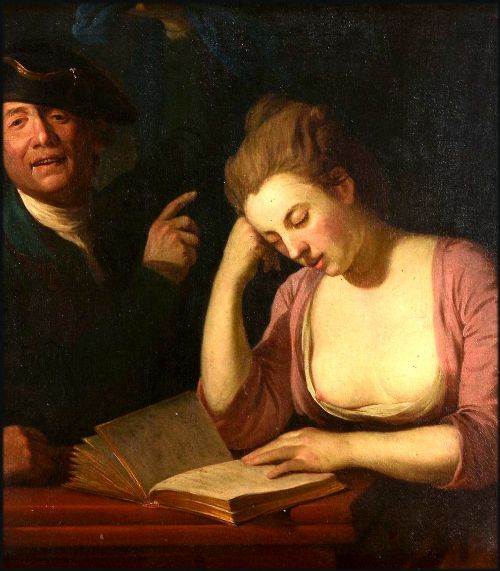
Lieutenant Peter Garrick was on a recruiting mission in Hereford when the future actor was born, but it was in Lichfield that the boy spent his formative years. The family was not, by contemporary standards, poor, but it was a struggle for Peter Garrick to maintain his wife and children, particularly after, as a career officer during a period of peace, he was reduced to half pay. The habitual prudence in financial matters that would earn for David Garrick a reputation for meanness owed something to family circumstance during his boyhood. There was, however, no social deprivation. As an officer in a garrison town Peter Garrick had easy access to the cream of Lichfield society, and the young David's close interest in many of the most prominent citizens is evident in his earliest surviving letters. The first of these, written when he was not quite sixteen, dates from the mid-point of Peter Garrick's prolonged absence in Gibraltar. Now with the rank of captain, and presumably under financial pressure, Peter had, in 1729, entered active service under Major-General Percy Kirke, with the Queen's Own 2nd regiment of foot. With his elder brother, also called Peter, serving as an ensign in the navy, and his mother and elder sister, Magdalen, in consistently poor health, David was, precociously, the virtual head of the household until his father's return in May 1736. To judge from the tone of his letters to his father, it was a job he generally relished, although his enjoyment of it was delayed by a curious episode. It was not only David's father who left home in 1729. At some time during that year he himself was sent to Lisbon to learn the wine trade from his uncle and namesake, who prospered as a vintner in that city. The decision to interrupt young David's schooling must have been taken for financial reasons, and it may have been his son's unhappiness in Portugal that persuaded Captain Garrick to volunteer for the Gibraltar posting. Within a year David was back at Lichfield grammar school.
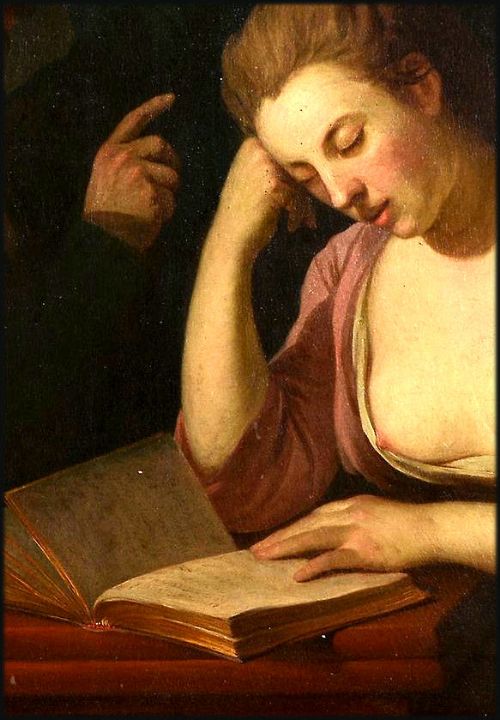
There is presumptive evidence, despite the Portuguese venture, that Garrick's parents hoped to see their sons well educated. The regimen at the grammar school, under its headmaster Dr John Hunter, was a stern one, and it was probably outside school hours that the twelve-year-old Garrick first involved himself in theatrical activity. He was the prime mover in a

Date of Manufacture

Artware Fineart has dated this piece to the 18th Century.

Physical Dimensions
Height
82cm (32.28")
Width
110cm (43.31")
Depth
3cm (1.18")
Reference Numbers
Sellingantiques Reference
SA485964
Dealers Internal Reference
3921
Description
Attributed to Joseph Wright of Derby, ARA, 1734-1797
“
Thought to be a Portrait of Samuel Foote 1720-1777 with David Garrick 1717-1779 & his wife Eva Maria Veigel 1724–1822.
Artware Fineart

oil on canvas

32.1/4 x 43.1/2in. (82 x 110cm.)

fig 1. Attributed to Joseph Wright of Derby, ARA, 1734-1797
Portrait of Samuel Foote 1720-1777 with David Garrick 1717-1779 & his wife Eva Maria Veigel 1724–1822
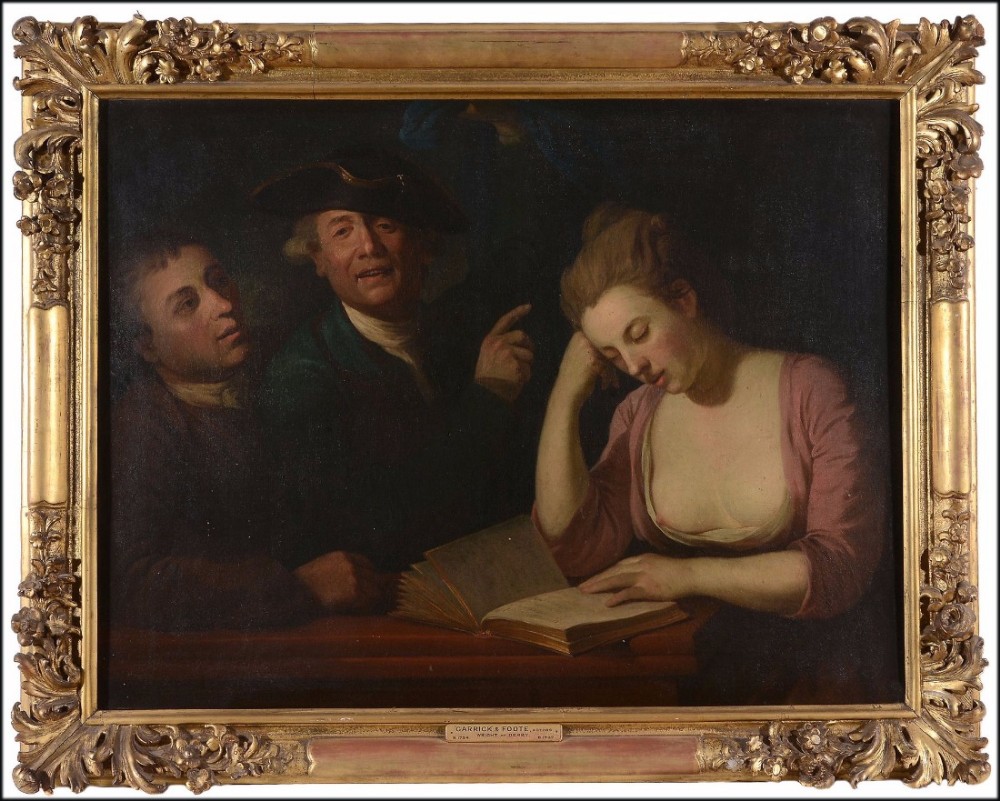
fig 1. Attributed to Joseph Wright of Derby, Ara, 1734-1797 Portrait of Samuel Foote 1720-1777 with David Garrick 1717-1779 & His Wife Eva Maria Veigel 1724–1822

Provenance

The Marquess of Linlithgow, Bryngwyn Hall

Notes

The sitters in this portrait were leading lights of theatre and entertainment in the 18th century, they collaborated both on and off stage and appeared in other portraits.

fig 2. Attributed to Joseph Wright of Derby, ARA, 1734-1797
Portrait of Samuel Foote 1720-1777 with David Garrick 1717-1779 & his wife Eva Maria Veigel 1724–1822
fig 2. Attributed to Joseph Wright of Derby, Ara, 1734-1797 Portrait of Samuel Foote 1720-1777 with David Garrick 1717-1779 & His Wife Eva Maria Veigel 1724–1822

David Garrick, (1717–1779), actor and playwright, was born on 19 February 1717 at The Angel inn in Hereford, the third of the seven children of Peter Garrick (1685–1737), an army officer, and his wife, Arabella (d. 1740), the daughter of Anthony Clough, a vicar-choral of Lichfield Cathedral. His paternal grandfather, David de la Garrique, was among the many Huguenots to leave France after the revocation of the edict of Nantes in 1685. There was a distinct community of émigré Huguenots in London at the end of the seventeenth century, and the sparse journal kept by David de la Garrique (rewritten initially as Garric, and then as Garrick) from 1685 to 1701 bears witness to his devoutness. Imprecisely described as a merchant, he seems to have been prosperous enough to have purchased for his son Peter a commission in a regiment of foot in April 1706. It was his army service that took Peter Garrick to the garrison at Lichfield, Staffordshire, where the growing family lived close to the cathedral, in Bird (later Beacon) Street.

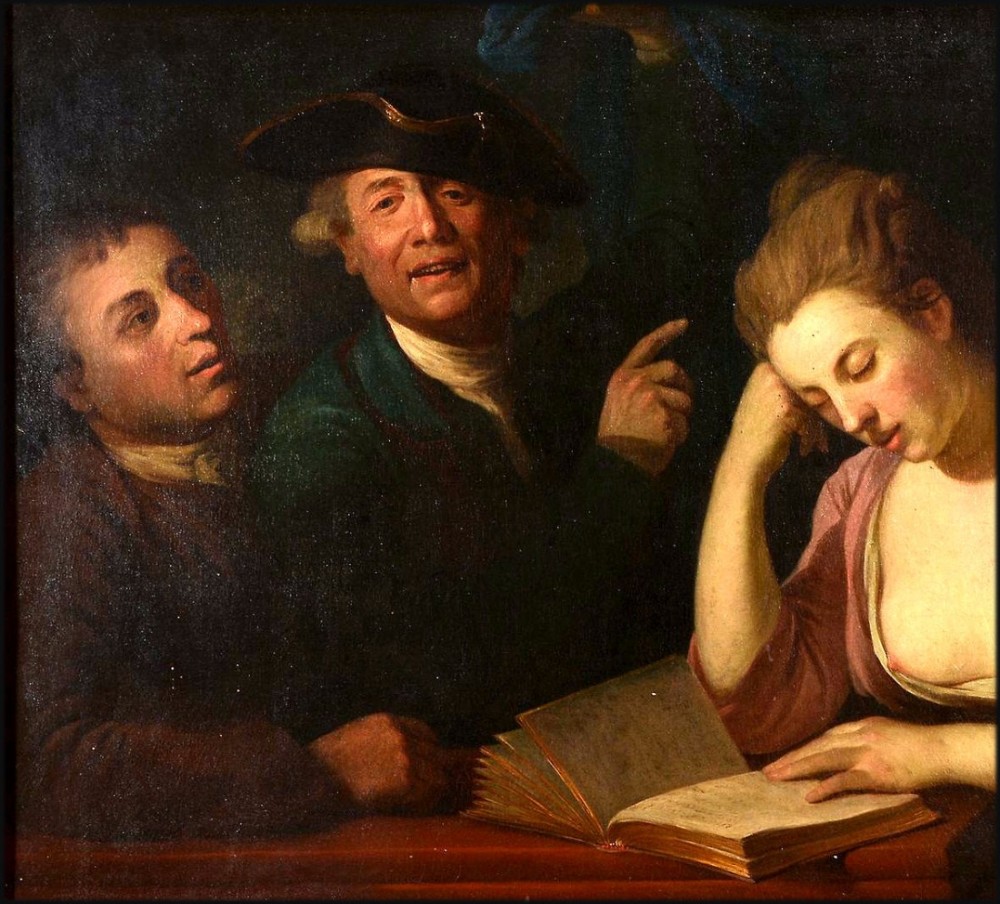
fig 3. Attributed to Joseph Wright of Derby, ARA, 1734-1797
Portrait of Samuel Foote 1720-1777 with David Garrick 1717-1779 & his wife Eva Maria Veigel 1724–1822
fig 3. Attributed to Joseph Wright of Derby, Ara, 1734-1797 Portrait of Samuel Foote 1720-1777 with David Garrick 1717-1779 & His Wife Eva Maria Veigel 1724–1822

Lieutenant Peter Garrick was on a recruiting mission in Hereford when the future actor was born, but it was in Lichfield that the boy spent his formative years. The family was not, by contemporary standards, poor, but it was a struggle for Peter Garrick to maintain his wife and children, particularly after, as a career officer during a period of peace, he was reduced to half pay. The habitual prudence in financial matters that would earn for David Garrick a reputation for meanness owed something to family circumstance during his boyhood. There was, however, no social deprivation. As an officer in a garrison town Peter Garrick had easy access to the cream of Lichfield society, and the young David's close interest in many of the most prominent citizens is evident in his earliest surviving letters. The first of these, written when he was not quite sixteen, dates from the mid-point of Peter Garrick's prolonged absence in Gibraltar. Now with the rank of captain, and presumably under financial pressure, Peter had, in 1729, entered active service under Major-General Percy Kirke, with the Queen's Own 2nd regiment of foot. With his elder brother, also called Peter, serving as an ensign in the navy, and his mother and elder sister, Magdalen, in consistently poor health, David was, precociously, the virtual head of the household until his father's return in May 1736. To judge from the tone of his letters to his father, it was a job he generally relished, although his enjoyment of it was delayed by a curious episode. It was not only David's father who left home in 1729. At some time during that year he himself was sent to Lisbon to learn the wine trade from his uncle and namesake, who prospered as a vintner in that city. The decision to interrupt young David's schooling must have been taken for financial reasons, and it may have been his son's unhappiness in Portugal that persuaded Captain Garrick to volunteer for the Gibraltar posting. Within a year David was back at Lichfield grammar school.

fig 4. Attributed to Joseph Wright of Derby, ARA, 1734-1797
Portrait of Samuel Foote 1720-1777 with David Garrick 1717-1779 & his wife Eva Maria Veigel 1724–1822
fig 4. Attributed to Joseph Wright of Derby, Ara, 1734-1797 Portrait of Samuel Foote 1720-1777 with David Garrick 1717-1779 & His Wife Eva Maria Veigel 1724–1822

There is presumptive evidence, despite the Portuguese venture, that Garrick's parents hoped to see their sons well educated. The regimen at the grammar school, under its headmaster Dr John Hunter, was a stern one, and it was probably outside school hours that the twelve-year-old Garrick first involved himself in theatrical activity. He was the prime mover in a

Date of Manufacture

Artware Fineart has dated this piece to the 18th Century.

Height
82cm (32.28")
Width
110cm (43.31")
Depth
3cm (1.18")
Reference Numbers
Sellingantiques Ref
SA485964
Dealers Internal Ref
3921
Artware Fineart
Sellingantiques verified Since Sep 2008
Dealer Profile

You can view the stock and full dealer information on the Artware Fineart Profile Page
PDF SHARE
SAVE
Attributed to Joseph Wright of Derby, ARA, 1734-1797
Portrait of Samuel Foote 1720-1777 with David Garrick 1717-1779 & his wife Eva Maria Veigel 1724–1822 SOLD6+ MONTHS AGO
1 / 5
Archive I Attributed to Joseph Wright of Derby, ARA, 1734-1797
Portrait of Samuel Foote 1720-1777 with David Garrick 1717-1779 & his wife Eva Maria Veigel 1724–1822 SOLD6+ MONTHS AGO

Attributed to Joseph Wright of Derby, Ara, 1734-1797 Portrait of Samuel Foote 1720-1777 with David Garrick 1717-1779 & His Wife Eva Maria Veigel 1724–1822
Archive II Attributed to Joseph Wright of Derby, ARA, 1734-1797
Portrait of Samuel Foote 1720-1777 with David Garrick 1717-1779 & his wife Eva Maria Veigel 1724–1822 View II
Archive III Attributed to Joseph Wright of Derby, ARA, 1734-1797
Portrait of Samuel Foote 1720-1777 with David Garrick 1717-1779 & his wife Eva Maria Veigel 1724–1822 View III
Archive IV Attributed to Joseph Wright of Derby, ARA, 1734-1797
Portrait of Samuel Foote 1720-1777 with David Garrick 1717-1779 & his wife Eva Maria Veigel 1724–1822 View IV
Archive V Attributed to Joseph Wright of Derby, ARA, 1734-1797
Portrait of Samuel Foote 1720-1777 with David Garrick 1717-1779 & his wife Eva Maria Veigel 1724–1822 View V
Enlarged Archival View
Telephone 07958 699 645
Location
18 La Gare
51 Surrey Row
London
SE1 0BZ
United Kingdom
Verified Since Sep 2008
Items For Sale 243
Items Sold 223
Artware Fineart
Verified Since Sep 2008
View Dealer Info
Location: 18 La Gare , 51 Surrey Row , London , SE1 0BZ , United Kingdom
Verified
Sep 2008
For Sale
243
Sold
223
Attributed to Joseph Wright of Derby, ARA, 1734-1797
Portrait of Samuel Foote 1720-1777 with David Garrick 1717-1779 & his wife Eva Maria Veigel 1724–1822
Attributed to Joseph Wright of Derby, ARA, 1734-1797 Portrait of Samuel Foote 1720-1777 with David Garrick 1717-1779 & his wife Eva Maria Veigel 1724–1822
Ref: SA485964
Attributed to Joseph Wright of Derby, ARA, 1734-1797
Portrait of Samuel Foote 1720-1777 with David Garrick 1717-1779 & his wife Eva Maria Veigel 1724–1822
Detail View 1
Detail View 2
Detail View 3
Detail View 4
Archival Detail
Every single antique dealer on our platform is individually approved by our internal team. We verify their professional trade history, ethical standards, and photographic quality to ensure a secure, high-standard buying environment. Upon joining, every dealer agrees to a strict 9-point code of conduct. While issues can occasionally arise, our dealers typically resolve them swiftly and directly with the buyer. In fact, since our founding in 2002, Sellingantiques has only had to step in to help resolve an issue on roughly five occasions—a true testament to the quality of our dealers and their dedication to your happiness.
Our dealers are highly experienced in packing and shipping fragile, high-value antiques. Because you are in direct contact with the dealer, you will be able to easily go through all available shipping and insurance options together to ensure your item arrives safely.
Antiques are the ultimate green purchase. By choosing historical pieces over newly manufactured goods, you completely eliminate the carbon footprint of modern mass production while preserving exceptional, timeless craftsmanship.
Written by Sellingantiques from the dealer’s photographs and listing
  • Period18th century
  • SizeH 82 cm (32 in) x W 110 cm (43 in) x D 3 cm (1 in)
items
Add keywords to the filter
Price
£100
£250000
Era
Period
Style
Material
Origin
Stock Location
Recently Added
Online Payments
Categories