Titan Fine Art has dated this piece to the 17th Century.
During this time, The Dutch Old Masters began to prevail in the art world, creating a depth of realistic portraits of people and life in the area that has hardly been surpassed. The Golden Age painters depicted the scenes that their discerning new middle class patrons wanted to see. This new wealth from merchant activities and exploration combined with a lack of church patronage, shifted art subjects away from biblical genres. Still lifes of items of everyday objects, landscapes, and seascapes reflecting the naval and trade power that the Republic enjoyed were popular. The large group portrait is also a standard subject often of a civic organisations. The new wealthly class were keen to have their portraits commissioned and thus many artist’s worked in this lucrative genre.
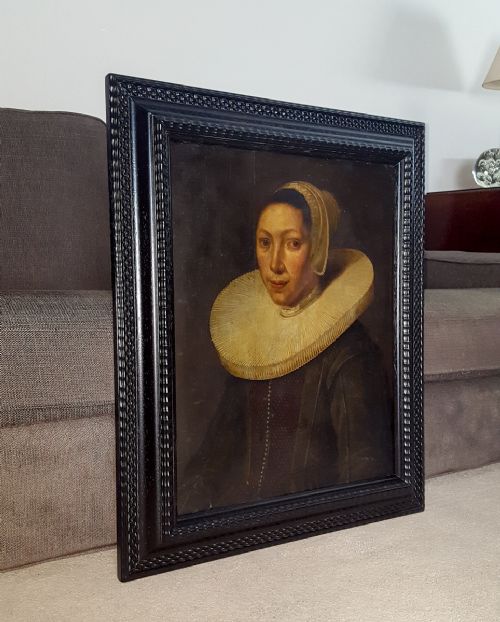
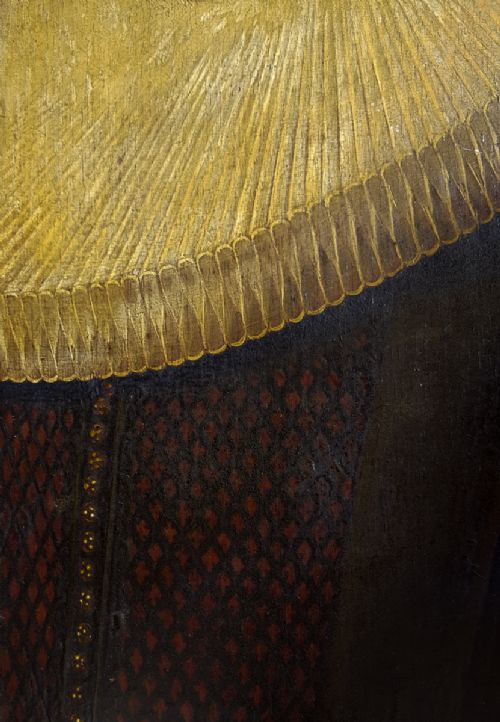
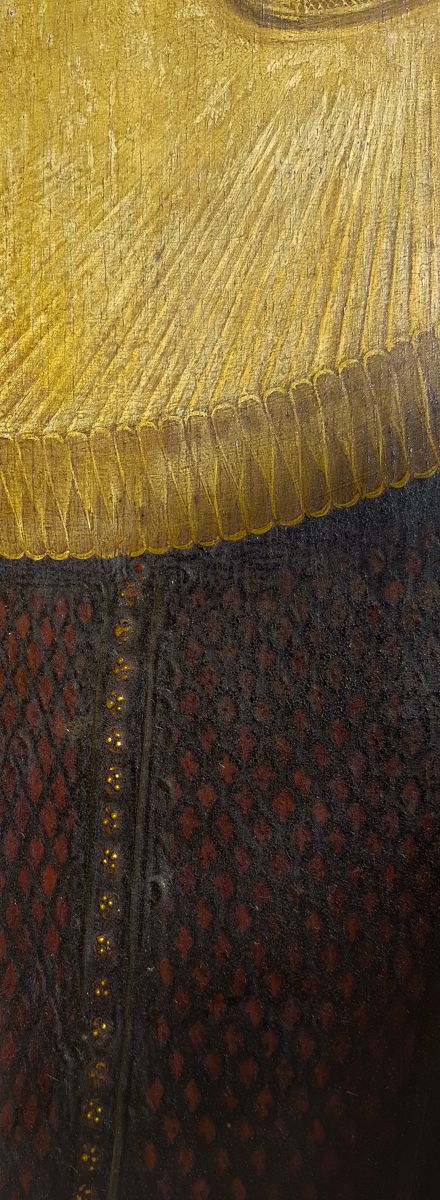
These Golden Age artists were particularly adept at meticulously rendering details of their sitter's costumes. In this carefully accurate portrait the patron is wearing attire that was fashionable in Holland between c.1620 and c.1640. The large millstone ruff, vlieger, and the elaborate crimson stomacher were costly garments. The sitter is distinguished by her costume of rich black satin and embroidered bodice. Delicate white lace forms her diadem cap (this type of cap was usually worn by married woman). An enormous, figure eight collar surrounds her neck and a sparkling row of buttons falls down the front.
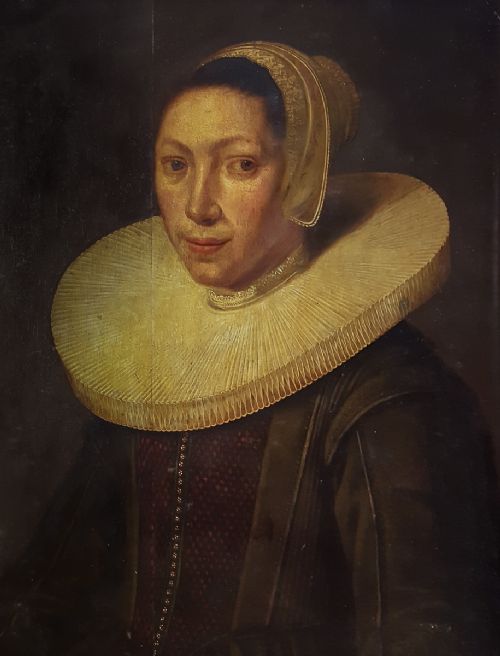
The present painting is a good example from this period and these types of portraits are not widely available on the market.
Measurements: Height 73cm, Width 61cm framed (Height 28.75”, Width 24” framed)
Titan Fine Art has dated this piece to the 17th Century.
Specialist in 17th & 18thc portraits. Highly curated selection, museum-level research & pro conservation. Exceptional art, expertly vetted.
You can view the stock and full dealer information on the Titan Fine Art Profile Page

Portrait of a Lady C.1630, Dutch, Oil on Panel