16,176  PAGES BROWSED TODAY PAGES TODAY 109 ANTIQUES UPLOADED TODAYNEW ARRIVALS
109 ITEMS ADDED TODAY
Sort Order
Items Per Page
Browse Categories
Sort order
Items per page
ID #SA47215
SOLD
Email Phone WhatsApp
Save
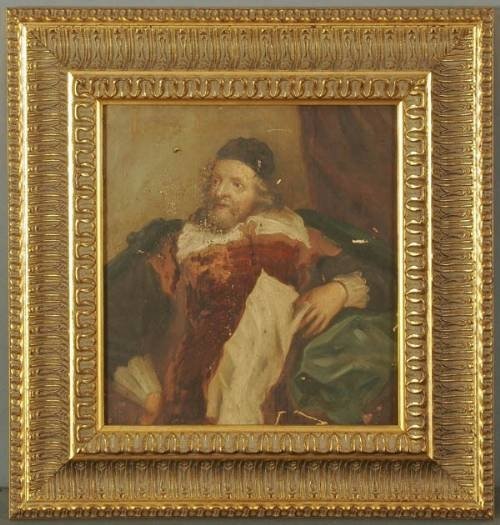
Portrait of Inigo Jones 1573 -1652, After Sir Anthony Van Dyck
Sold by Artware Fineart
sold SA47215
Sorry, but this item has been sold.

Artware Fineart

Sellingantiques Verified Since Sep 2008
Id #SA47215
PDF SHARE
SAVE

Portrait of Inigo Jones 1573 -1652, After Sir Anthony Van Dyck

Description

Size 30.00x27.00ins; oil on canvas


Inigo Jones (July 15, 1573 – June 21, 1652) is regarded as the first significant British architect of the modern period, and the first to bring Italianate Renaissance architecture to England. He also made valuable contributions to stage design.Beyond the fact that he was born in the vicinity of Smithfield in central London, the son of a Welsh Catholic cloth worker, and christened at the church of St Bartholomew the Less, little is known about Jones' early years. He certainly travelled abroad at the end of the century, probably at the expense of a patron, and was very influenced by the work of the Italian architect Andrea Palladio. In the early 1600s, Jones was employed by the wife of King James I, Queen Anne, to provide costumes and settings for a masque at court, something he continued to do even after he started receiving architectural commissions. His first-known building was the New Exchange in the Strand in London, designed in 1608 for the Earl of Salisbury. In 1611 Jones was appointed surveyor of works to Henry, Prince of Wales but the young prince died in 1612. In 1613, Jones left England to visit Italy again. A year after his return, he was appointed surveyor to the king, a position he held until 1643.


But towards the end of the 16th century, he became one of the first Englishmen to study architecture in Italy, making two visits to that country. The first (c.1598-1603) was possibly funded by Roger Manners, 5th Earl of Rutland. The second, from 1613 to 1614, found Inigo in the company of the Earl of Arundel. He may also have been in Italy in 1606 and was influenced by the ambassador Henry Wotton and owned a copy of Andrea Palladio's works with marginalia that refer to Wotton. See Wotton And His Worlds 2004 by Gerald Curzon. His work became particularly influenced by Palladio. To a lesser extent, he also held that the setting out of buildings should be guided by principles first described by ancient Roman writer Vitruvius.



The Queen's House at Greenwich Jones' best known buildings are the Queen's House at Greenwich, London (started in 1616, his earliest surviving work) and the Banqueting House at Whitehall (1619) – part of a major modernisation by him of the Palace of Whitehall – which also has a ceiling painted by Peter Paul Rubens. The Banqueting House was one of several projects where Jones worked with his personal assistant and nephew by marriage John Webb. It was begun in 1617 but work was suspended at her death in 1619 and only completed in 1635. In 1619 the old Banqueting House at Whitehall Palace burned down and Jones began work on a new one. It was completed in 1622 and in 1635, an allegorical painting for its ceiling was commissioned from Rubens. Jones also worked on the restoration of St Paul's Cathedral, adding a magnificent portico to the west end.

Reference Numbers
Sellingantiques Reference
SA47215
Dealers Internal Reference
3239
Description
Size 30.00x27.00ins; oil on canvas

Inigo Jones (July 15, 1573 – June 21, 1652) is regarded as the first significant British architect of the modern period, and the first to bring Italianate Renaissance architecture to England.
Artware Fineart

He also made valuable contributions to stage design.Beyond the fact that he was born in the vicinity of Smithfield in central London, the son of a Welsh Catholic cloth worker, and christened at the church of St Bartholomew the Less, little is known about Jones' early years. He certainly travelled abroad at the end of the century, probably at the expense of a patron, and was very influenced by the work of the Italian architect Andrea Palladio. In the early 1600s, Jones was employed by the wife of King James I, Queen Anne, to provide costumes and settings for a masque at court, something he continued to do even after he started receiving architectural commissions. His first-known building was the New Exchange in the Strand in London, designed in 1608 for the Earl of Salisbury. In 1611 Jones was appointed surveyor of works to Henry, Prince of Wales but the young prince died in 1612. In 1613, Jones left England to visit Italy again. A year after his return, he was appointed surveyor to the king, a position he held until 1643.

fig 1. Portrait of Inigo Jones 1573 -1652, after Sir Anthony Van Dyck
fig 1. Portrait of Inigo Jones 1573 -1652, After Sir Anthony Van Dyck

But towards the end of the 16th century, he became one of the first Englishmen to study architecture in Italy, making two visits to that country. The first (c.1598-1603) was possibly funded by Roger Manners, 5th Earl of Rutland. The second, from 1613 to 1614, found Inigo in the company of the Earl of Arundel. He may also have been in Italy in 1606 and was influenced by the ambassador Henry Wotton and owned a copy of Andrea Palladio's works with marginalia that refer to Wotton. See Wotton And His Worlds 2004 by Gerald Curzon. His work became particularly influenced by Palladio. To a lesser extent, he also held that the setting out of buildings should be guided by principles first described by ancient Roman writer Vitruvius.

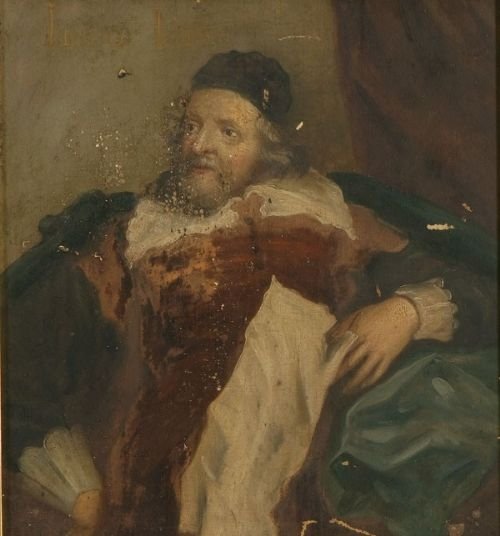
fig 2. Portrait of Inigo Jones 1573 -1652, after Sir Anthony Van Dyck
fig 2. Portrait of Inigo Jones 1573 -1652, After Sir Anthony Van Dyck

The Queen's House at Greenwich Jones' best known buildings are the Queen's House at Greenwich, London (started in 1616, his earliest surviving work) and the Banqueting House at Whitehall (1619) – part of a major modernisation by him of the Palace of Whitehall – which also has a ceiling painted by Peter Paul Rubens. The Banqueting House was one of several projects where Jones worked with his personal assistant and nephew by marriage John Webb. It was begun in 1617 but work was suspended at her death in 1619 and only completed in 1635. In 1619 the old Banqueting House at Whitehall Palace burned down and Jones began work on a new one. It was completed in 1622 and in 1635, an allegorical painting for its ceiling was commissioned from Rubens. Jones also worked on the restoration of St Paul's Cathedral, adding a magnificent portico to the west end.

Reference Numbers
Sellingantiques Ref
SA47215
Dealers Internal Ref
3239
Artware Fineart
Sellingantiques verified Since Sep 2008
Dealer Profile

You can view the stock and full dealer information on the Artware Fineart Profile Page
PDF SHARE
SAVE
Portrait of Inigo Jones 1573 -1652, after Sir Anthony Van Dyck
1 / 3
Archive I Portrait of Inigo Jones 1573 -1652, after Sir Anthony Van Dyck

Portrait of Inigo Jones 1573 -1652, After Sir Anthony Van Dyck

Archive II Portrait of Inigo Jones 1573 -1652, after Sir Anthony Van Dyck View II
Archive III Portrait of Inigo Jones 1573 -1652, after Sir Anthony Van Dyck View III
Enlarged Archival View
Telephone 07958 699 645
Location
18 La Gare
51 Surrey Row
London
SE1 0BZ
United Kingdom
Verified Since Sep 2008
Items For Sale 243
Items Sold 223
Artware Fineart
Verified Since Sep 2008
View Dealer Info
Location: 18 La Gare , 51 Surrey Row , London , SE1 0BZ , United Kingdom
Verified
Sep 2008
For Sale
243
Sold
223
Portrait of Inigo Jones 1573 -1652, after Sir Anthony Van Dyck
Ref: SA47215
Portrait of Inigo Jones 1573 -1652, after Sir Anthony Van Dyck
Detail View 1
Detail View 2
Archival Detail
Every single antique dealer on our platform is individually approved by our internal team. We verify their professional trade history, ethical standards, and photographic quality to ensure a secure, high-standard buying environment. Upon joining, every dealer agrees to a strict 9-point code of conduct. While issues can occasionally arise, our dealers typically resolve them swiftly and directly with the buyer. In fact, since our founding in 2002, Sellingantiques has only had to step in to help resolve an issue on roughly five occasions—a true testament to the quality of our dealers and their dedication to your happiness.
Our dealers are highly experienced in packing and shipping fragile, high-value antiques. Because you are in direct contact with the dealer, you will be able to easily go through all available shipping and insurance options together to ensure your item arrives safely.
Antiques are the ultimate green purchase. By choosing historical pieces over newly manufactured goods, you completely eliminate the carbon footprint of modern mass production while preserving exceptional, timeless craftsmanship.
items
Add keywords to the filter
Price
£100
£250000
Era
Movements
Material
Origin
Stock Location
Freshness
Online Payments
Categories