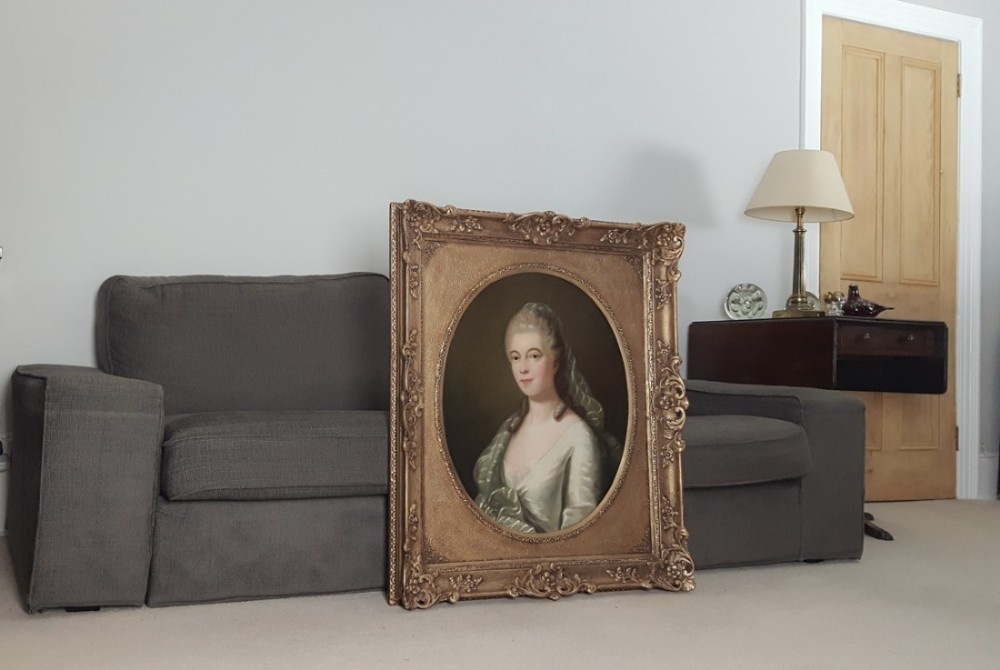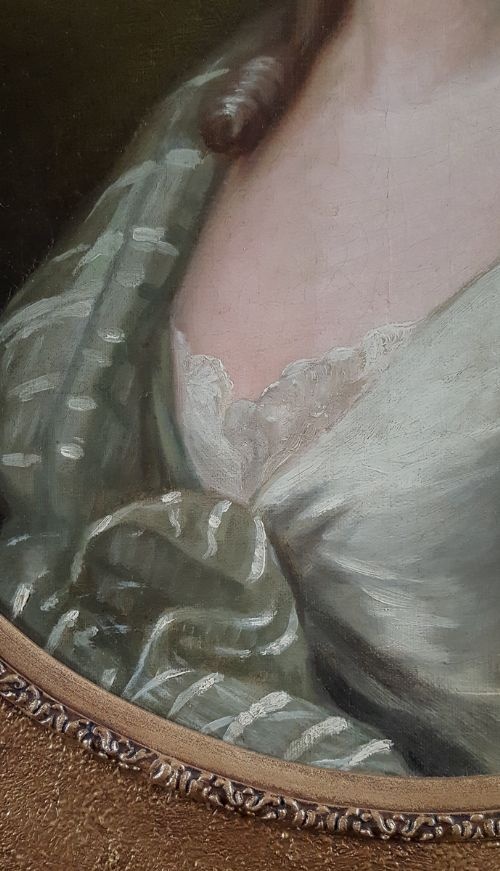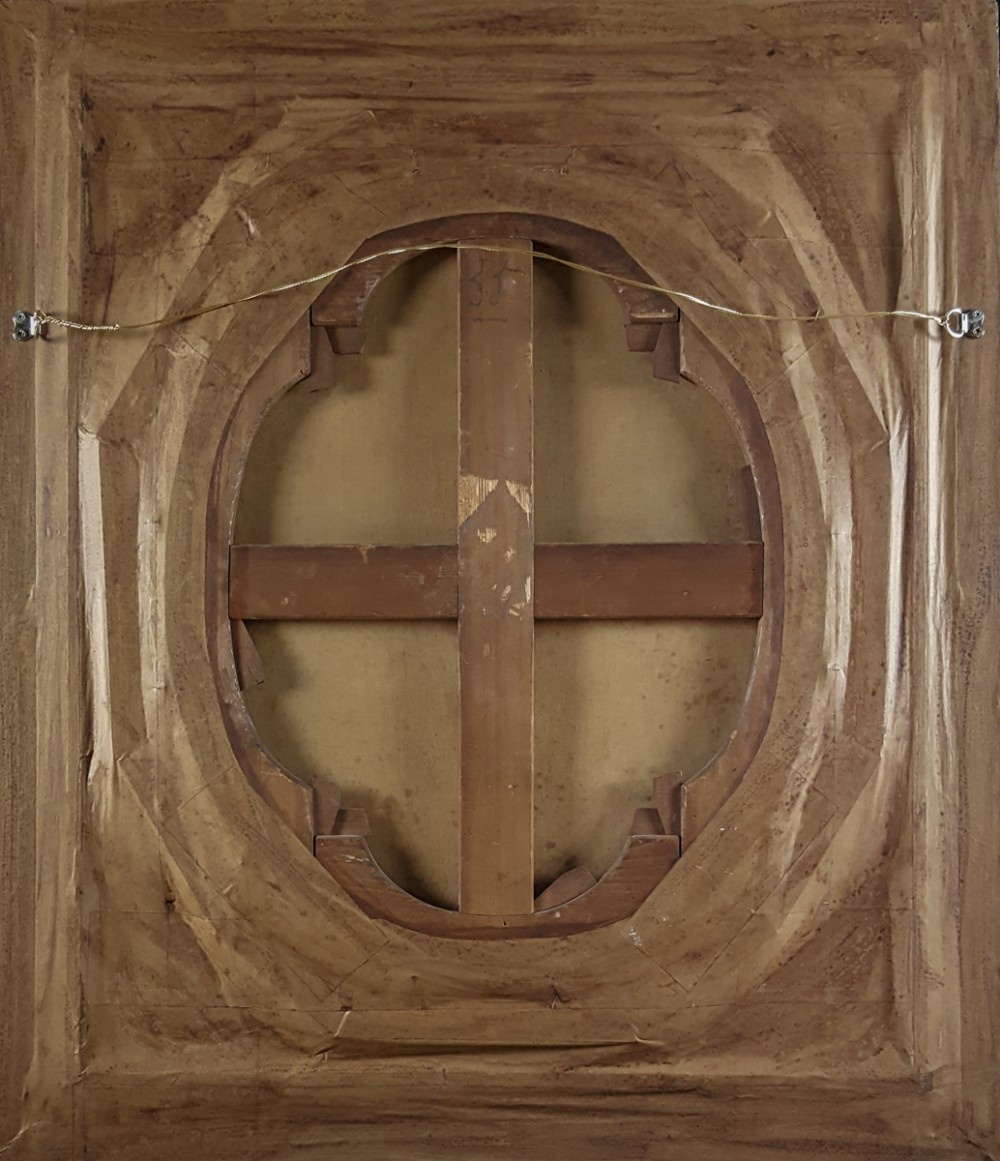
Titan Fine Art has dated this piece to the 18th Century.
In ancient Rome, the Vestals or Vestal Virgins were priestesses of Vesta, goddess of the hearth. The College of the Vestals and its well-being were regarded as fundamental to the continuance and security of Rome. They cultivated the sacred fire that was not allowed to go out. The Vestals were freed of the usual social obligations to marry and bear children, and took a vow of chastity in order to devote themselves to the study and correct observance of state rituals that were off-limits to the male colleges of priests.
These Roman guardians were chosen for their youth and purity.
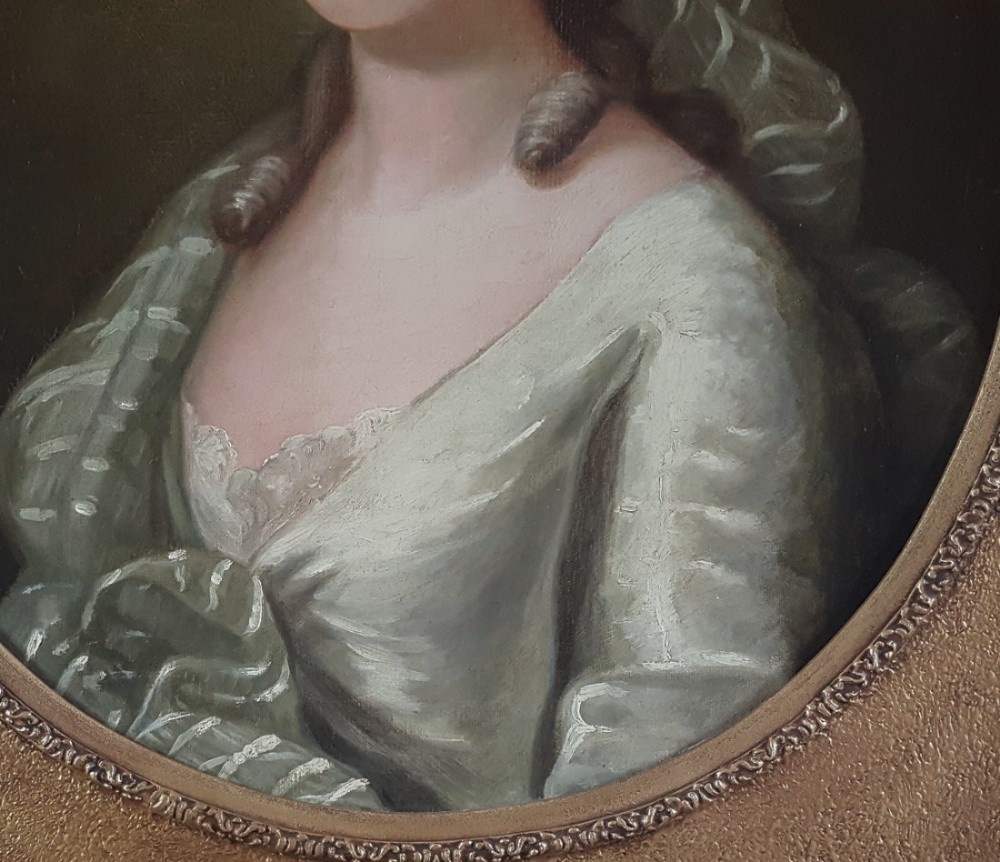
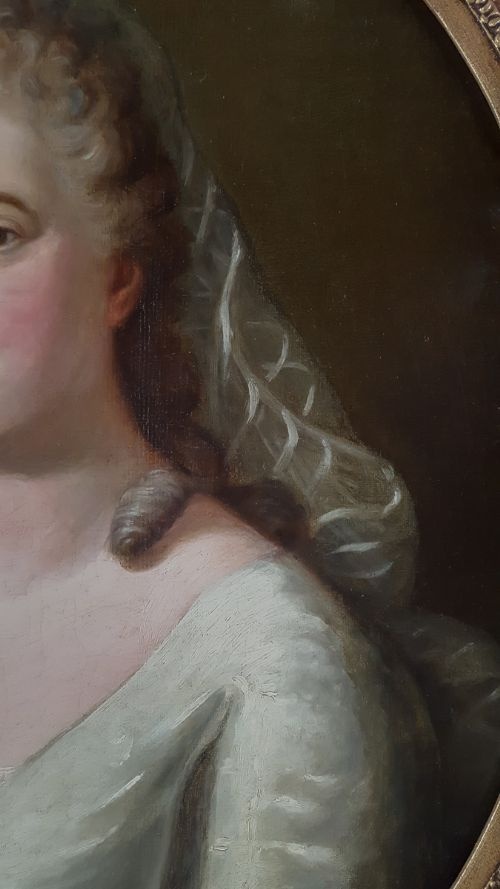
The Vestals were used as models of female virtue in allegorizing portraiture of the later West. Elizabeth I of England was portrayed holding a sieve to evoke Tuccia, the Vestal who proved her virtue by carrying water in a sieve. In the libertine environment of 18th century France, portraits of women as Vestals seem intended as fantasies of virtue infused with ironic eroticism. Later vestals became an image of republican virtue, as in Jacques-Louis David's The Vestal Virgin. The discovery of a "House of the Vestals" in Pompeii made the Vestals a popular subject in the 18th century and the 19th century.
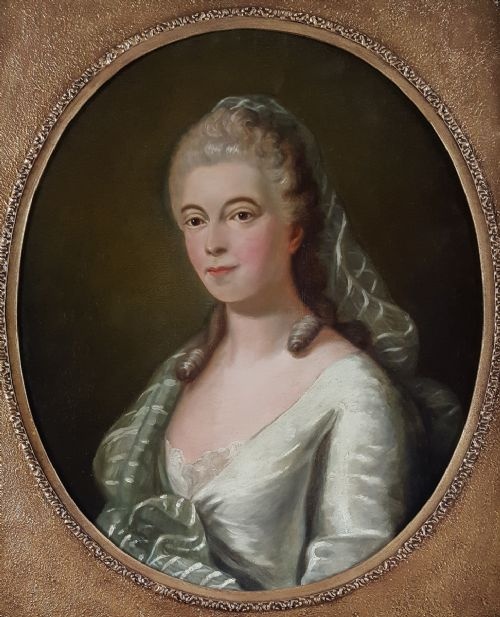
Several artists, notably Jean Raoux (1677–1734) and Jean Marc Nattier (1685–1766), had depicted portrait sitters in the guise of a vestal virgin, including several of the royal princesses, who were unmarried, and others who sat when they were about to marry.
Presented in a fine 18th 19th century frame.
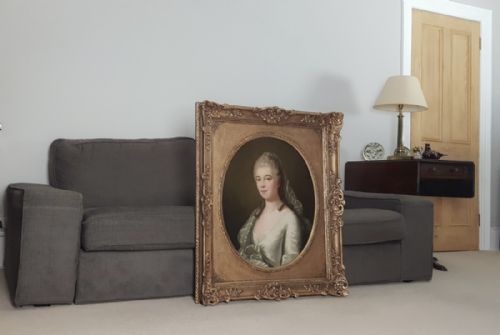
Measurements: Height 92cm, Width 90cm framed (Height 36”, Width 35.5” framed)
Titan Fine Art has dated this piece to the 18th Century.
Specialist in 17th & 18thc portraits. Highly curated selection, museum-level research & pro conservation. Exceptional art, expertly vetted.
You can view the stock and full dealer information on the Titan Fine Art Profile Page
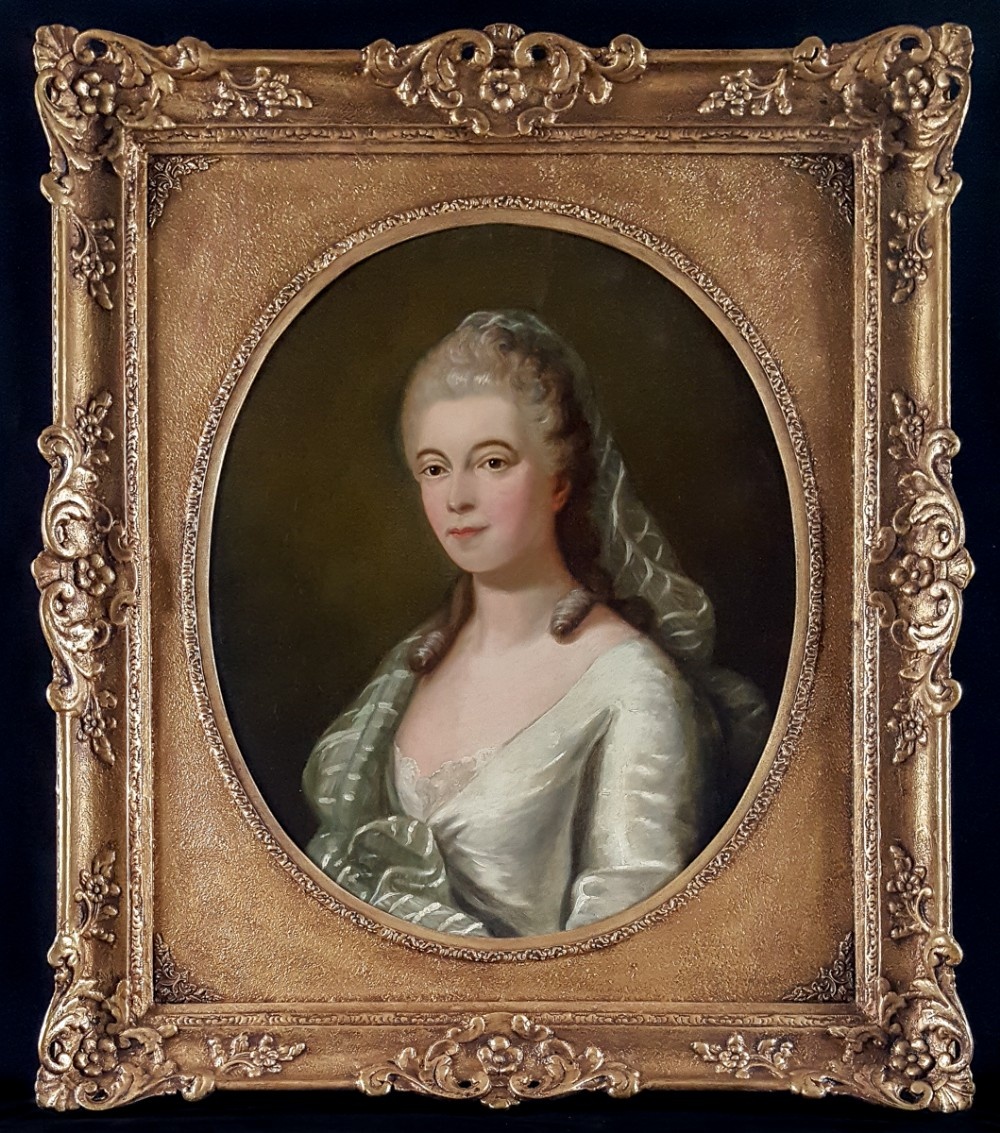
Portrait of a Lady, 18th Century French; Follower of François Hubert Drouais (1727–1775)