19,041  PAGES BROWSED TODAY PAGES TODAY 109 ANTIQUES UPLOADED TODAYNEW ARRIVALS
109 ITEMS ADDED TODAY
Sort Order
Items Per Page
Browse Categories
Sort order
Items per page
ID #SA46331
SOLD
Email Phone WhatsApp
Save
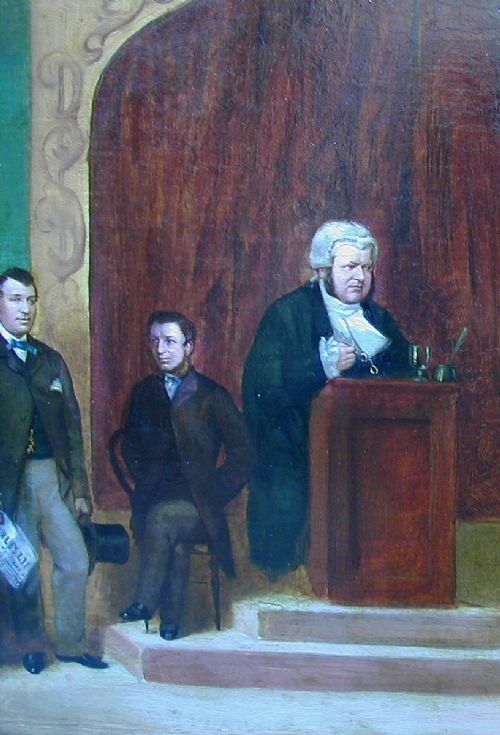
A Scene from Trial by Jury by Gilbert and Sullivan, 19th Century English School
Sold by Artware Fineart
sold SA46331
Sorry, but this item has been sold.

Artware Fineart

Sellingantiques Verified Since Sep 2008
Id #SA46331
PDF SHARE
SAVE

A Scene from Trial by Jury by Gilbert and Sullivan, 19th Century English School

19th century
Description

Size: 25.00 x 30.00; oil on canvas


In 1874, Gilbert wrote a short libretto on commission from producer–composer Carl Rosa, whose wife would have played the leading role, but her death in childbirth cancelled the project and left the libretto an orphan. Not long afterwards, Richard D'Oyly Carte was managing the Royalty Theatre, and he needed a short opera to be played as an afterpiece to Offenbach's La Périchole. Gilbert already had available the libretto he had written for Rosa, and Carte suggested that Sullivan write the score. The composer was delighted with it, and Trial by Jury was composed in a matter of weeks. D. H. Friston's engraving of the original production of Trial by JuryThe piece is one of Gilbert's humorous spoofs of the law and the legal profession, based on his short experience as a barrister. It concerns a breach of promise of marriage suit. The defendant argues that damages should be slight, since "he is such a very bad lot," while the plaintiff argues that she loves the defendant fervently and seeks "substantial damages." After much argument, the judge resolves the case by marrying the lovely plaintiff himself. With Sullivan's brother, Fred, as the Learned Judge, the opera was a runaway hit, outlasting the run of La Périchole. Provincial tours and productions at other theatres quickly followed. Fred Sullivan was the prototype for the "patter" (comic) baritone roles in the later operas. F. C. Burnand wrote that he "was one of the most naturally comic little men I ever came across. He, too, was a first-rate practical musician... As he was the most absurd person, so was he the very kindliest..." Fred's creation would serve as a model for the rest of the collaborators' works, and each of them has a crucial comic little man role, as Burnand had put it. The "patter" baritone (or "principal comedian", as these roles later were called) would often assume the leading role in Gilbert and Sullivan's comic operas, and was usually allotted the speedy patter songs. After the success of Trial by Jury, Gilbert and Sullivan were suddenly in demand to write more operas together. Over the next two years, Richard D'Oyly Carte was one of several theatrical managers who negotiated with the team but were unable to come to terms. Carte also proposed a revival of Thespis for the 1875 Christmas season, which Gilbert and Sullivan would have revised, but he was unable to obtain financing for the project.


Gilbert and Sullivan refers to the Victorian era partnership of librettist W. S. Gilbert (1836–1911) and composer Arthur Sullivan (1842–1900). The two men collaborated on fourteen comic operas between 1871 and 1896, of which H.M.S. Pinafore, The Pirates of Penzance and The Mikado are among the best known.

Declaration

Artware Fineart has dated this piece to the 19th Century.

Reference Numbers
Sellingantiques Reference
SA46331
Dealers Internal Reference
3234
Description
Size: 25.00 x 30.00; oil on canvas

In 1874, Gilbert wrote a short libretto on commission from producer–composer Carl Rosa, whose wife would have played the leading role, but her death in childbirth cancelled the project and left the libretto an orphan.

Not long afterwards, Richard D'Oyly Carte was managing the Royalty Theatre, and he needed a short opera to be played as an afterpiece to Offenbach's La Périchole.
Artware Fineart

Gilbert already had available the libretto he had written for Rosa, and Carte suggested that Sullivan write the score. The composer was delighted with it, and Trial by Jury was composed in a matter of weeks. D. H. Friston's engraving of the original production of Trial by JuryThe piece is one of Gilbert's humorous spoofs of the law and the legal profession, based on his short experience as a barrister. It concerns a breach of promise of marriage suit. The defendant argues that damages should be slight, since "he is such a very bad lot," while the plaintiff argues that she loves the defendant fervently and seeks "substantial damages." After much argument, the judge resolves the case by marrying the lovely plaintiff himself. With Sullivan's brother, Fred, as the Learned Judge, the opera was a runaway hit, outlasting the run of La Périchole. Provincial tours and productions at other theatres quickly followed. Fred Sullivan was the prototype for the "patter" (comic) baritone roles in the later operas. F. C. Burnand wrote that he "was one of the most naturally comic little men I ever came across. He, too, was a first-rate practical musician... As he was the most absurd person, so was he the very kindliest..." Fred's creation would serve as a model for the rest of the collaborators' works, and each of them has a crucial comic little man role, as Burnand had put it. The "patter" baritone (or "principal comedian", as these roles later were called) would often assume the leading role in Gilbert and Sullivan's comic operas, and was usually allotted the speedy patter songs. After the success of Trial by Jury, Gilbert and Sullivan were suddenly in demand to write more operas together. Over the next two years, Richard D'Oyly Carte was one of several theatrical managers who negotiated with the team but were unable to come to terms. Carte also proposed a revival of Thespis for the 1875 Christmas season, which Gilbert and Sullivan would have revised, but he was unable to obtain financing for the project.

fig 1. A Scene from Trial by Jury by Gilbert and Sullivan, 19th Century English School

Gilbert and Sullivan refers to the Victorian era partnership of librettist W. S. Gilbert (1836–1911) and composer Arthur Sullivan (1842–1900). The two men collaborated on fourteen comic operas between 1871 and 1896, of which H.M.S. Pinafore, The Pirates of Penzance and The Mikado are among the best known.

Date of Manufacture

Artware Fineart has dated this piece to the 19th Century.

Reference Numbers
Sellingantiques Ref
SA46331
Dealers Internal Ref
3234
Artware Fineart
Sellingantiques verified Since Sep 2008
Dealer Profile

You can view the stock and full dealer information on the Artware Fineart Profile Page

PDF SHARE
SAVE
A Scene from Trial by Jury by Gilbert and Sullivan, 19th Century English School
1 / 2
Archive I A Scene from Trial by Jury by Gilbert and Sullivan, 19th Century English School

A Scene from Trial by Jury by Gilbert and Sullivan, 19th Century English School

Archive II A Scene from Trial by Jury by Gilbert and Sullivan, 19th Century English School View II
Enlarged Archival View
Telephone 07958 699 645
Location
18 La Gare
51 Surrey Row
London
SE1 0BZ
United Kingdom
Verified Since Sep 2008
Items For Sale 243
Items Sold 223
Artware Fineart
Verified Since Sep 2008
View Dealer Info
Location: 18 La Gare , 51 Surrey Row , London , SE1 0BZ , United Kingdom
Verified
Sep 2008
For Sale
243
Sold
223
A Scene from Trial by Jury by Gilbert and Sullivan, 19th Century English School
Ref: SA46331
A Scene from Trial by Jury by Gilbert and Sullivan, 19th Century English School
Detail View 1
Archival Detail
Every single antique dealer on our platform is individually approved by our internal team. We verify their professional trade history, ethical standards, and photographic quality to ensure a secure, high-standard buying environment. Upon joining, every dealer agrees to a strict 9-point code of conduct. While issues can occasionally arise, our dealers typically resolve them swiftly and directly with the buyer. In fact, since our founding in 2002, Sellingantiques has only had to step in to help resolve an issue on roughly five occasions—a true testament to the quality of our dealers and their dedication to your happiness.
Our dealers are highly experienced in packing and shipping fragile, high-value antiques. Because you are in direct contact with the dealer, you will be able to easily go through all available shipping and insurance options together to ensure your item arrives safely.
Antiques are the ultimate green purchase. By choosing historical pieces over newly manufactured goods, you completely eliminate the carbon footprint of modern mass production while preserving exceptional, timeless craftsmanship.
items
Add keywords to the filter
Price
£100
£250000
Era
Movements
Material
Origin
Stock Location
Freshness
Online Payments
Categories