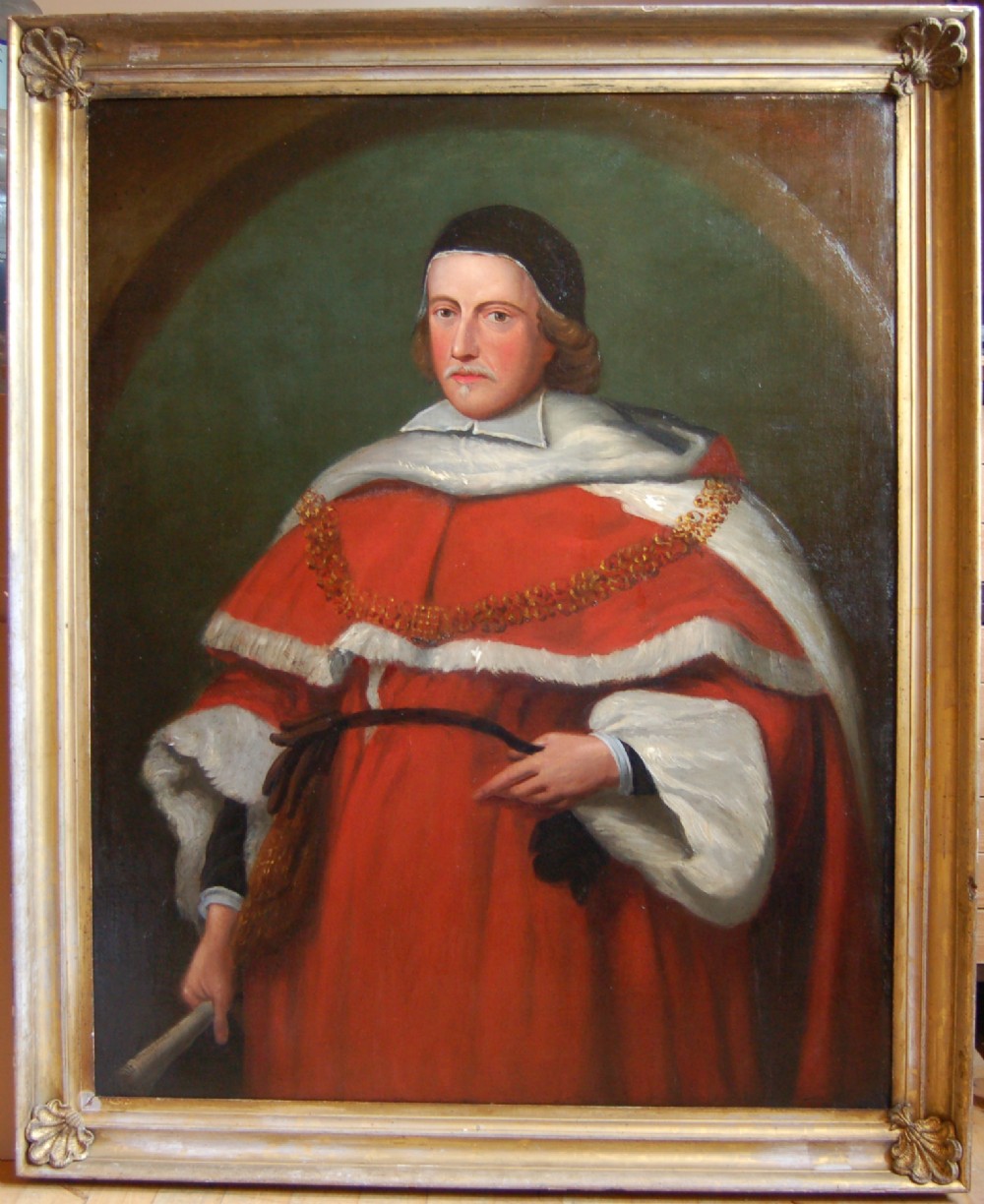
Artware Fineart has dated this piece to the 18th Century.
His paternal grandfather was a rich clothier of Wotton-under-Edge; on his mother's side he was connected with the noble family of the Poyntzes of Acton. Left an orphan when five years old, he was placed by his guardian under the care of the Puritan vicar of Wotton-under-Edge, with whom he remained until he attained his sixteenth year, when he entered Magdalen Hall, Oxford. At Oxford, Hale studied for several terms with a view to holy orders, but suddenly there came a change. The diligent student, at first attracted by a company of strolling players, threw aside his studies, and plunged carelessly into gay society. He soon decided to change his profession; and resolved to trail a pike as a soldier under the prince of Orange in the Low Countries. Before going abroad, however, Hale found himself obliged to proceed to London in order to give instructions for his defense in a legal action which threatened to deprive him of his patrimony. His leading counsel was the celebrated Serjeant Glanville (1586-1661), who, perceiving in the acuteness and sagacity of his youthful client a peculiar fitness for the legal profession, succeeded, with much difficulty, in inducing him to renounce his military for a legal career, and on the 8th of November 1629 Hale became a member of the honorable society of Lincoln's Inn.
He immediately resumed his habits of intense application. The rules which he laid down for himself, and which are still extant in his handwriting, prescribe sixteen hours a day of close application, and prove, not only the great mental power, but also the extraordinary physical strength he must have possessed, and for which indeed, during his residence at the university, he had been remarkable. During the period allotted to his preliminary studies, he read over and over again all the yearbooks, reports, and law treatises in print, and at the tower of london and other antiquarian repositories examined and carefully studied the records from the foundation of the English monarchy down to his own time. But Hale did not confine himself to law. He dedicated no small portion of his time to the study of pure mathematics, to investigations in physics and chemistry, and even to anatomy and architecture; and there can be no doubt that this varied learning enhanced considerably the value of many of his judicial decisions.

Hale was called to the bar in 1637, and almost at once found himself in full practice. Though neither a fluent speaker nor bold pleader, in a very few years he was at the head of his profession. He entered public life at perhaps the most critical period of English history.
Artware Fineart has dated this piece to the 18th Century.
You can view the stock and full dealer information on the Artware Fineart Profile Page
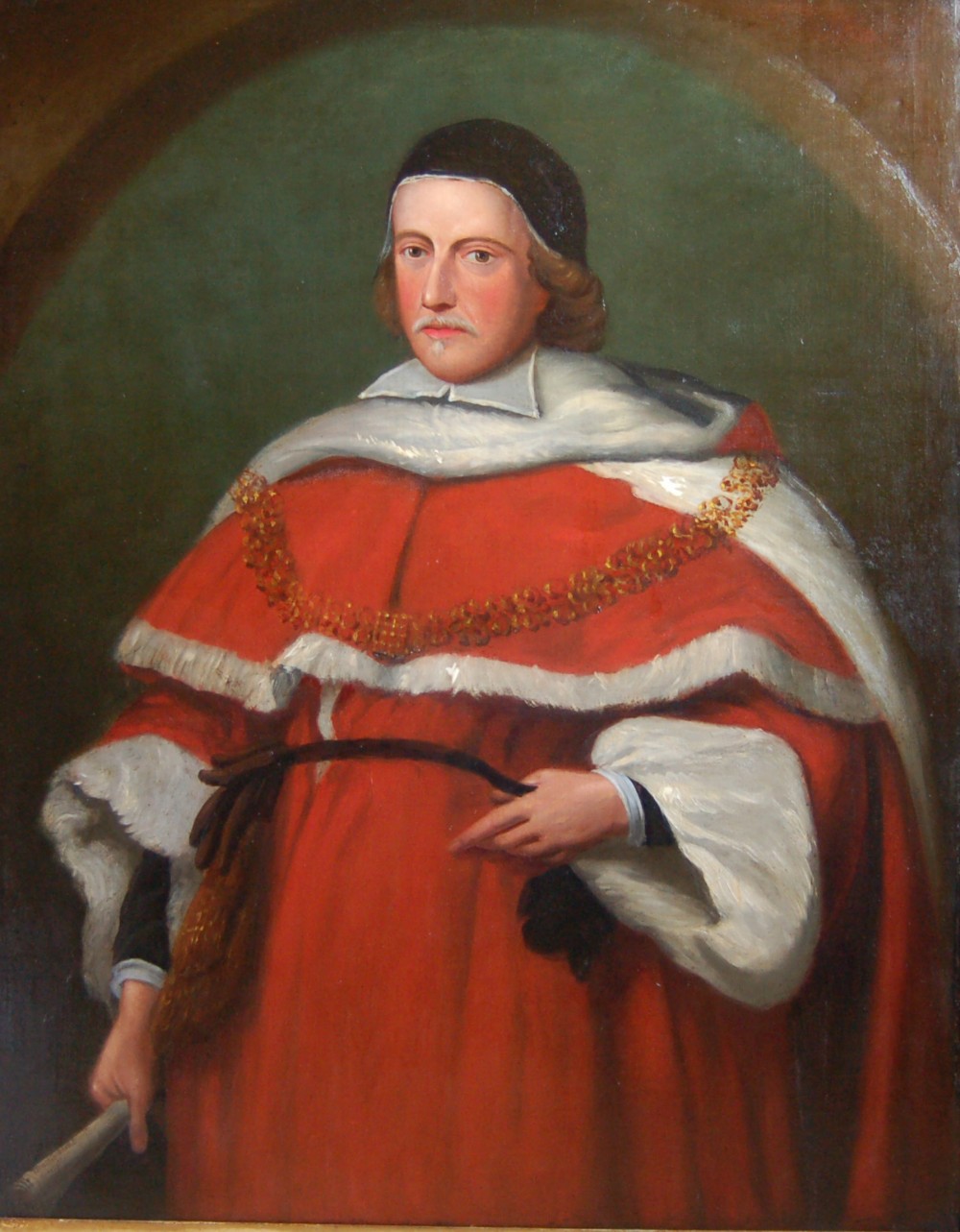
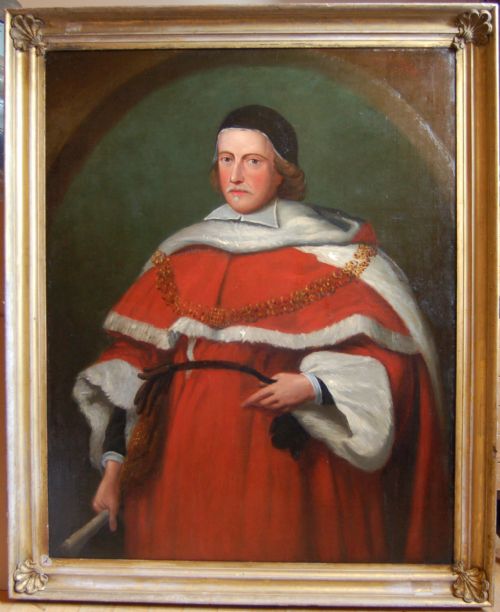
Portrait of Sir Matthew Hale, Lord Chief Justice of England 1609-1676, After John Michael Wright, Circa 1617-1694