It was listed by Artware Fineart. Sold pieces stay on Sellingantiques as a record of what has passed through, and the next one is rarely far away.
Artware Fineart has dated this piece to the 19th Century.
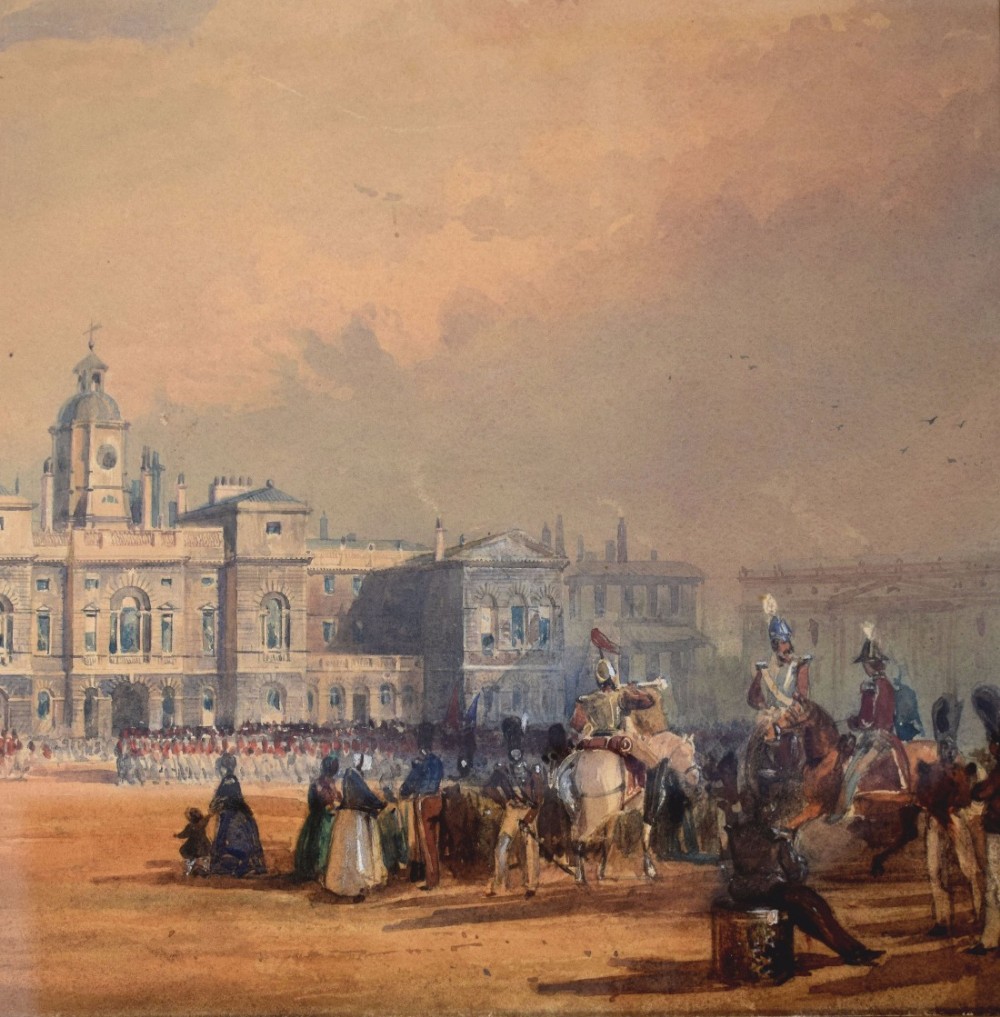
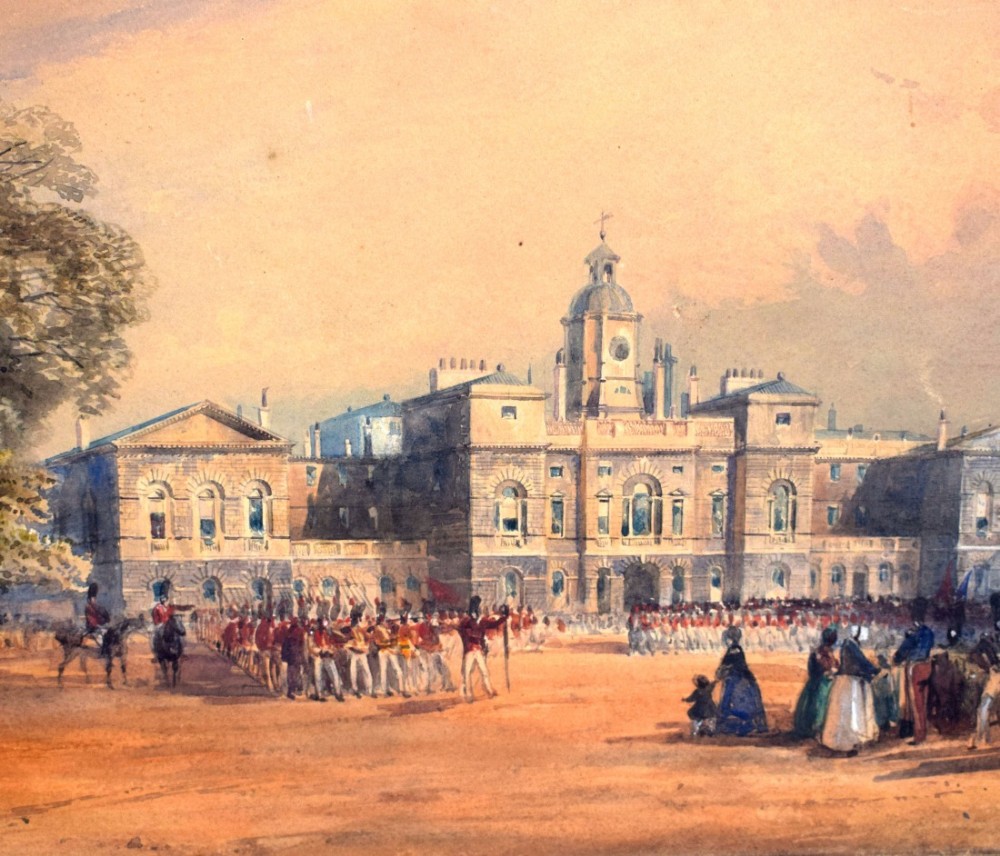
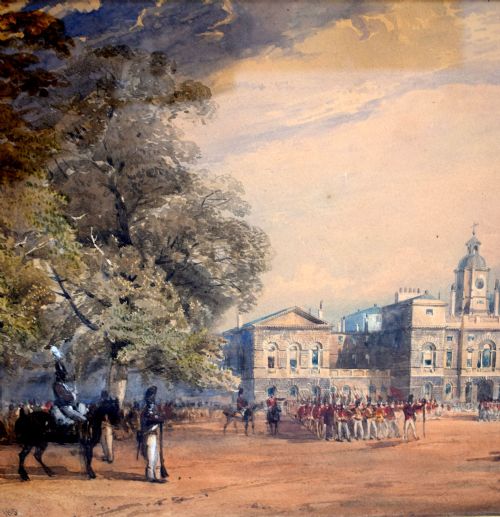
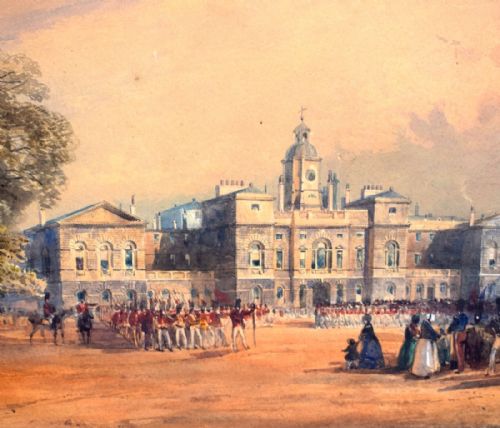
The Trooping of the Colour, Horse Guards parade Whitehall, 1851
22nd August 1851
Signed/Inscribed:
"W C Smith 1851"
pencil and watercolour
20 x 45 cm. (7.3/4 x 17.3/4in.)
Provenance
The Museum Galleries, 38 Piccadilly
Notes
Trooping the Colour is a ceremony performed by regiments of the British and Commonwealth armies.
On battlefields, a regiment's colours, or flags, were used as rallying points. Consequently, regiments would have their ensigns slowly march with their colours between the soldiers' ranks to enable soldiers to recognise their regiments' colours. Since 1748 Trooping the Colour has also marked the official birthday of the British sovereign. It is held in London annually on a Saturday in June on Horse Guards Parade by St. James's Park, and coincides with the publication of the Birthday Honours List. Among the audience are the Royal Family, invited guests, ticketholders and the general public. The colourful ceremony, also known as "The Queen's Birthday Parade", is broadcast live by the BBC within the UK and is telecast also in Germany and Belgium.
The Queen travels down The Mall from Buckingham Palace in a royal procession with a sovereign's escort of Household Cavalry (mounted troops or horse guards). After receiving a royal salute, she inspects her troops of the Household Division, both foot guards and horse guards, and the King's Troop, Royal Horse Artillery. Each year, one of the foot-guards regiments is selected to troop its colour through the ranks of guards. Then the entire Household Division assembly conducts a march past the Queen, who receives a salute from the saluting base. Parading with its guns, the King's Troop takes precedence as the mounted troops perform a walk-march and trot-past.
The music is provided by the massed bands of the foot guards and the mounted bands of the Household Cavalry, together with a Corps of Drums, and occasionally pipers, totalling approximately 400 musicians.
Returning to Buckingham Palace, the Queen watches a further march-past from outside the gates. Following a 41-gun salute by the King's Troop in Green Park, she leads the Royal Family on to the palace balcony for a Royal Air Force flypast. A regiment's colours embody its spirit and service, as well as its fallen soldiers. The loss of a colour, or the capture of an enemy colour, were respectively considered the greatest shame, or the greatest glory on a battlefield. Consequently, regimental colours are venerated by officers and soldiers of all ranks, second only to the sovereign. Only battalions of infantry regiments of the line carry colours; the Royal Artillery's colours, for example, are its guns. Rifle regiments did not form a line and thus never carried colours. Their battle honours are carried on their drums. The exception to this is the Honourable Artillery Company, which has both a stand of colours and guns. Trooping the Colour is an old ceremony whereby a battalion would fall in by companies and the colour-party would "troop" or march the colours through the ranks so that every man would see that the colours were intact. This was done before and after every battle. This ceremony has been retained through time and is today largely ceremonial.
In the United Kingdom, Trooping the Colour is also known as the Queen's Birthday Parade. It has marked the official birthday of the sovereign since 1748, and has occurred annually since 1820 (except in bad weather, periods of mourning and other exceptional circumstances).The first Trooping of the Colour took place on Horse Guards Parade on 4 June 1805. From the reign of King Edward VII, the sovereign has taken the salute in person. It was Edward VII who moved Trooping the Colo
Artware Fineart has dated this piece to the 19th Century.
You can view the stock and full dealer information on the Artware Fineart Profile Page
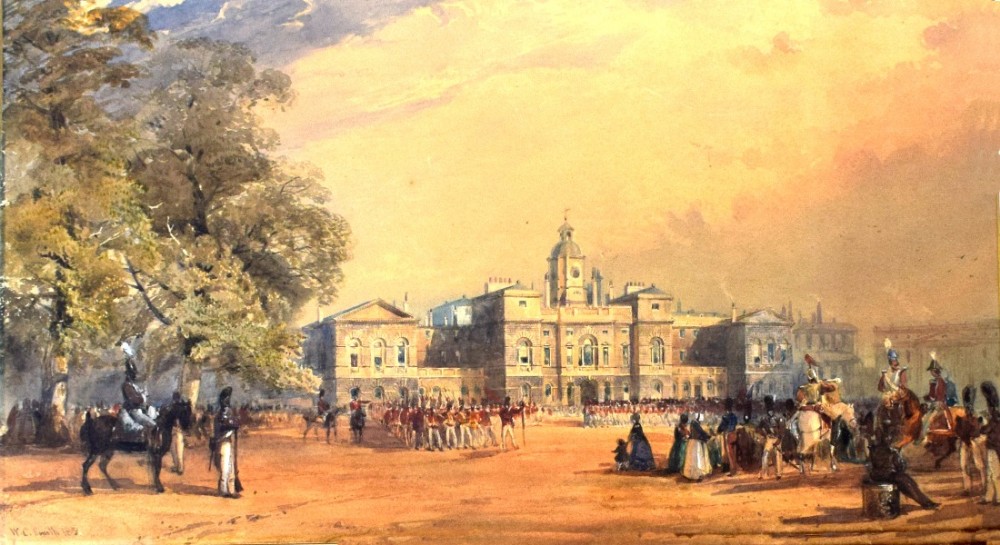
William Collingwood Smith, 1815 - 1887 The Trooping of the Colour, Horse Guards Parade Whitehall, 1851