69,681  PAGES BROWSED TODAY PAGES TODAY • 27 ANTIQUES UPLOADED TODAYNEW ARRIVALS
GIFTS
27 ITEMS ADDED TODAY
Sort Order
Items Per Page
Browse Categories
Sort order
Items per page
ID #SA441094
SOLD
Email Phone
Save
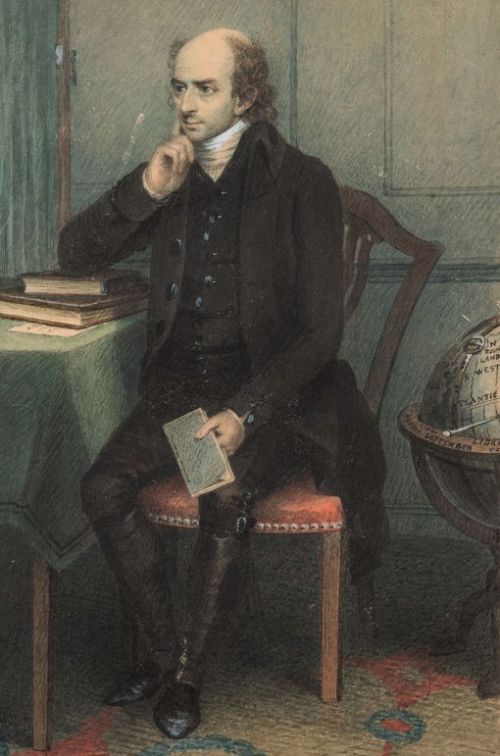
James Green, 1771-1834 Portrait of the Rev Gilbert Wakefield 1756–1801
Sold by Artware Fineart
sold SA441094
Sorry, but this item has been sold.

Artware Fineart

Sellingantiques Verified Since Sep 2008
Browse dealers 243 items
Id #SA441094
PDF SHARE
SAVE

James Green, 1771-1834 Portrait of the Rev Gilbert Wakefield 1756–1801

18th century
Sold 7 January 2019 · Artware Fineart
This “James Green, 1771-1834 Portrait of the Rev Gilbert Wakefield 1756–1801” found a buyer.

It was listed by Artware Fineart. Sold pieces stay on Sellingantiques as a record of what has passed through, and the next one is rarely far away.

Description

James Green, 1771-1834

Portrait of The Rev Gilbert Wakefield 1756–1801

Signed/Inscribed:

"J Green 1795"

pencil and watercolour

21 x 18 cm. 8.14/ x 7.1/4 in.

Gilbert Wakefield, (1756–1801), biblical scholar and religious controversialist, born on 22 February 1756 in the parsonage-house of St Nicholas's, Nottingham, was the third son of George Wakefield (1720–1776), rector of that parish and later vicar of Richmond and Kingston, and his wife, Elizabeth (1721–1800), whose grandfather had been twice mayor of Nottingham. From infancy, Wakefield showed a remarkable aptitude for learning, but his early education was erratic: passed from master to master, he made considerable progress after enrolling at the free school of Kingston in 1770. There he was among the last to study with Richard Wooddeson, who had counted George Steevens, Edward Gibbon, and William Hayley among his scholars.

In April 1772 Wakefield entered Jesus College, Cambridge, having obtained a Marsden scholarship, established ‘for the son of a living clergyman, born at Nottingham, both of which conditions were united in me’ (Memoirs of the Life, 1.62). As was customary, he divided his studies between mathematics and classics, preferring the latter, but applying himself to the former ‘with all the assiduity that I could bear’ (ibid., 1.83). When not engaged in formal study, he taught himself Hebrew, played cricket and fished, published a volume of Latin verse (1776), and befriended Robert Tyrwhitt and John Jebb (who also inclined to Unitarian views). He received his BA in January 1776, second wrangler and second chancellor medallist in classics. In April of that year he was elected fellow of his college.

Wakefield spent the years of his fellowship dedicated to biblical studies, acquiring several oriental languages as he did so. In 1778 he was ordained deacon, in spite of growing doubts about matters of doctrine and scruples about the practice of subscription to the Thirty-Nine Articles (several Jesuans, including Tyrwhitt, had recently resigned their fellowships over this practice). It was, he later wrote, ‘the most disingenuous action of my whole life; utterly incapable of palliation or apology’ (Memoirs of the Life, 1.121). His clerical life lasted just over a year: he served as curate in Stockport, Cheshire, under a Mr Watson, then successively at St Peter's and St Paul's in Liverpool, all the while hoping to find employment as a schoolmaster. In Liverpool he crusaded against the slave trade and British privateering, and denounced both practices from the pulpit, angering many parishioners. This was the first sign of the political activism that was to characterize his later life.

On 23 March 1779 Wakefield married Anne Watson (d. 1819), the niece of his rector in Stockport. The couple had five sons and two daughters. Wakefield gave up his fellowship on marrying, and shortly afterwards he resigned his curacy as well because of doctrinal differences. Wakefield's study of scripture had led him to reject the doctrines of the Trinity and incarnation. Yet he embraced the teachings of Jesus Christ, whom he regarded as the greatest moral philosopher, sent by God to redeem mankind. Chief among these teachings was the mandate to love one another, and the corollary to it was service to the poor, respect for individual liberty, and the pursuit of peace. Initially he was opposed to all but defensive war, and later became a total pacifist. Although technically a dissenter or Unitarian, Wakefield never associated himself with any sect or congregation, being averse to most forms of worship.

In the summer of 1779 Wakefield accepted an appointment as classical tutor at Warrington Academy, the prominent dissenting academy where Joseph Priestley had taught, and where John Aikin was tutor of divinity and William Enfield tutor of philosophy. The years at Warring

Date of Manufacture

Artware Fineart has dated this piece to the 18th Century.

Physical Dimensions
Height
21cm (8.27")
Width
18cm (7.09")
Depth
2cm (0.79")
Reference Numbers
Sellingantiques Reference
SA441094
Dealers Internal Reference
3884
Description
James Green, 1771-1834

Portrait of The Rev Gilbert Wakefield 1756–1801

Signed/Inscribed:

"J Green 1795"

pencil and watercolour

21 x 18 cm. 8.14/ x 7.1/4 in.

Gilbert Wakefield, (1756–1801), biblical scholar and religious controversialist, born on 22 February 1756 in the parsonage-house of St Nicholas's, Nottingham, was the third son of George Wakefield (1720–1776), rector of that parish and later vicar of Richmond and Kingston, and his wife, Elizabeth (1721–1800), whose grandfather had been twice mayor of Nottingham. From infancy, Wakefield showed a remarkable aptitude for learning, but his early education was erratic: passed from master to master, he made considerable progress after enrolling at the free school of Kingston in 1770.
“
There he was among the last to study with Richard Wooddeson, who had counted George Steevens, Edward Gibbon, and William Hayley among his scholars.
Artware Fineart
fig 1. James Green, 1771-1834
Portrait of The Rev Gilbert Wakefield 1756–1801
fig 1. James Green, 1771-1834 Portrait of the Rev Gilbert Wakefield 1756–1801

In April 1772 Wakefield entered Jesus College, Cambridge, having obtained a Marsden scholarship, established ‘for the son of a living clergyman, born at Nottingham, both of which conditions were united in me’ (Memoirs of the Life, 1.62). As was customary, he divided his studies between mathematics and classics, preferring the latter, but applying himself to the former ‘with all the assiduity that I could bear’ (ibid., 1.83). When not engaged in formal study, he taught himself Hebrew, played cricket and fished, published a volume of Latin verse (1776), and befriended Robert Tyrwhitt and John Jebb (who also inclined to Unitarian views). He received his BA in January 1776, second wrangler and second chancellor medallist in classics. In April of that year he was elected fellow of his college.
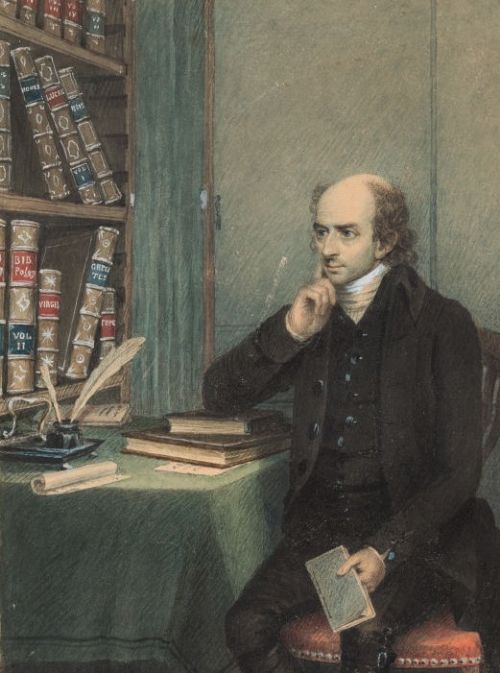
fig 2. James Green, 1771-1834
Portrait of The Rev Gilbert Wakefield 1756–1801
fig 2. James Green, 1771-1834 Portrait of the Rev Gilbert Wakefield 1756–1801

Wakefield spent the years of his fellowship dedicated to biblical studies, acquiring several oriental languages as he did so. In 1778 he was ordained deacon, in spite of growing doubts about matters of doctrine and scruples about the practice of subscription to the Thirty-Nine Articles (several Jesuans, including Tyrwhitt, had recently resigned their fellowships over this practice). It was, he later wrote, ‘the most disingenuous action of my whole life; utterly incapable of palliation or apology’ (Memoirs of the Life, 1.121). His clerical life lasted just over a year: he served as curate in Stockport, Cheshire, under a Mr Watson, then successively at St Peter's and St Paul's in Liverpool, all the while hoping to find employment as a schoolmaster. In Liverpool he crusaded against the slave trade and British privateering, and denounced both practices from the pulpit, angering many parishioners. This was the first sign of the political activism that was to characterize his later life.

On 23 March 1779 Wakefield married Anne Watson (d. 1819), the niece of his rector in Stockport. The couple had five sons and two daughters. Wakefield gave up his fellowship on marrying, and shortly afterwards he resigned his curacy as well because of doctrinal differences. Wakefield's study of scripture had led him to reject the doctrines of the Trinity and incarnation. Yet he embraced the teachings of Jesus Christ, whom he regarded as the greatest moral philosopher, sent by God to redeem mankind. Chief among these teachings was the mandate to love one another, and the corollary to it was service to the poor, respect for individual liberty, and the pursuit of peace. Initially he was opposed to all but defensive war, and later became a total pacifist. Although technically a dissenter or Unitarian, Wakefield never associated himself with any sect or congregation, being averse to most forms of worship.

In the summer of 1779 Wakefield accepted an appointment as classical tutor at Warrington Academy, the prominent dissenting academy where Joseph Priestley had taught, and where John Aikin was tutor of divinity and William Enfield tutor of philosophy. The years at Warring

Date of Manufacture

Artware Fineart has dated this piece to the 18th Century.

Height
21cm (8.27")
Width
18cm (7.09")
Depth
2cm (0.79")
Reference Numbers
Sellingantiques Ref
SA441094
Dealers Internal Ref
3884
Artware Fineart
Sellingantiques verified Since Sep 2008
Dealer Profile

You can view the stock and full dealer information on the Artware Fineart Profile Page

PDF SHARE
SAVE
James Green, 1771-1834
Portrait of The Rev Gilbert Wakefield 1756–1801 SOLD6+ MONTHS AGO
1 / 3
Archive I James Green, 1771-1834
Portrait of The Rev Gilbert Wakefield 1756–1801 SOLD6+ MONTHS AGO

James Green, 1771-1834 Portrait of the Rev Gilbert Wakefield 1756–1801

Archive II James Green, 1771-1834
Portrait of The Rev Gilbert Wakefield 1756–1801 View II
Archive III James Green, 1771-1834
Portrait of The Rev Gilbert Wakefield 1756–1801 View III
Enlarged Archival View
Telephone 07958 699 645
Location
18 La Gare
51 Surrey Row
London
SE1 0BZ
United Kingdom
Verified Since Sep 2008
Items For Sale 243
Items Sold 223
Artware Fineart
Verified Since Sep 2008
View Dealer Info
Location: 18 La Gare , 51 Surrey Row , London , SE1 0BZ , United Kingdom
Verified
Sep 2008
For Sale
243
Sold
223
James Green, 1771-1834
Portrait of The Rev Gilbert Wakefield 1756–1801
James Green, 1771-1834 Portrait of The Rev Gilbert Wakefield 1756–1801
Ref: SA441094
James Green, 1771-1834
Portrait of The Rev Gilbert Wakefield 1756–1801
Detail View 1
Detail View 2
Archival Detail
Every single antique dealer on our platform is individually approved by our internal team. We verify their professional trade history, ethical standards, and photographic quality to ensure a secure, high-standard buying environment. Upon joining, every dealer agrees to a strict 9-point code of conduct. While issues can occasionally arise, our dealers typically resolve them swiftly and directly with the buyer. In fact, since our founding in 2002, Sellingantiques has only had to step in to help resolve an issue on roughly five occasions—a true testament to the quality of our dealers and their dedication to your happiness.
Our dealers are highly experienced in packing and shipping fragile, high-value antiques. Because you are in direct contact with the dealer, you will be able to easily go through all available shipping and insurance options together to ensure your item arrives safely.
Antiques are the ultimate green purchase. By choosing historical pieces over newly manufactured goods, you completely eliminate the carbon footprint of modern mass production while preserving exceptional, timeless craftsmanship.
Written by Sellingantiques from the dealer’s photographs and listing
  • Period18th century
  • SizeH 21 cm (8 in) x W 18 cm (7 in) x D 2 cm (1 in)
items
Add keywords to the filter
Price
£100
£250000
Era
Period
Style
Material
Origin
Stock Location
Recently Added
Online Payments
Categories