18,938  PAGES BROWSED TODAY PAGES TODAY 109 ANTIQUES UPLOADED TODAYNEW ARRIVALS
109 ITEMS ADDED TODAY
Sort Order
Items Per Page
Browse Categories
Sort order
Items per page
ID #SA42180
SOLD
Email Phone WhatsApp
Save
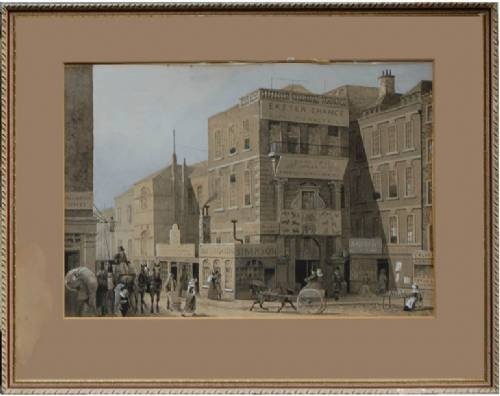
The Exeter Exchange, Popularly Known as Exeter Change by Thomas Hosmer Shepherd
Sold by Artware Fineart
sold SA42180
Sorry, but this item has been sold.

Artware Fineart

Sellingantiques Verified Since Sep 2008
Id #SA42180
PDF SHARE
SAVE

The Exeter Exchange, Popularly Known as Exeter Change by Thomas Hosmer Shepherd

19th century
Description

pencil and watercolour

9 x 13 in. (23 x 34 cm. )

Thomas Hosmer Shepherd (1792 – 1864) was a watercolor artist well known for his architectural works. Son of an architectural draughtsman, Shepherd was employed to illustrate architecture in London, and later Edinburgh, Bath and Bristol. His paintings were the basis for steel engravings in many books.
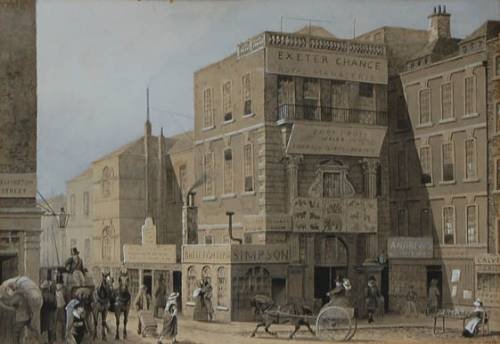
Shepherd's work, mostly topographical, is characterized by an attention to detail, along with lifelike scenes that contained people, carriages and horses. His first acclaim came with Metropolitan improvements, a publication of modern London architecture commissioned by Jones & Co. He worked mostly for Frederick Crace, who employed him to paint old London buildings prior to their demolition, with much of the work surviving in the Crace collection at the British Museum.
The Exeter Exchange (popularly known as Exeter Change) was a building on the north side of the Strand in London, with an arcade extending partway across the carriageway. It is most famous for the menagerie that occupied its upper floors for over 50 years, from 1773 until it was demolished in 1829. Exeter Exchange was built in 1676, on the site of the demolished Exeter House (formerly Burghley House and Cecil House), London residence of the Earls of Exeter, almost opposite the Savoy. Around the same time, the nearby Burleigh Street and Exeter Street were laid out. The Exeter Exchange originally housed small shops (milliners, drapers, hosiers) on the ground floor, and rooms above which were let to the Land Bank. Over time, the traders on the ground floor were replaced by offices, and the upper rooms were used for storage.

Physical Dimensions
Height
33cm (12.99")
Width
44cm (17.32")
Depth
0.5cm (0.20")
Declaration

Artware Fineart has dated this piece to the 19th Century.

Reference Numbers
Sellingantiques Reference
SA42180
Dealers Internal Reference
3143
Description
Pencil and watercolour

9 x 13 in. (23 x 34 cm. )

Thomas Hosmer Shepherd (1792 – 1864) was a watercolor artist well known for his architectural works.

Son of an architectural draughtsman, Shepherd was employed to illustrate architecture in London, and later Edinburgh, Bath and Bristol.
Artware Fineart

His paintings were the basis for steel engravings in many books.

fig 1. The Exeter Exchange,  popularly known as Exeter Change by Thomas Hosmer Shepherd
fig 1. The Exeter Exchange, Popularly Known as Exeter Change by Thomas Hosmer Shepherd

Shepherd's work, mostly topographical, is characterized by an attention to detail, along with lifelike scenes that contained people, carriages and horses. His first acclaim came with Metropolitan improvements, a publication of modern London architecture commissioned by Jones & Co. He worked mostly for Frederick Crace, who employed him to paint old London buildings prior to their demolition, with much of the work surviving in the Crace collection at the British Museum.

fig 2. The Exeter Exchange,  popularly known as Exeter Change by Thomas Hosmer Shepherd
fig 2. The Exeter Exchange, Popularly Known as Exeter Change by Thomas Hosmer Shepherd

The Exeter Exchange (popularly known as Exeter Change) was a building on the north side of the Strand in London, with an arcade extending partway across the carriageway. It is most famous for the menagerie that occupied its upper floors for over 50 years, from 1773 until it was demolished in 1829. Exeter Exchange was built in 1676, on the site of the demolished Exeter House (formerly Burghley House and Cecil House), London residence of the Earls of Exeter, almost opposite the Savoy. Around the same time, the nearby Burleigh Street and Exeter Street were laid out. The Exeter Exchange originally housed small shops (milliners, drapers, hosiers) on the ground floor, and rooms above which were let to the Land Bank. Over time, the traders on the ground floor were replaced by offices, and the upper rooms were used for storage.

Height
33cm (12.99")
Width
44cm (17.32")
Depth
0.5cm (0.20")
Date of Manufacture

Artware Fineart has dated this piece to the 19th Century.

Reference Numbers
Sellingantiques Ref
SA42180
Dealers Internal Ref
3143
Artware Fineart
Sellingantiques verified Since Sep 2008
Dealer Profile

You can view the stock and full dealer information on the Artware Fineart Profile Page
PDF SHARE
SAVE
The Exeter Exchange,  popularly known as Exeter Change by Thomas Hosmer Shepherd

1 / 5
Archive I The Exeter Exchange,  popularly known as Exeter Change by Thomas Hosmer Shepherd
The Exeter Exchange, Popularly Known as Exeter Change by Thomas Hosmer Shepherd

Archive II The Exeter Exchange,  popularly known as Exeter Change by Thomas Hosmer Shepherd View II
Archive III The Exeter Exchange,  popularly known as Exeter Change by Thomas Hosmer Shepherd View III
Archive IV The Exeter Exchange,  popularly known as Exeter Change by Thomas Hosmer Shepherd View IV
Archive V The Exeter Exchange,  popularly known as Exeter Change by Thomas Hosmer Shepherd View V
Enlarged Archival View
Telephone 07958 699 645
Location
18 La Gare
51 Surrey Row
London
SE1 0BZ
United Kingdom
Verified Since Sep 2008
Items For Sale 243
Items Sold 223
Artware Fineart
Verified Since Sep 2008
View Dealer Info
Location: 18 La Gare , 51 Surrey Row , London , SE1 0BZ , United Kingdom
Verified
Sep 2008
For Sale
243
Sold
223
The Exeter Exchange,  popularly known as Exeter Change by Thomas Hosmer Shepherd
The Exeter Exchange, popularly known as Exeter Change by Thomas Hosmer Shepherd
Ref: SA42180
The Exeter Exchange,  popularly known as Exeter Change by Thomas Hosmer Shepherd
Detail View 1
Detail View 2
Detail View 3
Detail View 4
Archival Detail
Every single antique dealer on our platform is individually approved by our internal team. We verify their professional trade history, ethical standards, and photographic quality to ensure a secure, high-standard buying environment. Upon joining, every dealer agrees to a strict 9-point code of conduct. While issues can occasionally arise, our dealers typically resolve them swiftly and directly with the buyer. In fact, since our founding in 2002, Sellingantiques has only had to step in to help resolve an issue on roughly five occasions—a true testament to the quality of our dealers and their dedication to your happiness.
Our dealers are highly experienced in packing and shipping fragile, high-value antiques. Because you are in direct contact with the dealer, you will be able to easily go through all available shipping and insurance options together to ensure your item arrives safely.
Antiques are the ultimate green purchase. By choosing historical pieces over newly manufactured goods, you completely eliminate the carbon footprint of modern mass production while preserving exceptional, timeless craftsmanship.
items
Add keywords to the filter
Price
£100
£250000
Era
Movements
Material
Origin
Stock Location
Freshness
Online Payments
Categories