It was listed by Artware Fineart. Sold pieces stay on Sellingantiques as a record of what has passed through, and the next one is rarely far away.
Artware Fineart has dated this piece to the 18th Century.
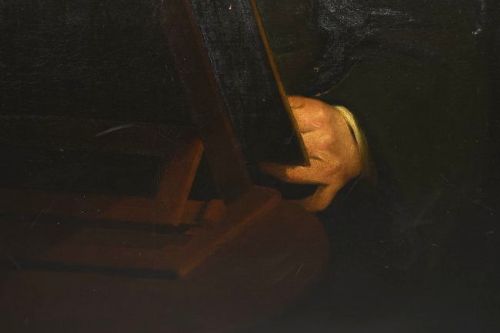
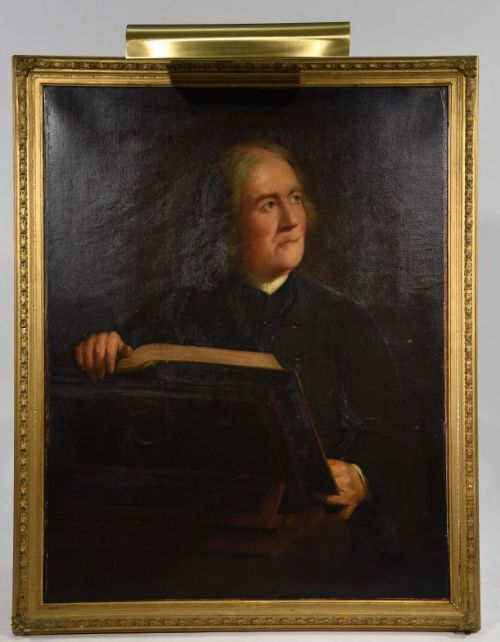
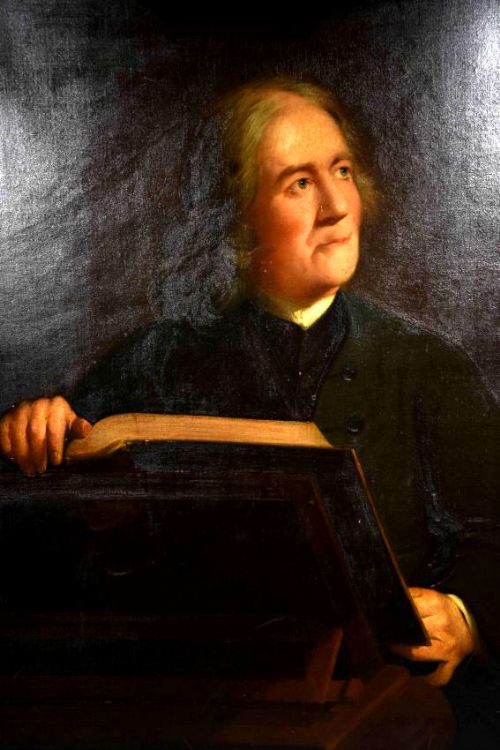
'The Parish Clerk’ (Edward Orpin, Parish Clerk of Bradford-upon-Avon) 1692-1781
Edward Orpin, Parish Clerk of Bradford-upon-Avon, 1692-1781
oil on canvas
38 x 28in. (96 x 72 cm.)
His duties in the town were various, including transcribing registers, acting as Coroner or Clerk of the Market (in which role he enforced the weights and measures laws at markets and fairs) and, as vestry clerk, doing everything from organising the church laundry to dealing with church taxes. With his long service, and his prominent historic home in the town centre (now known as Orpin House) he was a well-known local figure. There are several portraits of Orpin, the famous portrait in The Tate, (a larger and more detailed version of this one) a Portrait in the Philadelphia Art Gallery of Orpin standing with a Beadles Staff, all of these portraits have been debated at length as to their authorship.
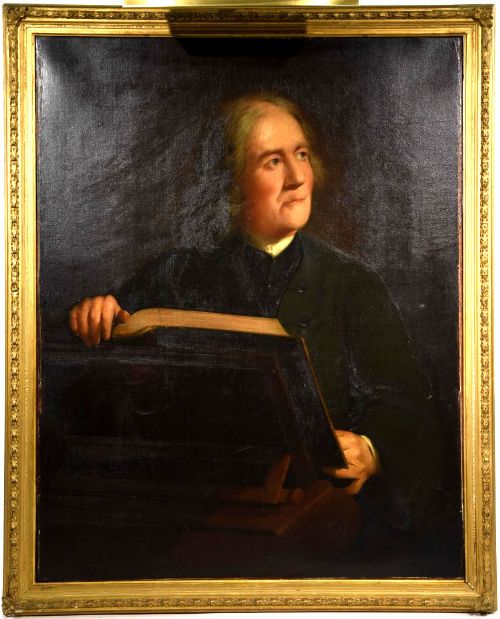
Circumstantial evidence has lent credibility to the attribution of the portrait in the Tate to Gainsborough, despite the absence of supporting documentation. Gainsborough had connections with the Orpin family, as he was a neighbour of Edward Orpin’s son Thomas Orpin (d.1797), who was a successful music teacher in Bath.
Importantly, the painter was a friend of John Wiltshire’s father, Walter Wiltshire (1719–1799), the wealthy Bath merchant whose carrier service he used to transport paintings to London while he was based in the west country city (1760–1774). We know that Wiltshire obtained paintings directly from Gainsborough, including the famous The Harvest Waggon (Barber Institute of Arts, University of Birmingham), the painting noted as ‘well known’ by Britton (as quoted above). All the other paintings attributed to Gainsborough in the Wiltshire sale of 1867, and apparently sharing the same provenance, remain identified as works by that artist. However, it cannot be certain whether this work was owned by Walter Wiltshire or was acquired by the family at a later date (but of course, before 1814 when it was exhibited by his son).
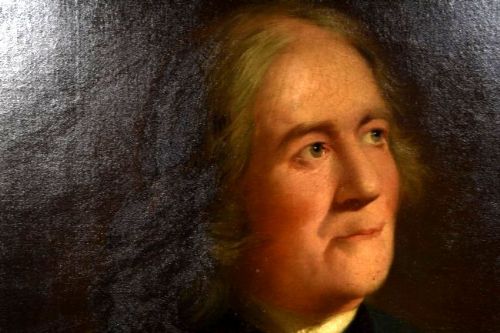
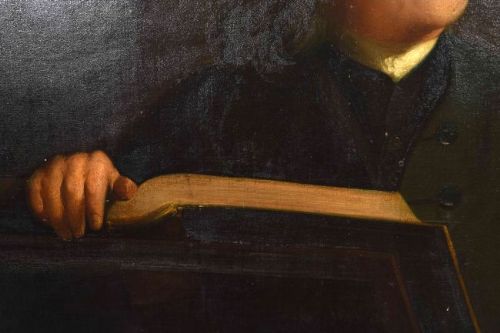
The painting was acclaimed as a masterpiece when it was first displayed as part of the National Gallery collection of British art at South Kensington in 1867. A reporter for the London newspaper, the Standard (26 December 1867), was enraptured: The artist has drawn with his pencil as noble a portrait of the parish clerk as that the poet Goldsmith drew in verse of the country clergyman.11 The old man looks up from his Bible to the skies with inquiring gaze. Perhaps just a shade of misgiving may exist, to trouble the venerable clerk’s thoughts, but the doubt, if doubt exists, will only be transitory in the good man’s mind. We might wish for more such deserving subjects for the pencil, and for more Gainsboroughs to appreciate and do justice to them.
In 1876 the picture was introduced into a new hang at the National Gallery in Trafalgar Square, paired with the famous painting by Gainsborough of Mrs Siddons (National Gallery, London) at either side of the acclaimed landscape by the same artist, The Watering Place (National Gallery, London). The picture had already been matched to Mrs Siddons in terms of quality and importance; the leading weekly journal Illustrated London News proclaimed both were ‘unsurpassedly fine’.12 The later arrangement at the National Gallery seems to have actively invited this comparison. The novelist Charles Dickens, in an essay on the parish clerk for the popular weekly journal All the Year Round in 1880, proclaimed it ‘as fine a specimen of his delineation of men, as is his portrait of Mrs Siddons of women’ and ‘the most perfect picture of a parish clerk ever painted’.13 A journalist in 1885 similarly saw a t
Artware Fineart has dated this piece to the 18th Century.
You can view the stock and full dealer information on the Artware Fineart Profile Page
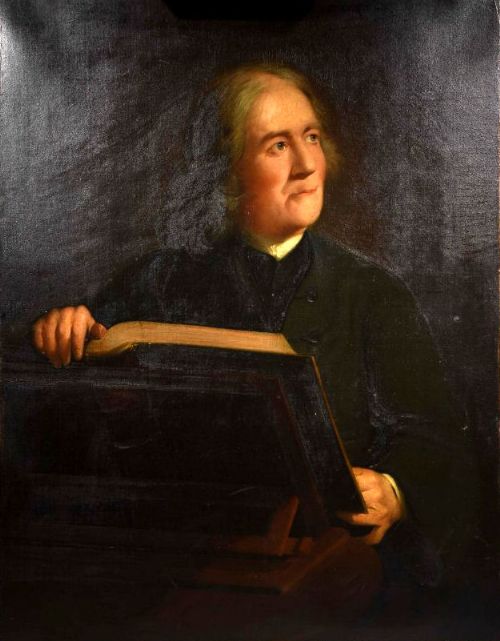
William Hoare of Bath, 1707-1792 'The Parish Clerk’ (Edward Orpin, Parish Clerk of Bradford-upon-avon) 1692-1781 Edward Orpin, Parish Clerk of Bradford-upon-avon, 1692-1781