

It was listed by Artware Fineart. Sold pieces stay on Sellingantiques as a record of what has passed through, and the next one is rarely far away.
Artware Fineart has dated this piece to the Before 1700 period.
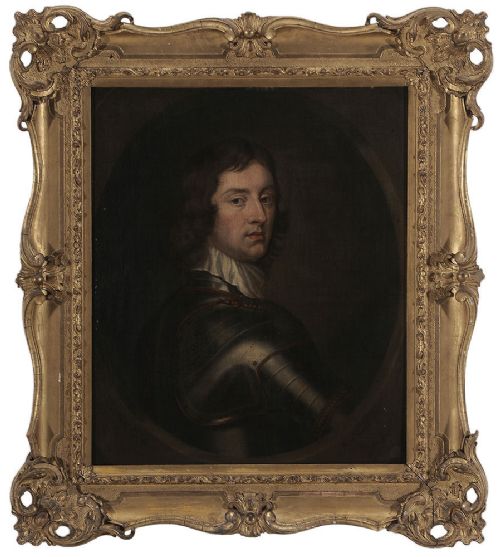
Portrait of John, 1st Viscount Mordaunt (1626-1675) royalist conspirator, in Armour
Signed/Inscribed:
signed lower right "Alexr. Pinxit 1739"
oil on canvas
30 x 25 in. (76 x 64 cm.)
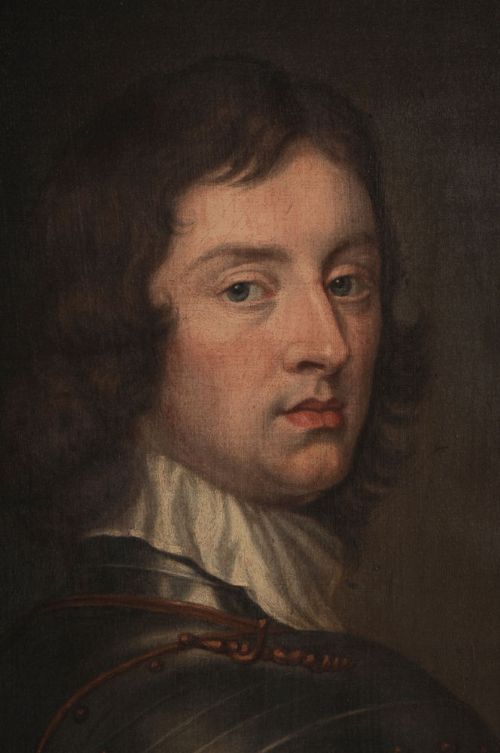
Description
Provenance
Estate of Johnsie Bason Burnham; by descent .
Literature
Mezzotint by Robert Dunkarton (1744-1811)
Notes
John Mordaunt, first Viscount Mordaunt of Avalon (1626–1675), royalist conspirator, was born on 18 June and baptized on 20 June 1626 at Lowick, Northamptonshire, the second son of John Mordaunt, fifth Baron Mordaunt and later first earl of Peterborough (bap. 1599, d. 1643) [see under Mordaunt, Henry], and his wife, Elizabeth (1603–1671), daughter of William, first Baron Howard of Effingham. He was educated privately in France and Italy and it is unclear when he returned from the continent. However, he was in England by July 1648 when he joined his elder brother Henry Mordaunt, second earl of Peterborough, in a royalist uprising. John raised 200 horsemen for the king, but the rising failed and he, along with his brother, fled into exile, staying for a time at The Hague.
Mordaunt had returned to England by 1652, when a challenge to a duel from Brian Cockayne ended in a brief stay in the Tower. He was on the fringes of royalist conspiracy throughout the early and mid-1650s; in 1654 Sir Edward Hyde wrote to him, accepting his offer of service. But he did not play an important role until after his marriage, on 7 May 1657, to Elizabeth (1632/3–1679), daughter of Thomas Carey, second son of Robert, earl of Monmouth. That year he promised 400–500 men for Charles II, and in 1658 he plotted with the marquess of Ormond, in England on a secret visit. A royalist turncoat, John Stapley, betrayed Mordaunt and he was arrested on 1 April 1658. Closely questioned by Cromwell himself he was released and rearrested on 15 April, charged with treason. Mordaunt's trial, before a special commission of forty, began on 1 June, and he avoided the block by a mixture of judicious bribery and blind luck. After first refusing to accept the court's jurisdiction he finally pleaded not guilty. A key witness, one Morley, escaped—possibly through Elizabeth Mordaunt's means—and one of the judges, Colonel Thomas Pride, who was expected to favour a conviction, was taken ill and did not vote. There were nineteen votes for acquittal and nineteen for conviction; the president of the court, John Lisle, spared Mordaunt with his casting vote.
Released shortly afterwards Mordaunt immediately returned to his work for the king. His career as a royalist plotter was difficult: though he had the support and trust of the king, Ormond, and Hyde, many royalists disliked and resented him. Through his mother, a devout presbyterian, he had connections with discontented peers and gentlemen, once parliamentarians, who now favoured a restoration. The exiled court hoped that he could forge an alliance between presbyterians and royalists. Older royalists, particularly members of the devoted, if ineffectual, Sealed Knot, refused to co-operate with Mordaunt, who did not make matters any easier by his headstrong impatience. Hyde expected Mordaunt to be the acknowledged leader of the royalist cause in England and in March 1659 Charles named Mordaunt, along with several members of the Knot, to a ‘Great Trust and Commission’ whose charge was to effect a restoration. The members of the Knot refused to act, and by July 1659 the commission was a largely presbyterian body, dominated by Mordaunt. A mark of the king's favour came in March 1659, when he signed a warrant for Mordaunt's viscountcy as Viscount Mordaunt of Avalon. Despite this, however, bitter divisions among t
Artware Fineart has dated this piece to the Before 1700 period.
You can view the stock and full dealer information on the Artware Fineart Profile Page
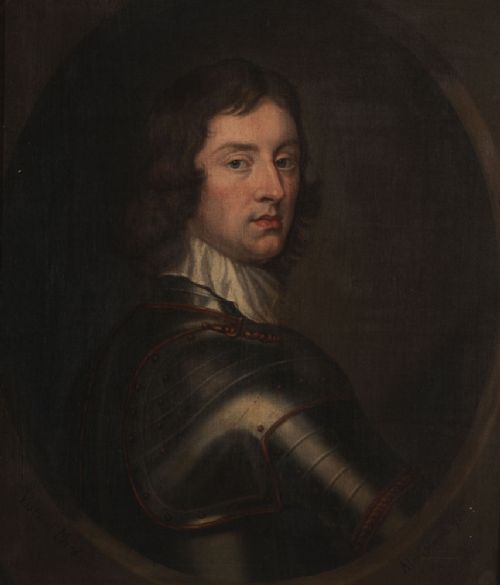
John Alexander, 1686/8 - Circa 1766 Portrait of John, 1st Viscount Mordaunt (1626-1675) Royalist Conspirator, in Armour