984  PAGES BROWSED TODAY PAGES TODAY • 0 ANTIQUES UPLOADED TODAYNEW ARRIVALS
GIFTS
LATEST STOCK
Sort Order
Items Per Page
Browse Categories
Sort order
Items per page
ID #SA398379
SOLD
Email Phone
Save
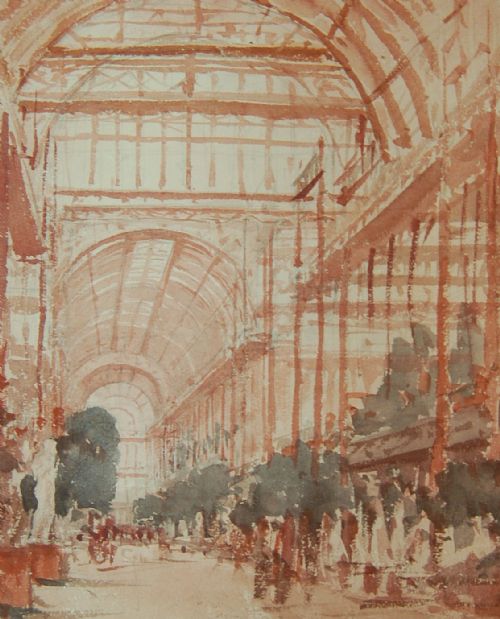
Rev John Louis Petit, 1801 - 1868 Interior of Crystal Palace, Sydenham, London
Sold by Artware Fineart
sold SA398379
Sorry, but this item has been sold.

Artware Fineart

Sellingantiques Verified Since Sep 2008
Browse dealers 243 items
Id #SA398379
PDF SHARE
SAVE

Rev John Louis Petit, 1801 - 1868 Interior of Crystal Palace, Sydenham, London

19th century
Sold 7 October 2021 · Artware Fineart
This “Rev John Louis Petit, 1801 - 1868 Interior of Crystal Palace, Sydenham, London” found a buyer.

It was listed by Artware Fineart. Sold pieces stay on Sellingantiques as a record of what has passed through, and the next one is rarely far away.

Description

Rev John Louis Petit, 1801 - 1868

Interior of Crystal Palace, Sydenham, London

Signed/Inscribed:

"Sydenham"

pencil and watercolour

39 x 28 cm. (15.1/4 x 11in.)

The Crystal Palace was a cast-iron and plate-glass structure erected in Hyde Park, London, England, to house the the Great Exhibition of 1851. More than 14,000 exhibitors from around the world gathered in its 990,000 square feet (92,000 m2) of exhibition space to display examples of the technology developed during the Industrial Revolution. Designed by Sir Joseph Paxton, the Great Exhibition building was 1,851 feet (564 m) long, with an interior height of 128 feet (39 m). The invention of the cast plate glass method in 1848 made possible the production of large sheets of cheap but strong glass, and its use in the Crystal Palace created a structure with the greatest area of glass ever seen in a building and astonished visitors with its clear walls and ceilings that did not require interior lights.Its name Crystal Palace was result of a piece penned by the playwright Douglas Jerrold, who in July 1850 wrote in the satirical magazine Punch as 'Mrs Amelia Mouser' about the forthcoming Great Exhibition of 1851, referring to a palace of very crystal. The name was subsequently repeated even though the building had not been approved.
After the exhibition, the building was rebuilt in an enlarged form on Penge Common, at the top of Penge Peak next to Sydenham Hill, an affluent south London suburb full of large villas. It stood there from 1854 until its destruction by fire in 1936.The name was later used to denote this area of south London and the park that surrounds the site, home of the Crystal Palace National Sports Centre as well as Crystal Palace F.C. who were founded at the Crystal Palace. A re-working of the building, known as The Garden Palace, was constructed in Sydney in 1879, but this building too was destroyed by fire. In 2013 a proposal was made to re-build the Crystal Palace within the Crystal Palace Park, but the project was cancelled in 2015. The park still contains Benjamin Waterhouse Hawkins's Crystal Palace Dinosaurs from 1854.

The Commission in charge of mounting the Great Exhibition was established in January 1850, and it was decided at the outset that the entire project would be funded by public subscription. An executive Building Committee was quickly formed to oversee the design and construction of the exhibition building, comprising Isambard Kingdom Brunel, Robert Stephenson, renowned architects Charles Barry and Thomas Leverton Donaldson, the Duke of Buccleuch and the Earl of Ellesmere, and chaired by William Cubitt. By 15 March 1850 they were ready to invite submissions, which had to conform to several key specifications: the building had to be temporary, simple, as cheap as possible, and economical to build within the short time remaining before the Exhibition opening, which had already been scheduled for 1 May 1851.

Within three weeks, the committee had received some 245 entries, including 38 international submissions from Australia, the Netherlands, Belgium, Hanover, Switzerland, Brunswick, Hamburg and France. Two designs, both in iron and glass, were singled out for praise - one by Richard Turner, co-designer of the Palm House at Kew, and the other by French architect Hector Horeau[8] but despite the great number of submissions, the Committee rejected them all. Turner was furious at the rejection, and reportedly badgered the commissioners for months afterwards, seeking compensation, but at an estimated £300,000, his design (like Horeau's) was too expensive. As a last resort the committee came up with a standby design of its own, for a brick building in the rundbogenstil by Donaldson, featuring a sheet-iron dome designed by Brunel but it was widely criticized and ridiculed when it was published in the newspapers. Adding to the Com

Date of Manufacture

Artware Fineart has dated this piece to the 1850s.

Reference Numbers
Sellingantiques Reference
SA398379
Dealers Internal Reference
3809
Description
Rev John Louis Petit, 1801 - 1868

Interior of Crystal Palace, Sydenham, London

Signed/Inscribed:

"Sydenham"

pencil and watercolour

39 x 28 cm. (15.1/4 x 11in.)

“
The Crystal Palace was a cast-iron and plate-glass structure erected in Hyde Park, London, England, to house the the Great Exhibition of 1851.
Artware Fineart

More than 14,000 exhibitors from around the world gathered in its 990,000 square feet (92,000 m2) of exhibition space to display examples of the technology developed during the Industrial Revolution. Designed by Sir Joseph Paxton, the Great Exhibition building was 1,851 feet (564 m) long, with an interior height of 128 feet (39 m). The invention of the cast plate glass method in 1848 made possible the production of large sheets of cheap but strong glass, and its use in the Crystal Palace created a structure with the greatest area of glass ever seen in a building and astonished visitors with its clear walls and ceilings that did not require interior lights.Its name Crystal Palace was result of a piece penned by the playwright Douglas Jerrold, who in July 1850 wrote in the satirical magazine Punch as 'Mrs Amelia Mouser' about the forthcoming Great Exhibition of 1851, referring to a palace of very crystal. The name was subsequently repeated even though the building had not been approved.

fig 1. Rev John Louis Petit, 1801 - 1868
Interior of Crystal Palace, Sydenham, London
fig 1. Rev John Louis Petit, 1801 - 1868 Interior of Crystal Palace, Sydenham, London

After the exhibition, the building was rebuilt in an enlarged form on Penge Common, at the top of Penge Peak next to Sydenham Hill, an affluent south London suburb full of large villas. It stood there from 1854 until its destruction by fire in 1936.The name was later used to denote this area of south London and the park that surrounds the site, home of the Crystal Palace National Sports Centre as well as Crystal Palace F.C. who were founded at the Crystal Palace. A re-working of the building, known as The Garden Palace, was constructed in Sydney in 1879, but this building too was destroyed by fire. In 2013 a proposal was made to re-build the Crystal Palace within the Crystal Palace Park, but the project was cancelled in 2015. The park still contains Benjamin Waterhouse Hawkins's Crystal Palace Dinosaurs from 1854.

The Commission in charge of mounting the Great Exhibition was established in January 1850, and it was decided at the outset that the entire project would be funded by public subscription. An executive Building Committee was quickly formed to oversee the design and construction of the exhibition building, comprising Isambard Kingdom Brunel, Robert Stephenson, renowned architects Charles Barry and Thomas Leverton Donaldson, the Duke of Buccleuch and the Earl of Ellesmere, and chaired by William Cubitt. By 15 March 1850 they were ready to invite submissions, which had to conform to several key specifications: the building had to be temporary, simple, as cheap as possible, and economical to build within the short time remaining before the Exhibition opening, which had already been scheduled for 1 May 1851.

Within three weeks, the committee had received some 245 entries, including 38 international submissions from Australia, the Netherlands, Belgium, Hanover, Switzerland, Brunswick, Hamburg and France. Two designs, both in iron and glass, were singled out for praise - one by Richard Turner, co-designer of the Palm House at Kew, and the other by French architect Hector Horeau[8] but despite the great number of submissions, the Committee rejected them all. Turner was furious at the rejection, and reportedly badgered the commissioners for months afterwards, seeking compensation, but at an estimated £300,000, his design (like Horeau's) was too expensive. As a last resort the committee came up with a standby design of its own, for a brick building in the rundbogenstil by Donaldson, featuring a sheet-iron dome designed by Brunel but it was widely criticized and ridiculed when it was published in the newspapers. Adding to the Com

Date of Manufacture

Artware Fineart has dated this piece to the 1850s.

Reference Numbers
Sellingantiques Ref
SA398379
Dealers Internal Ref
3809
Artware Fineart
Sellingantiques verified Since Sep 2008
Dealer Profile

You can view the stock and full dealer information on the Artware Fineart Profile Page

PDF SHARE
SAVE
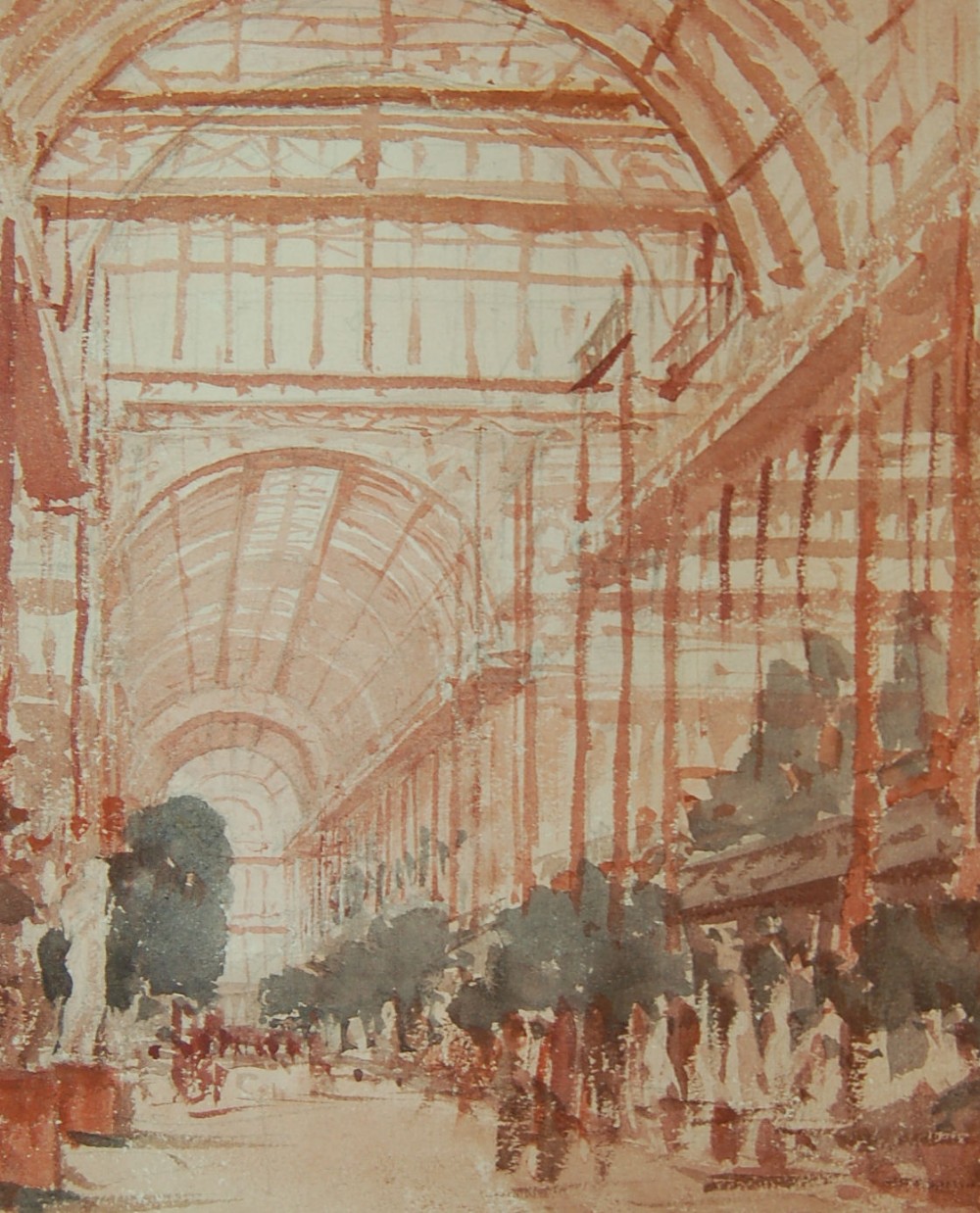
Rev John Louis Petit, 1801 - 1868
Interior of Crystal Palace, Sydenham, London SOLD6+ MONTHS AGO
1 / 2
Archive I Rev John Louis Petit, 1801 - 1868
Interior of Crystal Palace, Sydenham, London SOLD6+ MONTHS AGO

Rev John Louis Petit, 1801 - 1868 Interior of Crystal Palace, Sydenham, London

Archive II Rev John Louis Petit, 1801 - 1868
Interior of Crystal Palace, Sydenham, London View II
Enlarged Archival View
Telephone 07958 699 645
Location
18 La Gare
51 Surrey Row
London
SE1 0BZ
United Kingdom
Verified Since Sep 2008
Items For Sale 243
Items Sold 223
Artware Fineart
Verified Since Sep 2008
View Dealer Info
Location: 18 La Gare , 51 Surrey Row , London , SE1 0BZ , United Kingdom
Verified
Sep 2008
For Sale
243
Sold
223
Rev John Louis Petit, 1801 - 1868
Interior of Crystal Palace, Sydenham, London
Rev John Louis Petit, 1801 - 1868 Interior of Crystal Palace, Sydenham, London
Ref: SA398379
Rev John Louis Petit, 1801 - 1868
Interior of Crystal Palace, Sydenham, London
Detail View 1
Archival Detail
Every single antique dealer on our platform is individually approved by our internal team. We verify their professional trade history, ethical standards, and photographic quality to ensure a secure, high-standard buying environment. Upon joining, every dealer agrees to a strict 9-point code of conduct. While issues can occasionally arise, our dealers typically resolve them swiftly and directly with the buyer. In fact, since our founding in 2002, Sellingantiques has only had to step in to help resolve an issue on roughly five occasions—a true testament to the quality of our dealers and their dedication to your happiness.
Our dealers are highly experienced in packing and shipping fragile, high-value antiques. Because you are in direct contact with the dealer, you will be able to easily go through all available shipping and insurance options together to ensure your item arrives safely.
Antiques are the ultimate green purchase. By choosing historical pieces over newly manufactured goods, you completely eliminate the carbon footprint of modern mass production while preserving exceptional, timeless craftsmanship.
Written by Sellingantiques from the dealer’s photographs and listing
  • Period19th century
items
Add keywords to the filter
Price
£100
£250000
Era
Period
Style
Material
Origin
Stock Location
Recently Added
Online Payments
Categories