984  PAGES BROWSED TODAY PAGES TODAY • 0 ANTIQUES UPLOADED TODAYNEW ARRIVALS
GIFTS
LATEST STOCK
Sort Order
Items Per Page
Browse Categories
Sort order
Items per page
ID #SA398289
SOLD
Email Phone
Save
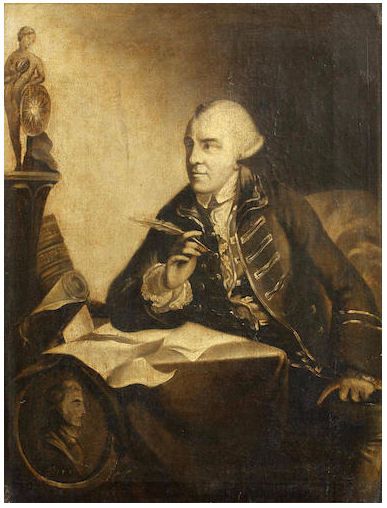
Robert Edge Pine, Circa 1720 - 1788 Portrait of John Wilkes, Mp , 1725–1797
Sold by Artware Fineart
sold SA398289
Sorry, but this item has been sold.

Artware Fineart

Sellingantiques Verified Since Sep 2008
Browse dealers 243 items
Id #SA398289
PDF SHARE
SAVE

Robert Edge Pine, Circa 1720 - 1788 Portrait of John Wilkes, Mp , 1725–1797

Sold 8 May 2018 · Artware Fineart
This “Robert Edge Pine, Circa 1720 - 1788 Portrait of John Wilkes, Mp , 1725–1797” found a buyer.

It was listed by Artware Fineart. Sold pieces stay on Sellingantiques as a record of what has passed through, and the next one is rarely far away.

Description

Robert Edge Pine, Circa 1720 - 1788

Portrait of John Wilkes, MP , 1725–1797

oil on canvas en grisaille

48 x 35 cm. (19 x 14 in.)

full-length, three-quarters facing left, seated, writing, with a medallion portrait of John Hampden at the lower left and Truth on a pedestal holding a magnifying glass

Notes

There is a larger portrait of John Wilkes by Robert Edge Pine in the collection of the Palace of Westminster, Parlimentary art collection painted in 1768 . This portrait has a number of differences in the pose of the hand and is likely to be a studio version of the portrait in Westminster.

Wilkes, John (1725–1797), politician, was born in St John's Square, Clerkenwell, London, on 17 October 1725, the second son of the six children of the malt distiller Israel Wilkes (1698–1761) of Clerkenwell and his wife, Sarah (1700–1781), the daughter of John Heaton, a tanner from Bermondsey. This plebeian though prosperous background was not a promising one for a man with social and political pretensions, but the Wilkes family evidently marked out the clever and charming John for such advancement, and there never seems to have been any suggestion that he should manage the distillery. That task fell to his younger brother Heaton after the eldest son, Israel, had declined it. Having been sent to a school in Hertford in 1734, Wilkes had mastered Latin and Greek by the age of fourteen, and remained a scholar throughout his life. His Presbyterian mother was the dominant figure in the household, but John took the opportunity to break free of moral restraint when he went to the University of Leiden in 1744; he later boasted to James Boswell of his incessant whoring and drinking there. This Dutch interlude ended when he was summoned back for an arranged marriage on 23 May 1747 to a bride some ten years older than himself, Mary Mead (d. 1784), whose dowry from her wealthy widowed mother was the manor of Aylesbury in Buckinghamshire. While it was evidently intended by his parents to establish his fortune, this betrothal was a mismatch between a simple, devout woman and a sophisticated rake, one that not even the birth of a daughter, Mary (known as Polly), in 1750 could save. For some years Wilkes played a dual role of country squire—he served as a local magistrate in Aylesbury—and London man about town (he was elected to two prestigious clubs, the Royal Society in 1749 and the Beefsteak Club in 1754). Wit and generosity gave him the entry into society his parents had sought for him.

In Buckinghamshire, Wilkes joined the Franciscans or ‘monks of St Francis’ at Medmenham, and doubtless regaled members with the ‘Essay on woman’, an unpublished obscene parody of Alexander Pope's Essay on Man which he wrote in 1754. His evil genius was Thomas Potter, who not only strengthened Wilkes's addiction to vice but also introduced him into politics. Before the parliamentary general election of 1754 Potter deceptively flattered him with the idea of a joint candidature for the two seats at Aylesbury, where Wilkes had an important interest—only for Wilkes to find himself being palmed off with the honorific sop of being county sheriff while Potter was elected with another candidate. The prime minister, the duke of Newcastle, noting his interest in politics, sent Wilkes to fight, at his own expense, the distant borough of Berwick upon Tweed, a hopeless and costly quest. Such political adventures incurred almost as much disapproval by his thrifty and puritanical wife as his fashionable lifestyle, and the marriage broke up. A trial separation in 1756 became permanent the next year, when Wilkes retained the Aylesbury estate and agreed to pay his wife £200 a year. Their daughter chose to live with her father, and their loving relationship was thought even by his severest critics to be a redeeming feature of Wilkes's life.

Wilkes now decided to exploit

Reference Numbers
Sellingantiques Reference
SA398289
Dealers Internal Reference
3740
Description
Robert Edge Pine, Circa 1720 - 1788

Portrait of John Wilkes, MP , 1725–1797

oil on canvas en grisaille

48 x 35 cm. (19 x 14 in.)

“
full-length, three-quarters facing left, seated, writing, with a medallion portrait of John Hampden at the lower left and Truth on a pedestal holding a magnifying glass.
Artware Fineart

Notes

There is a larger portrait of John Wilkes by Robert Edge Pine in the collection of the Palace of Westminster, Parlimentary art collection painted in 1768 . This portrait has a number of differences in the pose of the hand and is likely to be a studio version of the portrait in Westminster.

Wilkes, John (1725–1797), politician, was born in St John's Square, Clerkenwell, London, on 17 October 1725, the second son of the six children of the malt distiller Israel Wilkes (1698–1761) of Clerkenwell and his wife, Sarah (1700–1781), the daughter of John Heaton, a tanner from Bermondsey. This plebeian though prosperous background was not a promising one for a man with social and political pretensions, but the Wilkes family evidently marked out the clever and charming John for such advancement, and there never seems to have been any suggestion that he should manage the distillery. That task fell to his younger brother Heaton after the eldest son, Israel, had declined it. Having been sent to a school in Hertford in 1734, Wilkes had mastered Latin and Greek by the age of fourteen, and remained a scholar throughout his life. His Presbyterian mother was the dominant figure in the household, but John took the opportunity to break free of moral restraint when he went to the University of Leiden in 1744; he later boasted to James Boswell of his incessant whoring and drinking there. This Dutch interlude ended when he was summoned back for an arranged marriage on 23 May 1747 to a bride some ten years older than himself, Mary Mead (d. 1784), whose dowry from her wealthy widowed mother was the manor of Aylesbury in Buckinghamshire. While it was evidently intended by his parents to establish his fortune, this betrothal was a mismatch between a simple, devout woman and a sophisticated rake, one that not even the birth of a daughter, Mary (known as Polly), in 1750 could save. For some years Wilkes played a dual role of country squire—he served as a local magistrate in Aylesbury—and London man about town (he was elected to two prestigious clubs, the Royal Society in 1749 and the Beefsteak Club in 1754). Wit and generosity gave him the entry into society his parents had sought for him.

In Buckinghamshire, Wilkes joined the Franciscans or ‘monks of St Francis’ at Medmenham, and doubtless regaled members with the ‘Essay on woman’, an unpublished obscene parody of Alexander Pope's Essay on Man which he wrote in 1754. His evil genius was Thomas Potter, who not only strengthened Wilkes's addiction to vice but also introduced him into politics. Before the parliamentary general election of 1754 Potter deceptively flattered him with the idea of a joint candidature for the two seats at Aylesbury, where Wilkes had an important interest—only for Wilkes to find himself being palmed off with the honorific sop of being county sheriff while Potter was elected with another candidate. The prime minister, the duke of Newcastle, noting his interest in politics, sent Wilkes to fight, at his own expense, the distant borough of Berwick upon Tweed, a hopeless and costly quest. Such political adventures incurred almost as much disapproval by his thrifty and puritanical wife as his fashionable lifestyle, and the marriage broke up. A trial separation in 1756 became permanent the next year, when Wilkes retained the Aylesbury estate and agreed to pay his wife £200 a year. Their daughter chose to live with her father, and their loving relationship was thought even by his severest critics to be a redeeming feature of Wilkes's life.

Wilkes now decided to exploit

Reference Numbers
Sellingantiques Ref
SA398289
Dealers Internal Ref
3740
Artware Fineart
Sellingantiques verified Since Sep 2008
Dealer Profile

You can view the stock and full dealer information on the Artware Fineart Profile Page
PDF SHARE
SAVE
Robert Edge Pine, Circa 1720 - 1788
Portrait of John Wilkes, MP , 1725–1797 SOLD6+ MONTHS AGO
1 / 1
Archive I Robert Edge Pine, Circa 1720 - 1788
Portrait of John Wilkes, MP , 1725–1797 SOLD6+ MONTHS AGO

Robert Edge Pine, Circa 1720 - 1788 Portrait of John Wilkes, Mp , 1725–1797

Enlarged Archival View
Telephone 07958 699 645
Location
18 La Gare
51 Surrey Row
London
SE1 0BZ
United Kingdom
Verified Since Sep 2008
Items For Sale 243
Items Sold 223
Artware Fineart
Verified Since Sep 2008
View Dealer Info
Location: 18 La Gare , 51 Surrey Row , London , SE1 0BZ , United Kingdom
Verified
Sep 2008
For Sale
243
Sold
223
Robert Edge Pine, Circa 1720 - 1788
Portrait of John Wilkes, MP , 1725–1797
Robert Edge Pine, Circa 1720 - 1788 Portrait of John Wilkes, MP , 1725–1797
Ref: SA398289
Robert Edge Pine, Circa 1720 - 1788
Portrait of John Wilkes, MP , 1725–1797
Archival Detail
Every single antique dealer on our platform is individually approved by our internal team. We verify their professional trade history, ethical standards, and photographic quality to ensure a secure, high-standard buying environment. Upon joining, every dealer agrees to a strict 9-point code of conduct. While issues can occasionally arise, our dealers typically resolve them swiftly and directly with the buyer. In fact, since our founding in 2002, Sellingantiques has only had to step in to help resolve an issue on roughly five occasions—a true testament to the quality of our dealers and their dedication to your happiness.
Our dealers are highly experienced in packing and shipping fragile, high-value antiques. Because you are in direct contact with the dealer, you will be able to easily go through all available shipping and insurance options together to ensure your item arrives safely.
Antiques are the ultimate green purchase. By choosing historical pieces over newly manufactured goods, you completely eliminate the carbon footprint of modern mass production while preserving exceptional, timeless craftsmanship.
items
Add keywords to the filter
Price
£100
£250000
Era
Period
Style
Material
Origin
Stock Location
Recently Added
Online Payments
Categories