17,343  PAGES BROWSED TODAY PAGES TODAY 109 ANTIQUES UPLOADED TODAYNEW ARRIVALS
109 ITEMS ADDED TODAY
Sort Order
Items Per Page
Browse Categories
Sort order
Items per page
ID #SA388328
SOLD
Email Phone WhatsApp
Save
Portrait of a Ww I Allied Aviator in Flying Dress a Leather Coat and Leather Flying Cap by Albert Rubin 1887 - 1956
Sold by Artware Fineart
sold SA388328
Sorry, but this item has been sold.

Artware Fineart

Sellingantiques Verified Since Sep 2008
Id #SA388328
PDF SHARE
SAVE

Portrait of a Ww I Allied Aviator in Flying Dress a Leather Coat and Leather Flying Cap by Albert Rubin 1887 - 1956

1900 - 1920
Description

Albert Rubin 1887 - 1956

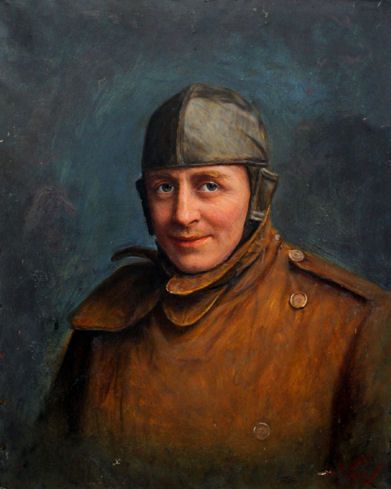
Portrait of a WW I Allied Aviator in Flying Dress a Leather Coat and leather Flying Cap

inscribed and dated "A Rubin /1918"

oil on canvas

51 x 42 cm. (20 x 16.54 cm.)

According to Ewen Cameron , Ian Thirsk & Vernon Creek from the Royal Air Force Museum , Flying Coat is probably British, although the not standard issue British helmet or coat but there was so much private purchase of flying kit being used at this time. The coat is a similar design to a fabric example The RAF Musuem has in the collection. By 1918, The Germans were finding it very hard to rub two bits of leather together ! , so it is unlikely that the subject of the portrait is German , most likley British Allied or Commonwealth.

The readily available motoring apparel was the norm and could be obtained at reasonable cost. By the start of the War in 1914, developments by the Royal Aircraft Factory and British industry had provided more refined aircraft in which the pilot was contained more within the fuselage, rather than perched on a wicker seat and fully exposed to the elements. At this stage there was no formal issue of clothing specifically for flying but the military, with their wide experience of Army motor transport, had a range of readily available motoring garments which they offered to the newly formed Royal Flying Corps and Royal Naval Air Service pilots. Thus, at the start of the war pilots were provided with a more formalised issue of motoring gear – weatherproof coats, goggles, gauntlets, leather boots etc. – all of which were worn over the uniform. Although pilots were able to use the military issue they were also at liberty to purchase their own clothing and commercial companies continued to develop their motoring clothing into more specialised flying clothing.

Although both the RFC and the RNAS supplied clothing to their pilots and observers, there was the freedom to purchase from commercial suppliers which allowed the crews to incorporate individual needs from their London tailors

. In the winter of 1916 the first significant stride was made to providing effective protection for the pilot and this arrived from the brain of Sidney Cotton, an RNAS pilot with No.8 Squadron. Cotton had been working on his own aircraft when a ‘scramble’ was called and he flew in his dirty overalls for an hour or so and upon landing found that, unlike his fellow pilots who were shivering from the cold, he was quite unaffected. Having thought through this effect, he realised that it was the oil and grease soaked into the overalls that had retained the body heat.

Picking up on the idea, he took leave and travelled to London, to Robinson & Cleaver, where he had a flying suit made for him to his design. The suit had three layers, a thin lining of fur, a layer of airproof silk, and an outside layer of light Burberry material, all made into a one-piece

suit, just like his overalls. Robinson & Cleaver were asked to register the design on behalf of Cotton and the flying suit took its name from the inventor and was called the Sidcot suit. By late 1917, tests had shown that the Sidcot Flying Suit No 5 was regarded by pilots as the most suitable for operational use. Consequently the manufacturers of the suit, Robinson & Cleaver, were asked to produce 250 suits per week, just fourteen days after the order. Deliveries were later expected to reach 1,000 per week just four weeks after the initial order. By December 1917 the orders for leather flying coats, some 3,000, were cancelled in favour of the Sidcot suit. This suit met virtually every requirement for protection against the primary threat, the cold, and was in service in a number of modified and development forms right through into WW2 and only ceased being used as closed cockpits, combined sometimes with cabin heating, became the norm in aircraft design.

World War I

Declaration

Artware Fineart has dated this piece to the 1910s.

Reference Numbers
Sellingantiques Reference
SA388328
Dealers Internal Reference
3843
Description
Albert Rubin 1887 - 1956

Portrait of a WW I Allied Aviator in Flying Dress a Leather Coat and leather Flying Cap

inscribed and dated "A Rubin /1918"

oil on canvas

51 x 42 cm. (20 x 16.54 cm.)

According to Ewen Cameron , Ian Thirsk & Vernon Creek from the Royal Air Force Museum , Flying Coat is probably British, although the not standard issue British helmet or coat but there was so much private purchase of flying kit being used at this time. The coat is a similar design to a fabric example The RAF Musuem has in the collection.

By 1918, The Germans were finding it very hard to rub two bits of leather together ! , so it is unlikely that the subject of the portrait is German , most likley British Allied or Commonwealth.
Artware Fineart

The readily available motoring apparel was the norm and could be obtained at reasonable cost. By the start of the War in 1914, developments by the Royal Aircraft Factory and British industry had provided more refined aircraft in which the pilot was contained more within the fuselage, rather than perched on a wicker seat and fully exposed to the elements. At this stage there was no formal issue of clothing specifically for flying but the military, with their wide experience of Army motor transport, had a range of readily available motoring garments which they offered to the newly formed Royal Flying Corps and Royal Naval Air Service pilots. Thus, at the start of the war pilots were provided with a more formalised issue of motoring gear – weatherproof coats, goggles, gauntlets, leather boots etc. – all of which were worn over the uniform. Although pilots were able to use the military issue they were also at liberty to purchase their own clothing and commercial companies continued to develop their motoring clothing into more specialised flying clothing.

Although both the RFC and the RNAS supplied clothing to their pilots and observers, there was the freedom to purchase from commercial suppliers which allowed the crews to incorporate individual needs from their London tailors

In the winter of 1916 the first significant stride was made to providing effective protection for the pilot and this arrived from the brain of Sidney Cotton, an RNAS pilot with No.8 Squadron. Cotton had been working on his own aircraft when a ‘scramble’ was called and he flew in his dirty overalls for an hour or so and upon landing found that, unlike his fellow pilots who were shivering from the cold, he was quite unaffected. Having thought through this effect, he realised that it was the oil and grease soaked into the overalls that had retained the body heat.

Picking up on the idea, he took leave and travelled to London, to Robinson & Cleaver, where he had a flying suit made for him to his design. The suit had three layers, a thin lining of fur, a layer of airproof silk, and an outside layer of light Burberry material, all made into a one-piece

suit, just like his overalls. Robinson & Cleaver were asked to register the design on behalf of Cotton and the flying suit took its name from the inventor and was called the Sidcot suit. By late 1917, tests had shown that the Sidcot Flying Suit No 5 was regarded by pilots as the most suitable for operational use. Consequently the manufacturers of the suit, Robinson & Cleaver, were asked to produce 250 suits per week, just fourteen days after the order. Deliveries were later expected to reach 1,000 per week just four weeks after the initial order. By December 1917 the orders for leather flying coats, some 3,000, were cancelled in favour of the Sidcot suit. This suit met virtually every requirement for protection against the primary threat, the cold, and was in service in a number of modified and development forms right through into WW2 and only ceased being used as closed cockpits, combined sometimes with cabin heating, became the norm in aircraft design.

World War I

Date of Manufacture

Artware Fineart has dated this piece to the 1910s.

Reference Numbers
Sellingantiques Ref
SA388328
Dealers Internal Ref
3843
Artware Fineart
Sellingantiques verified Since Sep 2008
Dealer Profile

You can view the stock and full dealer information on the Artware Fineart Profile Page
PDF SHARE
SAVE
Portrait of a WW I  Allied Aviator in Flying Dress a Leather Coat and leather Flying Cap  by Albert Rubin 1887 - 1956
1 / 1
Archive I Portrait of a WW I  Allied Aviator in Flying Dress a Leather Coat and leather Flying Cap  by Albert Rubin 1887 - 1956

Portrait of a Ww I Allied Aviator in Flying Dress a Leather Coat and Leather Flying Cap by Albert Rubin 1887 - 1956

Enlarged Archival View
Telephone 07958 699 645
Location
18 La Gare
51 Surrey Row
London
SE1 0BZ
United Kingdom
Verified Since Sep 2008
Items For Sale 243
Items Sold 223
Artware Fineart
Verified Since Sep 2008
View Dealer Info
Location: 18 La Gare , 51 Surrey Row , London , SE1 0BZ , United Kingdom
Verified
Sep 2008
For Sale
243
Sold
223
Portrait of a WW I  Allied Aviator in Flying Dress a Leather Coat and leather Flying Cap  by Albert Rubin 1887 - 1956
Portrait of a WW I Allied Aviator in Flying Dress a Leather Coat and leather Flying Cap by Albert Rubin 1887 - 1956
Ref: SA388328
Portrait of a WW I  Allied Aviator in Flying Dress a Leather Coat and leather Flying Cap  by Albert Rubin 1887 - 1956
Archival Detail
Every single antique dealer on our platform is individually approved by our internal team. We verify their professional trade history, ethical standards, and photographic quality to ensure a secure, high-standard buying environment. Upon joining, every dealer agrees to a strict 9-point code of conduct. While issues can occasionally arise, our dealers typically resolve them swiftly and directly with the buyer. In fact, since our founding in 2002, Sellingantiques has only had to step in to help resolve an issue on roughly five occasions—a true testament to the quality of our dealers and their dedication to your happiness.
Our dealers are highly experienced in packing and shipping fragile, high-value antiques. Because you are in direct contact with the dealer, you will be able to easily go through all available shipping and insurance options together to ensure your item arrives safely.
Antiques are the ultimate green purchase. By choosing historical pieces over newly manufactured goods, you completely eliminate the carbon footprint of modern mass production while preserving exceptional, timeless craftsmanship.
items
Add keywords to the filter
Price
£100
£250000
Era
Movements
Material
Origin
Stock Location
Freshness
Online Payments
Categories