17,672  PAGES BROWSED TODAY PAGES TODAY 109 ANTIQUES UPLOADED TODAYNEW ARRIVALS
109 ITEMS ADDED TODAY
Sort Order
Items Per Page
Browse Categories
Sort order
Items per page
ID #SA35610
SOLD
Email Phone WhatsApp
Save
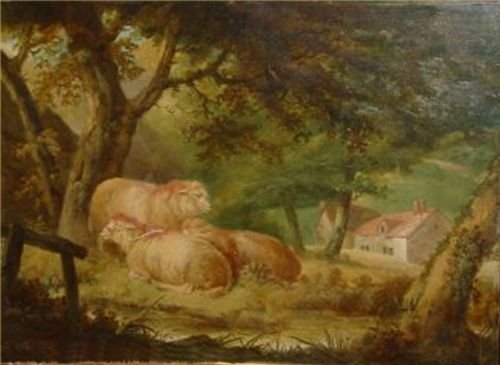
Sheep in a Wooded Landcape with a Cottage Beyond, by George Morland 1763-1804
Sold by Artware Fineart
sold SA35610
Sorry, but this item has been sold.

Artware Fineart

Sellingantiques Verified Since Sep 2008
Id #SA35610
PDF SHARE
SAVE

Sheep in a Wooded Landcape with a Cottage Beyond, by George Morland 1763-1804

Description

oil on canvas

17 x 22 in.

Morland was born in London on the June 26th, 1763. His mother was a Frenchwoman, who possessed a small independent property of her own. His grandfather, George H. Morland, was a subject painter. Henry Robert Morland (c. 1719 – 1797), father of George, was also an artist and engraver, and picture restorer, at one time a rich man, but later in reduced circumstances. His pictures of Jaundry-maids, reproduced in mezzotint and representing ladies of some importance, were very popular in their time. At a very early age Morland produced sketches of remarkable promise, exhibiting some at the Royal Academy in 1773, when he was but ten years old, and continuing to exhibit at the Free Society of Artists in 1775 and 1776, and at the Society of Artists in 1777, and then sending again to the Royal Academy in 1778, 1779 and 1780. His very earliest work, however, was produced even before that tender age, as his father kept a drawing which the boy had executed when he was but four years old, representing a coach and horses and two footmen. He was a student at the Royal Academy in early youth, but only for a very short time. From the age of fourteen he was apprenticed to his father for seven years, and by means of his talent appears to have kept the family together. He had opportunities at this time of seeing some of the greatest artists of the day, and works by old masters, but even then a strange repugnance for educated society showed itself, and no persuasion, for example, could ever allure him within reach of the Angerstein gallery, where he would have been a welcome visitor. Before his apprenticeship came to an end, George Romney offered to take Morland into his studio for three years, with a salary of 300 a year, but the offer was rejected, and as soon as his freedom came, he left his dull, respectable home, with its over-strict discipline, and began a career of reckless prodigality which has hardly a parallel in art biography. In 1785 he was in France, whither his fame had preceded him, and where he had no lack of commissions, and in the following year he married Anne, the sister of William Ward, the engraver, and settled down in High Street, Marylebone.

Morland's wife was a beautiful and virtuous woman, and throughout the whole of her husbands profligate career was deeply attached to him. It was at this time that he painted the six pictures known as the Laetitia series, and, just preceding his marriage, four other didactic works, The Idle and the Industrious Mechanic and The Idle Laundress and the Industrious Cottager. Shortly after his marriage Morland resided at Pleasant Passage, Hampstead Road, and at that time his reputation was rapidly increasing, while as he was the sole vendor of his own productions, his expenditure, although very extravagant, was not beyond his income.

Reference Numbers
Sellingantiques Reference
SA35610
Dealers Internal Reference
2951
Description
Oil on canvas

17 x 22 in.

Morland was born in London on the June 26th, 1763. His mother was a Frenchwoman, who possessed a small independent property of her own. His grandfather, George H. Morland, was a subject painter. Henry Robert Morland (c.

1719 – 1797), father of George, was also an artist and engraver, and picture restorer, at one time a rich man, but later in reduced circumstances.
Artware Fineart

His pictures of Jaundry-maids, reproduced in mezzotint and representing ladies of some importance, were very popular in their time. At a very early age Morland produced sketches of remarkable promise, exhibiting some at the Royal Academy in 1773, when he was but ten years old, and continuing to exhibit at the Free Society of Artists in 1775 and 1776, and at the Society of Artists in 1777, and then sending again to the Royal Academy in 1778, 1779 and 1780. His very earliest work, however, was produced even before that tender age, as his father kept a drawing which the boy had executed when he was but four years old, representing a coach and horses and two footmen. He was a student at the Royal Academy in early youth, but only for a very short time. From the age of fourteen he was apprenticed to his father for seven years, and by means of his talent appears to have kept the family together. He had opportunities at this time of seeing some of the greatest artists of the day, and works by old masters, but even then a strange repugnance for educated society showed itself, and no persuasion, for example, could ever allure him within reach of the Angerstein gallery, where he would have been a welcome visitor. Before his apprenticeship came to an end, George Romney offered to take Morland into his studio for three years, with a salary of 300 a year, but the offer was rejected, and as soon as his freedom came, he left his dull, respectable home, with its over-strict discipline, and began a career of reckless prodigality which has hardly a parallel in art biography. In 1785 he was in France, whither his fame had preceded him, and where he had no lack of commissions, and in the following year he married Anne, the sister of William Ward, the engraver, and settled down in High Street, Marylebone.

Morland's wife was a beautiful and virtuous woman, and throughout the whole of her husbands profligate career was deeply attached to him. It was at this time that he painted the six pictures known as the Laetitia series, and, just preceding his marriage, four other didactic works, The Idle and the Industrious Mechanic and The Idle Laundress and the Industrious Cottager. Shortly after his marriage Morland resided at Pleasant Passage, Hampstead Road, and at that time his reputation was rapidly increasing, while as he was the sole vendor of his own productions, his expenditure, although very extravagant, was not beyond his income.

Reference Numbers
Sellingantiques Ref
SA35610
Dealers Internal Ref
2951
Artware Fineart
Sellingantiques verified Since Sep 2008
Dealer Profile

You can view the stock and full dealer information on the Artware Fineart Profile Page
PDF SHARE
SAVE
Sheep in a Wooded Landcape with a Cottage beyond, By George Morland 1763-1804
1 / 1
Archive I Sheep in a Wooded Landcape with a Cottage beyond, By George Morland 1763-1804

Sheep in a Wooded Landcape with a Cottage Beyond, by George Morland 1763-1804

Enlarged Archival View
Telephone 07958 699 645
Location
18 La Gare
51 Surrey Row
London
SE1 0BZ
United Kingdom
Verified Since Sep 2008
Items For Sale 243
Items Sold 223
Artware Fineart
Verified Since Sep 2008
View Dealer Info
Location: 18 La Gare , 51 Surrey Row , London , SE1 0BZ , United Kingdom
Verified
Sep 2008
For Sale
243
Sold
223
Sheep in a Wooded Landcape with a Cottage beyond, By George Morland 1763-1804
Ref: SA35610
Sheep in a Wooded Landcape with a Cottage beyond, By George Morland 1763-1804
Archival Detail
Every single antique dealer on our platform is individually approved by our internal team. We verify their professional trade history, ethical standards, and photographic quality to ensure a secure, high-standard buying environment. Upon joining, every dealer agrees to a strict 9-point code of conduct. While issues can occasionally arise, our dealers typically resolve them swiftly and directly with the buyer. In fact, since our founding in 2002, Sellingantiques has only had to step in to help resolve an issue on roughly five occasions—a true testament to the quality of our dealers and their dedication to your happiness.
Our dealers are highly experienced in packing and shipping fragile, high-value antiques. Because you are in direct contact with the dealer, you will be able to easily go through all available shipping and insurance options together to ensure your item arrives safely.
Antiques are the ultimate green purchase. By choosing historical pieces over newly manufactured goods, you completely eliminate the carbon footprint of modern mass production while preserving exceptional, timeless craftsmanship.
items
Add keywords to the filter
Price
£100
£250000
Era
Movements
Material
Origin
Stock Location
Freshness
Online Payments
Categories