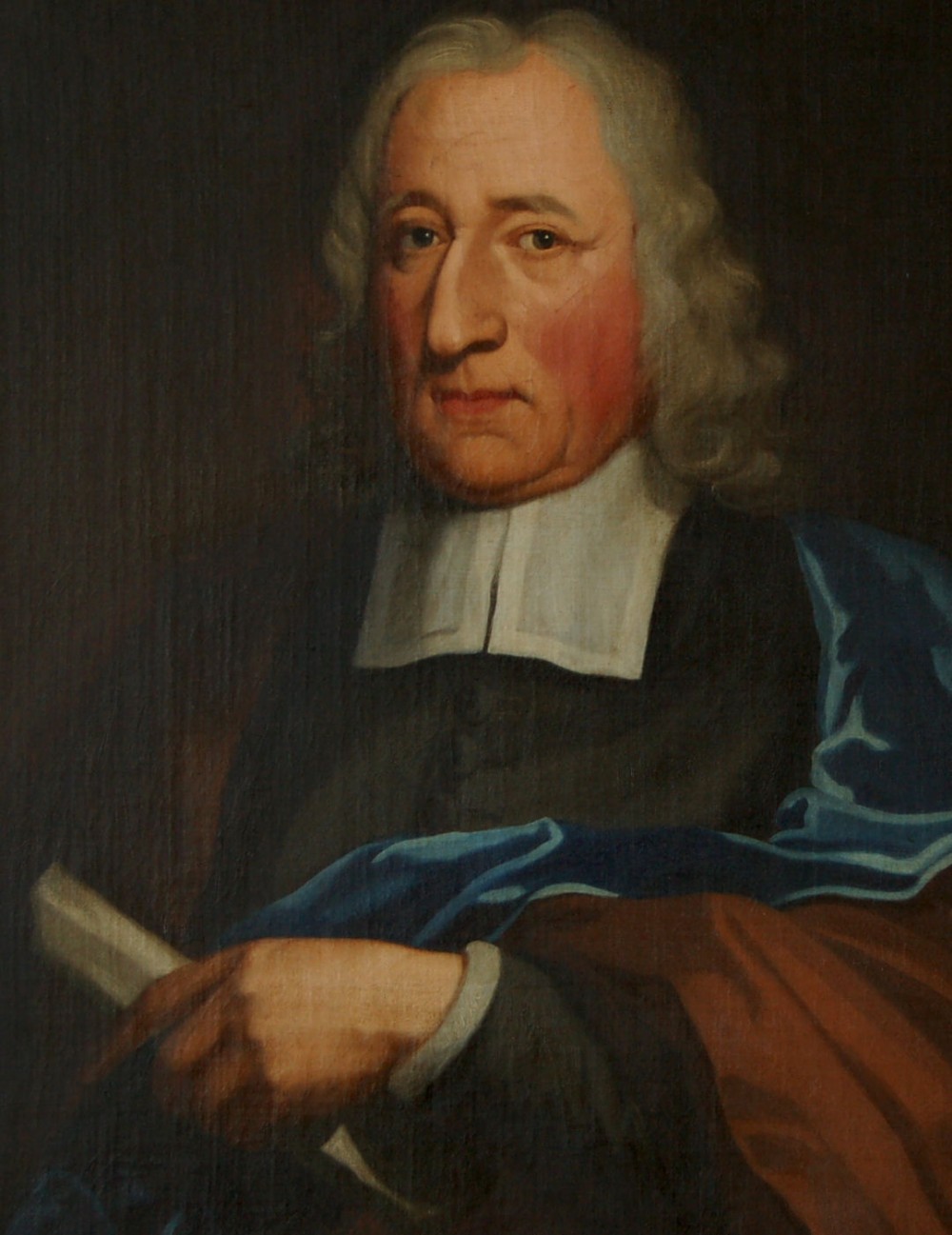
Artware Fineart has dated this piece to the 17th Century.
Portrait of John Swynfen 1613-1694
oil on canvas
76.20 x 63.50 cm. (30 x 25 in.)
PROVENANCE : Lt William Lewis Clinton- Baker, R.N
Lot 107, 1st June 1945, Christies, Bt Bangal, sold for £27.6.0
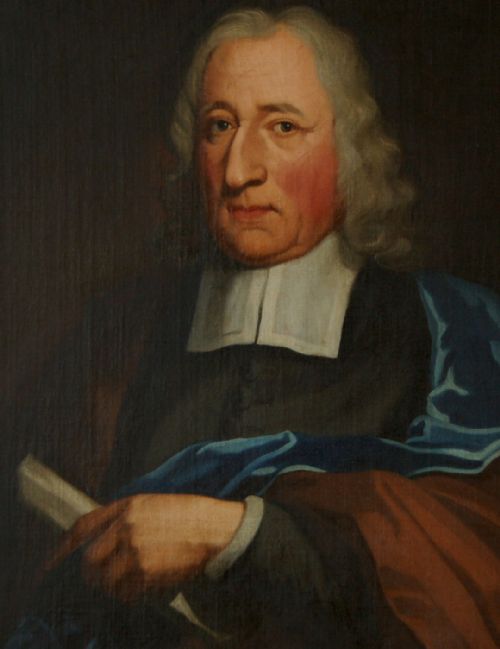
John Swynfen or Swinfen was commonly called "Russet Coat", from his affected plainness of dress. His portrait shows him in Puritan dress with a blue silk lined russet cloak. Although Puritan in dress his extravigant cloak was presumably worn for this portrait ! Swynfen [Swinfen], John (1613–1694), politician, was born at Swynfen Hall, Weeford, in south-east Staffordshire, on 19 March 1613 and was baptized there, at St Mary's, on 28 March, the eldest son of Richard Swynfen (bap. 1596, d. 1659), landowner, and his wife, Joan (bap.
1591, d. 1658), daughter of George Curitall, alias Harman, of Lichfield. Swynfen enrolled at Pembroke College, Cambridge, in autumn
1628 and obtained his BA four years later. He returned to the ancestral home in the tiny hamlet of Swynfen and in Weeford church on
26 July 1632 married Anne (bap. 1613, d. 1690), daughter of a neighbouring gentleman, John Brandreth. Anne proved ‘an inestimable blessing to her husband’ (Shaw, 2.
In the 1640s Swynfen enthusiastically embraced the cause of parliament. He signed a radical petition in favour of parliamentary control of the militia and godly reformation in March 1642; took part in the defence of Lichfield Close against Prince Rupert's forces in April 1643; and was appointed a member of the Staffordshire parliamentary committee in June 1643. As a man who believed in the uncompromising prosecution of the war against the king, Swynfen had a natural affinity with the leader of the militants on the Staffordshire committee, Sir William Brereton, with whom he developed a close partnership, supplying him with intelligence on military, political, and a host of other matters. Swynfen's support for Brereton involved him in the latter's bitter feud with Basil Feilding, second earl of Denbigh. In spring 1645 he furnished evidence against Denbigh in the House of Lords' investigation into the earl's conduct, accusing him of rank disaffection, pusillanimous leadership, and partiality in the treatment of royalist delinquents.
Denbigh retaliated by berating Swynfen's own ‘factious demeanour’
(Parl. Arch., House of Lords MSS, special depositions, 2 May 1645) as well as exposing the blatant favouritism which he had shown to sequestrated cavaliers such as Sir John Skeffington. Despite these allegations, in summer 1645 Swynfen was nominated a Staffordshire JP while in late October he secured election as a recruited MP for the borough of Stafford. His opponents called him ‘Russet-coat, from his affected plainness and pretences to sincerity’ (Shaw, 27), but Brereton, his parliamentary sponsor, declared that he was a ‘very choice, able man’ who would be ‘very serviceable to the Kingdom’
(Letter Books, 2.19), an accurate prediction as Swynfen turned out to be an outstanding MP.
From the outset Swynfen distinguished himself by his devotion to parliamentary business, serving on innumerable committees, and on 3 January 1648 he was rewarded with a prestigious appointment as member of the Derby House committee of both kingdoms. As ‘a rigid Presbyterian’ (Kidson, 29) who had subscribed to the solemn league and covenant and who had been appointed to a select committee for establishing classes and elderships in London peculiars in January 1646, Swynfen naturally opposed the radical religious and political stance of the New Model Army and on 3 August 1647 was one of the three MPs sent on the fruitless exercise of ordering it not to advance on London to intimidate parliament. Swynfen's alienat
Artware Fineart has dated this piece to the 17th Century.
You can view the stock and full dealer information on the Artware Fineart Profile Page
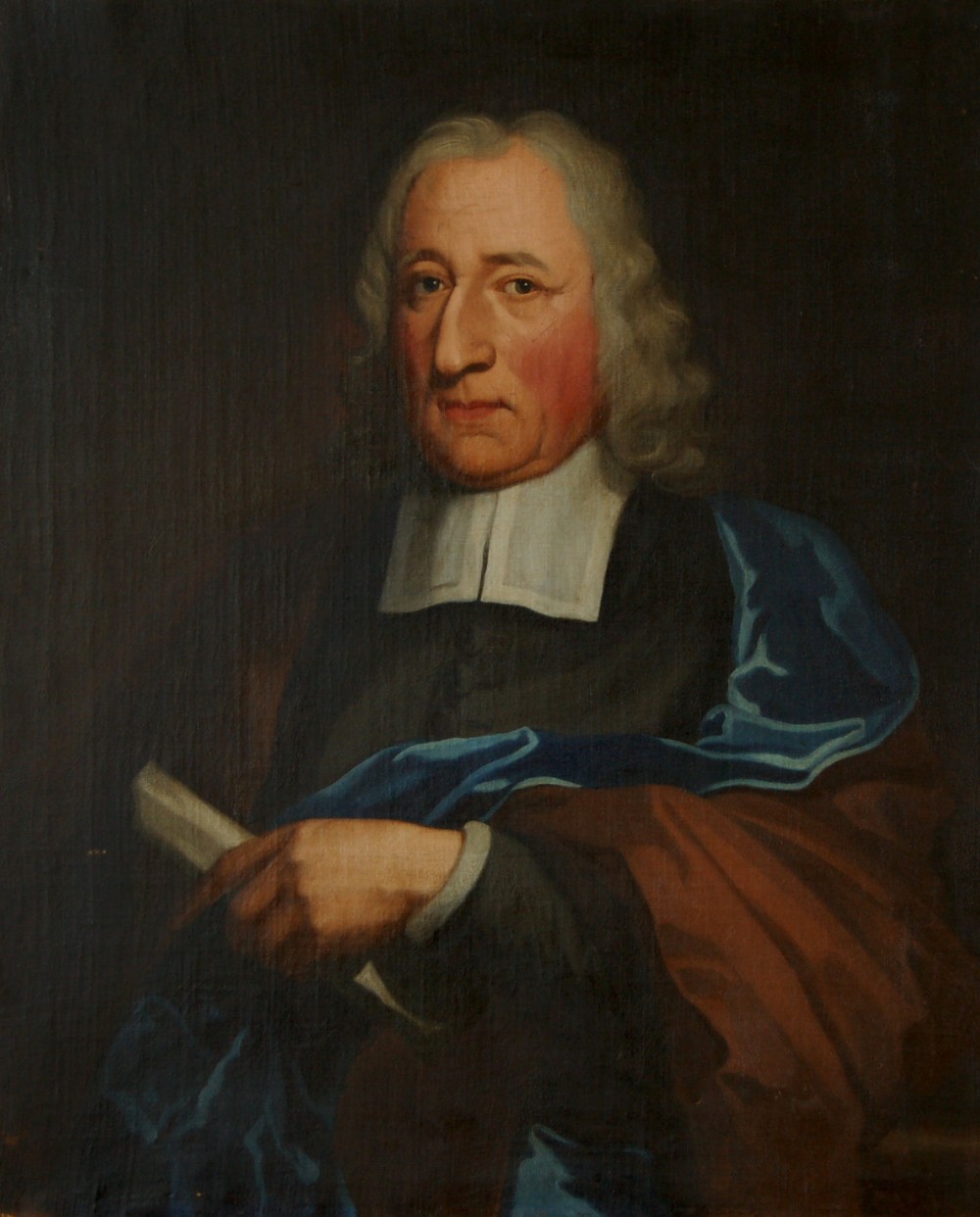
Portrait of John Swynfen 1613-1694 by Sir Godfrey Kneller 1646 - 1723