17,331  PAGES BROWSED TODAY PAGES TODAY 109 ANTIQUES UPLOADED TODAYNEW ARRIVALS
109 ITEMS ADDED TODAY
Sort Order
Items Per Page
Browse Categories
Sort order
Items per page
ID #SA342086
SOLD
Email Phone WhatsApp
Save
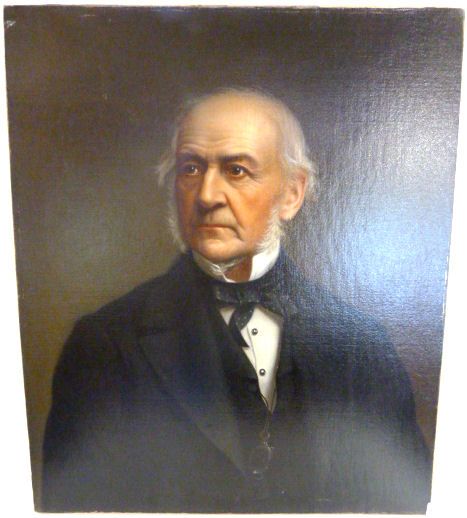
Edward Travanyon Haynes 1840 - 1922, Portrait of William Ewart Gladstone 1809 - 1898
Sold by Artware Fineart
sold SA342086
Sorry, but this item has been sold.

Artware Fineart

Sellingantiques Verified Since Sep 2008
Id #SA342086
PDF SHARE
SAVE

Edward Travanyon Haynes 1840 - 1922, Portrait of William Ewart Gladstone 1809 - 1898

19th century
Description

Edward Travanyon Haynes 1840 - 1922,

Portrait of William Ewart Gladstone 1809 - 1898

oil on canvas

76.20 x 63.50 cm. (30 x 25 in.)

Gladstone, William Ewart (1809–1898), prime minister and author, was the fifth child and fourth and youngest son of Sir John Gladstone, first baronet (1764–1851), and his second wife, Anne, née Robertson (1771/2–1835). His parents named him William Ewart after their radical friend of that name, who, like them, was part of the Scottish commercial community in Liverpool. John Gladstones (he dropped the ‘s’ informally in 1787 and by letters patent in 1835) had established himself as a leading member of that community and it was at the fashionable address of 62 (formerly 1) Rodney Street, Liverpool, that his fourth son was born on 29 December 1809.

Gladstone was born into an evangelical family, his mother and his sister Anne (who was his godmother) both combining prolonged illnesses with intense evangelical pietism. His mother was of Scottish Episcopal origins, and his father joined the Church of England, having been a Presbyterian when he first settled in Liverpool. William was thus baptized into the Church of England, in St Peter's Church, Liverpool. But the Scottish ties of the family remained strong: William probably first visited that country in 1814, aged four, recalling in old age having heard the guns of Edinburgh Castle fired, probably to celebrate the abdication of Napoleon that spring. Gladstone's upbringing in the Liverpool area rooted him in northern England, midway between the metropolitan south, which was to be the centre of his political and intellectual life, Scotland, whither his father retired in 1830, Ireland just across the sea, and Wales, where his family home was to be from 1839. Gladstone recalled, ‘I was not a devotional child’ (Morley, 1.13), but this may have been a self-deprecation arising from the reverence in which he held the religiosity of his mother and sister Anne. From an early age he read copiously—he later recalled the ‘great and fascinating hold’ (ibid.) that Bunyan's Pilgrim's Progress took upon him and remembered weeping profusely at the description of the life and death of William Wallace in Jane Porter's Scottish Chiefs.

By the 1810s the Gladstones were a rich family, their fortune based on transatlantic corn and tobacco trade and on the slave-labour sugar plantations they owned in the West Indies. William attended the small school at Bootle near Liverpool kept by William Rawson, a moderate evangelical, previously private tutor in the Gladstone household. He thought he learned little from Rawson. In 1821 John Gladstone sent his son to Eton College, where the eldest son, Thomas, was already a pupil. John Gladstone was determined that at least one of his children should succeed in the political world, and he saw an education at Eton and Christ Church, Oxford, as the best preparation for that success. William, who was an oppidan, roomed with Thomas, their ‘dame’ being Mrs Shurley. Already well exposed to tory politics, for his father was George Canning's chief supporter and political organizer in Liverpool, Gladstone at Eton also met whigs, notably Arthur Henry Hallam [see under Hallam, Henry], for whom in 1824 he formed a close affection. For Gladstone, Hallam, and others such as Francis Doyle and James Milnes-Gaskell, the chief focus of their Eton life was the Eton Society (later ‘Pop’) which they ran as an intellectual and debating club, and from whose coterie was published the Eton Miscellany (1827), edited by Gladstone (writing as Bartholomew Bouverie) and George Selwyn (later the noted bishop). In the Eton Society, Gladstone learned that readiness of public speaking which never left him. Gladstone's tutor at Eton was the whiggish H. H. Knapp, but E. C. Hawtrey was the master whose intellectual encouragement Gladstone especially value

Physical Dimensions
Height
76cm (29.92")
Width
63cm (24.80")
Depth
2cm (0.79")
Declaration

Artware Fineart has dated this piece to the 19th Century.

Reference Numbers
Sellingantiques Reference
SA342086
Dealers Internal Reference
3733
Description
Edward Travanyon Haynes 1840 - 1922,

Portrait of William Ewart Gladstone 1809 - 1898

oil on canvas

76.20 x 63.50 cm. (30 x 25 in.)

Gladstone, William Ewart (1809–1898), prime minister and author, was the fifth child and fourth and youngest son of Sir John Gladstone, first baronet (1764–1851), and his second wife, Anne, née Robertson (1771/2–1835).

His parents named him William Ewart after their radical friend of that name, who, like them, was part of the Scottish commercial community in Liverpool.
Artware Fineart

John Gladstones (he dropped the ‘s’ informally in 1787 and by letters patent in 1835) had established himself as a leading member of that community and it was at the fashionable address of 62 (formerly 1) Rodney Street, Liverpool, that his fourth son was born on 29 December 1809.

Gladstone was born into an evangelical family, his mother and his sister Anne (who was his godmother) both combining prolonged illnesses with intense evangelical pietism. His mother was of Scottish Episcopal origins, and his father joined the Church of England, having been a Presbyterian when he first settled in Liverpool. William was thus baptized into the Church of England, in St Peter's Church, Liverpool. But the Scottish ties of the family remained strong: William probably first visited that country in 1814, aged four, recalling in old age having heard the guns of Edinburgh Castle fired, probably to celebrate the abdication of Napoleon that spring. Gladstone's upbringing in the Liverpool area rooted him in northern England, midway between the metropolitan south, which was to be the centre of his political and intellectual life, Scotland, whither his father retired in 1830, Ireland just across the sea, and Wales, where his family home was to be from 1839. Gladstone recalled, ‘I was not a devotional child’ (Morley, 1.13), but this may have been a self-deprecation arising from the reverence in which he held the religiosity of his mother and sister Anne. From an early age he read copiously—he later recalled the ‘great and fascinating hold’ (ibid.) that Bunyan's Pilgrim's Progress took upon him and remembered weeping profusely at the description of the life and death of William Wallace in Jane Porter's Scottish Chiefs.

By the 1810s the Gladstones were a rich family, their fortune based on transatlantic corn and tobacco trade and on the slave-labour sugar plantations they owned in the West Indies. William attended the small school at Bootle near Liverpool kept by William Rawson, a moderate evangelical, previously private tutor in the Gladstone household. He thought he learned little from Rawson. In 1821 John Gladstone sent his son to Eton College, where the eldest son, Thomas, was already a pupil. John Gladstone was determined that at least one of his children should succeed in the political world, and he saw an education at Eton and Christ Church, Oxford, as the best preparation for that success. William, who was an oppidan, roomed with Thomas, their ‘dame’ being Mrs Shurley. Already well exposed to tory politics, for his father was George Canning's chief supporter and political organizer in Liverpool, Gladstone at Eton also met whigs, notably Arthur Henry Hallam [see under Hallam, Henry], for whom in 1824 he formed a close affection. For Gladstone, Hallam, and others such as Francis Doyle and James Milnes-Gaskell, the chief focus of their Eton life was the Eton Society (later ‘Pop’) which they ran as an intellectual and debating club, and from whose coterie was published the Eton Miscellany (1827), edited by Gladstone (writing as Bartholomew Bouverie) and George Selwyn (later the noted bishop). In the Eton Society, Gladstone learned that readiness of public speaking which never left him. Gladstone's tutor at Eton was the whiggish H. H. Knapp, but E. C. Hawtrey was the master whose intellectual encouragement Gladstone especially value

Height
76cm (29.92")
Width
63cm (24.80")
Depth
2cm (0.79")
Date of Manufacture

Artware Fineart has dated this piece to the 19th Century.

Reference Numbers
Sellingantiques Ref
SA342086
Dealers Internal Ref
3733
Artware Fineart
Sellingantiques verified Since Sep 2008
Dealer Profile

You can view the stock and full dealer information on the Artware Fineart Profile Page
PDF SHARE
SAVE
Edward Travanyon Haynes 1840 - 1922, Portrait of William  Ewart Gladstone 1809 - 1898
1 / 1
Archive I Edward Travanyon Haynes 1840 - 1922, Portrait of William  Ewart Gladstone 1809 - 1898

Edward Travanyon Haynes 1840 - 1922, Portrait of William Ewart Gladstone 1809 - 1898

Enlarged Archival View
Telephone 07958 699 645
Location
18 La Gare
51 Surrey Row
London
SE1 0BZ
United Kingdom
Verified Since Sep 2008
Items For Sale 243
Items Sold 223
Artware Fineart
Verified Since Sep 2008
View Dealer Info
Location: 18 La Gare , 51 Surrey Row , London , SE1 0BZ , United Kingdom
Verified
Sep 2008
For Sale
243
Sold
223
Edward Travanyon Haynes 1840 - 1922, Portrait of William  Ewart Gladstone 1809 - 1898
Edward Travanyon Haynes 1840 - 1922, Portrait of William Ewart Gladstone 1809 - 1898
Ref: SA342086
Edward Travanyon Haynes 1840 - 1922, Portrait of William  Ewart Gladstone 1809 - 1898
Archival Detail
Every single antique dealer on our platform is individually approved by our internal team. We verify their professional trade history, ethical standards, and photographic quality to ensure a secure, high-standard buying environment. Upon joining, every dealer agrees to a strict 9-point code of conduct. While issues can occasionally arise, our dealers typically resolve them swiftly and directly with the buyer. In fact, since our founding in 2002, Sellingantiques has only had to step in to help resolve an issue on roughly five occasions—a true testament to the quality of our dealers and their dedication to your happiness.
Our dealers are highly experienced in packing and shipping fragile, high-value antiques. Because you are in direct contact with the dealer, you will be able to easily go through all available shipping and insurance options together to ensure your item arrives safely.
Antiques are the ultimate green purchase. By choosing historical pieces over newly manufactured goods, you completely eliminate the carbon footprint of modern mass production while preserving exceptional, timeless craftsmanship.
items
Add keywords to the filter
Price
£100
£250000
Era
Movements
Material
Origin
Stock Location
Freshness
Online Payments
Categories