17,327  PAGES BROWSED TODAY PAGES TODAY 109 ANTIQUES UPLOADED TODAYNEW ARRIVALS
109 ITEMS ADDED TODAY
Sort Order
Items Per Page
Browse Categories
Sort order
Items per page
ID #SA299644
SOLD
Email Phone WhatsApp
Save
Horace Van Ruith 1839-1923 Jacobs Ladder, Sidmouth
Sold by Artware Fineart
sold SA299644
Sorry, but this item has been sold.

Artware Fineart

Sellingantiques Verified Since Sep 2008
Id #SA299644
PDF SHARE
SAVE

Horace Van Ruith 1839-1923 Jacobs Ladder, Sidmouth

1900 - 1920
Description

Horace Van Ruith 1839-1923

Jacobs Ladder, Sidmouth

signed and further inscribed on the reverse

pencil and watercolour

9.1/4 x 14 in. (23 x 35 cm.)

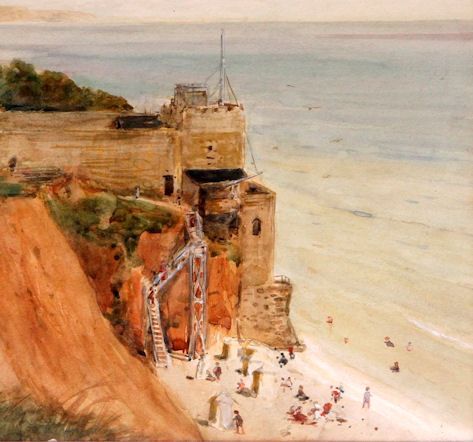
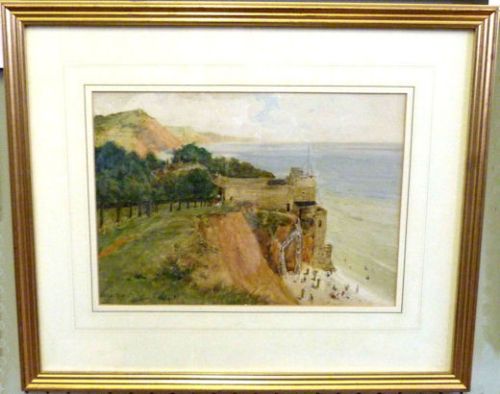
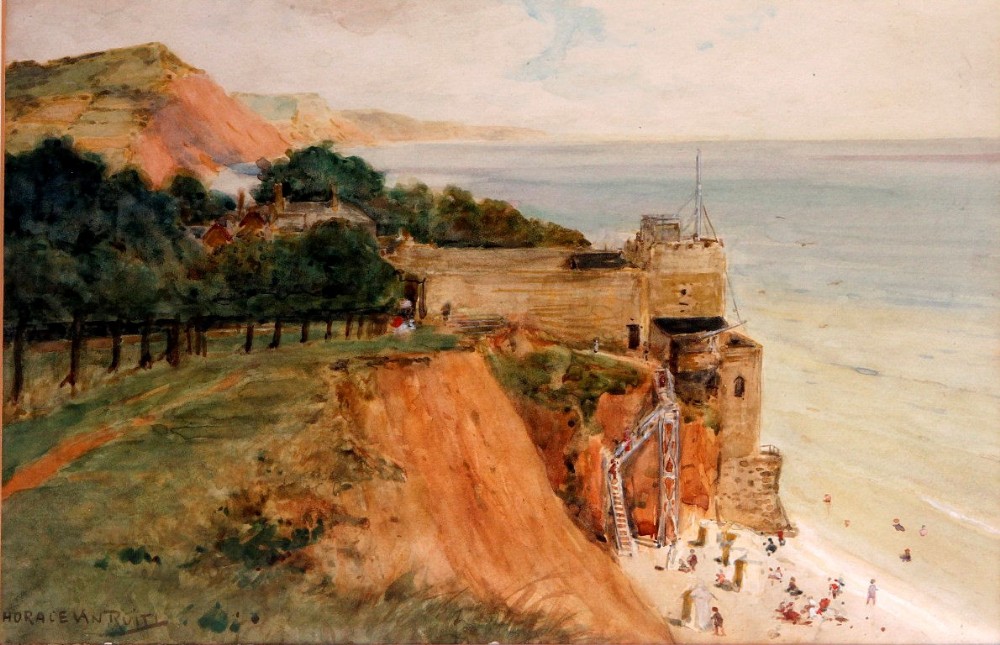
Jacob’s Ladder itself is the tall white set of steps that have been constructed to link the Gardens to the beach below. This is not, however, the first structure in this location. An access in this area actually dates back to the mid 19th Century when steps were cut into the cliff to give access to the beach below which had been largely inaccessible until then. This developed into a cart track that was used to transport lime (brought in by boat from places such as Branscombe) to the lime kiln which has now been converted into the Tea Rooms. The ongoing cliff erosion caused the path to fall in 1870 but access to the beach had become so popular with the Victorian population by this time that an extremely long ladder was built, like Jacob’s ladder to heaven, hence its name. The steep ladder was not popular though, being difficult to use in the dress of the day, and so a new ladder was constructed in much the same style as the steps of today. The chine with the zig-zag path down to the beach was not created until the 1950’s, the esplanade walk around the base of the cliff being completed a few years later. Jacob's Ladder starts from Connaught Gardens and then zig zags down to the beach.
The gardens were named after His Grace, The Duke of Connaught, Queen Victoria’s third son. Although the Duke’s first visit to Sidmouth was not until 1931, the Royal link with Sidmouth continues back over a century earlier when the young Princess Victoria, aged only 6 months, visited with her parents and stayed in what is now the Royal Glen Hotel. It was the Duke himself who formally opened the Gardens on 3rd November 1934 at the age of 84. The plaque marking this grand opening is still clearly visible within the Gardens overlooking the main lawn.
Born in Capri in 1839, Horace van Ruith built his career as a professional painter who specialized in portraiture, landscapes and genre scenes in oil and watercolour. He had addresses in Capri, London and Bombay and is best known for his landscape and genre paintings of India and Capri.

He visited Bombay sometime between 1879 and 1884 and is known to have established a studio in the city. He painted a number of portraits of local people, especially those engaged in various trades: coolies at work, cotton cleaners, cord makers and street musicians. He often identified his Indian sitters by naming them on the painting as in the present lot. Van Ruith participated in the Colonial and Indian Exhibition of 1886, held in London, where he exhibited a number of these paintings. Queen Victoria's son, the Duke of Connaught, commented of his work, "no man understands the peculiar characteristics of Indian life better than he does and he is a very clever artist." This is evidenced in the present portrait which skilfully captures the innocence of the young sitter.

Van Ruith visited India again, probably around 1900, and worked in Baroda at the invitation of His Highness the Gaekwad of Baroda, joining the ranks of other British born artists such as Tilly Kettle, James Wells, Thomas Hickey and Robert Home, who were also working on commissions from various Royal courts in India. Despite his long life and obviously considerable output, van Ruith's pictures are rare today.

Declaration

Artware Fineart has dated this piece to the 1900s.

Reference Numbers
Sellingantiques Reference
SA299644
Dealers Internal Reference
3676
Description
Horace Van Ruith 1839-1923

Jacobs Ladder, Sidmouth

signed and further inscribed on the reverse

pencil and watercolour

9.1/4 x 14 in. (23 x 35 cm.)

Jacob’s Ladder itself is the tall white set of steps that have been constructed to link the Gardens to the beach below.
Artware Fineart

This is not, however, the first structure in this location. An access in this area actually dates back to the mid 19th Century when steps were cut into the cliff to give access to the beach below which had been largely inaccessible until then. This developed into a cart track that was used to transport lime (brought in by boat from places such as Branscombe) to the lime kiln which has now been converted into the Tea Rooms. The ongoing cliff erosion caused the path to fall in 1870 but access to the beach had become so popular with the Victorian population by this time that an extremely long ladder was built, like Jacob’s ladder to heaven, hence its name. The steep ladder was not popular though, being difficult to use in the dress of the day, and so a new ladder was constructed in much the same style as the steps of today. The chine with the zig-zag path down to the beach was not created until the 1950’s, the esplanade walk around the base of the cliff being completed a few years later. Jacob's Ladder starts from Connaught Gardens and then zig zags down to the beach.

fig 1. Horace Van Ruith 1839-1923  Jacobs Ladder, Sidmouth
fig 1. Horace Van Ruith 1839-1923 Jacobs Ladder, Sidmouth

The gardens were named after His Grace, The Duke of Connaught, Queen Victoria’s third son. Although the Duke’s first visit to Sidmouth was not until 1931, the Royal link with Sidmouth continues back over a century earlier when the young Princess Victoria, aged only 6 months, visited with her parents and stayed in what is now the Royal Glen Hotel. It was the Duke himself who formally opened the Gardens on 3rd November 1934 at the age of 84. The plaque marking this grand opening is still clearly visible within the Gardens overlooking the main lawn.

fig 2. Horace Van Ruith 1839-1923  Jacobs Ladder, Sidmouth
fig 2. Horace Van Ruith 1839-1923 Jacobs Ladder, Sidmouth

Born in Capri in 1839, Horace van Ruith built his career as a professional painter who specialized in portraiture, landscapes and genre scenes in oil and watercolour. He had addresses in Capri, London and Bombay and is best known for his landscape and genre paintings of India and Capri.

He visited Bombay sometime between 1879 and 1884 and is known to have established a studio in the city. He painted a number of portraits of local people, especially those engaged in various trades: coolies at work, cotton cleaners, cord makers and street musicians. He often identified his Indian sitters by naming them on the painting as in the present lot. Van Ruith participated in the Colonial and Indian Exhibition of 1886, held in London, where he exhibited a number of these paintings. Queen Victoria's son, the Duke of Connaught, commented of his work, "no man understands the peculiar characteristics of Indian life better than he does and he is a very clever artist." This is evidenced in the present portrait which skilfully captures the innocence of the young sitter.

Van Ruith visited India again, probably around 1900, and worked in Baroda at the invitation of His Highness the Gaekwad of Baroda, joining the ranks of other British born artists such as Tilly Kettle, James Wells, Thomas Hickey and Robert Home, who were also working on commissions from various Royal courts in India. Despite his long life and obviously considerable output, van Ruith's pictures are rare today.

Date of Manufacture

Artware Fineart has dated this piece to the 1900s.

Reference Numbers
Sellingantiques Ref
SA299644
Dealers Internal Ref
3676
Artware Fineart
Sellingantiques verified Since Sep 2008
Dealer Profile

You can view the stock and full dealer information on the Artware Fineart Profile Page
PDF SHARE
SAVE
Horace Van Ruith 1839-1923  Jacobs Ladder, Sidmouth
1 / 3
Archive I Horace Van Ruith 1839-1923  Jacobs Ladder, Sidmouth

Horace Van Ruith 1839-1923 Jacobs Ladder, Sidmouth

Archive II Horace Van Ruith 1839-1923  Jacobs Ladder, Sidmouth View II
Archive III Horace Van Ruith 1839-1923  Jacobs Ladder, Sidmouth View III
Enlarged Archival View
Telephone 07958 699 645
Location
18 La Gare
51 Surrey Row
London
SE1 0BZ
United Kingdom
Verified Since Sep 2008
Items For Sale 243
Items Sold 223
Artware Fineart
Verified Since Sep 2008
View Dealer Info
Location: 18 La Gare , 51 Surrey Row , London , SE1 0BZ , United Kingdom
Verified
Sep 2008
For Sale
243
Sold
223
Horace Van Ruith 1839-1923  Jacobs Ladder, Sidmouth
Horace Van Ruith 1839-1923 Jacobs Ladder, Sidmouth
Ref: SA299644
Horace Van Ruith 1839-1923  Jacobs Ladder, Sidmouth
Detail View 1
Detail View 2
Archival Detail
Every single antique dealer on our platform is individually approved by our internal team. We verify their professional trade history, ethical standards, and photographic quality to ensure a secure, high-standard buying environment. Upon joining, every dealer agrees to a strict 9-point code of conduct. While issues can occasionally arise, our dealers typically resolve them swiftly and directly with the buyer. In fact, since our founding in 2002, Sellingantiques has only had to step in to help resolve an issue on roughly five occasions—a true testament to the quality of our dealers and their dedication to your happiness.
Our dealers are highly experienced in packing and shipping fragile, high-value antiques. Because you are in direct contact with the dealer, you will be able to easily go through all available shipping and insurance options together to ensure your item arrives safely.
Antiques are the ultimate green purchase. By choosing historical pieces over newly manufactured goods, you completely eliminate the carbon footprint of modern mass production while preserving exceptional, timeless craftsmanship.
items
Add keywords to the filter
Price
£100
£250000
Era
Movements
Material
Origin
Stock Location
Freshness
Online Payments
Categories