It was listed by Artware Fineart. Sold pieces stay on Sellingantiques as a record of what has passed through, and the next one is rarely far away.
Artware Fineart has dated this piece to the 17th Century.
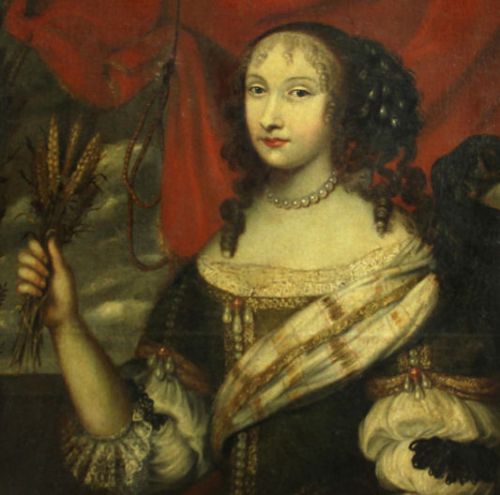
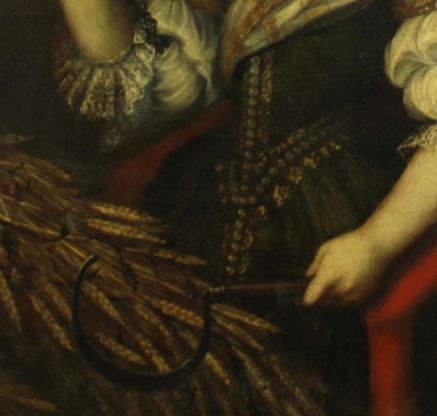
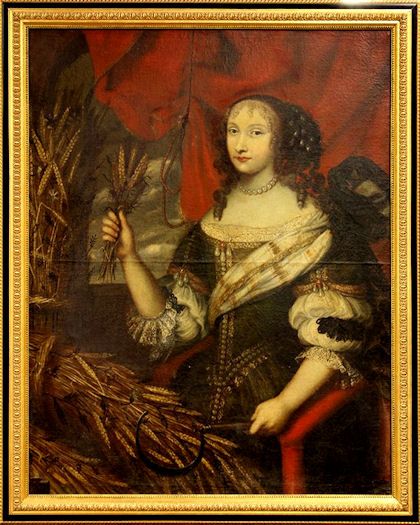
Portrait of an Elegant Lady as Ceres
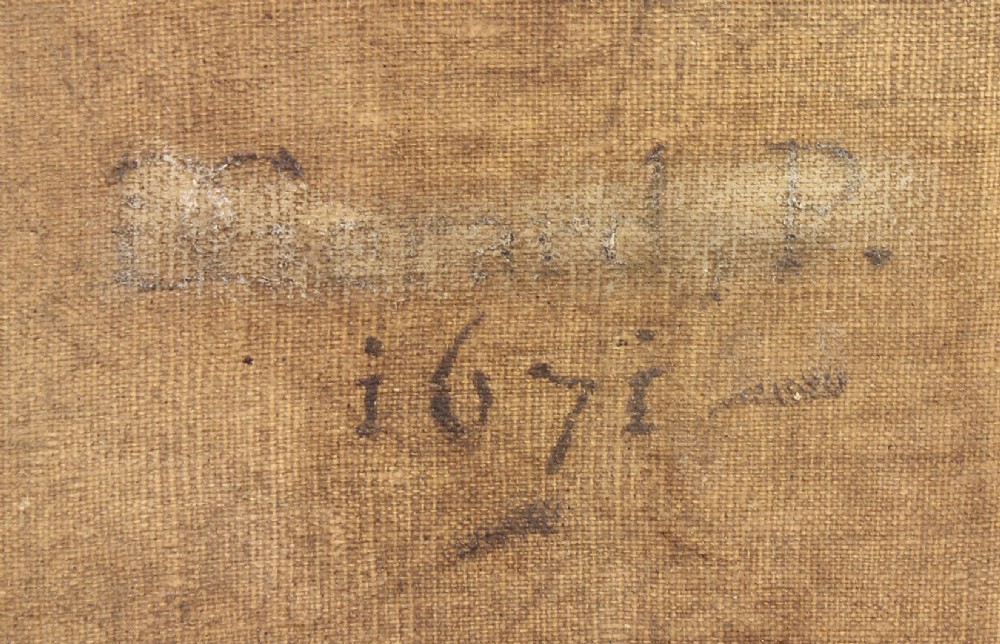
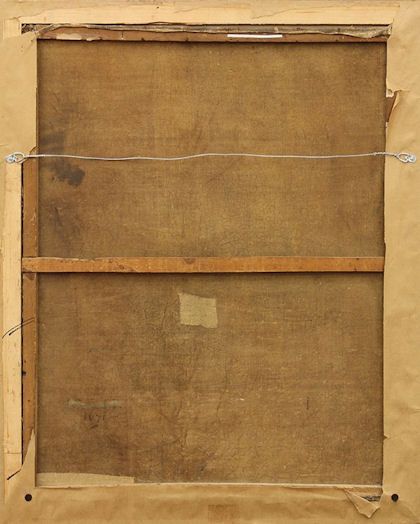
inscribed and dated on the reverse " S Gerard. P 1671"
Oil on Canvas
inscribed and dated on the reverse " S Gerard . P 1671"
35 x 45 in. (89 x 115 cm.)
He is most famous for his portraits of William Shakespeare and Samuel Butler, but painted many members of the English gentry. Soest was traditionally thought to have come from Soest, Germany in Westphalia, but was probably from Soest, Netherlands, being Dutch by birth and training. He seems to have been in England by the late 1640s, and his paintings at this time show the influence of William Dobson. His earliest known work is dated 1646.He had a moderately successful career, but was never fashionable and never managed to get commissions from courtiers and royalty.Soest's portrait of Shakespeare was owned by Thomas Wright of Covent Garden in 1725 when it was engraved by John Simon. It was painted by Soest at least 30 years after Shakespeare's death. George Vertue states that it was based on a man who resembled Shakespeare, while the pose and costume suggest the influence of the Chandos portrait. In ancient Roman religion, Ceres was a goddess of agriculture, grain crops, fertility and motherly relationships.She was originally the central deity in Rome's so-called plebeian or Aventine Triad, then was paired with her daughter Proserpina in what Romans described as "the Greek rites of Ceres". Her seven-day April festival of Cerealia included the popular Ludi Ceriales (Ceres' games). She was also honoured in the May lustration of fields at the Ambarvalia festival, at harvest-time, and during Roman marriages and funeral rites.Ceres is the only one of Rome's many agricultural deities to be listed among the Di Consentes, Rome's equivalent to the Twelve Olympians of Greek mythology. The Romans saw her as the counterpart of the Greek goddess Demeter, whose mythology was reinterpreted for Ceres in Roman art and literature.
Artware Fineart has dated this piece to the 17th Century.
You can view the stock and full dealer information on the Artware Fineart Profile Page
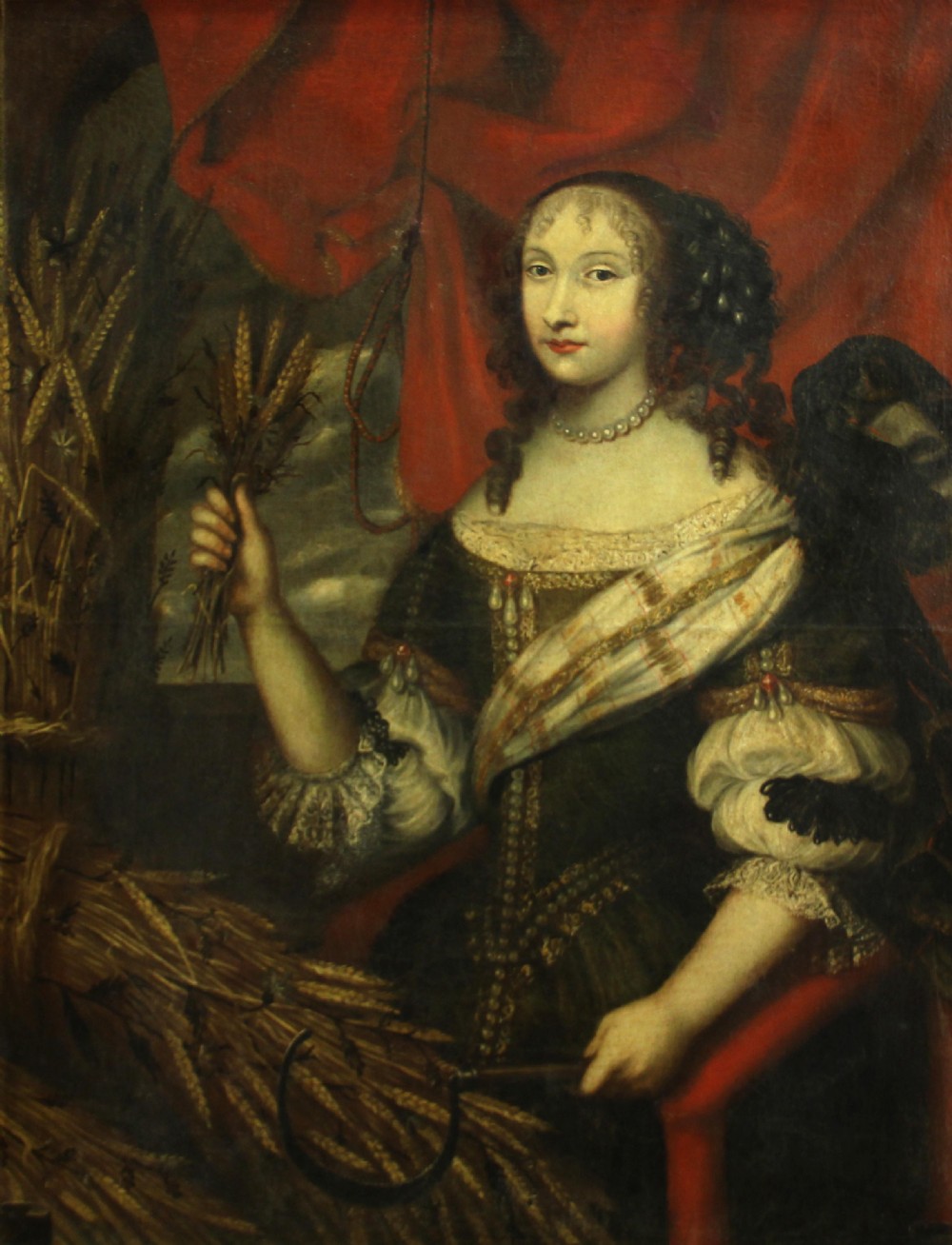
Gerard Soest 1600 - 1681 Portrait of an Elegant Lady as Ceres