17,414  PAGES BROWSED TODAY PAGES TODAY 109 ANTIQUES UPLOADED TODAYNEW ARRIVALS
109 ITEMS ADDED TODAY
Sort Order
Items Per Page
Browse Categories
Sort order
Items per page
ID #SA256676
SOLD
Email Phone WhatsApp
Save
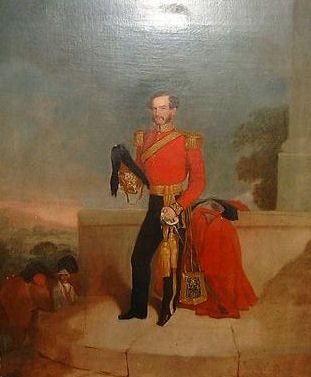
Robert Ker Porter 1777 - 1842, an Officer of the 1st Kings Dragoon Guards His Attendant Holding His Charger
Sold by Artware Fineart
sold SA256676
Sorry, but this item has been sold.

Artware Fineart

Sellingantiques Verified Since Sep 2008
Id #SA256676
PDF SHARE
SAVE

Robert Ker Porter 1777 - 1842, an Officer of the 1st Kings Dragoon Guards His Attendant Holding His Charger

19th century
Description

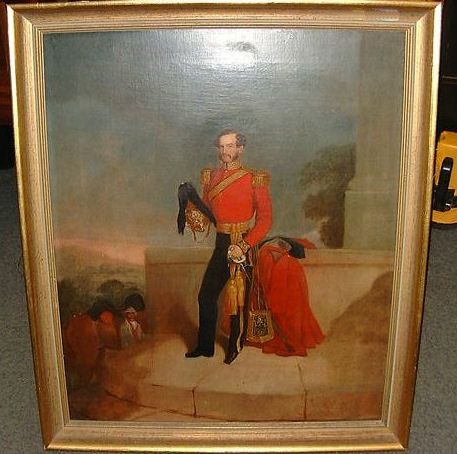
Robert Ker Porter 1777 - 1842, An Officer of the 1st Kings Dragoon Guards his attendant holding his Charger

Oil on Canvas

30 x 25 in. (76 x 64 cm.)

The officer will be anything between a Cornet and a Captain. His helmet and coatee are of a pattern adopted in 1847, and the uniform changed radically in 1855, so the portrait depicts an officer from this regiment somewhere between 1847 and 1855. The first Kings Dragoon Guards were stationed in Ireland from 1843-1854, when they went to Glasgow so the artist is almost certainly Irish or a British artist working in Ireland. The 1st King's Dragoon Guards was a cavalry regiment in the British Army. The regiment was formed in 1685 as The Queen's Regiment of Horse, named in honour of Queen Mary, consort of King James II. It was renamed The King's Own Regiment of Horse in 1714 in honour of George I. The regiment attained the title 1st King's Dragoon Guards in 1751. The regiment served as horse cavalry until 1937 when it was mechanised with light tanks. The regiment became part of the Royal Armoured Corps in 1939. The regiment merged with The Queen's Bays (2nd Dragoon Guards) in 1959 to form 1st The Queen's Dragoon Guards. In March 1896 Emperor Franz Joseph I of Austria became Colonel-in-Chief of the regiment, which he remained until the outbreak of the Great War in 1914. At the same time the double-headed Austrian eagle became the cap-badge of the regiment (see illustration above) until it, too, was replaced, in 1915. On Dec 2, 1908 the Emperor instituted the Inhaber-Jubiläums-Medaille für Ausländer (Commander's Jubilee Medal for Foreigners) to celebrate his 60 years on the throne. Some of the 40 Golden, 635 Silver and 2000 Bronze medals were awarded to officers, NCOs and private soldiers in the regiment. In 1938, the Austrian eagle returned as the regiment's cap badge, but without the scroll. At the commencement of war in 1914 the KDGs were stationed in Lucknow, India as part of the Lucknow Cavalry Brigade. The regiment was ordered to France and arrived at Marseilles on 7 November. The KDGs formed part of 1st Indian Cavalry Division serving on the Western Front. The regiment returned to India in 1917 and joined 1st (Peshawar) Division and during 1919 took part in the Third Afghan War. The KDGs remained in garrison at Meerut until October 1918 when they exchanged stations with 21st (Empress of India's) Lancers and moved to Risalpur. On 2 May 1919 Afghan troops seized control of wells on the Indian side of the border. The Afghan Amir Amanullah was warned to withdraw, but his answer was to send more troops to reinforce those at the wells and to move other Afghan units to various points on the frontier. The KDGs were mobilised on 6 May and formed part of the British Indian Army's 1st Cavalry Brigade. The regiment served throughout the Third Afghan War and saw action at the Khyber Pass and Dakka. On 8 August a peace treaty with Afghanistan was officially signed and the KDGs returned to Risalpur on 28 August. The Regiment fought with distinction in North Africa and Sicily and Italy, landing at Salerno against concentrated enemy opposition. They were the first Allied unit into Naples. The Welsh writer Norman Lewis, in his celebrated account of life in Naples claimed that the King's Dragoon Guards was the first British unit to reach Naples in 1943, and that many of its officers immediately went on a looting spree, cutting paintings from their frames in the prince's palace. The Regiment was posted to Home Duties at Omagh, Northern Ireland before moving to Germany in 1952 as part of the British Army of the Rhine (BAOR), initially stationed in Hamburg and later Celle and Wolfenbüttel. In 1956 the KDG were sent on active service in Malaya during the Emergency and were stationed at Ipoh. During this time they took part in counter-insurgency operations in both mounted operations (armou

Declaration

Artware Fineart has dated this piece to the 1850s.

Reference Numbers
Sellingantiques Reference
SA256676
Dealers Internal Reference
3583
Description
Robert Ker Porter 1777 - 1842, An Officer of the 1st Kings Dragoon Guards his attendant holding his Charger

Oil on Canvas

30 x 25 in. (76 x 64 cm.)

The officer will be anything between a Cornet and a Captain.

His helmet and coatee are of a pattern adopted in 1847, and the uniform changed radically in 1855, so the portrait depicts an officer from this regiment somewhere between 1847 and 1855.
Artware Fineart

The first Kings Dragoon Guards were stationed in Ireland from 1843-1854, when they went to Glasgow so the artist is almost certainly Irish or a British artist working in Ireland. The 1st King's Dragoon Guards was a cavalry regiment in the British Army. The regiment was formed in 1685 as The Queen's Regiment of Horse, named in honour of Queen Mary, consort of King James II. It was renamed The King's Own Regiment of Horse in 1714 in honour of George I. The regiment attained the title 1st King's Dragoon Guards in 1751. The regiment served as horse cavalry until 1937 when it was mechanised with light tanks. The regiment became part of the Royal Armoured Corps in 1939. The regiment merged with The Queen's Bays (2nd Dragoon Guards) in 1959 to form 1st The Queen's Dragoon Guards. In March 1896 Emperor Franz Joseph I of Austria became Colonel-in-Chief of the regiment, which he remained until the outbreak of the Great War in 1914. At the same time the double-headed Austrian eagle became the cap-badge of the regiment (see illustration above) until it, too, was replaced, in 1915. On Dec 2, 1908 the Emperor instituted the Inhaber-Jubiläums-Medaille für Ausländer (Commander's Jubilee Medal for Foreigners) to celebrate his 60 years on the throne. Some of the 40 Golden, 635 Silver and 2000 Bronze medals were awarded to officers, NCOs and private soldiers in the regiment. In 1938, the Austrian eagle returned as the regiment's cap badge, but without the scroll. At the commencement of war in 1914 the KDGs were stationed in Lucknow, India as part of the Lucknow Cavalry Brigade. The regiment was ordered to France and arrived at Marseilles on 7 November. The KDGs formed part of 1st Indian Cavalry Division serving on the Western Front. The regiment returned to India in 1917 and joined 1st (Peshawar) Division and during 1919 took part in the Third Afghan War. The KDGs remained in garrison at Meerut until October 1918 when they exchanged stations with 21st (Empress of India's) Lancers and moved to Risalpur. On 2 May 1919 Afghan troops seized control of wells on the Indian side of the border. The Afghan Amir Amanullah was warned to withdraw, but his answer was to send more troops to reinforce those at the wells and to move other Afghan units to various points on the frontier. The KDGs were mobilised on 6 May and formed part of the British Indian Army's 1st Cavalry Brigade. The regiment served throughout the Third Afghan War and saw action at the Khyber Pass and Dakka. On 8 August a peace treaty with Afghanistan was officially signed and the KDGs returned to Risalpur on 28 August. The Regiment fought with distinction in North Africa and Sicily and Italy, landing at Salerno against concentrated enemy opposition. They were the first Allied unit into Naples. The Welsh writer Norman Lewis, in his celebrated account of life in Naples claimed that the King's Dragoon Guards was the first British unit to reach Naples in 1943, and that many of its officers immediately went on a looting spree, cutting paintings from their frames in the prince's palace. The Regiment was posted to Home Duties at Omagh, Northern Ireland before moving to Germany in 1952 as part of the British Army of the Rhine (BAOR), initially stationed in Hamburg and later Celle and Wolfenbüttel. In 1956 the KDG were sent on active service in Malaya during the Emergency and were stationed at Ipoh. During this time they took part in counter-insurgency operations in both mounted operations (armou

Date of Manufacture

Artware Fineart has dated this piece to the 1850s.

Reference Numbers
Sellingantiques Ref
SA256676
Dealers Internal Ref
3583
Artware Fineart
Sellingantiques verified Since Sep 2008
Dealer Profile

You can view the stock and full dealer information on the Artware Fineart Profile Page
PDF SHARE
SAVE
Robert Ker Porter 1777 - 1842,  An Officer of the 1st Kings Dragoon Guards his attendant holding his Charger
1 / 2
Archive I Robert Ker Porter 1777 - 1842,  An Officer of the 1st Kings Dragoon Guards his attendant holding his Charger

Robert Ker Porter 1777 - 1842, an Officer of the 1st Kings Dragoon Guards His Attendant Holding His Charger
Archive II Robert Ker Porter 1777 - 1842,  An Officer of the 1st Kings Dragoon Guards his attendant holding his Charger View II
Enlarged Archival View
Telephone 07958 699 645
Location
18 La Gare
51 Surrey Row
London
SE1 0BZ
United Kingdom
Verified Since Sep 2008
Items For Sale 243
Items Sold 223
Artware Fineart
Verified Since Sep 2008
View Dealer Info
Location: 18 La Gare , 51 Surrey Row , London , SE1 0BZ , United Kingdom
Verified
Sep 2008
For Sale
243
Sold
223
Robert Ker Porter 1777 - 1842,  An Officer of the 1st Kings Dragoon Guards his attendant holding his Charger
Robert Ker Porter 1777 - 1842, An Officer of the 1st Kings Dragoon Guards his attendant holding his Charger
Ref: SA256676
Robert Ker Porter 1777 - 1842,  An Officer of the 1st Kings Dragoon Guards his attendant holding his Charger
Detail View 1
Archival Detail
Every single antique dealer on our platform is individually approved by our internal team. We verify their professional trade history, ethical standards, and photographic quality to ensure a secure, high-standard buying environment. Upon joining, every dealer agrees to a strict 9-point code of conduct. While issues can occasionally arise, our dealers typically resolve them swiftly and directly with the buyer. In fact, since our founding in 2002, Sellingantiques has only had to step in to help resolve an issue on roughly five occasions—a true testament to the quality of our dealers and their dedication to your happiness.
Our dealers are highly experienced in packing and shipping fragile, high-value antiques. Because you are in direct contact with the dealer, you will be able to easily go through all available shipping and insurance options together to ensure your item arrives safely.
Antiques are the ultimate green purchase. By choosing historical pieces over newly manufactured goods, you completely eliminate the carbon footprint of modern mass production while preserving exceptional, timeless craftsmanship.
items
Add keywords to the filter
Price
£100
£250000
Era
Movements
Material
Origin
Stock Location
Freshness
Online Payments
Categories