17,414  PAGES BROWSED TODAY PAGES TODAY 109 ANTIQUES UPLOADED TODAYNEW ARRIVALS
109 ITEMS ADDED TODAY
Sort Order
Items Per Page
Browse Categories
Sort order
Items per page
ID #SA206172
SOLD
Email Phone WhatsApp
Save
After Leonardo Da Vinci 1452-1519 the Mona Lisa or "La Gioconda" 16th Century Copy
Sold by Artware Fineart
sold SA206172
Sorry, but this item has been sold.

Artware Fineart

Sellingantiques Verified Since Sep 2008
Id #SA206172
PDF SHARE
SAVE

After Leonardo Da Vinci 1452-1519 the Mona Lisa or "La Gioconda" 16th Century Copy

Description

After Leonardo da Vinci 1452-1519

The Mona Lisa or "La Gioconda"

oil on walnut panel

34 x 30 inches (86.36 x 76.20 cm)

Provenance : J Bamford, Christies sale, March 1841, lot 85

Exhibited : Westham Picture exhibition, london, March 1895
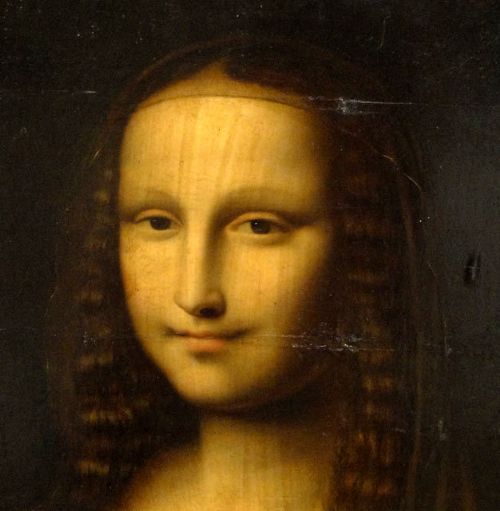
Professor Martin Kemp has dated this panel to be 16th century based on the inspection of photographs.

The 16th-century portrait Mona Lisa, or La Gioconda (La Joconde), painted in oil on a poplar panel by Leonardo da Vinci, has been the subject of a considerable deal of speculation.

It has for a long time been argued that after Leonardo's death the painting was cut down by having part of the panel at both sides removed. Early copies depict columns on both sides of the figure. Only the edges of the bases can be seen in the original. However, some art historians, such as Martin Kemp, now argue that the painting has not been altered, and that the columns depicted in the copies were added by the copyists. The latter view was bolstered during 2004 and 2005 when an international team of 39 specialists undertook the most thorough scientific examination of the Mona Lisa yet undertaken. Beneath the frame (the current one was fitted to the Mona Lisa in 2004) there was discovered a "reserve" around all four edges of the panel. A reserve is an area of bare wood surrounding the gessoed and painted portion of the panel. That this is a genuine reserve, and not the result of removal of the gesso or paint, is demonstrated by a raised edge still existing around the gesso, the result of build up from the edge of brush strokes at the edge of the gesso area.The reserve area, which was likely to have been as much as 20 mm originally appears to have been trimmed at some point probably to fit a frame (we know that in the 1906 framing it was the frame itself which was trimmed, not the picture, so it must have been earlier), however at no point has any of Leonardo's actual paint been trimmed. Therefore the columns in early copies must be inventions of those artists, or copies of another (unknown) studio version of Mona Lisa.
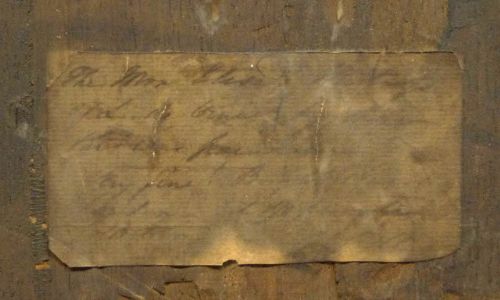
People of Arezzo in the Val di Chiana, a valley in Tuscany, have traditionally claimed the Mona Lisa landscape as theirs. An article published in the journal Cartographica suggests that the landscape comprises two parts which when placed together correspond to Leonardo’s topographic map, the Val di Chiana.
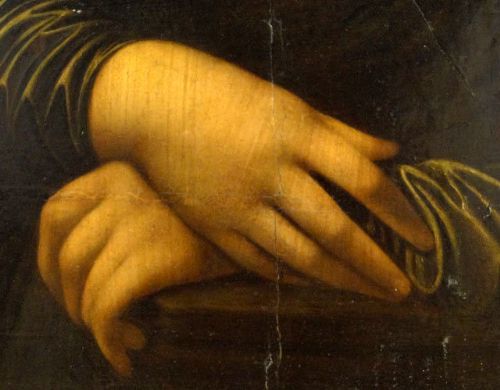
It has been suggested that Leonardo created more than one version of the painting. The owners of the version known as the Isleworth Mona Lisa claim that it is an original, though the great majority of art historians believe it to be a later copy by an unknown artist. The same claim has been made for a version in the Vernon collection. The Vernon Mona Lisa is particularly interesting because it was originally part of the collection at the Louvre. Another version, dating from c.1616 was given in c. 1790 to Joshua Reynolds by the Duke of Leeds in exchange for a Reynolds self-portrait. Reynolds thought it to be the real painting and the French one a copy, which has now been disproved. It is, however, useful in that it was copied when the original's colors were far brighter than they are now, and so it gives some sense of the original's appearance 'as new'. It is in a private collection, but was exhibited in 2006 at the Dulwich Picture Gallery. There are also copies of the image in which the figure appears nude. These have also led to speculation that they were copied from a lost Leonardo original depicting Lisa naked.In January 2012 Museo del Prado in Madrid announced that it had discovered and almost fully restored a copy of the painting by a pupil of Leonardo, very possibly painted alongside the master. The copy gives a better indication of what the portrait looked like at the time, as the varnish on the original has become cracked and yellowed with age.

Reference Numbers
Sellingantiques Reference
SA206172
Dealers Internal Reference
3558
Description
After Leonardo da Vinci 1452-1519

The Mona Lisa or "La Gioconda"

oil on walnut panel

34 x 30 inches (86.36 x 76.20 cm)

Provenance : J Bamford, Christies sale, March 1841, lot 85

Exhibited : Westham Picture exhibition, london, March 1895

Professor Martin Kemp has dated this panel to be 16th century based on the inspection of photographs.
Artware Fineart
fig 1. After Leonardo da Vinci 1452-1519   The Mona Lisa or
fig 1. After Leonardo Da Vinci 1452-1519 the Mona Lisa or "La Gioconda" 16th Century Copy

The 16th-century portrait Mona Lisa, or La Gioconda (La Joconde), painted in oil on a poplar panel by Leonardo da Vinci, has been the subject of a considerable deal of speculation.

It has for a long time been argued that after Leonardo's death the painting was cut down by having part of the panel at both sides removed. Early copies depict columns on both sides of the figure. Only the edges of the bases can be seen in the original. However, some art historians, such as Martin Kemp, now argue that the painting has not been altered, and that the columns depicted in the copies were added by the copyists. The latter view was bolstered during 2004 and 2005 when an international team of 39 specialists undertook the most thorough scientific examination of the Mona Lisa yet undertaken. Beneath the frame (the current one was fitted to the Mona Lisa in 2004) there was discovered a "reserve" around all four edges of the panel. A reserve is an area of bare wood surrounding the gessoed and painted portion of the panel. That this is a genuine reserve, and not the result of removal of the gesso or paint, is demonstrated by a raised edge still existing around the gesso, the result of build up from the edge of brush strokes at the edge of the gesso area.The reserve area, which was likely to have been as much as 20 mm originally appears to have been trimmed at some point probably to fit a frame (we know that in the 1906 framing it was the frame itself which was trimmed, not the picture, so it must have been earlier), however at no point has any of Leonardo's actual paint been trimmed. Therefore the columns in early copies must be inventions of those artists, or copies of another (unknown) studio version of Mona Lisa.

fig 2. After Leonardo da Vinci 1452-1519   The Mona Lisa or
fig 2. After Leonardo Da Vinci 1452-1519 the Mona Lisa or "La Gioconda" 16th Century Copy

People of Arezzo in the Val di Chiana, a valley in Tuscany, have traditionally claimed the Mona Lisa landscape as theirs. An article published in the journal Cartographica suggests that the landscape comprises two parts which when placed together correspond to Leonardo’s topographic map, the Val di Chiana.

fig 3. After Leonardo da Vinci 1452-1519   The Mona Lisa or
fig 3. After Leonardo Da Vinci 1452-1519 the Mona Lisa or "La Gioconda" 16th Century Copy

It has been suggested that Leonardo created more than one version of the painting. The owners of the version known as the Isleworth Mona Lisa claim that it is an original, though the great majority of art historians believe it to be a later copy by an unknown artist. The same claim has been made for a version in the Vernon collection. The Vernon Mona Lisa is particularly interesting because it was originally part of the collection at the Louvre. Another version, dating from c.1616 was given in c. 1790 to Joshua Reynolds by the Duke of Leeds in exchange for a Reynolds self-portrait. Reynolds thought it to be the real painting and the French one a copy, which has now been disproved. It is, however, useful in that it was copied when the original's colors were far brighter than they are now, and so it gives some sense of the original's appearance 'as new'. It is in a private collection, but was exhibited in 2006 at the Dulwich Picture Gallery. There are also copies of the image in which the figure appears nude. These have also led to speculation that they were copied from a lost Leonardo original depicting Lisa naked.In January 2012 Museo del Prado in Madrid announced that it had discovered and almost fully restored a copy of the painting by a pupil of Leonardo, very possibly painted alongside the master. The copy gives a better indication of what the portrait looked like at the time, as the varnish on the original has become cracked and yellowed with age.

Reference Numbers
Sellingantiques Ref
SA206172
Dealers Internal Ref
3558
Artware Fineart
Sellingantiques verified Since Sep 2008
Dealer Profile

You can view the stock and full dealer information on the Artware Fineart Profile Page

PDF SHARE
SAVE
After Leonardo da Vinci 1452-1519   The Mona Lisa or
1 / 5
Archive I After Leonardo da Vinci 1452-1519   The Mona Lisa or

After Leonardo Da Vinci 1452-1519 the Mona Lisa or "La Gioconda" 16th Century Copy
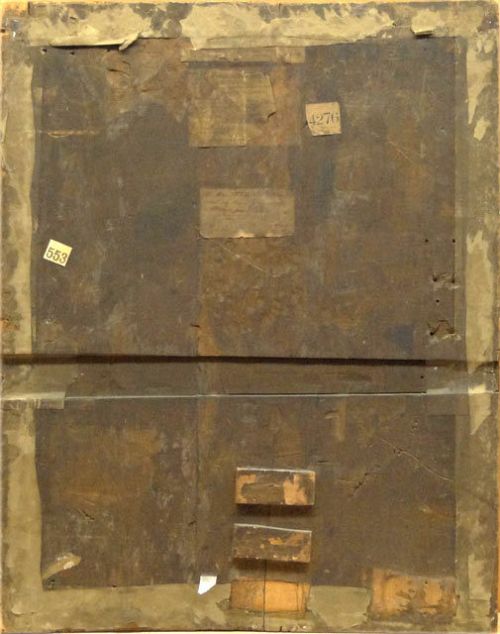
Archive II After Leonardo da Vinci 1452-1519   The Mona Lisa or
Archive III After Leonardo da Vinci 1452-1519   The Mona Lisa or
Archive IV After Leonardo da Vinci 1452-1519   The Mona Lisa or
Archive V After Leonardo da Vinci 1452-1519   The Mona Lisa or
Enlarged Archival View
Telephone 07958 699 645
Location
18 La Gare
51 Surrey Row
London
SE1 0BZ
United Kingdom
Verified Since Sep 2008
Items For Sale 243
Items Sold 223
Artware Fineart
Verified Since Sep 2008
View Dealer Info
Location: 18 La Gare , 51 Surrey Row , London , SE1 0BZ , United Kingdom
Verified
Sep 2008
For Sale
243
Sold
223
After Leonardo da Vinci 1452-1519   The Mona Lisa or
After Leonardo da Vinci 1452-1519 The Mona Lisa or "La Gioconda" 16th century copy
Ref: SA206172
After Leonardo da Vinci 1452-1519   The Mona Lisa or
Detail View 1
Detail View 2
Detail View 3
Detail View 4
Archival Detail
Every single antique dealer on our platform is individually approved by our internal team. We verify their professional trade history, ethical standards, and photographic quality to ensure a secure, high-standard buying environment. Upon joining, every dealer agrees to a strict 9-point code of conduct. While issues can occasionally arise, our dealers typically resolve them swiftly and directly with the buyer. In fact, since our founding in 2002, Sellingantiques has only had to step in to help resolve an issue on roughly five occasions—a true testament to the quality of our dealers and their dedication to your happiness.
Our dealers are highly experienced in packing and shipping fragile, high-value antiques. Because you are in direct contact with the dealer, you will be able to easily go through all available shipping and insurance options together to ensure your item arrives safely.
Antiques are the ultimate green purchase. By choosing historical pieces over newly manufactured goods, you completely eliminate the carbon footprint of modern mass production while preserving exceptional, timeless craftsmanship.
items
Add keywords to the filter
Price
£100
£250000
Era
Movements
Material
Origin
Stock Location
Freshness
Online Payments
Categories