14,330  PAGES BROWSED TODAY PAGES TODAY 87 ANTIQUES UPLOADED TODAYNEW ARRIVALS
87 ITEMS ADDED TODAY
Sort Order
Items Per Page
Browse Categories
Sort order
Items per page
ID #SA172258
SOLD
Email Phone WhatsApp
Save
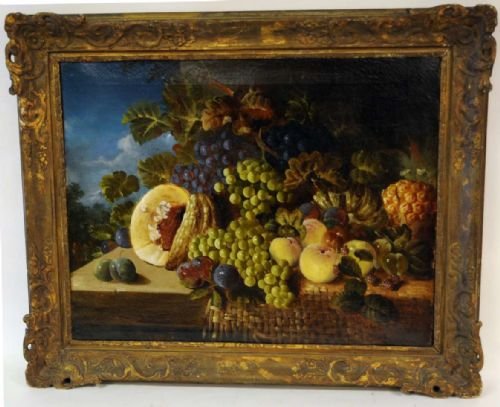
Still Life of Fruit on a Ledge by George Lance 1802-1864
Sold by Artware Fineart
sold SA172258
Sorry, but this item has been sold.

Artware Fineart

Sellingantiques Verified Since Sep 2008
Id #SA172258
PDF SHARE
SAVE

Still Life of Fruit on a Ledge by George Lance 1802-1864

19th century
Description

George Lance 1802-1864

Still Life of Fruit on a Ledge

signed with initials and dated on the reverse " GL 1858 "

oil on canvas

24 x 30in. (61 x 76 cm.)

EXHIBITED : Bradford Art Gallery, 1949

Lance was born at the old manor-house in Little Easton in Essex. His father was William Lance who had previously served in a regiment of light horse and was at the time of Lance's birth an adjutant in the Essex yeomanry; afterwards he became the inspector of the Bow Street horse-patrol. His mother, Louisa Lucy (née) Constable, with whom his father had eloped from boarding-school, was the daughter of Colonel Constable of Beverley in Yorkshire.Although Lance showed a predilection for art at a very early age, his friends placed him, when under the age of fourteen, in a factory in Leeds. However, the uncongenial work injured his health and he returned to London. Wandering one day into the British Museum, he casually started a conversation with Charles Landseer, who happened to be drawing there. On learning that Landseer was a pupil of Benjamin Haydon, he went early next morning to that painter's residence, and asked to become a pupil. Haydon replied that if his drawings promised future success he would instruct him for nothing. Not many days later Lance, still under fourteen, entered Haydon's studio, and remained there seven years, at the same time studying in the schools of the Royal Academy.
While designing a picture inspired by Homer's 'Iliad', he decided, before putting on the colours, to paint some fruit and vegetables, in order to improve his execution. His work attracted the notice of Sir George Beaumont, who purchased it, and this success led him to paint another fruit-piece, which he sold to the Earl of Shaftesbury. He then painted two fruit-pieces for the Duke of Bedford as decorations for a summer-house at Woburn Abbey, and his work proved so profitable that he decided to devote himself to the painting of still-life.
He began to exhibit in 1824, when he sent to the British Institution 'A Fruit Boy,' and to the Society of British Artists 'The Mischievous Boy' and two fruit-pieces. In 1828 appeared his first contribution to the exhibitions of the Royal Academy, 'Still Life,' with the quotation from Samuel Butler's poem "Hudibras":
"Goose, rabbit, pheasant, pigeons, all

With good brown jug for beer not small!"

Although it was chiefly as a painter of fruit and flowers that Lance gained his reputation, he sometimes produced historical and genre works, and his picture of 'Melanchthon's First Misgivings of the Church of Rome' won the prize at the Liverpool Academy in 1836. His works appeared most frequently at the exhibitions of the British Institution, to which he contributed in all 135 pictures.

Declaration

Artware Fineart has dated this piece to the 1850s.

Reference Numbers
Sellingantiques Reference
SA172258
Dealers Internal Reference
3559
Description
George Lance 1802-1864

Still Life of Fruit on a Ledge

signed with initials and dated on the reverse " GL 1858 "

oil on canvas

24 x 30in. (61 x 76 cm.)

EXHIBITED : Bradford Art Gallery, 1949

Lance was born at the old manor-house in Little Easton in Essex. His father was William Lance who had previously served in a regiment of light horse and was at the time of Lance's birth an adjutant in the Essex yeomanry; afterwards he became the inspector of the Bow Street horse-patrol.

His mother, Louisa Lucy (née) Constable, with whom his father had eloped from boarding-school, was the daughter of Colonel Constable of Beverley in Yorkshire.
Artware Fineart

Although Lance showed a predilection for art at a very early age, his friends placed him, when under the age of fourteen, in a factory in Leeds. However, the uncongenial work injured his health and he returned to London. Wandering one day into the British Museum, he casually started a conversation with Charles Landseer, who happened to be drawing there. On learning that Landseer was a pupil of Benjamin Haydon, he went early next morning to that painter's residence, and asked to become a pupil. Haydon replied that if his drawings promised future success he would instruct him for nothing. Not many days later Lance, still under fourteen, entered Haydon's studio, and remained there seven years, at the same time studying in the schools of the Royal Academy.

fig 1. Still Life of Fruit on a Ledge by George Lance 1802-1864

While designing a picture inspired by Homer's 'Iliad', he decided, before putting on the colours, to paint some fruit and vegetables, in order to improve his execution. His work attracted the notice of Sir George Beaumont, who purchased it, and this success led him to paint another fruit-piece, which he sold to the Earl of Shaftesbury. He then painted two fruit-pieces for the Duke of Bedford as decorations for a summer-house at Woburn Abbey, and his work proved so profitable that he decided to devote himself to the painting of still-life.

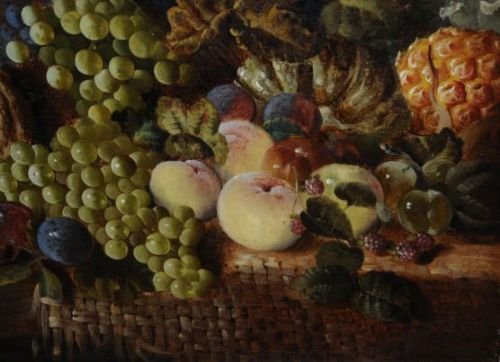
fig 2. Still Life of Fruit on a Ledge by George Lance 1802-1864

He began to exhibit in 1824, when he sent to the British Institution 'A Fruit Boy,' and to the Society of British Artists 'The Mischievous Boy' and two fruit-pieces. In 1828 appeared his first contribution to the exhibitions of the Royal Academy, 'Still Life,' with the quotation from Samuel Butler's poem "Hudibras":

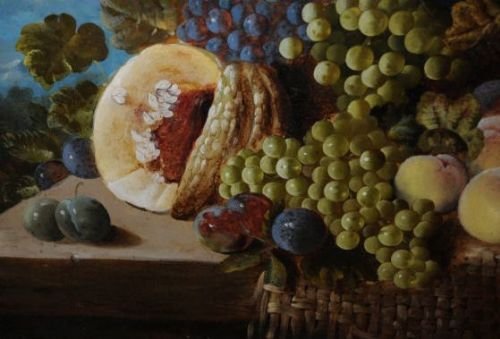
fig 3. Still Life of Fruit on a Ledge by George Lance 1802-1864

"Goose, rabbit, pheasant, pigeons, all

With good brown jug for beer not small!"

Although it was chiefly as a painter of fruit and flowers that Lance gained his reputation, he sometimes produced historical and genre works, and his picture of 'Melanchthon's First Misgivings of the Church of Rome' won the prize at the Liverpool Academy in 1836. His works appeared most frequently at the exhibitions of the British Institution, to which he contributed in all 135 pictures.

Date of Manufacture

Artware Fineart has dated this piece to the 1850s.

Reference Numbers
Sellingantiques Ref
SA172258
Dealers Internal Ref
3559
Artware Fineart
Sellingantiques verified Since Sep 2008
Dealer Profile

You can view the stock and full dealer information on the Artware Fineart Profile Page

PDF SHARE
SAVE
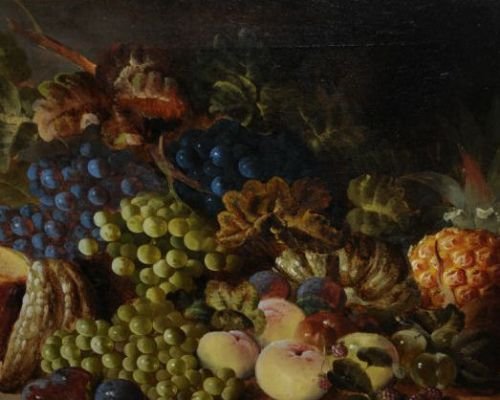
Still Life of Fruit on a Ledge by George Lance 1802-1864
1 / 5
Archive I Still Life of Fruit on a Ledge by George Lance 1802-1864

Still Life of Fruit on a Ledge by George Lance 1802-1864

Archive II Still Life of Fruit on a Ledge by George Lance 1802-1864 View II
Archive III Still Life of Fruit on a Ledge by George Lance 1802-1864 View III
Archive IV Still Life of Fruit on a Ledge by George Lance 1802-1864 View IV
Archive V Still Life of Fruit on a Ledge by George Lance 1802-1864 View V
Enlarged Archival View
Telephone 07958 699 645
Location
18 La Gare
51 Surrey Row
London
SE1 0BZ
United Kingdom
Verified Since Sep 2008
Items For Sale 243
Items Sold 223
Artware Fineart
Verified Since Sep 2008
View Dealer Info
Location: 18 La Gare , 51 Surrey Row , London , SE1 0BZ , United Kingdom
Verified
Sep 2008
For Sale
243
Sold
223
Still Life of Fruit on a Ledge by George Lance 1802-1864
Ref: SA172258
Still Life of Fruit on a Ledge by George Lance 1802-1864
Detail View 1
Detail View 2
Detail View 3
Detail View 4
Archival Detail
Every single antique dealer on our platform is individually approved by our internal team. We verify their professional trade history, ethical standards, and photographic quality to ensure a secure, high-standard buying environment. Upon joining, every dealer agrees to a strict 9-point code of conduct. While issues can occasionally arise, our dealers typically resolve them swiftly and directly with the buyer. In fact, since our founding in 2002, Sellingantiques has only had to step in to help resolve an issue on roughly five occasions—a true testament to the quality of our dealers and their dedication to your happiness.
Our dealers are highly experienced in packing and shipping fragile, high-value antiques. Because you are in direct contact with the dealer, you will be able to easily go through all available shipping and insurance options together to ensure your item arrives safely.
Antiques are the ultimate green purchase. By choosing historical pieces over newly manufactured goods, you completely eliminate the carbon footprint of modern mass production while preserving exceptional, timeless craftsmanship.
items
Add keywords to the filter
Price
£100
£250000
Era
Movements
Material
Origin
Stock Location
Freshness
Online Payments
Categories