18,947  PAGES BROWSED TODAY PAGES TODAY 109 ANTIQUES UPLOADED TODAYNEW ARRIVALS
109 ITEMS ADDED TODAY
Sort Order
Items Per Page
Browse Categories
Sort order
Items per page
ID #SA142530
SOLD
Email Phone WhatsApp
Save
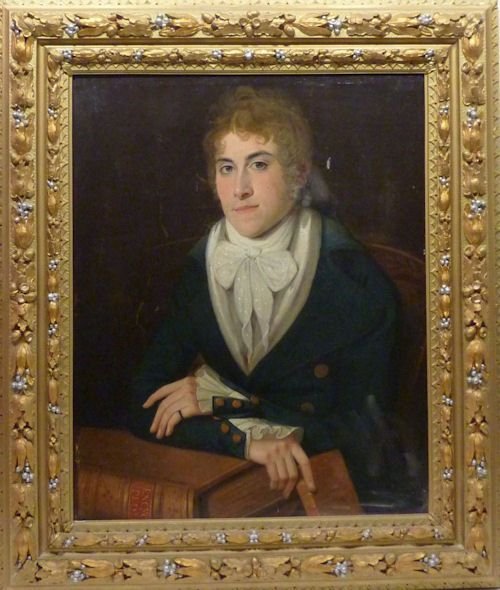
Portrait of Sir Edward Thomason Circa 1769 -1849, Attributed to Sir William Beechey 1753 - 1839
Sold by Artware Fineart
sold SA142530
Sorry, but this item has been sold.

Artware Fineart

Sellingantiques Verified Since Sep 2008
Id #SA142530
PDF SHARE
SAVE

Portrait of Sir Edward Thomason Circa 1769 -1849, Attributed to Sir William Beechey 1753 - 1839

19th century
Description

Portrait of Sir Edward Thomason Circa 1769 -1849, attributed to Sir William Beechey 1753 - 1839

oil on canvas

30 x 25in.

inscribed on the reverse

Thomason, Sir Edward (bap. 1769, d. 1849), manufacturer of buttons and jewellery and publisher of medals, was baptized in Birmingham on 14 November 1769, the son of Edward Thomason, a buckle manufacturer, and his wife, Catherine. He served as an apprentice in Matthew Boulton's factory in Soho, Birmingham, from the age of sixteen to twenty-one. In the early 1790s he opened his own factory, in the premises in Church Street, Birmingham, where his father, then retired, had previously had his business. He began by manufacturing gilt and plated buttons, expanding subsequently into the production of jewellery; a medal and token department was added by 1807; three years later he began plating steel cutlery, and the silver- and gold-plating side of the business expanded to include larger objects thereafter. He also did large-scale castings. His experiments with various mechanical devices, recorded in his Memoirs (1845), were not always successful, and the automatically folding carriage step, for which he took out patents in 1796 and 1798, was defeated by the fashion from 1799 for curved carriage doors.
On the 7th May 1802 Thomason hit the jackpot when he entered patent no 2617, for an improvement to the corkscrew. The next fourteen years saw his factory turn out 130,000 units before allowing others to manufacture under licence and the design is still to this day considered by many to be the finest corkscrew ever made. Perhaps Thomason knew this as each one carried the motto “Ne Plus Ultra” (None Better).

His success with inventions continued, including the extending toast fork complete with ejector plate in 1809, and such diverse items as swordsticks, walking canes that incorporated a cigar lighter, safety catches for guns. He even created a patented dice thrower, albeit strictly for backgammon; Thomason was a devoutly religious man.

In 1807 Thomason produced the first British electioneering medals, for the candidates in the Yorkshire elections. In 1809 he manufactured a medal of his former employer Matthew Boulton, engraved by Peter Wyon after Peter Rouw, which was one of the largest medals then to have been struck. About this time he also made his first medallic series, of six European sovereigns. January 1810 saw Thomason extend his factory to start production of close plated knives, forks and spoons. The following year he received an order for two million copper tokens from Samuel Fereday the great Iron-master.

In 1812 he produced gold and silver tokens for Berkeley Monck, and in 1815 he struck penny tokens for Magdalen Island, Canada. In May 1814 Thomason travelled to Paris with his wife, Phillis Bown Glover (d. 1861), whom he had married on 26 August 1799, and his son Henry Botfield Thomason (1802–1843).

The Napoleonic wars offered plentiful subjects for medals: one celebrating the treaty of Paris (1814) was especially popular. In 1817 Thomason entered into an agreement with James Mudie to strike a series of medals recording British victories over Napoleon; the dies were engraved by English and French artists, and the results were published by Mudie in An Historical and Critical Account of a Grand Series of National Medals (1820). Thomason subsequently purchased the dies. In 1819 he began a series of forty-eight medals of the Elgin marbles in the British Museum, which was completed by 1823.

Thomason was knighted by William IV in 1832. A series of medallets of ‘Bible truths’ and ‘Testamental Truths’ was published in 1835. Thomason sold his factory to George Richmond Collis, seemingly in 1835, and retired fully in 1844. He subsequently lived in Ludlow, Bath, and Warwick, and died at his home in Jury Street, Warwick, on 29 May 1849. He was buried at St Philip's Church, Birmingham.

Philip Attwood DNB

Declaration

Artware Fineart has dated this piece to the 1800s.

Reference Numbers
Sellingantiques Reference
SA142530
Dealers Internal Reference
3524
Description
Portrait of Sir Edward Thomason Circa 1769 -1849, attributed to Sir William Beechey 1753 - 1839

oil on canvas

30 x 25in.

inscribed on the reverse

Thomason, Sir Edward (bap. 1769, d.

1849), manufacturer of buttons and jewellery and publisher of medals, was baptized in Birmingham on 14 November 1769, the son of Edward Thomason, a buckle manufacturer, and his wife, Catherine.
Artware Fineart

He served as an apprentice in Matthew Boulton's factory in Soho, Birmingham, from the age of sixteen to twenty-one. In the early 1790s he opened his own factory, in the premises in Church Street, Birmingham, where his father, then retired, had previously had his business. He began by manufacturing gilt and plated buttons, expanding subsequently into the production of jewellery; a medal and token department was added by 1807; three years later he began plating steel cutlery, and the silver- and gold-plating side of the business expanded to include larger objects thereafter. He also did large-scale castings. His experiments with various mechanical devices, recorded in his Memoirs (1845), were not always successful, and the automatically folding carriage step, for which he took out patents in 1796 and 1798, was defeated by the fashion from 1799 for curved carriage doors.

fig 1. Portrait of Sir Edward Thomason Circa 1769 -1849, attributed to Sir William Beechey 1753 - 1839
fig 1. Portrait of Sir Edward Thomason Circa 1769 -1849, Attributed to Sir William Beechey 1753 - 1839

On the 7th May 1802 Thomason hit the jackpot when he entered patent no 2617, for an improvement to the corkscrew. The next fourteen years saw his factory turn out 130,000 units before allowing others to manufacture under licence and the design is still to this day considered by many to be the finest corkscrew ever made. Perhaps Thomason knew this as each one carried the motto “Ne Plus Ultra” (None Better).

His success with inventions continued, including the extending toast fork complete with ejector plate in 1809, and such diverse items as swordsticks, walking canes that incorporated a cigar lighter, safety catches for guns. He even created a patented dice thrower, albeit strictly for backgammon; Thomason was a devoutly religious man.

In 1807 Thomason produced the first British electioneering medals, for the candidates in the Yorkshire elections. In 1809 he manufactured a medal of his former employer Matthew Boulton, engraved by Peter Wyon after Peter Rouw, which was one of the largest medals then to have been struck. About this time he also made his first medallic series, of six European sovereigns. January 1810 saw Thomason extend his factory to start production of close plated knives, forks and spoons. The following year he received an order for two million copper tokens from Samuel Fereday the great Iron-master.

In 1812 he produced gold and silver tokens for Berkeley Monck, and in 1815 he struck penny tokens for Magdalen Island, Canada. In May 1814 Thomason travelled to Paris with his wife, Phillis Bown Glover (d. 1861), whom he had married on 26 August 1799, and his son Henry Botfield Thomason (1802–1843).

The Napoleonic wars offered plentiful subjects for medals: one celebrating the treaty of Paris (1814) was especially popular. In 1817 Thomason entered into an agreement with James Mudie to strike a series of medals recording British victories over Napoleon; the dies were engraved by English and French artists, and the results were published by Mudie in An Historical and Critical Account of a Grand Series of National Medals (1820). Thomason subsequently purchased the dies. In 1819 he began a series of forty-eight medals of the Elgin marbles in the British Museum, which was completed by 1823.

Thomason was knighted by William IV in 1832. A series of medallets of ‘Bible truths’ and ‘Testamental Truths’ was published in 1835. Thomason sold his factory to George Richmond Collis, seemingly in 1835, and retired fully in 1844. He subsequently lived in Ludlow, Bath, and Warwick, and died at his home in Jury Street, Warwick, on 29 May 1849. He was buried at St Philip's Church, Birmingham.

Philip Attwood DNB

Date of Manufacture

Artware Fineart has dated this piece to the 1800s.

Reference Numbers
Sellingantiques Ref
SA142530
Dealers Internal Ref
3524
Artware Fineart
Sellingantiques verified Since Sep 2008
Dealer Profile

You can view the stock and full dealer information on the Artware Fineart Profile Page
PDF SHARE
SAVE
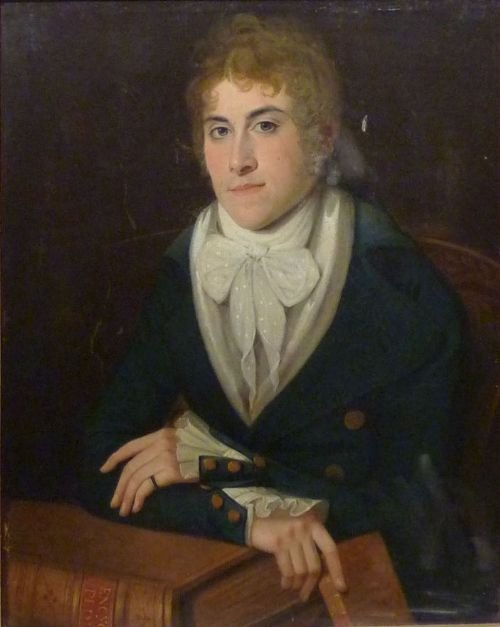
Portrait of Sir Edward Thomason Circa 1769 -1849, attributed to Sir William Beechey 1753 - 1839
1 / 2
Archive I Portrait of Sir Edward Thomason Circa 1769 -1849, attributed to Sir William Beechey 1753 - 1839

Portrait of Sir Edward Thomason Circa 1769 -1849, Attributed to Sir William Beechey 1753 - 1839

Archive II Portrait of Sir Edward Thomason Circa 1769 -1849, attributed to Sir William Beechey 1753 - 1839 View II
Enlarged Archival View
Telephone 07958 699 645
Location
18 La Gare
51 Surrey Row
London
SE1 0BZ
United Kingdom
Verified Since Sep 2008
Items For Sale 243
Items Sold 223
Artware Fineart
Verified Since Sep 2008
View Dealer Info
Location: 18 La Gare , 51 Surrey Row , London , SE1 0BZ , United Kingdom
Verified
Sep 2008
For Sale
243
Sold
223
Portrait of Sir Edward Thomason Circa 1769 -1849, attributed to Sir William Beechey 1753 - 1839
Ref: SA142530
Portrait of Sir Edward Thomason Circa 1769 -1849, attributed to Sir William Beechey 1753 - 1839
Detail View 2
Archival Detail
Every single antique dealer on our platform is individually approved by our internal team. We verify their professional trade history, ethical standards, and photographic quality to ensure a secure, high-standard buying environment. Upon joining, every dealer agrees to a strict 9-point code of conduct. While issues can occasionally arise, our dealers typically resolve them swiftly and directly with the buyer. In fact, since our founding in 2002, Sellingantiques has only had to step in to help resolve an issue on roughly five occasions—a true testament to the quality of our dealers and their dedication to your happiness.
Our dealers are highly experienced in packing and shipping fragile, high-value antiques. Because you are in direct contact with the dealer, you will be able to easily go through all available shipping and insurance options together to ensure your item arrives safely.
Antiques are the ultimate green purchase. By choosing historical pieces over newly manufactured goods, you completely eliminate the carbon footprint of modern mass production while preserving exceptional, timeless craftsmanship.
items
Add keywords to the filter
Price
£100
£250000
Era
Movements
Material
Origin
Stock Location
Freshness
Online Payments
Categories