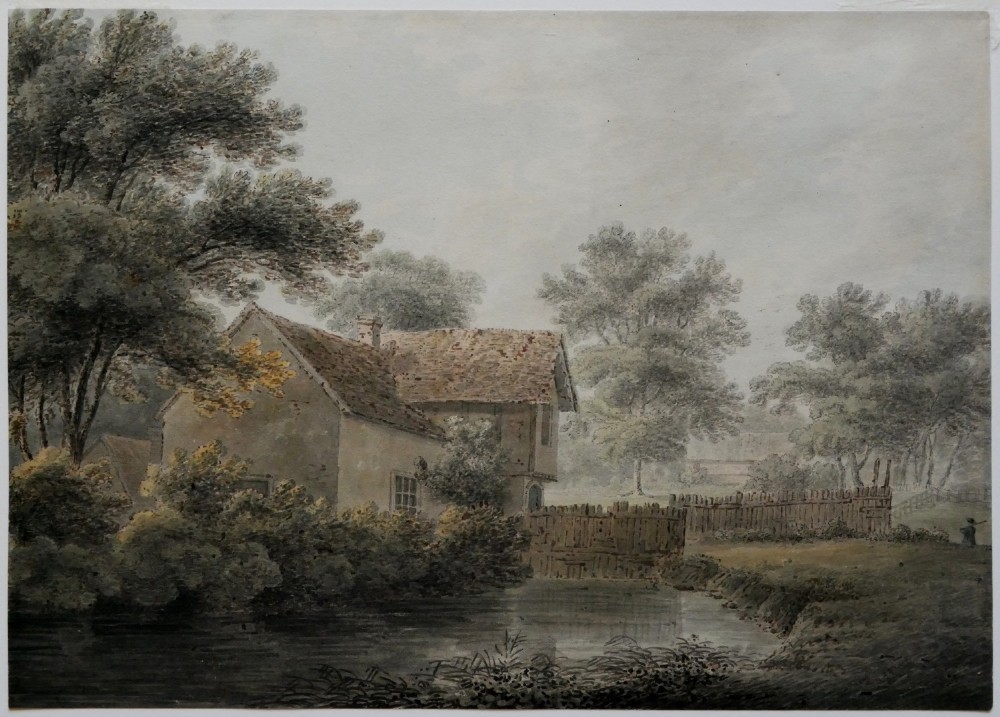
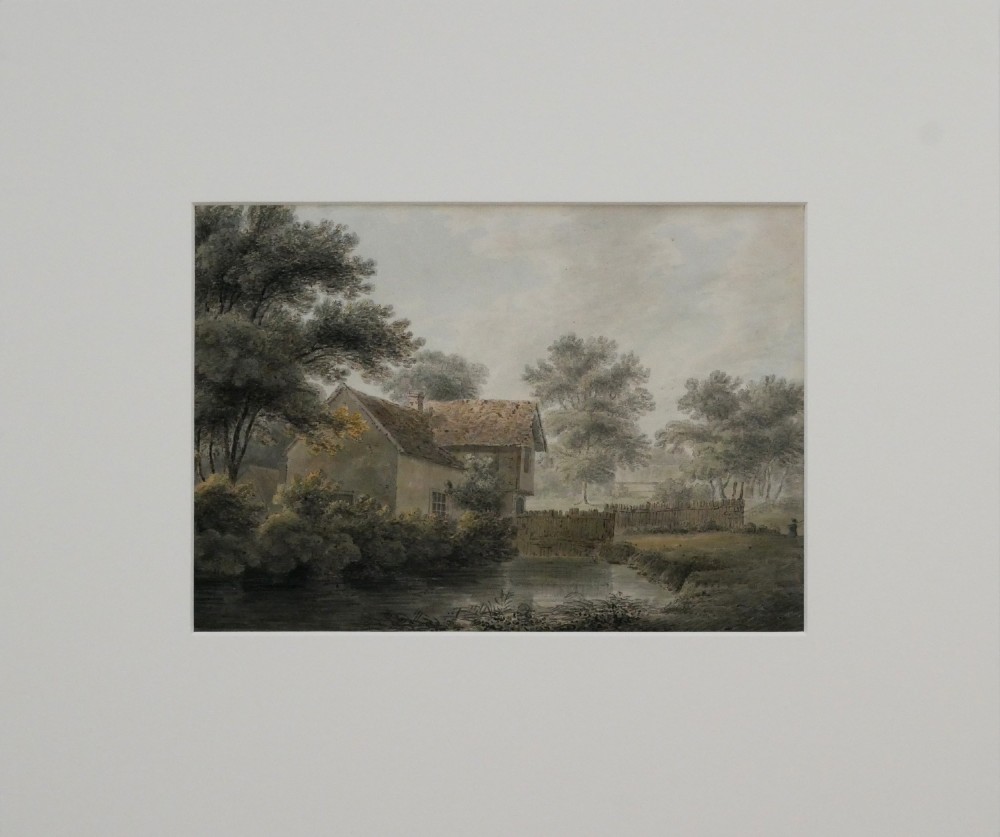
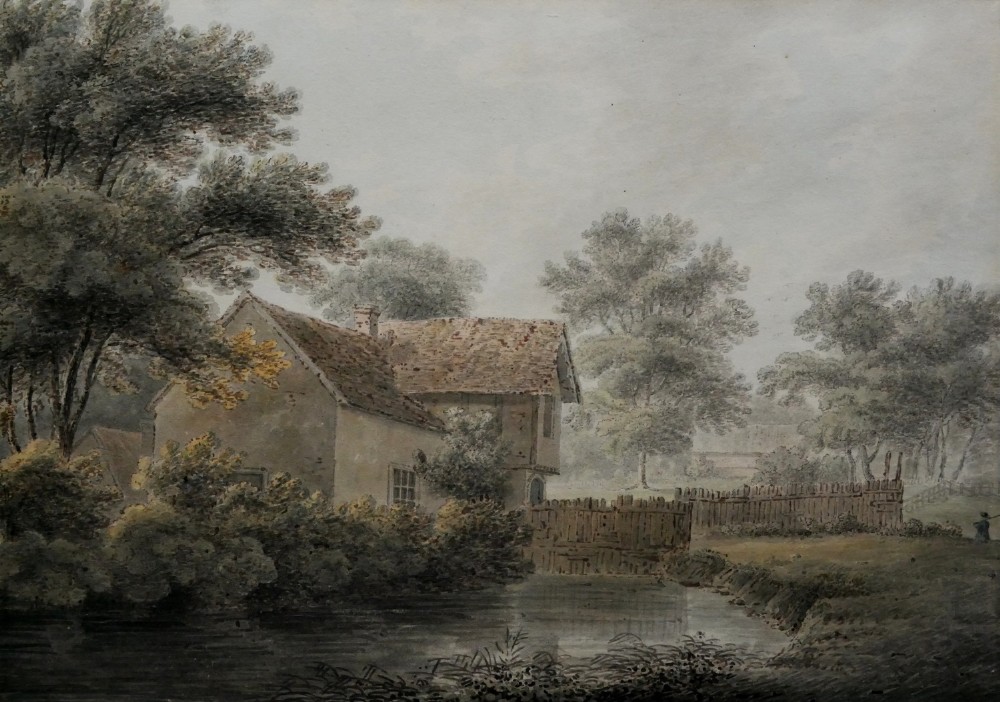
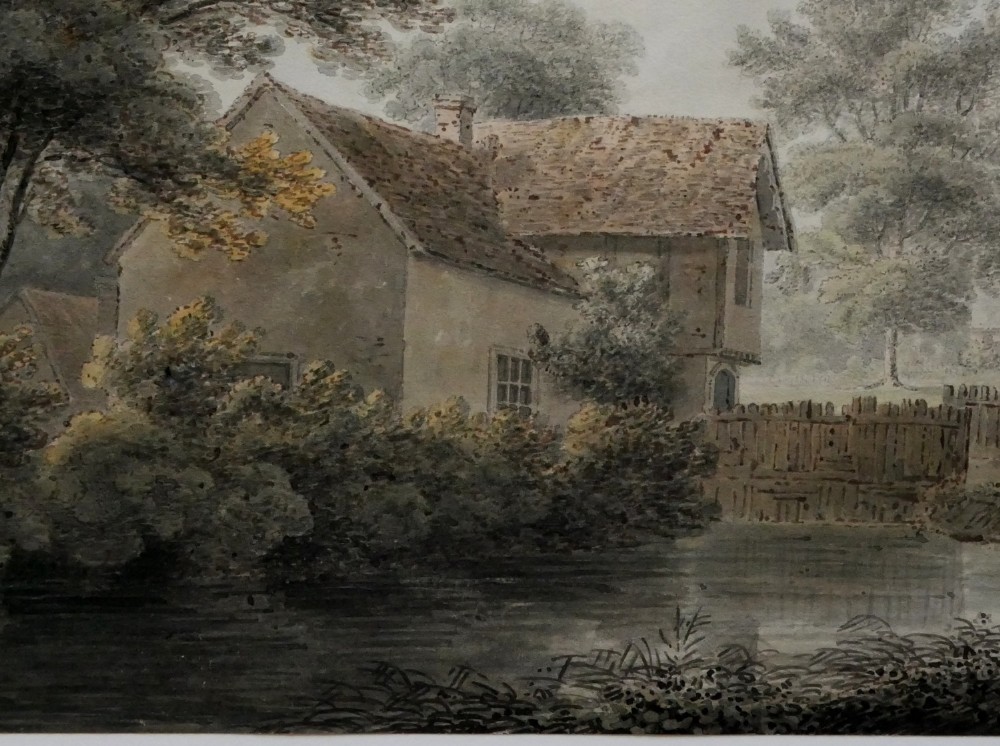
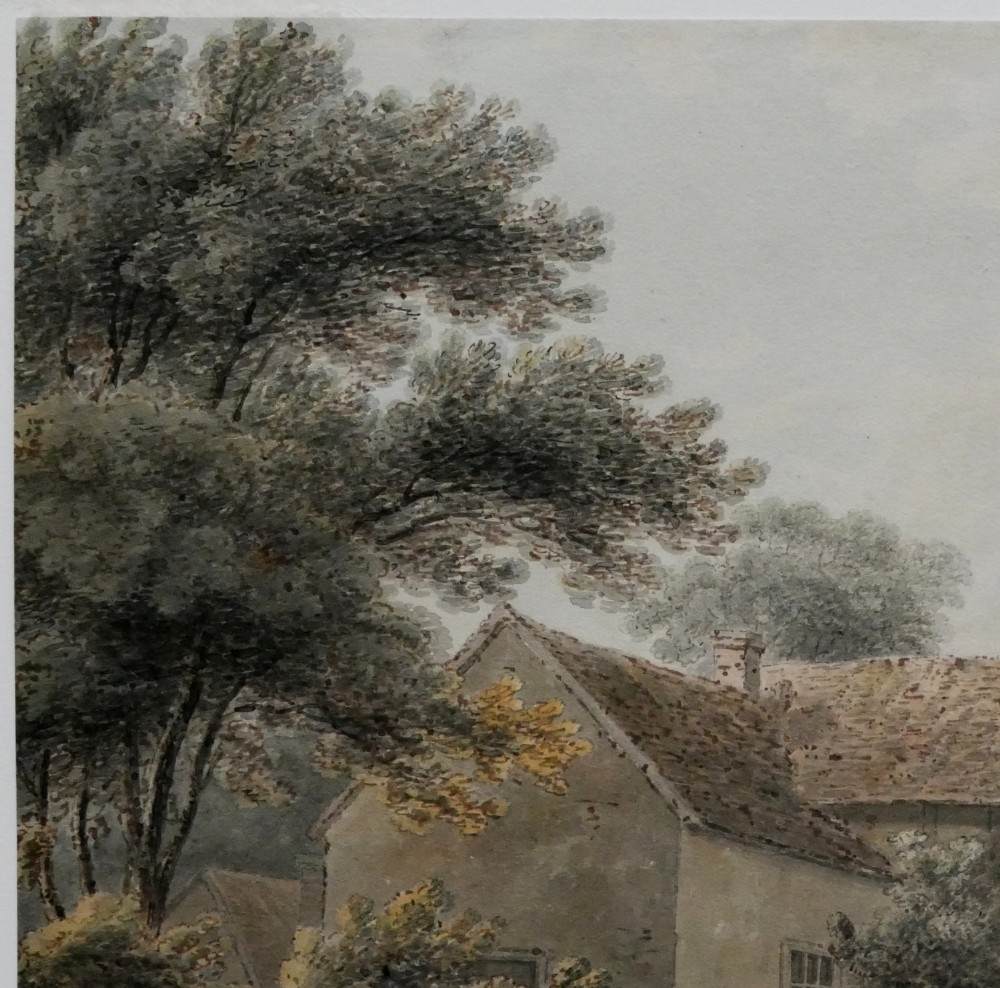
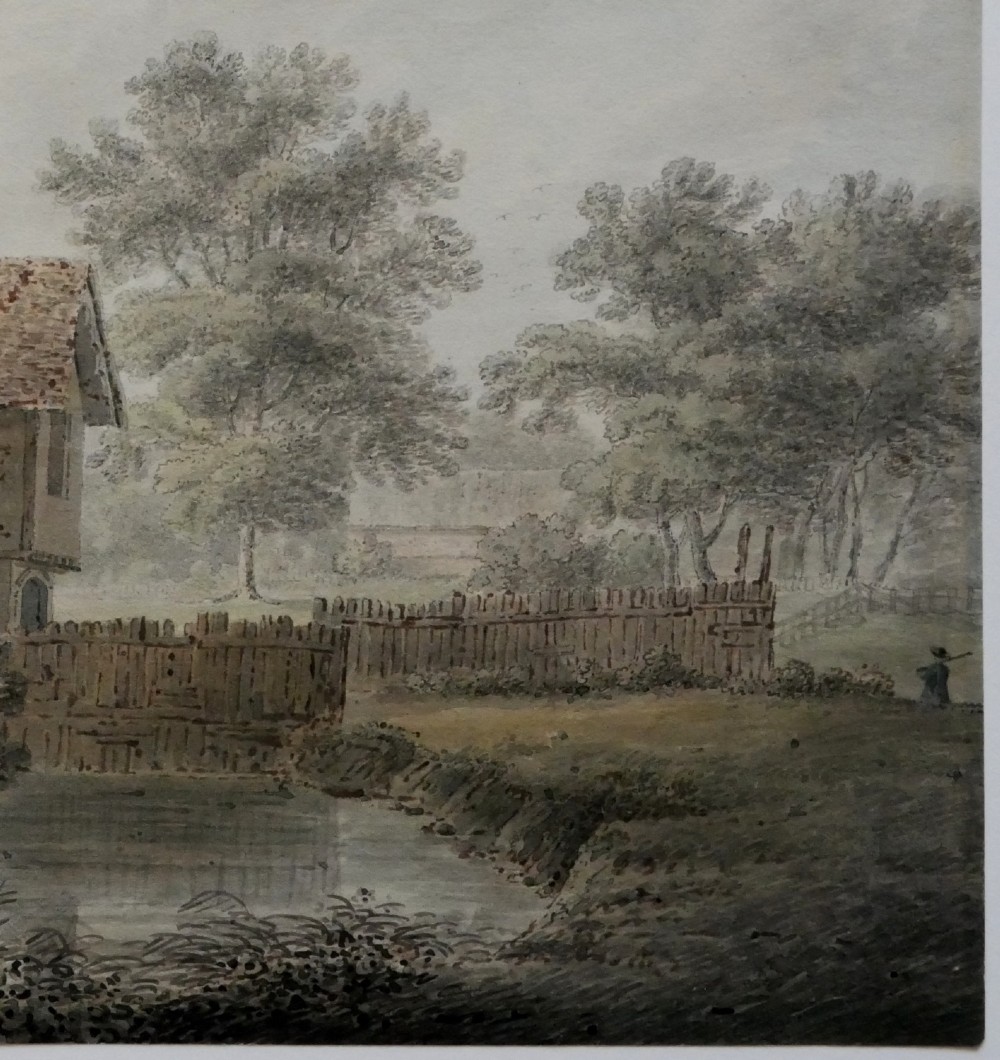
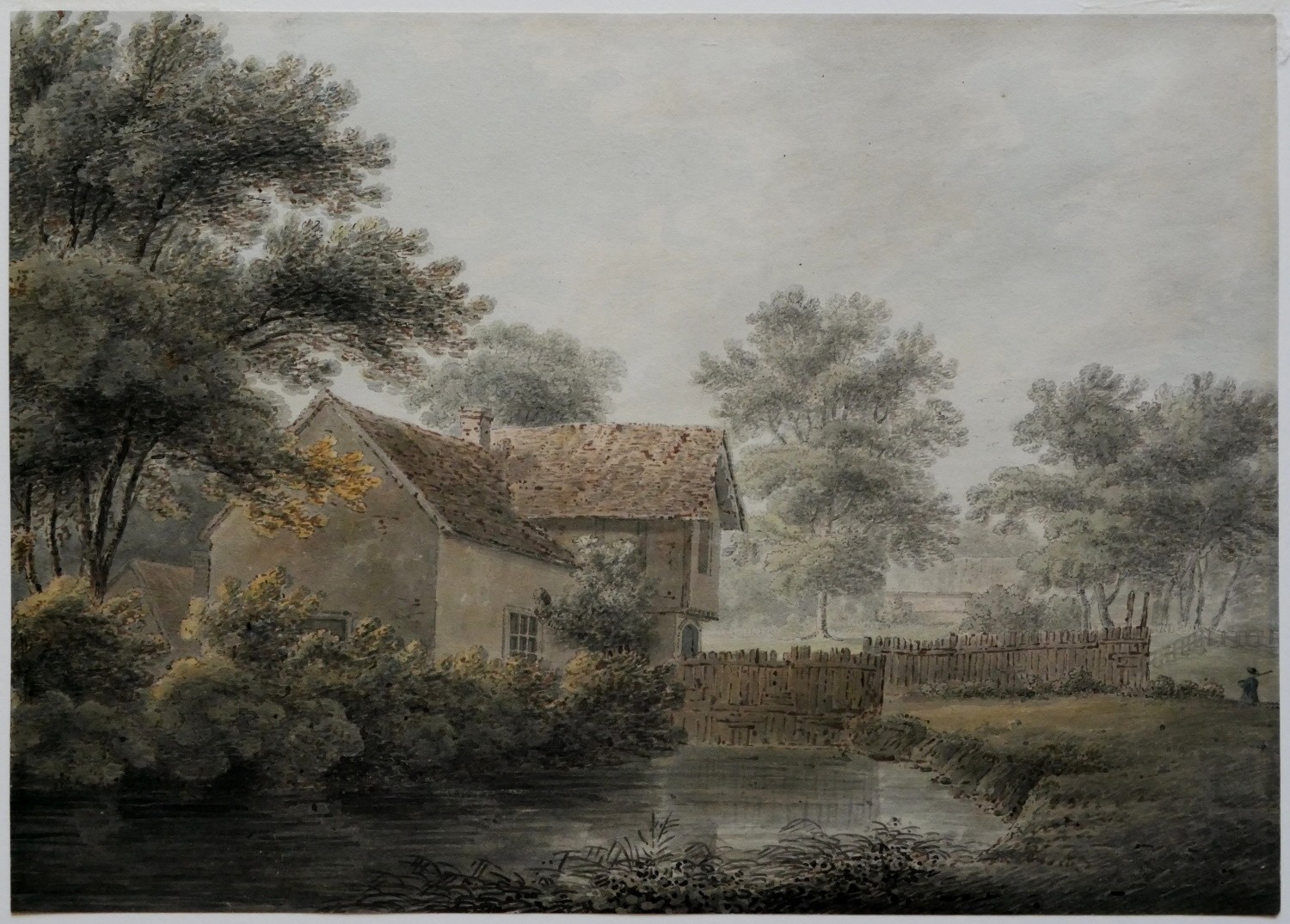
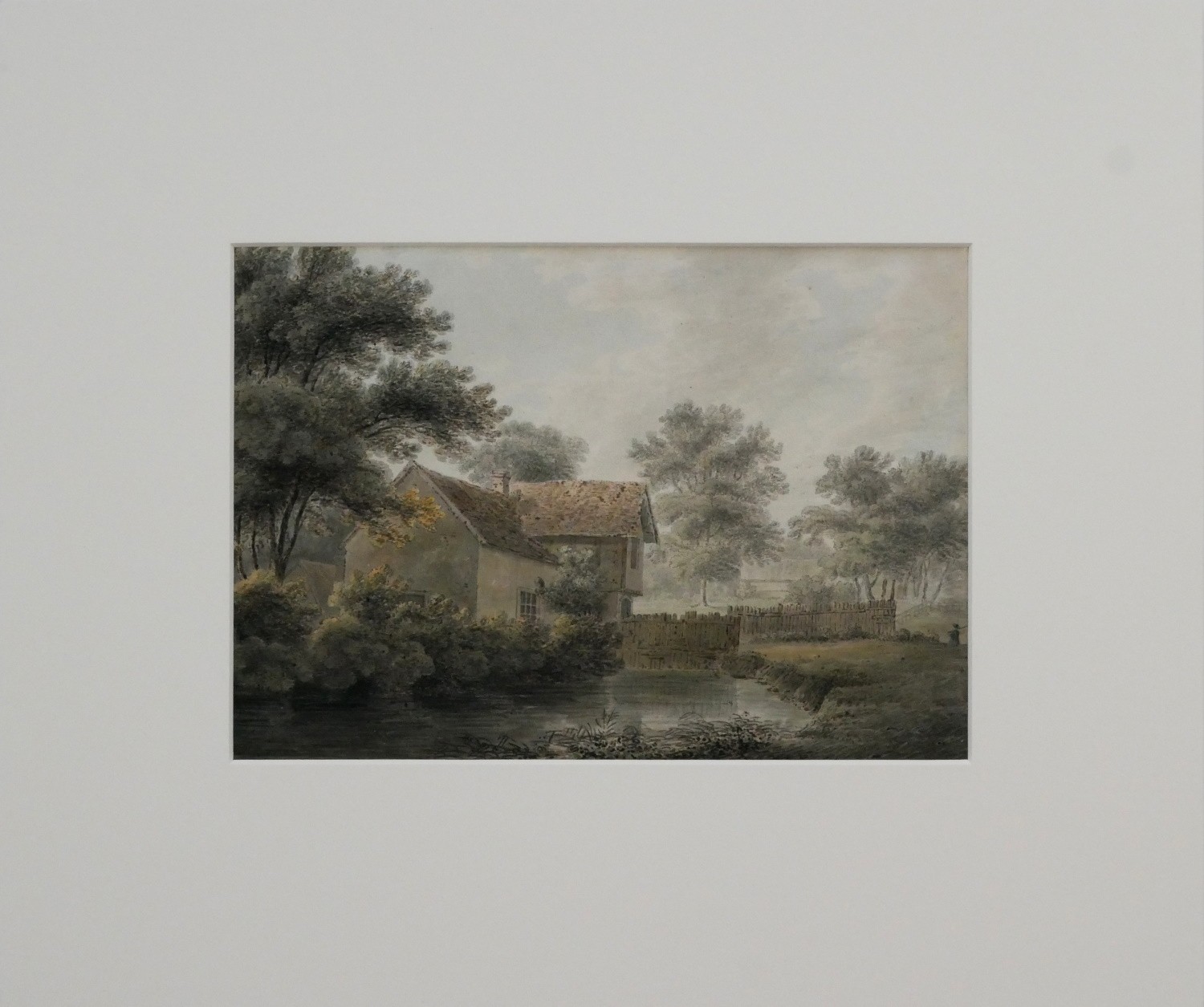
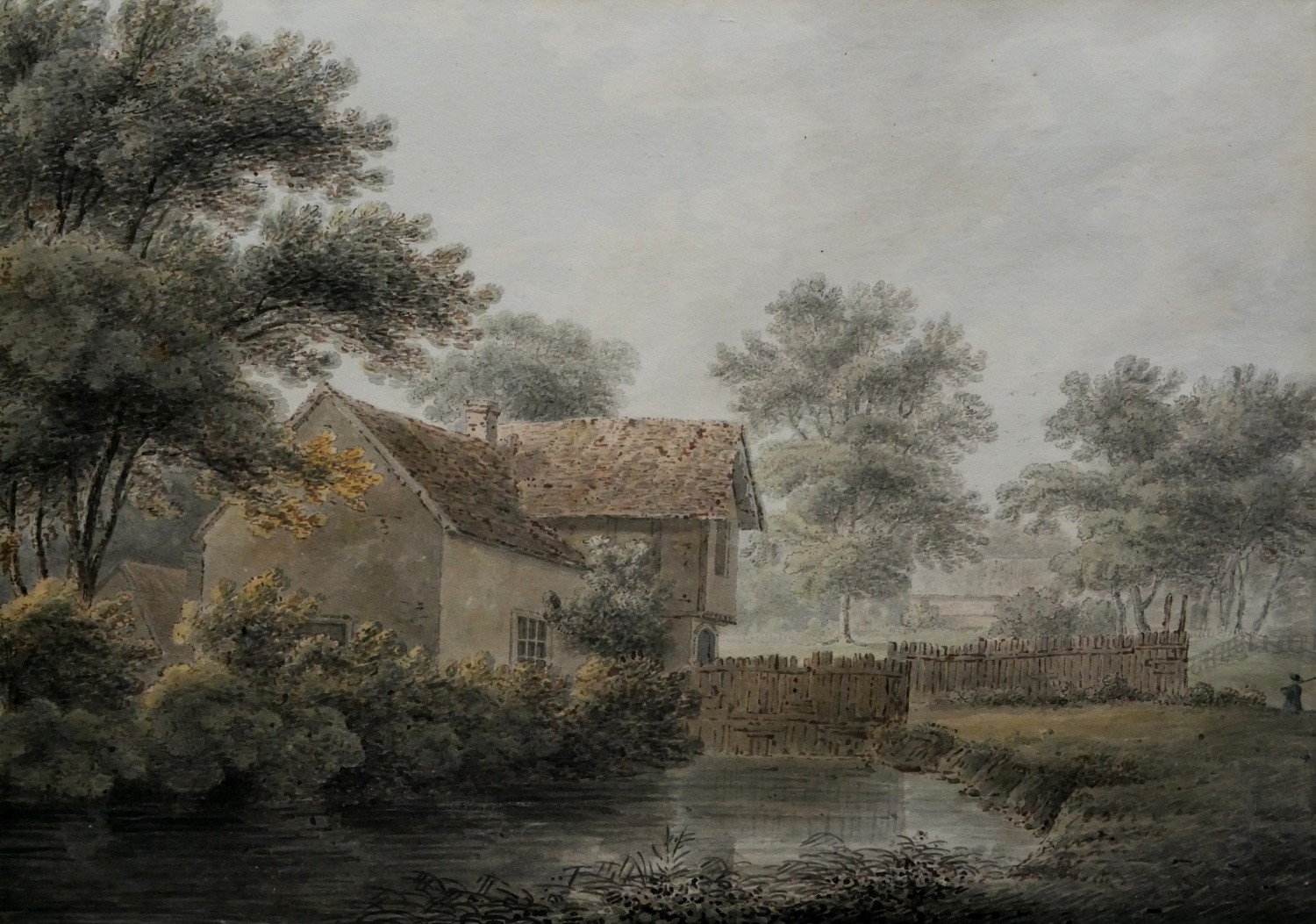
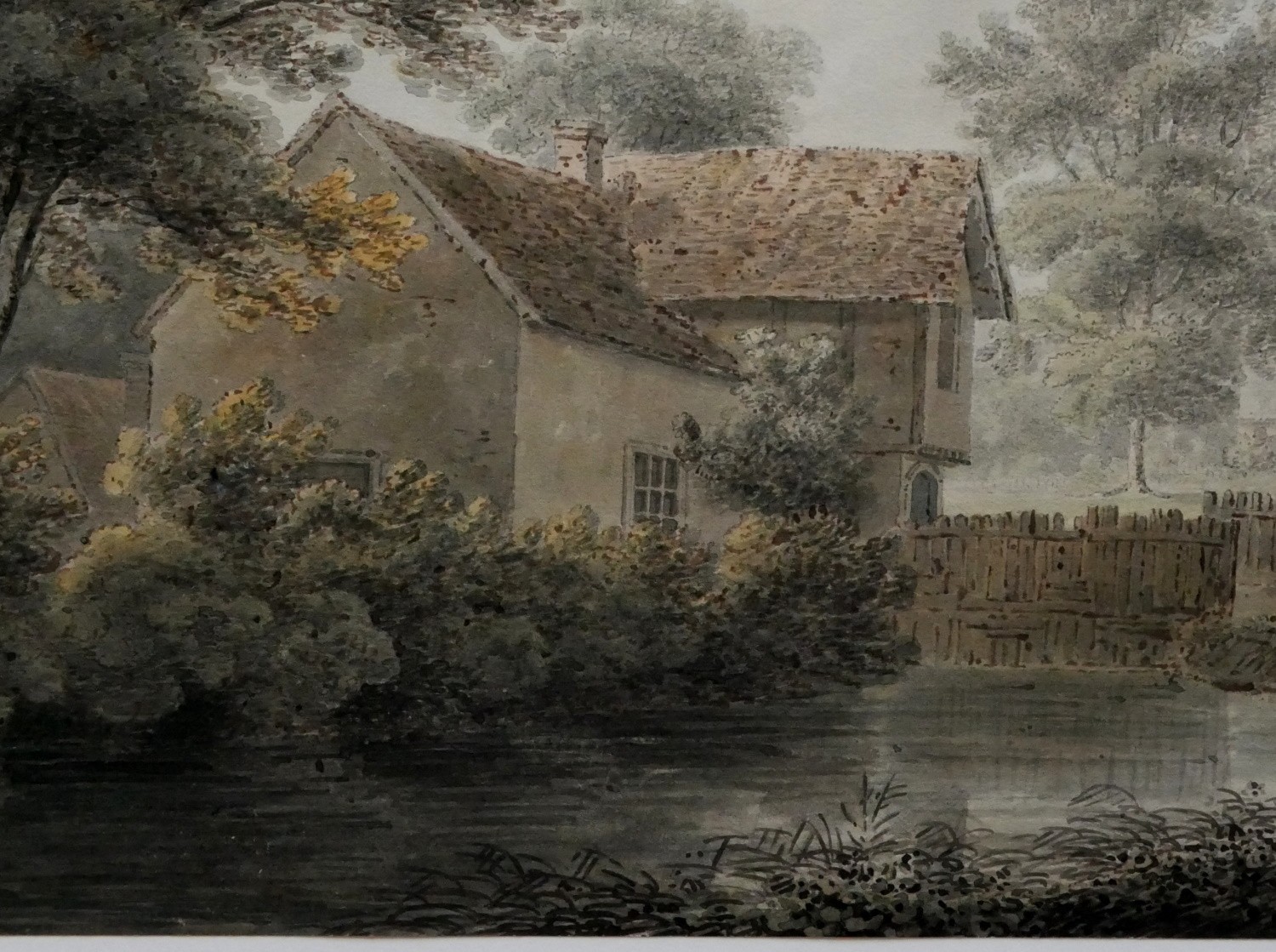
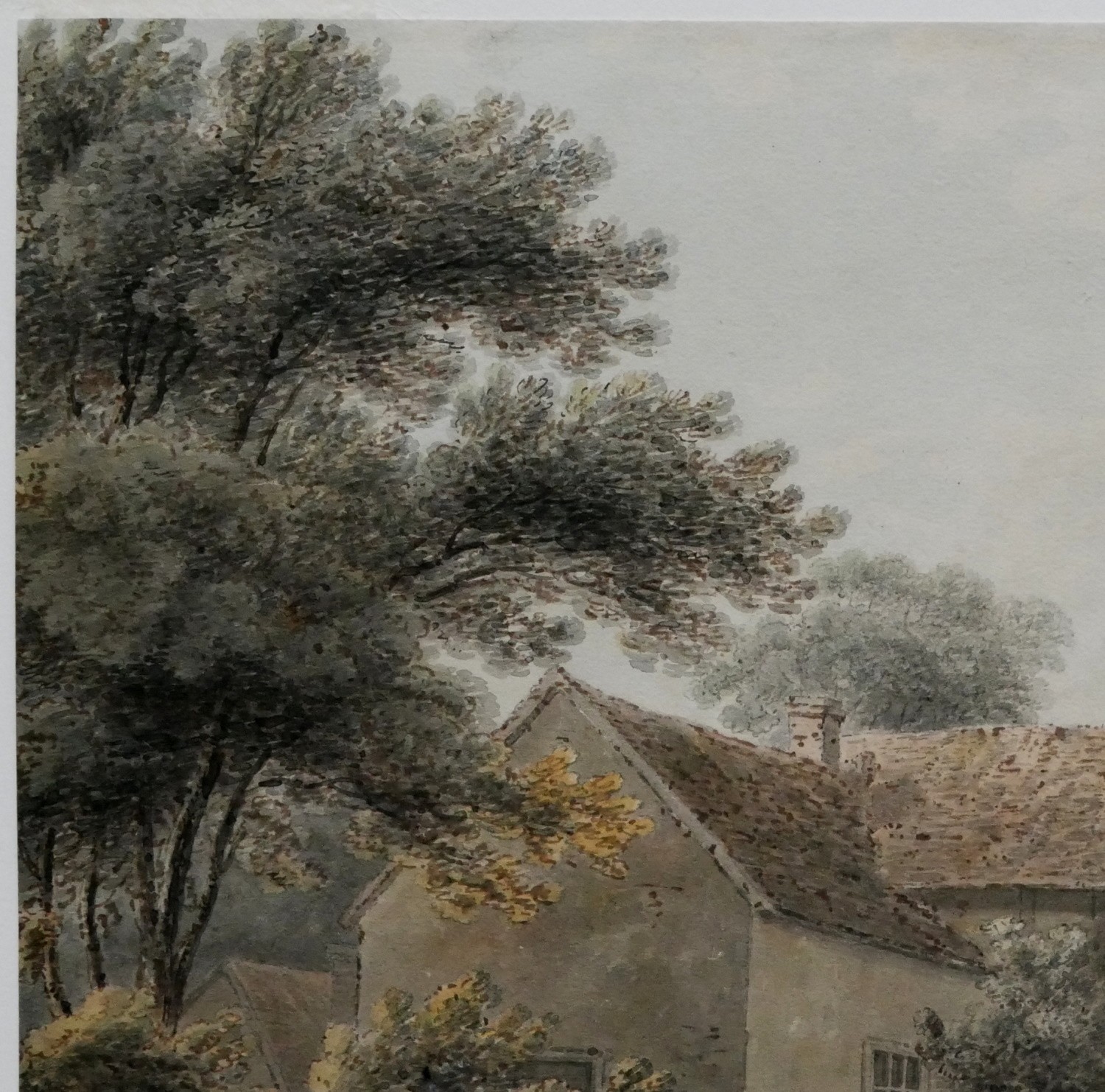
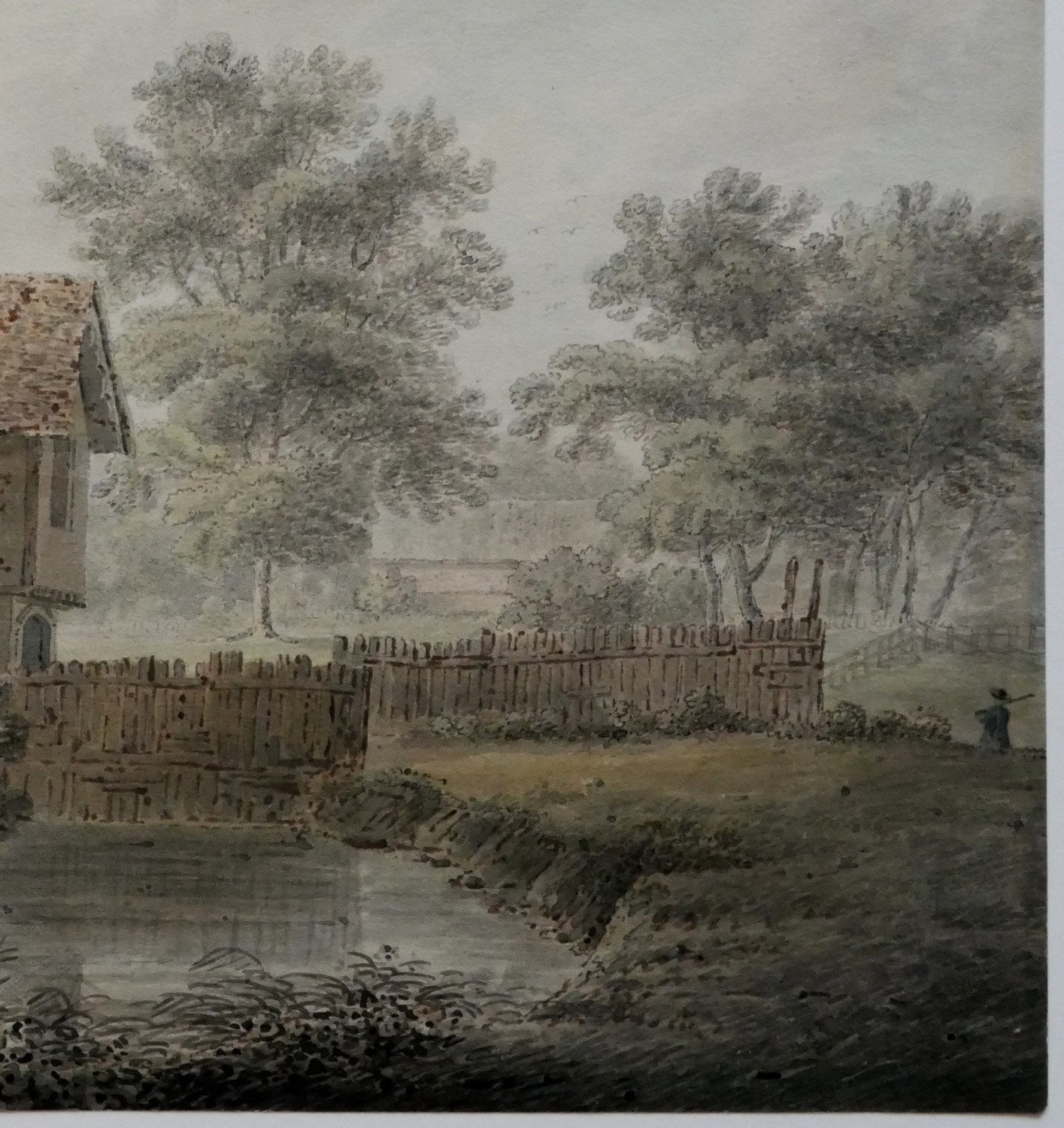
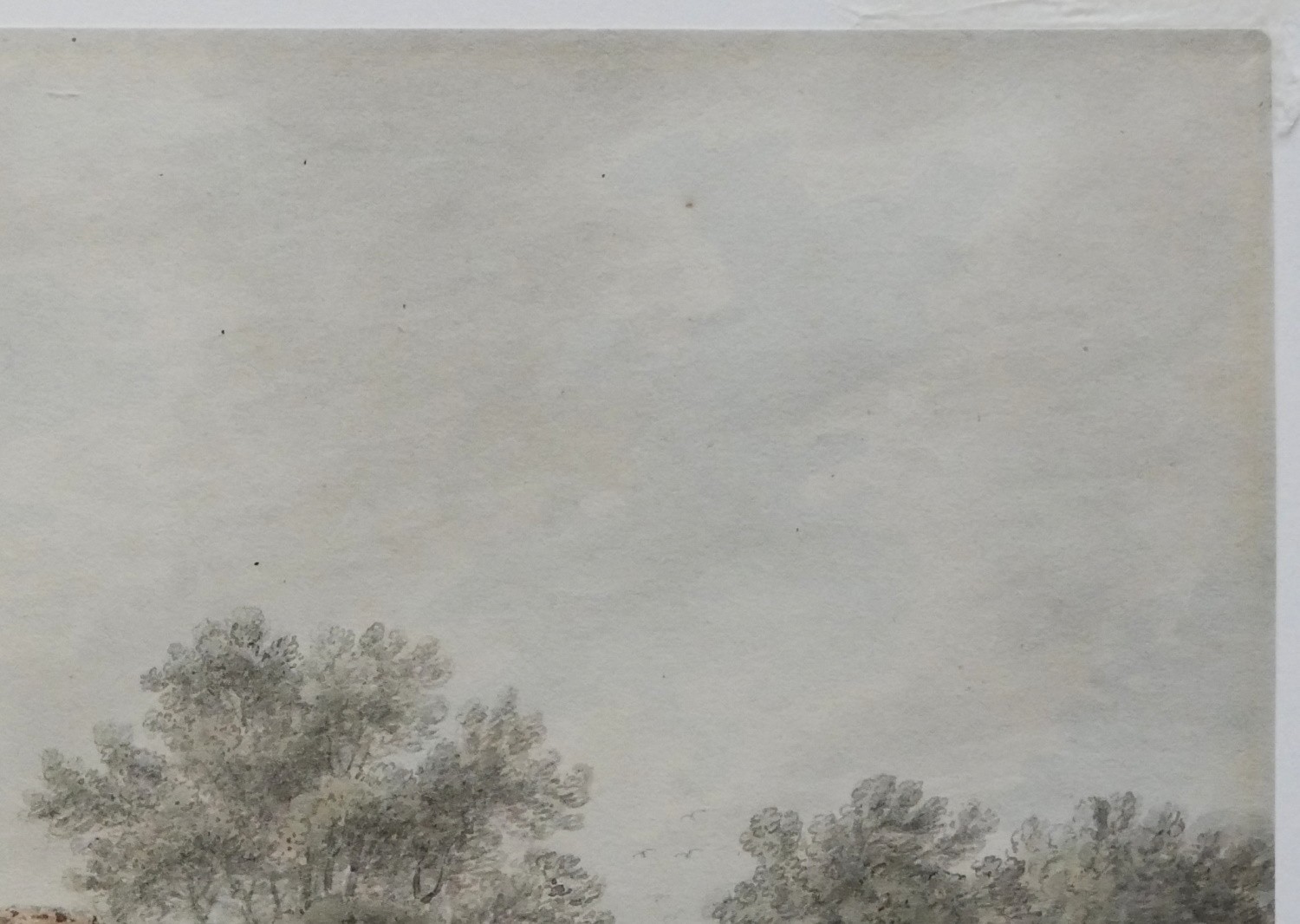
Watercolour and grey wash, with pen and brown ink, over graphite on wove paper. The watercolour is in excellent condition and has been conserved and presented in a new rag board mount.
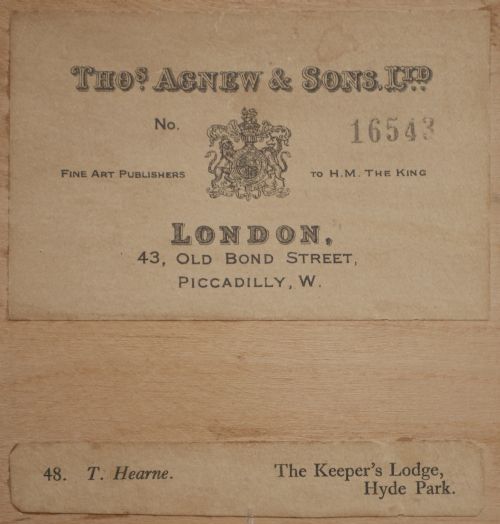
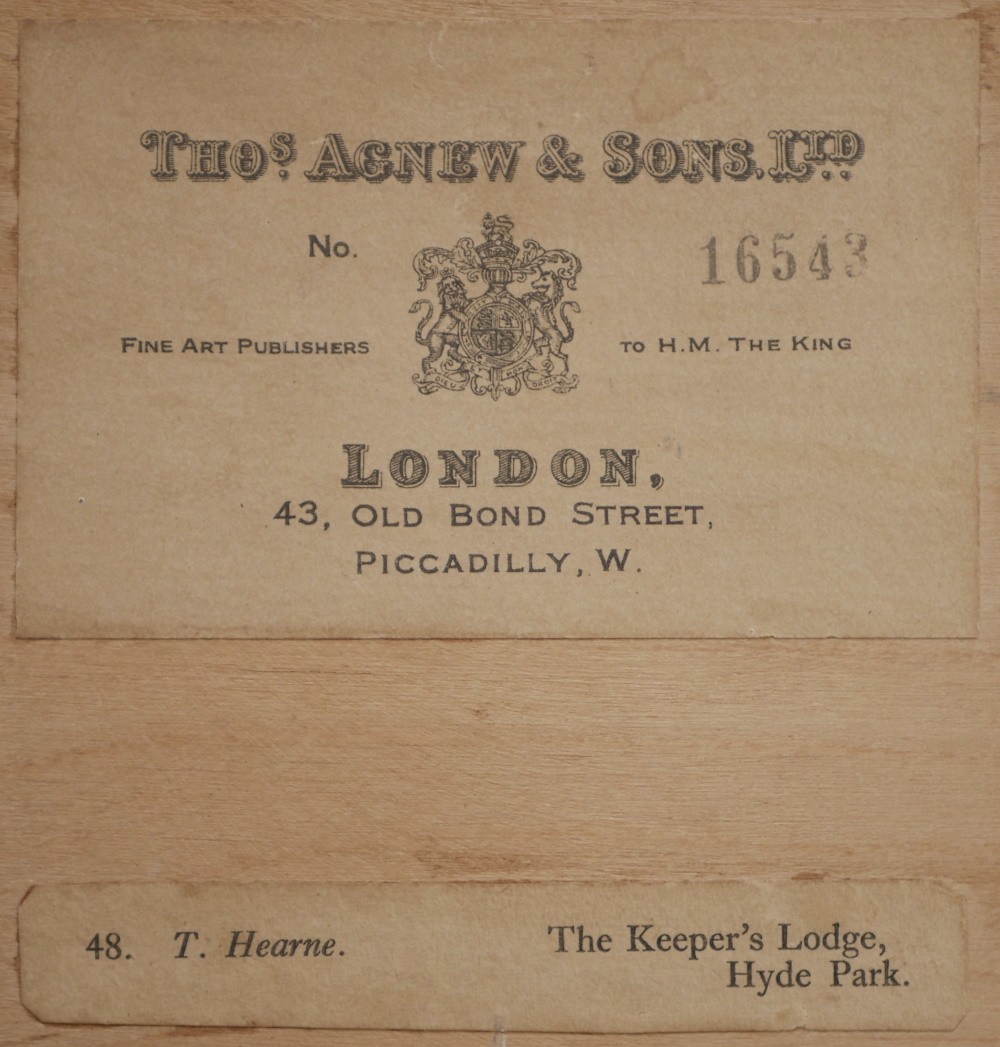
The watercolour will be sold along with the old gilded frame (without glass) and backboard with printed label: Thos. Agnew & Sons Ltd. 43, Old Bond Street, Piccadilly W, London. No. 16543. Cat No. 48. The Keeper’s Lodge Hyde Park. The dimensions of the old mount have been replicated with the new mount and will fit the old frame if required.
Sheet: 7 1/8 x 10 in. (18 x 25.4 cm.)
Mount: 13 5/8 x 16 3/16 in. (34.6 x 41.4 cm.)
The Lodge stood on the north side of the Serpentine next to the Ring (a circular track around which the nobility could drive their carriages). It was known as the Cheesecake House (among other names) where refreshments could be purchased.
Thomas Hearne made several watercolours and drawings of the Cheesecake House which had become a favourite subject for landscape painters in the 1790s: Including Paul Sandby, Michael Angelo Rooker and Dominic Serres. Another example of the same subject by Hearne is in the Paul Mellon collection, Yale Center for British Art, and is dated c.1795.
Thomas Hearne (1744-1817) was an English landscape painter, engraver and illustrator. His watercolours were typified by applying a wash of subtle subdued colours over a clear outline in fine brush, pen or pencil. Younger artists such as Thomas Girtin and J. M. W. Turner studied his techniques.
The Cheesecake House was an ancient building, about half an hour’s walk from Westminster or Charing Cross, made of timber and plaster with a flat tiled roof, it stood in the park from at least the reign of Charles II (and perhaps even earlier). To gain access to the front door, the visitor had to cross the small stream which ran in front of the building via a rudimentary wooden bridge. Samuel Pepys was a visitor; in 1669 he took his wife for a visit, and they sat in their coach and ate ‘a cheesecake and drank a tankard of milk’.
In the time of Queen Anne, it was known as the Cake House or Minced-pie House and later was called Price’s Lodge (later sources say after Gervase Price, chief under-keeper of Hyde Park). By the late seventeenth-century Price’s Lodge was run by a widow named Frances Price.
But it is best remembered as the Cheesecake House, after one of the delicacies which could be bought there as cheesecakes, custards, tarts, and syllabubs were all on the menu.
By 1801 the Cheesecake House was in use as a boathouse and in the nineteenth-century was demolished altogether. Except when there was a fair, for around a hundred years no refreshments were allowed to be sold in Hyde Park, a situation which caused many complaints. Finally, on 1st April 1909, the Ring Tea House was opened, a newly built Georgian rustic style circular building which catered for the park’s visitors.
Cheesecakes of the period contained no cheese and were akin to a Yorkshire curd tart.
Blog: Joanne Major September 18, 2018.