31,176  PAGES BROWSED TODAY PAGES TODAY • 60 ANTIQUES UPLOADED TODAYNEW ARRIVALS
GIFTSNEW
60 ITEMS ADDED TODAY
Sort Order
Items Per Page
Browse Categories
Sort order
Relevant Links
Items per page
ID #SA1237133
FOR SALE
£980
Email Phone
Save
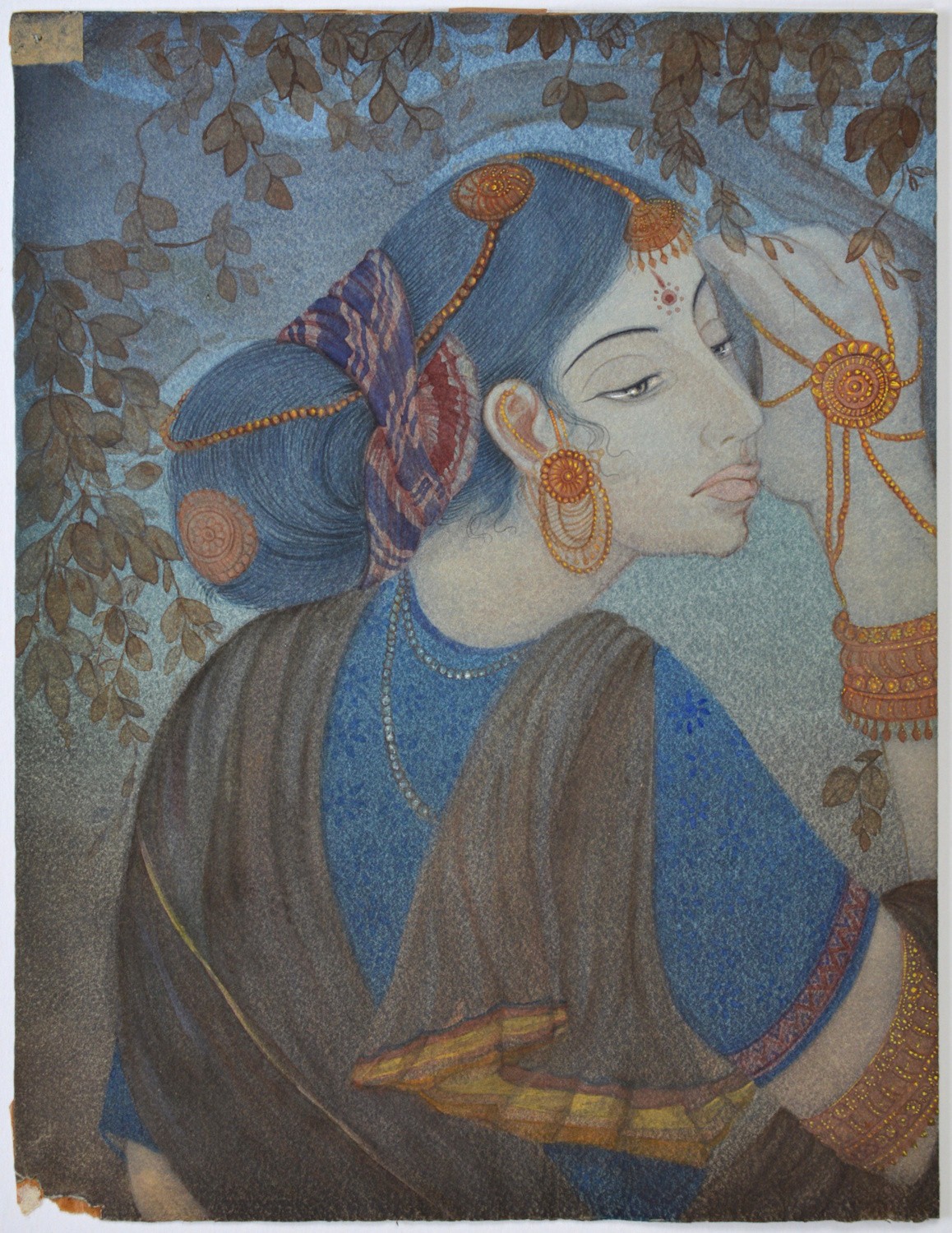
Bengali School, India, Watercolour Circa 1920
For sale by Radnorshire Fine Arts Ltd
for sale €1,147     $1,245
£980
Radnorshire Fine Arts Ltd

Radnorshire Fine Arts Ltd

Sellingantiques Verified Since Sep 2026
Browse dealers 29 items
  • About Us
    We buy and sell paintings, watercolours, prints and drawings from the 17th to the 20th century
Id #SA1237133
PDF SHARE
SAVE

Bengali School, India, Watercolour Circa 1920

1900 - 1920
Description

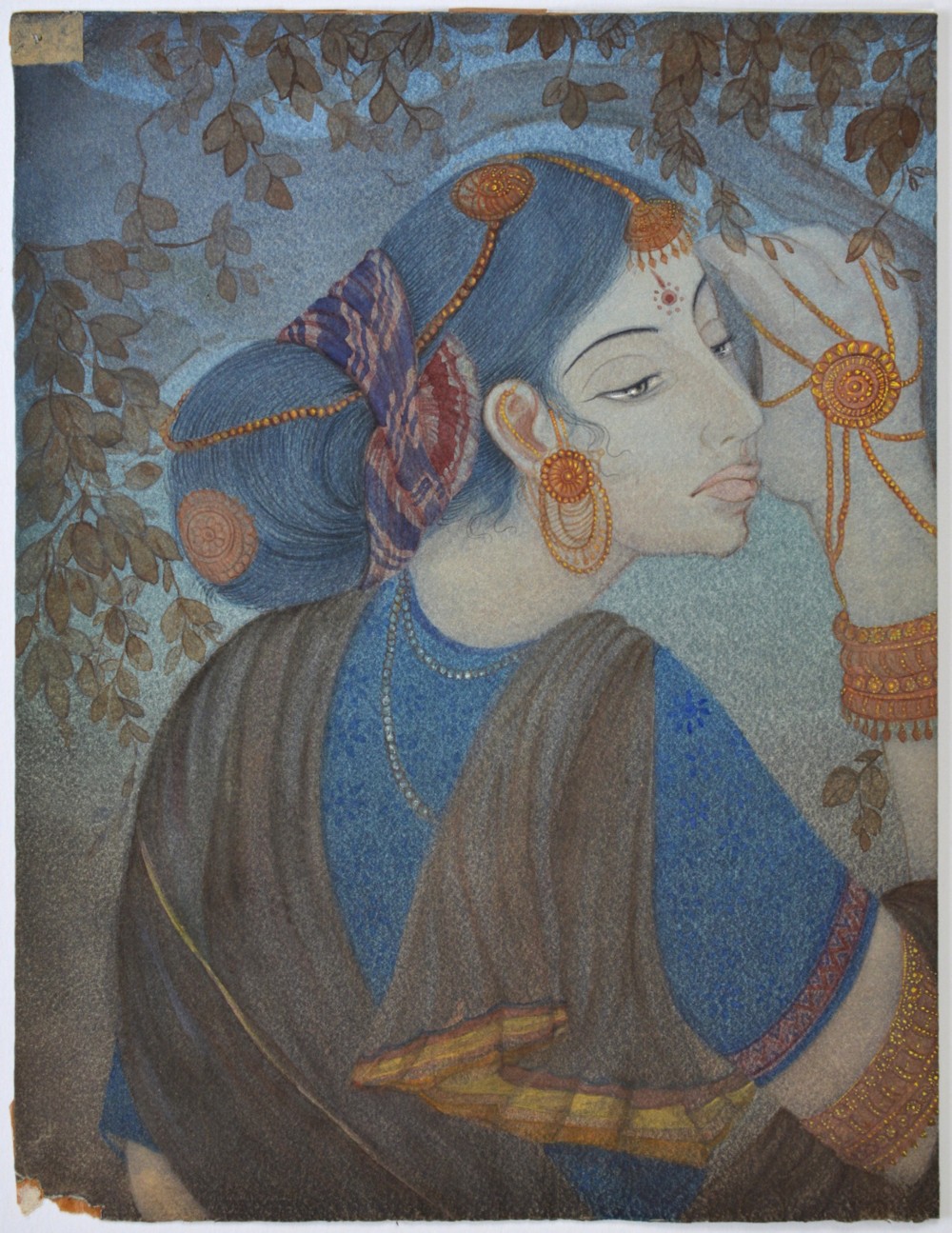
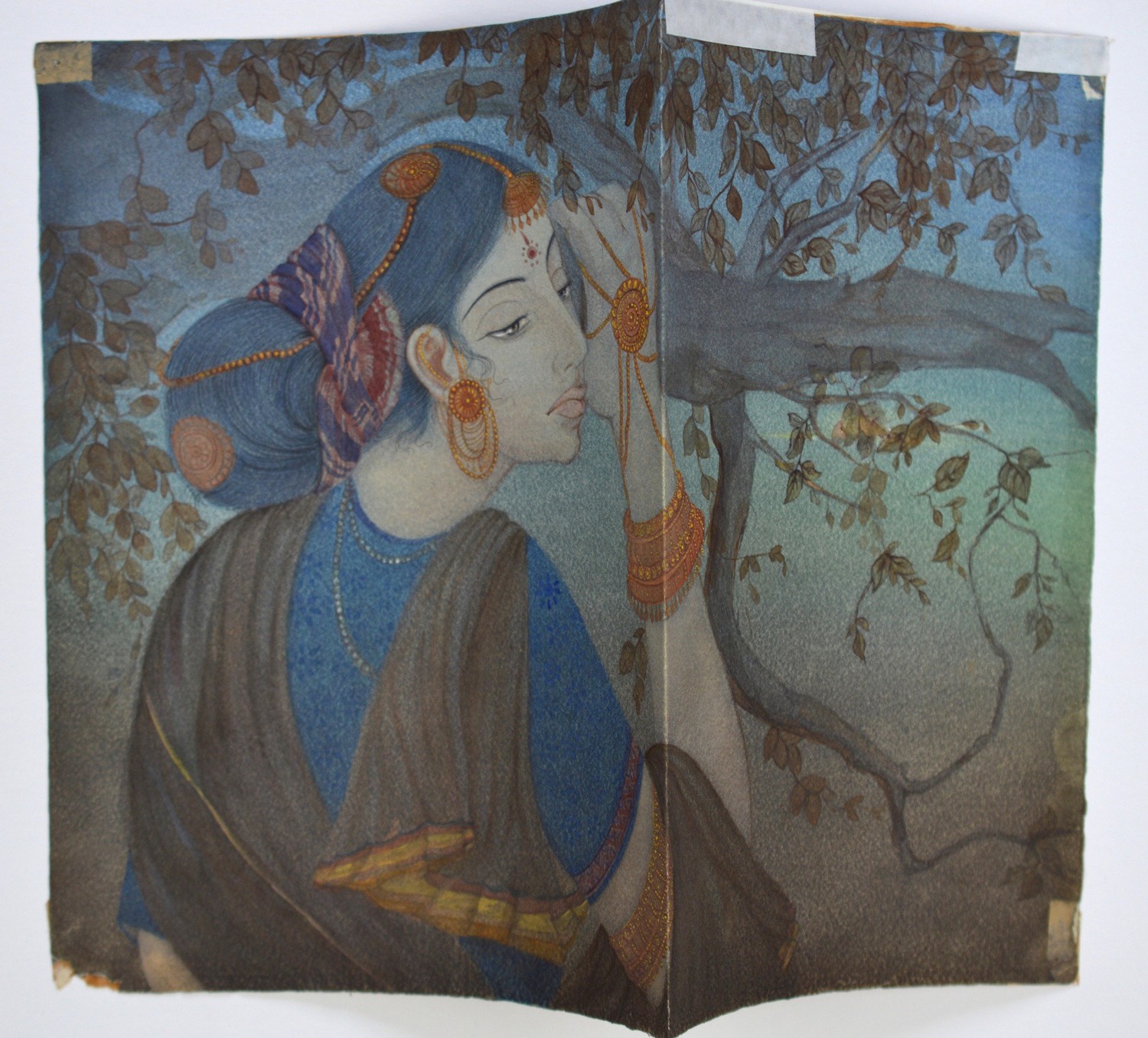
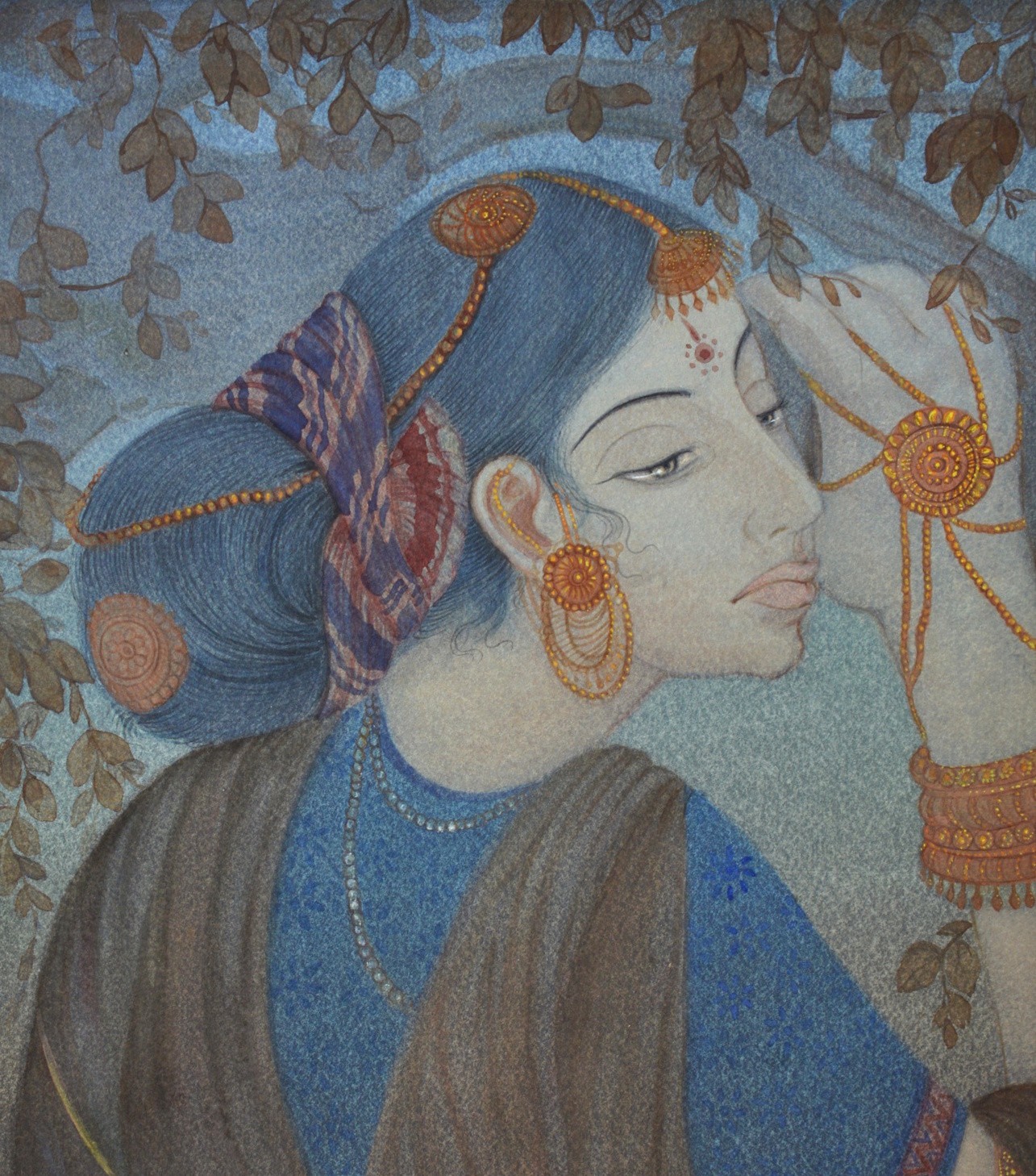
School of Bengal, India, (c1900-1920s) – Portrait of a Pensive Young Woman Standing Beside the Branch of a Tree

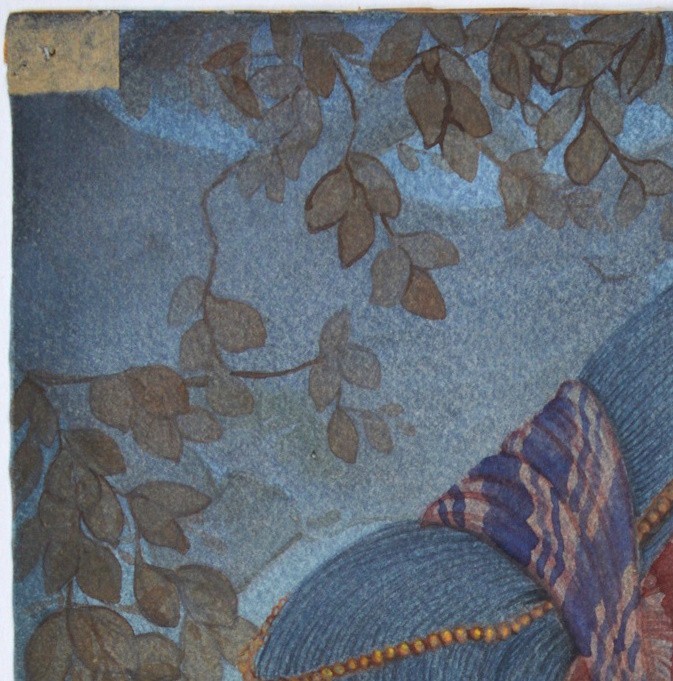
A fine watercolour with touches of body-colour on thick wove paper. The sheet has been carefully folded, almost in half and is inscribed variously on the back in pencil. Although the sheet has been folded the colours are strong and consistent on both sides.
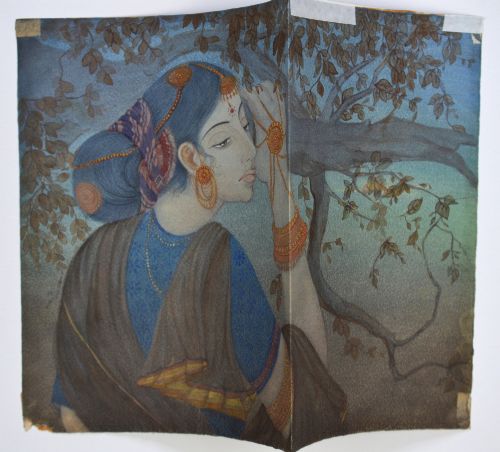
This painting will be sold as seen without a mount or frame. Care will be taken not to apply pressure on either side of the sheet and will be dispatched using a clear polyester sleeve.

Size unfolded: 11 3/8 x 13 in. (29 x 33 cm.)
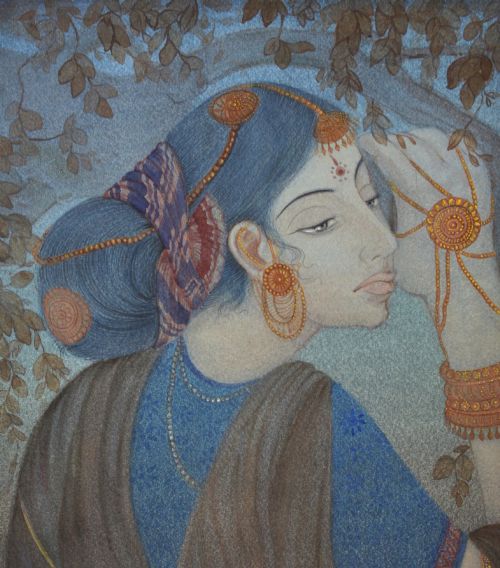
Front of sheet: 11 3/8 x 8 11/16 in. (29 x 22.5 cm.)

The Bengal school arose as an avant garde and nationalist movement reacting against the academic art styles previously promoted in India, both by Indian artists such as Raja Ravi Varma and in British art schools. Following the influence of Indian spiritual ideas in the West, the British art teacher Ernest Binfield Havell attempted to reform the teaching methods at the Calcutta School of Art by encouraging students to imitate Mughal miniatures. This caused controversy, leading to a strike by students and complaints from the local press, including from nationalists who considered it to be a retrogressive move. Havell was supported by the artist Abanindranath Tagore, a nephew of the poet Rabindranath Tagore. Tagore painted a number of works influenced by Mughal art, a style that he and Havell believed to be expressive of India’s distinct spiritual qualities, as opposed to the materialism of the West. Tagore’s best-known painting, Bharat Mata (Mother India), depicted a young woman, portrayed with four arms in the manner of Hindu deities, holding objects symbolic of India’s national aspirations. Tagore later attempted to develop links with Japanese artists as part of an aspiration to construct a pan-Asianist model of art. Through the paintings of Bharat Mata, Abanindranath established the pattern of patriotism. Some of the notable painters and artists of Bengal school were Nandalal Bose, M.A.R Chughtai, Sunayani Devi (sister of Abanindranath Tagore), Manishi Dey, Mukul Dey, Kalipada Ghoshal, Asit Kumar Haldar, Sudhir Khastgir, Kshitindranath Majumdar, Sughra Rababi.
The Bengal school’s influence in India declined with the spread of modernist ideas in the 1920s. As of 2012, there has been a surge in interest in the Bengal school of art among scholars and connoisseurs.

Declaration

Radnorshire Fine Arts Ltd has dated this Bengal School Watercolour Painting to the 1920s.

Reference Numbers
Sellingantiques Reference
SA1237133
Dealers Notes

All our prices include FREE packing and delivery within the UK.

Our website accepts payments from the UK. Buyers outside the UK are required to "CONTACT US" for delivery options and prices. Please include the detail of the item you wish to purchase and your shipping address.

'Stripe' has recently been introduced to our website, offering more choices for secure payments, including 'Apple Pay' and 'Google Pay'. You can also pay 3 monthly 'interest free' instalments with 'Klarna' at 'Checkout'.

Other information including terms and conditions can be found on our website @ Radnorshire Fine Arts Ltd.

Description
School of Bengal, India, (c1900-1920s) – Portrait of a Pensive Young Woman Standing Beside the Branch of a Tree

A fine watercolour with touches of body-colour on thick wove paper.

“
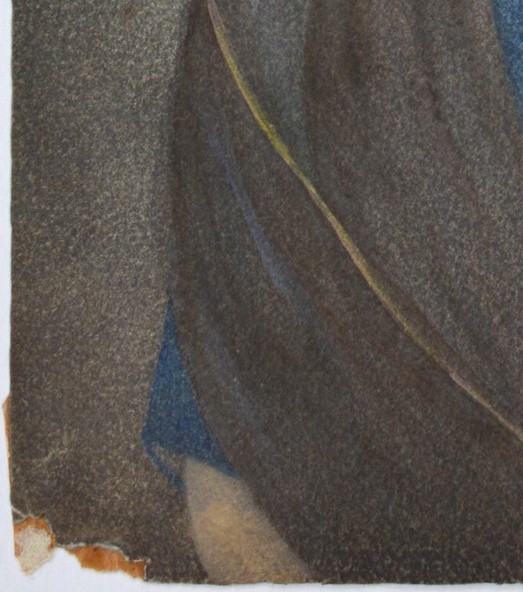
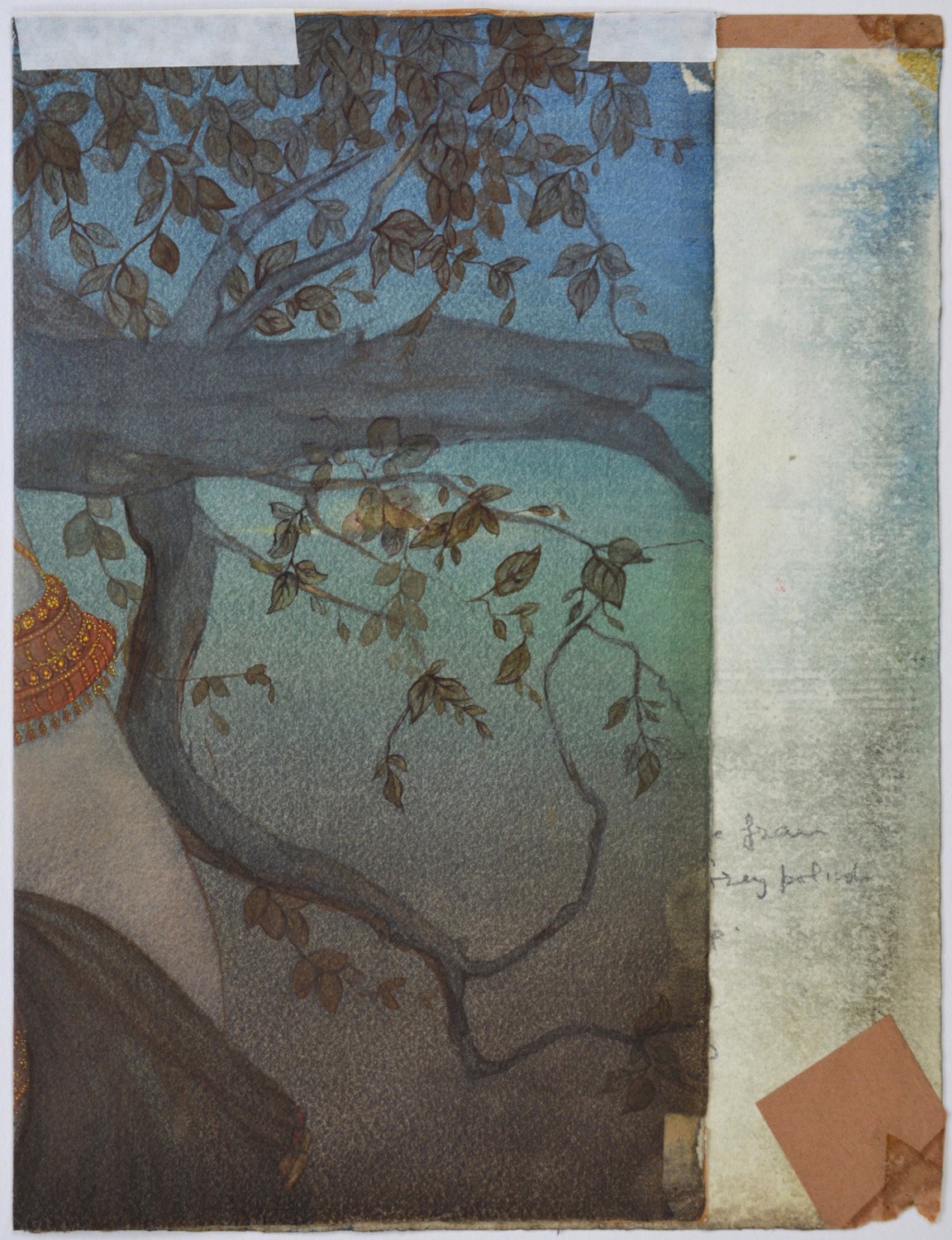
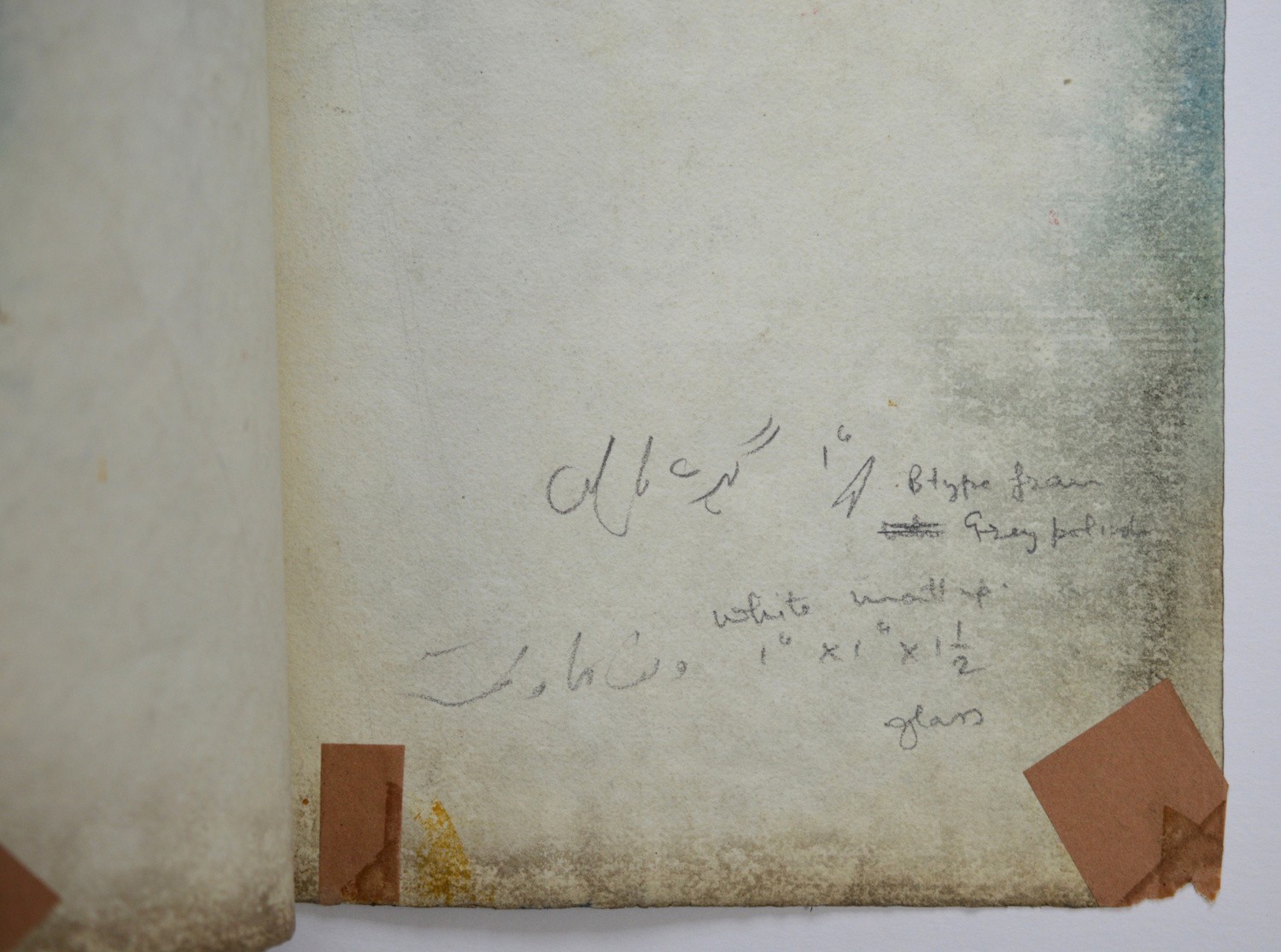
The sheet has been carefully folded, almost in half and is inscribed variously on the back in pencil.
Radnorshire Fine Arts Ltd

Although the sheet has been folded the colours are strong and consistent on both sides.

fig 1. An Indian watercolour painting depicting a woman in profile adorned with traditional gold jewellery against a backdrop of leafy branches.
fig 1. Bengali School, India, Watercolour Circa 1920

This painting will be sold as seen without a mount or frame. Care will be taken not to apply pressure on either side of the sheet and will be dispatched using a clear polyester sleeve.

Size unfolded: 11 3/8 x 13 in. (29 x 33 cm.)

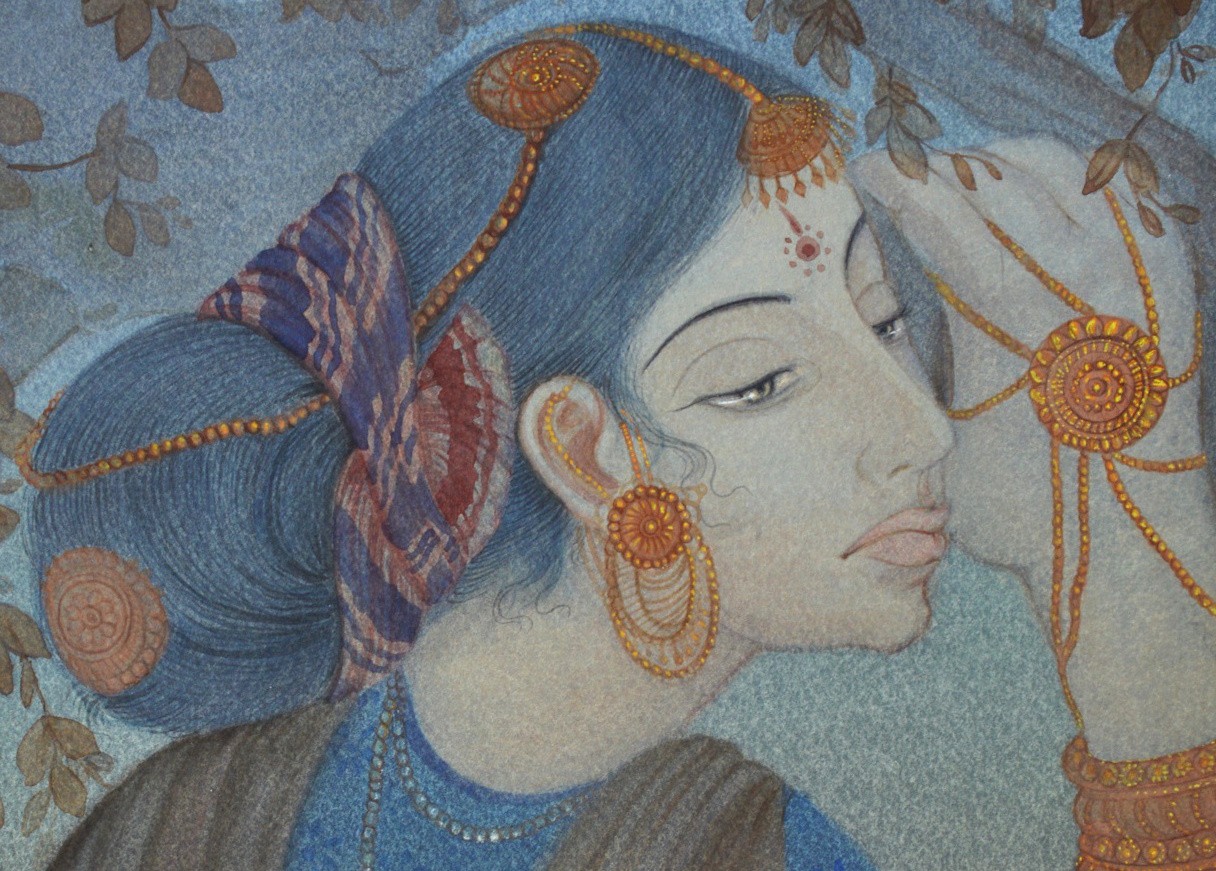
fig 2. An Indian watercolour painting depicting a woman in profile adorned with traditional gold jewellery against a backdrop of leafy branches.
fig 2. Bengali School, India, Watercolour Circa 1920

Front of sheet: 11 3/8 x 8 11/16 in. (29 x 22.5 cm.)

The Bengal school arose as an avant garde and nationalist movement reacting against the academic art styles previously promoted in India, both by Indian artists such as Raja Ravi Varma and in British art schools. Following the influence of Indian spiritual ideas in the West, the British art teacher Ernest Binfield Havell attempted to reform the teaching methods at the Calcutta School of Art by encouraging students to imitate Mughal miniatures. This caused controversy, leading to a strike by students and complaints from the local press, including from nationalists who considered it to be a retrogressive move. Havell was supported by the artist Abanindranath Tagore, a nephew of the poet Rabindranath Tagore. Tagore painted a number of works influenced by Mughal art, a style that he and Havell believed to be expressive of India’s distinct spiritual qualities, as opposed to the materialism of the West. Tagore’s best-known painting, Bharat Mata (Mother India), depicted a young woman, portrayed with four arms in the manner of Hindu deities, holding objects symbolic of India’s national aspirations. Tagore later attempted to develop links with Japanese artists as part of an aspiration to construct a pan-Asianist model of art. Through the paintings of Bharat Mata, Abanindranath established the pattern of patriotism. Some of the notable painters and artists of Bengal school were Nandalal Bose, M.A.R Chughtai, Sunayani Devi (sister of Abanindranath Tagore), Manishi Dey, Mukul Dey, Kalipada Ghoshal, Asit Kumar Haldar, Sudhir Khastgir, Kshitindranath Majumdar, Sughra Rababi.

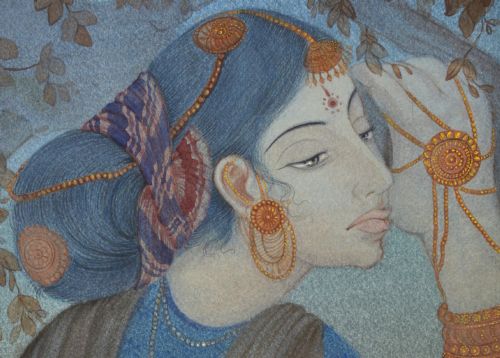
fig 3. An Indian watercolour painting depicting a woman in profile adorned with traditional gold jewellery against a backdrop of leafy branches.
fig 3. Bengali School, India, Watercolour Circa 1920

The Bengal school’s influence in India declined with the spread of modernist ideas in the 1920s. As of 2012, there has been a surge in interest in the Bengal school of art among scholars and connoisseurs.

Date of Manufacture

Radnorshire Fine Arts Ltd has dated this Bengal School Watercolour Painting to the 1920s.

Reference Numbers
Sellingantiques Ref
SA1237133
Radnorshire Fine Arts Ltd
Sellingantiques verified Since Sep 2026

We buy and sell paintings, watercolours, prints and drawings from the 17th to the 20th century

Dealer Profile

You can view the stock and full dealer information on the Radnorshire Fine Arts Ltd Profile Page
PDF SHARE
SAVE
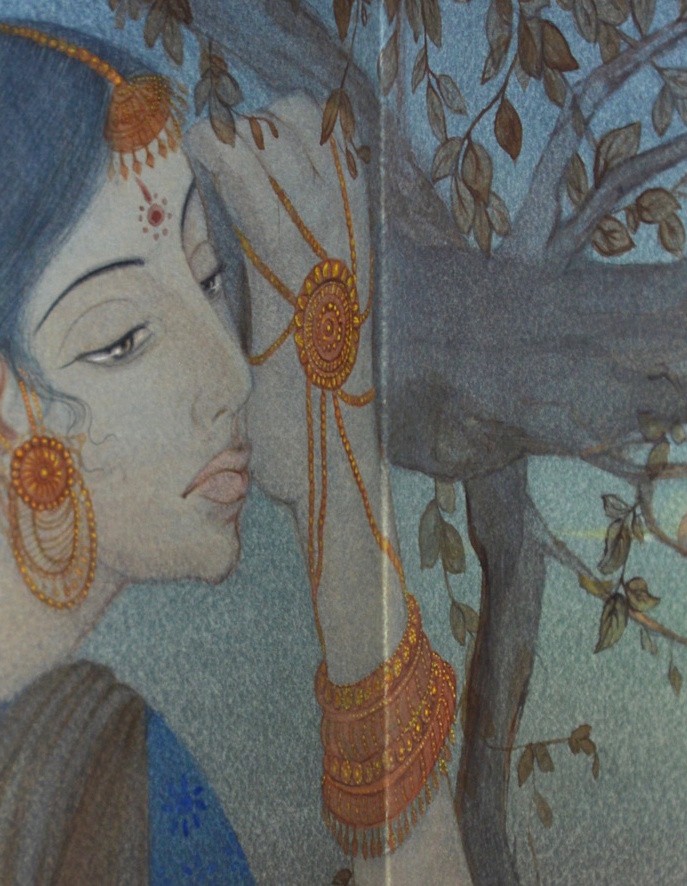
An Indian watercolour painting depicting a woman in profile adorned with traditional gold jewellery against a backdrop of leafy branches.
1 / 10
Archive I An Indian watercolour painting depicting a woman in profile adorned with traditional gold jewellery against a backdrop of leafy branches.

Bengali School, India, Watercolour Circa 1920
Archive II An Indian watercolour painting depicting a woman in profile adorned with traditional gold jewellery against a backdrop of leafy branches. View II
Archive III An Indian watercolour painting depicting a woman in profile adorned with traditional gold jewellery against a backdrop of leafy branches. View III
Archive IV An Indian watercolour painting depicting a woman in profile adorned with traditional gold jewellery against a backdrop of leafy branches. View IV
Archive V An Indian watercolour painting depicting a woman in profile adorned with traditional gold jewellery against a backdrop of leafy branches. View V
Archive VI An Indian watercolour painting depicting a woman in profile adorned with traditional gold jewellery against a backdrop of leafy branches. View VI
Archive VII An Indian watercolour painting depicting a woman in profile adorned with traditional gold jewellery against a backdrop of leafy branches. View VII
Archive VIII An Indian watercolour painting depicting a woman in profile adorned with traditional gold jewellery against a backdrop of leafy branches. View VIII
Archive IX An Indian watercolour painting depicting a woman in profile adorned with traditional gold jewellery against a backdrop of leafy branches. View IX
Archive X An Indian watercolour painting depicting a woman in profile adorned with traditional gold jewellery against a backdrop of leafy branches. View X
Enlarged Archival View
Telephone 07790 208712
Location
Powys
Wales
United Kingdom

By appointment.
Dealer Profile Page sellingantiques.co.uk/rfa
Verified Since Sep 2026
Items For Sale 29
Radnorshire Fine Arts Ltd
Verified Since Sep 2026
View Dealer Info
Location: Powys, Wales, United Kingdom, , By appointment.
Verified
Sep 2026
For Sale
29
An Indian watercolour painting depicting a woman in profile adorned with traditional gold jewellery against a backdrop of leafy branches.
Bengali School, India, Watercolour Circa 1920
Ref: SA1237133
An Indian watercolour painting depicting a woman in profile adorned with traditional gold jewellery against a backdrop of leafy branches.
Detail View 1
Detail View 2
Detail View 3
Detail View 4
Detail View 5
Detail View 6
Detail View 7
Detail View 8
Detail View 9
Archival Detail
Every single antique dealer on our platform is individually approved by our internal team. We verify their professional trade history, ethical standards, and photographic quality to ensure a secure, high-standard buying environment. Upon joining, every dealer agrees to a strict 9-point code of conduct. While issues can occasionally arise, our dealers typically resolve them swiftly and directly with the buyer. In fact, since our founding in 2002, Sellingantiques has only had to step in to help resolve an issue on roughly five occasions—a true testament to the quality of our dealers and their dedication to your happiness.
Our dealers are highly experienced in packing and shipping fragile, high-value antiques. Because you are in direct contact with the dealer, you will be able to easily go through all available shipping and insurance options together to ensure your item arrives safely.
Antiques are the ultimate green purchase. By choosing historical pieces over newly manufactured goods, you completely eliminate the carbon footprint of modern mass production while preserving exceptional, timeless craftsmanship.
Written by Sellingantiques from the dealer’s photographs and listing
  • ObjectPaintings
  • Period1900 - 1920
  • StyleBengal School
  • MaterialWatercolour, Paper
  • ColourIndigo Blue
  • MotifsProfile portrait, Traditional jewellery, Wash technique, Botanical foliage

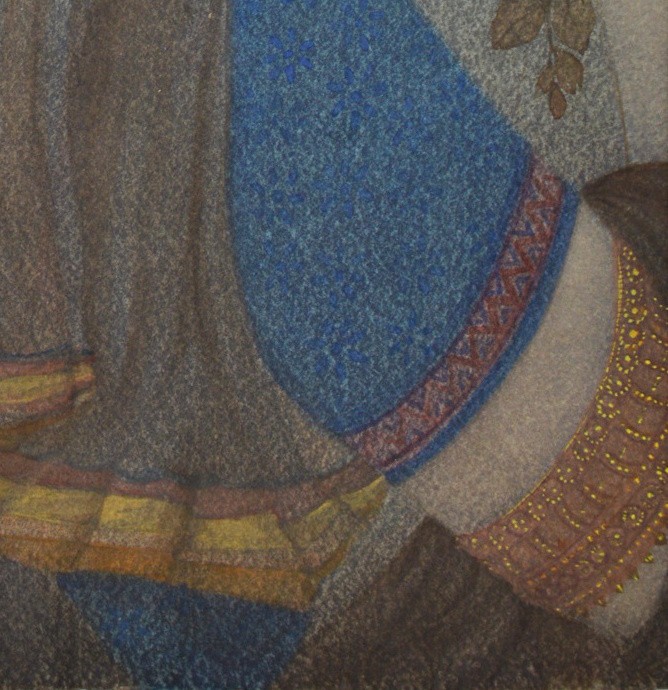
This watercolour painting on thick wove paper belongs to the Bengal School of India from circa 1920. It depicts a pensive young woman in profile adorned with traditional gold jewellery against a backdrop of botanical foliage, executed in indigo blue, brown, and ochre hues with a wash technique and touches of body-colour. The paper shows creases from a careful fold near the middle and bears pencil inscriptions on the back. The unfolded sheet measures 29 x 33 cm, while the front view measures 29 x 22.5 cm. Suitable for display above a sideboard in a living room, study, or hallway, the artwork hangs unframed and unmounted within a protective polyester sleeve. The piece coordinates with maximalist wonderland interiors, complementing traditional or eclectic decorative schemes in a residential home.

Originating in early 20th-century India, the Bengal School merged traditional Indian art styles, such as Mughal and Rajput miniatures, with Japanese wash techniques to create an authentic national artistic style.

Artists primarily used opaque and transparent watercolours on paper, frequently applying multiple washes of water and watercolour pigment to achieve soft, atmospheric hues and delicate textures.

Authentic works typically display elongated figures, expressive postures, soft misty colour gradients, delicate linework, and elements drawn from classical Indian mythology or quiet daily life.

Mount the artwork in a simple, high-quality timber frame with museum glass, hanging it on a muted accent wall alongside contemporary ceramics or dark wood furniture for visual depth.

Keep watercolours out of direct sunlight, store them in a humidity-controlled environment, and use acid-free mounting materials under UV-protective glazing to prevent fading and foxing.
items
Add keywords to the filter
Price
£100
£250000
Era
Period
Style
Material
Origin
Stock Location
Recently Added
Online Payments
Categories