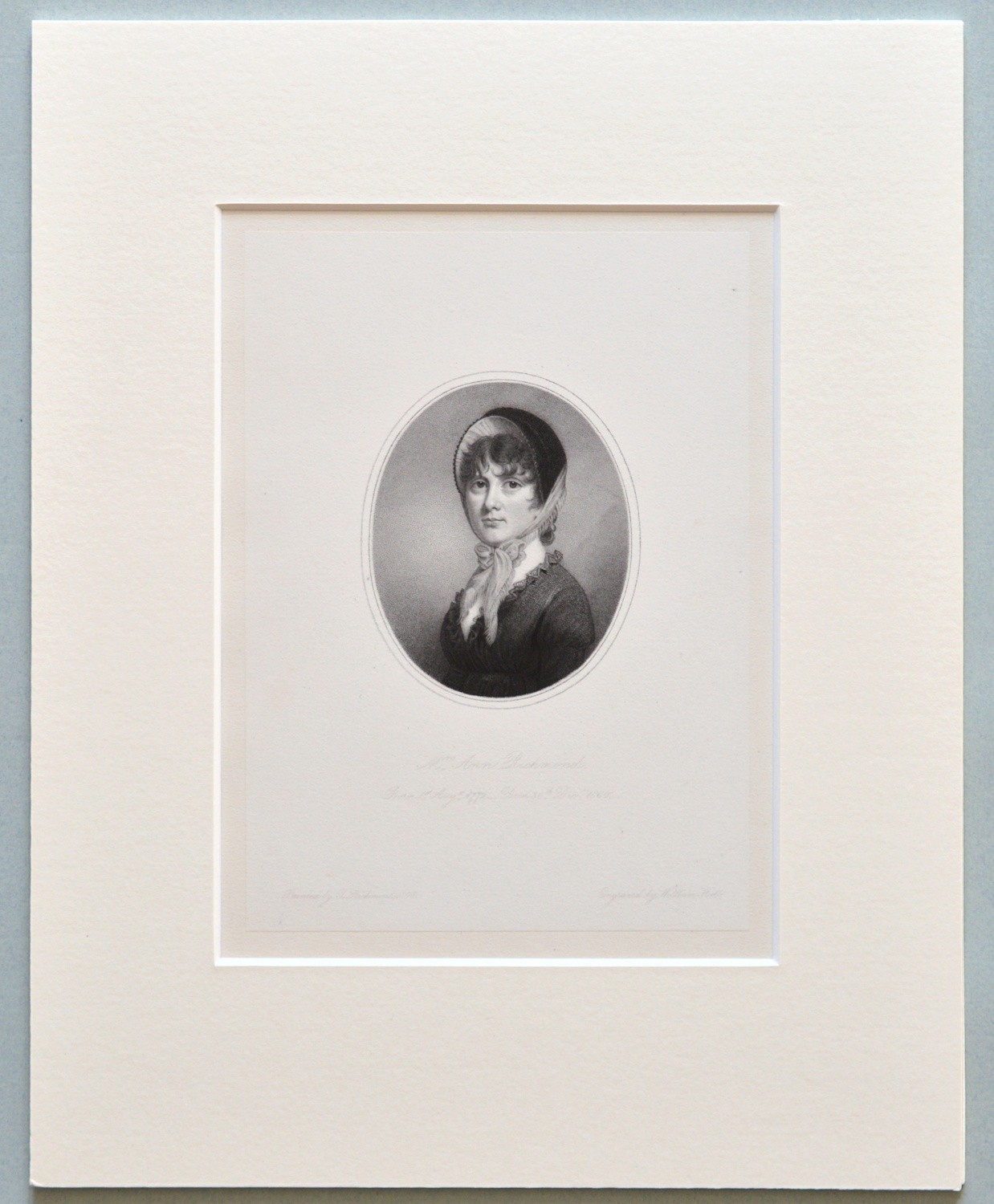
Radnorshire Fine Arts Ltd has dated this piece to the 19th Century.
Image: 3 3/4 x 2 7/8 in. (9 x 7.4 cm.)
Mount: 12 1/8 x 9 5/8 in. (30.8 x 24.6 cm.)
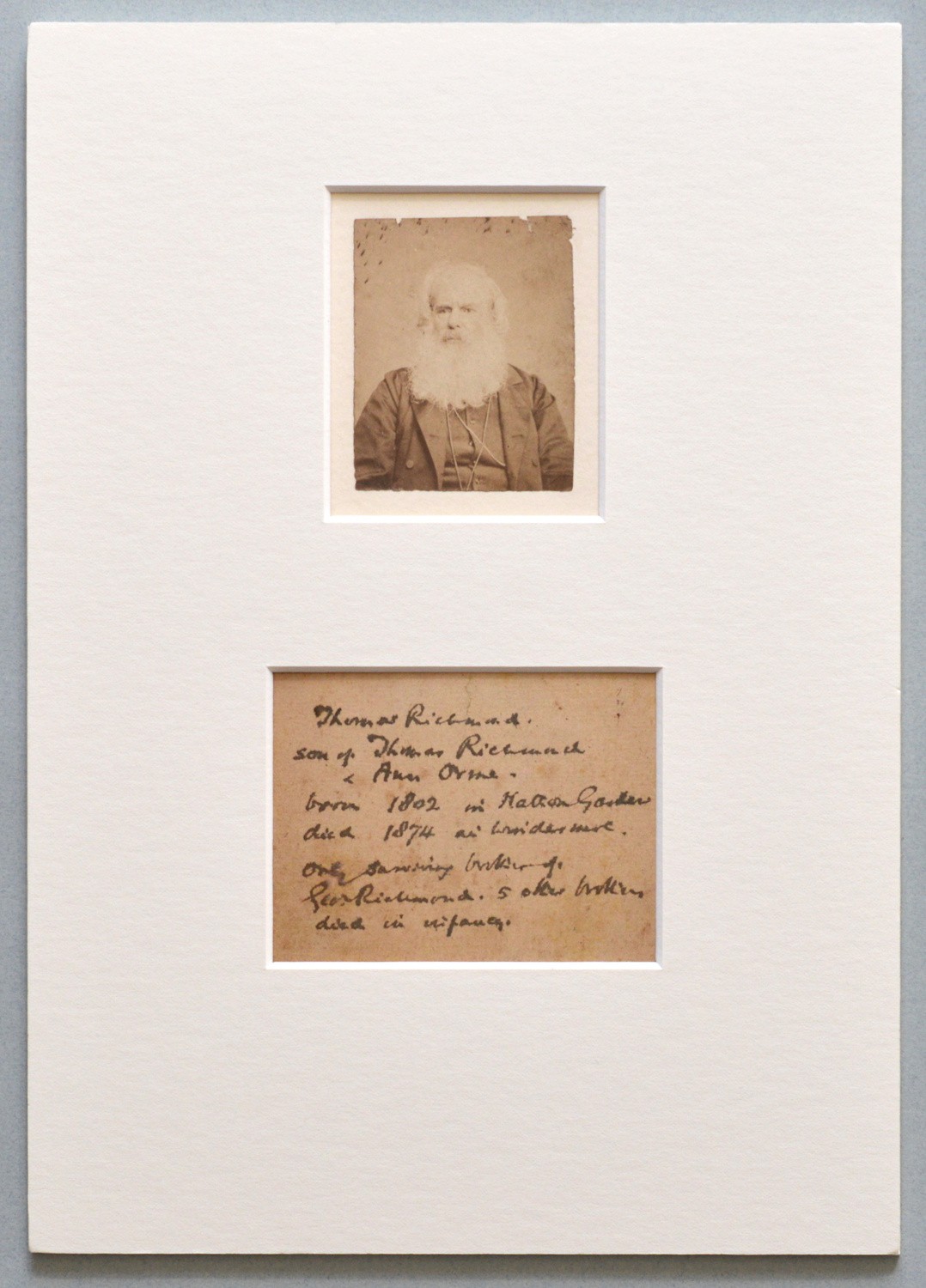
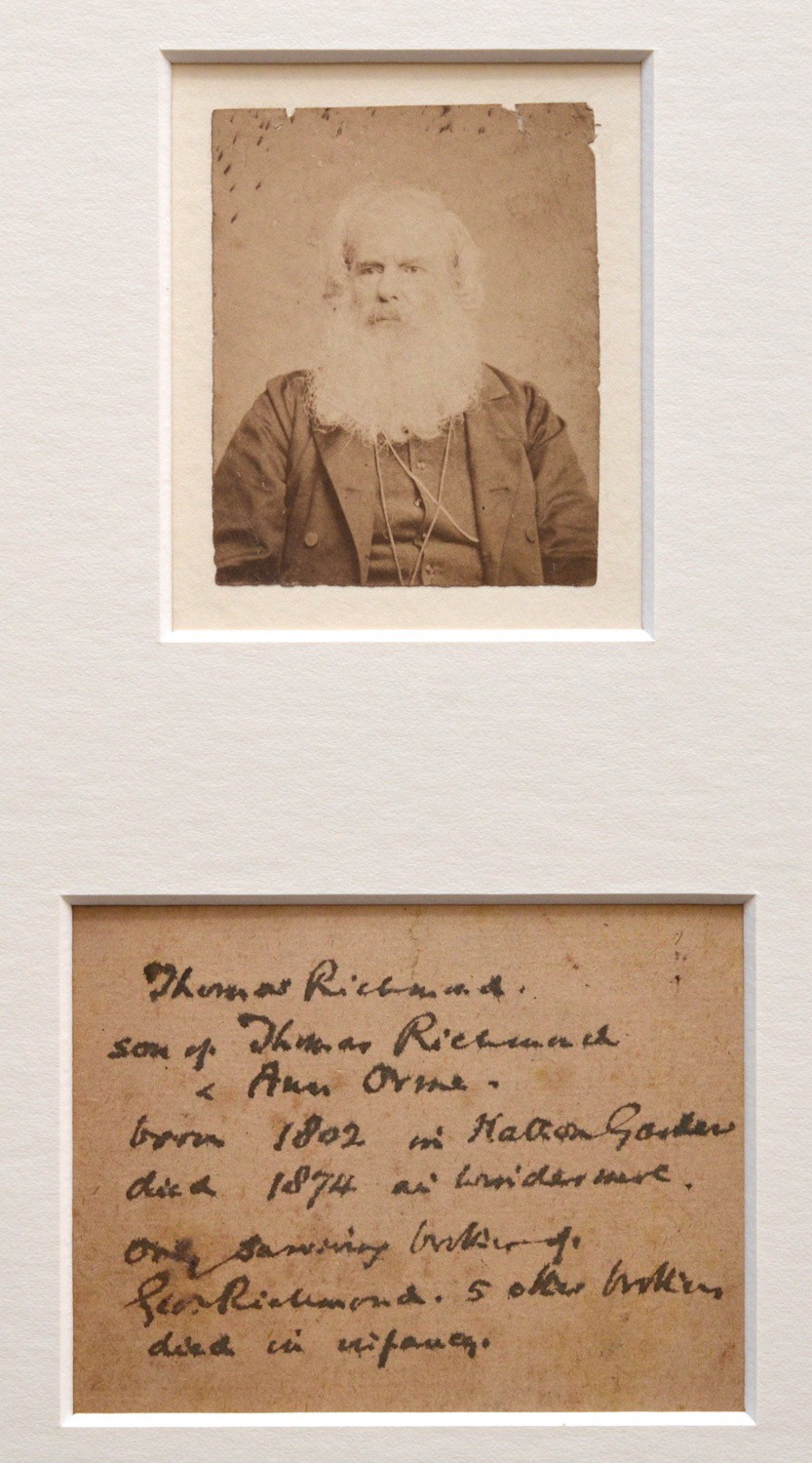
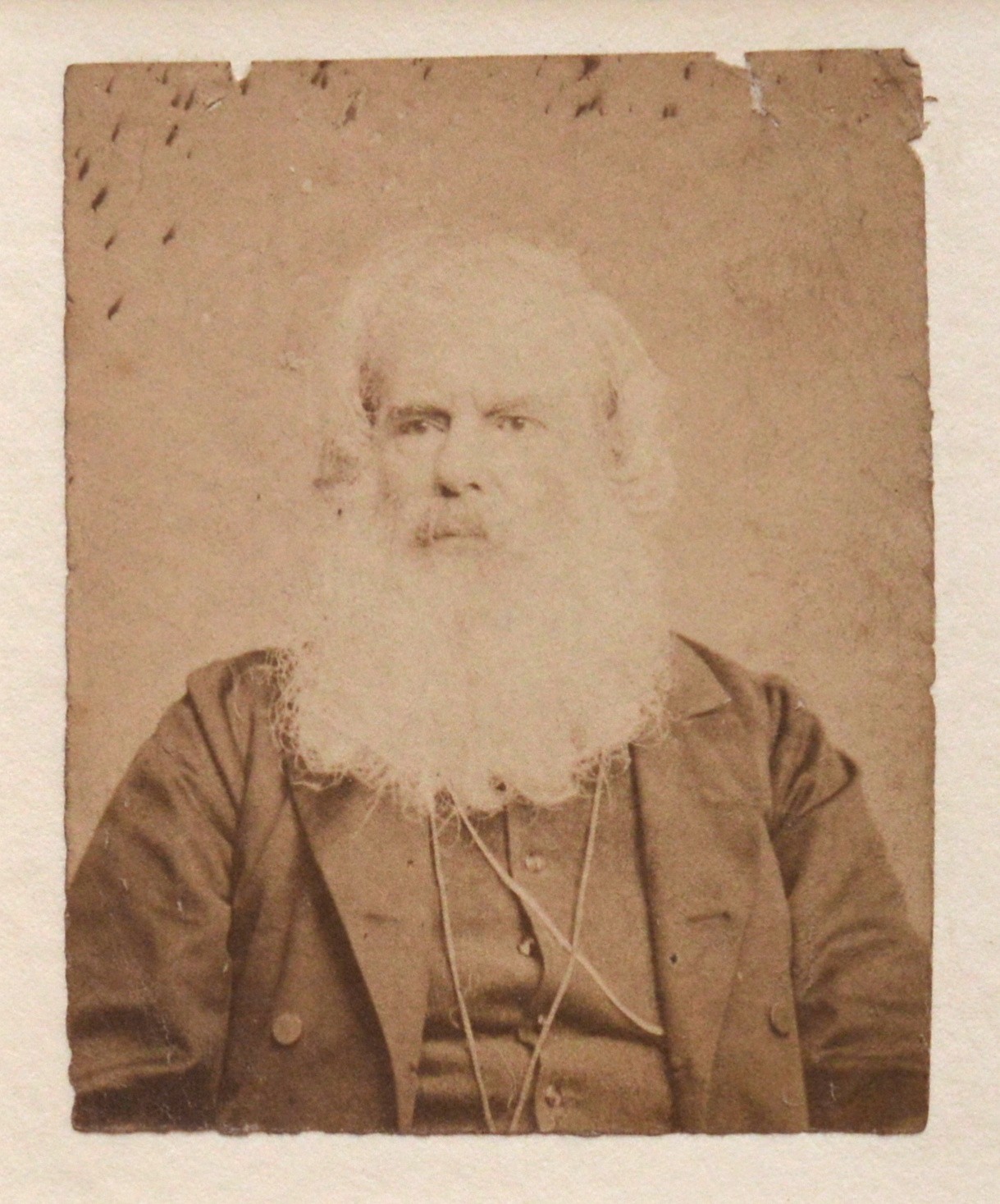
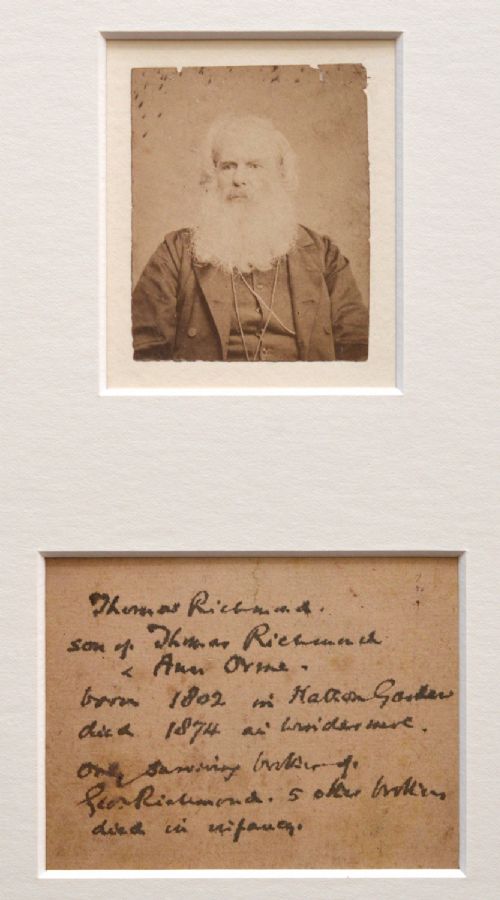
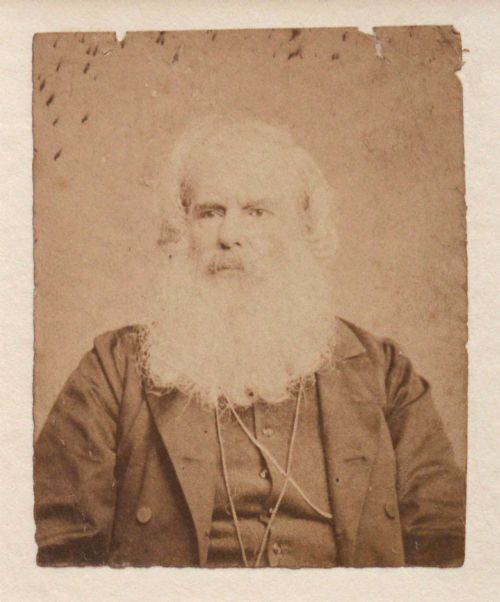
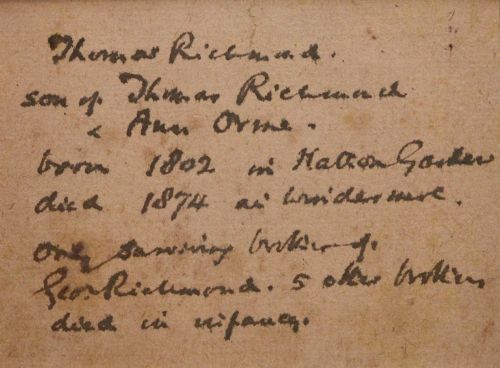
Portrait photograph of the artist Thomas (Tom) Richmond Jnr (1802-1874).
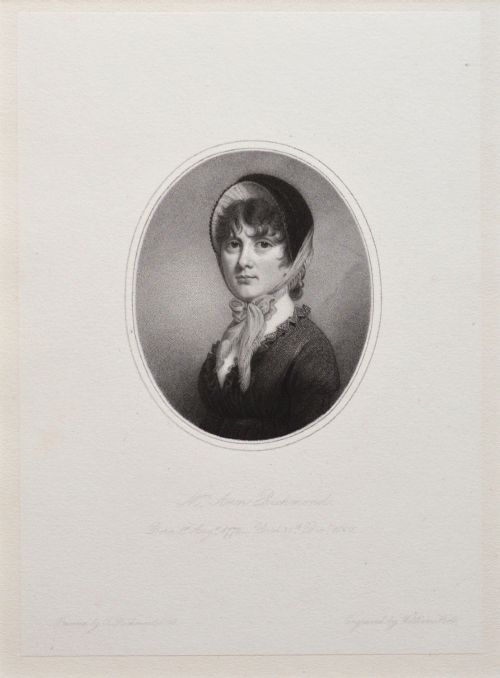
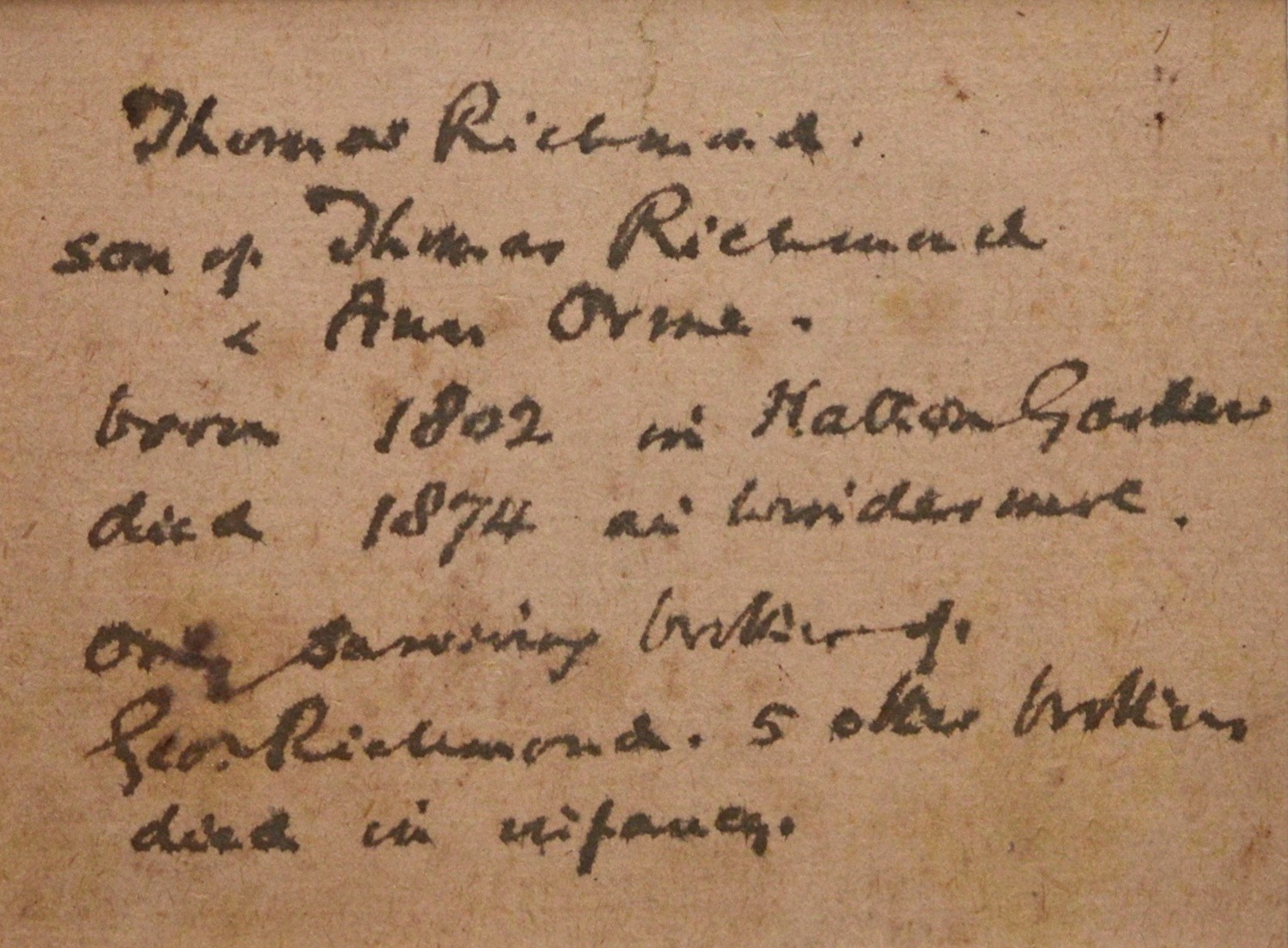
Inscribed: Thomas Richmond, son of Thomas Richmond, Ann Orme, born 1802 in Hatton Garden, died 1874 in Windermere. He was the only surviving brother of George Richmond. 5 other brothers died in infancy.
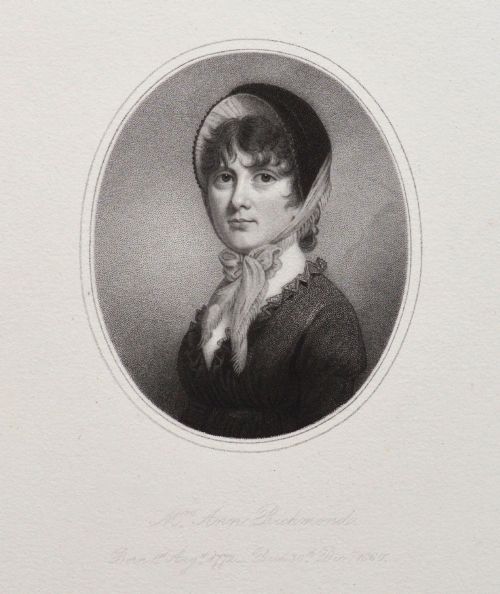
Image: 2 5/8 x 2 1/8 in. (6.6 x 5.3 cm.)
Mount: 11 3/4 x 8 1/4 in. (29.3 x 21 cm.)
Both items have been professionally cleaned and mounted.
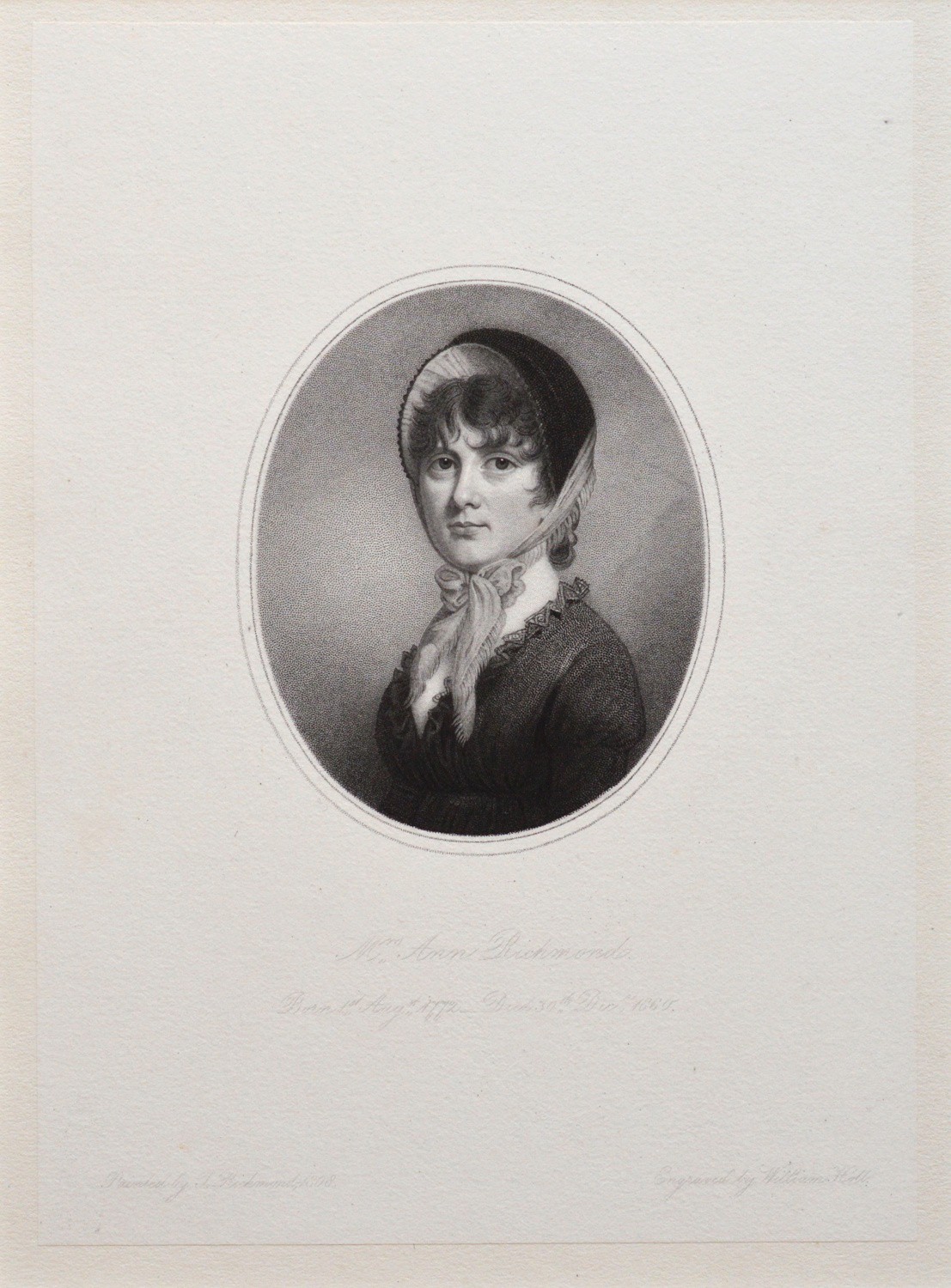
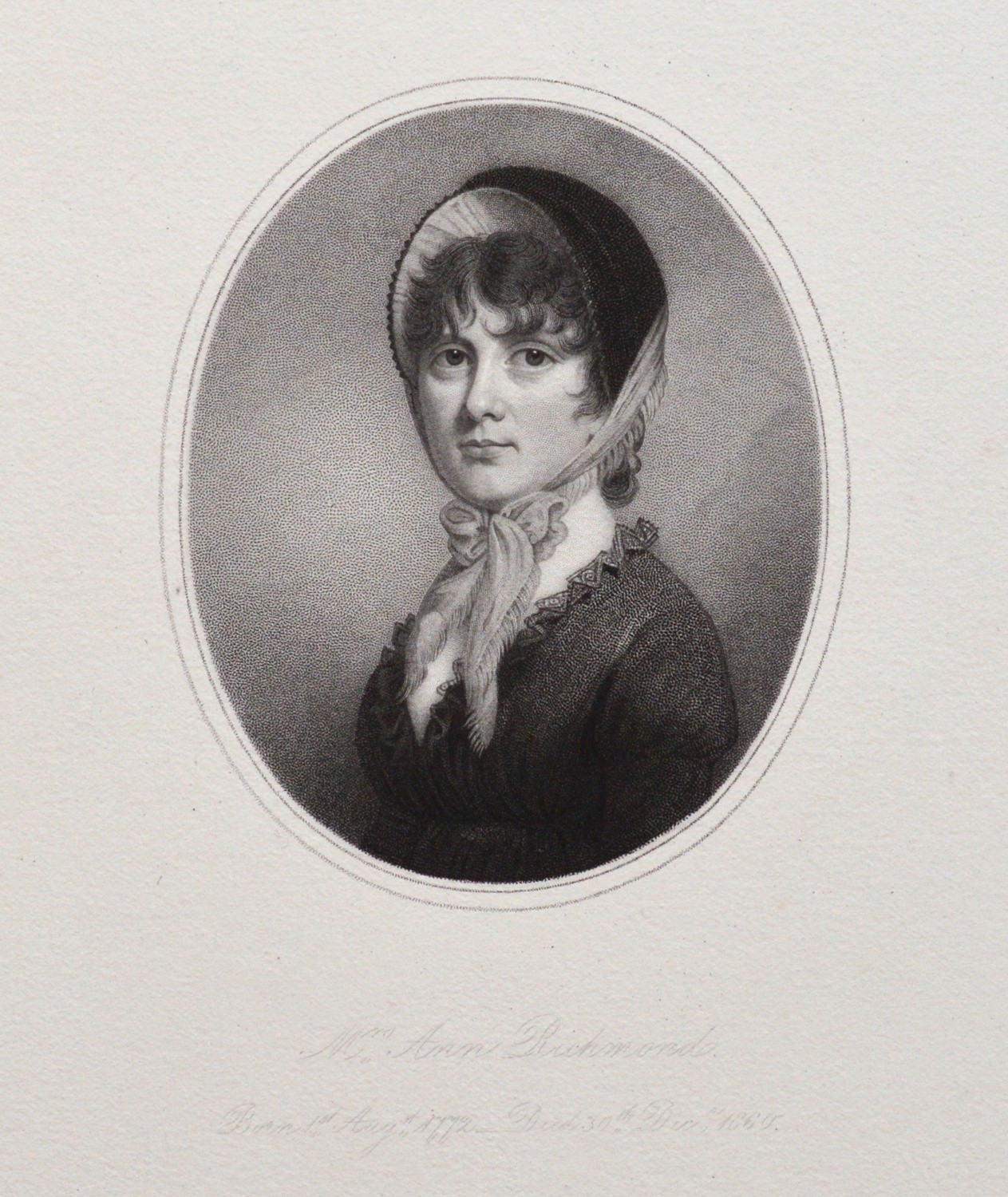
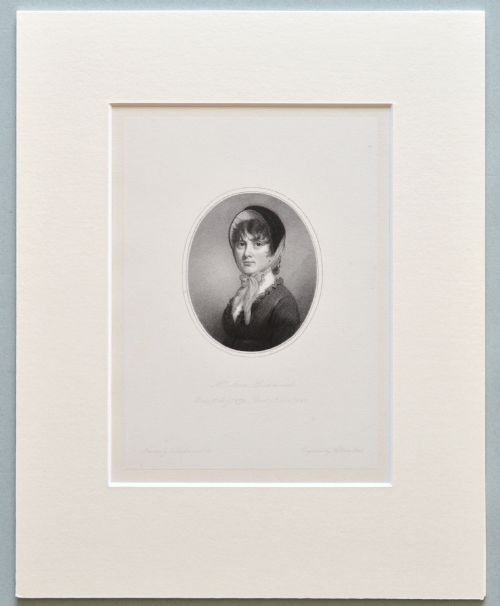
Anne Richmond
Anne was known far and wide for her beauty. Her father kept an Inn at Kew Green and her mother died when she was young.
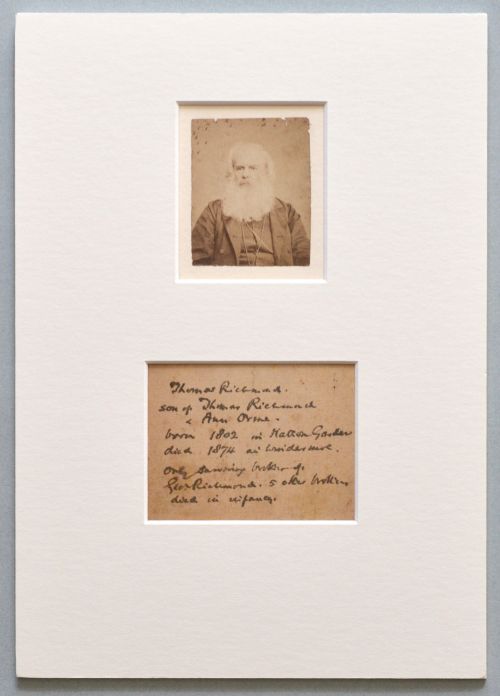
As an old lady she remembered the burning of Newgate during the Gordon riots and was taken to see Lord Gordon in prison. After her marriage she often saw Lord Nelson at Portsmouth, in which town her husband practised his art as a miniature painter. She also knew Shelley, who had lodged in the same house with her in Half Moon Street, Piccadilly.
A year before Anne died she gave a true and first hand account of a ghost story to her then, 16 year old grandchild, W B Richmond. After her mothers death her father immediately left the city and moved to Chelsea. At the back of their new house was a large and neglected garden which was used by their Newfoundland dog, and the children for games. One day while the children were playing “catch who catch can,” Anne’s brother, who was leading, came to some steps descending into a kind of hole; Anne followed but at the bottom of the steps there stood their mother, saying nothing but standing there in the attitude of pushing them back. Shocked by their dead mothers appearance they retreated immediately. When they told their father what had happened he sent them to bed for what he considered to be a monstrous lie. A few days after, the Newfoundland dog went missing; a search for him was made in the garden, and it was found that he had made his way down those same steps, had trodden upon some rotten planks overgrown with weeds, fallen into a covered well, and drowned.
Anne died in John Giles’ house where she had lived for some years.
Thomas (Tom) Richmond Jnr.
Thomas Richmond was a portrait painter, known for his idealised pictures in the so-called Keepsake style. His father Thomas Richmond (1771–1837), was a miniature painter, and his brother George Richmond RA (1809-1896) was a celebrated portrait painter.
Richmond initially practiced in Sheffield, and later moved to London. His main clientele was among the hunting fraternity. Between 1833 and 1860 he exhibited fifty one portraits in London. He exhibited forty-five portraits at the Royal Academy and six at the Suffolk Street gallery. Richmond’s paintings are close in style to his father’s work, but distinguished by the characteristic use of dark stippling in the background.
Richmond and his brother George had met Ruskin during his trip to Rome in 1840-1. He accompanied him on his visits to galleries. John Ruskin’s father commissioned Richmond to paint his daughter-in-law Effie Gray, Effie wrote of the finished work to her mother: ‘…it is the most lovely piece of oil painting but much prettier than me. I look like a graceful Doll but John and his father are delighted with it’. Ruskin’s father was not as delighted with the portrait of Effie as she believed. He wrote to his son that Thomas was inferior as an artist to his brother: “Tom I regret to say cannot hold a candle to George – It is second rate or lower”.
Tom Richmond died in 1874 at Windermere, where he had purchased an estate but was buried in Brompton Cemetery, London.
Radnorshire Fine Arts Ltd has dated this piece to the 19th Century.
We buy and sell paintings, watercolours, prints and drawings from the 17th to the 20th century
You can view the stock and full dealer information on the Radnorshire Fine Arts Ltd Profile Page
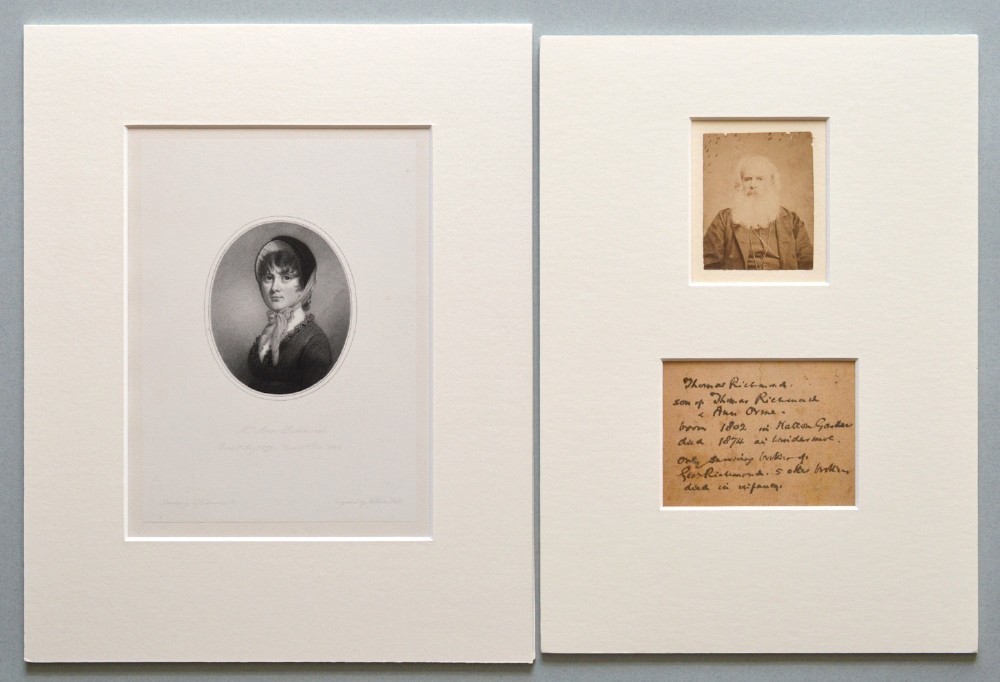
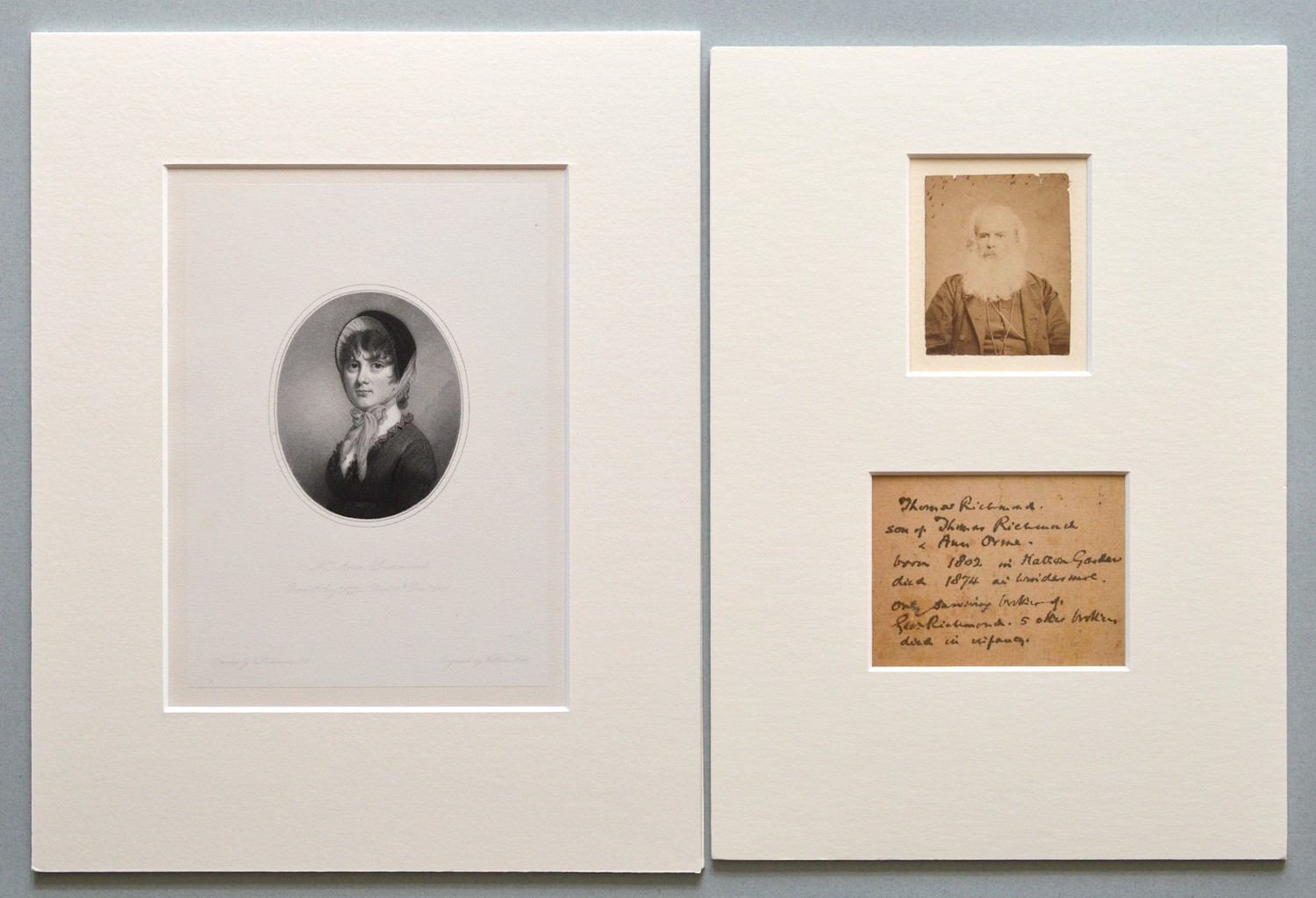
19th Century Engraved Print of Anne Richmond and Photo of the Artist Thomas (Tom) Richmond Jnr