It was listed by Titan Fine Art. Sold pieces stay on Sellingantiques as a record of what has passed through, and the next one is rarely far away.
Titan Fine Art has dated this Oil on Canvas Portrait to the 18th Century.
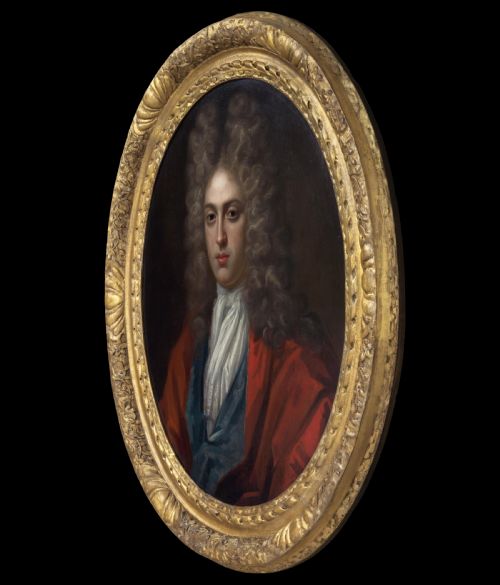
By the 1710s Kneller had dominated English portraiture for decades, serving as Principal Painter to the Crown across successive reigns. His highly organised London studio produced portraits that contemporaries regarded as fully authoritative expressions of his enterprise—consistent in manner, refined in execution, and sanctioned by his name.
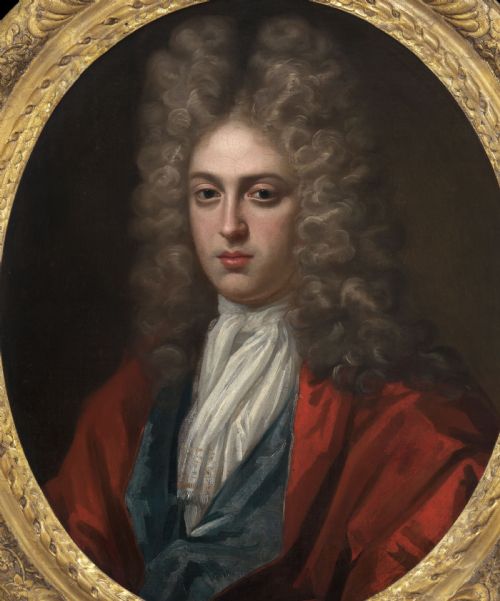
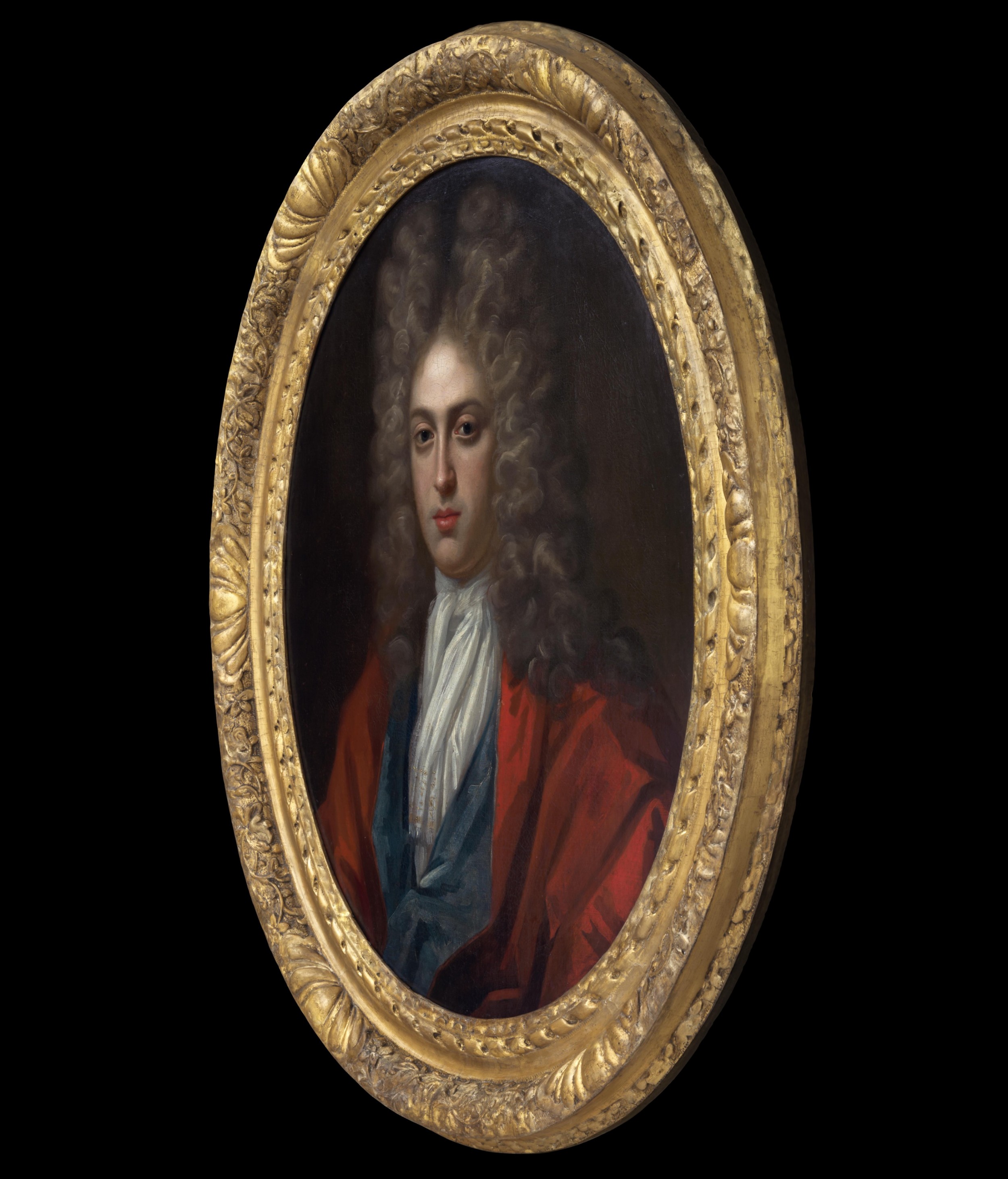
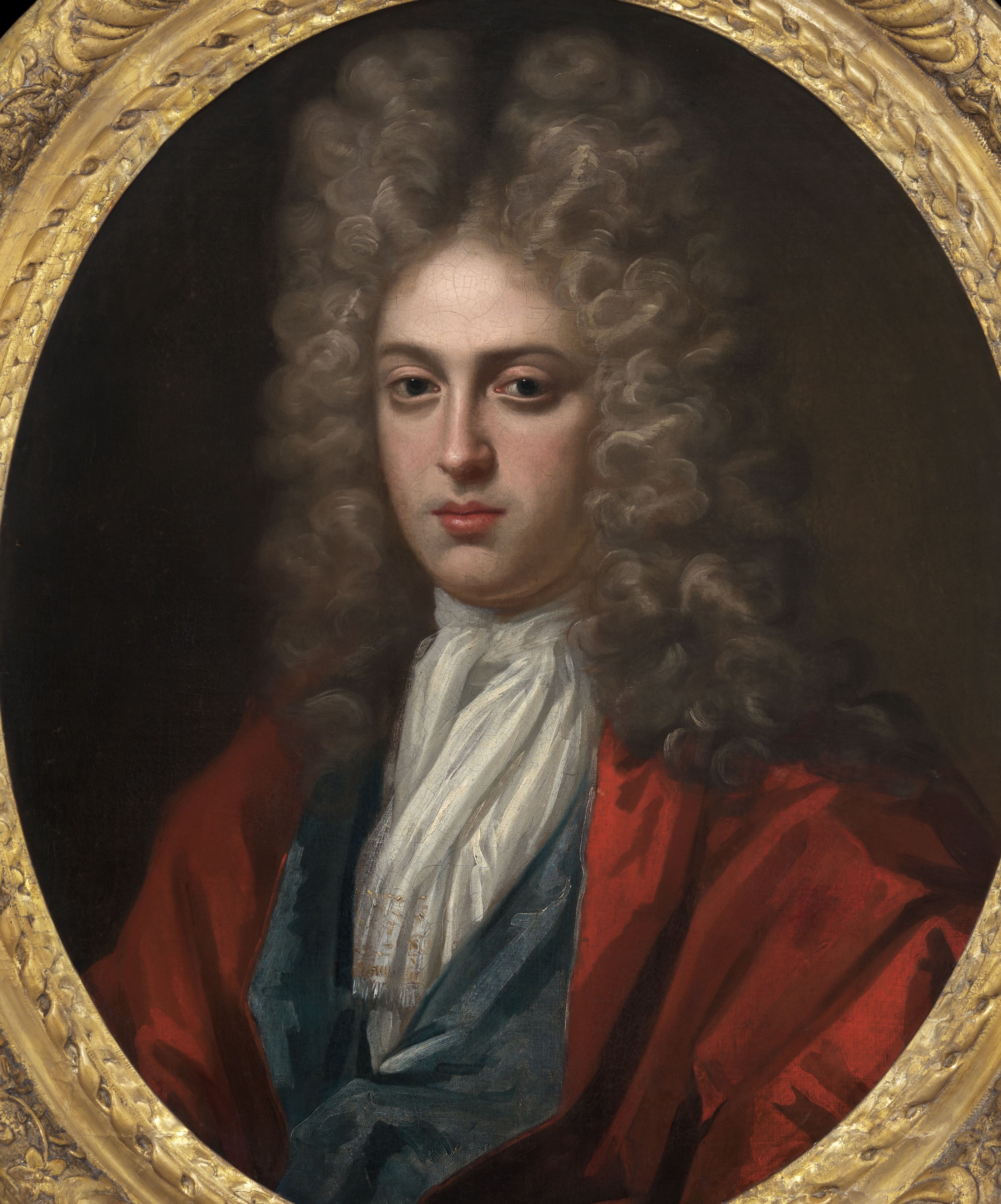
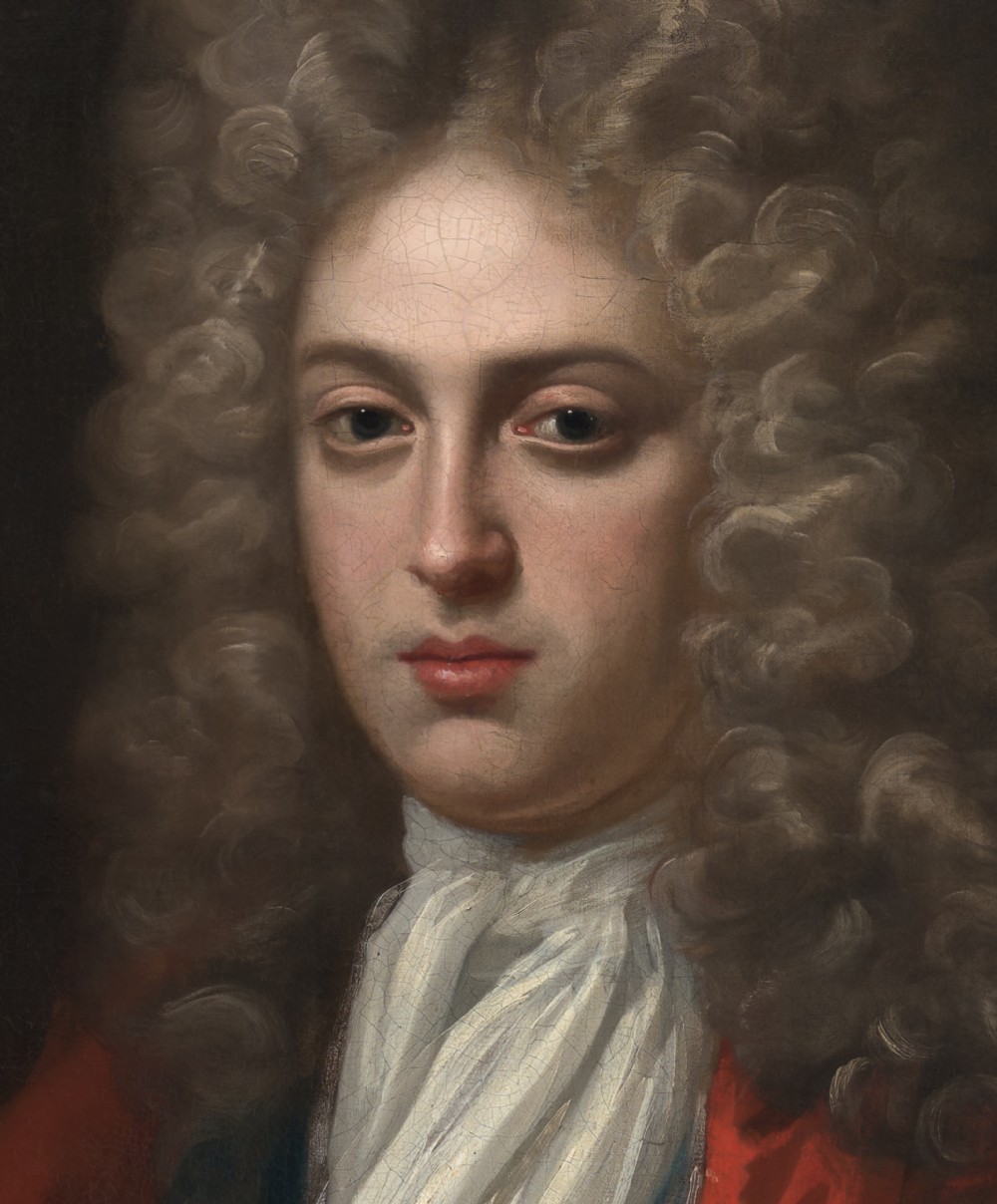
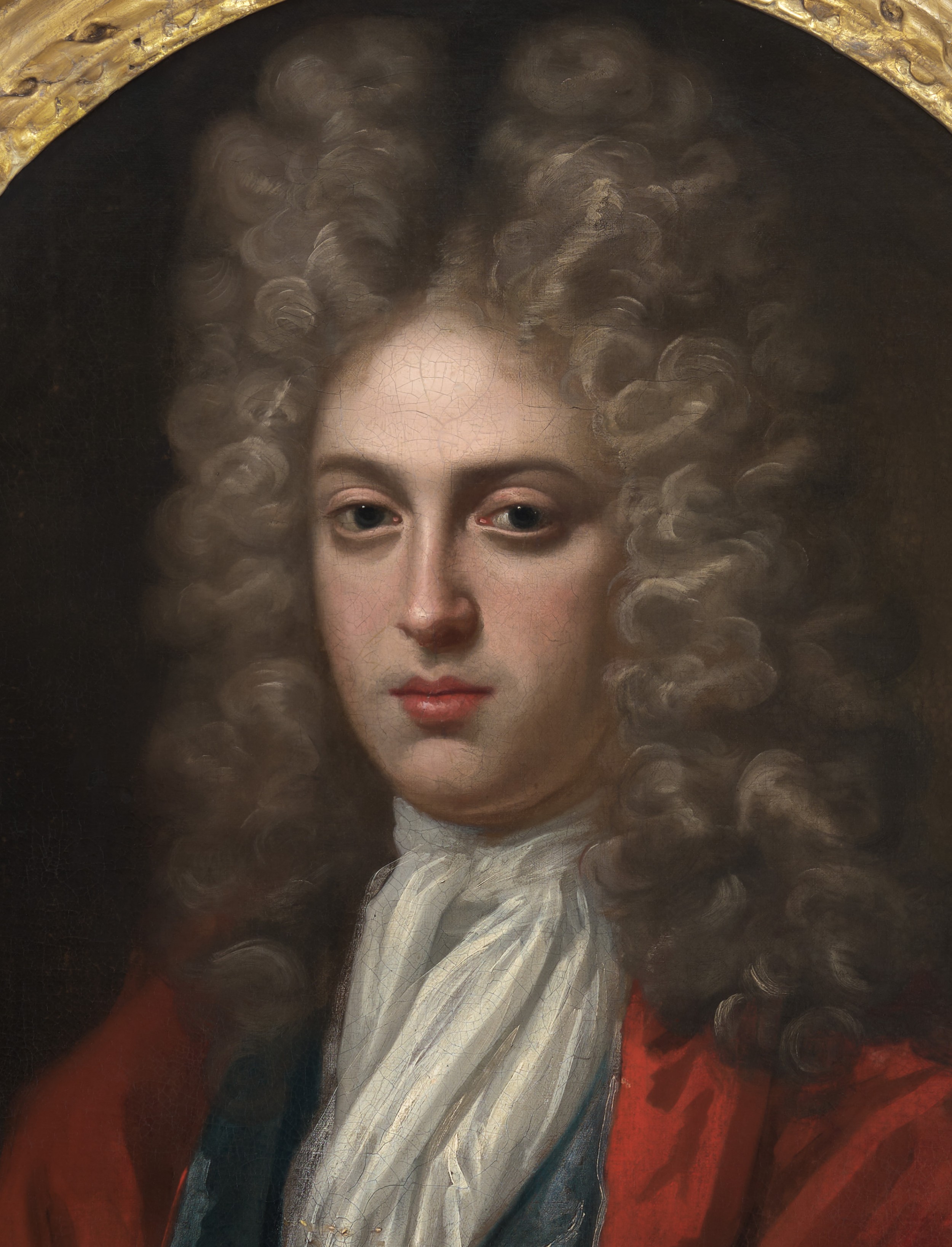
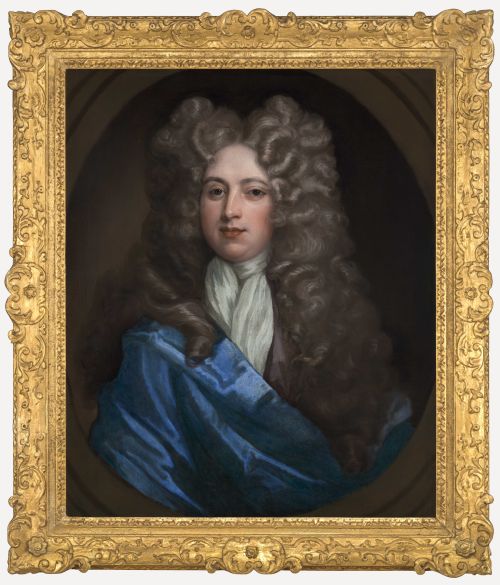
The present painting exemplifies late studio practice. The sitter appears bust-length in an oval format against a dark, unobtrusive background, with the head emerging in quiet emphasis. The features are modelled by soft tonal transitions rather than firm outlines: slightly heavy lids, a steady, reserved gaze, and a closed, understated mouth.
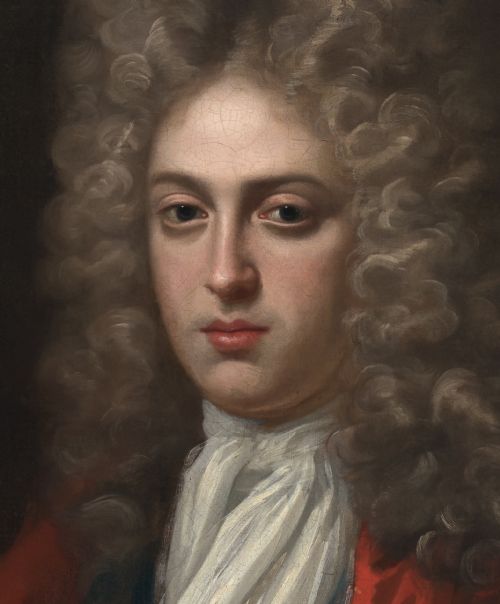
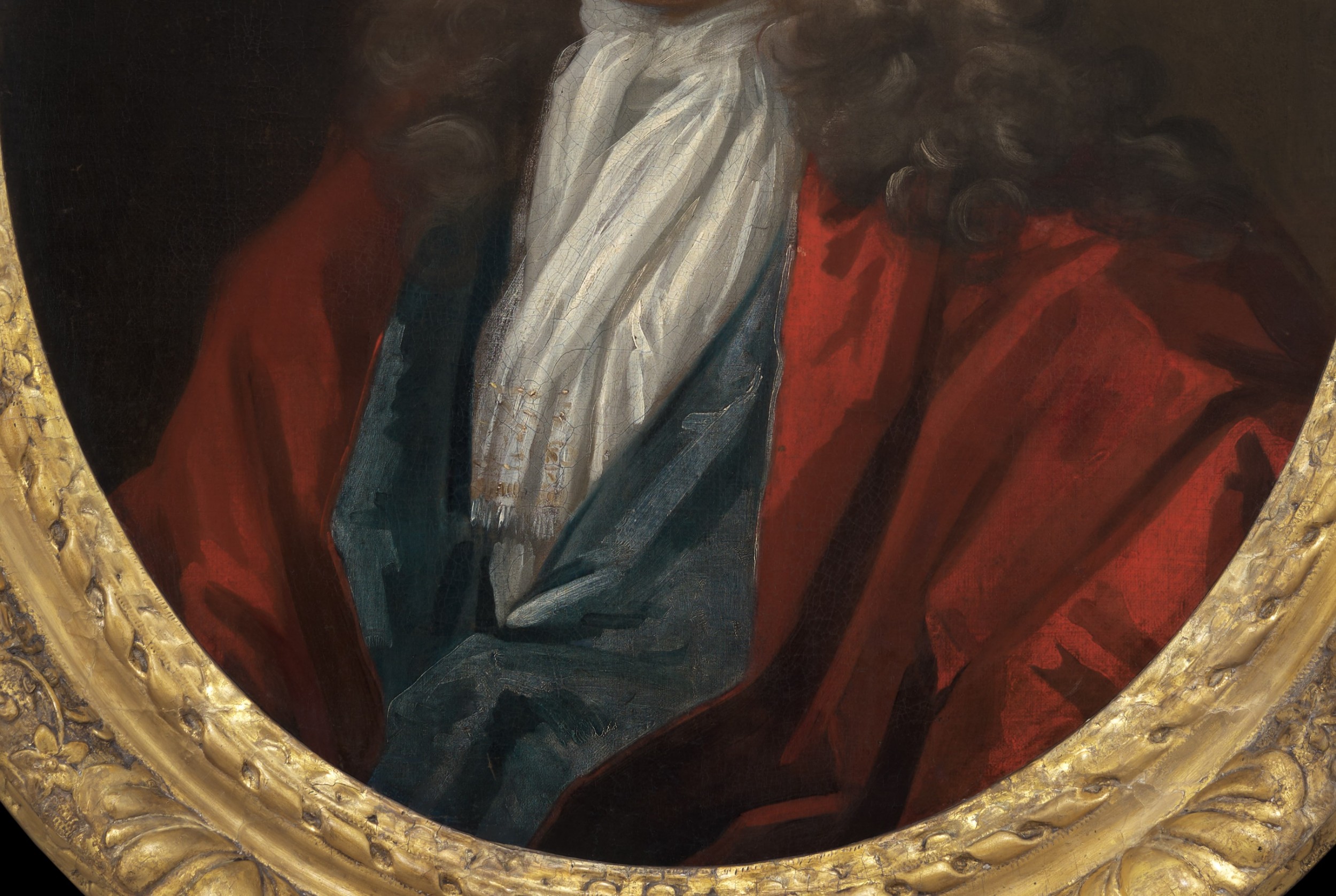
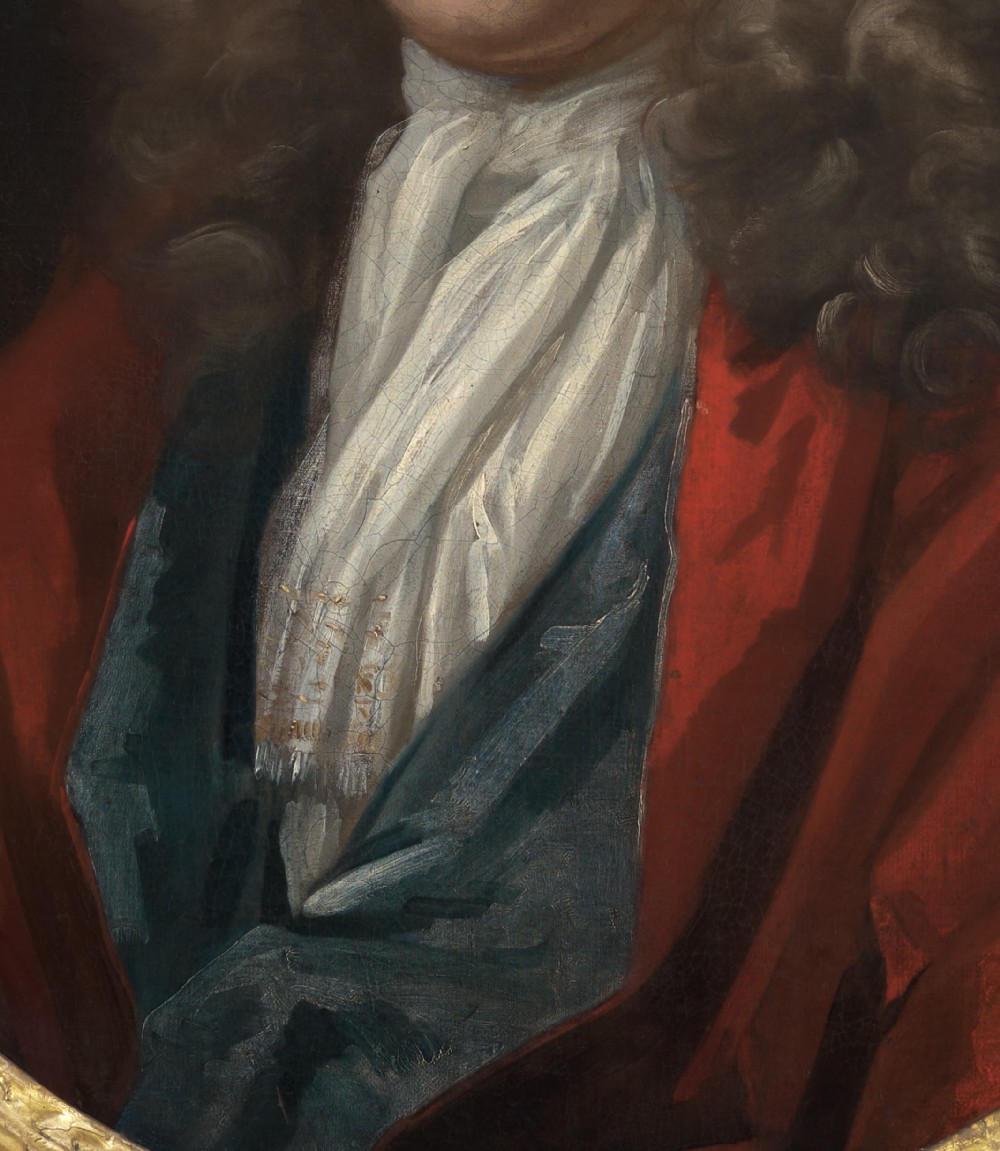
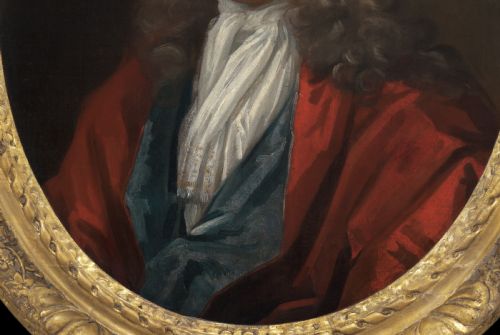
It shows key Kneller studio hallmarks: psychological restraint and controlled dignity; a wig painted as mass and atmosphere with highlights over darker underlayers; softly handled lips with blurred edges; an atmospheric, rounded nose built through warm shadow and light; and “sleepy authority” in the eyes, where tone replaces line and the whites are muted into the flesh. The cravat is painted with economical confidence—folds suggested rather than described—while the red coat and blue lining are handled broadly and subordinated to the face, consistent with the studio’s hierarchy of finish.
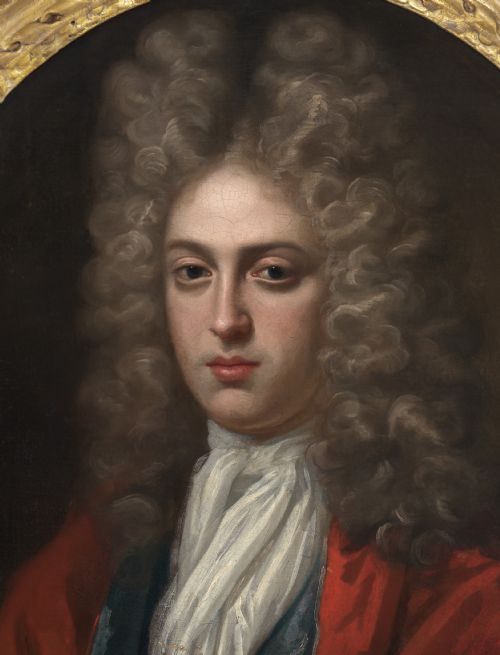
The costume supports the dating. A full powdered periwig with long curls was especially common after 1710 among senior professional men. The red wool broadcloth coat, cut with wide skirts and turned-back cuffs, signals expense and confidence; in the absence of armour or insignia, the colour reads as status rather than military identity. A loosely tied white linen cravat reflects the relaxed elegance of early Georgian fashion.
The sobriety of the composition suggests a man whose standing derived from profession, office, or property—perhaps a lawyer, judge, civil servant, physician, or prosperous landowner with London connections. Such sitters formed a major part of Kneller’s clientele during the reigns of Queen Anne and George I, when Britain’s administrative and financial institutions expanded. In the years after the Hanoverian succession of 1714—and on the eve of the South Sea Bubble (1720)—portraiture offered a public image of stability and legitimacy amid rapid change.
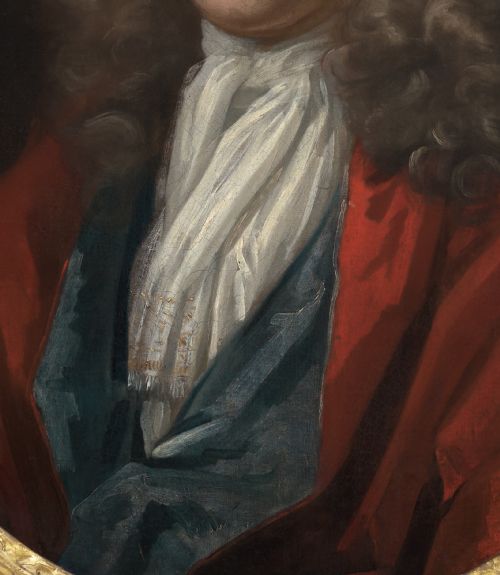
Technically, the painting displays a confident workshop finish: the face and cravat are carefully worked, while coat and background remain broader to maintain focus on identity. The surface is in notably good condition, preserving the tonal balance and original intent.
It is further enhanced by its contemporary carved and gilded oval frame, likely original or close in date. The leaf-and-shell ornament and egg-and-dart inner moulding align with early eighteenth-century London frame-making, and the close fit suggests frame and canvas were conceived together.
A high-quality Kneller studio portrait, combining strong workshop execution, excellent preservation, and a period frame.
Set with a fine carved and gilded period frame.
Full description at: www.titanfineart.com
Titan Fine Art has dated this Oil on Canvas Portrait to the 18th Century.
Specialist in 17th & 18thc portraits. Highly curated selection, museum-level research & pro conservation. Exceptional art, expertly vetted.
You can view the stock and full dealer information on the Titan Fine Art Profile Page
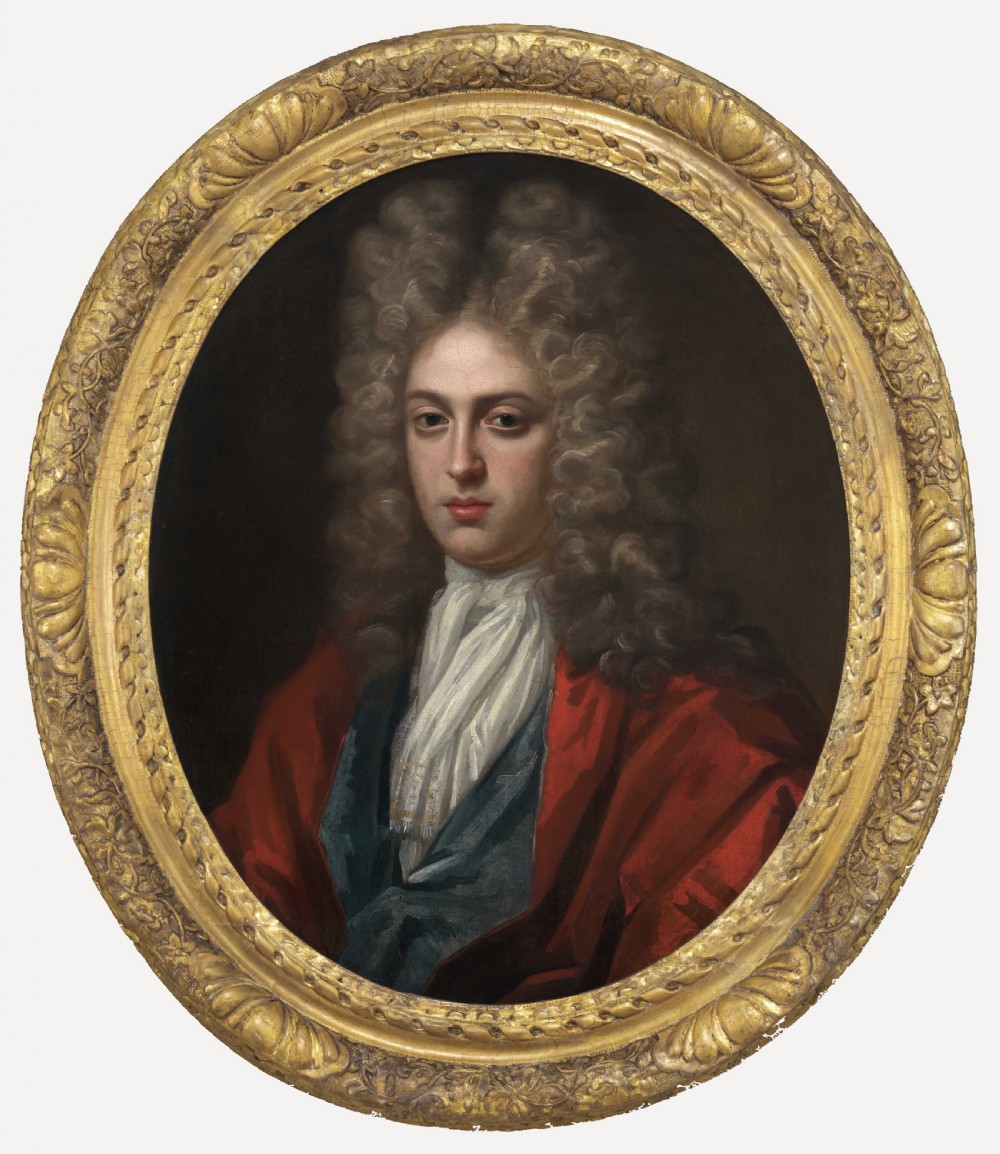
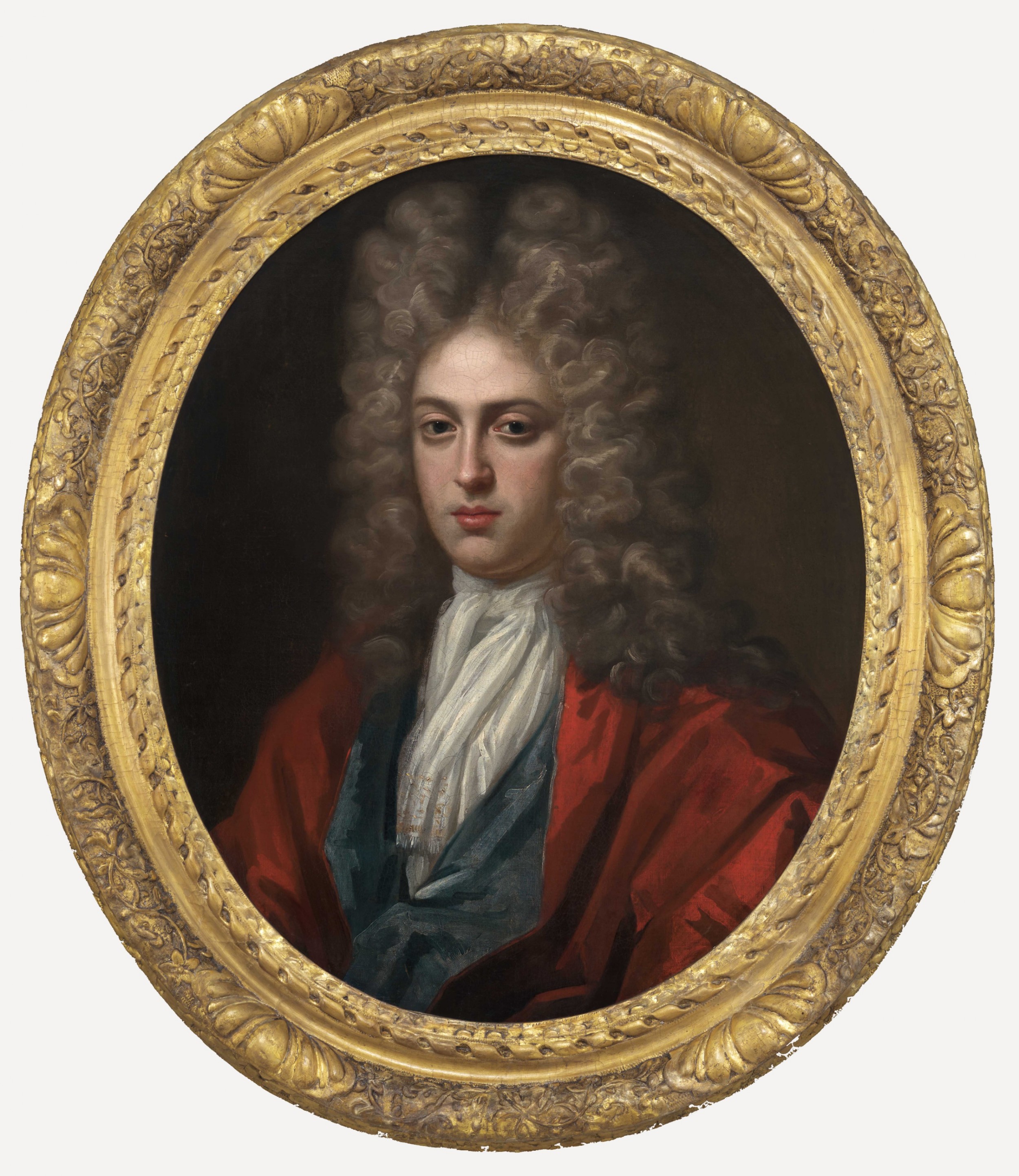
Portrait of a Gentleman in a Red Coat and Periwig, C.1715-1725; Studio of Sir Godfrey Kneller (1646–1723), Oil on Canvas Painting