29,978  PAGES BROWSED TODAY PAGES TODAY • 32 ANTIQUES UPLOADED TODAYNEW ARRIVALS
GIFTSNEW
32 ITEMS ADDED TODAY
Sort Order
Items Per Page
Browse Categories
Sort order
Relevant Links
Items per page
ID #SA1194216
SOLD
Email Phone
Save
Anthropomorphic Monkeys Oil on Canvas
Sold by Christopher Tombs Antiques Ltd
sold SA1194216
Sorry, but this item has been sold.

Christopher Tombs Antiques Ltd

Sellingantiques Verified Since Oct 2010
Browse dealers 66 items
Id #SA1194216
PDF SHARE
SAVE

Anthropomorphic Monkeys Oil on Canvas

19th century
Sold 14 February 2026 · Christopher Tombs Antiques Ltd
This “Anthropomorphic Monkeys Oil on Canvas” found a buyer.

It was listed by Christopher Tombs Antiques Ltd. Sold pieces stay on Sellingantiques as a record of what has passed through, and the next one is rarely far away.

Description

Anthropomorphised monkeys in an Asian village setting.

Oil on canvas.

Dimensions 70cm tall x 108cm wide and 4cm deep

Label verso for the Norcross Transfer and Storage company, Charlottesville, North Carolina, USA.

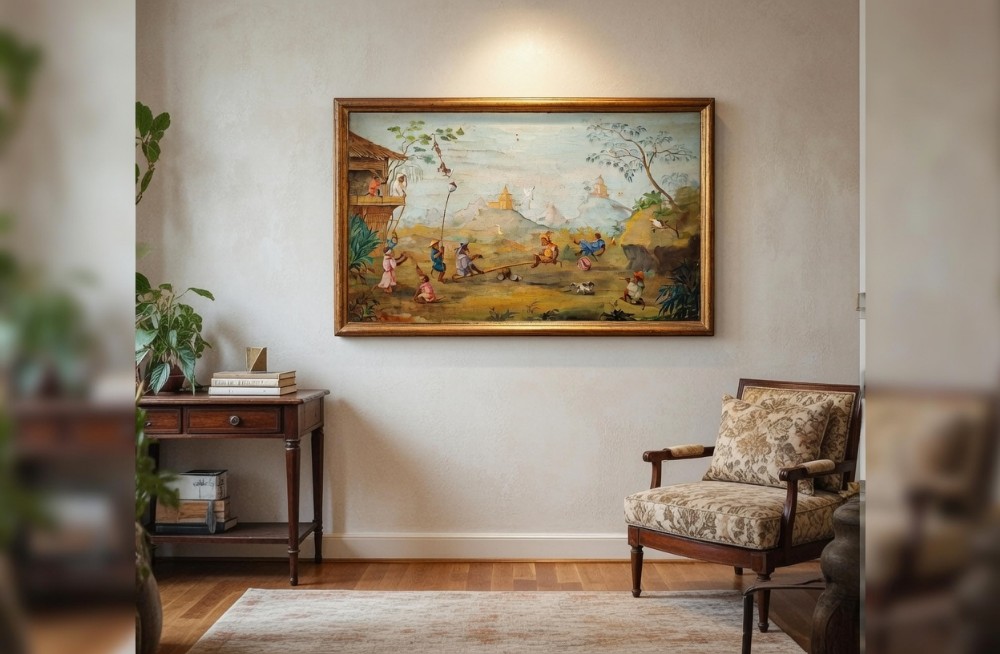
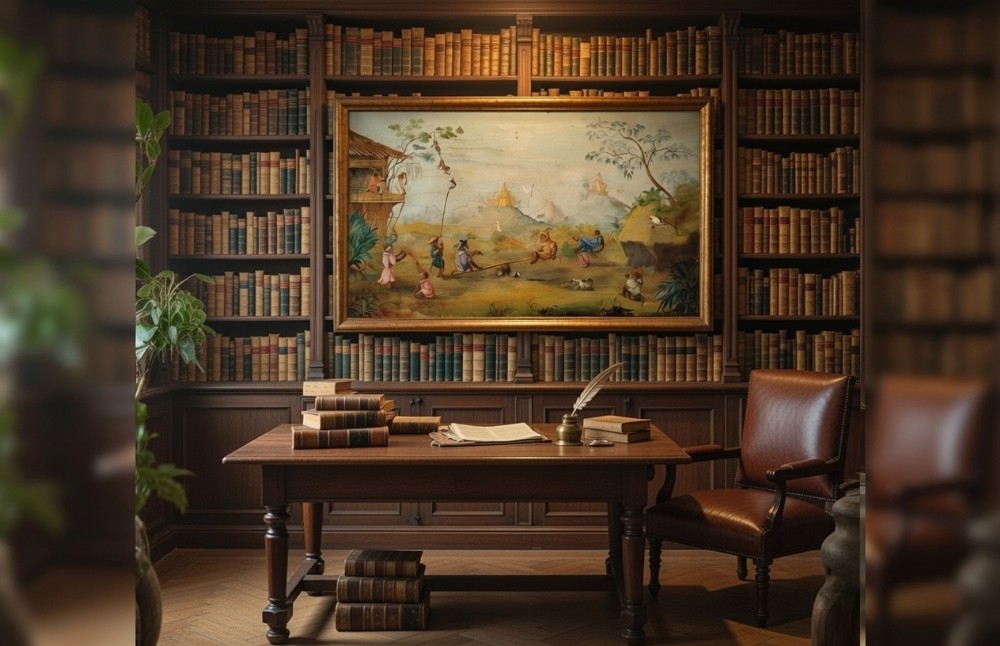
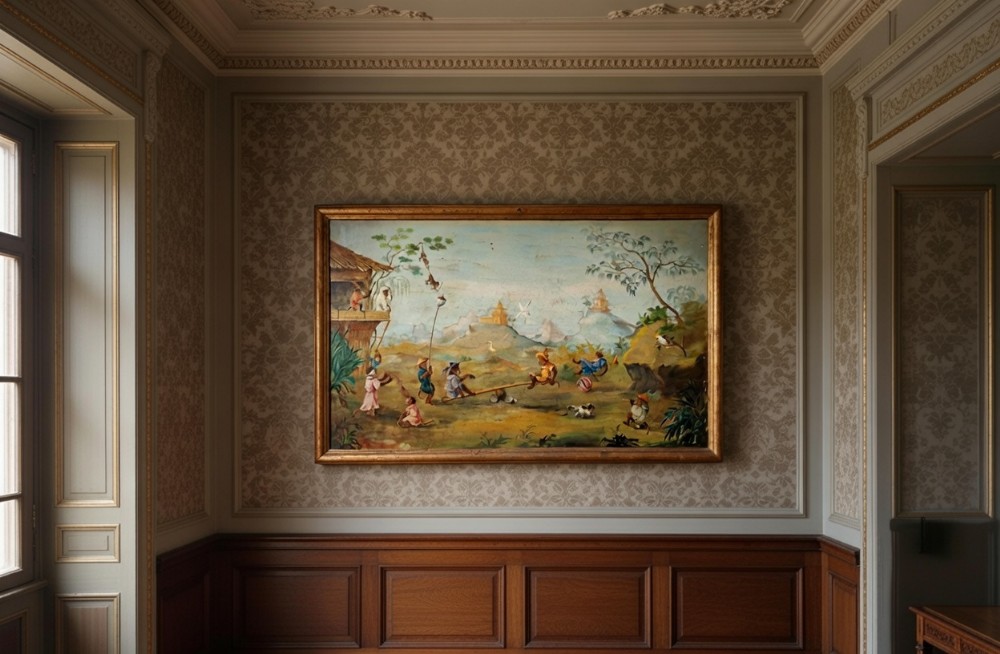
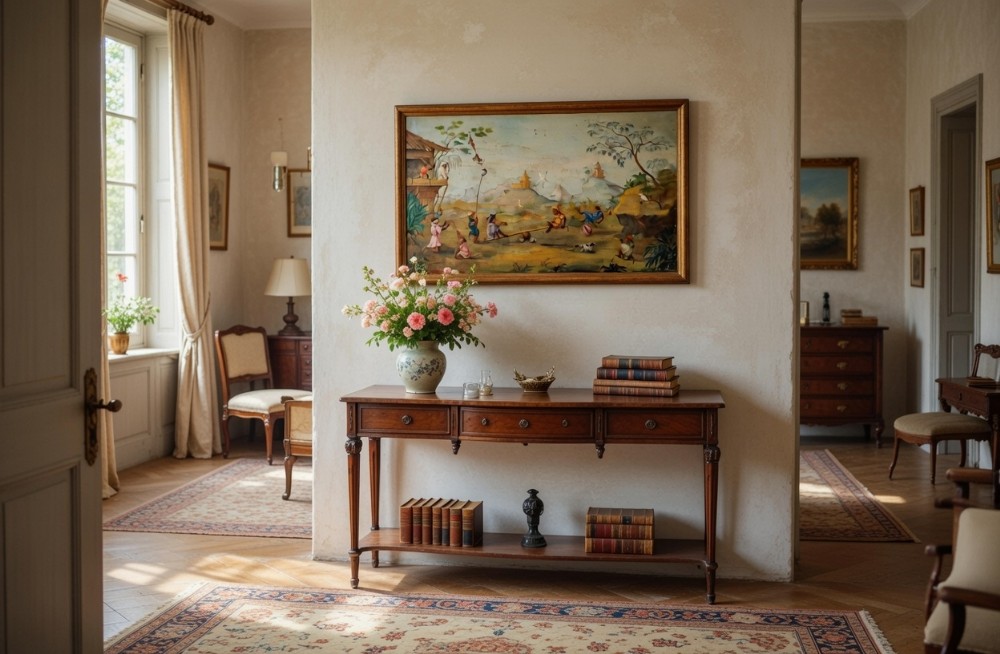
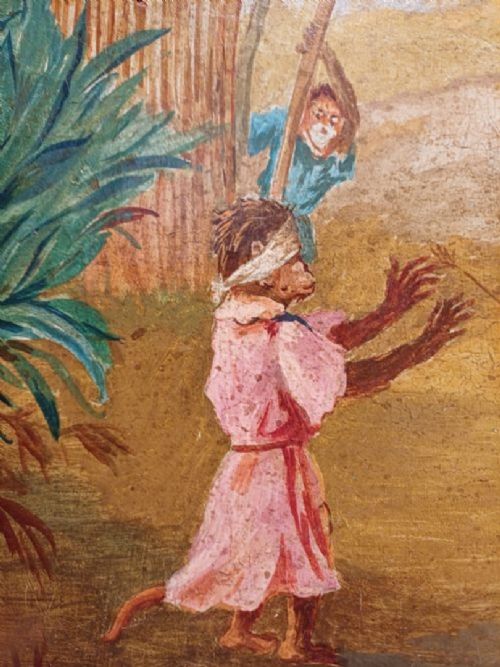
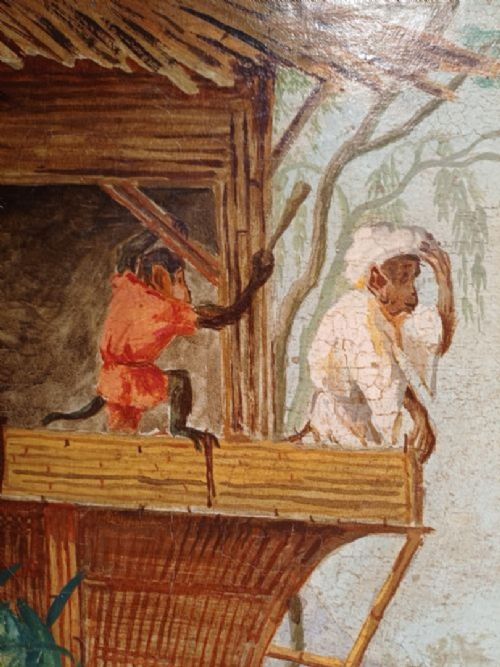
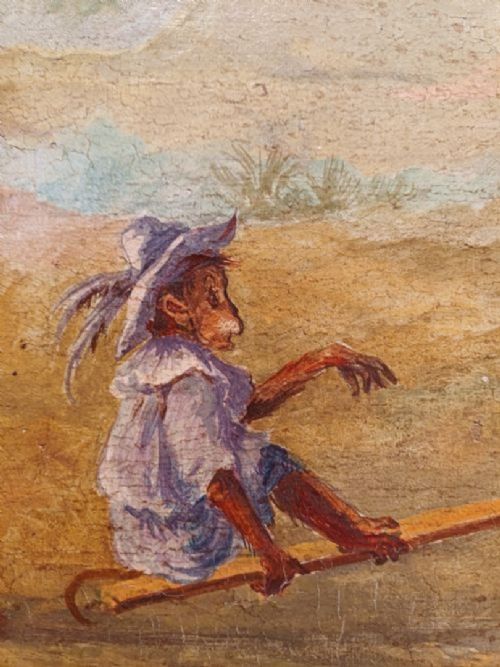
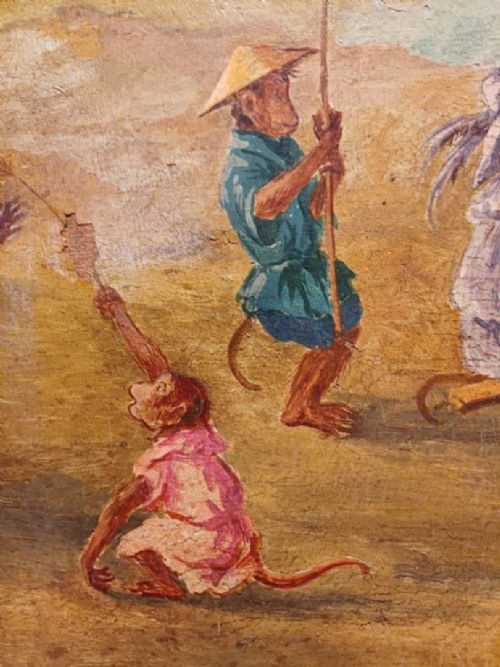
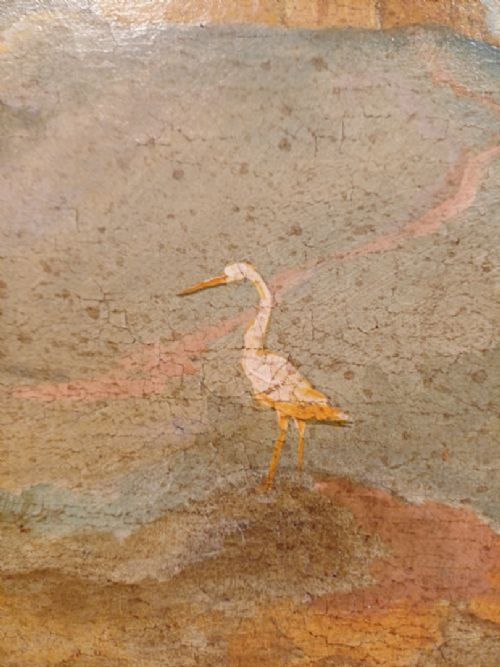
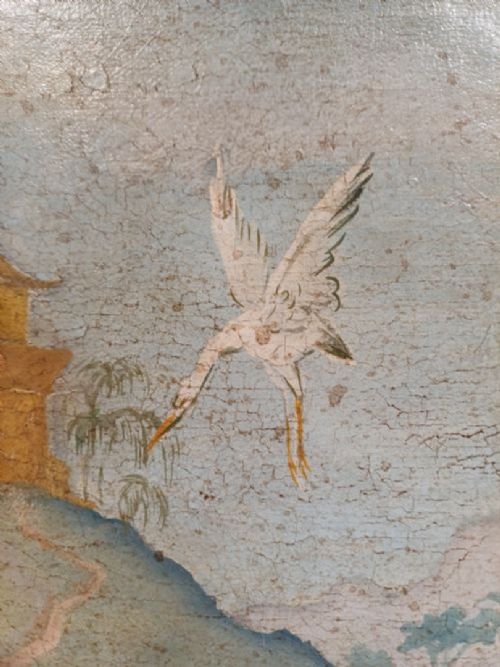
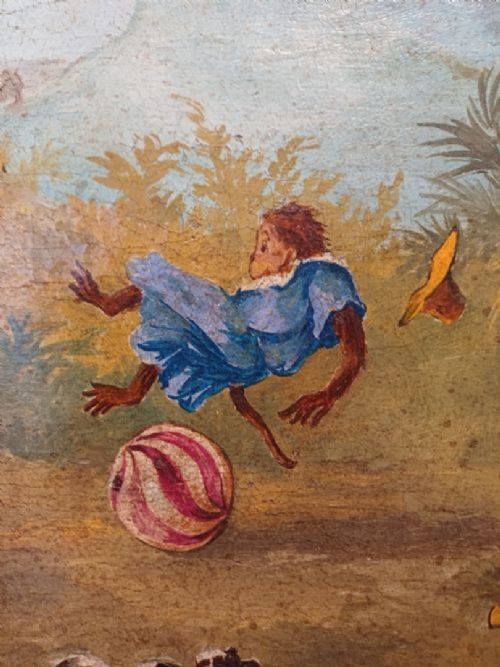
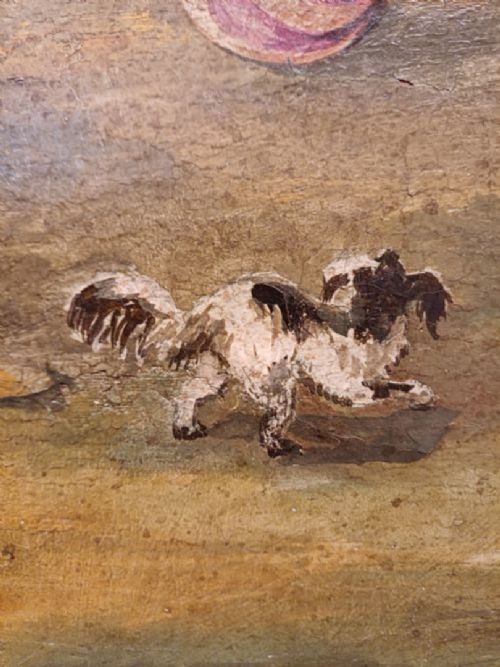
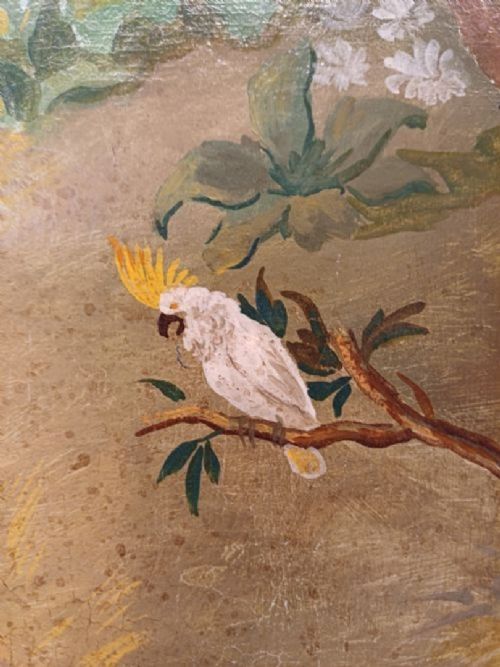
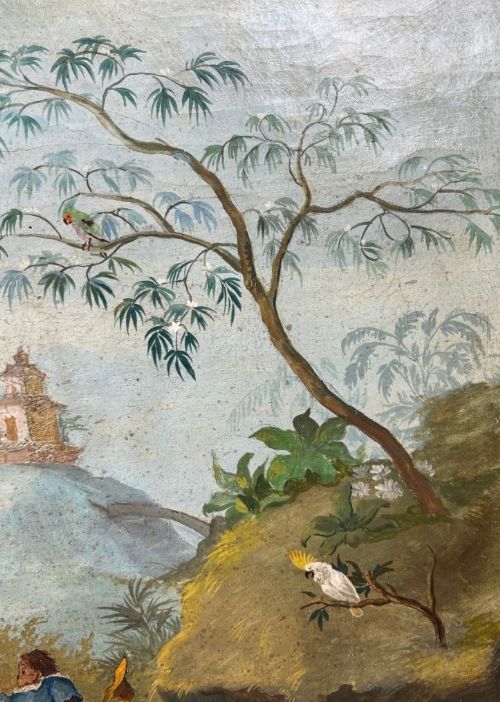
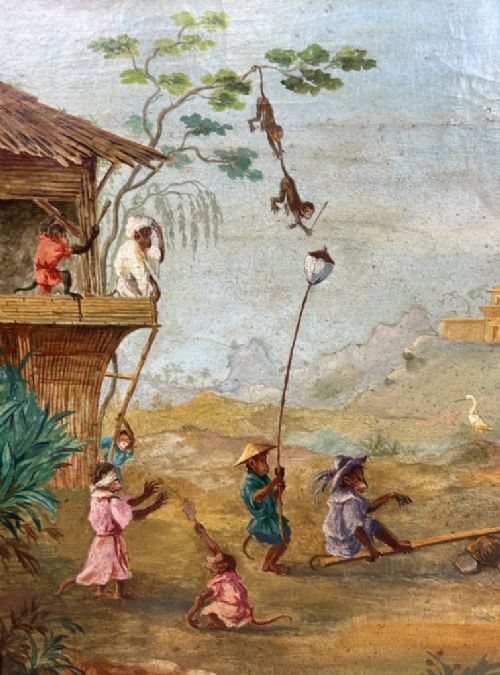
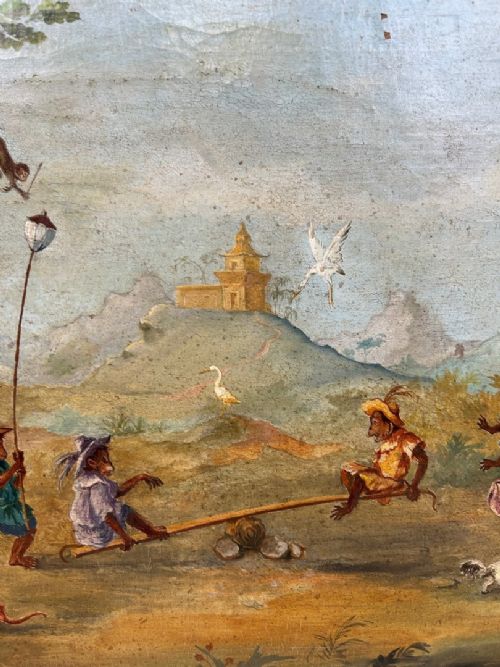
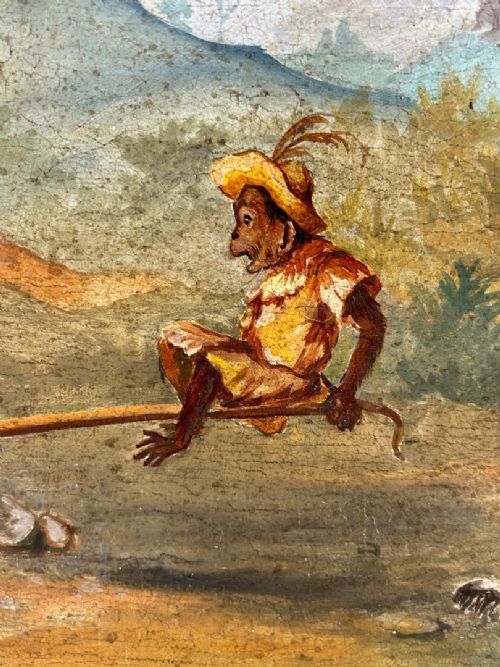
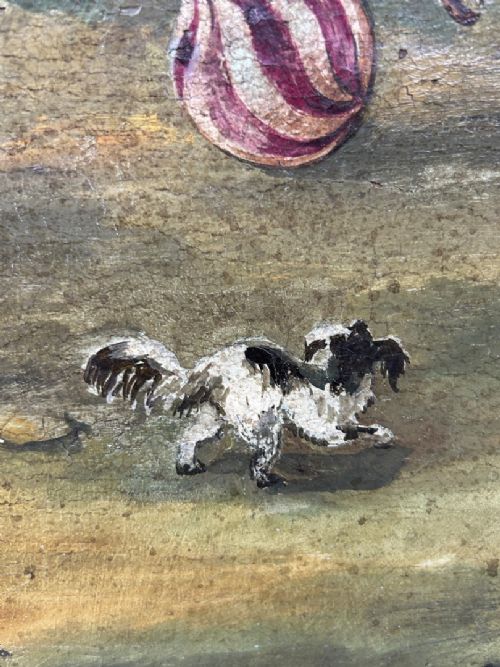
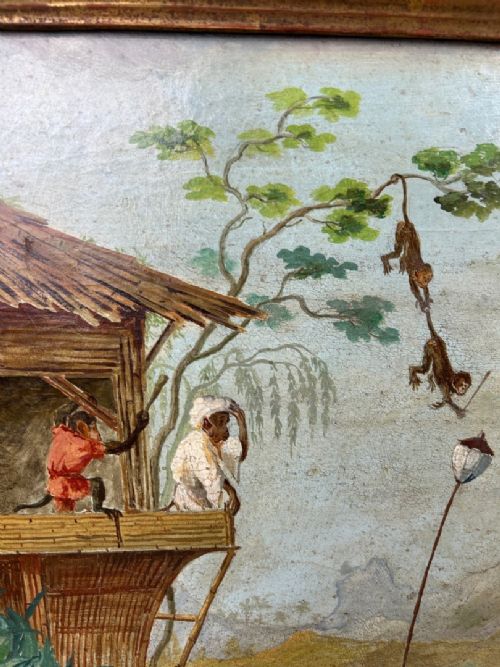
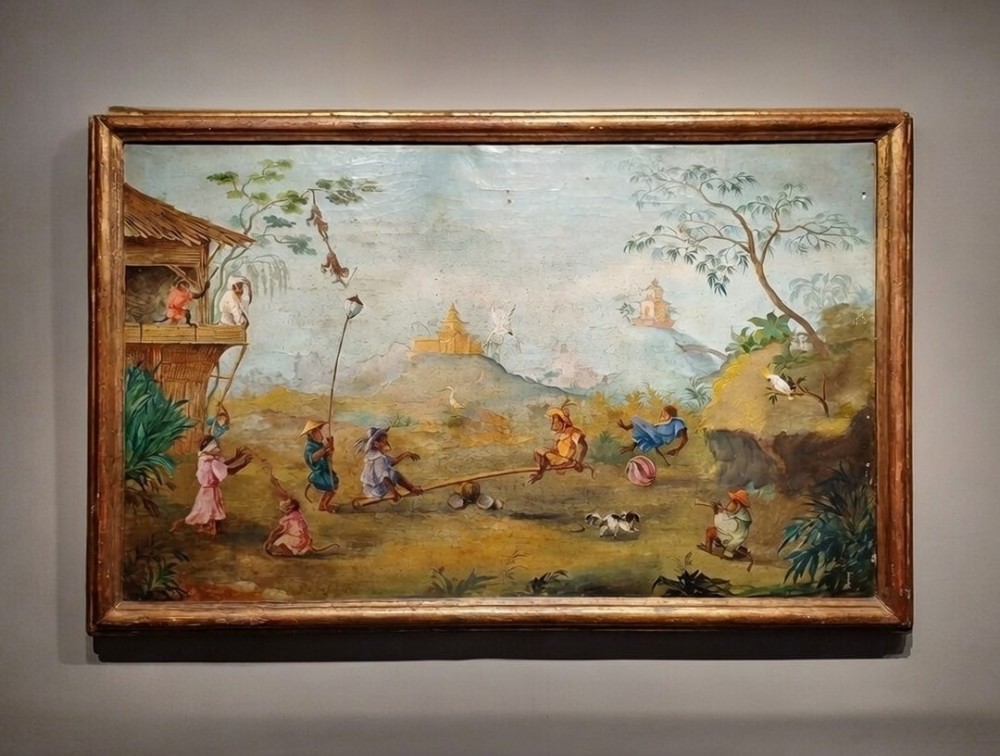
This humorous painting is a lively and ingeniously painted pastiche of formal Chinese landscapes. In the distance there are pagodas on rocky hills, and a willow curves elegantly into the painting from an outcrop at the right. Storks complement the scene, and at the right there is a yellow-crested cockatoo resting on a branch. The cockatoo may be a hint that the painting was not produced in China, since the bird is native to East Timor and Indonesia. Yellow cockatoos are known in Hong Kong, however, since at least the middle of the Twentieth Century, where they are the descendants of escaped pets.1 The usual human staffage of Chinese landscapes has been replaced in this painting by monkeys dressed in human clothes. They are performing a range of humorous antics throughout the painting. Two are playing on a seesaw in the centre, while a third in a conical peasant’s hat holds a precarious lantern over them, oblivious to two further monkeys craning down from a treetop trying to grab it. Two more are playing blindman’s buff at the left, while above them all a monkey sage in a white turban watches from the balcony of a bamboo house, unaware that an attendant is about to hit him on the head with a fan. At the right there is boisterous noise and movement where a monkey has fallen off a ball she is trying to sit on, losing her hat in the process, while a black and white Pekinese barks excitedly at her and another monkey plays the flute. Despite the Asian setting our painting may equally have been painted in the West, and perhaps in North America. The earliest provenance is a label from the Norcross Transfer and Storage company, Charlottesville, North Carolina, who were trading from new premises in 1924.2 The graphic style of the monkey figures and their lively reactive quality has parallels with American comic illustration of the period. Humorous monkeys have a place in traditional Chinese art, but they are not usually shown as humanly as this or wearing clothes. A rare example of anthropomorphised animal art is Ink Play of Cat and Mice by Pu Hsin-yu (1896–1963) in which mice drink and carouse in front of a sleeping cat.3 The clothes worn by some of the monkeys – particularly the feathered straw hats and smocks worn by the four central figures ¬– suggest a Western painter interpreting the idiom. Monkey paintings, known as singeries, have a long-established tradition in Western European art, in which the dressed monkey is a satirical comment on human habits and customs. Using monkeys as a pictorial comment on manners first appears in the margins of medieval illuminated manuscripts. A monkey looked at themself in a mirror in a marginal illustration to the Isabella Breviary, late 1480s–before 1497 (British Library). But the genre reached its height in the Baroque and Rococo, with paintings such as A Monkey Barber Surgeon’s Establishment by David Teniers II (1610–1690) in the collection of the Welcome Foundation. In the Eighteenth Century monkey-themed paintings and decorative arts were so popular that in the 1750s Meissen produced an entire set of monkey orchestra figurines, an example of which was acquired by King Louis XV.4
Please do contact me for the Completed Research on this Painting?

Delivery within the UK is included in the asking Price.

Shipping is also a Pleasure so please do let us know as we are always happy to help.

Thanks for looking Chris 07778655965

Physical Dimensions
Height
70cm (27.56")
Width
108cm (42.52")
Depth
4cm (1.57")
Declaration

Christopher Tombs Antiques Ltd has dated this Anthropomorphic Monkey Oil Painting to the 19th Century.

Reference Numbers
Sellingantiques Reference
SA1194216
Dealers Internal Reference
AM0001
Description
Anthropomorphised monkeys in an Asian village setting.

Oil on canvas.

Dimensions 70cm tall x 108cm wide and 4cm deep

Label verso for the Norcross Transfer and Storage company, Charlottesville, North Carolina, USA.

This humorous painting is a lively and ingeniously painted pastiche of formal Chinese landscapes.

“
In the distance there are pagodas on rocky hills, and a willow curves elegantly into the painting from an outcrop at the right.
Christopher Tombs Antiques Ltd

Storks complement the scene, and at the right there is a yellow-crested cockatoo resting on a branch. The cockatoo may be a hint that the painting was not produced in China, since the bird is native to East Timor and Indonesia. Yellow cockatoos are known in Hong Kong, however, since at least the middle of the Twentieth Century, where they are the descendants of escaped pets.1 The usual human staffage of Chinese landscapes has been replaced in this painting by monkeys dressed in human clothes. They are performing a range of humorous antics throughout the painting. Two are playing on a seesaw in the centre, while a third in a conical peasant’s hat holds a precarious lantern over them, oblivious to two further monkeys craning down from a treetop trying to grab it. Two more are playing blindman’s buff at the left, while above them all a monkey sage in a white turban watches from the balcony of a bamboo house, unaware that an attendant is about to hit him on the head with a fan. At the right there is boisterous noise and movement where a monkey has fallen off a ball she is trying to sit on, losing her hat in the process, while a black and white Pekinese barks excitedly at her and another monkey plays the flute. Despite the Asian setting our painting may equally have been painted in the West, and perhaps in North America. The earliest provenance is a label from the Norcross Transfer and Storage company, Charlottesville, North Carolina, who were trading from new premises in 1924.2 The graphic style of the monkey figures and their lively reactive quality has parallels with American comic illustration of the period. Humorous monkeys have a place in traditional Chinese art, but they are not usually shown as humanly as this or wearing clothes. A rare example of anthropomorphised animal art is Ink Play of Cat and Mice by Pu Hsin-yu (1896–1963) in which mice drink and carouse in front of a sleeping cat.3 The clothes worn by some of the monkeys – particularly the feathered straw hats and smocks worn by the four central figures ¬– suggest a Western painter interpreting the idiom. Monkey paintings, known as singeries, have a long-established tradition in Western European art, in which the dressed monkey is a satirical comment on human habits and customs. Using monkeys as a pictorial comment on manners first appears in the margins of medieval illuminated manuscripts. A monkey looked at themself in a mirror in a marginal illustration to the Isabella Breviary, late 1480s–before 1497 (British Library). But the genre reached its height in the Baroque and Rococo, with paintings such as A Monkey Barber Surgeon’s Establishment by David Teniers II (1610–1690) in the collection of the Welcome Foundation. In the Eighteenth Century monkey-themed paintings and decorative arts were so popular that in the 1750s Meissen produced an entire set of monkey orchestra figurines, an example of which was acquired by King Louis XV.4

fig 1. An antique oil painting on canvas depicting anthropomorphic monkeys engaged in human activities within a landscape, enclosed in a gilded wooden frame.
fig 1. Anthropomorphic Monkeys Oil on Canvas

Please do contact me for the Completed Research on this Painting?

Delivery within the UK is included in the asking Price.

Shipping is also a Pleasure so please do let us know as we are always happy to help.

Thanks for looking Chris 07778655965

Height
70cm (27.56")
Width
108cm (42.52")
Depth
4cm (1.57")
Date of Manufacture

Christopher Tombs Antiques Ltd has dated this Anthropomorphic Monkey Oil Painting to the 19th Century.

Reference Numbers
Sellingantiques Ref
SA1194216
Dealers Internal Ref
AM0001
Christopher Tombs Antiques Ltd
Sellingantiques verified Since Oct 2010
Dealer Profile

You can view the stock and full dealer information on the Christopher Tombs Antiques Ltd Profile Page
PDF SHARE
SAVE
An antique oil painting on canvas depicting anthropomorphic monkeys engaged in human activities within a landscape, enclosed in a gilded wooden frame. SOLD6+ MONTHS AGO
1 / 21
Archive I An antique oil painting on canvas depicting anthropomorphic monkeys engaged in human activities within a landscape, enclosed in a gilded wooden frame. SOLD6+ MONTHS AGO

Anthropomorphic Monkeys Oil on Canvas
Archive II An antique oil painting on canvas depicting anthropomorphic monkeys engaged in human activities within a landscape, enclosed in a gilded wooden frame. View II
Archive III An antique oil painting on canvas depicting anthropomorphic monkeys engaged in human activities within a landscape, enclosed in a gilded wooden frame. View III
Archive IV An antique oil painting on canvas depicting anthropomorphic monkeys engaged in human activities within a landscape, enclosed in a gilded wooden frame. View IV
Archive V An antique oil painting on canvas depicting anthropomorphic monkeys engaged in human activities within a landscape, enclosed in a gilded wooden frame. View V
Archive VI An antique oil painting on canvas depicting anthropomorphic monkeys engaged in human activities within a landscape, enclosed in a gilded wooden frame. View VI
Archive VII An antique oil painting on canvas depicting anthropomorphic monkeys engaged in human activities within a landscape, enclosed in a gilded wooden frame. View VII
Archive VIII An antique oil painting on canvas depicting anthropomorphic monkeys engaged in human activities within a landscape, enclosed in a gilded wooden frame. View VIII
Archive IX An antique oil painting on canvas depicting anthropomorphic monkeys engaged in human activities within a landscape, enclosed in a gilded wooden frame. View IX
Archive X An antique oil painting on canvas depicting anthropomorphic monkeys engaged in human activities within a landscape, enclosed in a gilded wooden frame. View X
Archive XI An antique oil painting on canvas depicting anthropomorphic monkeys engaged in human activities within a landscape, enclosed in a gilded wooden frame. View XI
Archive XII An antique oil painting on canvas depicting anthropomorphic monkeys engaged in human activities within a landscape, enclosed in a gilded wooden frame. View XII
Archive XIII An antique oil painting on canvas depicting anthropomorphic monkeys engaged in human activities within a landscape, enclosed in a gilded wooden frame. View XIII
Archive XIV An antique oil painting on canvas depicting anthropomorphic monkeys engaged in human activities within a landscape, enclosed in a gilded wooden frame. View XIV
Archive XV An antique oil painting on canvas depicting anthropomorphic monkeys engaged in human activities within a landscape, enclosed in a gilded wooden frame. View XV
Archive XVI An antique oil painting on canvas depicting anthropomorphic monkeys engaged in human activities within a landscape, enclosed in a gilded wooden frame. View XVI
Archive XVII An antique oil painting on canvas depicting anthropomorphic monkeys engaged in human activities within a landscape, enclosed in a gilded wooden frame. View XVII
Archive XVIII An antique oil painting on canvas depicting anthropomorphic monkeys engaged in human activities within a landscape, enclosed in a gilded wooden frame. View XVIII
Archive XIX An antique oil painting on canvas depicting anthropomorphic monkeys engaged in human activities within a landscape, enclosed in a gilded wooden frame. View XIX
Archive XX An antique oil painting on canvas depicting anthropomorphic monkeys engaged in human activities within a landscape, enclosed in a gilded wooden frame. View XX
Archive XXI An antique oil painting on canvas depicting anthropomorphic monkeys engaged in human activities within a landscape, enclosed in a gilded wooden frame. View XXI
Enlarged Archival View
Telephone 01386 700 085
Location
Unit 96
Northwick Business Centre
Blockley
Gloucestershire
GL56 9RF
United Kingdom
Dealer Profile Page sellingantiques.co.uk/ct
Verified Since Oct 2010
Items For Sale 66
Items Sold 567
Christopher Tombs Antiques Ltd
Verified Since Oct 2010
View Dealer Info
Location: Unit 96, Northwick Business Centre, Blockley, Gloucestershire, GL56 9RF, United Kingdom
Verified
Oct 2010
For Sale
66
Sold
567
An antique oil painting on canvas depicting anthropomorphic monkeys engaged in human activities within a landscape, enclosed in a gilded wooden frame.
Anthropomorphic Monkeys oil on Canvas
Ref: SA1194216
An antique oil painting on canvas depicting anthropomorphic monkeys engaged in human activities within a landscape, enclosed in a gilded wooden frame.
Detail View 1
Detail View 2
Detail View 3
Detail View 4
Detail View 5
Detail View 6
Detail View 7
Detail View 8
Detail View 9
Detail View 10
Detail View 11
Detail View 12
Detail View 13
Detail View 14
Detail View 15
Detail View 16
Detail View 17
Detail View 18
Detail View 19
Detail View 20
Archival Detail
Every single antique dealer on our platform is individually approved by our internal team. We verify their professional trade history, ethical standards, and photographic quality to ensure a secure, high-standard buying environment. Upon joining, every dealer agrees to a strict 9-point code of conduct. While issues can occasionally arise, our dealers typically resolve them swiftly and directly with the buyer. In fact, since our founding in 2002, Sellingantiques has only had to step in to help resolve an issue on roughly five occasions—a true testament to the quality of our dealers and their dedication to your happiness.
Our dealers are highly experienced in packing and shipping fragile, high-value antiques. Because you are in direct contact with the dealer, you will be able to easily go through all available shipping and insurance options together to ensure your item arrives safely.
Antiques are the ultimate green purchase. By choosing historical pieces over newly manufactured goods, you completely eliminate the carbon footprint of modern mass production while preserving exceptional, timeless craftsmanship.
Written by Sellingantiques from the dealer’s photographs and listing
  • ObjectOil Paintings
  • Period19th century
  • StyleSingerie / Satirical
  • MaterialOil paint, Canvas, Wood
  • ColourMulti-coloured
  • MotifsAnthropomorphic animals, Landscape background, Figurative narrative, Gilded frame
  • SizeH 70 cm (28 in) x W 108 cm (43 in) x D 4 cm (2 in)

Anthropomorphic animal paintings, often referred to as singerie when featuring monkeys, gained significant popularity in European art during the 17th and 18th centuries as a form of satire on human behaviour.

Traditional construction typically involves woven linen or cotton canvas stretched over a wooden strainer or stretcher frame, primed with gesso, and painted using linseed-oil-based pigments.

Authenticity is assessed through examination of canvas weave tightness, traditional stretcher frame construction, natural ageing and craquelure of the oil paint, and the presence of historical pigments under scientific analysis.

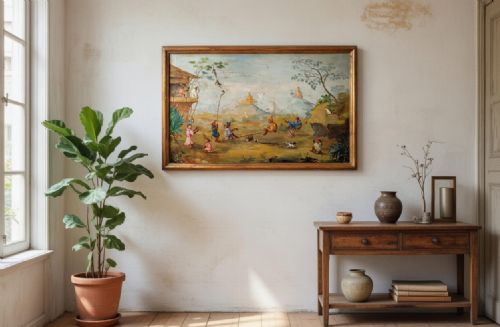
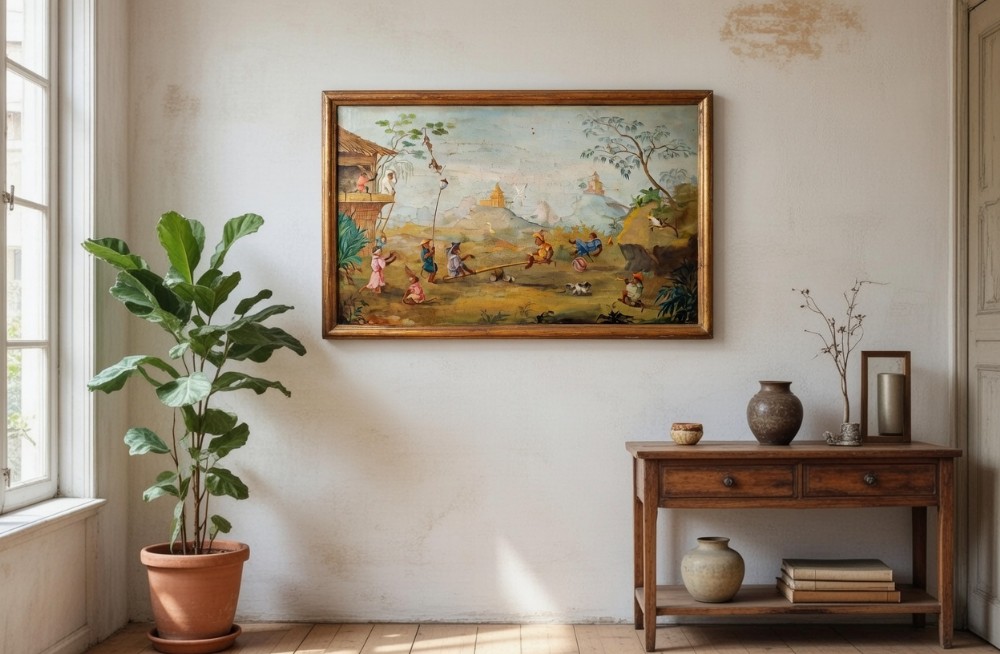
Such a piece serves as a striking focal point when hung against a moody, saturated wall colour, paired with minimalist contemporary furnishings to create a balanced juxtaposition of eras.

Preservation requires maintaining stable relative humidity and temperature, avoiding direct sunlight to prevent pigment fading, and periodically dusting the canvas with a soft, dry, non-abrasive brush.
items
Add keywords to the filter
Price
£100
£250000
Era
Period
Style
Material
Origin
Stock Location
Recently Added
Online Payments
Categories