11,099  PAGES BROWSED TODAY PAGES TODAY 51 ANTIQUES UPLOADED TODAYNEW ARRIVALS
51 ITEMS ADDED TODAY
Sort Order
Items Per Page
Browse Categories
Sort order
Items per page
ID #SA1187621
SOLD
Email
Save
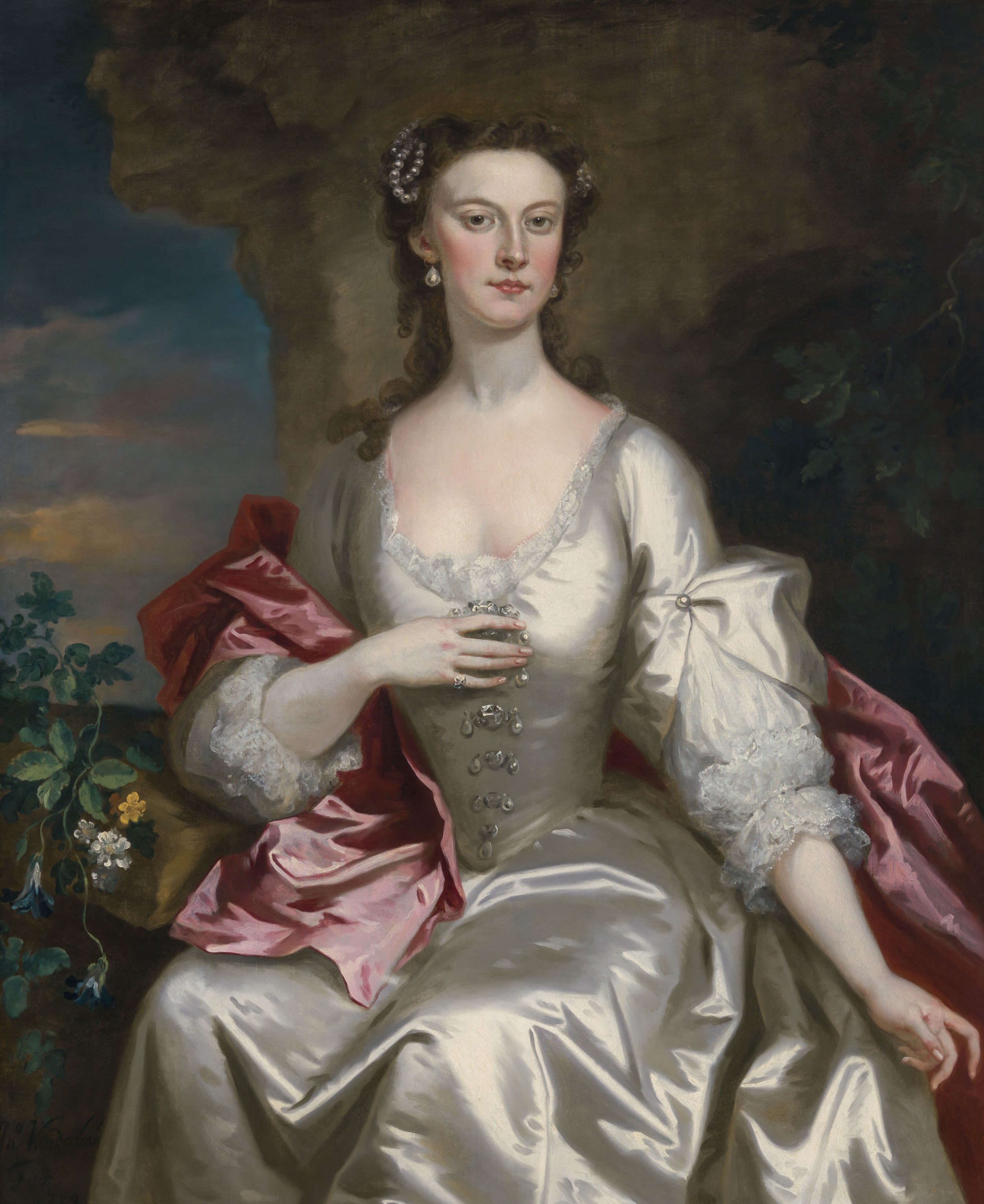
Portrait of a Lady in a White Silk Dress & Red Drapery, Signed and Dated 1739; John Vanderbank (1694–1739), Oil on Canvas Painting
Titan Fine Art
sold SA1187621
Sorry, but this item has been sold.
Titan Fine Art

Titan Fine Art

Sellingantiques Verified Since Jul 2016
View Dealers Stock Page
  • About Us
    Specialist in 17th & 18thc portraits. Highly curated selection, museum-level research & pro conservation. Exceptional art, expertly vetted.
Id #SA1187621
PDF SHARE
SAVE

Portrait of a Lady in a White Silk Dress & Red Drapery, Signed and Dated 1739; John Vanderbank (1694–1739), Oil on Canvas Painting

18th century
Description

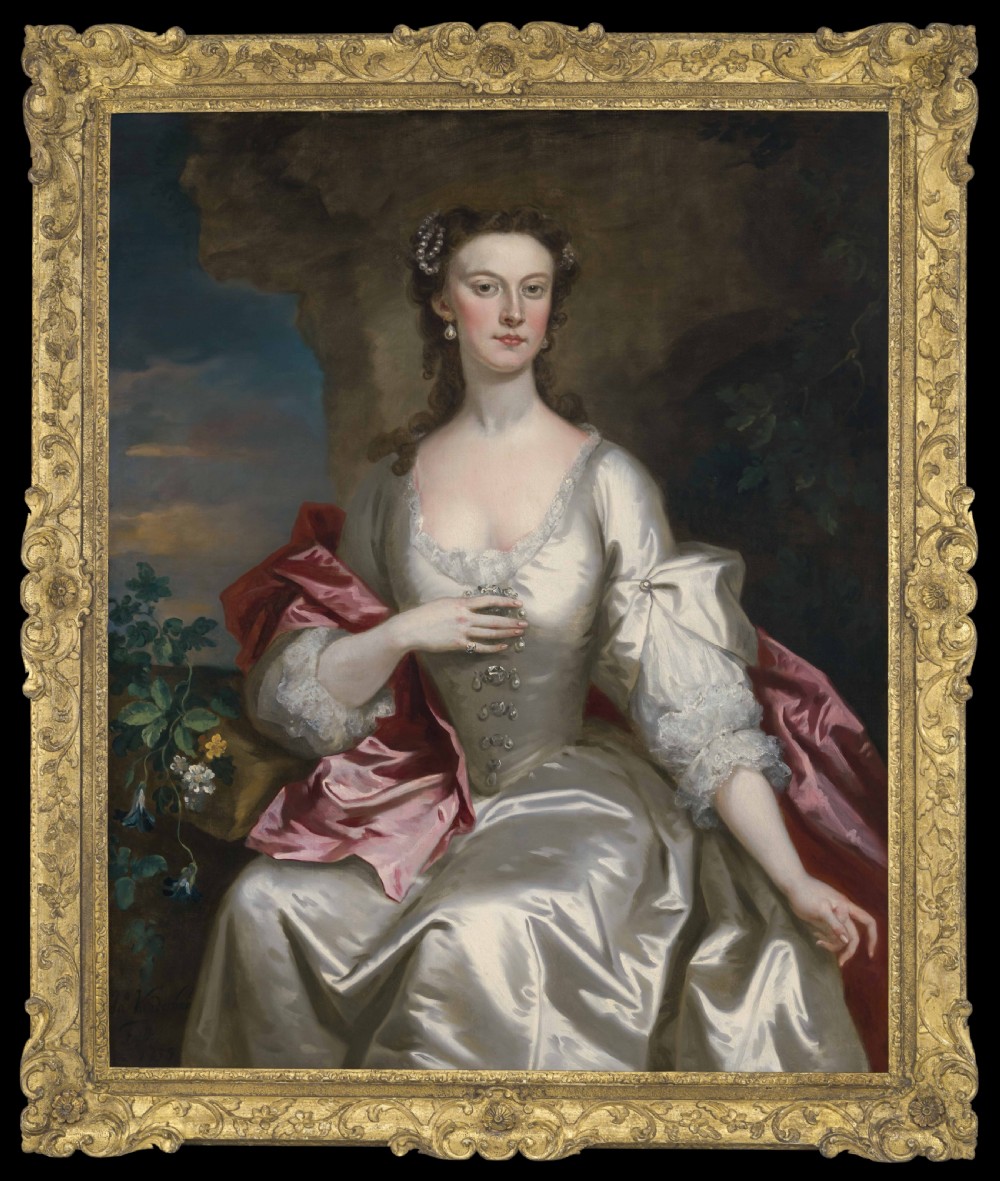
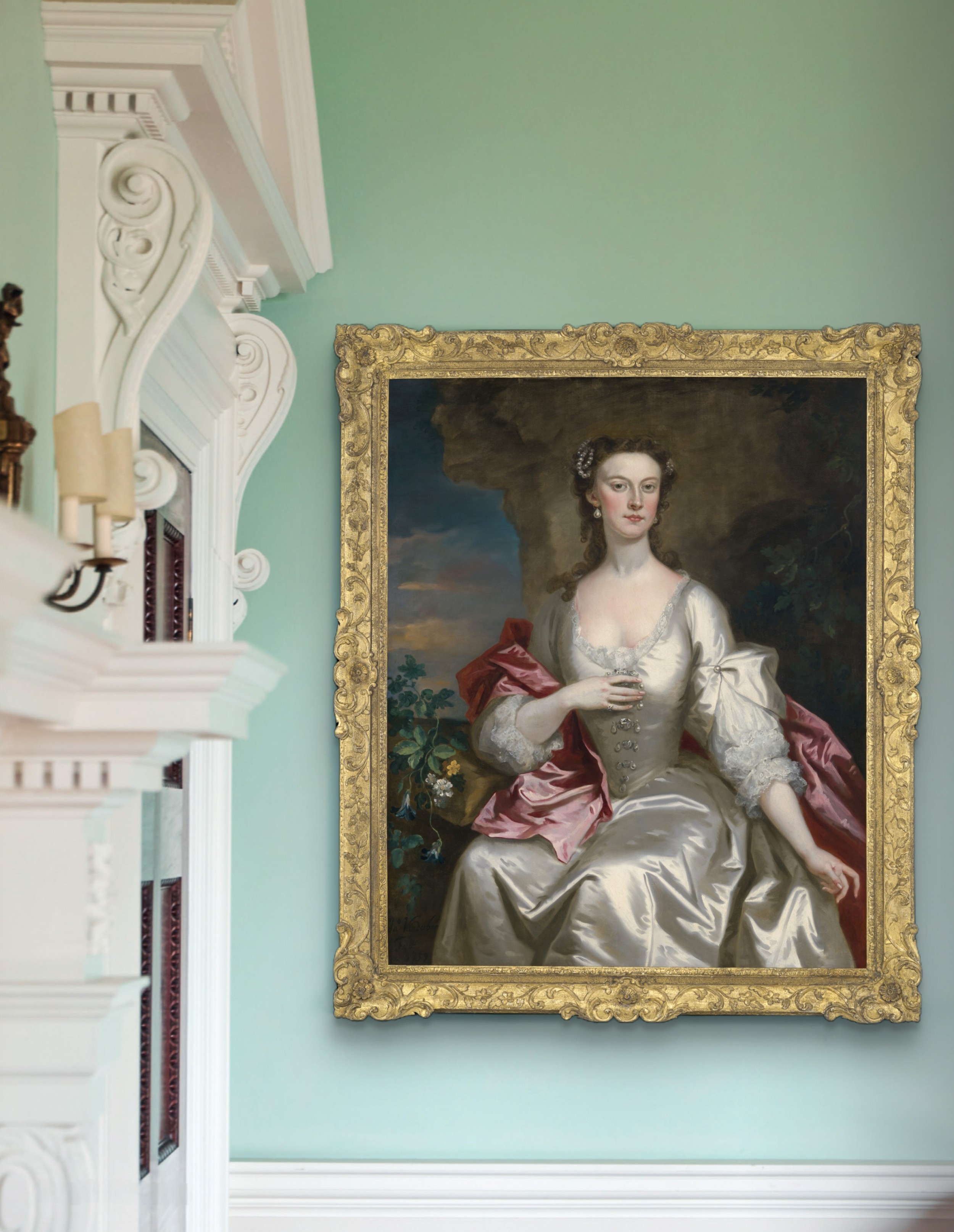
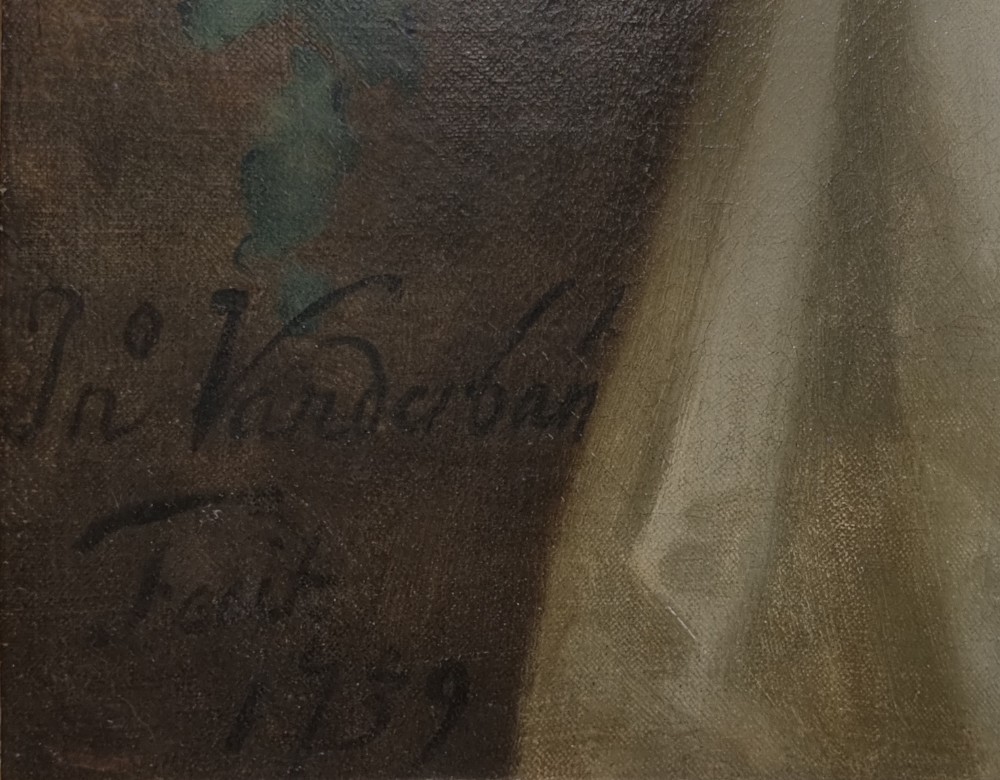
Signed and dated 1739—the final year of John Vanderbank’s life—this is a rare, highly desirable late portrait by one of the leading native painters of early Georgian London. Ambitious in scale and refined in execution, it retains notably fine condition and is housed in a fine carved and gilded eighteenth-century frame, appropriate to an elite commission. The picture offers precisely what discerning collectors seek in early Georgian portraiture: a commanding, life-present sitter, virtuoso handling of satin and jewels, and a quiet but eloquent statement of rank, lineage, and cultivated identity.
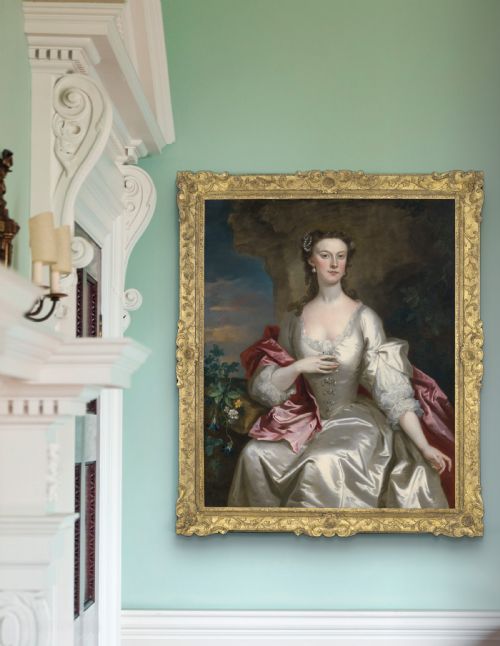
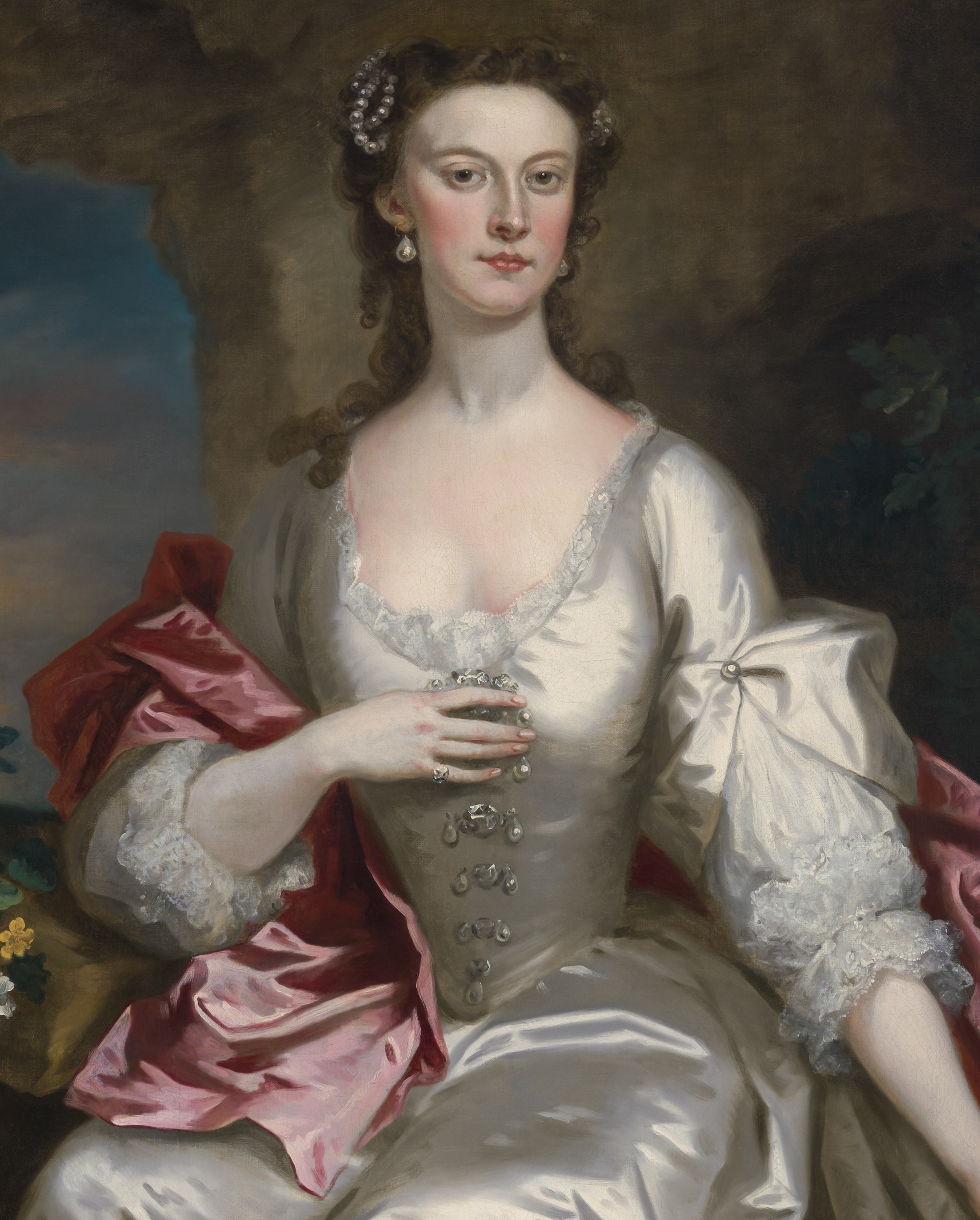
The sitter is shown three-quarter length, seated before a softly idealised landscape. Vanderbank’s mature portrait language is strongly evident in the poised balance of grandeur and intimacy, the confident articulation of the hands, and the controlled tonal contrasts that create vivid presence. The face is modelled with restraint and warmth; the direct gaze and self-possessed expression convey assured social standing without theatricality. The landscape is not literal topography but an estate-coded setting—an emblem of leisure, property, and the values of landed life.
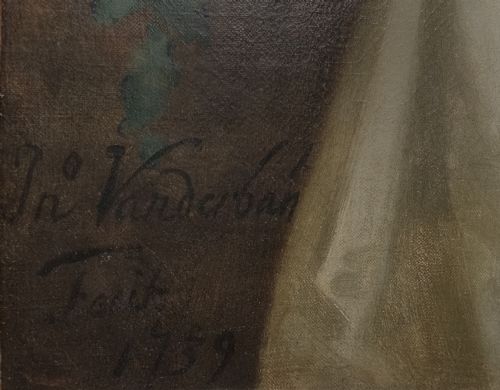
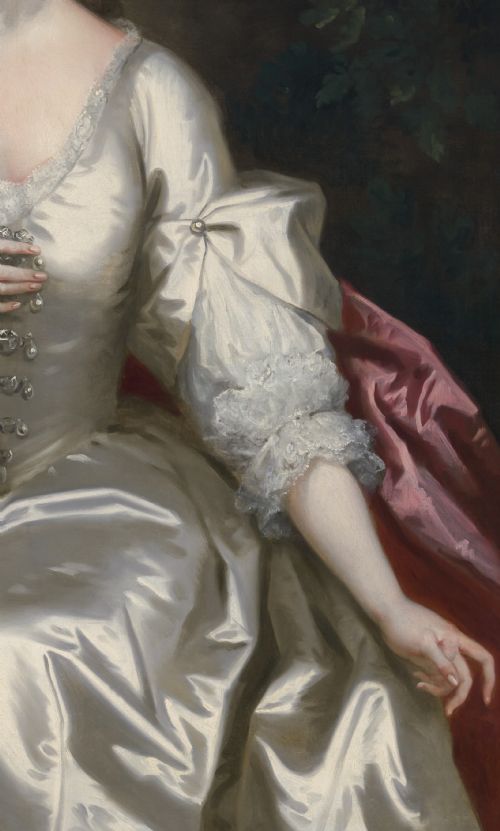
Her costume aligns precisely with the late 1730s and supports the inscribed date of 1739. A white silk gown—luxurious and difficult to keep pristine—was a socially legible signal of wealth, leisure, and refined household command. The low-cut bodice edged with lace and the lace engageantes at the sleeves reflect elite London fashion of the period. Across her lap and shoulder falls a generous sweep of red silk drapery, painted with bravura understanding of satin’s reflective surface—one of Vanderbank’s particular strengths. The red functions not only decoratively but compositionally, warming the palette, flattering the sitter’s complexion, and adding movement and richness without overt allegory.
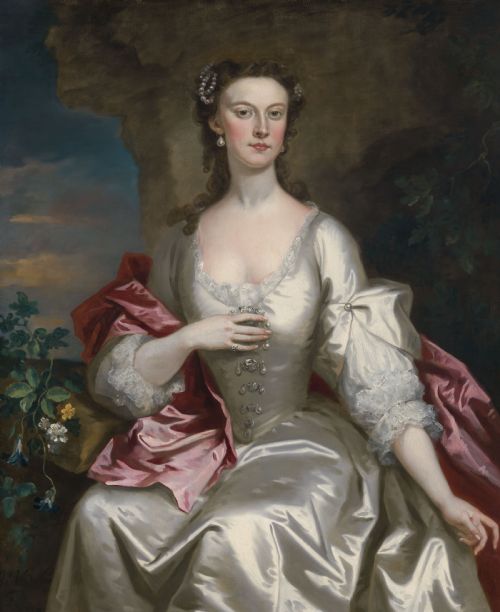
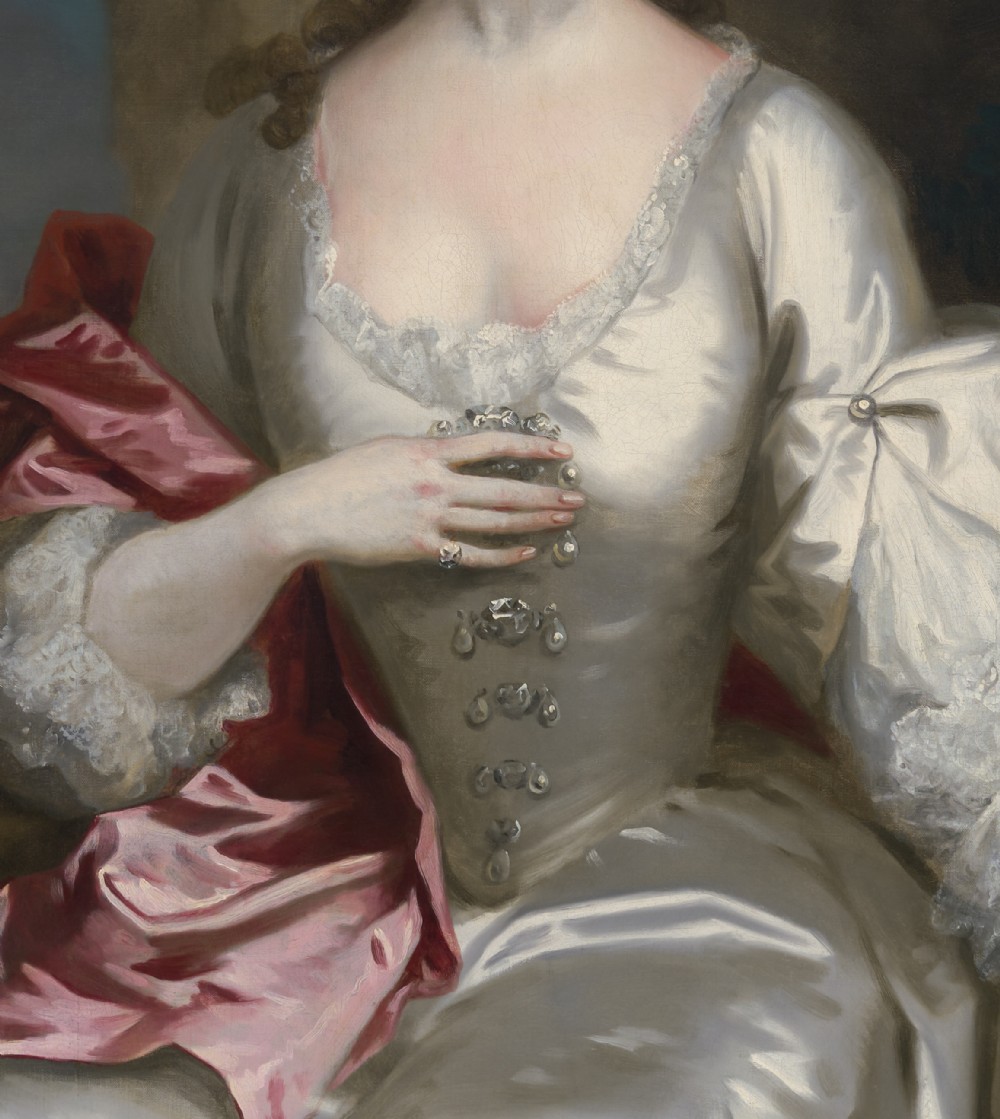
The bodice is fastened with a striking sequence of diamond-set clasps or jewelled fastenings, their faceted highlights placed with deliberate clarity to register as genuine luxury. A key feature is the sitter’s right hand, raised not to hold an object but to touch the diamonds—an intentional gesture that draws attention to the hand itself and, conspicuously, to a ring worn on the little finger. In eighteenth-century British portraiture, a pinky ring often reads less as a straightforward marital announcement than as a marker of rank, lineage, and cultivated elite identity. Here, the gesture makes the ring a primary point of meaning: an emblem of inherited distinction and social position.
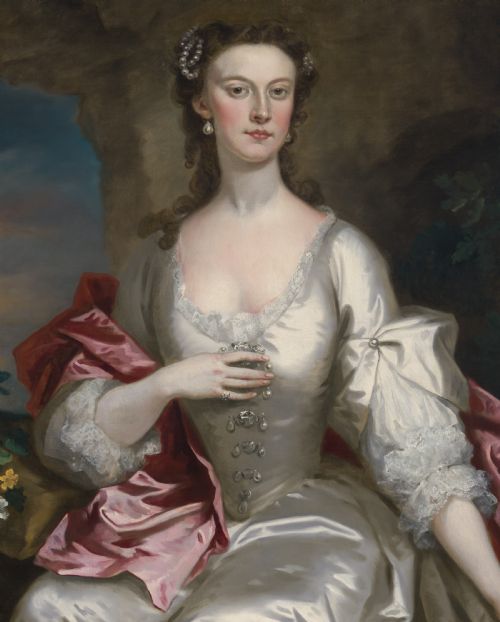
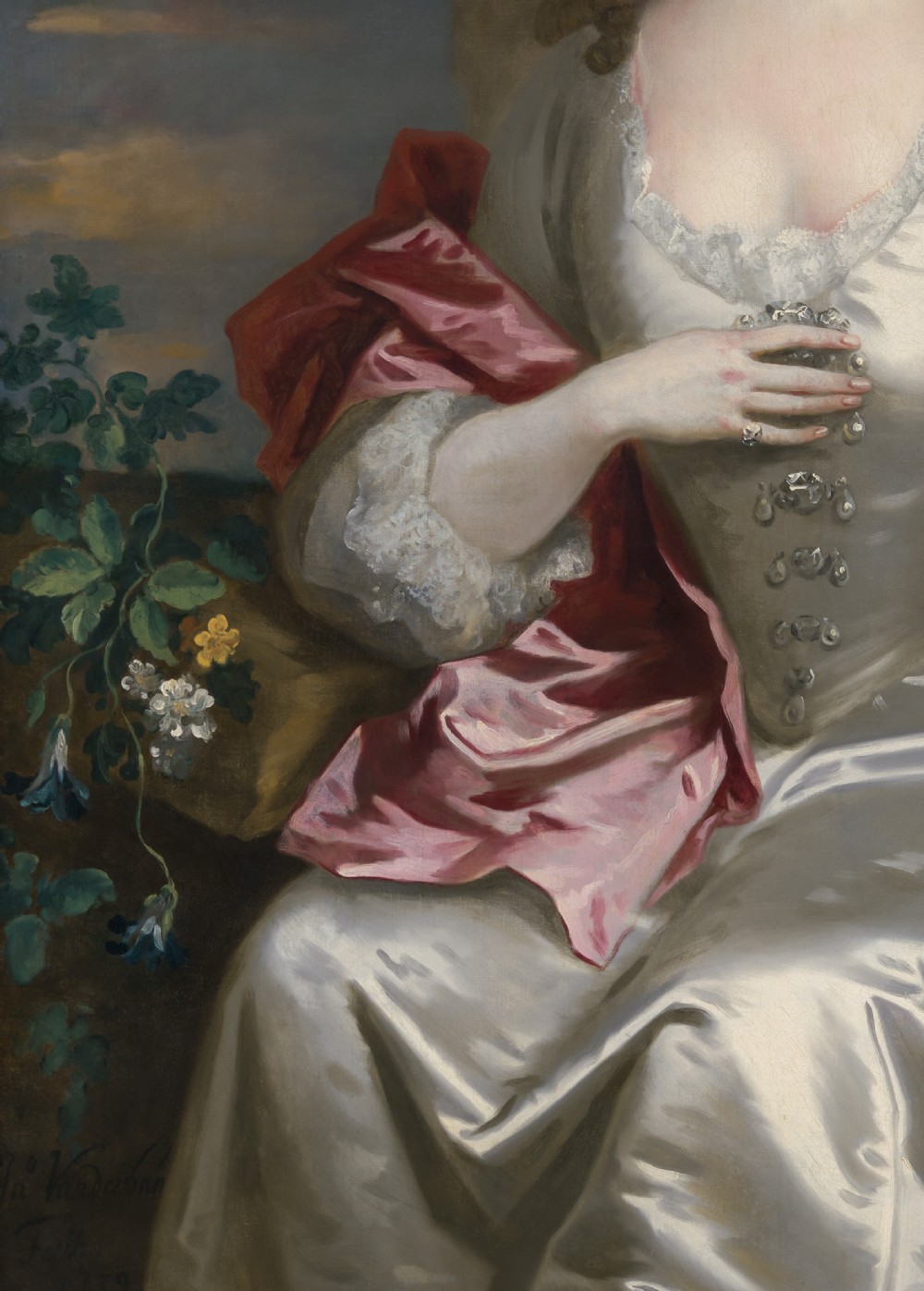
Along the left margin, a climbing vine with leaves and small blossoms—blue bell-shaped flowers, small white blooms, and a single yellow accent—functions as environmental symbolism rather than a personal token. Because the sitter does not hold or touch these flowers, they read as part of an estate-garden vocabulary: cultivated nature, stability, and continuity, balancing the glitter of diamonds and the sheen of satin with softened greenery. The portrait therefore most strongly suggests a sitter drawn from the landed gentry or minor aristocracy, painted in London at the height of early Georgian fashion: secure rank and dynastic standing, rather than office or achievement.
The portrait’s later history is unusually well anchored by physical evidence on the reverse. In the nineteenth century it was in the collection of the Bond Street dealer Eugene Benjamin (168 New Bond Street; earlier 169), active in works of art and high-quality decorative objects. After his death, Christie, Manson & Woods dispersed his entire stock in a substantial multi-day auction in November 1898. The stretcher preserves the Christie’s inventory stencil “476 W” and a handwritten chalk date “Nov. 23–98,” consistent with that sale and suggesting the work has remained on its original stretcher since that time—documentary interest beyond the painted surface.

Full description at: www.titanfineart.com

Physical Dimensions
Height
144cm (56.69")
Width
121cm (47.64")
Depth
7cm (2.76")
Declaration

Titan Fine Art has dated this piece to the 18th Century.

Reference Numbers
Sellingantiques Reference
SA1187621
Dealers Notes

Much more info about this item at: www.titanfineart.com

In a market saturated with available paintings, Titan Fine Art offers a distinct advantage: we sift through thousands of works to provide a specially curated selection. Each piece is meticulously chosen based on technical merit, provenance, and decorative appeal, ensuring our clients view only the finest examples of British and European art.

With over 20 years of expertise and 1,000+ works placed with collectors and institutions, we are one of the most prolific specialists in 17th and 18th-century portraiture. We combine a scholarly approach with museum-level rigor to replace the uncertainty of the open market with absolute confidence.

Why Buy From Titan Fine Art?

• Expertly Curated Selection

We act as your expert eye, selecting only high-quality works that offer genuine historical and artistic value.

• Museum-Level Research

Each portrait is supported by extensive academic research, often exceeding 40 hours, to establish attribution, sitter identity, and historical context.

• Professional Conservation

All paintings are carefully cleaned and stabilised by professional conservators, and are presented ready to hang.

• Transparent Pricing

No buyer’s premium or hidden fees—unlike auction houses, where additional costs can add 25–35%.

• Export Pricing Advantage

Reduced pricing is available for works exported outside the UK.

• Specialist Global Shipping

We manage the entire process, including custom crating, export documentation, and fully tracked delivery worldwide.

• Buy with Confidence

A 7-day return policy and the option to pay in GBP, USD, or EUR for convenience and transparency.

• Original Period Frames

Many works retain their original carved and gilded frames, which are works of art in their own right and enhance both historical authenticity and decorative impact.

• Personal Advisory Service

We work directly with collectors and interior designers, offering guidance on selection, scale, and placement—including bespoke room mock-ups on request.

Subscribe to our monthly 'new item alert' to be the first to hear about new works

Description
Signed and dated 1739—the final year of John Vanderbank’s life—this is a rare, highly desirable late portrait by one of the leading native painters of early Georgian London.
Ambitious in scale and refined in execution, it retains notably fine condition and is housed in a fine carved and gilded eighteenth-century frame, appropriate to an elite commission.
Titan Fine Art

The picture offers precisely what discerning collectors seek in early Georgian portraiture: a commanding, life-present sitter, virtuoso handling of satin and jewels, and a quiet but eloquent statement of rank, lineage, and cultivated identity.

fig 1. Portrait of a Lady in a White Silk Dress & Red Drapery, Signed and Dated 1739; John Vanderbank (1694–1739), Oil on canvas painting
fig 1. Portrait of a Lady in a White Silk Dress & Red Drapery, Signed and Dated 1739; John Vanderbank (1694–1739), Oil on Canvas Painting

The sitter is shown three-quarter length, seated before a softly idealised landscape. Vanderbank’s mature portrait language is strongly evident in the poised balance of grandeur and intimacy, the confident articulation of the hands, and the controlled tonal contrasts that create vivid presence. The face is modelled with restraint and warmth; the direct gaze and self-possessed expression convey assured social standing without theatricality. The landscape is not literal topography but an estate-coded setting—an emblem of leisure, property, and the values of landed life.

fig 2. Portrait of a Lady in a White Silk Dress & Red Drapery, Signed and Dated 1739; John Vanderbank (1694–1739), Oil on canvas painting
fig 2. Portrait of a Lady in a White Silk Dress & Red Drapery, Signed and Dated 1739; John Vanderbank (1694–1739), Oil on Canvas Painting

Her costume aligns precisely with the late 1730s and supports the inscribed date of 1739. A white silk gown—luxurious and difficult to keep pristine—was a socially legible signal of wealth, leisure, and refined household command. The low-cut bodice edged with lace and the lace engageantes at the sleeves reflect elite London fashion of the period. Across her lap and shoulder falls a generous sweep of red silk drapery, painted with bravura understanding of satin’s reflective surface—one of Vanderbank’s particular strengths. The red functions not only decoratively but compositionally, warming the palette, flattering the sitter’s complexion, and adding movement and richness without overt allegory.

fig 3. Portrait of a Lady in a White Silk Dress & Red Drapery, Signed and Dated 1739; John Vanderbank (1694–1739), Oil on canvas painting
fig 3. Portrait of a Lady in a White Silk Dress & Red Drapery, Signed and Dated 1739; John Vanderbank (1694–1739), Oil on Canvas Painting

The bodice is fastened with a striking sequence of diamond-set clasps or jewelled fastenings, their faceted highlights placed with deliberate clarity to register as genuine luxury. A key feature is the sitter’s right hand, raised not to hold an object but to touch the diamonds—an intentional gesture that draws attention to the hand itself and, conspicuously, to a ring worn on the little finger. In eighteenth-century British portraiture, a pinky ring often reads less as a straightforward marital announcement than as a marker of rank, lineage, and cultivated elite identity. Here, the gesture makes the ring a primary point of meaning: an emblem of inherited distinction and social position.

fig 4. Portrait of a Lady in a White Silk Dress & Red Drapery, Signed and Dated 1739; John Vanderbank (1694–1739), Oil on canvas painting
fig 4. Portrait of a Lady in a White Silk Dress & Red Drapery, Signed and Dated 1739; John Vanderbank (1694–1739), Oil on Canvas Painting

Along the left margin, a climbing vine with leaves and small blossoms—blue bell-shaped flowers, small white blooms, and a single yellow accent—functions as environmental symbolism rather than a personal token. Because the sitter does not hold or touch these flowers, they read as part of an estate-garden vocabulary: cultivated nature, stability, and continuity, balancing the glitter of diamonds and the sheen of satin with softened greenery. The portrait therefore most strongly suggests a sitter drawn from the landed gentry or minor aristocracy, painted in London at the height of early Georgian fashion: secure rank and dynastic standing, rather than office or achievement.

fig 5. Portrait of a Lady in a White Silk Dress & Red Drapery, Signed and Dated 1739; John Vanderbank (1694–1739), Oil on canvas painting
fig 5. Portrait of a Lady in a White Silk Dress & Red Drapery, Signed and Dated 1739; John Vanderbank (1694–1739), Oil on Canvas Painting

The portrait’s later history is unusually well anchored by physical evidence on the reverse. In the nineteenth century it was in the collection of the Bond Street dealer Eugene Benjamin (168 New Bond Street; earlier 169), active in works of art and high-quality decorative objects. After his death, Christie, Manson & Woods dispersed his entire stock in a substantial multi-day auction in November 1898. The stretcher preserves the Christie’s inventory stencil “476 W” and a handwritten chalk date “Nov. 23–98,” consistent with that sale and suggesting the work has remained on its original stretcher since that time—documentary interest beyond the painted surface.

Full description at: www.titanfineart.com

Height
144cm (56.69")
Width
121cm (47.64")
Depth
7cm (2.76")
Date of Manufacture

Titan Fine Art has dated this piece to the 18th Century.

Reference Numbers
Sellingantiques Ref
SA1187621
Titan Fine Art
Titan Fine Art
Sellingantiques verified Since Jul 2016

Specialist in 17th & 18thc portraits. Highly curated selection, museum-level research & pro conservation. Exceptional art, expertly vetted.

Dealer Profile

You can view the stock and full dealer information on the Titan Fine Art Profile Page
PDF SHARE
SAVE
Portrait of a Lady in a White Silk Dress & Red Drapery, Signed and Dated 1739; John Vanderbank (1694–1739), Oil on canvas painting
1 / 9
Archive I Portrait of a Lady in a White Silk Dress & Red Drapery, Signed and Dated 1739; John Vanderbank (1694–1739), Oil on canvas painting

Portrait of a Lady in a White Silk Dress & Red Drapery, Signed and Dated 1739; John Vanderbank (1694–1739), Oil on Canvas Painting
Archive II Portrait of a Lady in a White Silk Dress & Red Drapery, Signed and Dated 1739; John Vanderbank (1694–1739), Oil on canvas painting View II
Archive III Portrait of a Lady in a White Silk Dress & Red Drapery, Signed and Dated 1739; John Vanderbank (1694–1739), Oil on canvas painting View III
Archive IV Portrait of a Lady in a White Silk Dress & Red Drapery, Signed and Dated 1739; John Vanderbank (1694–1739), Oil on canvas painting View IV
Archive V Portrait of a Lady in a White Silk Dress & Red Drapery, Signed and Dated 1739; John Vanderbank (1694–1739), Oil on canvas painting View V
Archive VI Portrait of a Lady in a White Silk Dress & Red Drapery, Signed and Dated 1739; John Vanderbank (1694–1739), Oil on canvas painting View VI
Archive VII Portrait of a Lady in a White Silk Dress & Red Drapery, Signed and Dated 1739; John Vanderbank (1694–1739), Oil on canvas painting View VII
Archive VIII Portrait of a Lady in a White Silk Dress & Red Drapery, Signed and Dated 1739; John Vanderbank (1694–1739), Oil on canvas painting View VIII
Archive IX Portrait of a Lady in a White Silk Dress & Red Drapery, Signed and Dated 1739; John Vanderbank (1694–1739), Oil on canvas painting View IX
Enlarged Archival View
Telephone 07875 412 111
Location
London
United Kingdom
Dealer Profile Page sellingantiques.co.uk/titan
Verified Since Jul 2016
Items For Sale 16
Items Sold 401
Titan Fine Art
Titan Fine Art
Verified Since Jul 2016
View Dealer Info
Location: London, United Kingdom
Verified
Jul 2016
For Sale
16
Sold
401
Portrait of a Lady in a White Silk Dress & Red Drapery, Signed and Dated 1739; John Vanderbank (1694–1739), Oil on canvas painting
Ref: SA1187621
Portrait of a Lady in a White Silk Dress & Red Drapery, Signed and Dated 1739; John Vanderbank (1694–1739), Oil on canvas painting
Detail View 1
Detail View 2
Detail View 3
Detail View 4
Detail View 5
Detail View 6
Detail View 7
Detail View 8
Archival Detail
Every single antique dealer on our platform is individually approved by our internal team. We verify their professional trade history, ethical standards, and photographic quality to ensure a secure, high-standard buying environment. Upon joining, every dealer agrees to a strict 9-point code of conduct. While issues can occasionally arise, our dealers typically resolve them swiftly and directly with the buyer. In fact, since our founding in 2002, Sellingantiques has only had to step in to help resolve an issue on roughly five occasions—a true testament to the quality of our dealers and their dedication to your happiness.
Our dealers are highly experienced in packing and shipping fragile, high-value antiques. Because you are in direct contact with the dealer, you will be able to easily go through all available shipping and insurance options together to ensure your item arrives safely.
Antiques are the ultimate green purchase. By choosing historical pieces over newly manufactured goods, you completely eliminate the carbon footprint of modern mass production while preserving exceptional, timeless craftsmanship.
items
Add keywords to the filter
Price
£100
£250000
Era
Movements
Material
Origin
Stock Location
Freshness
Online Payments
Categories