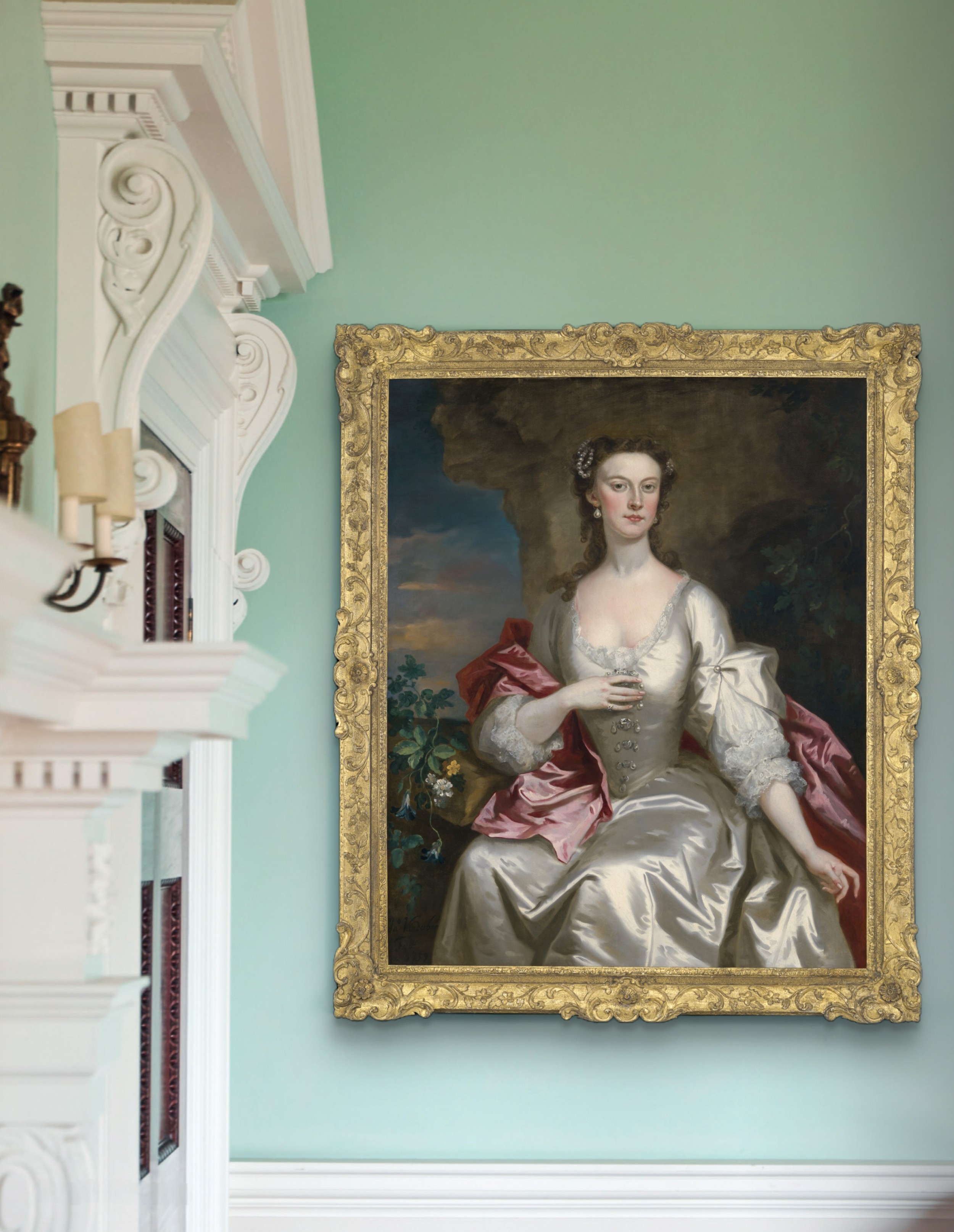
Titan Fine Art has dated this piece to the 18th Century.
The picture offers precisely what discerning collectors seek in early Georgian portraiture: a commanding, life-present sitter, virtuoso handling of satin and jewels, and a quiet but eloquent statement of rank, lineage, and cultivated identity.
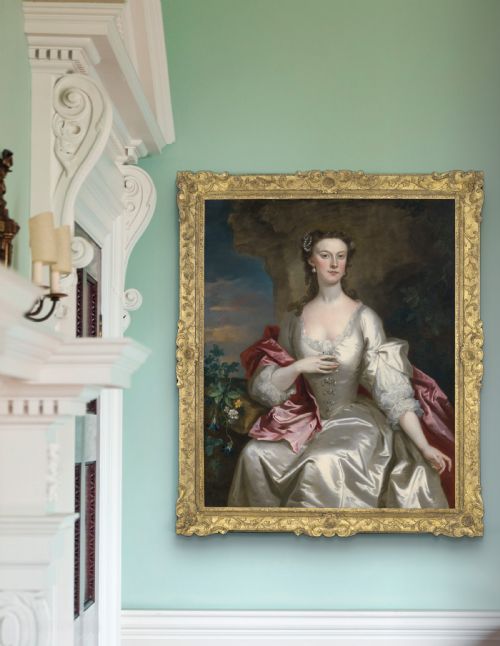
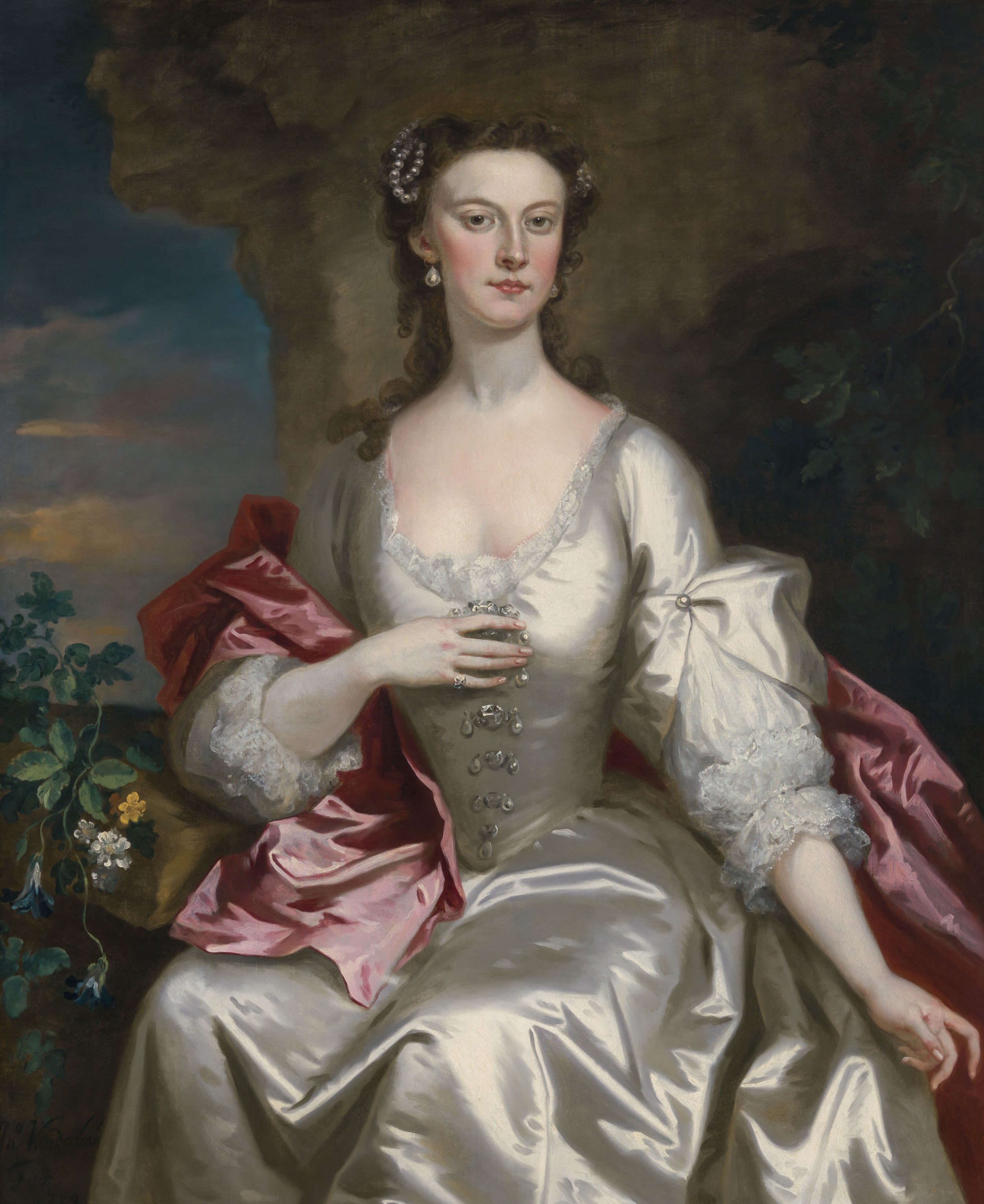
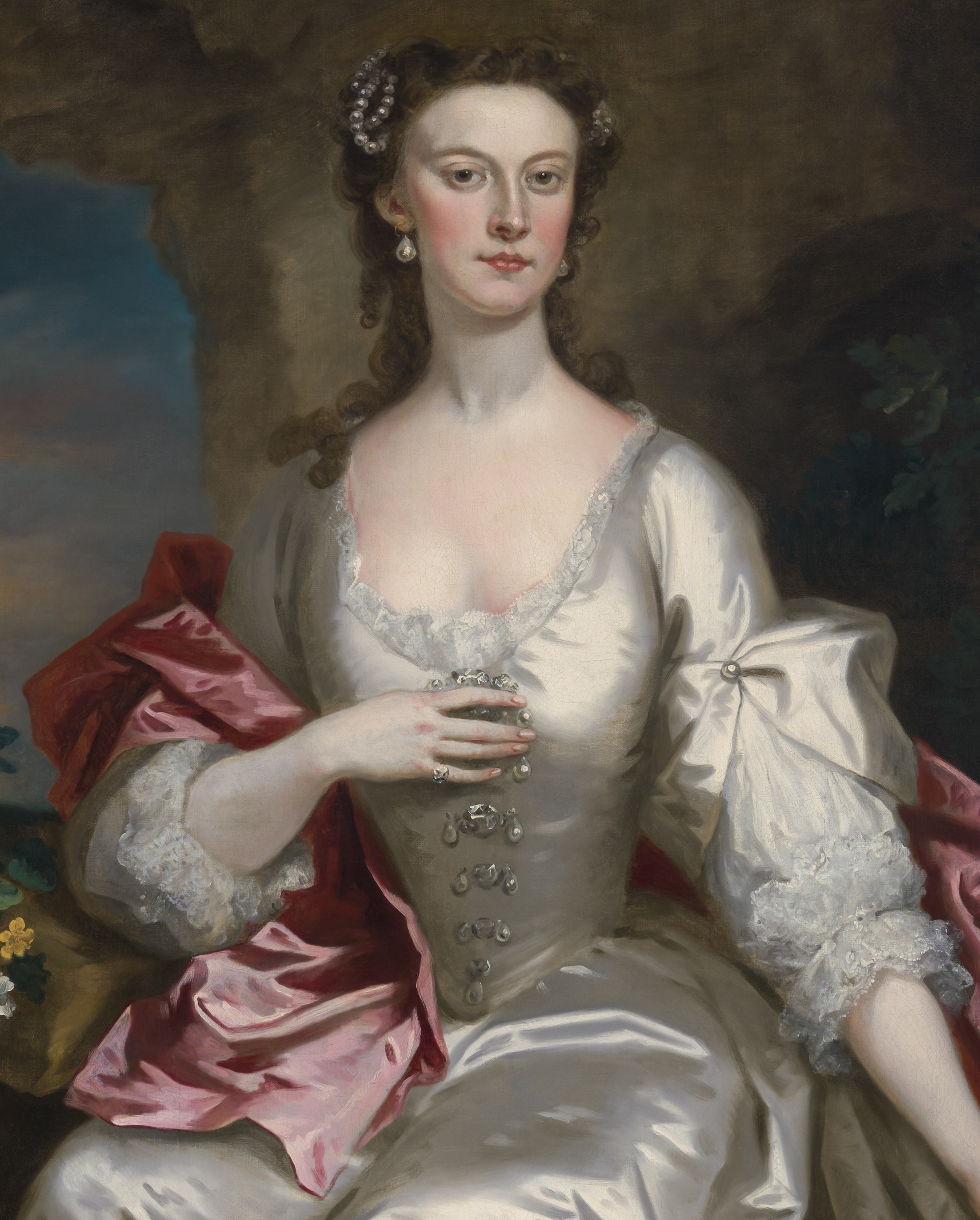
The sitter is shown three-quarter length, seated before a softly idealised landscape. Vanderbank’s mature portrait language is strongly evident in the poised balance of grandeur and intimacy, the confident articulation of the hands, and the controlled tonal contrasts that create vivid presence. The face is modelled with restraint and warmth; the direct gaze and self-possessed expression convey assured social standing without theatricality. The landscape is not literal topography but an estate-coded setting—an emblem of leisure, property, and the values of landed life.
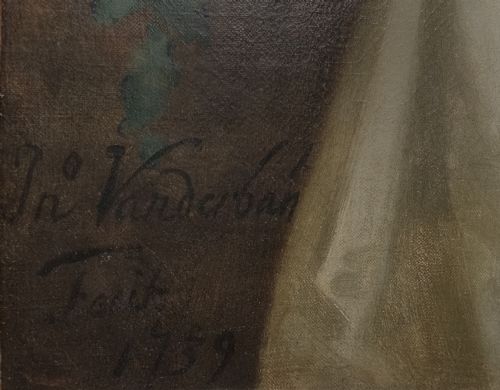
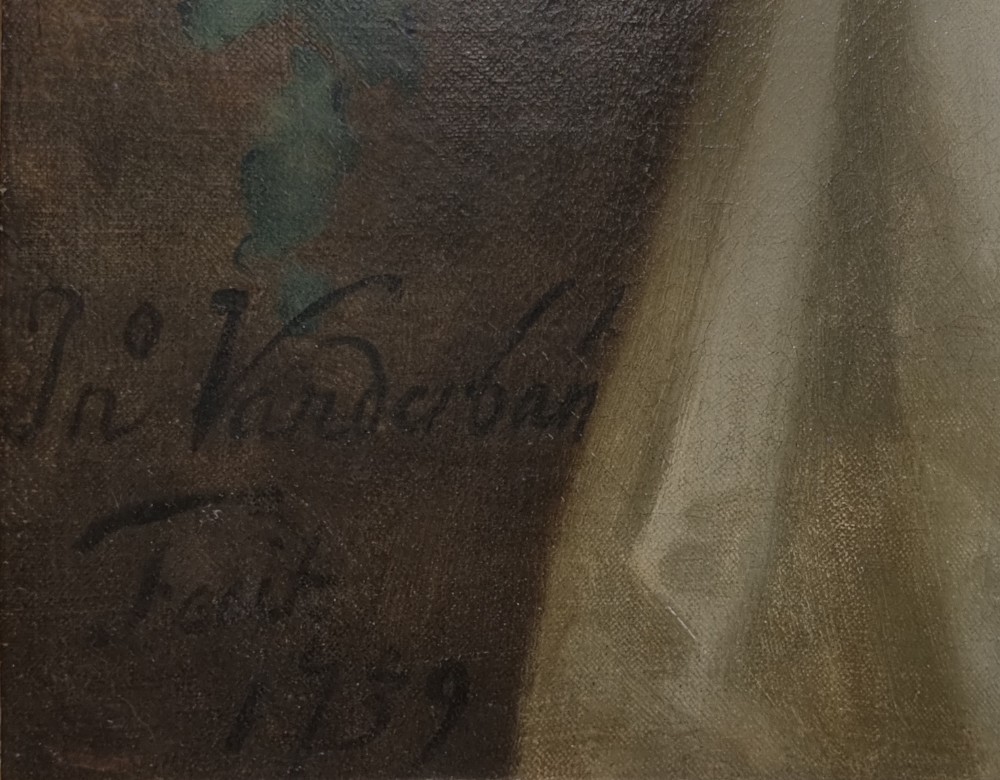
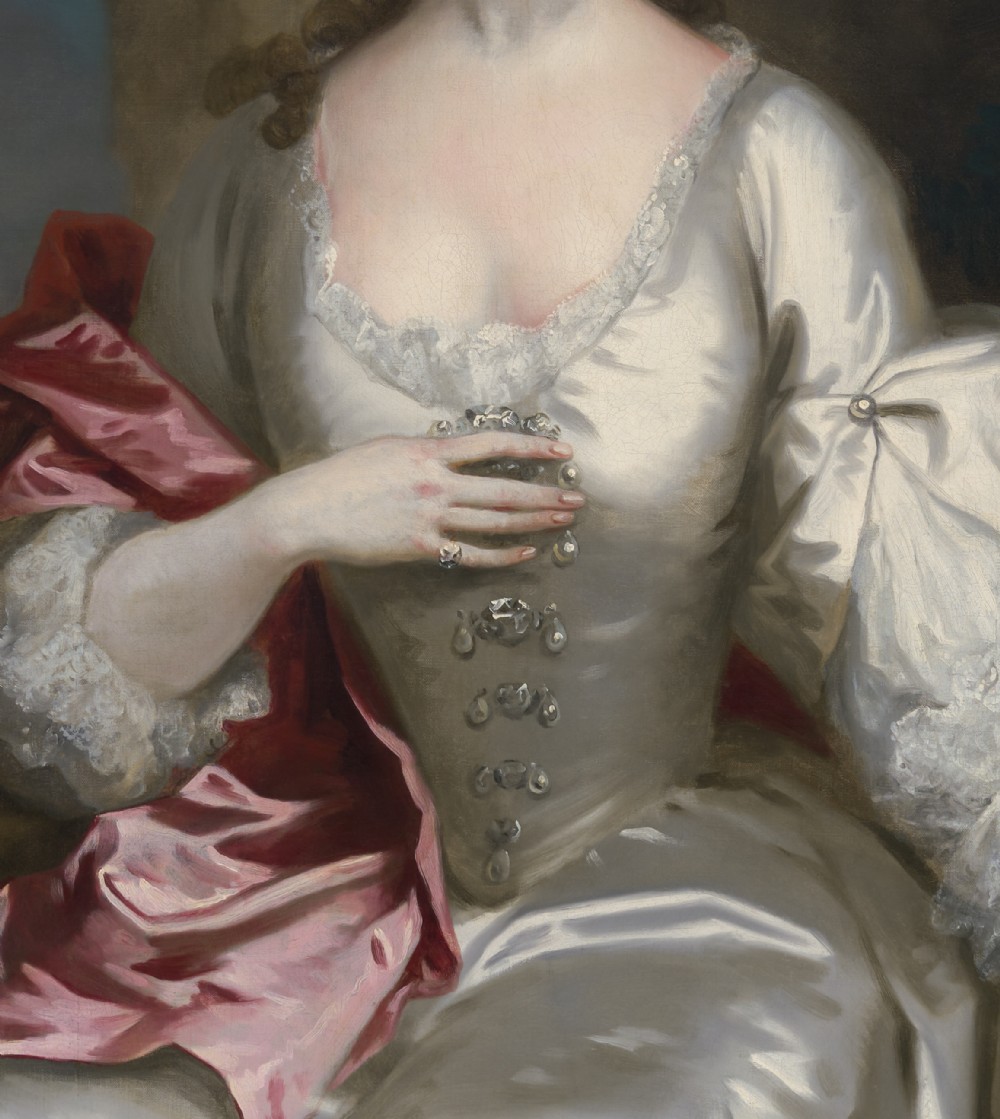
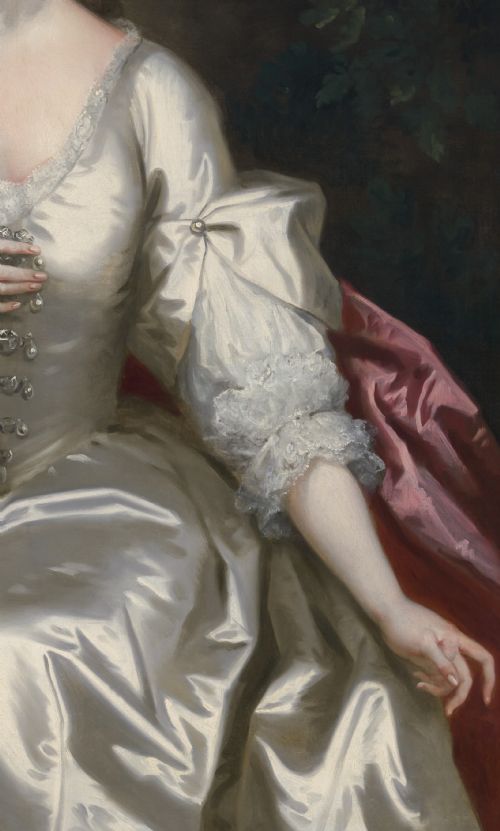
Her costume aligns precisely with the late 1730s and supports the inscribed date of 1739. A white silk gown—luxurious and difficult to keep pristine—was a socially legible signal of wealth, leisure, and refined household command. The low-cut bodice edged with lace and the lace engageantes at the sleeves reflect elite London fashion of the period. Across her lap and shoulder falls a generous sweep of red silk drapery, painted with bravura understanding of satin’s reflective surface—one of Vanderbank’s particular strengths. The red functions not only decoratively but compositionally, warming the palette, flattering the sitter’s complexion, and adding movement and richness without overt allegory.
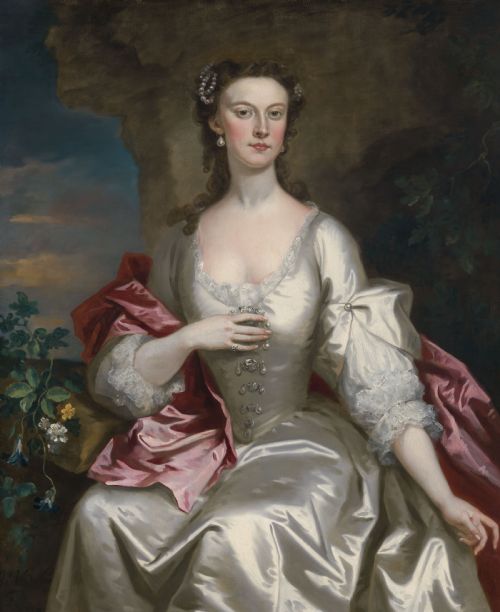
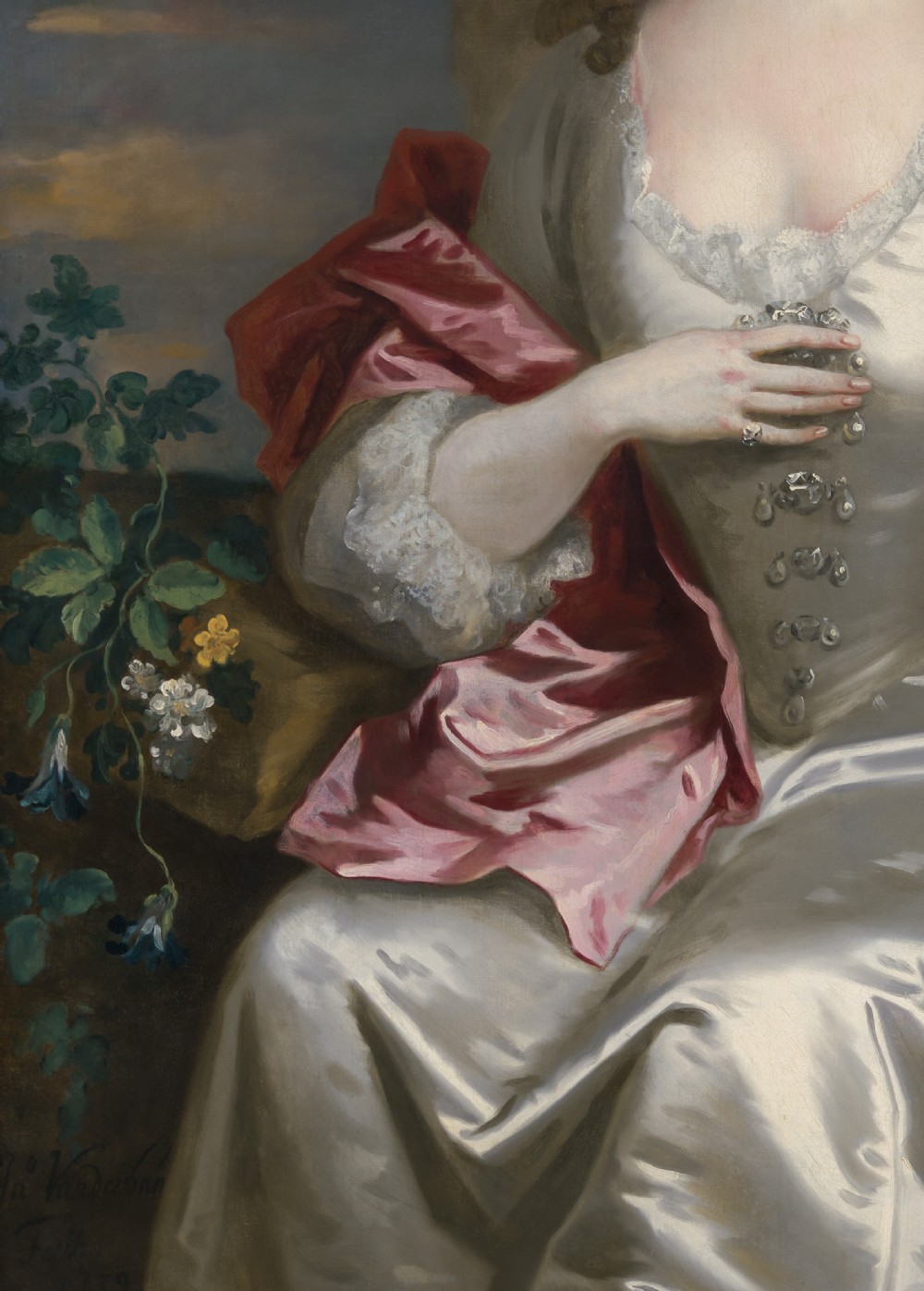
The bodice is fastened with a striking sequence of diamond-set clasps or jewelled fastenings, their faceted highlights placed with deliberate clarity to register as genuine luxury. A key feature is the sitter’s right hand, raised not to hold an object but to touch the diamonds—an intentional gesture that draws attention to the hand itself and, conspicuously, to a ring worn on the little finger. In eighteenth-century British portraiture, a pinky ring often reads less as a straightforward marital announcement than as a marker of rank, lineage, and cultivated elite identity. Here, the gesture makes the ring a primary point of meaning: an emblem of inherited distinction and social position.
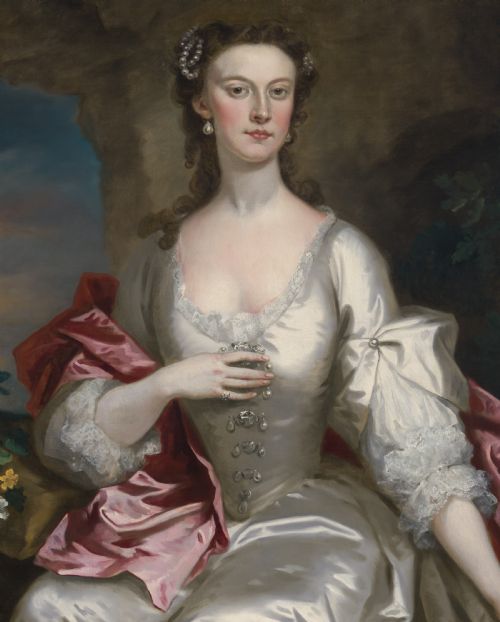
Along the left margin, a climbing vine with leaves and small blossoms—blue bell-shaped flowers, small white blooms, and a single yellow accent—functions as environmental symbolism rather than a personal token. Because the sitter does not hold or touch these flowers, they read as part of an estate-garden vocabulary: cultivated nature, stability, and continuity, balancing the glitter of diamonds and the sheen of satin with softened greenery. The portrait therefore most strongly suggests a sitter drawn from the landed gentry or minor aristocracy, painted in London at the height of early Georgian fashion: secure rank and dynastic standing, rather than office or achievement.
The portrait’s later history is unusually well anchored by physical evidence on the reverse. In the nineteenth century it was in the collection of the Bond Street dealer Eugene Benjamin (168 New Bond Street; earlier 169), active in works of art and high-quality decorative objects. After his death, Christie, Manson & Woods dispersed his entire stock in a substantial multi-day auction in November 1898. The stretcher preserves the Christie’s inventory stencil “476 W” and a handwritten chalk date “Nov. 23–98,” consistent with that sale and suggesting the work has remained on its original stretcher since that time—documentary interest beyond the painted surface.
Full description at: www.titanfineart.com
Titan Fine Art has dated this piece to the 18th Century.
Specialist in 17th & 18thc portraits. Highly curated selection, museum-level research & pro conservation. Exceptional art, expertly vetted.
You can view the stock and full dealer information on the Titan Fine Art Profile Page
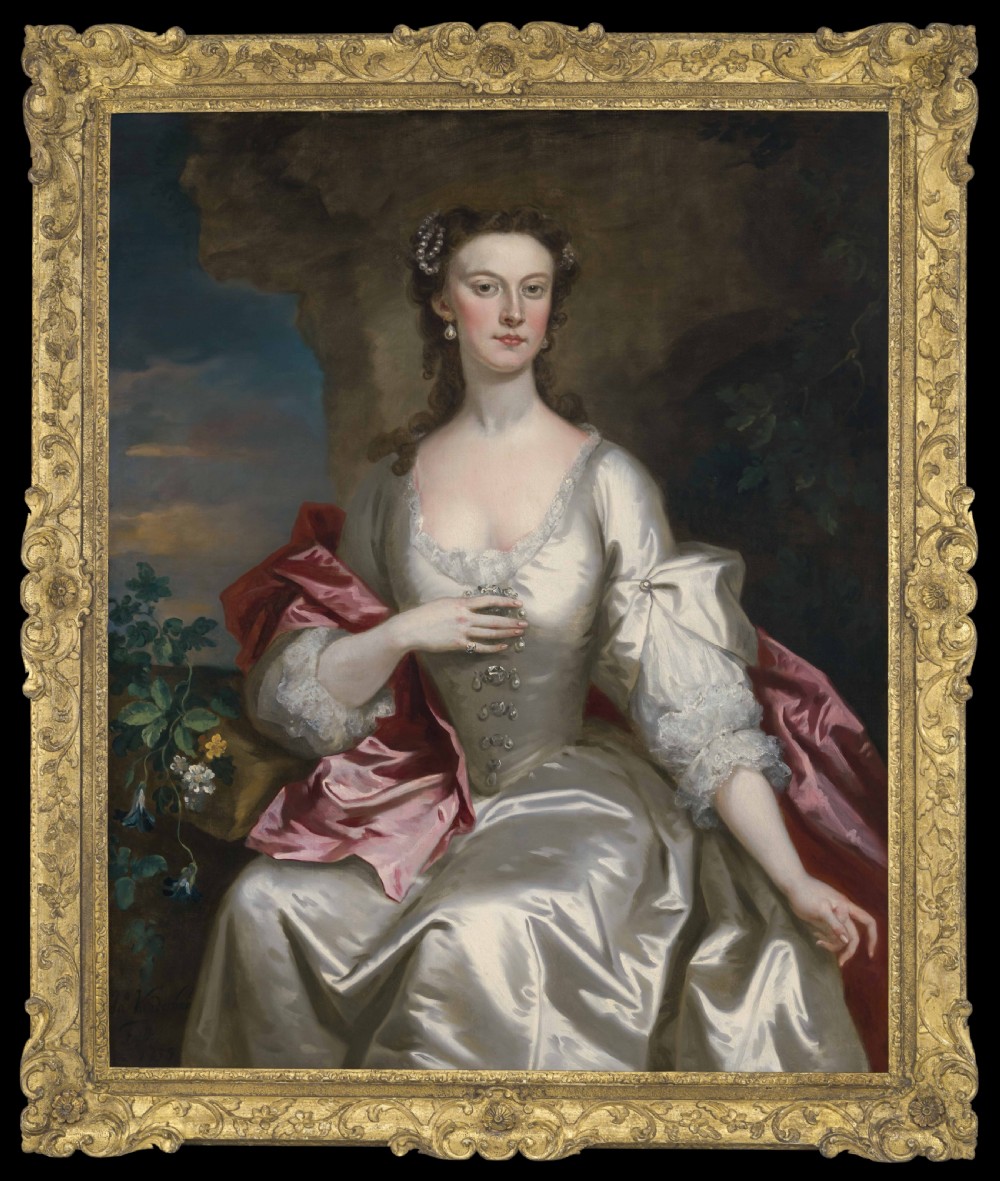

Portrait of a Lady in a White Silk Dress & Red Drapery, Signed and Dated 1739; John Vanderbank (1694–1739), Oil on Canvas Painting