33,213  PAGES BROWSED TODAY PAGES TODAY 88 ANTIQUES UPLOADED TODAYNEW ARRIVALS
88 ITEMS ADDED TODAY
Sort Order
Items Per Page
Browse Categories
Sort order
Items per page
ID #SA1187061
SOLD
Email
Save
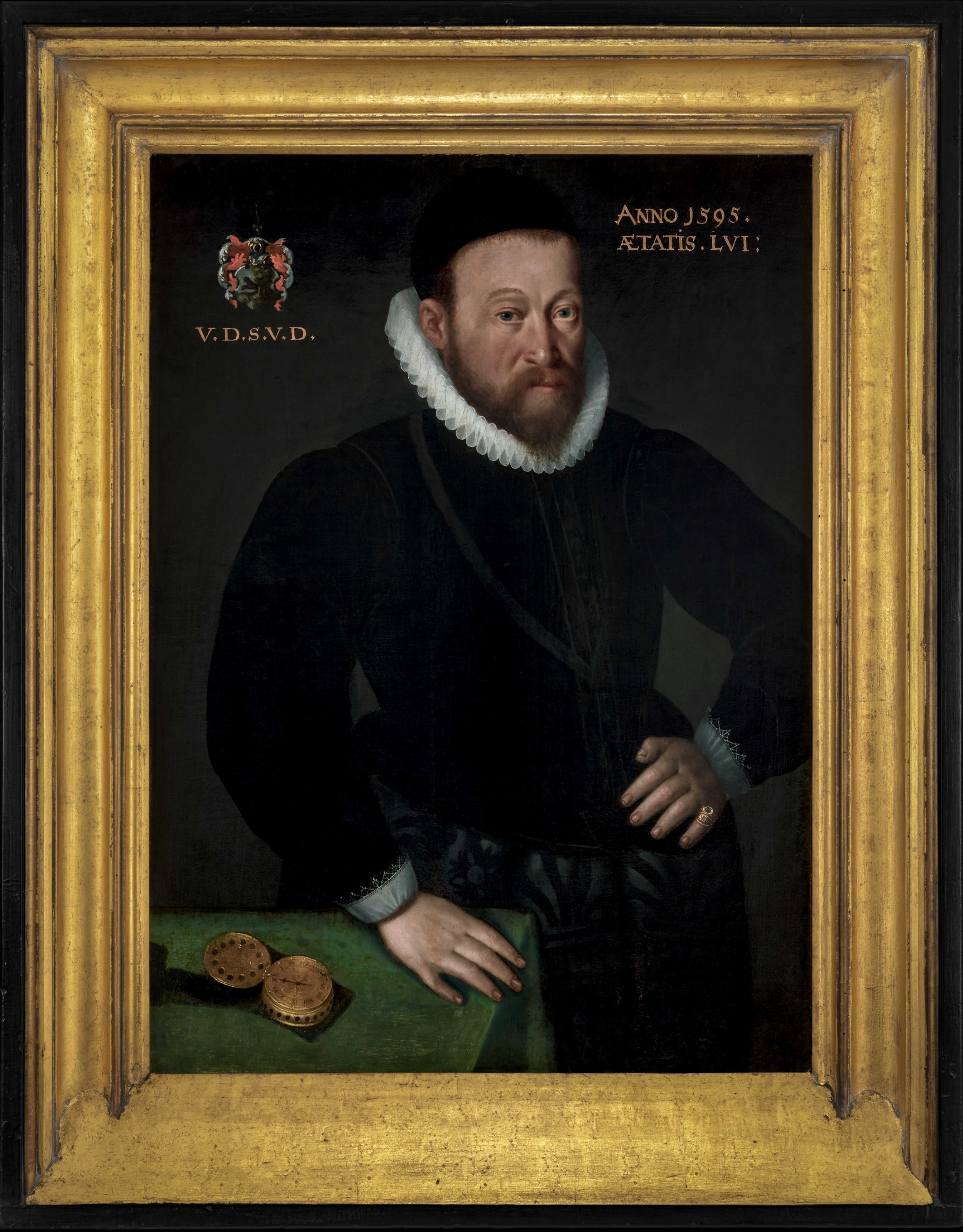
Civic Portrait of a Gentleman in a Doublet Beside a Table with a Clock, Dated 1595; Circle of Frans Pourbus the Elder (1545–1581) Oil on Panel Painting
Titan Fine Art
sold SA1187061
Sorry, but this item has been sold.
Titan Fine Art

Titan Fine Art

Sellingantiques Verified Since Jul 2016
View Dealers Stock Page
  • About Us
    Specialist in 17th & 18thc portraits. Highly curated selection, museum-level research & pro conservation. Exceptional art, expertly vetted.
Id #SA1187061
PDF SHARE
SAVE

Civic Portrait of a Gentleman in a Doublet Beside a Table with a Clock, Dated 1595; Circle of Frans Pourbus the Elder (1545–1581) Oil on Panel Painting

16th century
Description

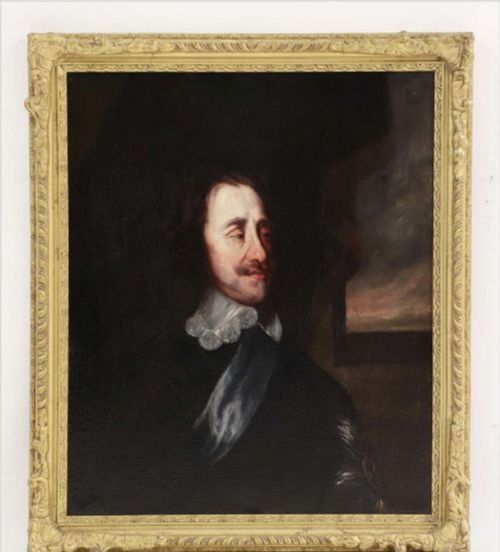
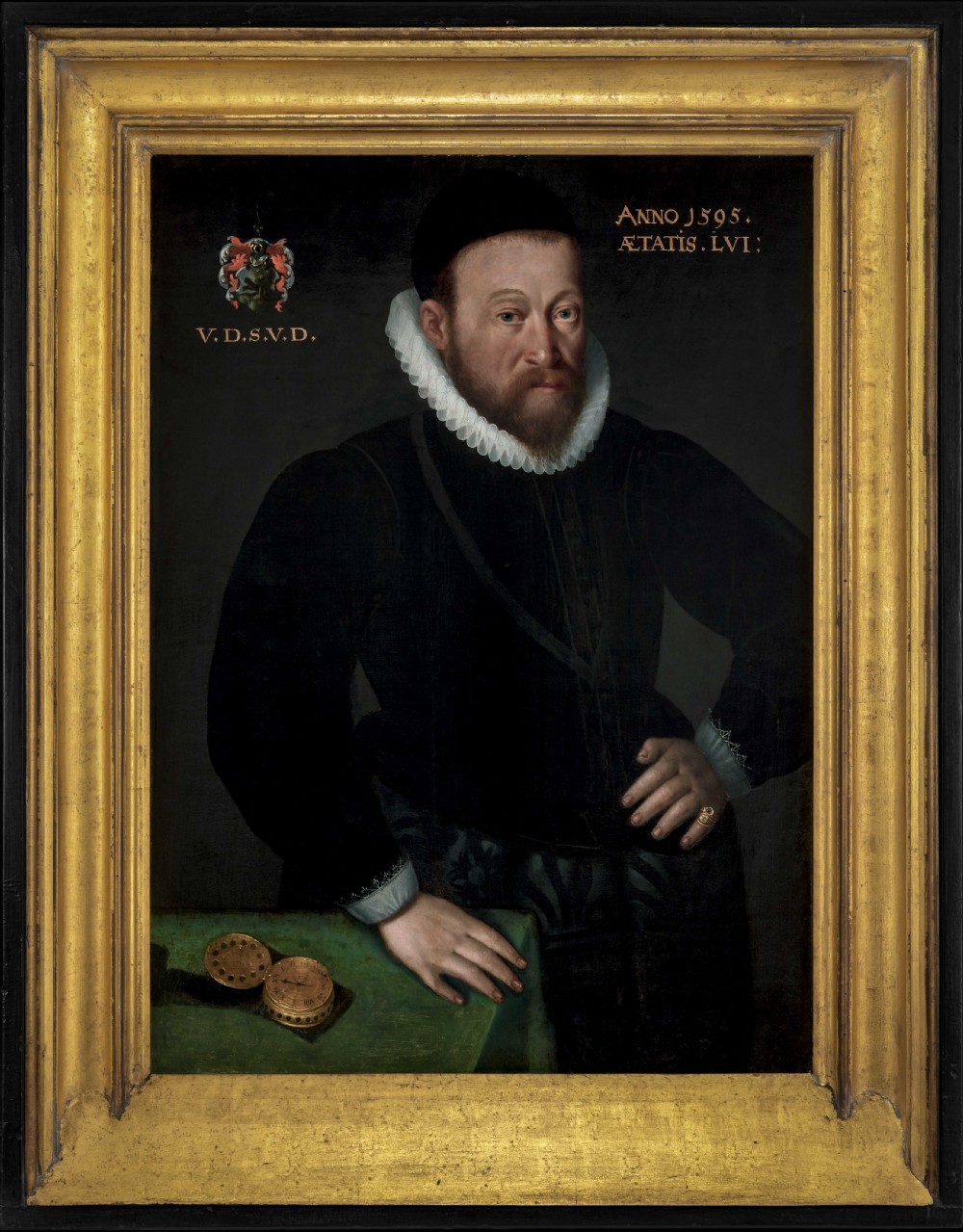
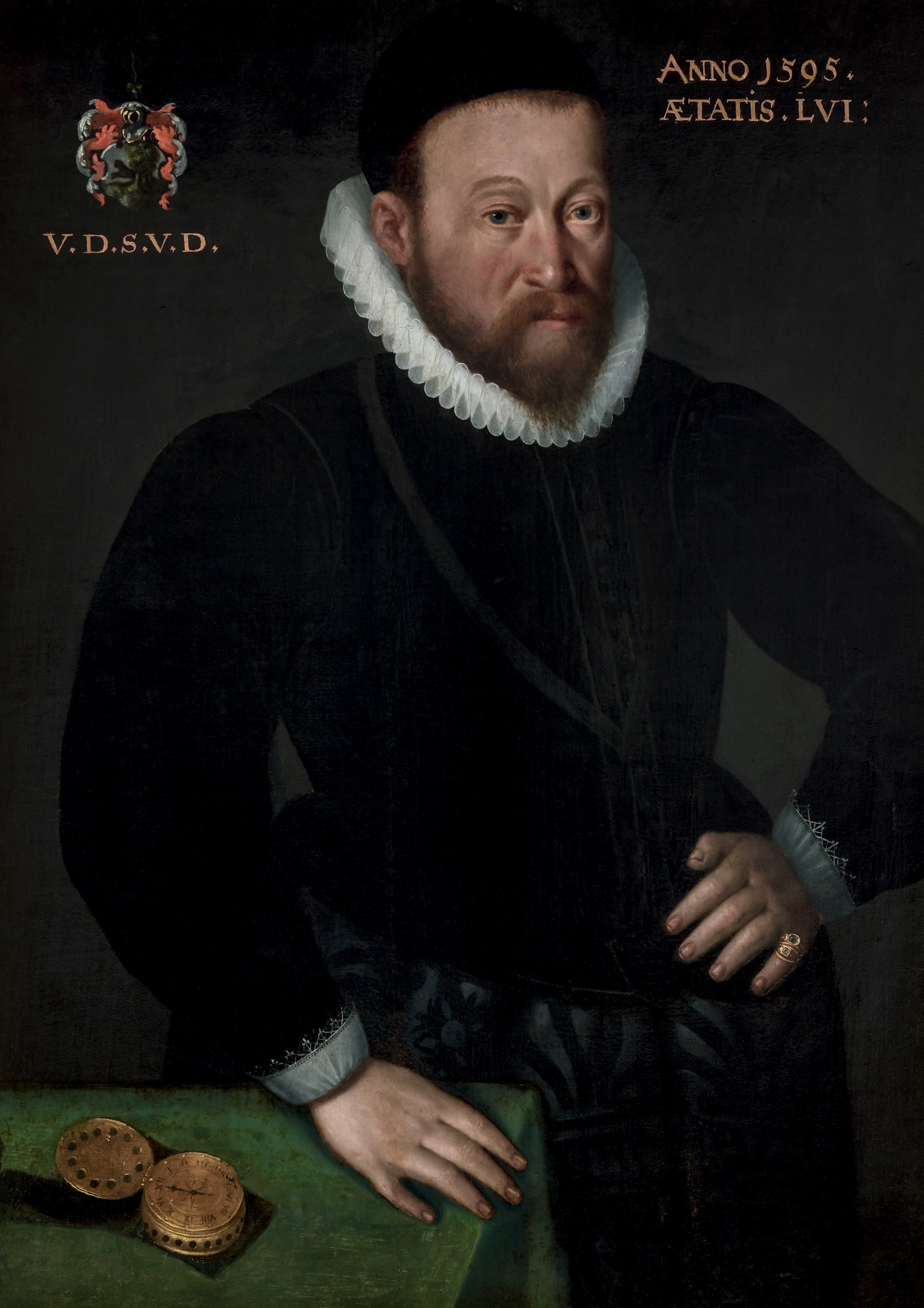
This rare late-sixteenth-century Flemish portrait is among the most complete survivals of Antwerp civic portraiture. Painted on panel and dated 1595, with the sitter’s age inscribed as Ætatis LVI, it combines high quality, strong condition, legible heraldry, and a psychologically nuanced likeness. Few works of this kind preserve such a coherent ensemble of inscription, armorial identity, symbolic objects, and refined paint handling, making it significant within Northern Renaissance portraiture.
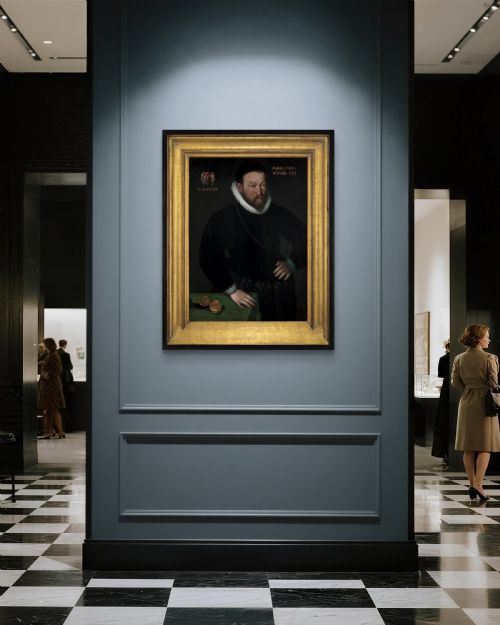
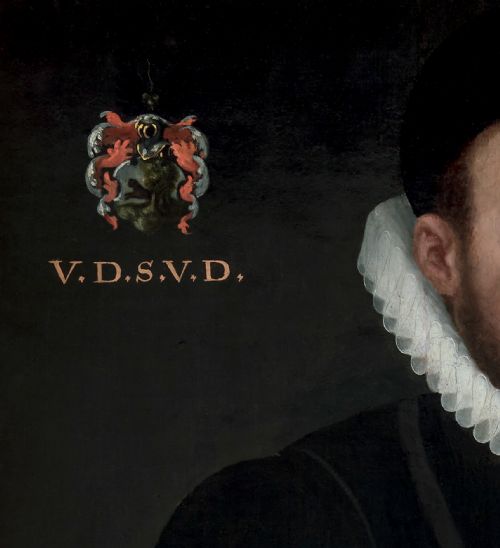
The sitter, aged fifty-six (born c. 1539), is identified by the initials “V.D.S.V.D.” and the coat of arms as a member of Antwerp’s armigerous patriciate, most plausibly linked to the Van der Straeten family or an allied branch joined to a second Van D– lineage. This compressed use of initials reflects a common Flemish practice for compound surnames. Heraldic details support the connection: mantling in argent and gules (silver and red), colours associated with Van der Straeten arms, together with a darker crest element suggestive of an allied device—an assertion of lineage typical of Antwerp’s merchant-magistrate class.
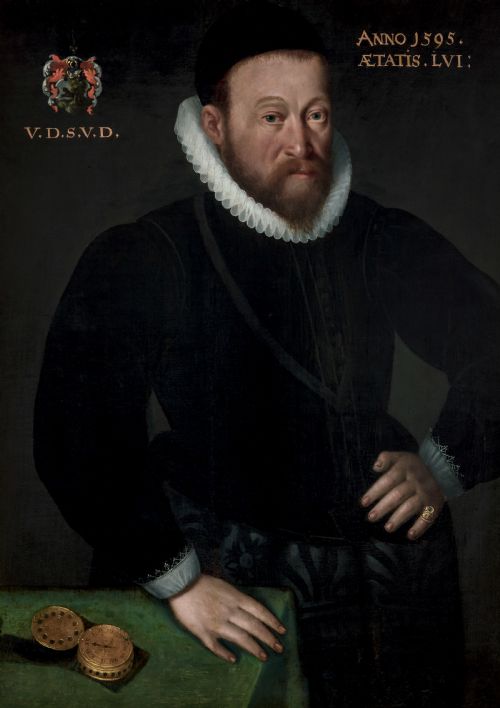
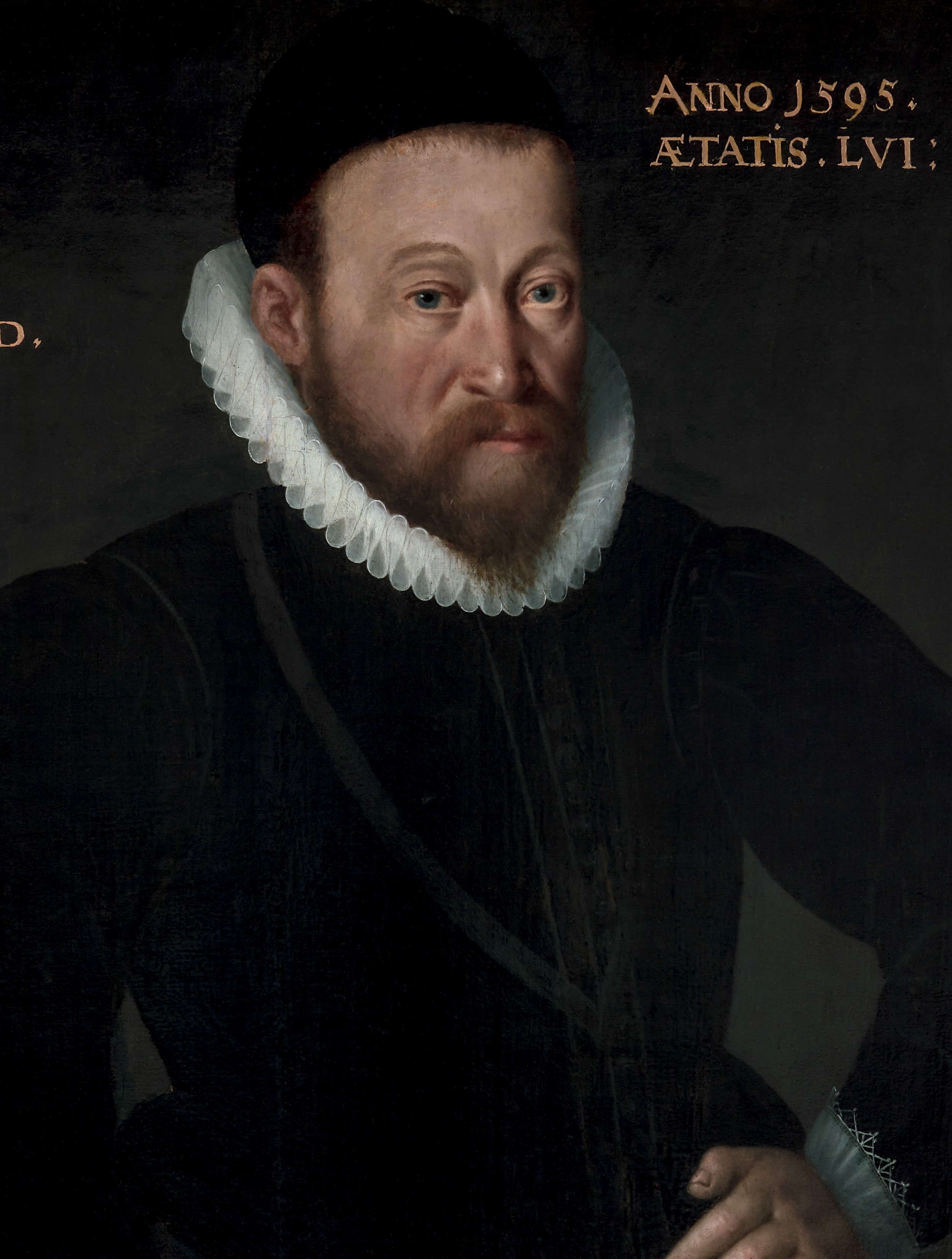
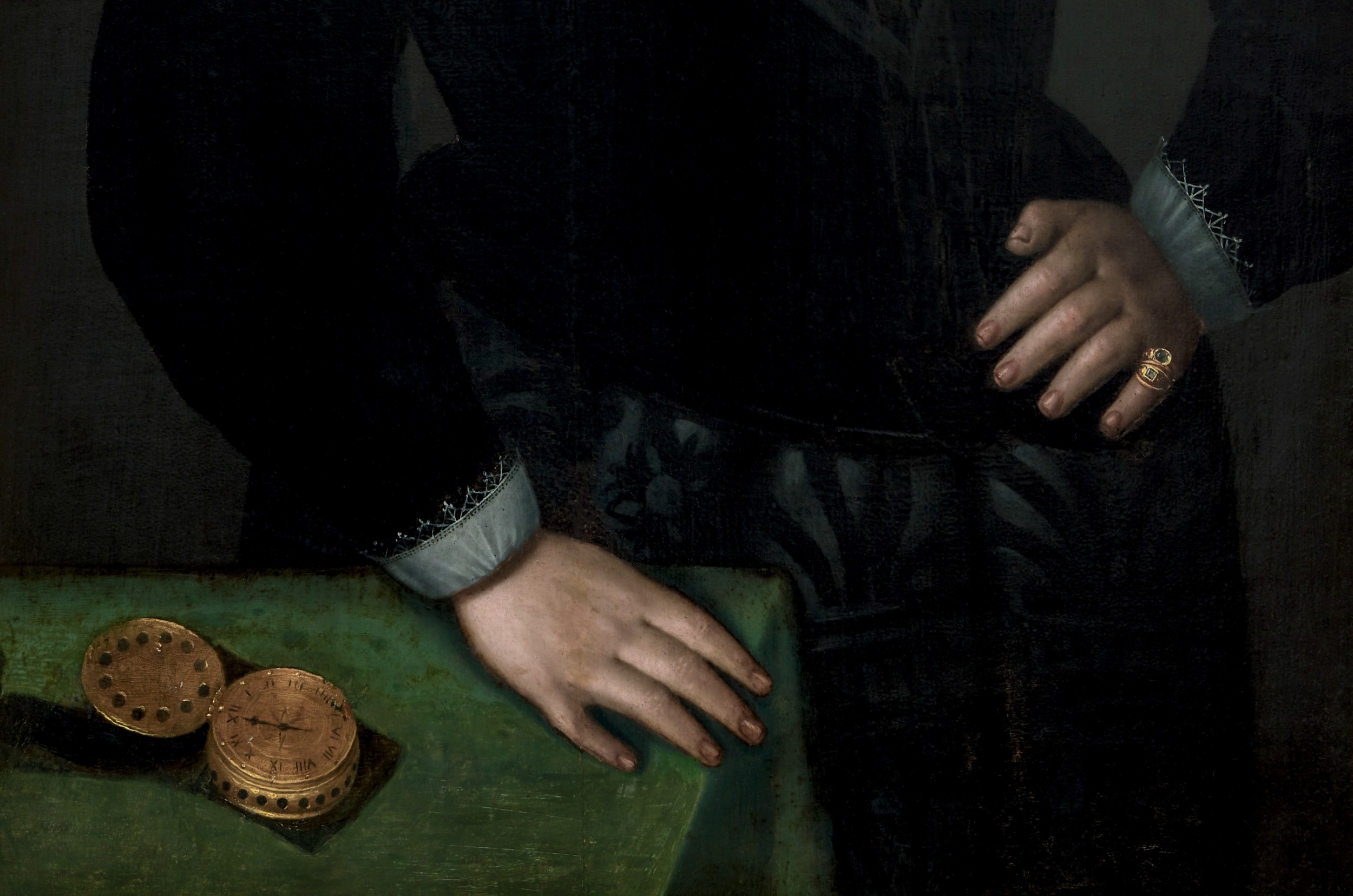
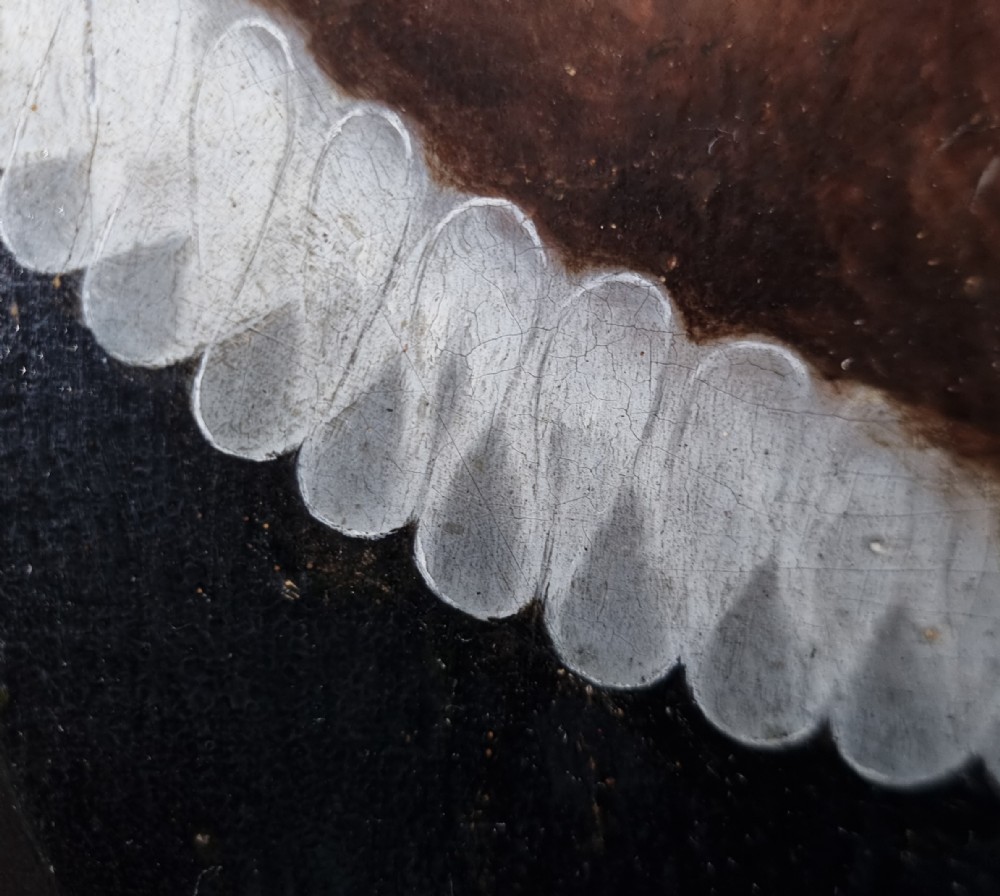
His costume is sober but elite, datable to the mid-1590s: a black doublet of costly dye, cut without ostentation, and a neatly pleated white ruff of moderate scale, aligned with professional dignity rather than courtly display. The broad, authoritative hands and two gold rings on the left small finger further signal status and responsibility; in contemporary Flemish portraiture, multiple rings often implied contractual power, commercial success, or legal authority, with one here appearing signet-like.
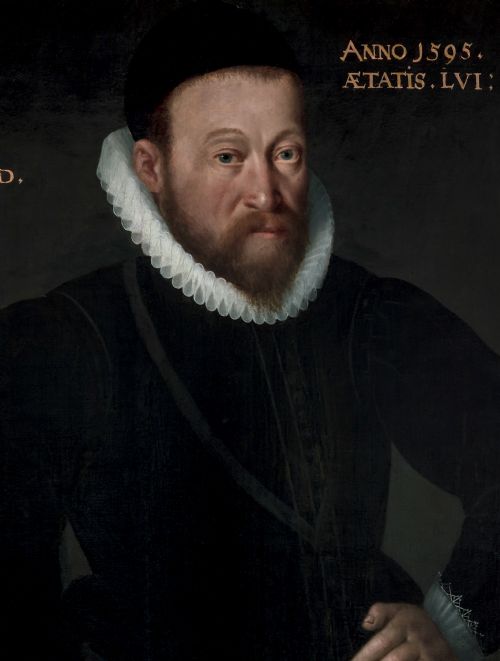
On the green-covered table rests an open table clock, a luxury object in the 1590s associated with order, discipline, and moral accountability. Set near twelve o’clock, it may be read both as a reminder of mortality and as a symbol of fullness and equilibrium—fitting for a man portraying himself at a mature apex. The inscription “ANNO 1595 · ÆTATIS LVI”, in gold serifed capitals integrated into the surface, provides rare chronological certainty and confirms the portrait as a deliberate act of self-representation.

Its date adds resonance: Antwerp in 1595 was rebuilding after 1585, amid confessional realignment, economic contraction, and the departure of many Protestant merchants. For those who remained—Catholic-aligned merchants, magistrates, and guild leaders—portraiture asserted lineage, authority, and steadiness in uncertain times; this sitter belongs unmistakably to that milieu.
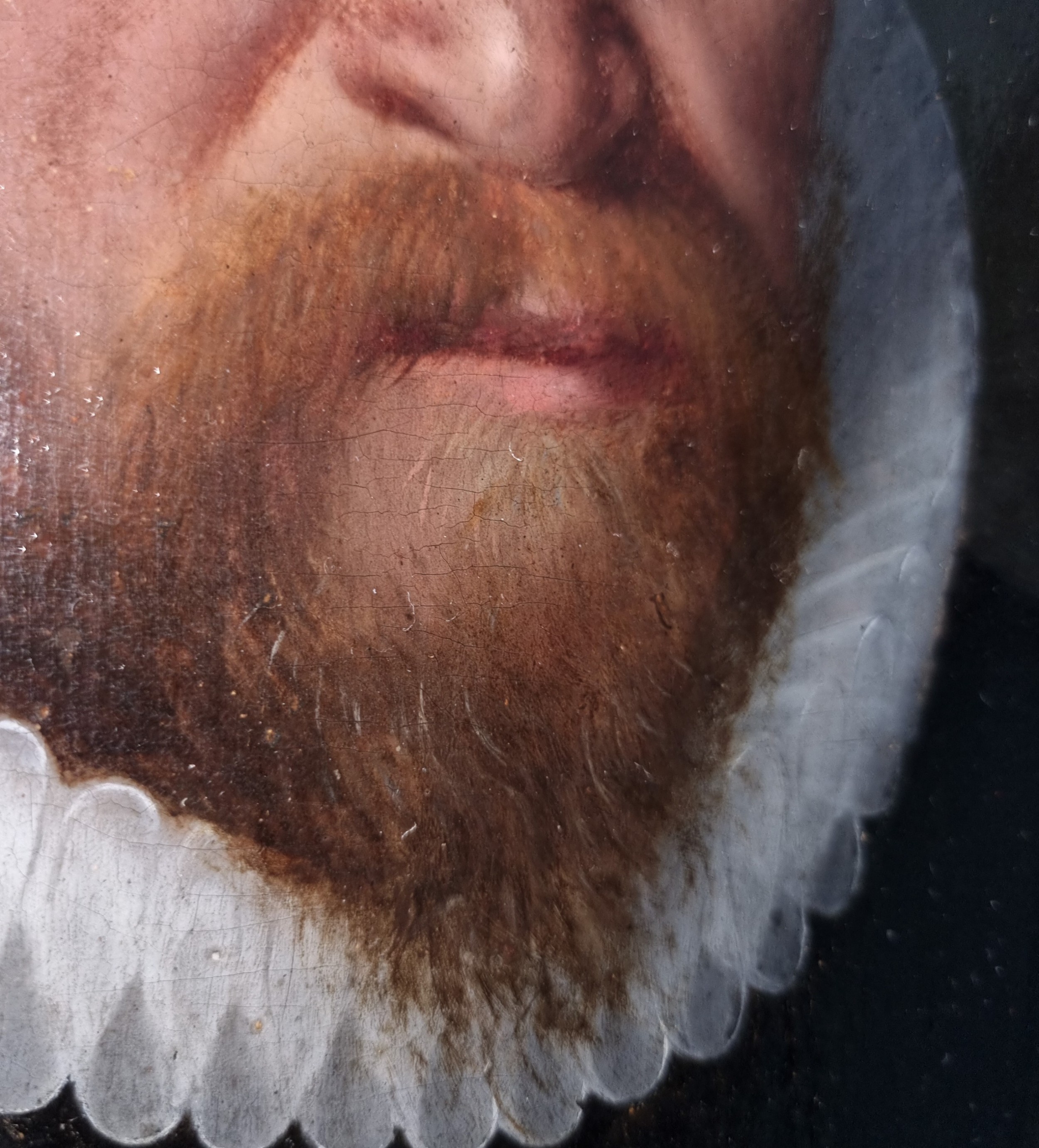
Stylistically, the work aligns with the Antwerp portrait tradition shaped by Frans Pourbus the Elder yet executed after his death. Softly modelled eyes, restrained flesh tones, tonal beard handling, and a sober ruff distinguish it from other Antwerp painters of the period. Ultimately, costume, gesture, heraldry, inscription, and symbolic objects operate in concert to construct a sophisticated image of lineage and measured civic responsibility, making the painting both aesthetically compelling and historically eloquent.

Full description at: www.titanfineart.com

Physical Dimensions
Height
89cm (35.04")
Width
70cm (27.56")
Depth
7cm (2.76")
Declaration

Titan Fine Art has dated this piece to the 16th Century.

Reference Numbers
Sellingantiques Reference
SA1187061
Dealers Notes

Much more info about this item at: www.titanfineart.com

In a market saturated with available paintings, Titan Fine Art offers a distinct advantage: we sift through thousands of works to provide a specially curated selection. Each piece is meticulously chosen based on technical merit, provenance, and decorative appeal, ensuring our clients view only the finest examples of British and European art.

With over 20 years of expertise and 1,000+ works placed with collectors and institutions, we are one of the most prolific specialists in 17th and 18th-century portraiture. We combine a scholarly approach with museum-level rigor to replace the uncertainty of the open market with absolute confidence.

Why Buy From Titan Fine Art?

• Expertly Curated Selection

We act as your expert eye, selecting only high-quality works that offer genuine historical and artistic value.

• Museum-Level Research

Each portrait is supported by extensive academic research, often exceeding 40 hours, to establish attribution, sitter identity, and historical context.

• Professional Conservation

All paintings are carefully cleaned and stabilised by professional conservators, and are presented ready to hang.

• Transparent Pricing

No buyer’s premium or hidden fees—unlike auction houses, where additional costs can add 25–35%.

• Export Pricing Advantage

Reduced pricing is available for works exported outside the UK.

• Specialist Global Shipping

We manage the entire process, including custom crating, export documentation, and fully tracked delivery worldwide.

• Buy with Confidence

A 7-day return policy and the option to pay in GBP, USD, or EUR for convenience and transparency.

• Original Period Frames

Many works retain their original carved and gilded frames, which are works of art in their own right and enhance both historical authenticity and decorative impact.

• Personal Advisory Service

We work directly with collectors and interior designers, offering guidance on selection, scale, and placement—including bespoke room mock-ups on request.

Subscribe to our monthly 'new item alert' to be the first to hear about new works

Description
This rare late-sixteenth-century Flemish portrait is among the most complete survivals of Antwerp civic portraiture.
Painted on panel and dated 1595, with the sitter’s age inscribed as Ætatis LVI, it combines high quality, strong condition, legible heraldry, and a psychologically nuanced likeness.
Titan Fine Art

Few works of this kind preserve such a coherent ensemble of inscription, armorial identity, symbolic objects, and refined paint handling, making it significant within Northern Renaissance portraiture.

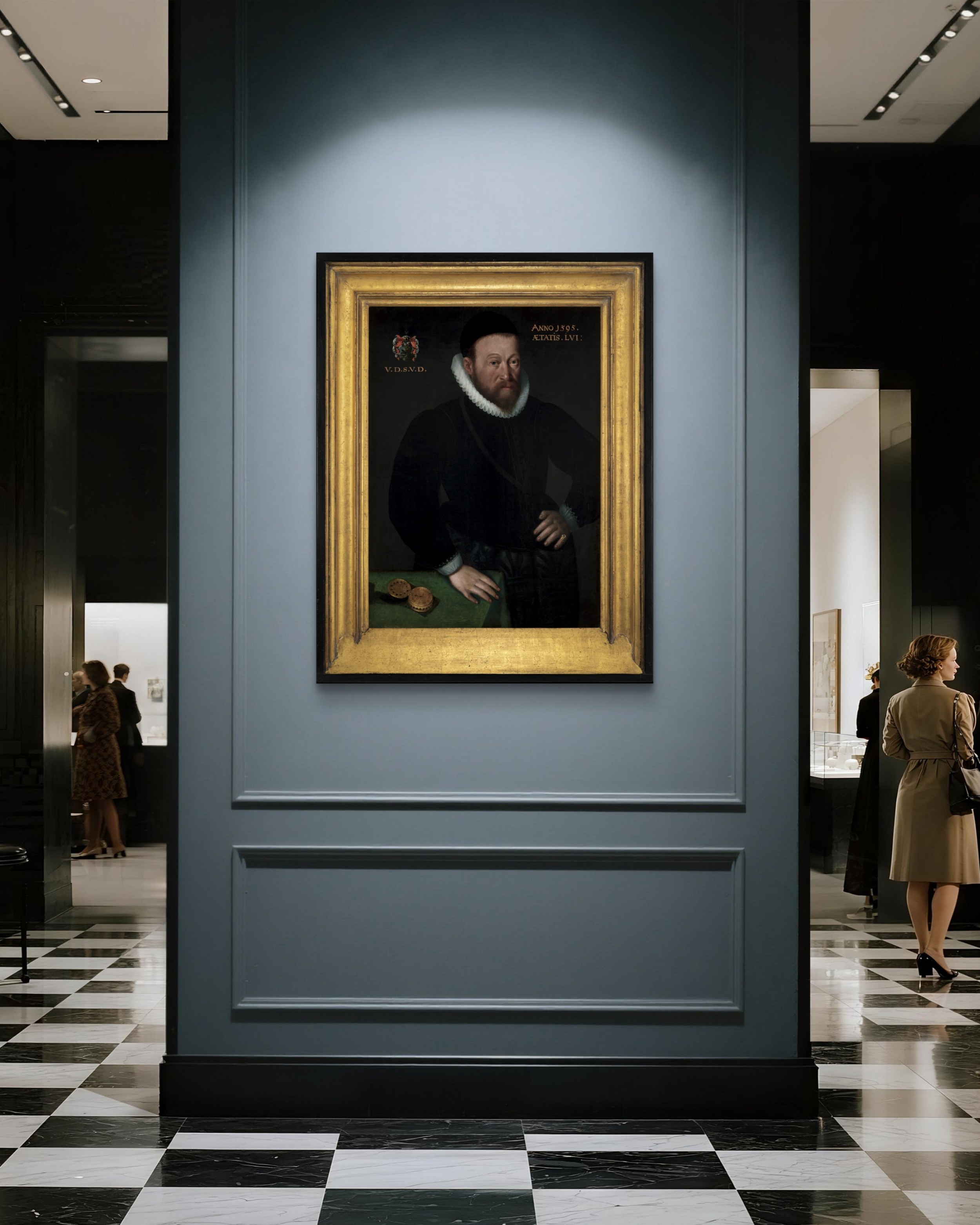
fig 1. Civic Portrait of a Gentleman in a Doublet beside a Table with a Clock, dated 1595; Circle of Frans Pourbus the Elder (1545–1581) Oil on panel painting
fig 1. Civic Portrait of a Gentleman in a Doublet Beside a Table with a Clock, Dated 1595; Circle of Frans Pourbus the Elder (1545–1581) Oil on Panel Painting

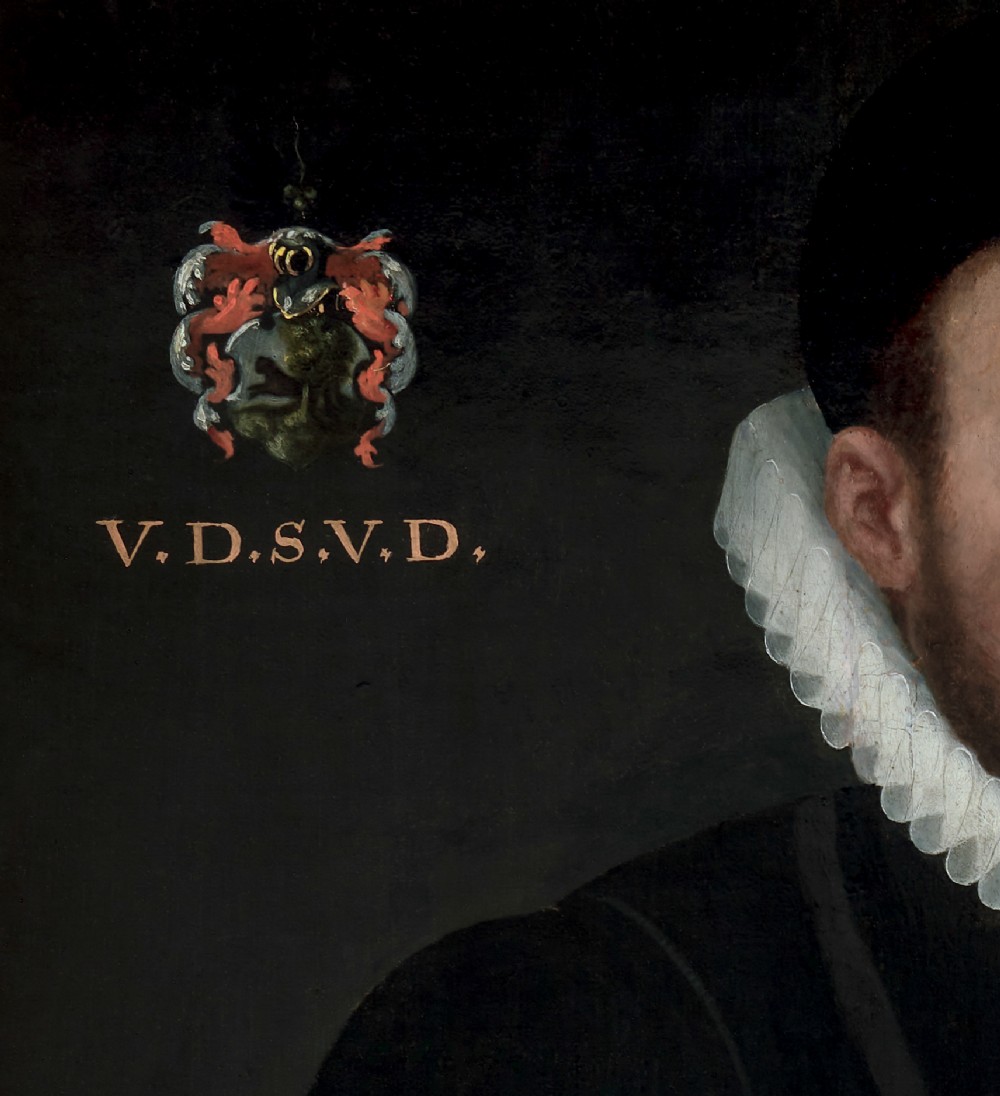
The sitter, aged fifty-six (born c. 1539), is identified by the initials “V.D.S.V.D.” and the coat of arms as a member of Antwerp’s armigerous patriciate, most plausibly linked to the Van der Straeten family or an allied branch joined to a second Van D– lineage. This compressed use of initials reflects a common Flemish practice for compound surnames. Heraldic details support the connection: mantling in argent and gules (silver and red), colours associated with Van der Straeten arms, together with a darker crest element suggestive of an allied device—an assertion of lineage typical of Antwerp’s merchant-magistrate class.

fig 2. Civic Portrait of a Gentleman in a Doublet beside a Table with a Clock, dated 1595; Circle of Frans Pourbus the Elder (1545–1581) Oil on panel painting
fig 2. Civic Portrait of a Gentleman in a Doublet Beside a Table with a Clock, Dated 1595; Circle of Frans Pourbus the Elder (1545–1581) Oil on Panel Painting

His costume is sober but elite, datable to the mid-1590s: a black doublet of costly dye, cut without ostentation, and a neatly pleated white ruff of moderate scale, aligned with professional dignity rather than courtly display. The broad, authoritative hands and two gold rings on the left small finger further signal status and responsibility; in contemporary Flemish portraiture, multiple rings often implied contractual power, commercial success, or legal authority, with one here appearing signet-like.

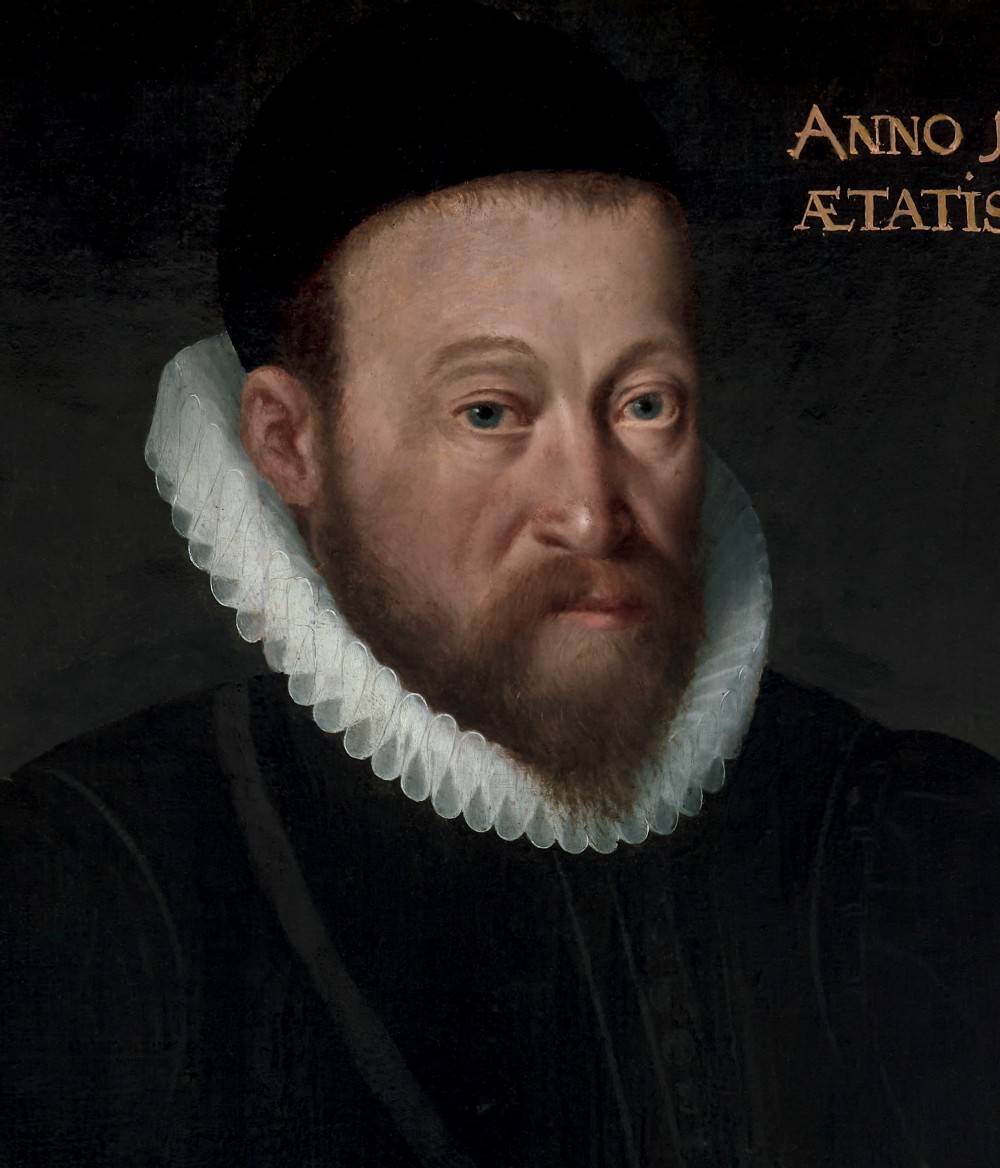
fig 3. Civic Portrait of a Gentleman in a Doublet beside a Table with a Clock, dated 1595; Circle of Frans Pourbus the Elder (1545–1581) Oil on panel painting
fig 3. Civic Portrait of a Gentleman in a Doublet Beside a Table with a Clock, Dated 1595; Circle of Frans Pourbus the Elder (1545–1581) Oil on Panel Painting

On the green-covered table rests an open table clock, a luxury object in the 1590s associated with order, discipline, and moral accountability. Set near twelve o’clock, it may be read both as a reminder of mortality and as a symbol of fullness and equilibrium—fitting for a man portraying himself at a mature apex. The inscription “ANNO 1595 · ÆTATIS LVI”, in gold serifed capitals integrated into the surface, provides rare chronological certainty and confirms the portrait as a deliberate act of self-representation.

fig 4. Civic Portrait of a Gentleman in a Doublet beside a Table with a Clock, dated 1595; Circle of Frans Pourbus the Elder (1545–1581) Oil on panel painting
fig 4. Civic Portrait of a Gentleman in a Doublet Beside a Table with a Clock, Dated 1595; Circle of Frans Pourbus the Elder (1545–1581) Oil on Panel Painting

Its date adds resonance: Antwerp in 1595 was rebuilding after 1585, amid confessional realignment, economic contraction, and the departure of many Protestant merchants. For those who remained—Catholic-aligned merchants, magistrates, and guild leaders—portraiture asserted lineage, authority, and steadiness in uncertain times; this sitter belongs unmistakably to that milieu.

fig 5. Civic Portrait of a Gentleman in a Doublet beside a Table with a Clock, dated 1595; Circle of Frans Pourbus the Elder (1545–1581) Oil on panel painting
fig 5. Civic Portrait of a Gentleman in a Doublet Beside a Table with a Clock, Dated 1595; Circle of Frans Pourbus the Elder (1545–1581) Oil on Panel Painting

Stylistically, the work aligns with the Antwerp portrait tradition shaped by Frans Pourbus the Elder yet executed after his death. Softly modelled eyes, restrained flesh tones, tonal beard handling, and a sober ruff distinguish it from other Antwerp painters of the period. Ultimately, costume, gesture, heraldry, inscription, and symbolic objects operate in concert to construct a sophisticated image of lineage and measured civic responsibility, making the painting both aesthetically compelling and historically eloquent.

Full description at: www.titanfineart.com

Height
89cm (35.04")
Width
70cm (27.56")
Depth
7cm (2.76")
Date of Manufacture

Titan Fine Art has dated this piece to the 16th Century.

Reference Numbers
Sellingantiques Ref
SA1187061
Titan Fine Art
Titan Fine Art
Sellingantiques verified Since Jul 2016

Specialist in 17th & 18thc portraits. Highly curated selection, museum-level research & pro conservation. Exceptional art, expertly vetted.

Dealer Profile

You can view the stock and full dealer information on the Titan Fine Art Profile Page
PDF SHARE
SAVE
Civic Portrait of a Gentleman in a Doublet beside a Table with a Clock, dated 1595; Circle of Frans Pourbus the Elder (1545–1581) Oil on panel painting
1 / 9
Archive I Civic Portrait of a Gentleman in a Doublet beside a Table with a Clock, dated 1595; Circle of Frans Pourbus the Elder (1545–1581) Oil on panel painting

Civic Portrait of a Gentleman in a Doublet Beside a Table with a Clock, Dated 1595; Circle of Frans Pourbus the Elder (1545–1581) Oil on Panel Painting
Archive II Civic Portrait of a Gentleman in a Doublet beside a Table with a Clock, dated 1595; Circle of Frans Pourbus the Elder (1545–1581) Oil on panel painting View II
Archive III Civic Portrait of a Gentleman in a Doublet beside a Table with a Clock, dated 1595; Circle of Frans Pourbus the Elder (1545–1581) Oil on panel painting View III
Archive IV Civic Portrait of a Gentleman in a Doublet beside a Table with a Clock, dated 1595; Circle of Frans Pourbus the Elder (1545–1581) Oil on panel painting View IV
Archive V Civic Portrait of a Gentleman in a Doublet beside a Table with a Clock, dated 1595; Circle of Frans Pourbus the Elder (1545–1581) Oil on panel painting View V
Archive VI Civic Portrait of a Gentleman in a Doublet beside a Table with a Clock, dated 1595; Circle of Frans Pourbus the Elder (1545–1581) Oil on panel painting View VI
Archive VII Civic Portrait of a Gentleman in a Doublet beside a Table with a Clock, dated 1595; Circle of Frans Pourbus the Elder (1545–1581) Oil on panel painting View VII
Archive VIII Civic Portrait of a Gentleman in a Doublet beside a Table with a Clock, dated 1595; Circle of Frans Pourbus the Elder (1545–1581) Oil on panel painting View VIII
Archive IX Civic Portrait of a Gentleman in a Doublet beside a Table with a Clock, dated 1595; Circle of Frans Pourbus the Elder (1545–1581) Oil on panel painting View IX
Enlarged Archival View
Telephone 07875 412 111
Location
London
United Kingdom
Dealer Profile Page sellingantiques.co.uk/titan
Verified Since Jul 2016
Items For Sale 16
Items Sold 401
Titan Fine Art
Titan Fine Art
Verified Since Jul 2016
View Dealer Info
Location: London, United Kingdom
Verified
Jul 2016
For Sale
16
Sold
401
Civic Portrait of a Gentleman in a Doublet beside a Table with a Clock, dated 1595; Circle of Frans Pourbus the Elder (1545–1581) Oil on panel painting
Ref: SA1187061
Civic Portrait of a Gentleman in a Doublet beside a Table with a Clock, dated 1595; Circle of Frans Pourbus the Elder (1545–1581) Oil on panel painting
Detail View 1
Detail View 2
Detail View 3
Detail View 4
Detail View 5
Detail View 6
Detail View 7
Detail View 8
Archival Detail
Every single antique dealer on our platform is individually approved by our internal team. We verify their professional trade history, ethical standards, and photographic quality to ensure a secure, high-standard buying environment. Upon joining, every dealer agrees to a strict 9-point code of conduct. While issues can occasionally arise, our dealers typically resolve them swiftly and directly with the buyer. In fact, since our founding in 2002, Sellingantiques has only had to step in to help resolve an issue on roughly five occasions—a true testament to the quality of our dealers and their dedication to your happiness.
Our dealers are highly experienced in packing and shipping fragile, high-value antiques. Because you are in direct contact with the dealer, you will be able to easily go through all available shipping and insurance options together to ensure your item arrives safely.
Antiques are the ultimate green purchase. By choosing historical pieces over newly manufactured goods, you completely eliminate the carbon footprint of modern mass production while preserving exceptional, timeless craftsmanship.
items
Add keywords to the filter
Price
£100
£250000
Era
Movements
Material
Origin
Stock Location
Freshness
Online Payments
Categories