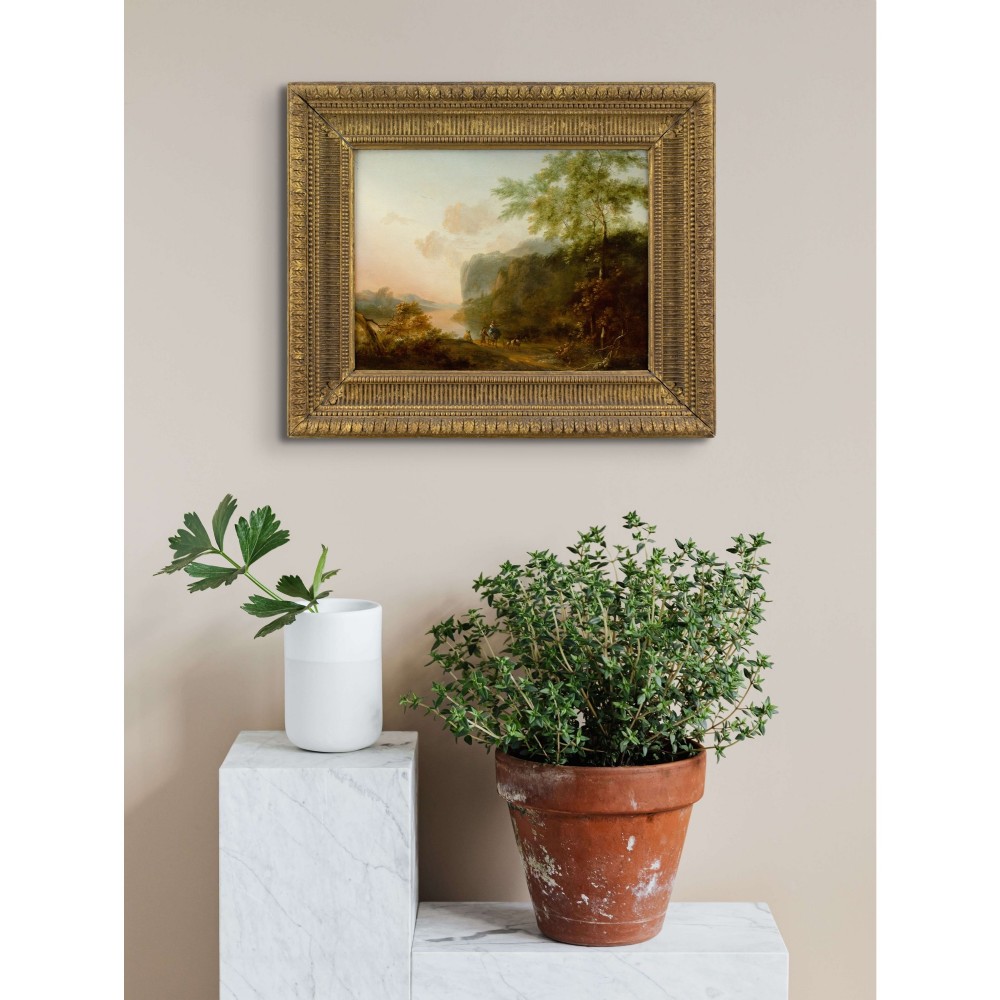
Brave Fine Art has dated this piece to the 18th Century.
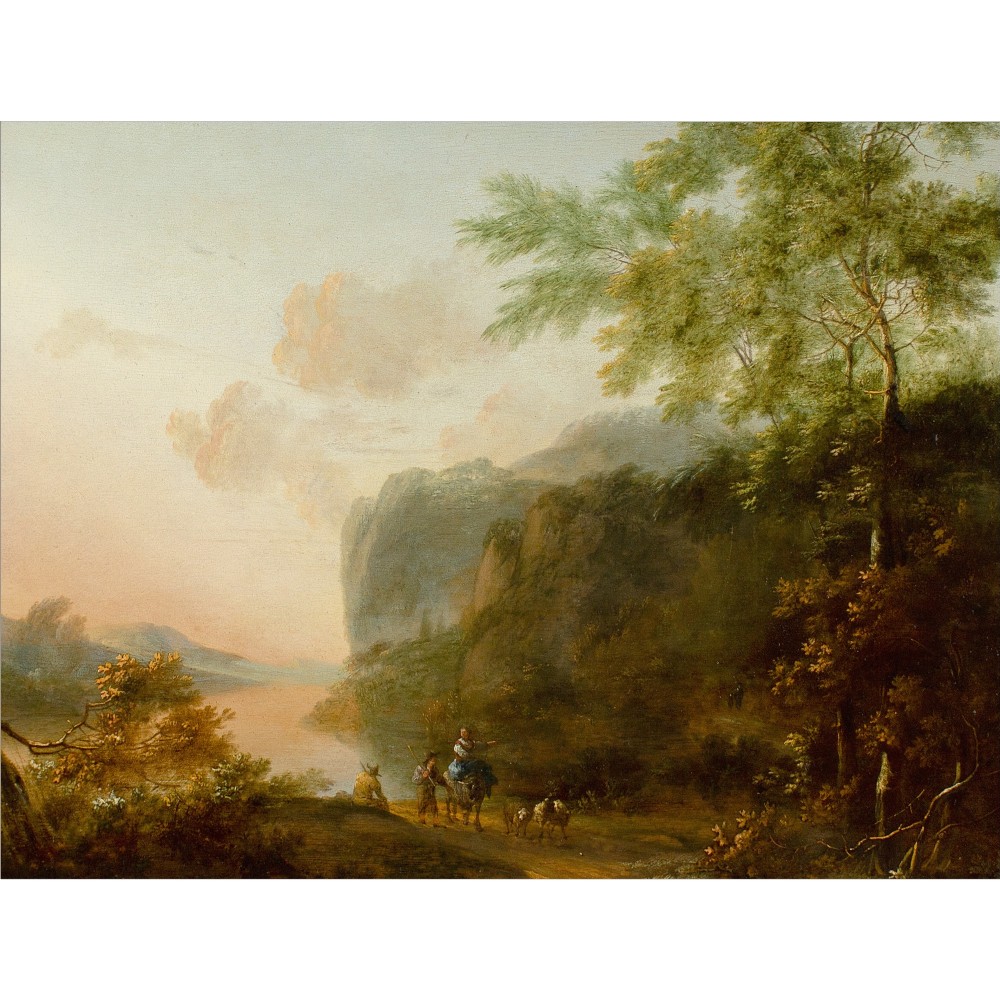
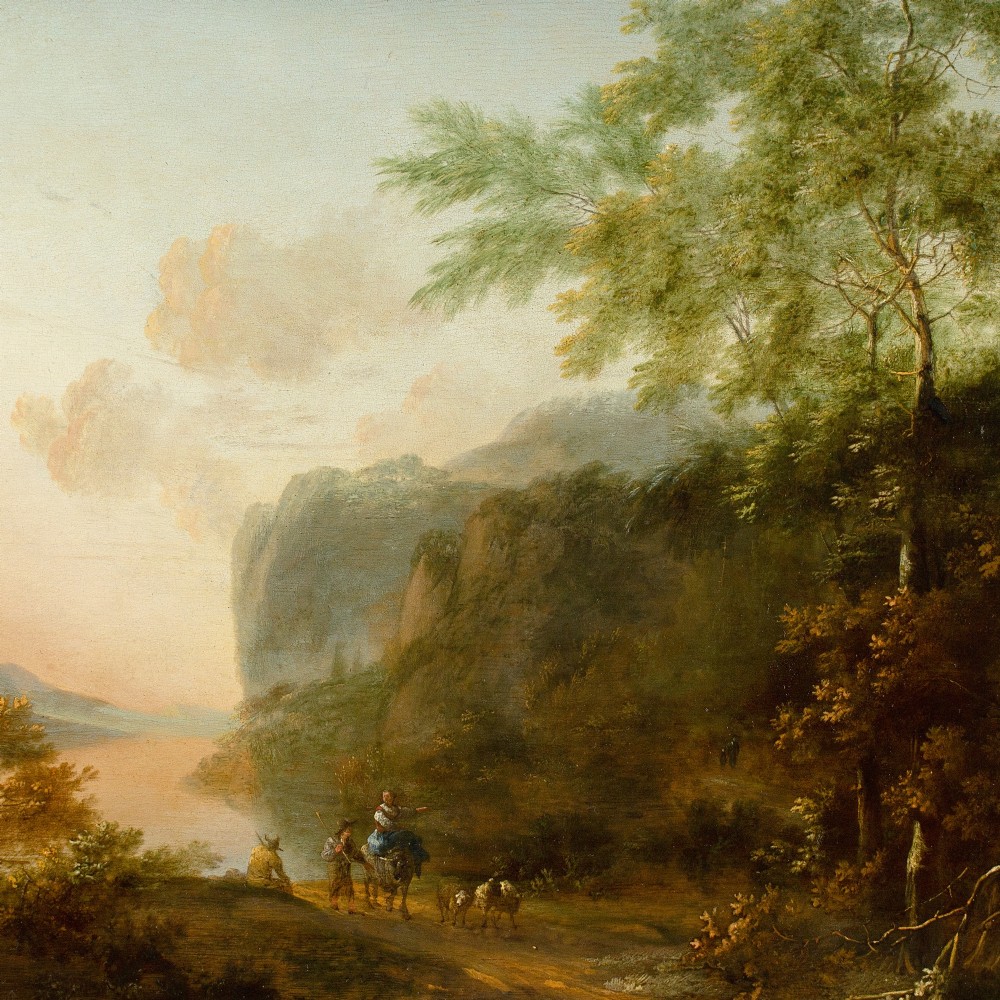
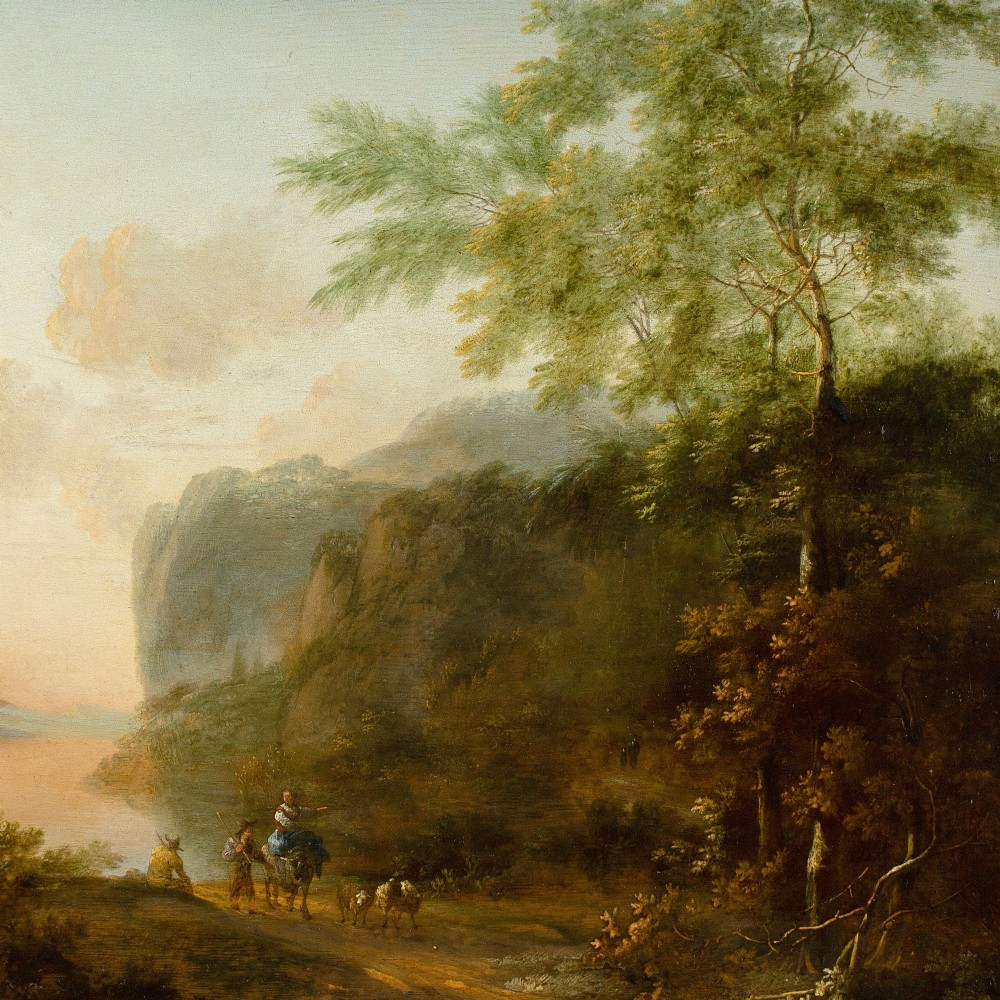
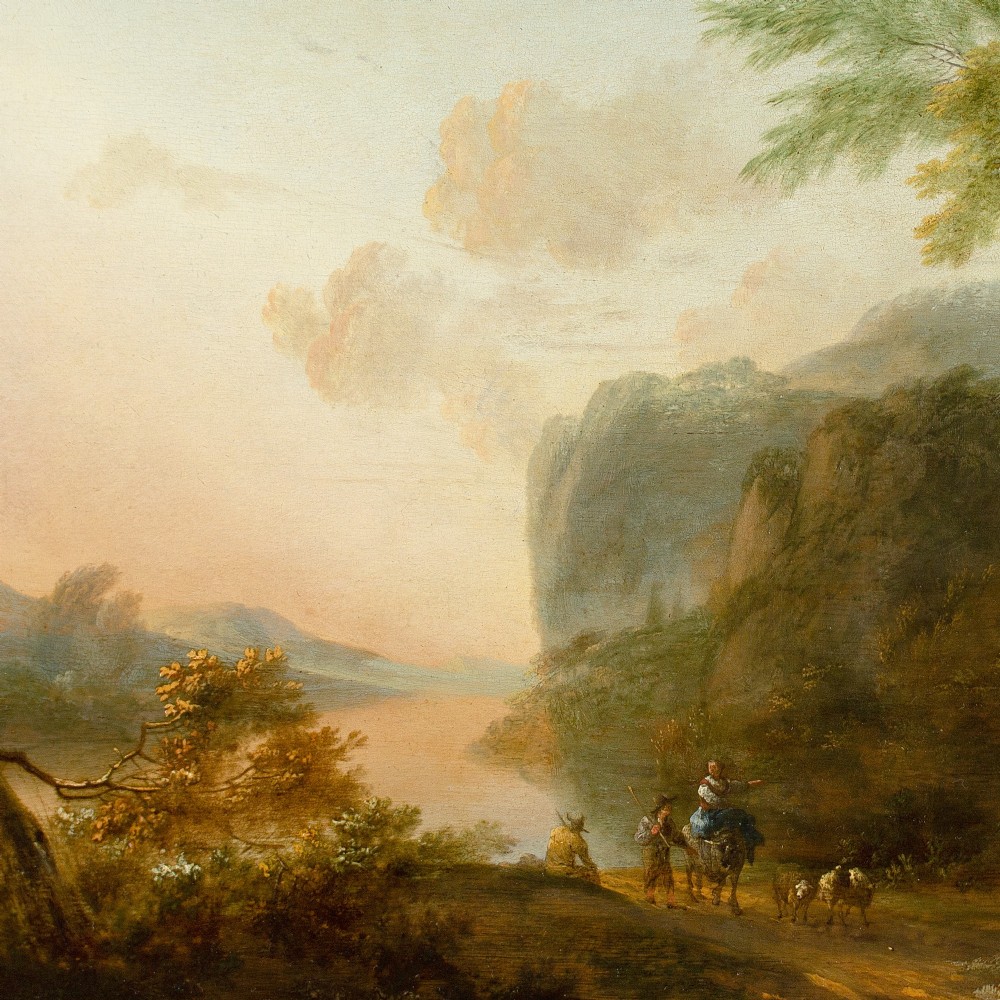
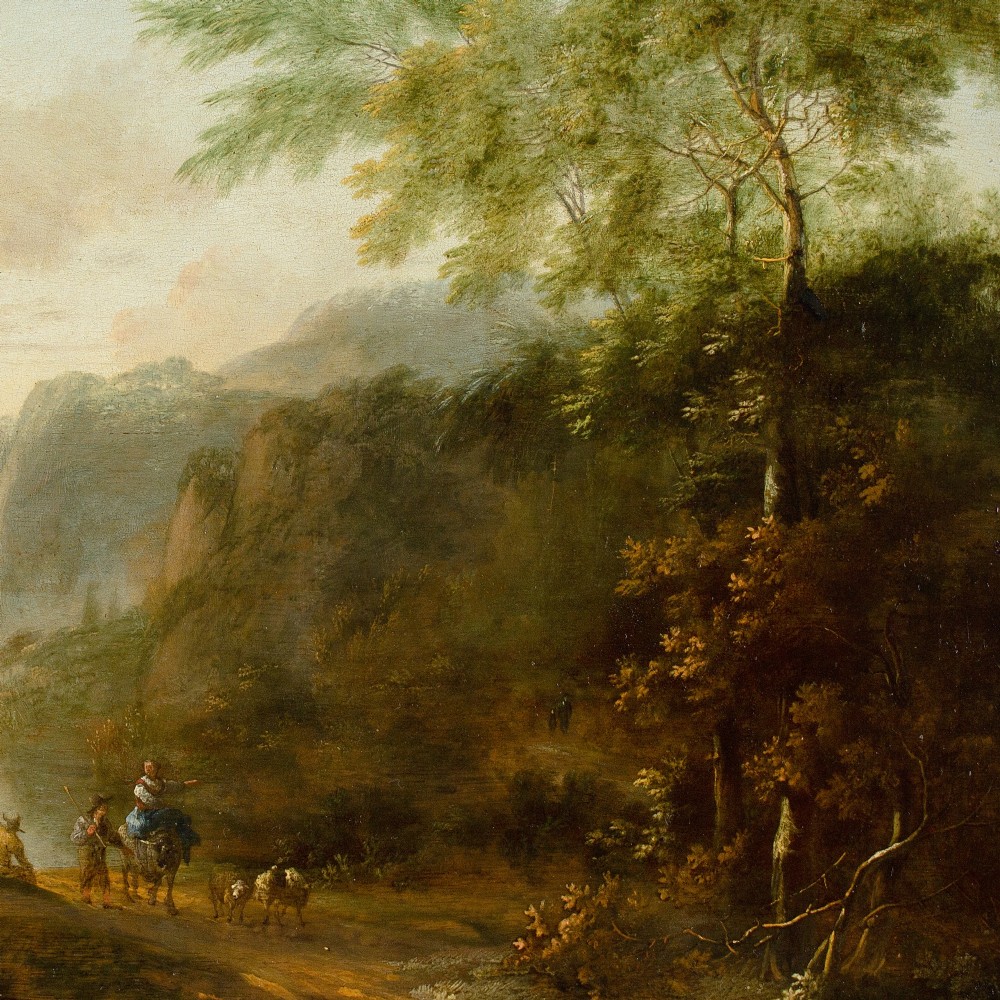
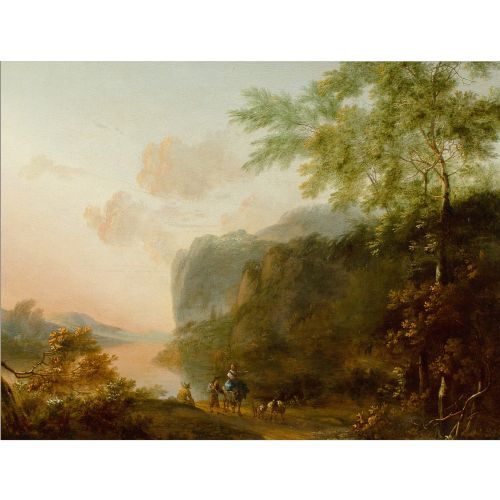
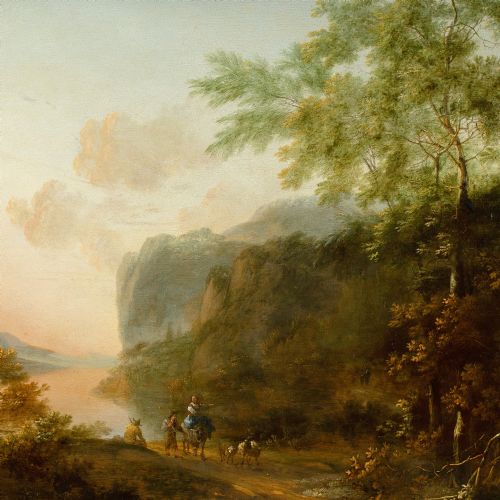
It’s distinctly Claudian, with the foreground in shadow, broken by flickers of crisp foliage and highlights on the forms of resting figures.
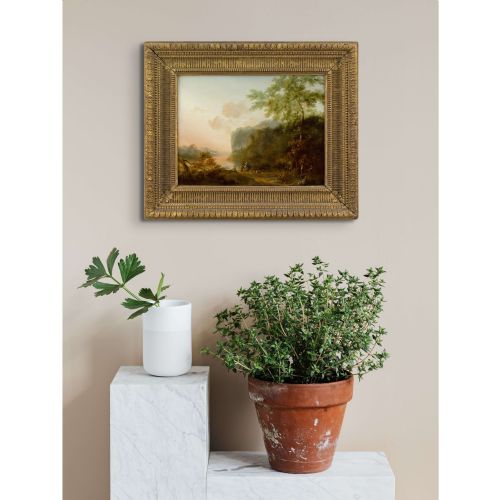
The composition, with its sinuous tree framing the right-hand side, guides the eye upwards, and then diagonally out towards the hazy distance. The hint of a craggy peak allows the viewer to rest awhile.
Jan Both transformed Dutch landscape painting in the 17th century by interweaving the Arcadian visions of French painter Claude Lorrain (1600-1682), with the rich heritage of the northern masters. As such, he elevated the earthy, gnarled portrayals of nature, which had become synonymous with the Dutch, with a romanticised, near-ethereal, Godly perfection. He influenced numerous others, including Nicolaes Berchem (1620-1683) and Aelbert Cuyp (1620-1691). Also Willem de Heusch (c.1625-c.1692) and Jan Hackaert (1628-after 1685).
Born in Utrecht, Both moved to Rome by 1638, and was so taken by the works of Claude that he reinvented his style. He travelled back to Utrecht around 1641, taking his new ideologies with him. He often captured views within the sublime Roman Campagna.
Here, we see a work by a follower from circa 1725.
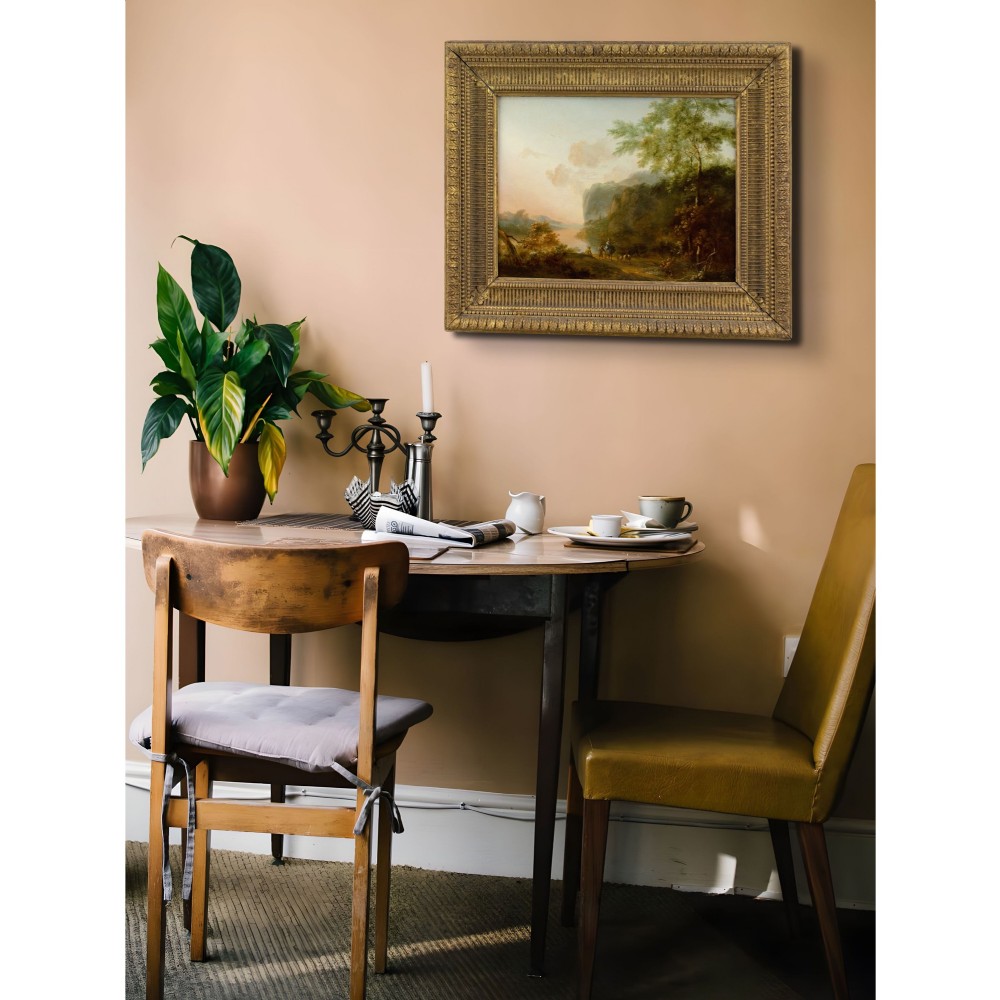
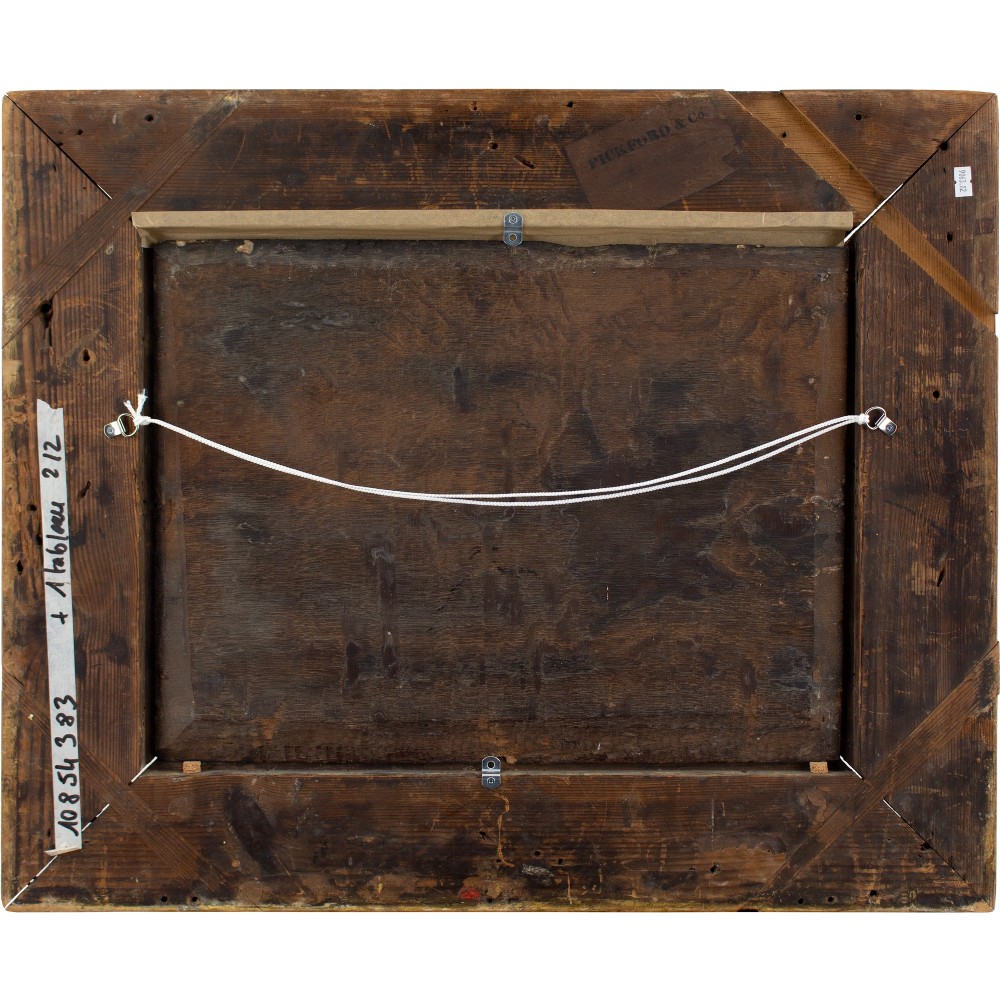
Held in a period frame, which could be original.
Medium: Oil on panel
Overall size: 28” x 23” / 71cm x 59cm
Year of creation: c. 1725
Provenance: Private collection, France.
Condition: Cleaned. Revarnished. Fine craquelure throughout. The paint layer is stable. Frame with various marks and showing its age.
Our reference: BRV2168
Brave Fine Art has dated this piece to the 18th Century.
Exquisite antique paintings that capture the imagination.
You can view the stock and full dealer information on the Brave Fine Art Profile Page
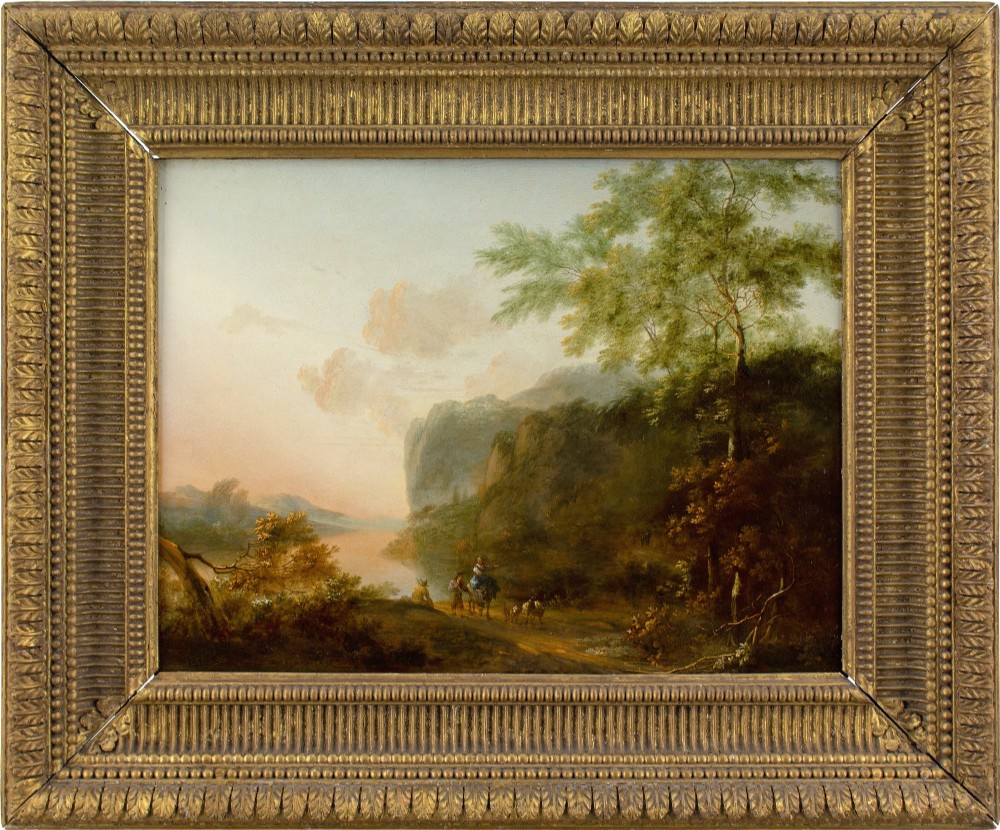
Jan Both (Follower), Idyllic River Landscape with Figures, Antique Oil Painting