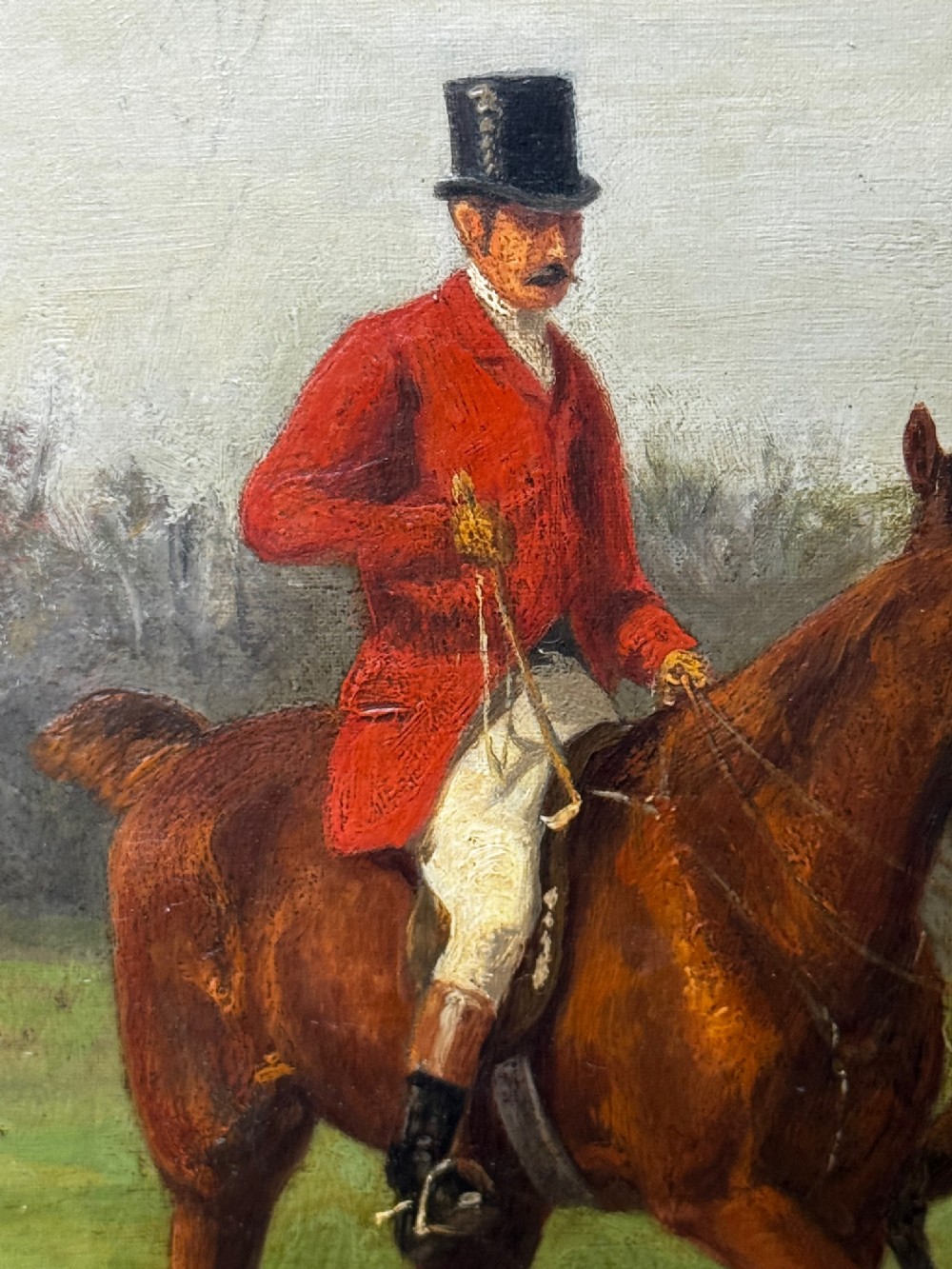
Cheshire Antiques Consultant Ltd has dated this piece to the Victorian era.
?? Subject & Medium
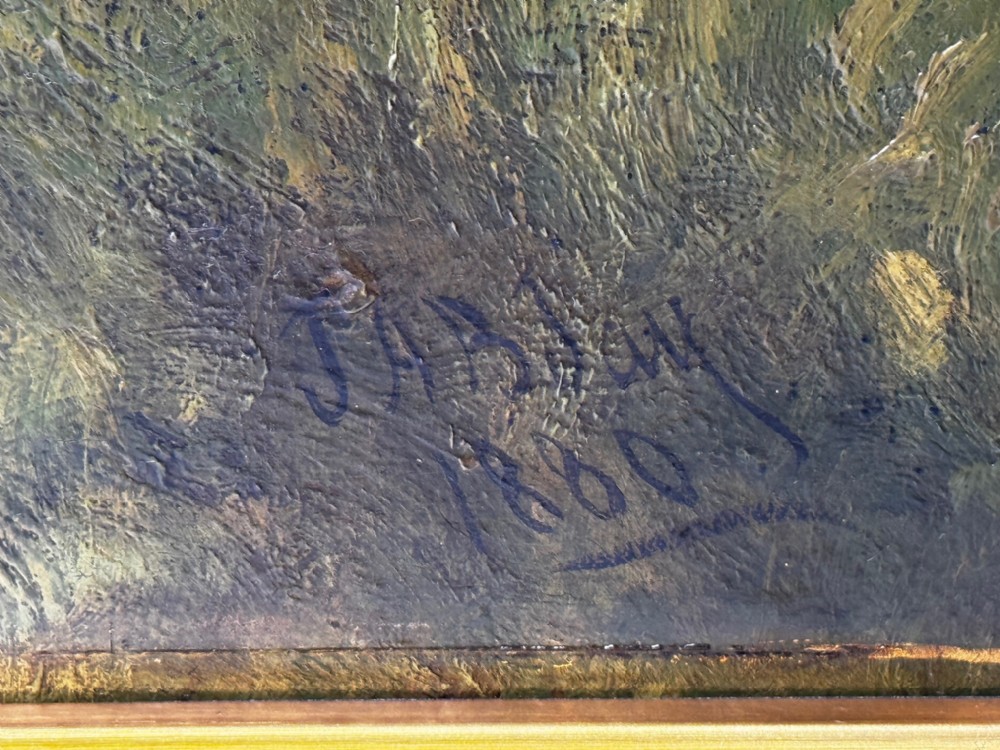
A quintessential example of Victorian equestrian art, the painting portrays a significant fox hunting scene—an iconic subject of the era—executed with both narrative richness and technical mastery. The original 1880 commissioned purchase price is shown verso.
?? Composition & Technique
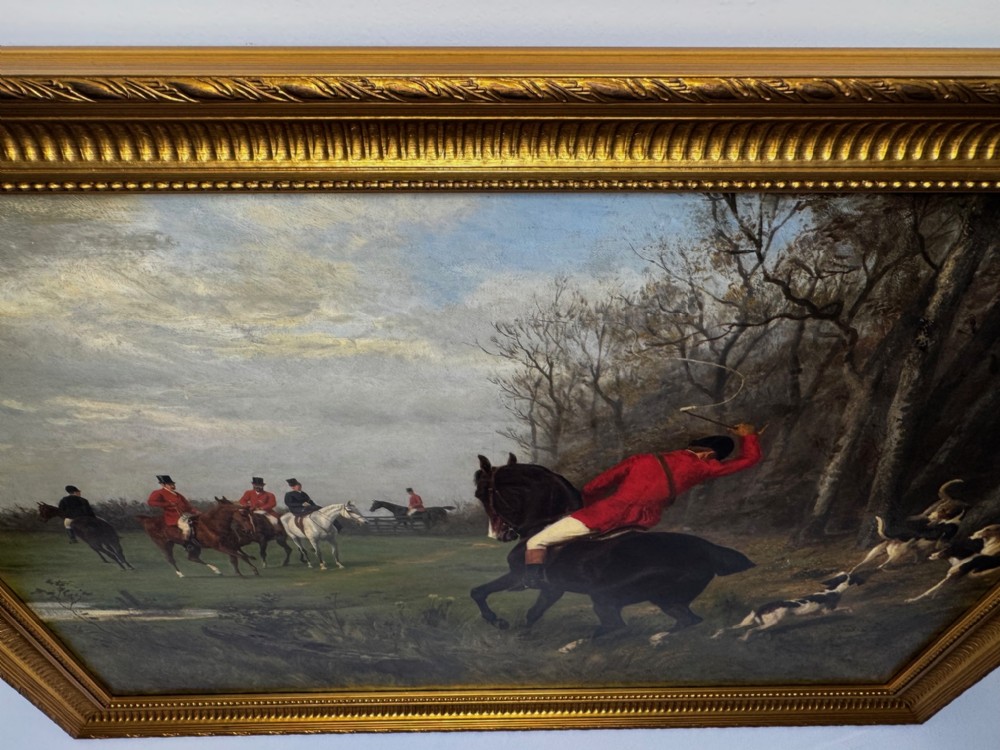
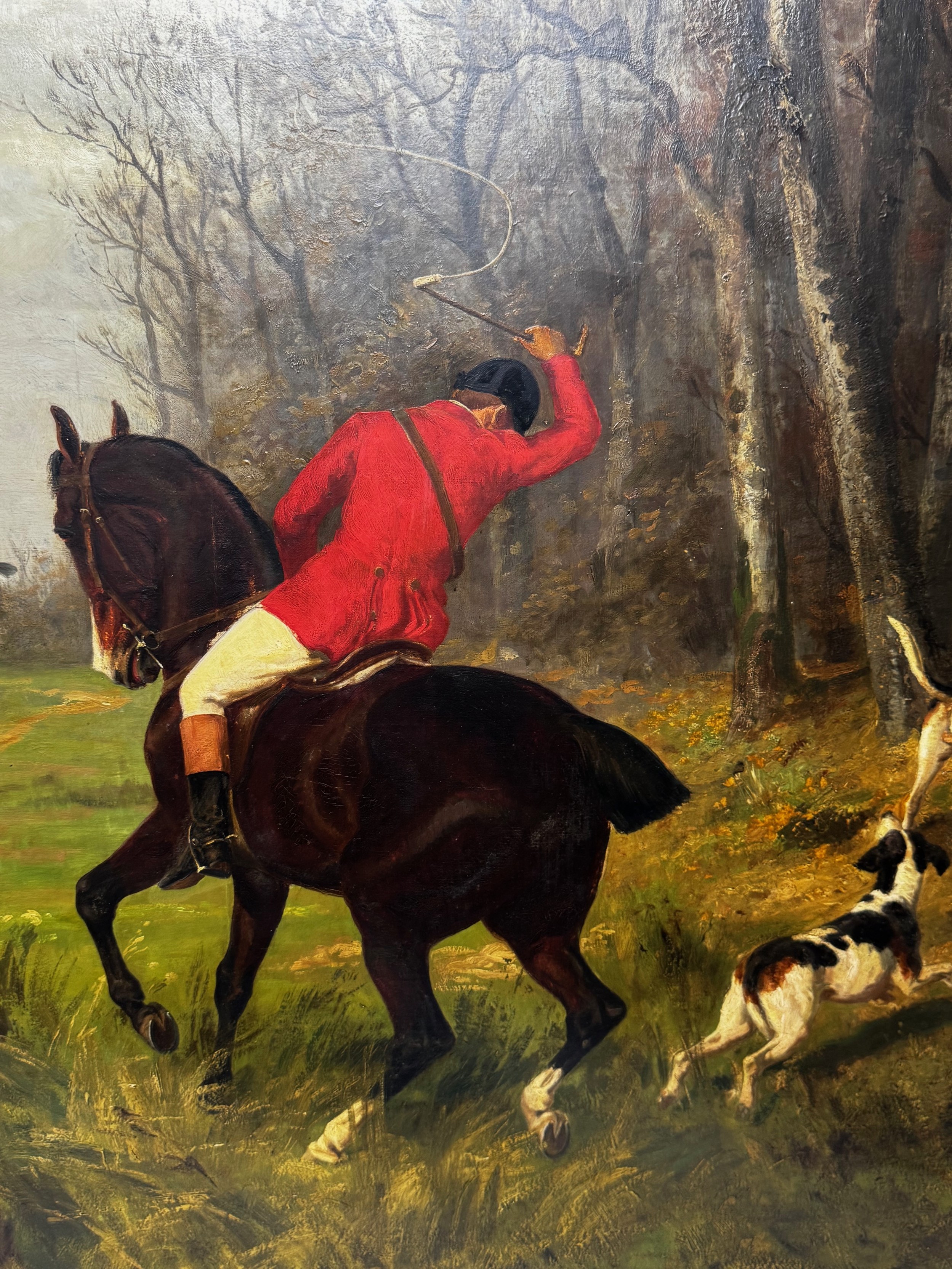
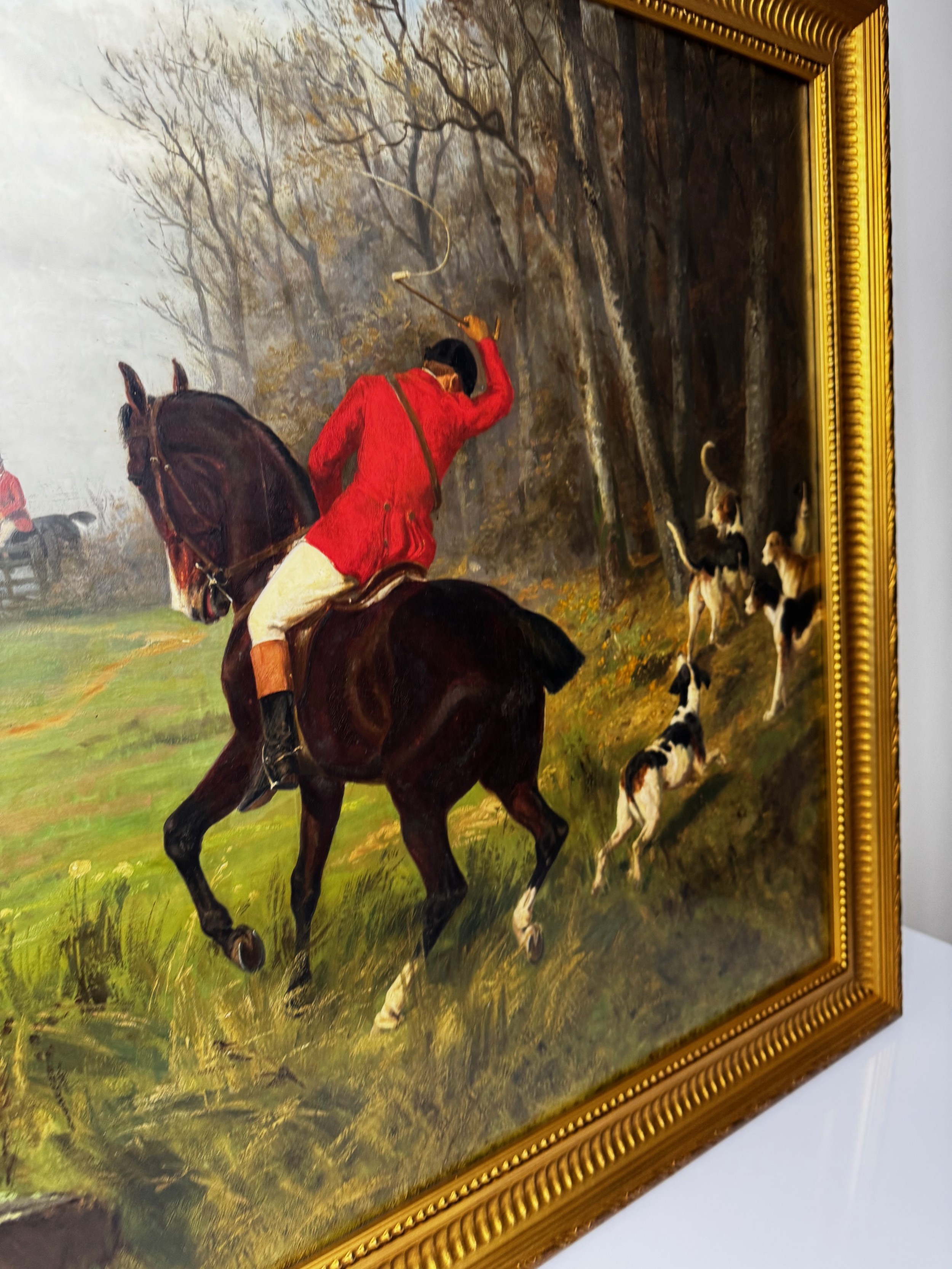
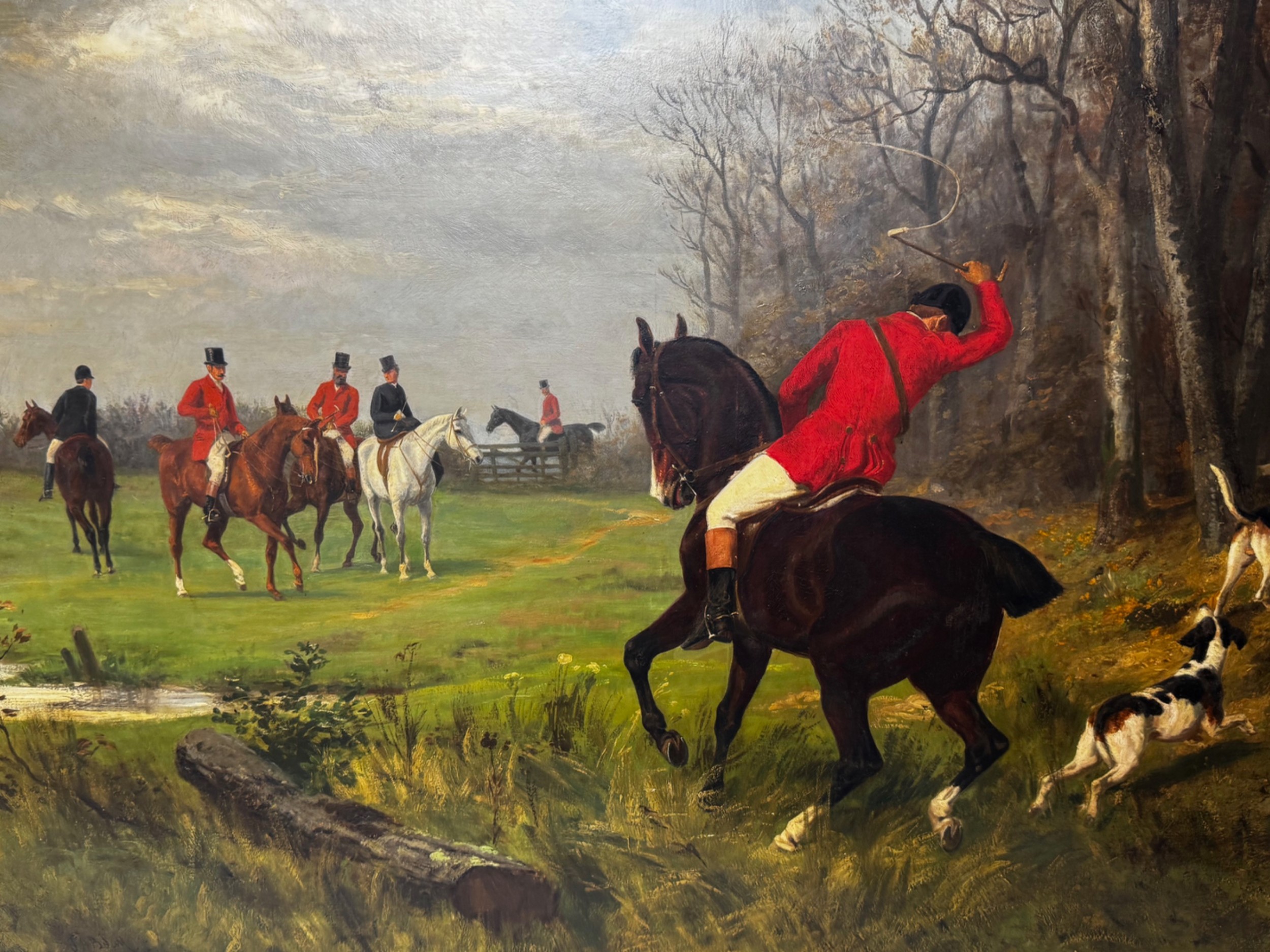
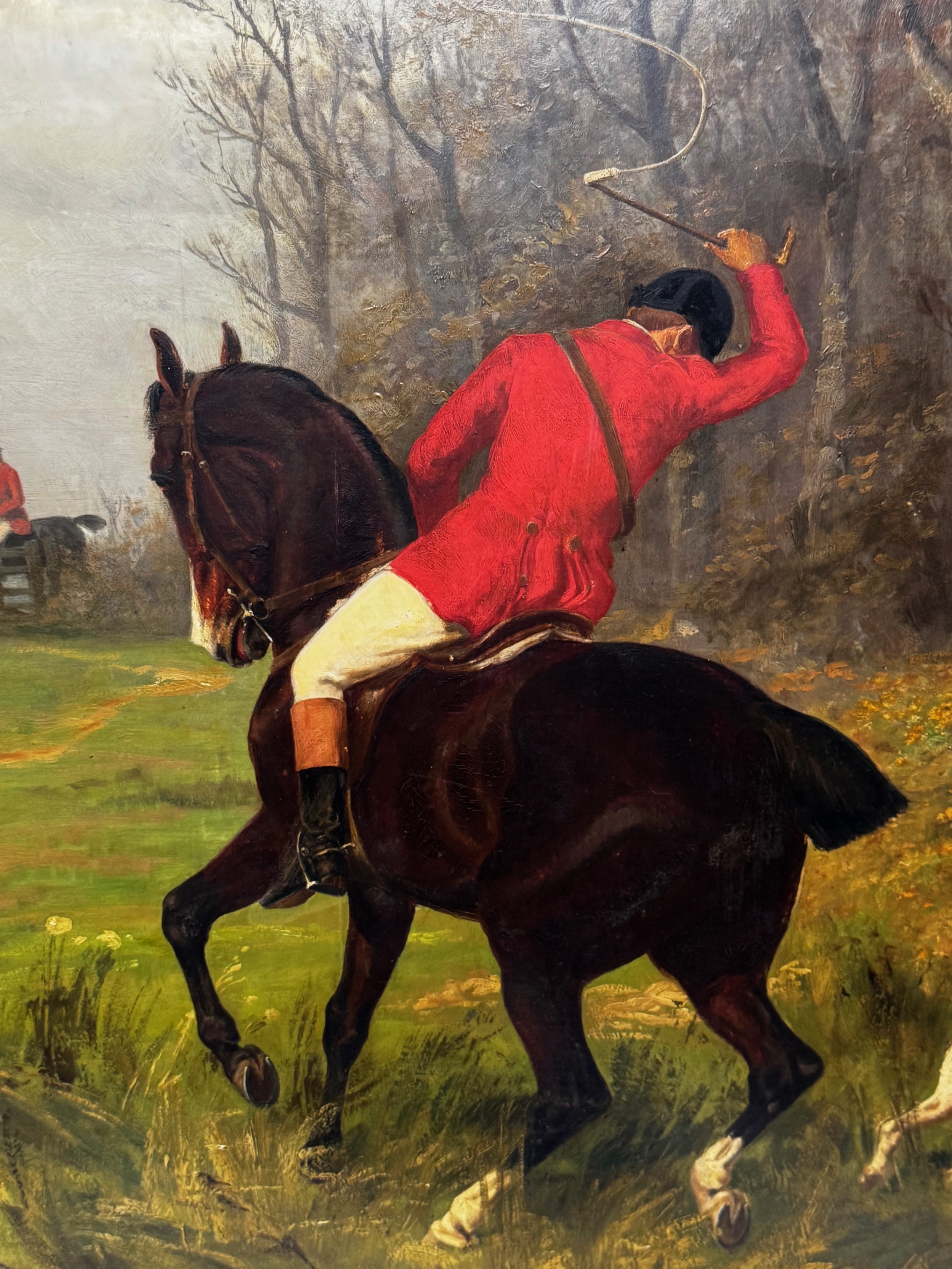
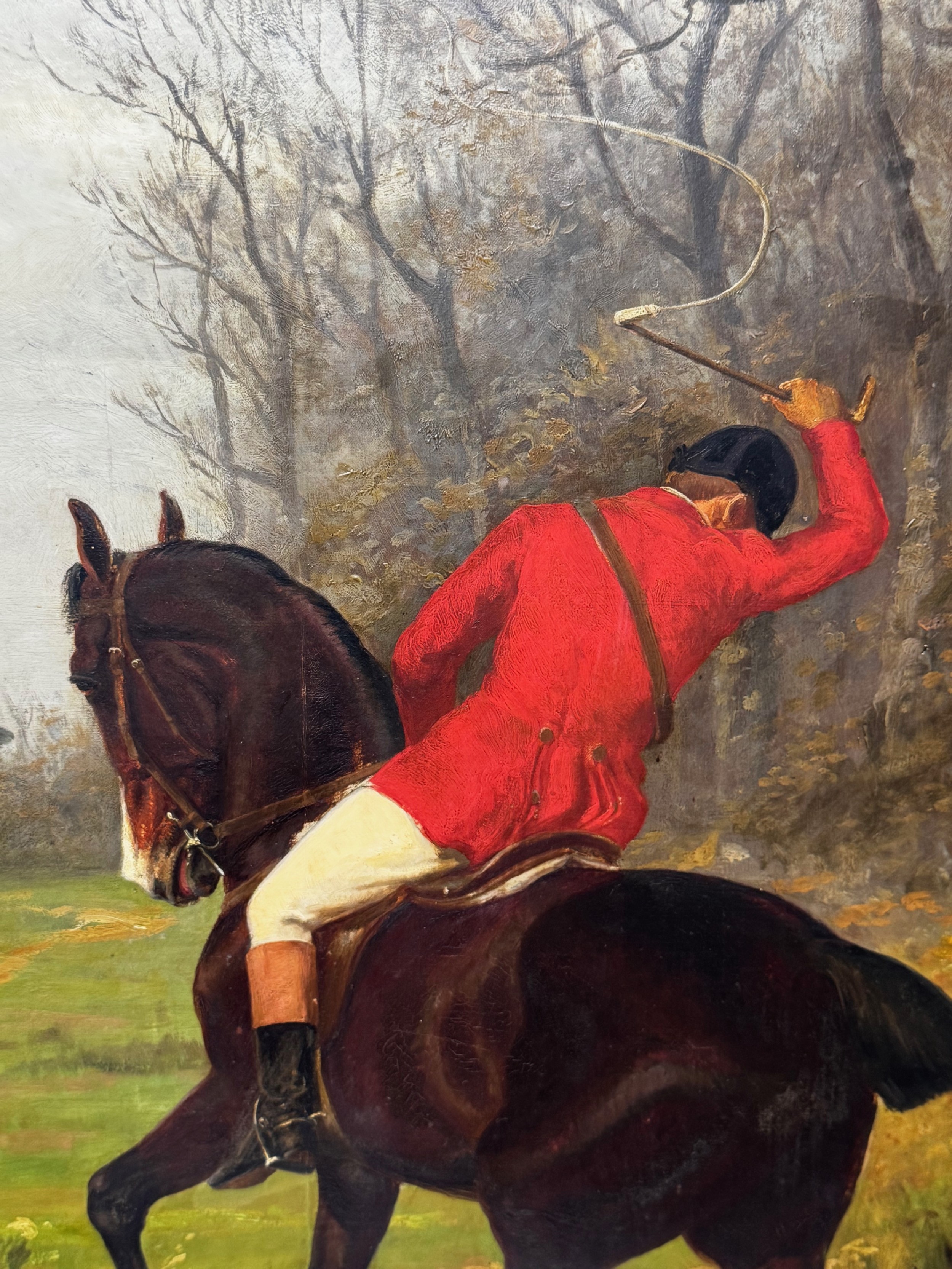
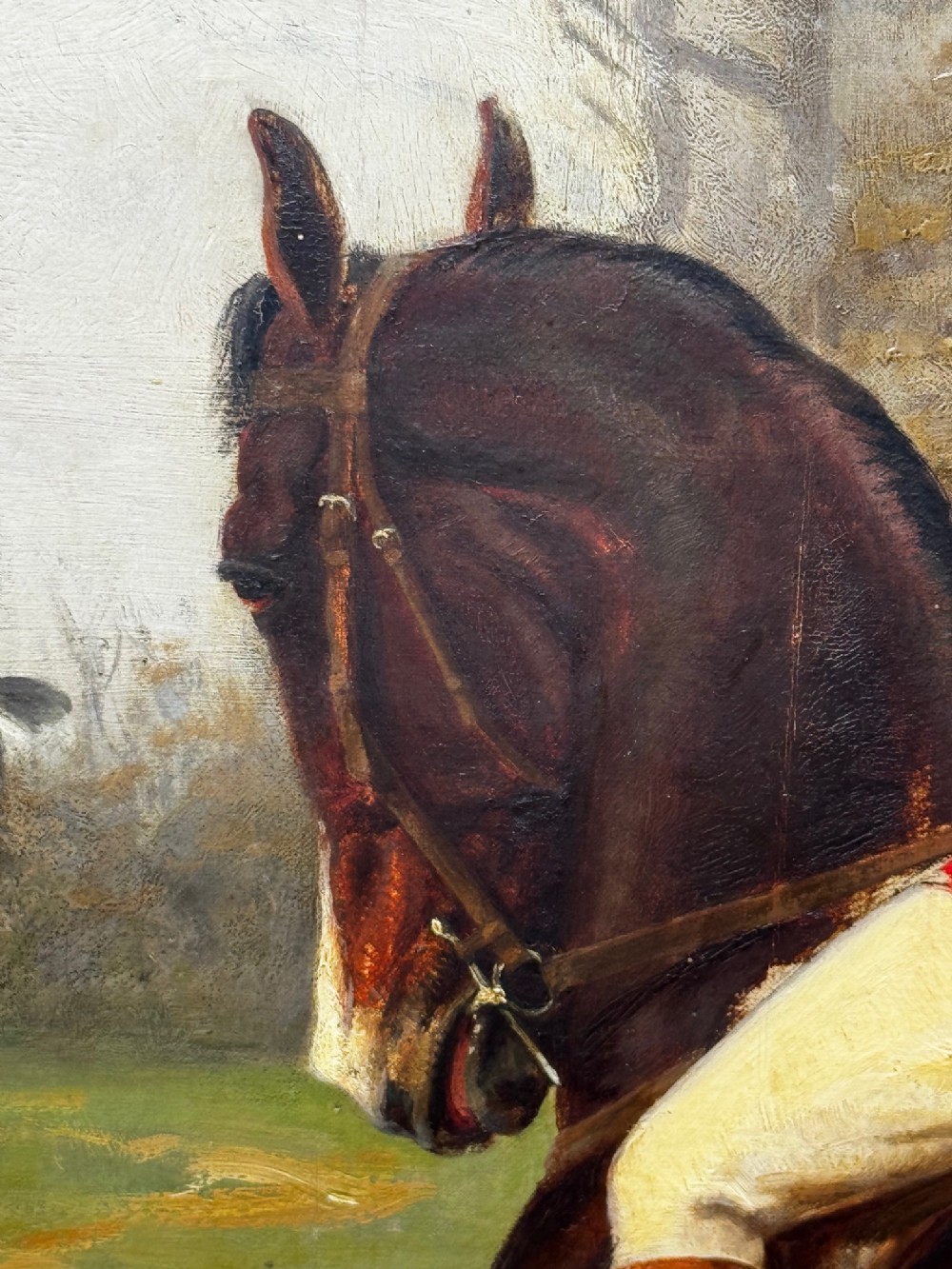
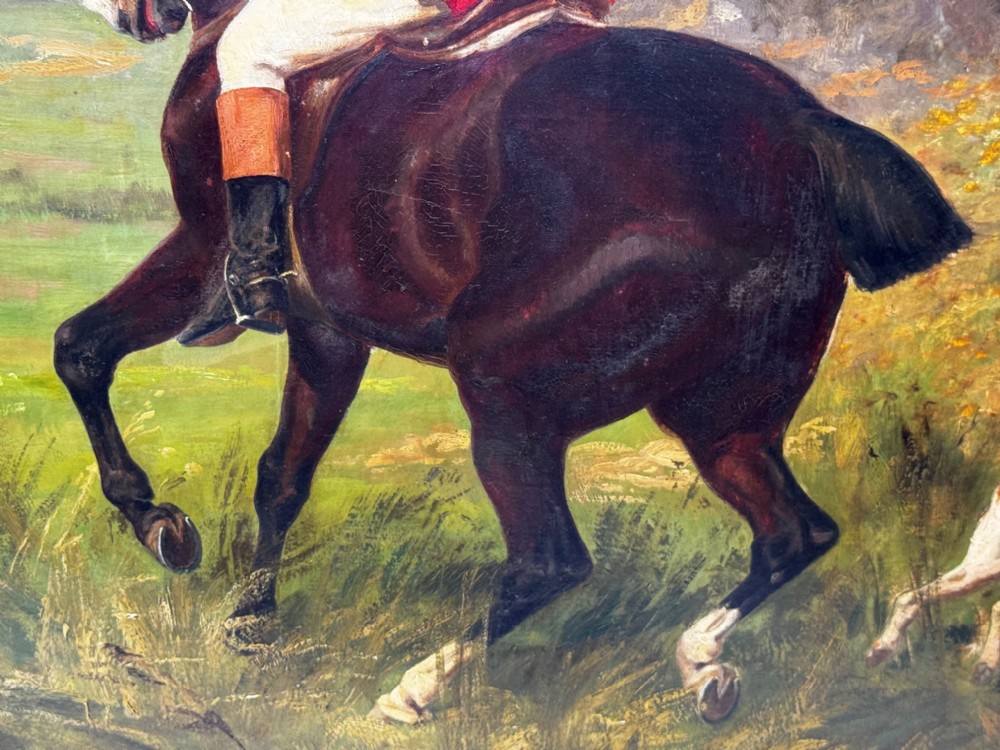
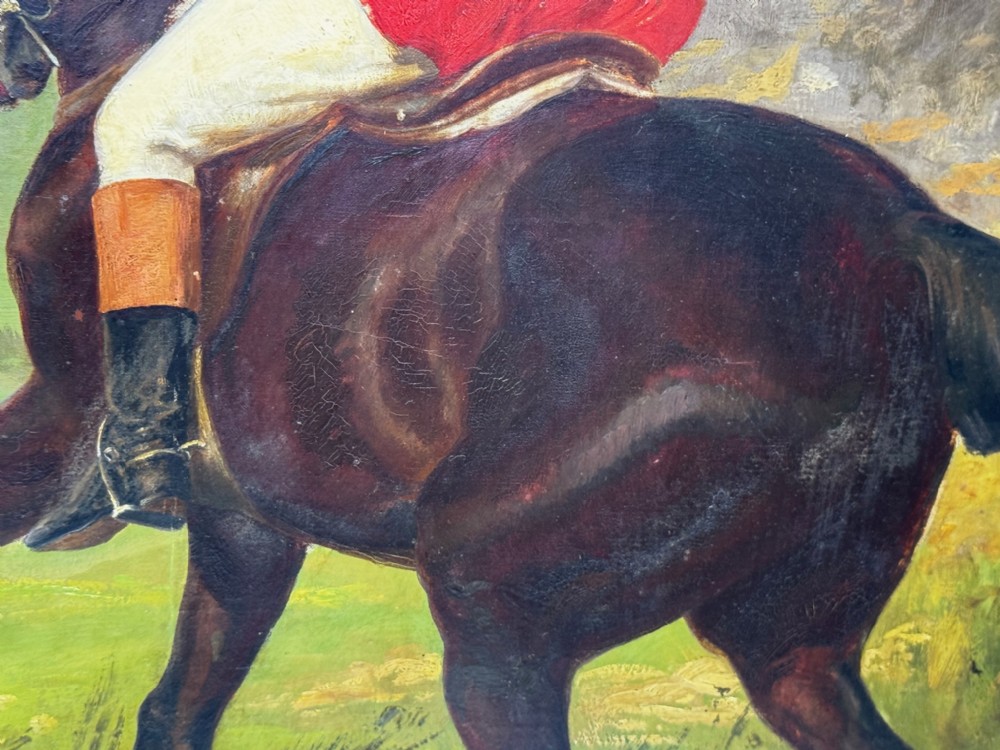
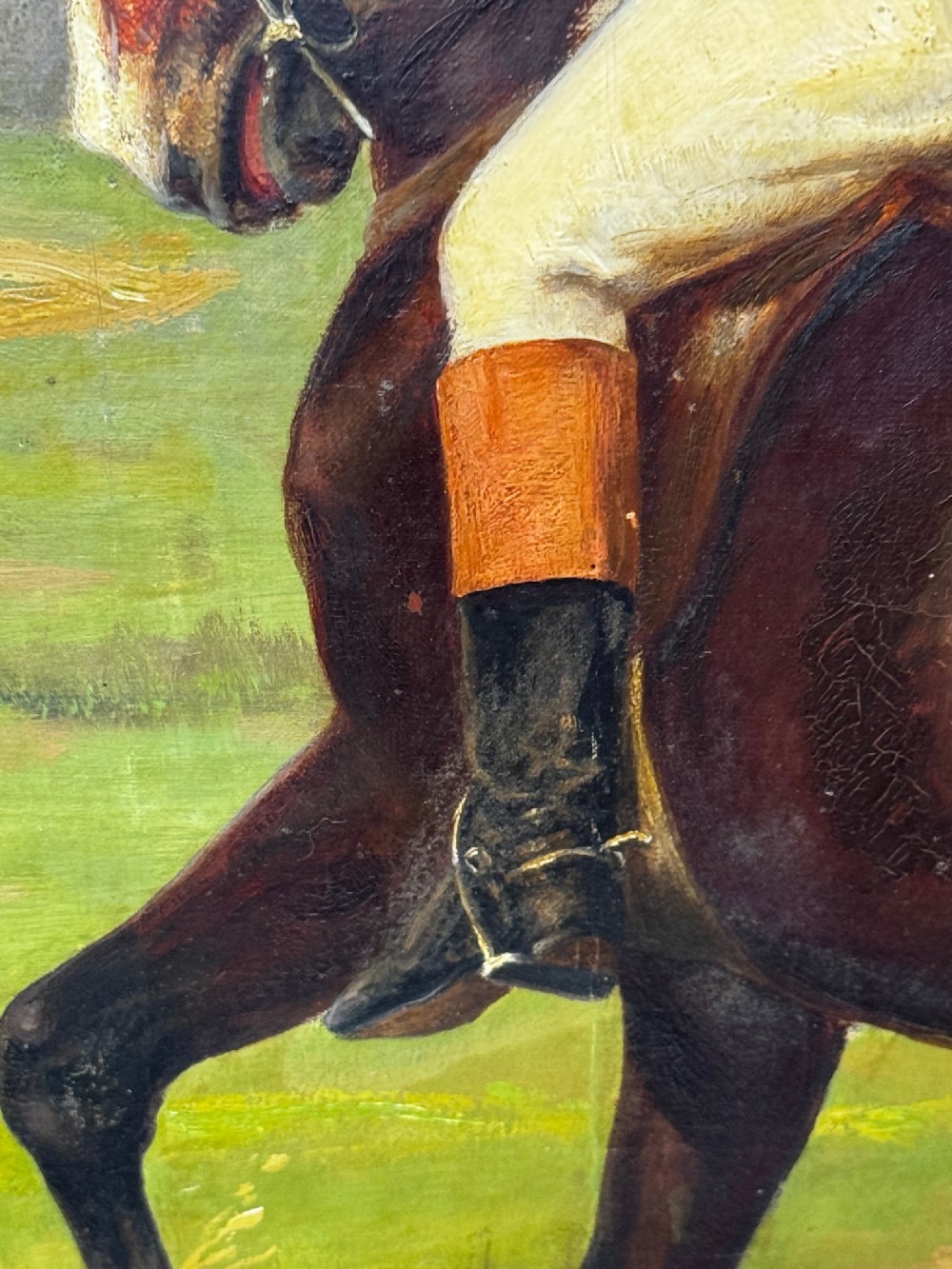
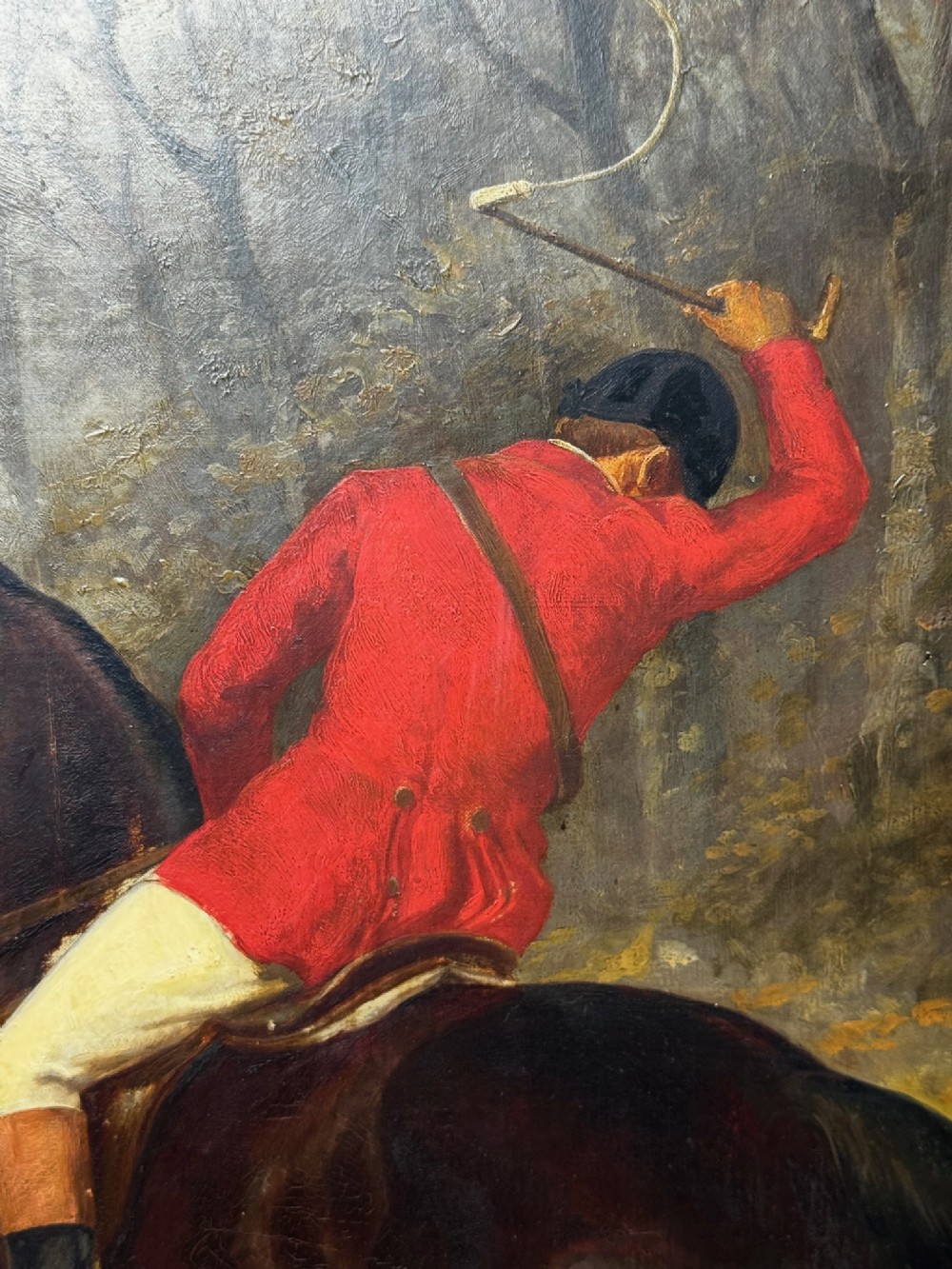
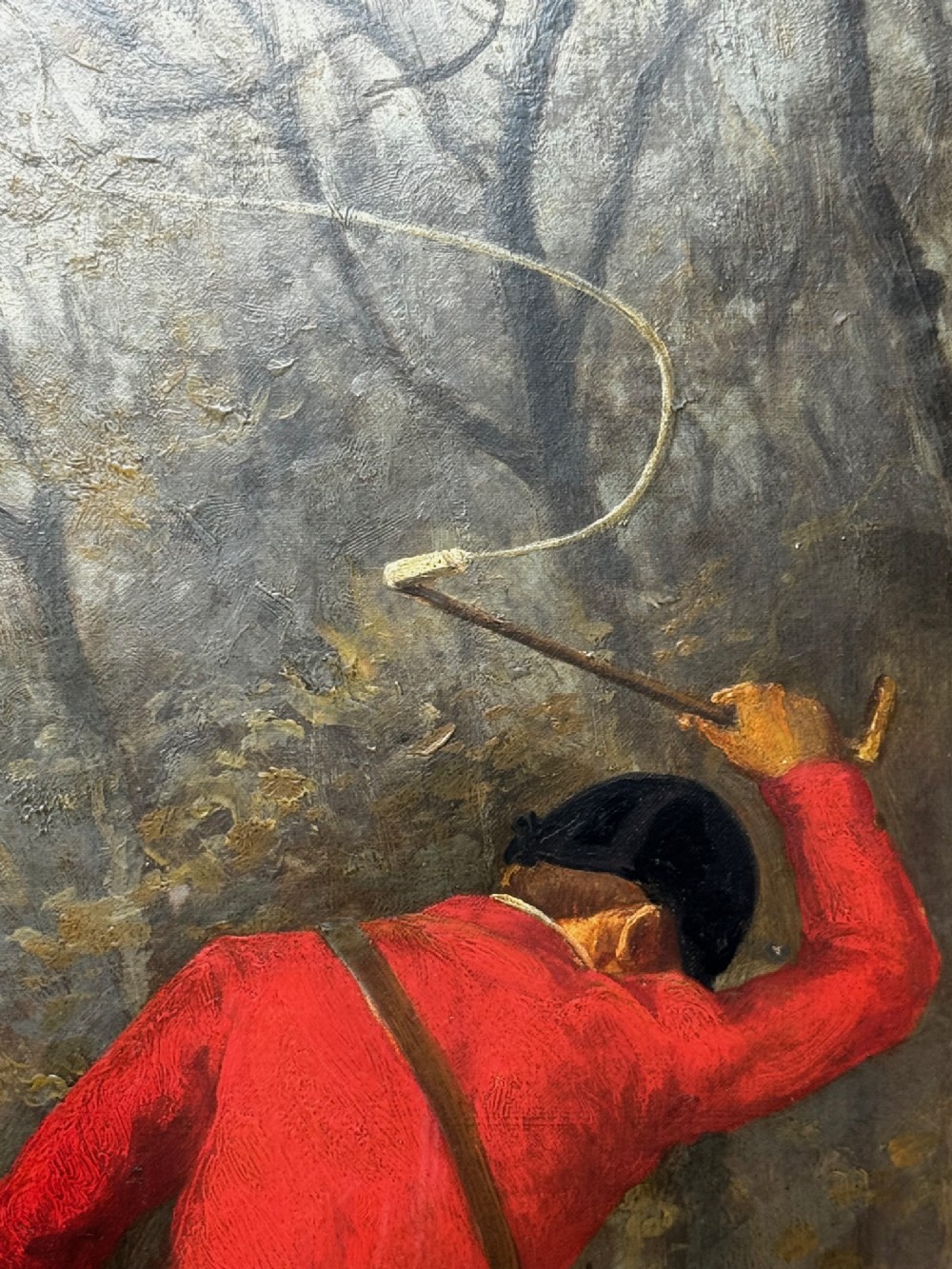
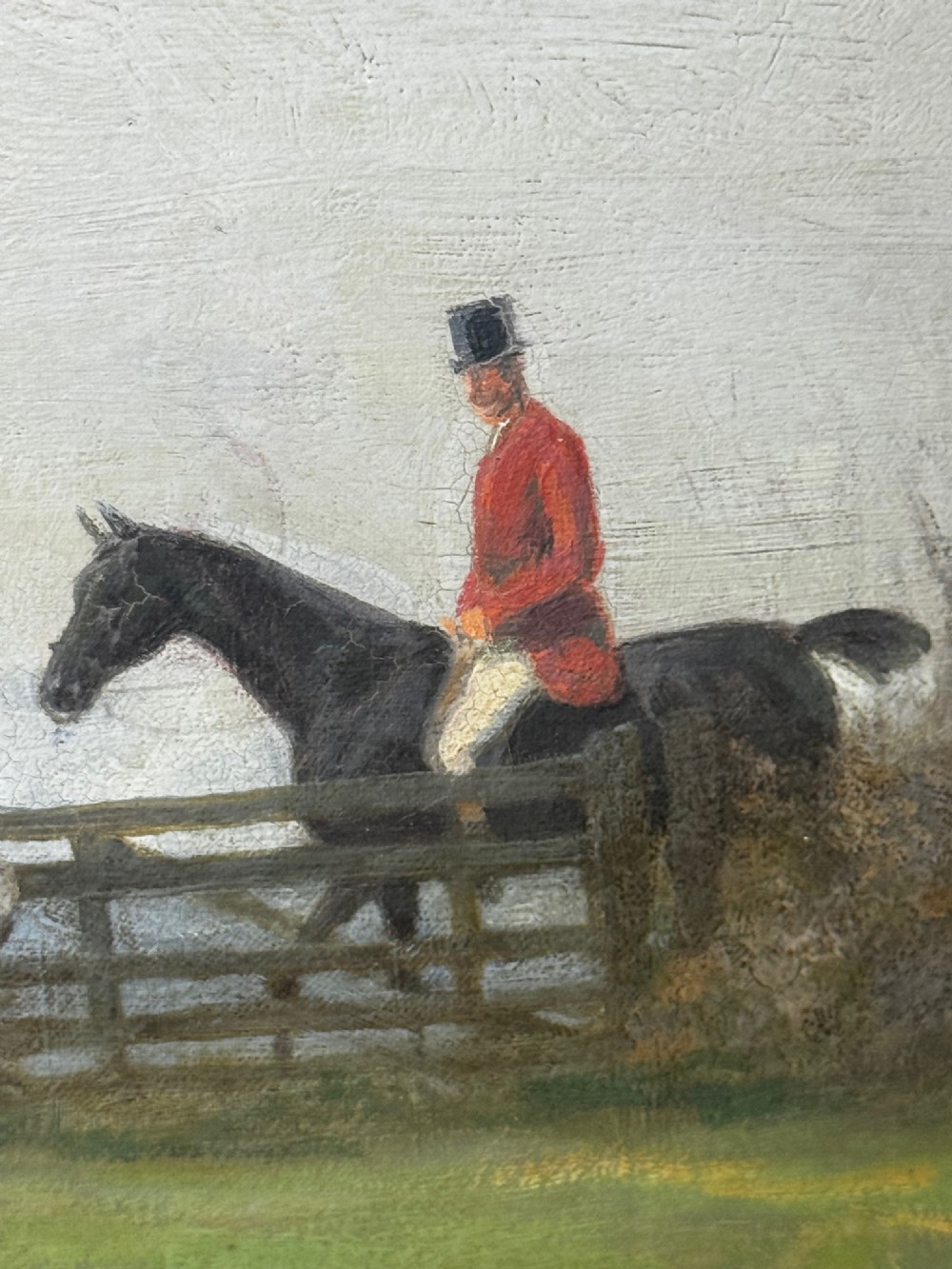
Set on the historic grounds of Norwood House, Beverley in Yorkshire, this painting captures a moment of peak drama in a traditional English fox hunt. In the foreground, the central figure—a huntsman in a vivid scarlet coat—charges forward on a muscular black horse, his iconic Swaine Adeney riding crop whip is raised & captured in mid lash strike whilst in pursuit. His body leans into the action, commanding attention and suggesting the intensity of the chase.
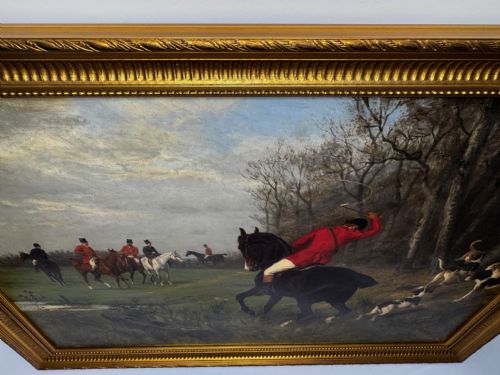
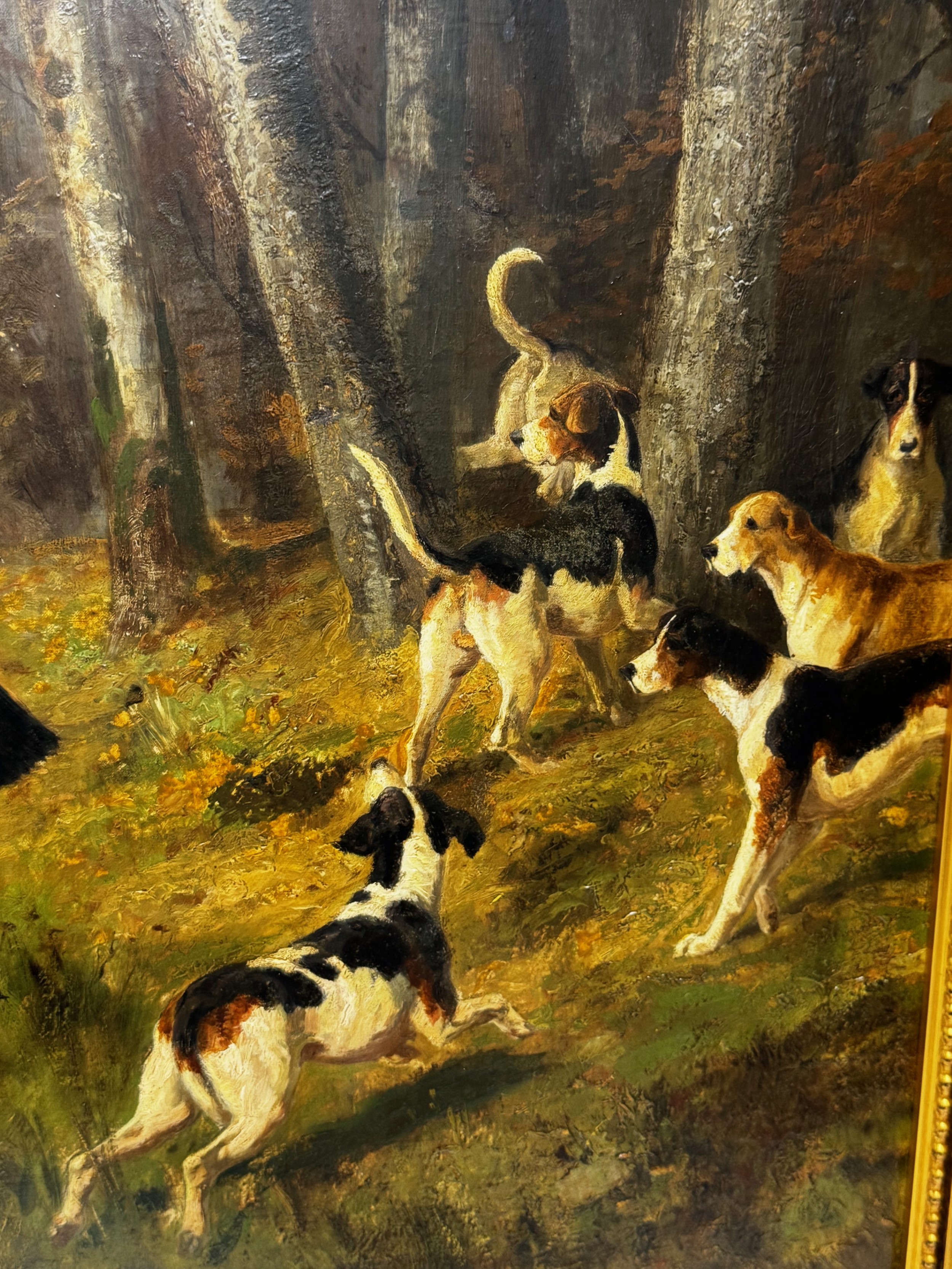
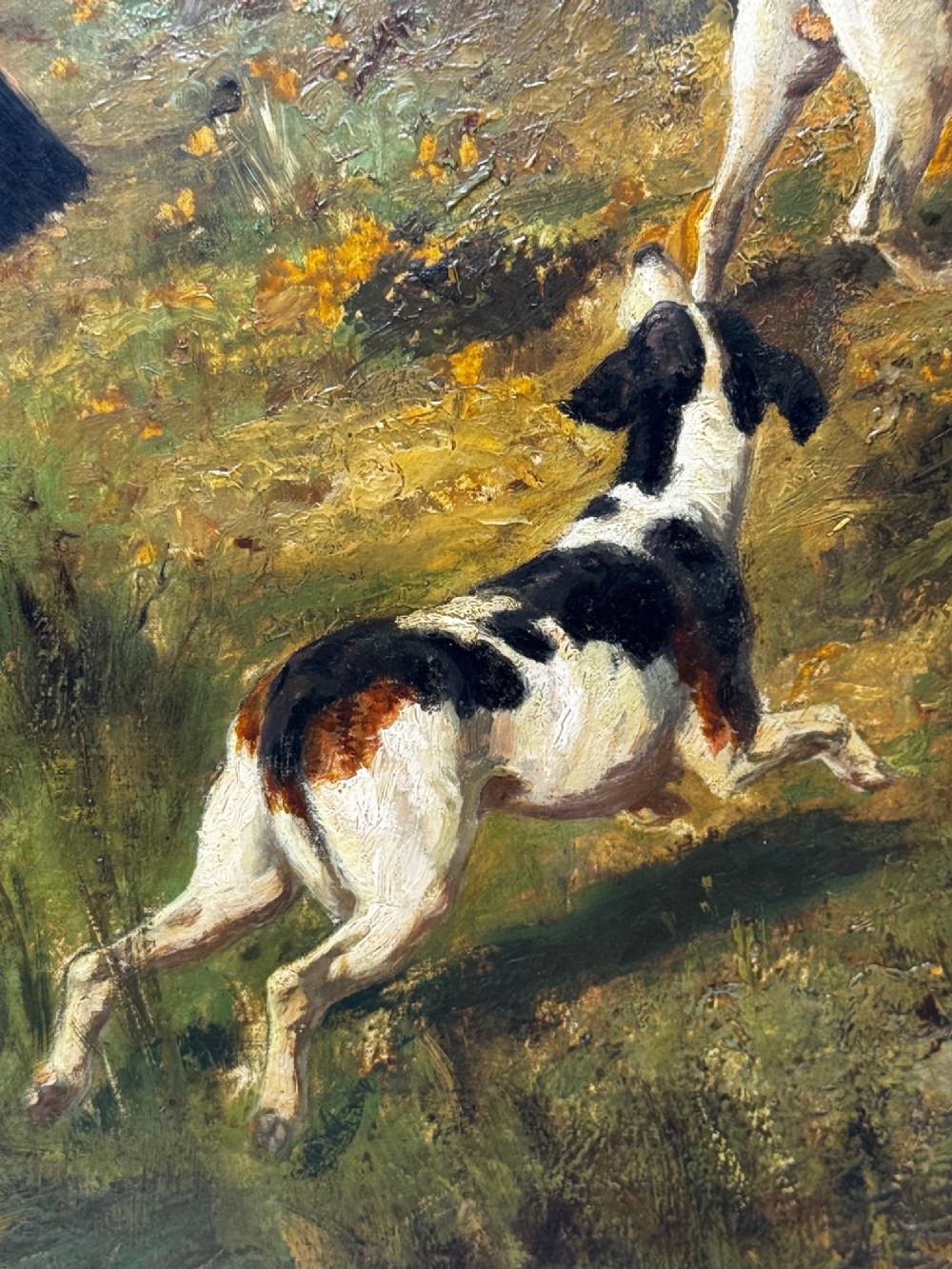
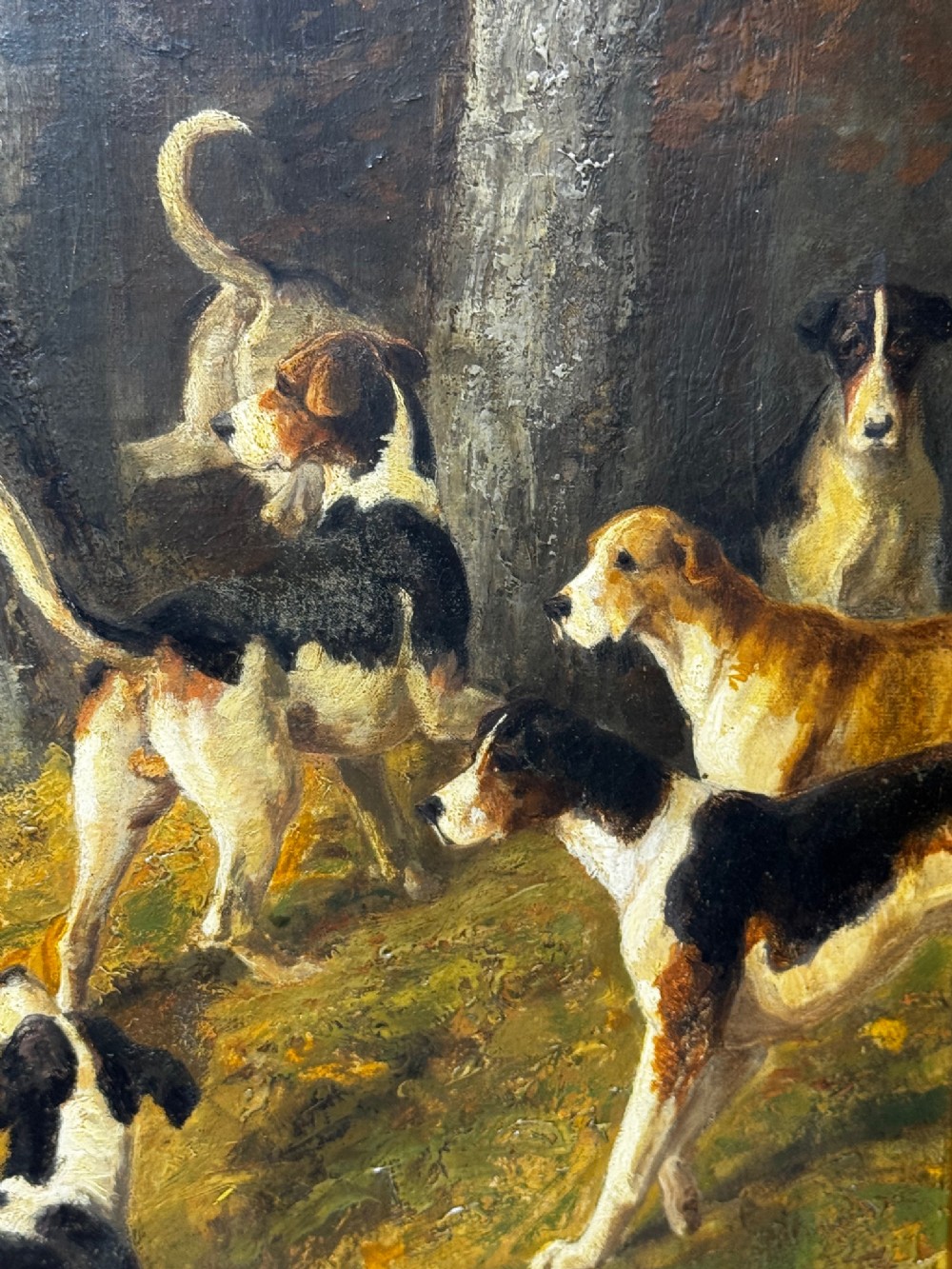
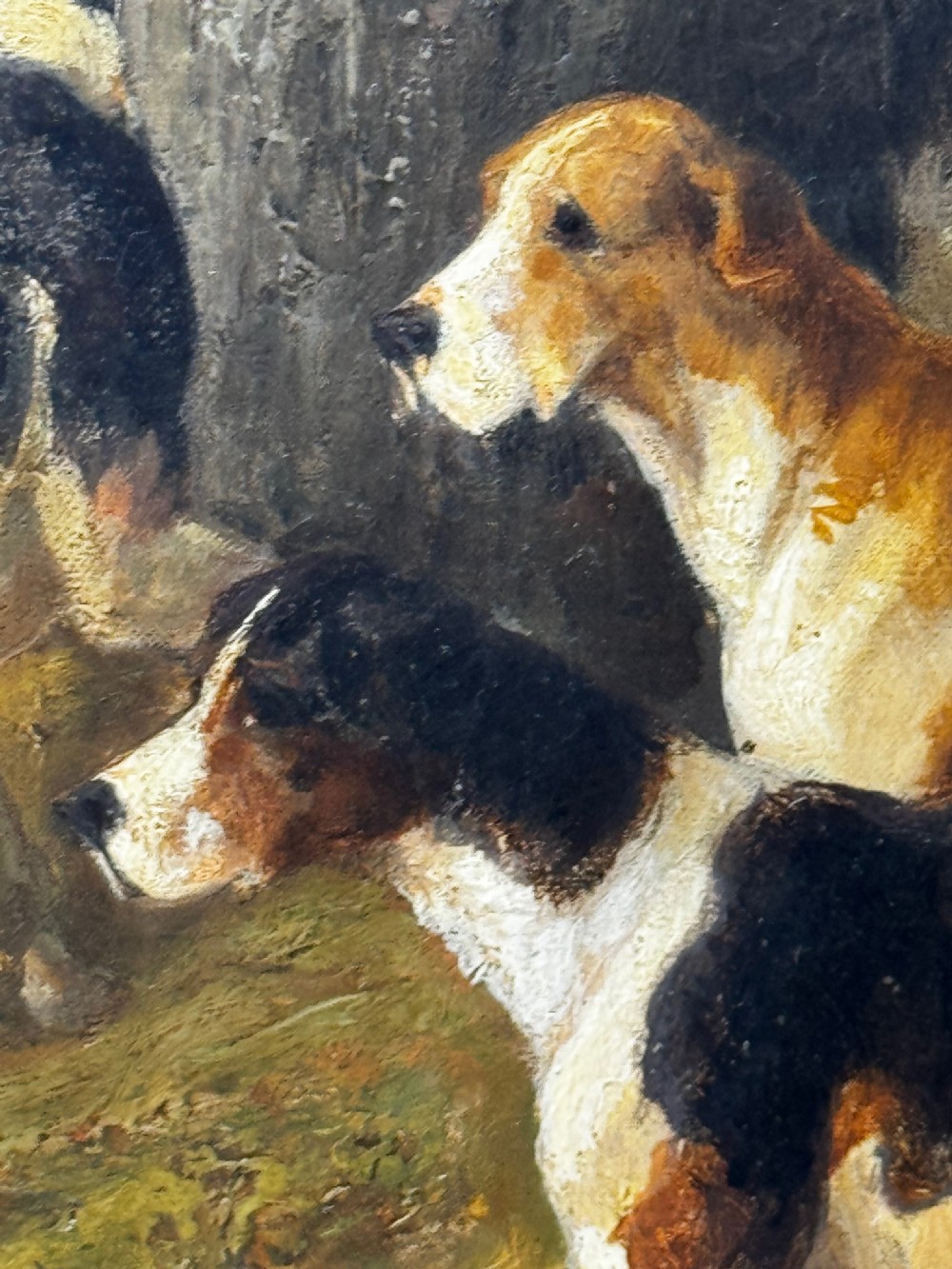
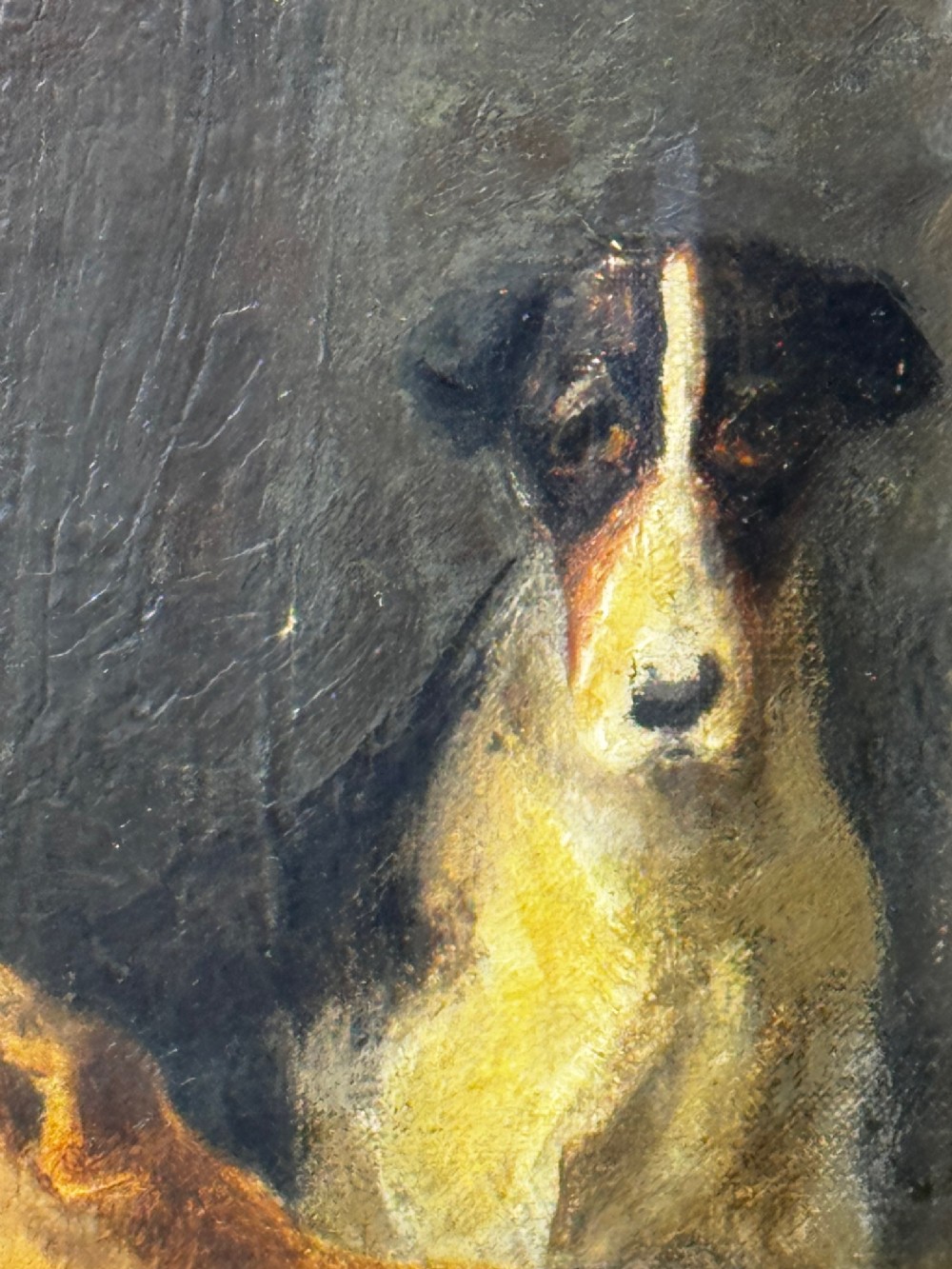
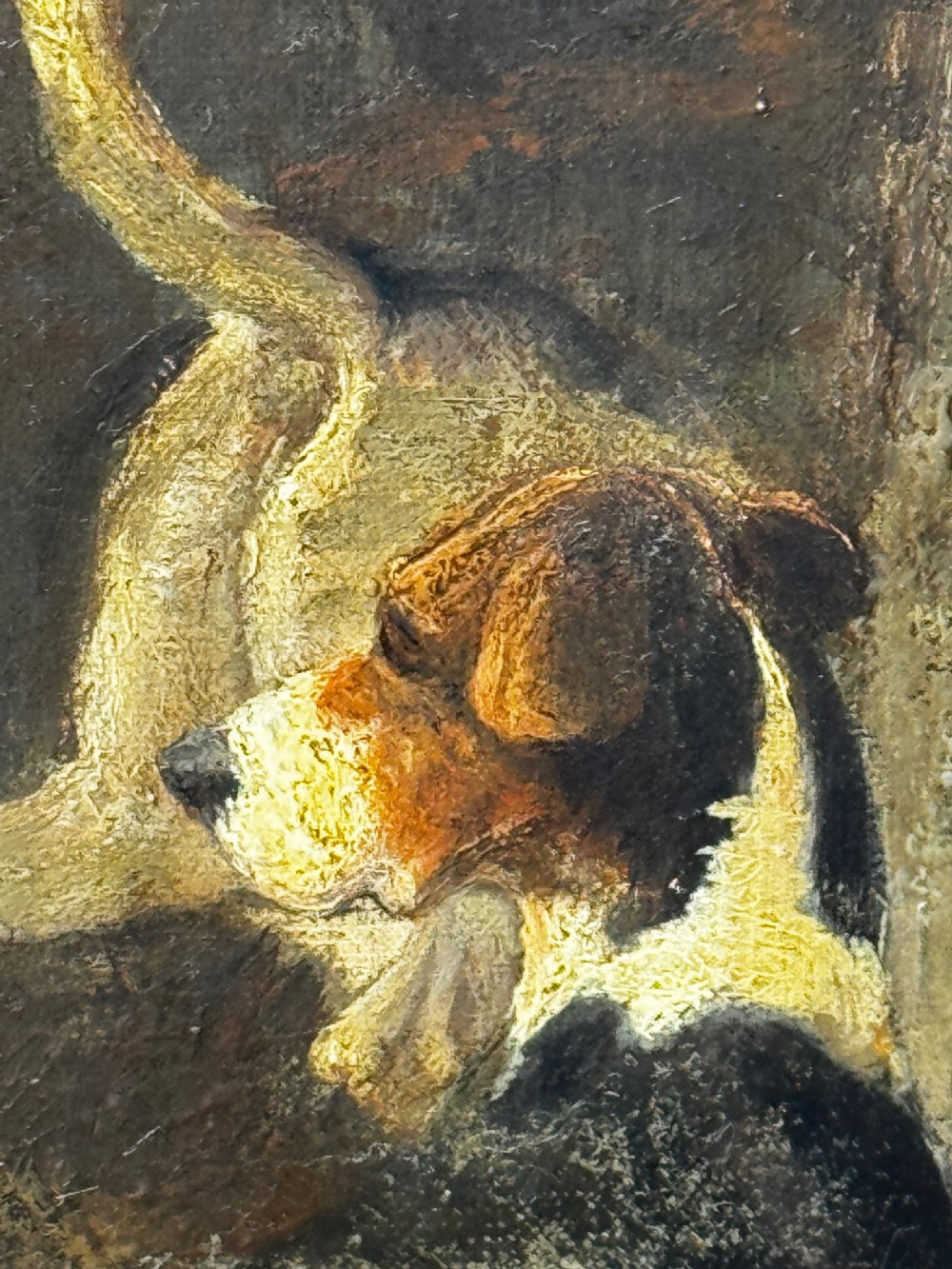
To the right, a lively pack of hounds bursts into the wooded edge, their noses to the ground, bodies stretched in motion, and tails raised in alertness. Each dog is uniquely characterized, a testament to Jay’s keen eye for animal anatomy and behavior.
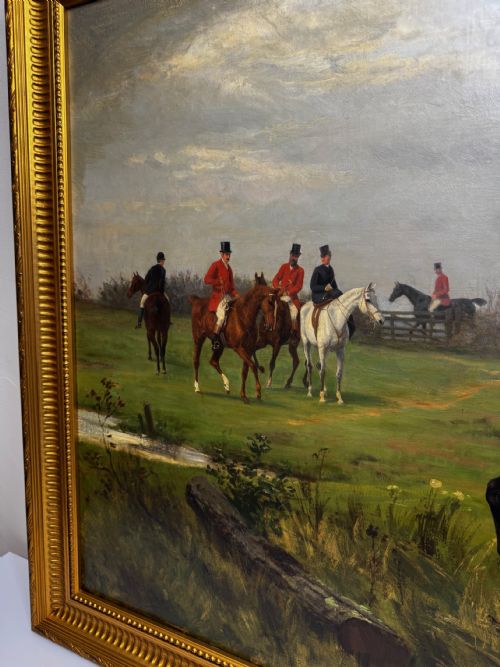
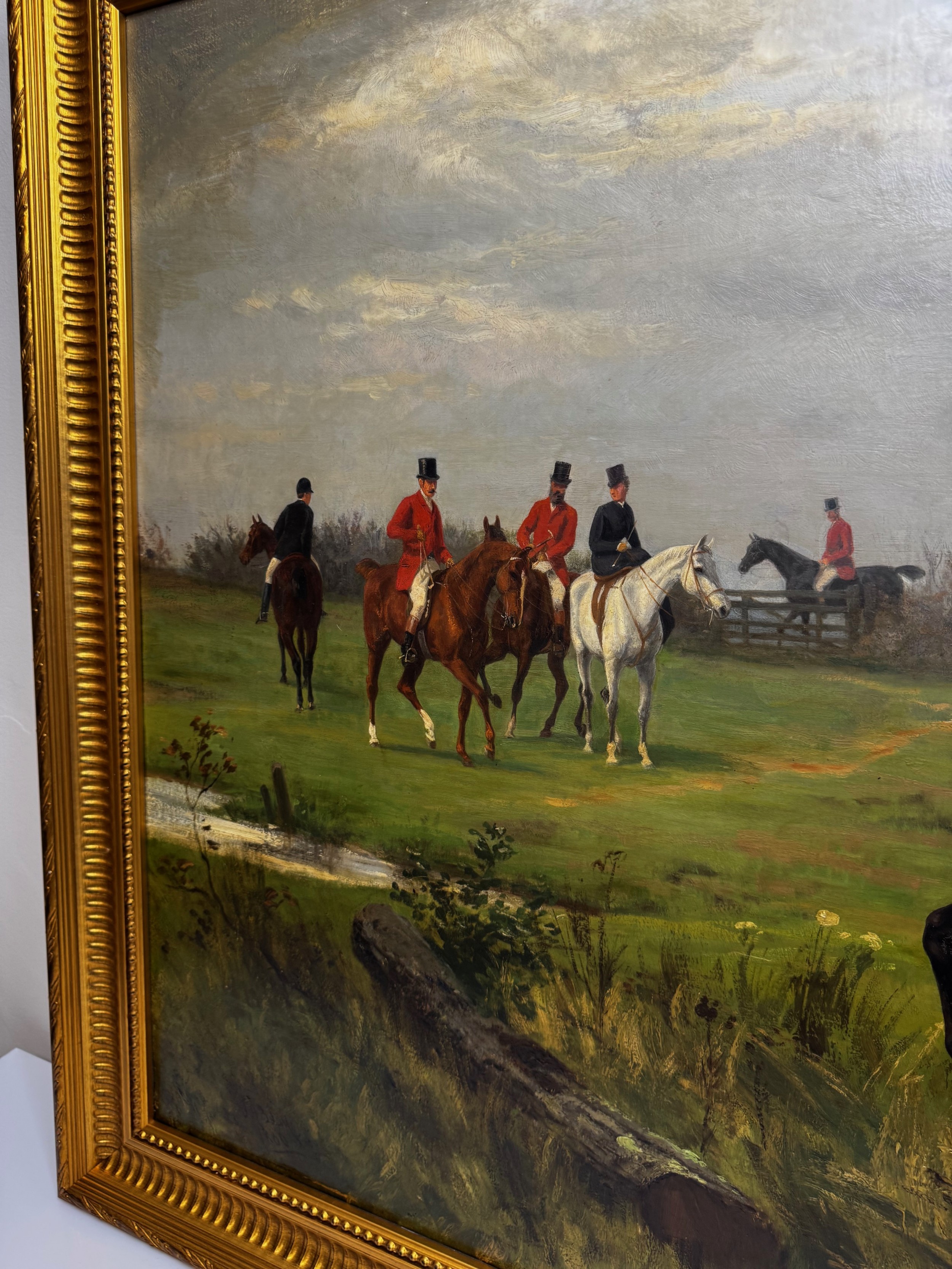
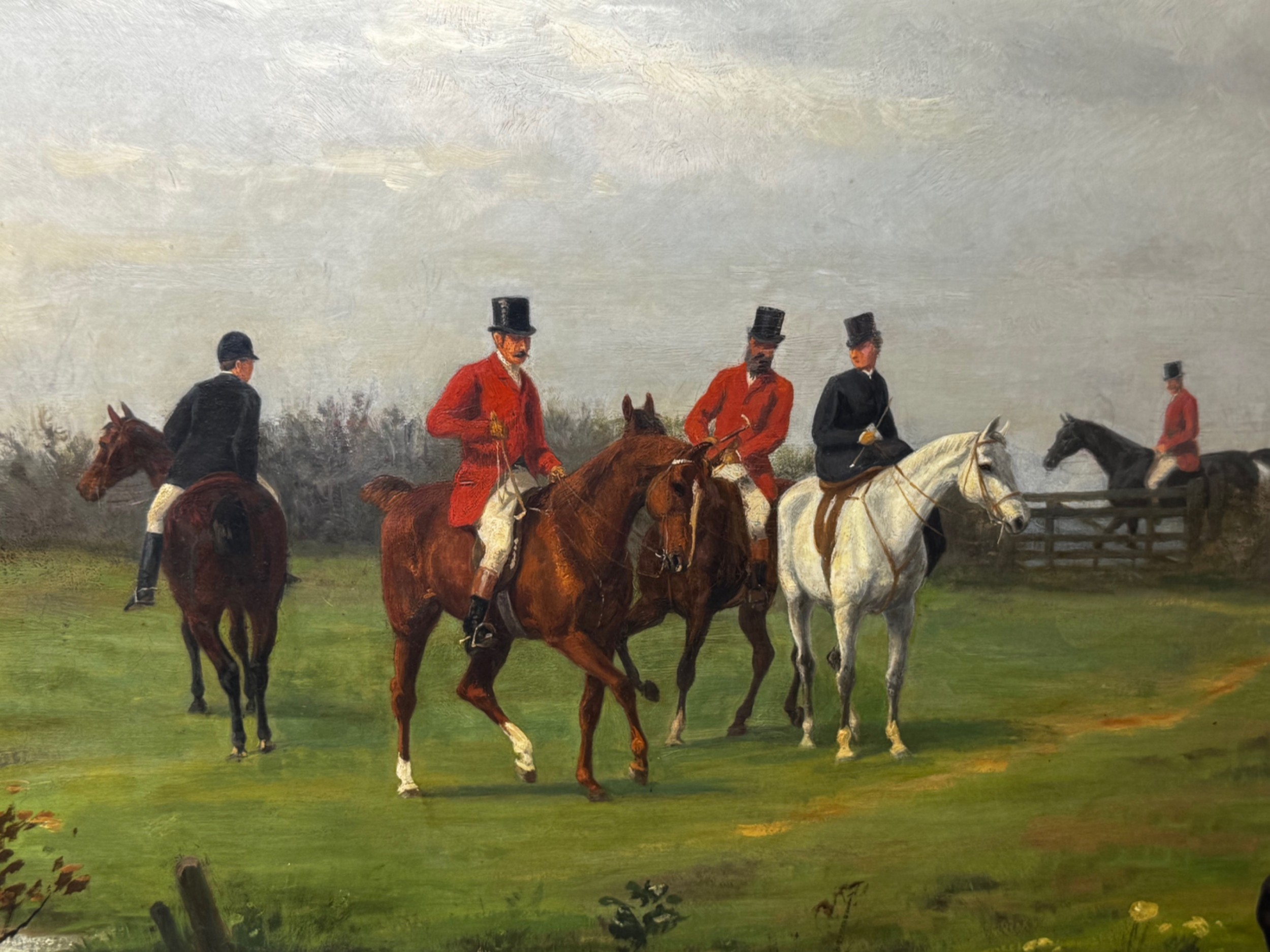
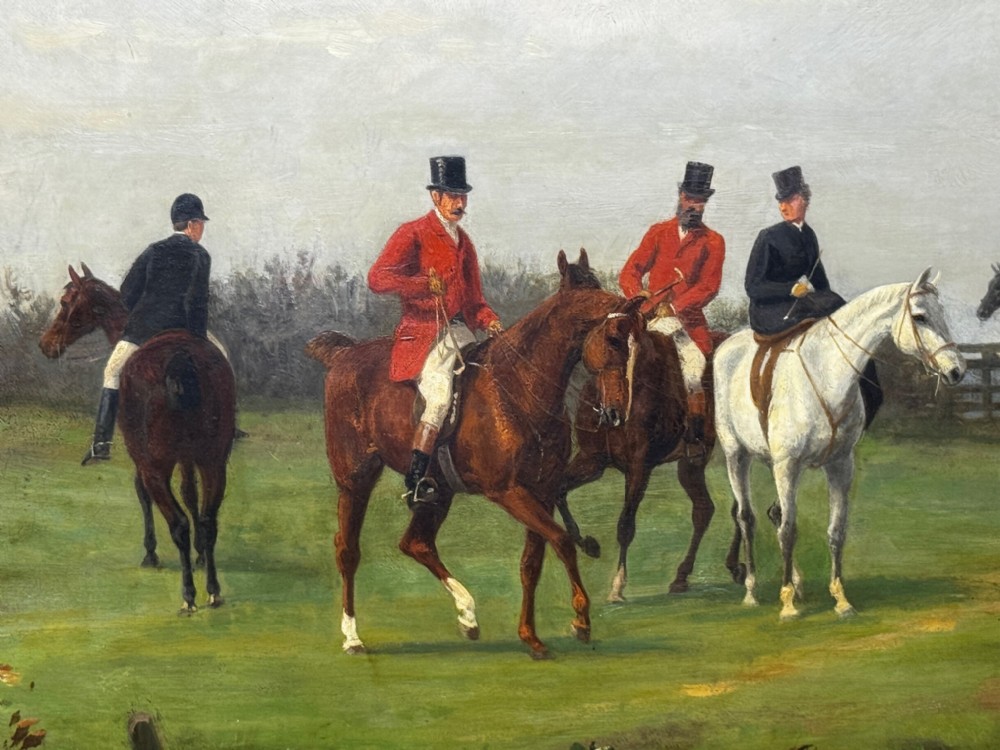
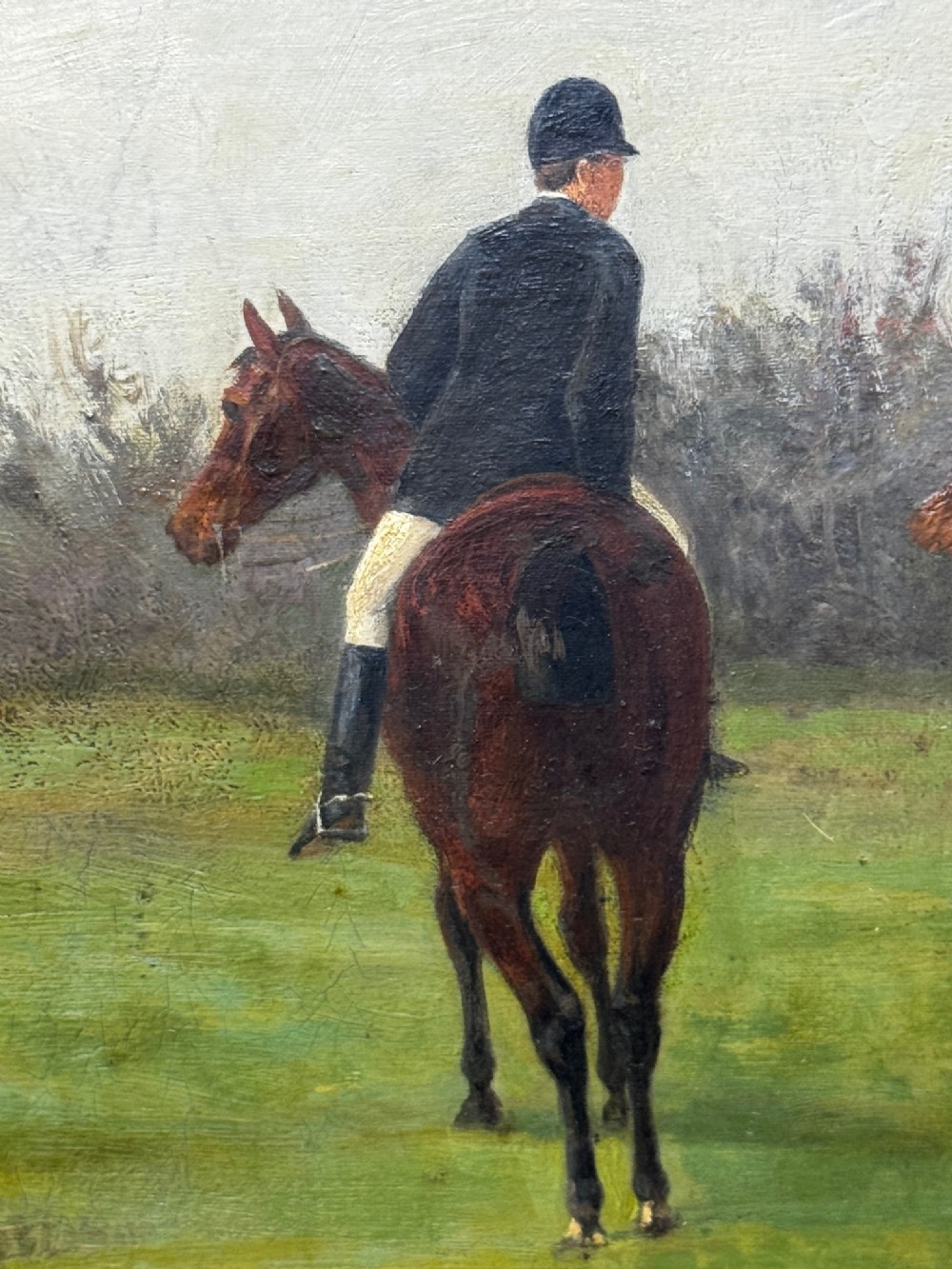
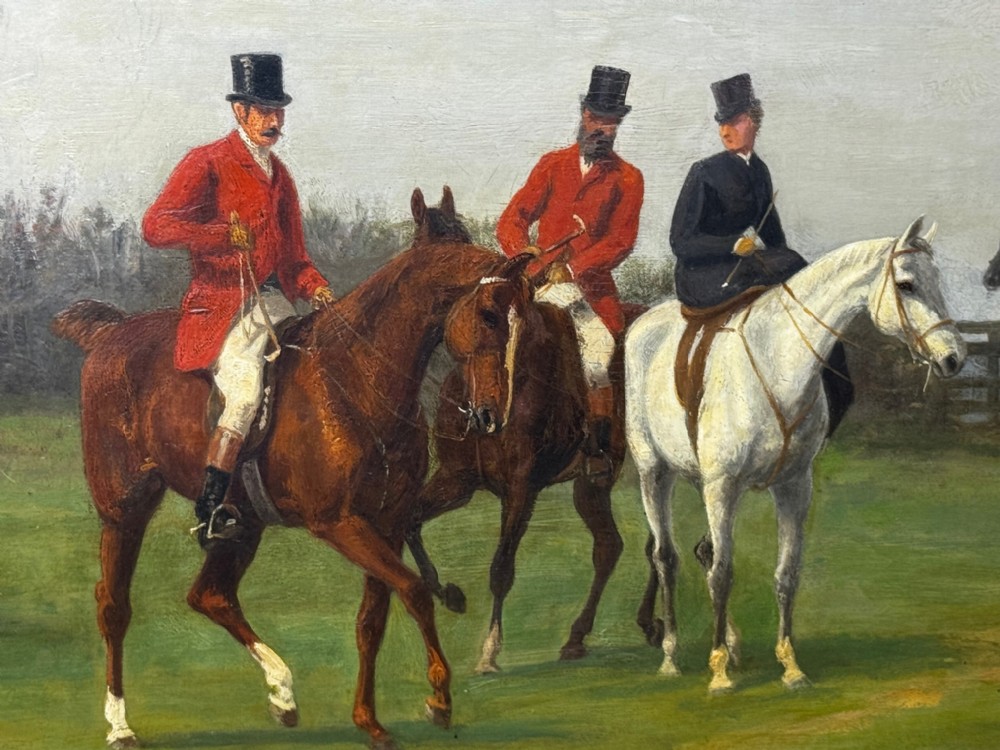
In the middle distance, a line of fellow hunters on horseback—some in red, some in black—waits near a gate, watching the lead rider and pack disappear into the trees. Their positioning adds a sense of anticipation and depth to the scene. The composition draws the eye from the lush green field into the darker, more mysterious forest beyond.
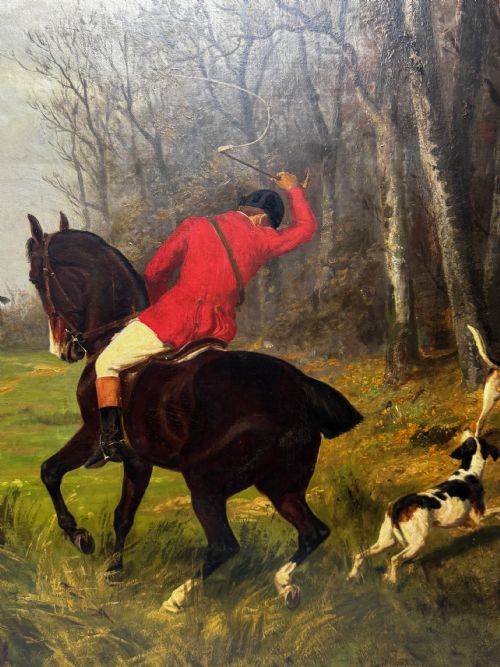
The sky above is rendered in muted greys and soft blues, suggesting either an early morning mist or late afternoon cloud cover, setting a moody, atmospheric tone. Gentle shafts of light break through, catching highlights on the horses’ flanks and the folds of the riders’ coats.
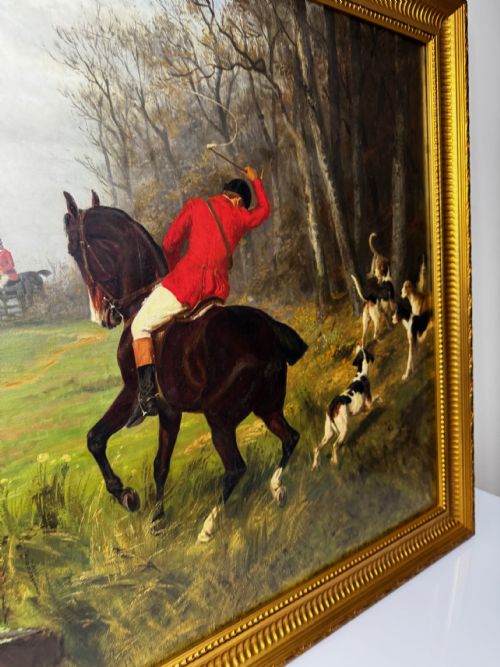
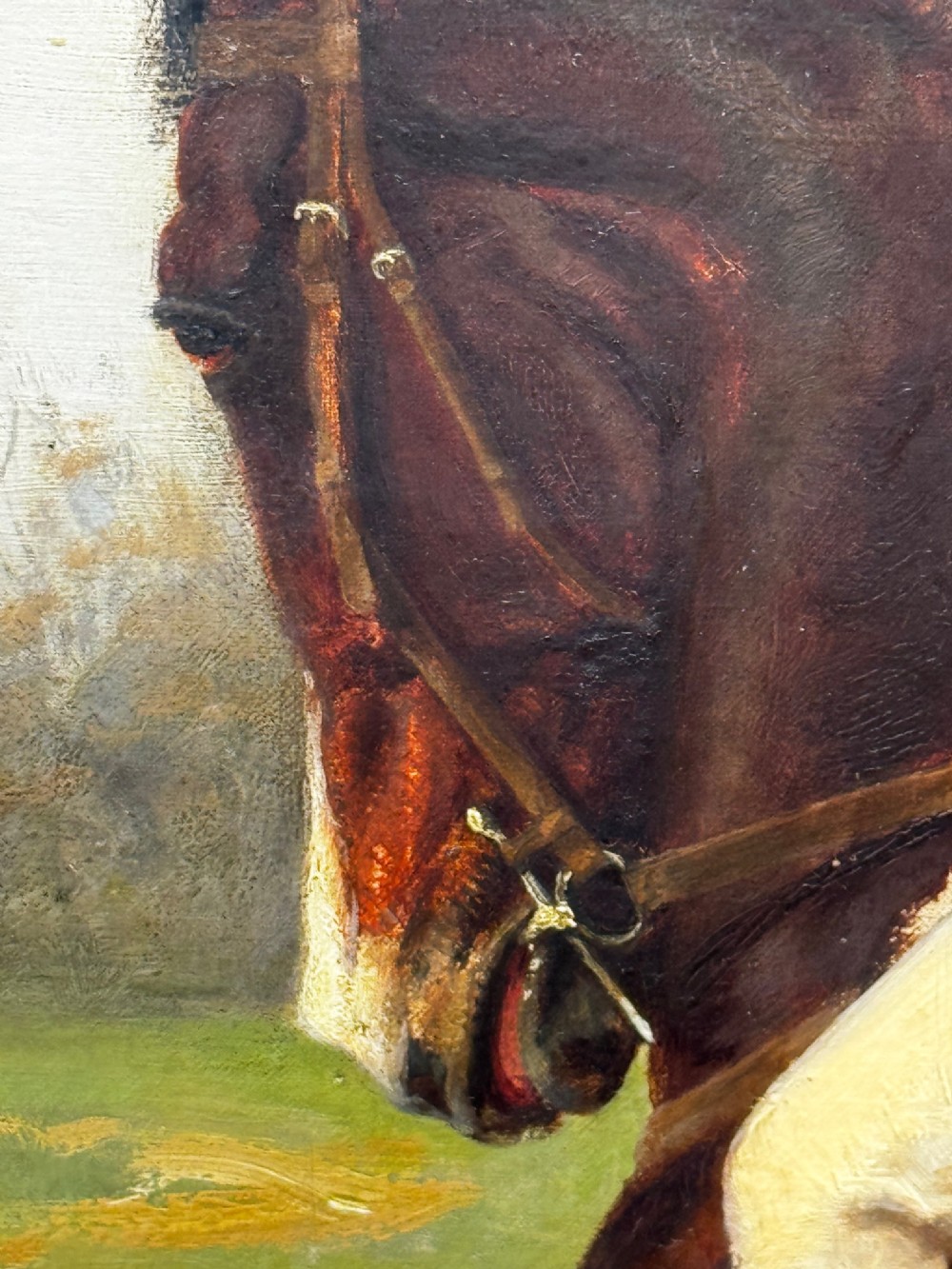
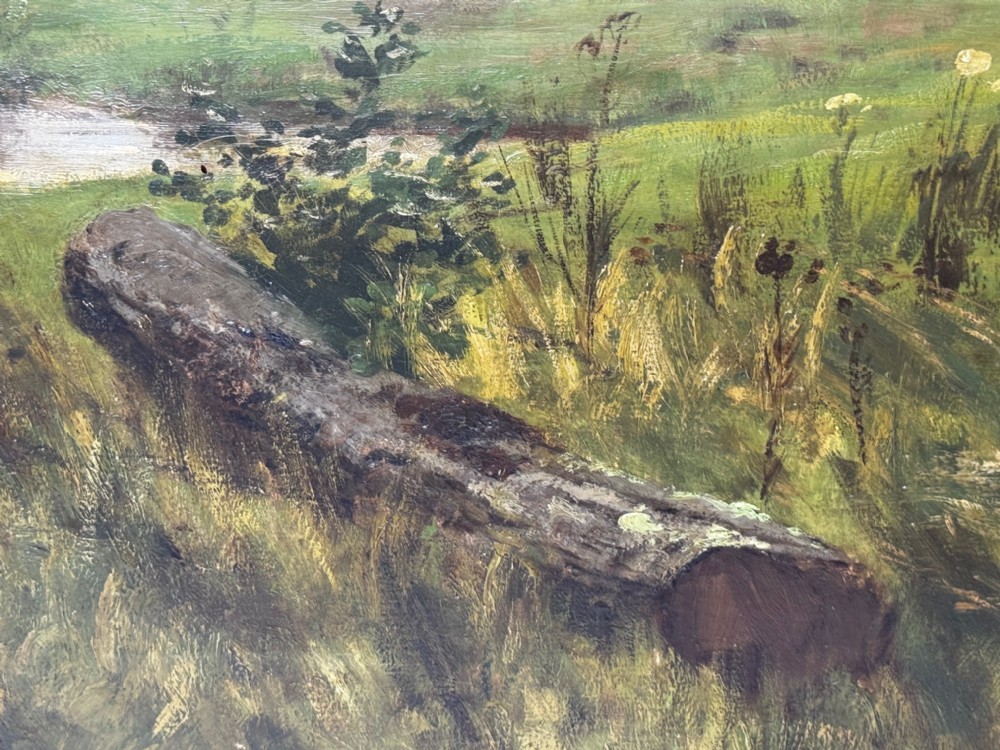
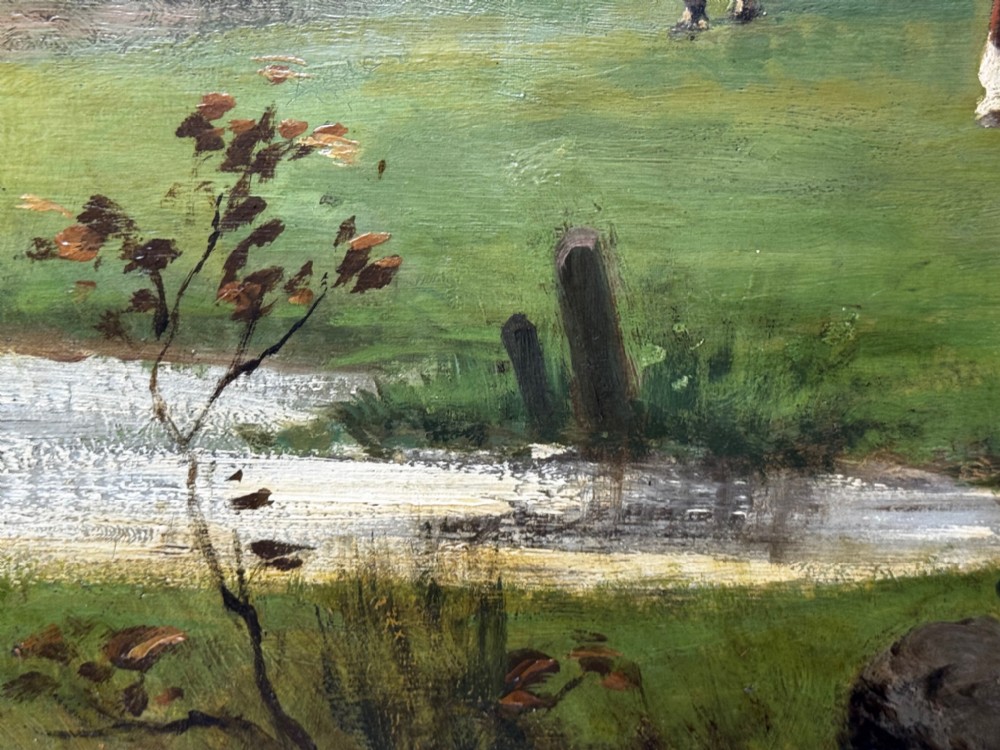
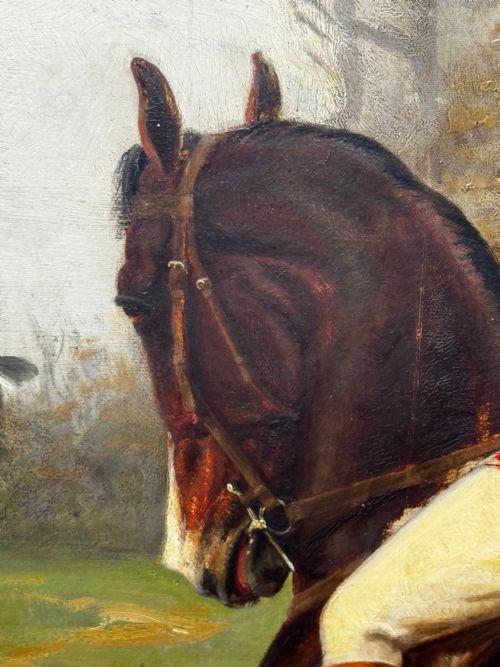
Jay’s brushwork varies masterfully across the canvas. His rendering of the wooded landscape and grassy terrain is expressive, with broader, textured strokes that convey movement and natural variation. By contrast, the horses and figures are depicted with sharp precision—a hallmark of his academic training and deep familiarity with equestrian form.
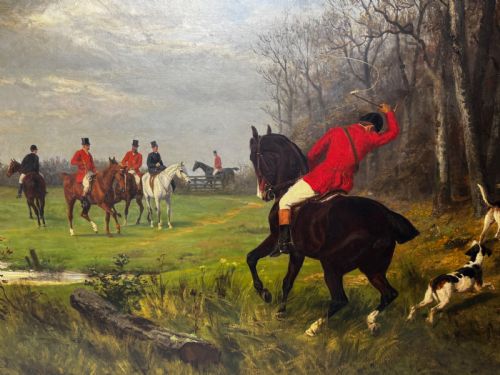
The colour palette is earthy and authentic, dominated by greens, browns, slate blues, and that commanding red, which serves as both a focal point and a visual anchor. The contrast between the bright hunting attire and the dim forest enhances the narrative, adding drama and urgency to the moment.
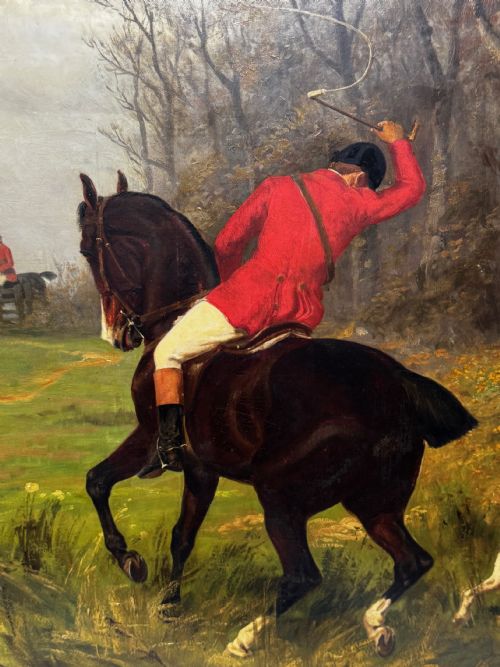
This painting is more than a depiction of sport—it’s a study of motion, light, and Victorian tradition, all brought to life through Jay’s confident technique and deep respect for his subject matter.
?? Signed
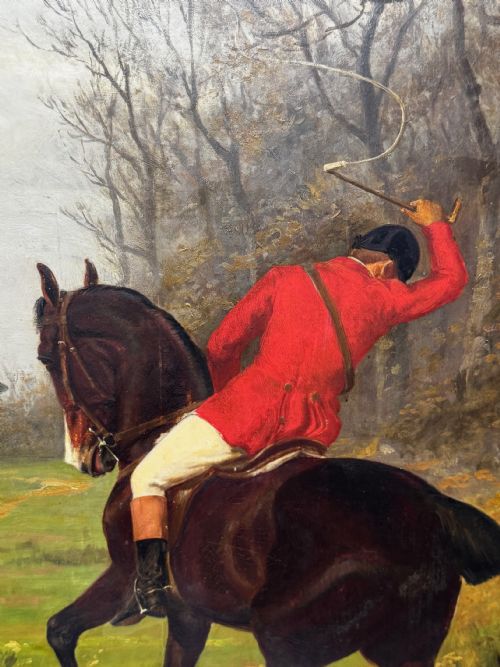
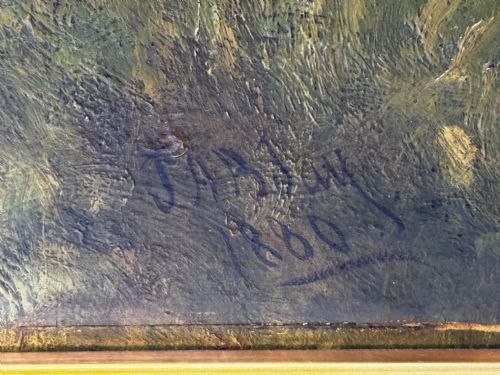
The painting is signed by the artist, lower right.
????? About the Artist
James Albert Buchanan Jay (1838–1888) was a British artist known for his equestrian, hunting, and rural landscapes. Born into the landed gentry of Herefordshire, Jay was immersed in the culture of country sports from a young age. He trained at the Royal Academy Schools and began his career illustrating children's literature before fully committing to painting.
Jay exhibited at the Royal Academy (notably in 1878 and 1880), the Walker Art Gallery, and several regional exhibitions. He spent time in Germany and later traveled to Australia in pursuit of racehorse commissions before his untimely death in Sydney in 1888. His works, while rare, are praised for their dynamism, detail, and authenticity, and represent a vital thread in the tradition of Victorian sporting art. His finest works fetch in excess of $32,000 US dollars. In our opinion this is his finest and most notable work.
??? Frame
Presented in a recently added Larson-Juhl gold leaf s
Cheshire Antiques Consultant Ltd has dated this piece to the Victorian era.
Source the historic in 17th, 18th, 19th & 20th century fine arts, painting, sculptures & collectibles
You can view the stock and full dealer information on the Cheshire Antiques Consultant Ltd Profile Page
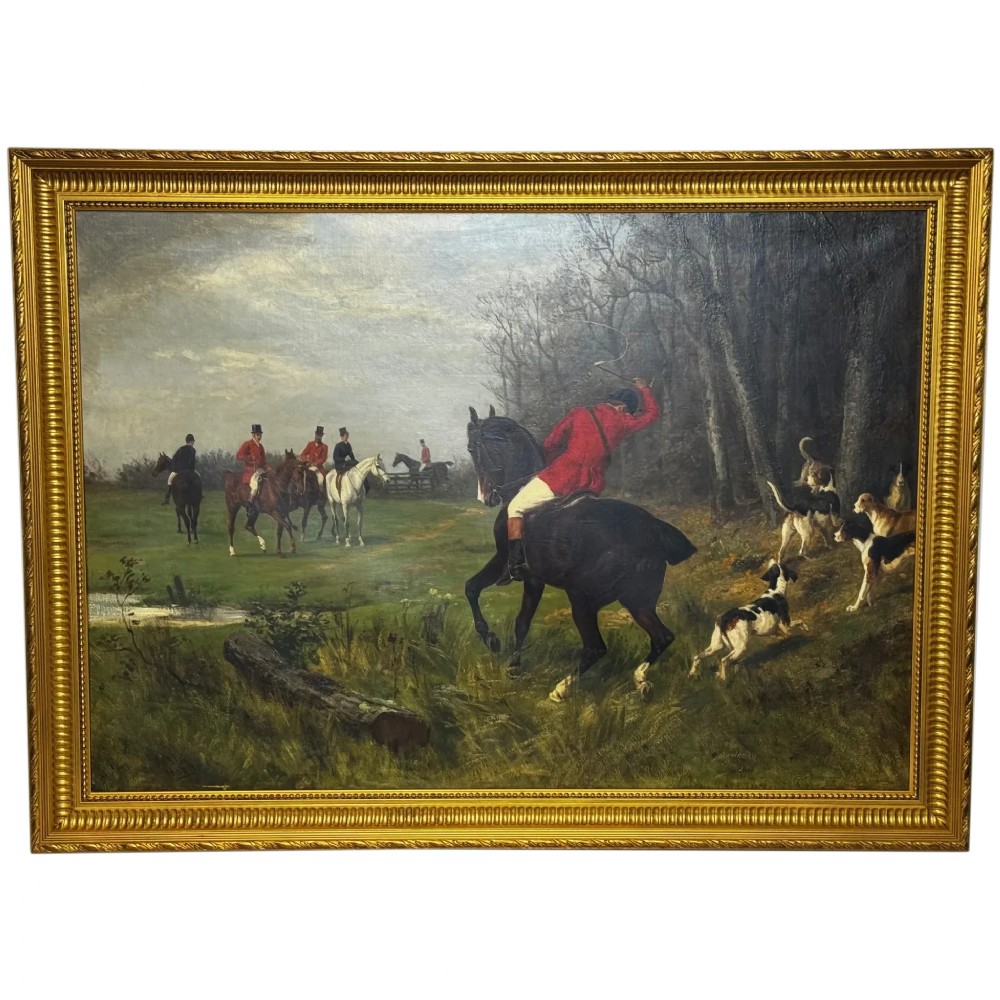
C.1880 Fox Hunt Royal Academy-exhibited Equestrian Oil Painting