It was listed by Titan Fine Art. Sold pieces stay on Sellingantiques as a record of what has passed through, and the next one is rarely far away.
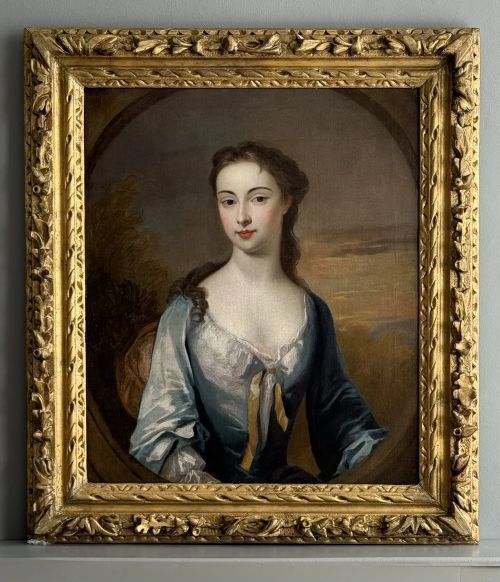
Titan Fine Art has dated this Oil on Canvas Portrait to the 17th Century.
Through this portrait, collectors have a chance to acquire an evocative vestige from a glittering aristocratic way of life that is fast disappearing.

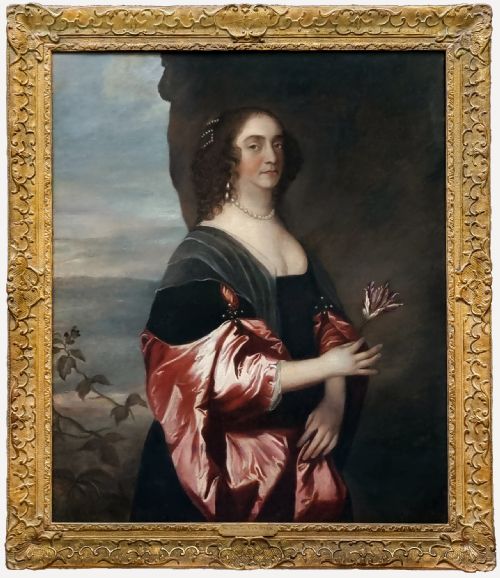
It is a good example of portraiture of aristocratic and wealthy women in England during the last quarter of the seventeenth century. Beautifully composed, the sitter is seated in a woodland and a rocky outcrop. This arcadian setting draws from the tradition of pastoral literature where life in the country was perceived as peaceful, contemplative, free of worry, and a time to pursue pleasure. By the early seventeenth century, Arcadia was already a popular theme in art and all educated individuals were familiar with Latin and Greek pastoral poetry. The topic was so ingrained in society that, contemporary audiences would have instantly recognised its meaning when viewing this portrait.

The sitter was born Lady Isabella Robartes in 1674. She was the daughter of The Honorable Robert Robartes, Lord Viscount Bodmin (1634-82) who was an English politician and ambassador to Denmark. The Robartes were a Cornish family who resided in Truro for many generations and had acquired great wealth through trading in wool and tin in Tudor times.

On 18 July 1693 Lady Robartes married John Legh of Adlington Hall (1688-1739] who was a colonel of militia, and sheriff of the county in 1705. The couple had three children, of which Charles, was a friend of the composer Handel who composed the Musical ‘Blacksmith’ whilst on a visit to Adlington. The sitter died in 1725.

The ancient Legh family were already an established family in Cheshire having been granted many estates by William the Conqueror after the Norman Conquest in 1066.
Adlington is mentioned in the Domesday survey as Edulvinstane, which was owned before the Conquest by the Saxon Earl Edwin. It was given to John de Legh in 1315 - and has been the seat of the Legh family since then.

During the Civil War the moat was put to its proper defensive use when the estate was besieged by parliamentary forces. The toll this period took on the collection is still evident as one of the paintings was defaced by sword-slashes made by billeted parliamentarians – and bullet holes in three or four places in the massive oak door to the Hall.

The elegant modelling of the hands and arms, the slight turn of the head, and the lock of hair trailing down her neck help to imbue the portrait with a sense of elegance and sophistication. This type of portrait was often used by Kneller and his contemporaries as an archetypal example of what wealthy patrons in England wanted - and these portraits lined the walls of many great halls in stately manors throughout the Britain.

Held in its original gilded period frame.
Sir Godfrey Kneller (1646-1723) became the leading portrait painter in Britain and the court painter to English and British monarchs from Charles II to George I. He dominated English art for more than thirty years. He ran a large, busy and successful studio in London and employed many assistants thereby establishing a routine that enabled a great number of works to be produced. His name became synonymous with British portraiture at the time and he rose to great notoriety. He died in London in 1723 and a memorial was erected in Westminster Abbey.
Provenance:
Probably commissioned by the sitter's husband, John Legh, and thence by decent at Adlington Hall for approximately 330 years
Much more info at: www.titanfineart.com
Titan Fine Art has dated this Oil on Canvas Portrait to the 17th Century.
Specialist in 17th & 18thc portraits. Highly curated selection, museum-level research & pro conservation. Exceptional art, expertly vetted.
You can view the stock and full dealer information on the Titan Fine Art Profile Page
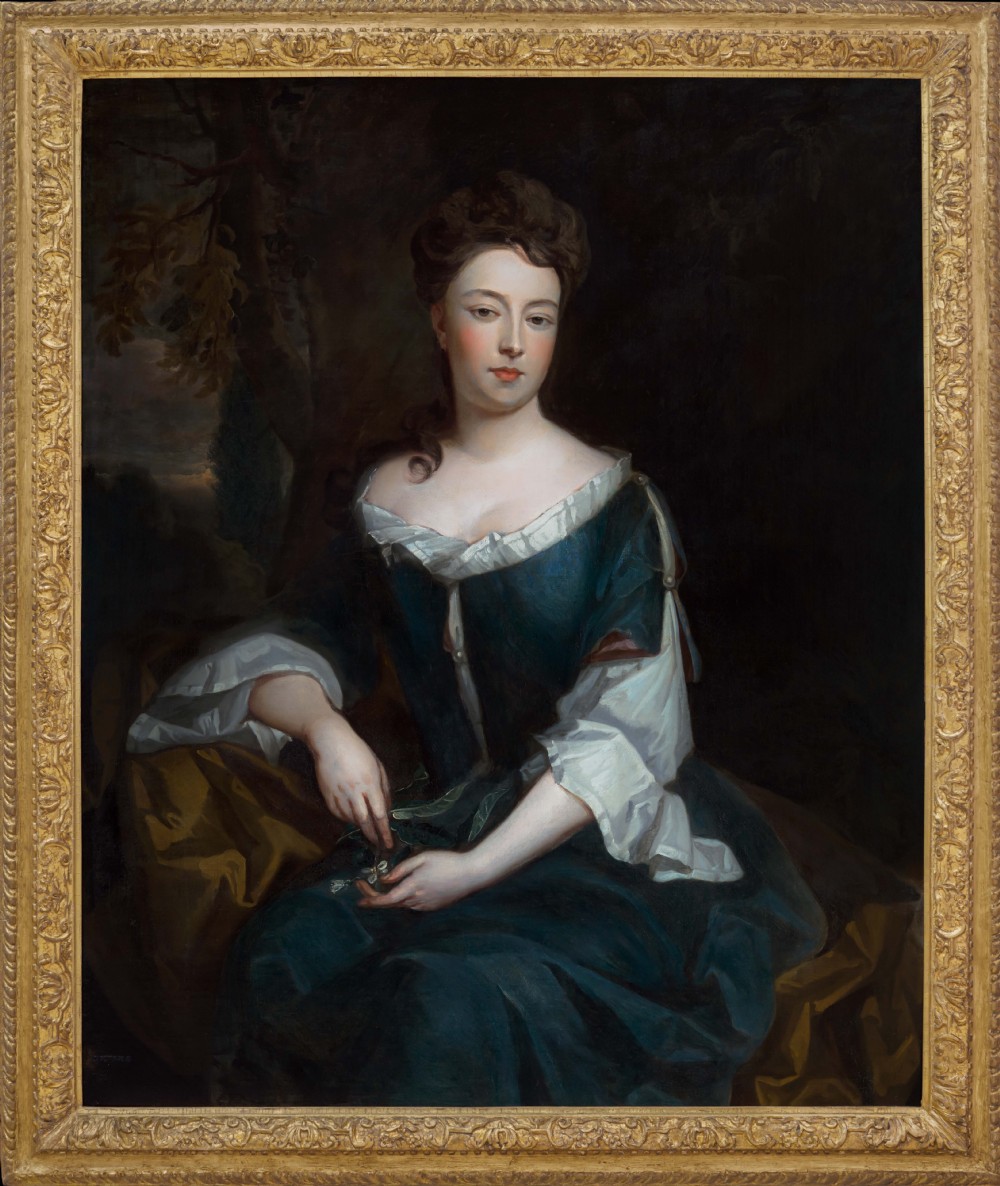

Portrait of Lady Isabella Legh in a Woodland Holding Flowers C.1693; Follower or Circle of Sir Godfrey Kneller (1646-1723), Oil on Canvas Painting