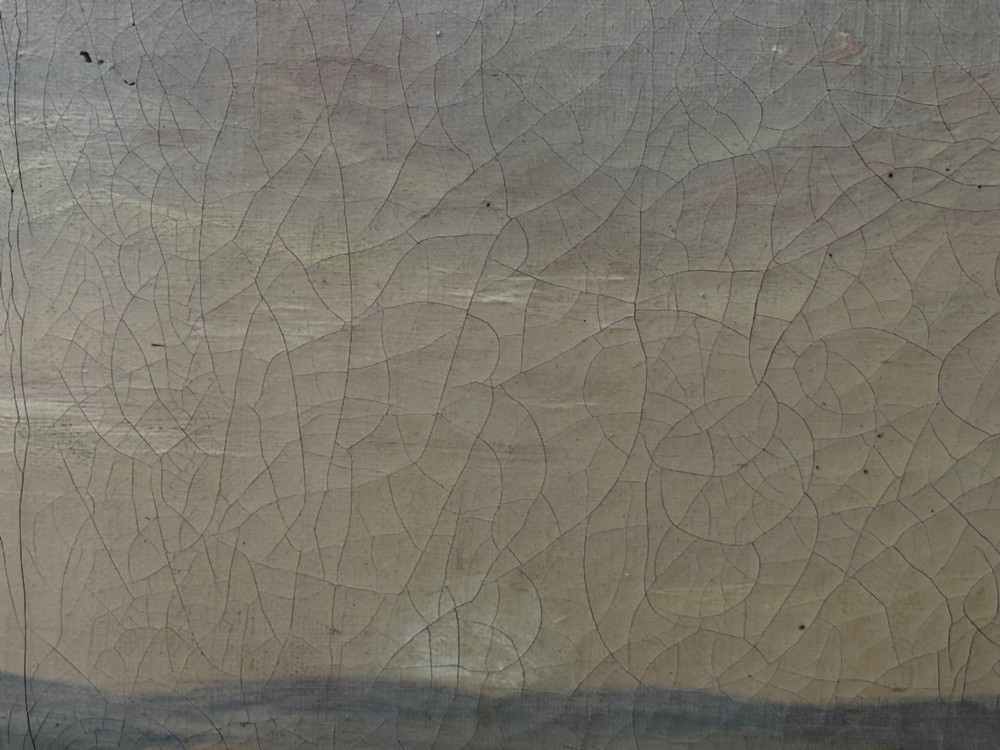
Cheshire Antiques Consultant Ltd has dated this piece to the 19th Century.
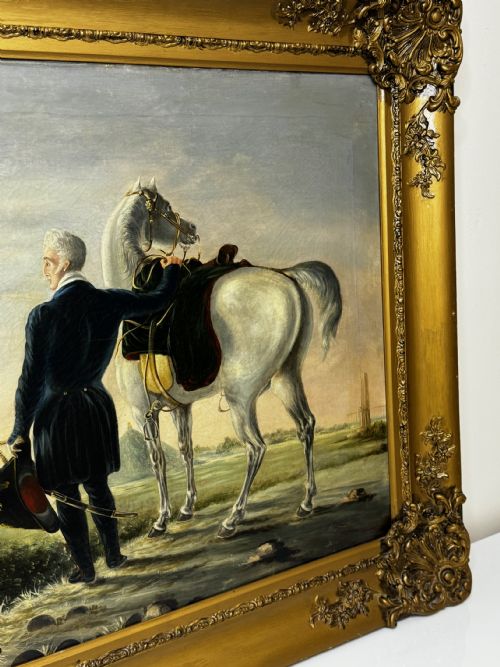
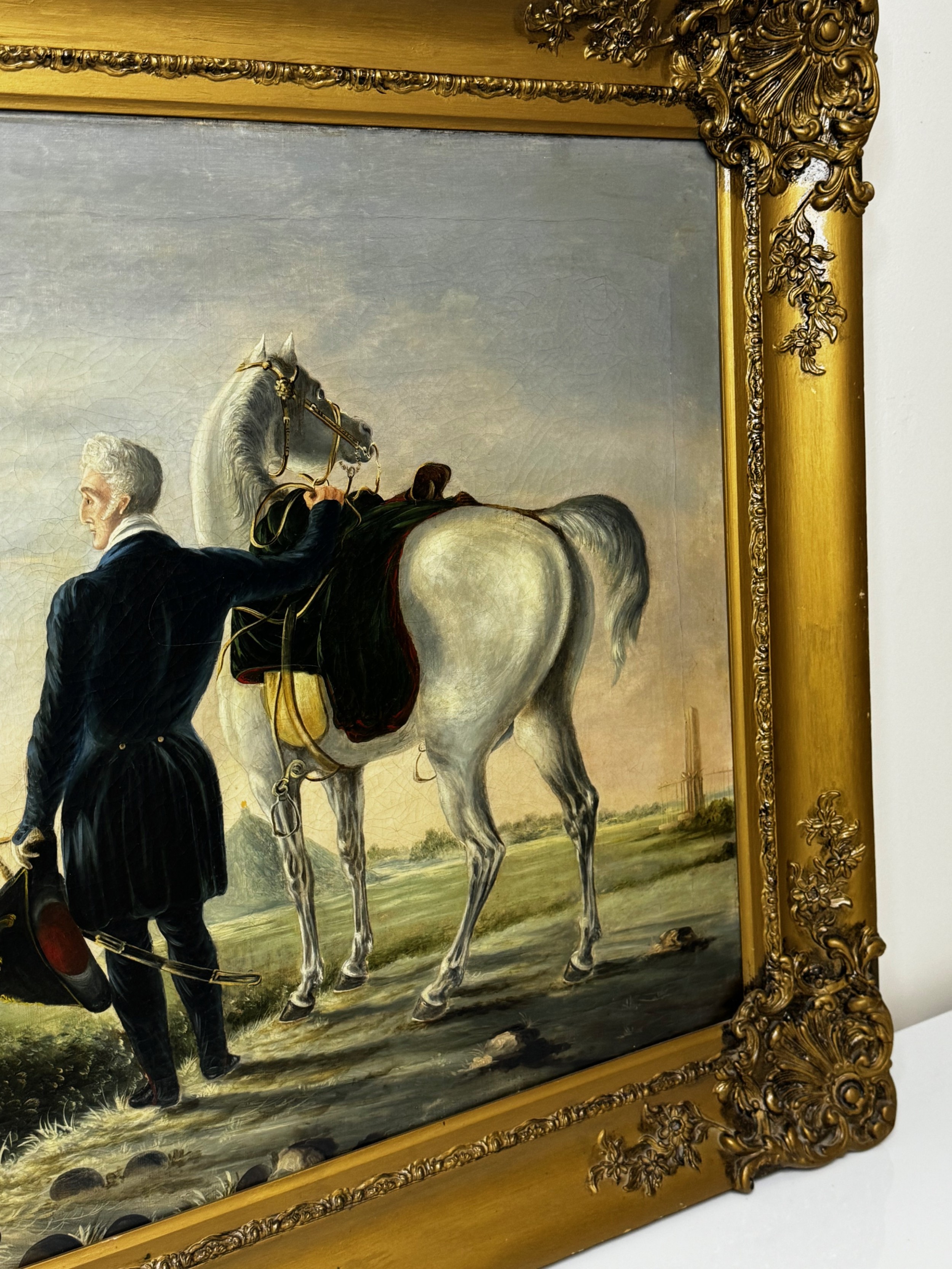
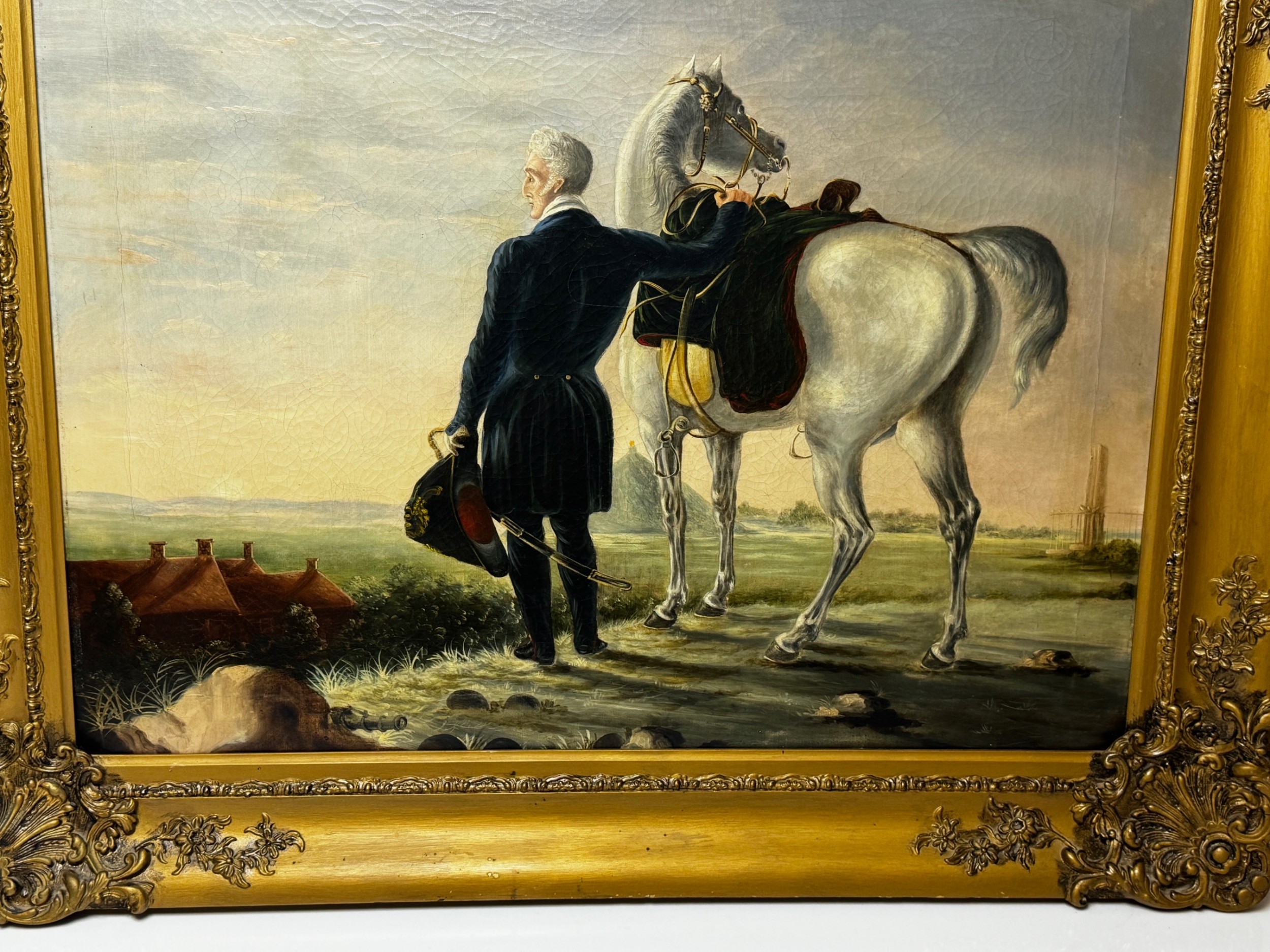
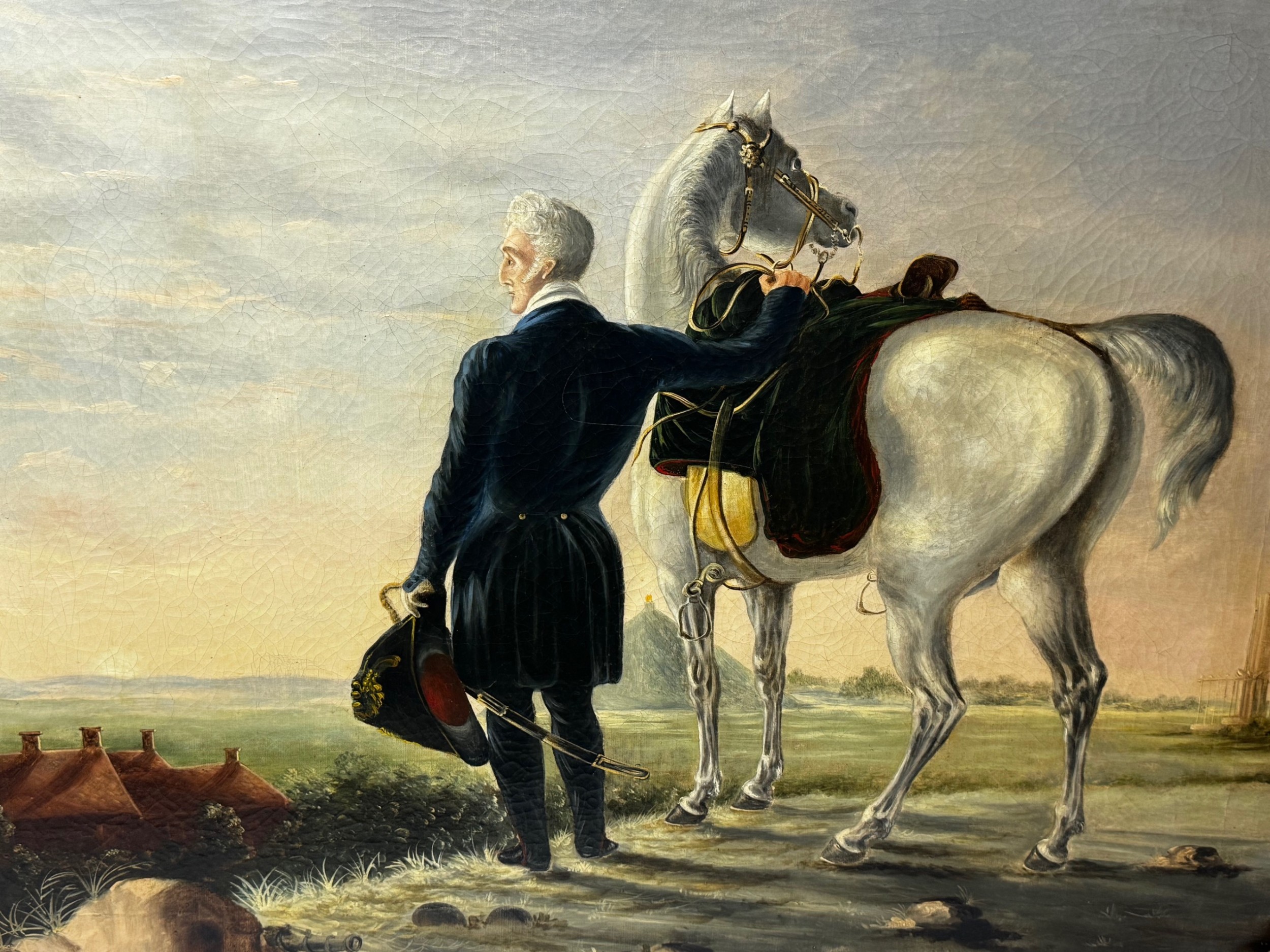
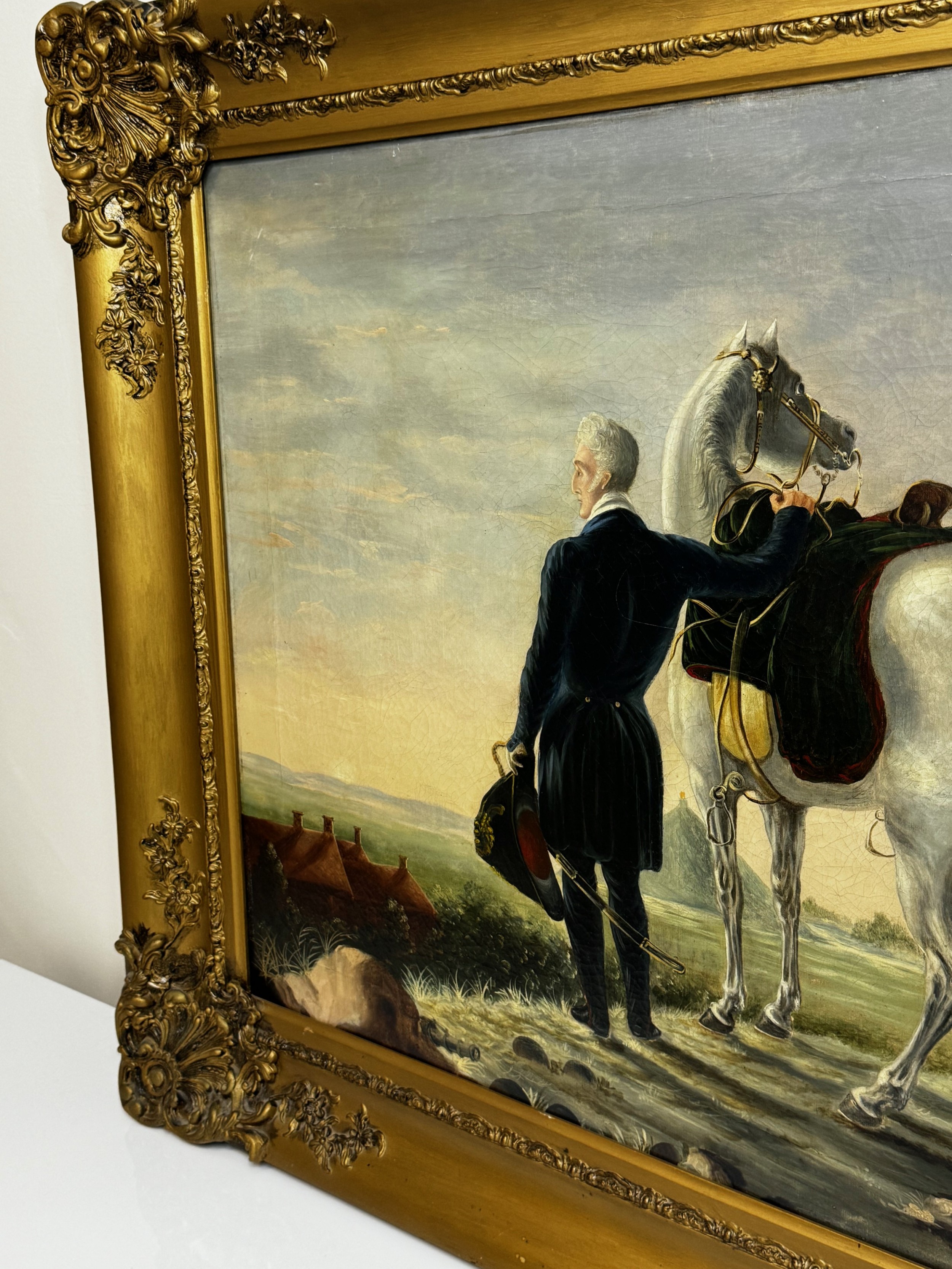
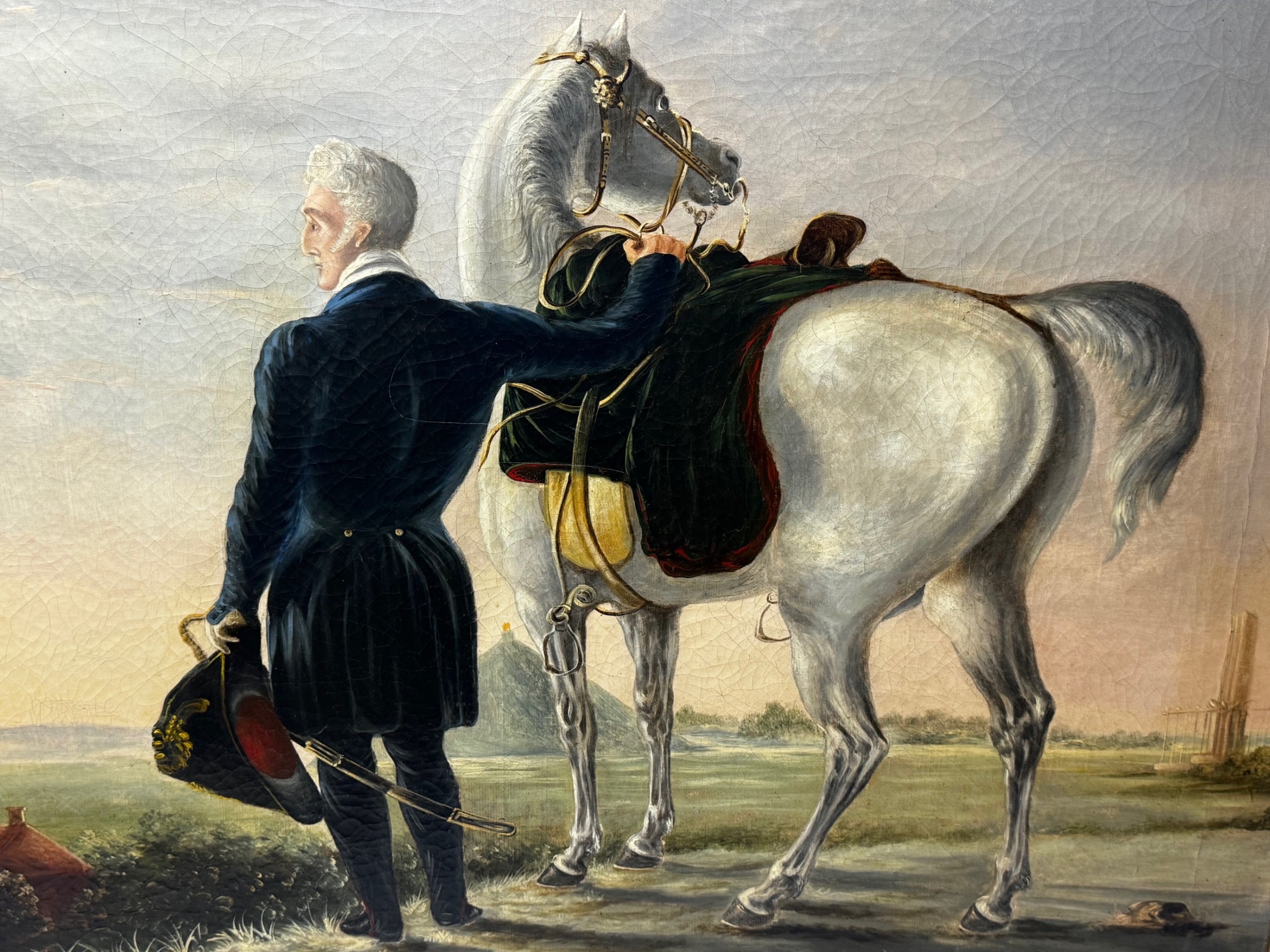
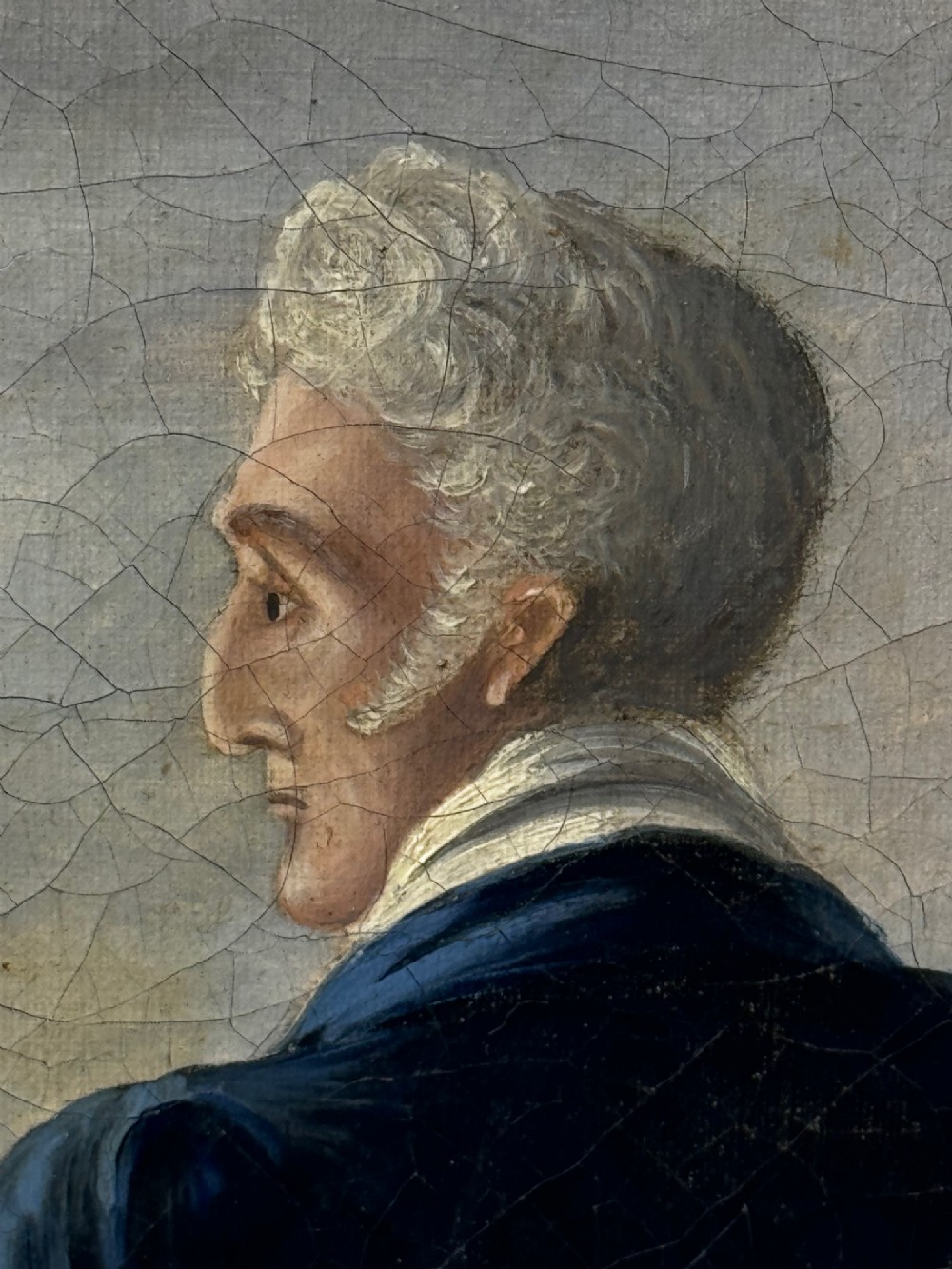
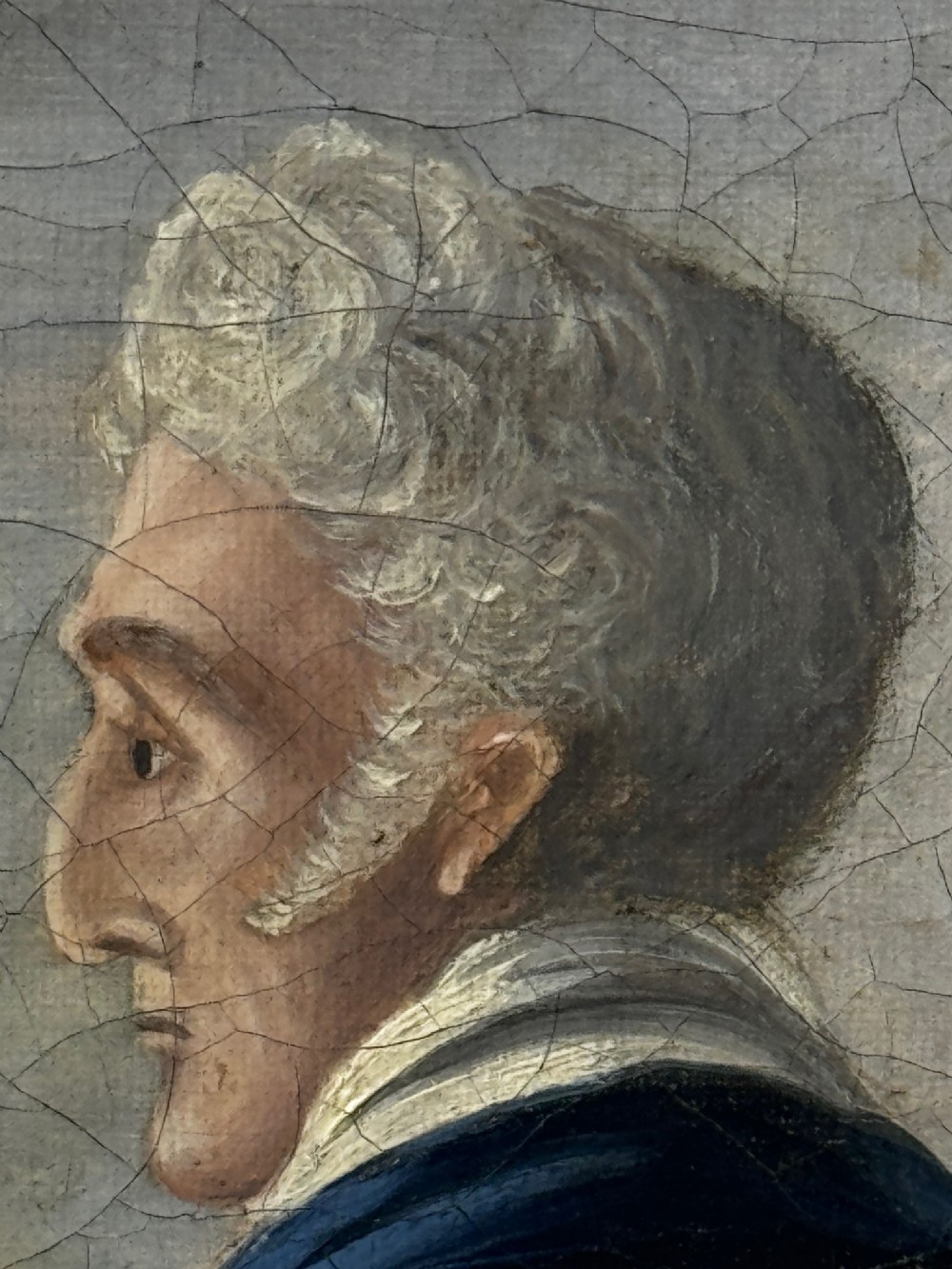
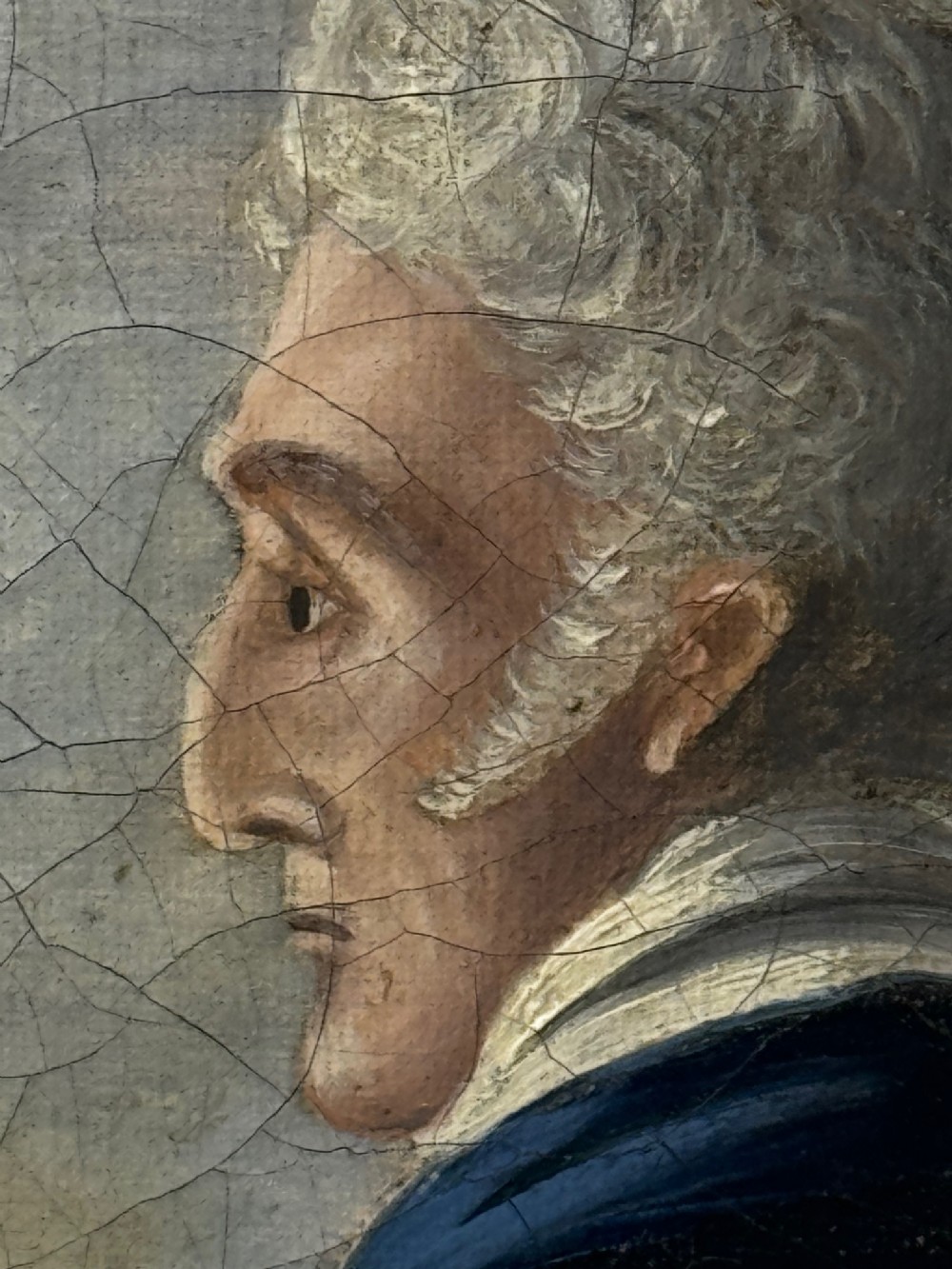
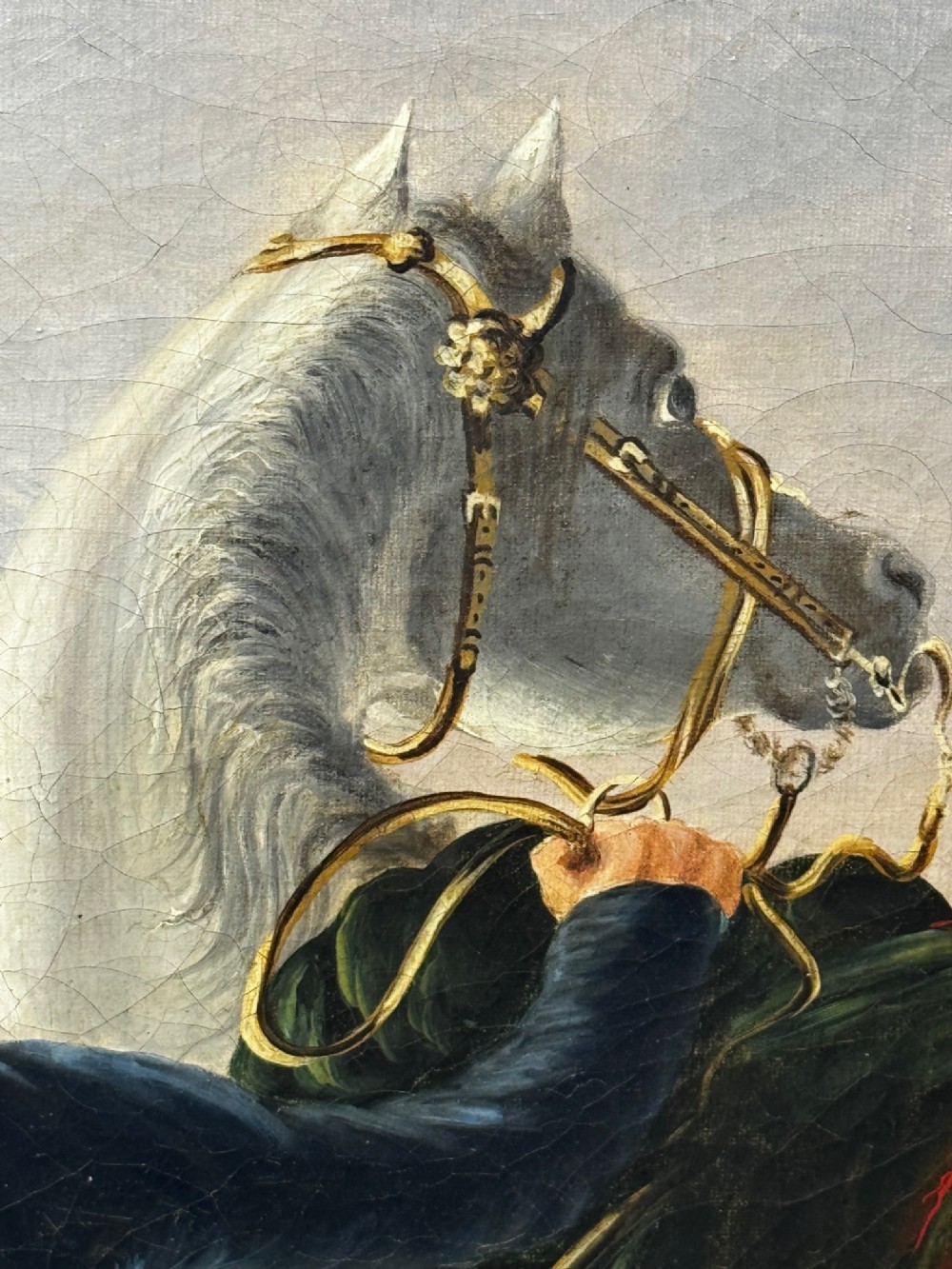
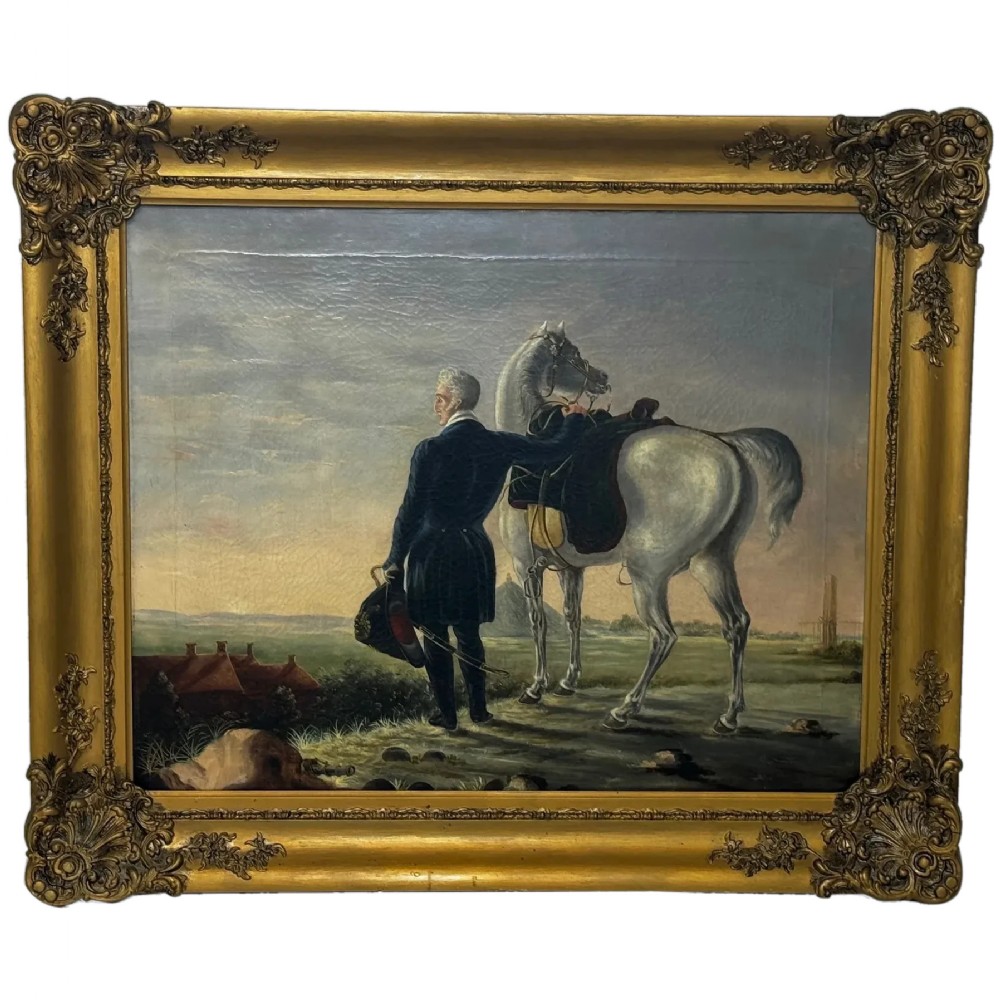
Title “The Duke Of Wellington Surveying The Field Of Waterloo Battle Site With His Purebred Arabian Stallion White Horse Quiet Contemplation”
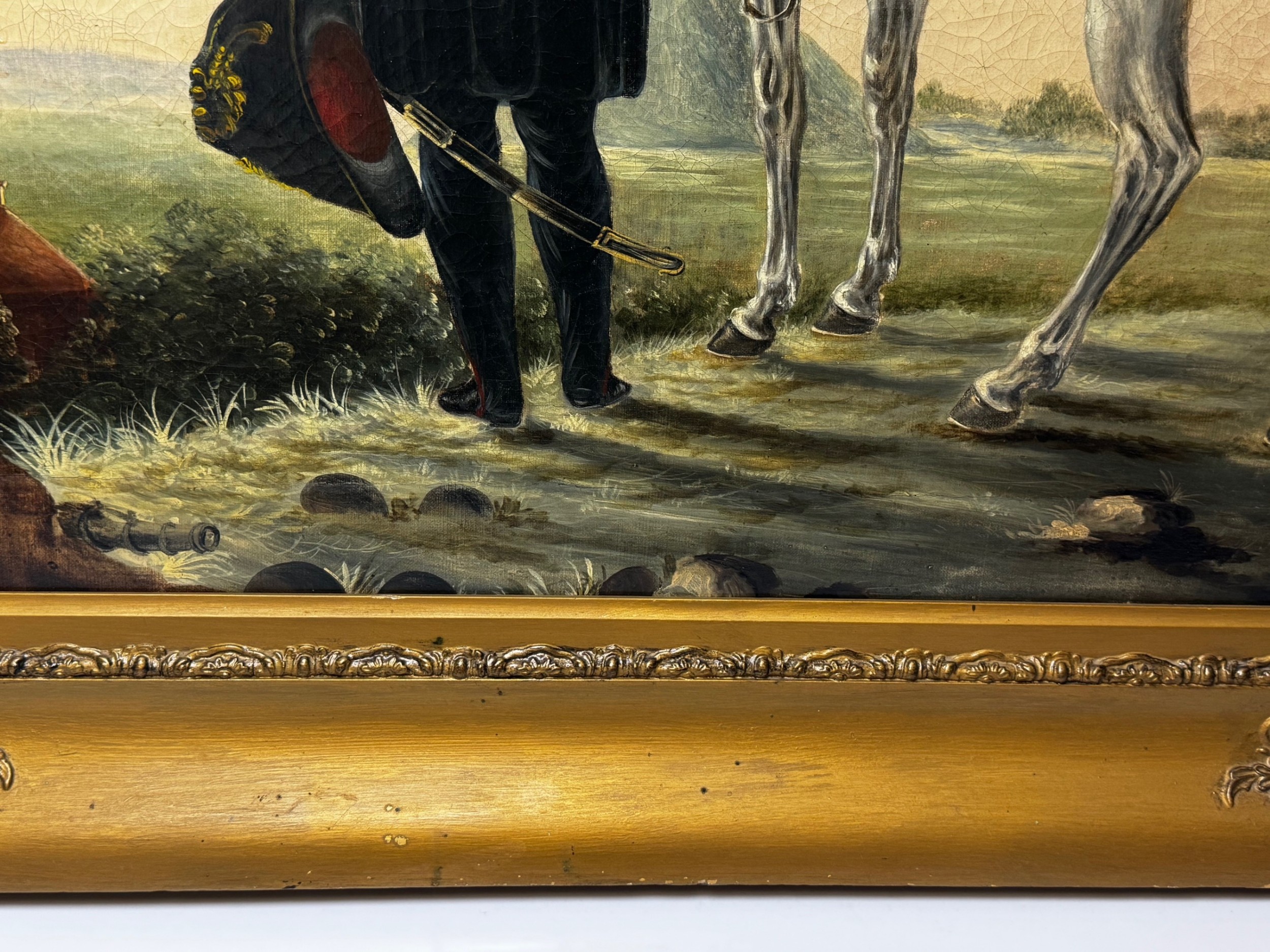
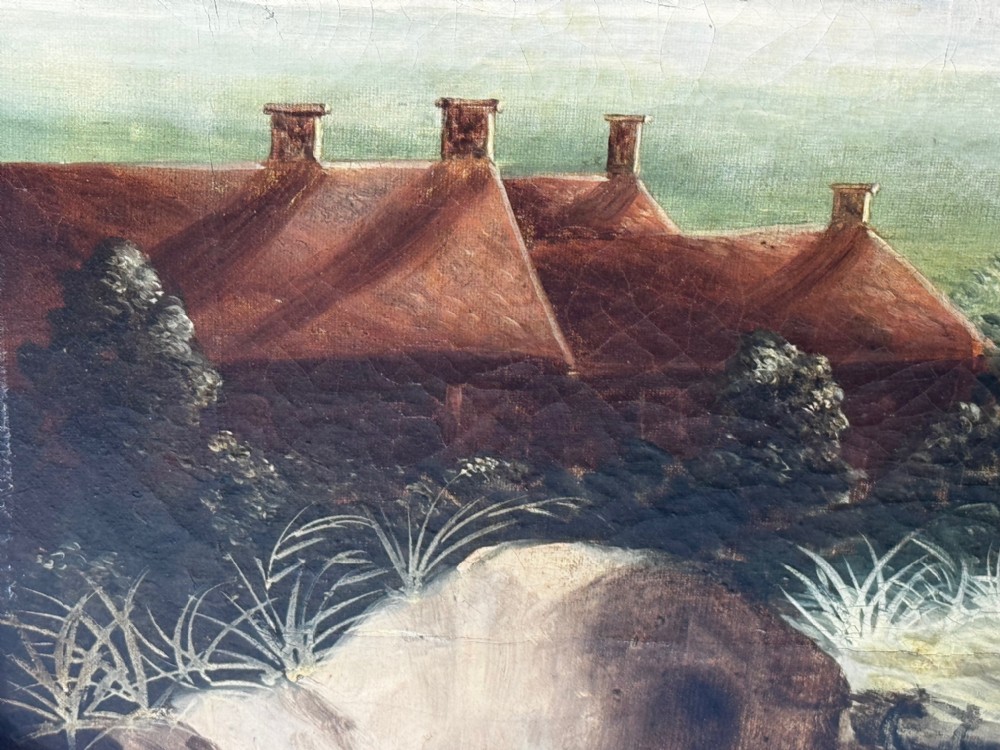
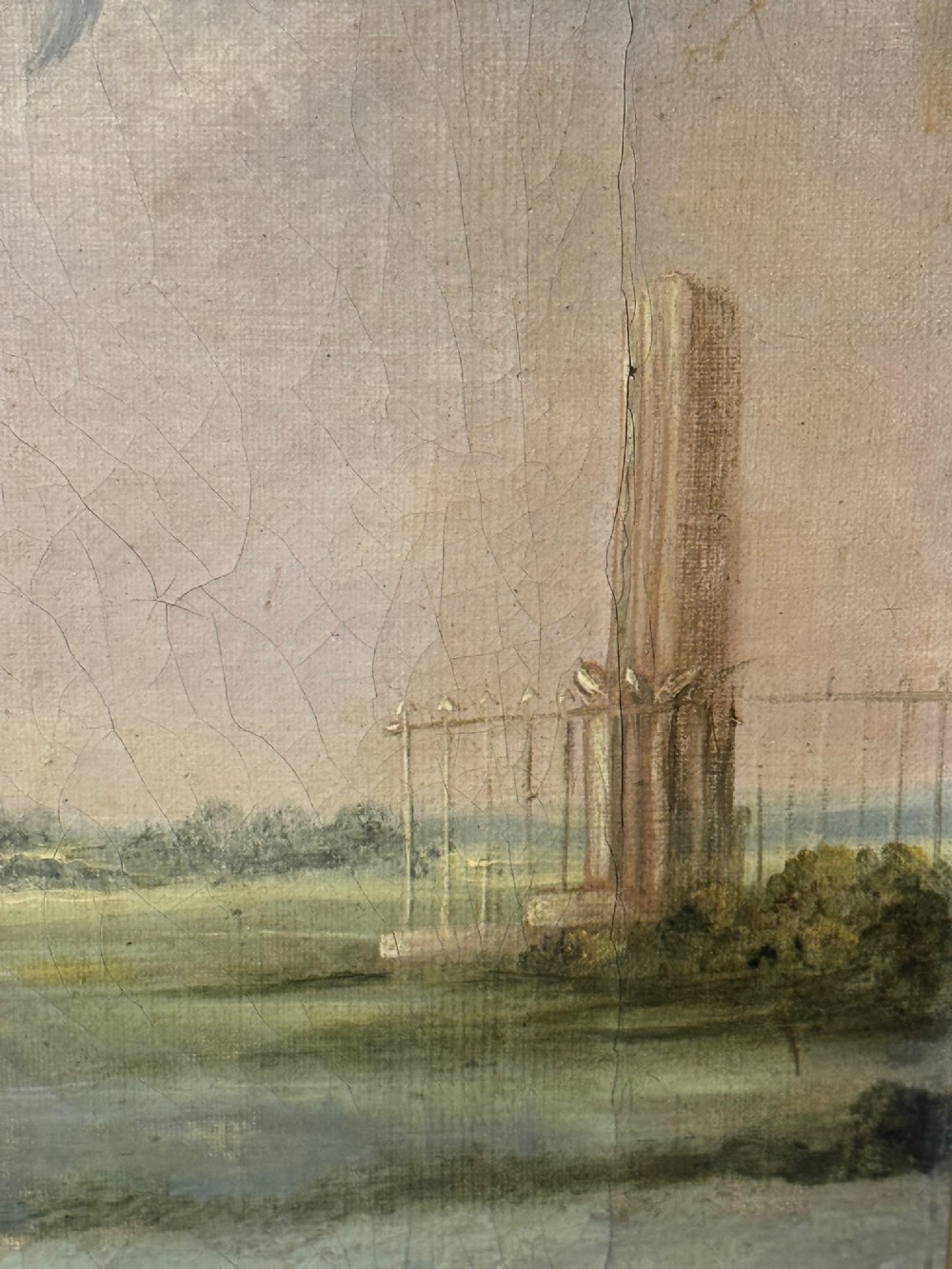
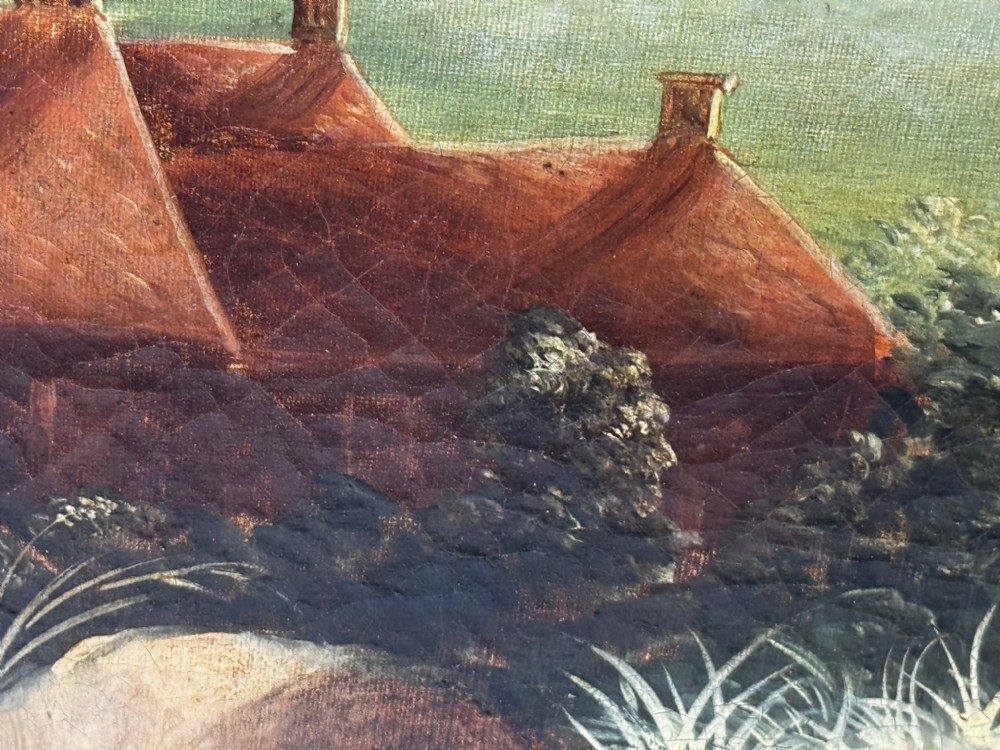
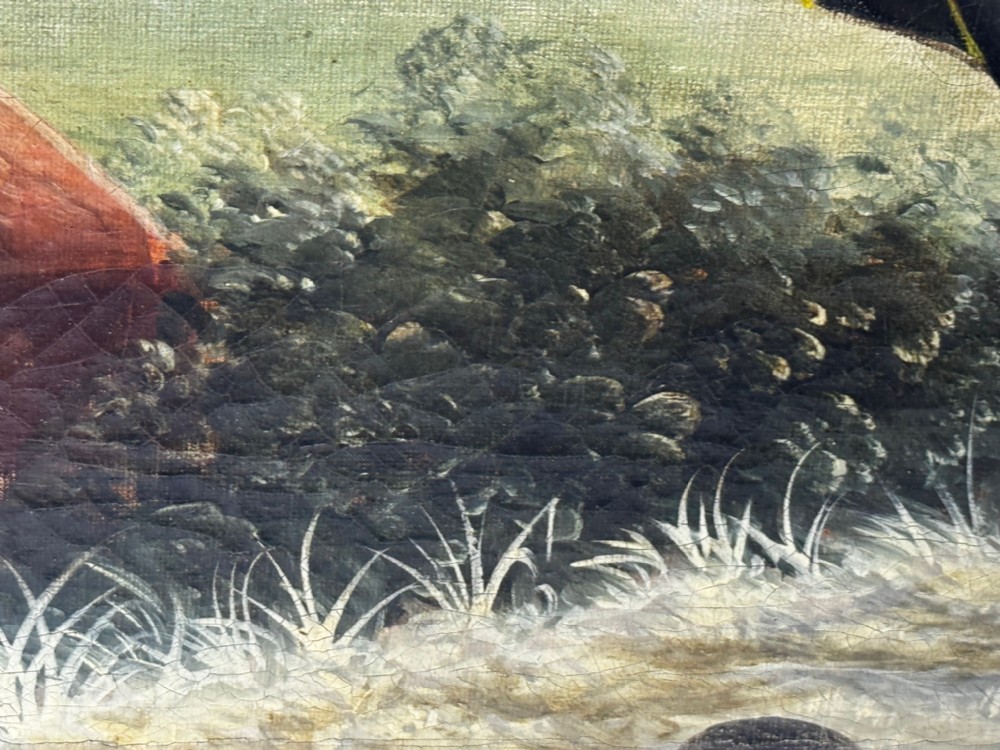
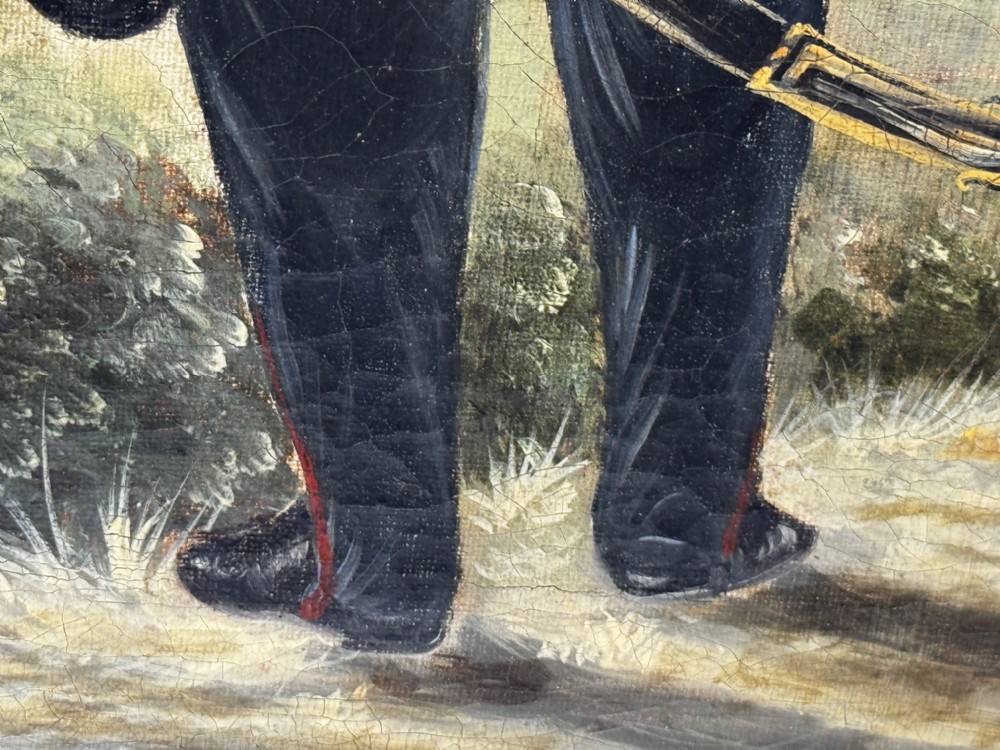
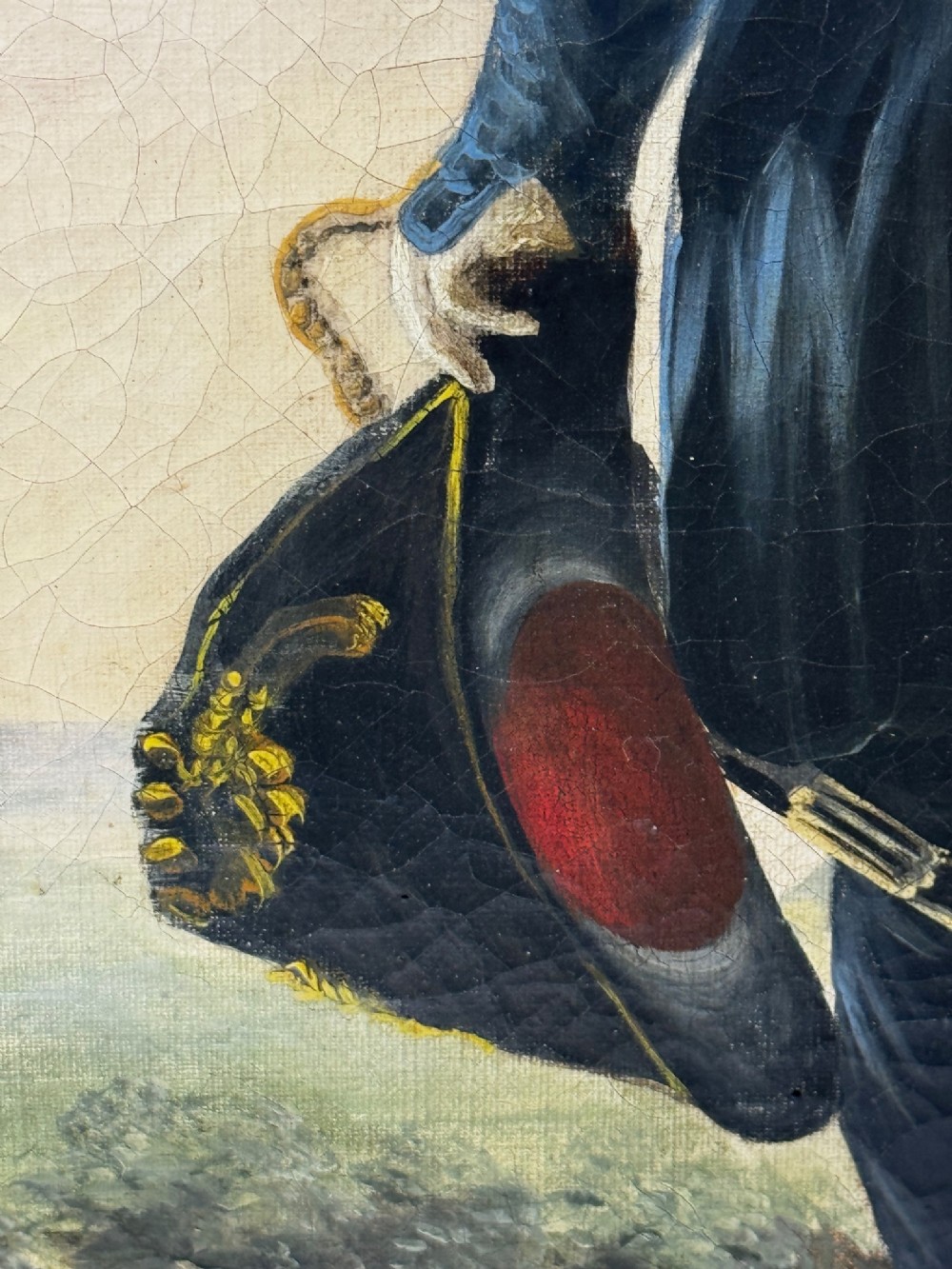
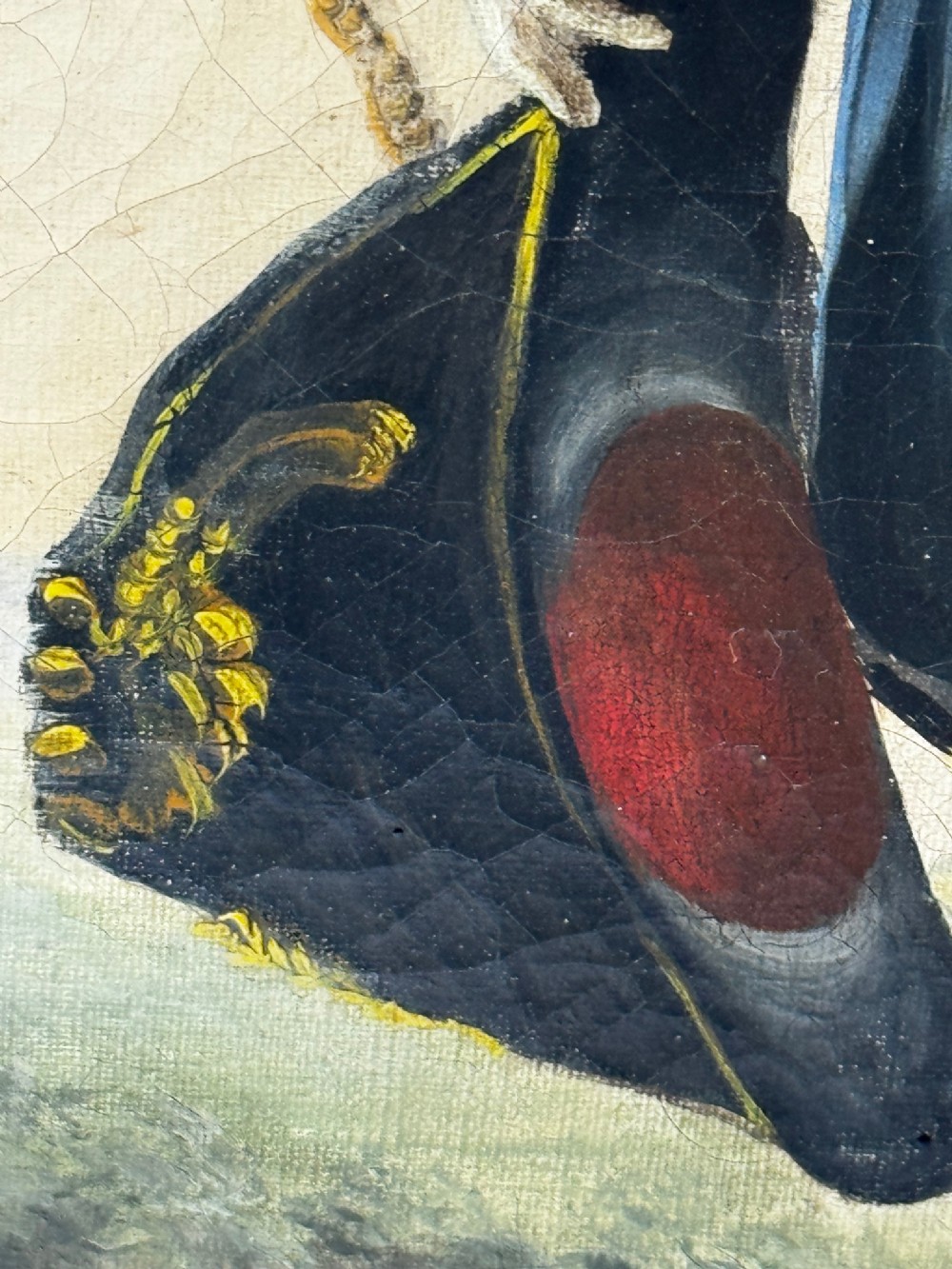
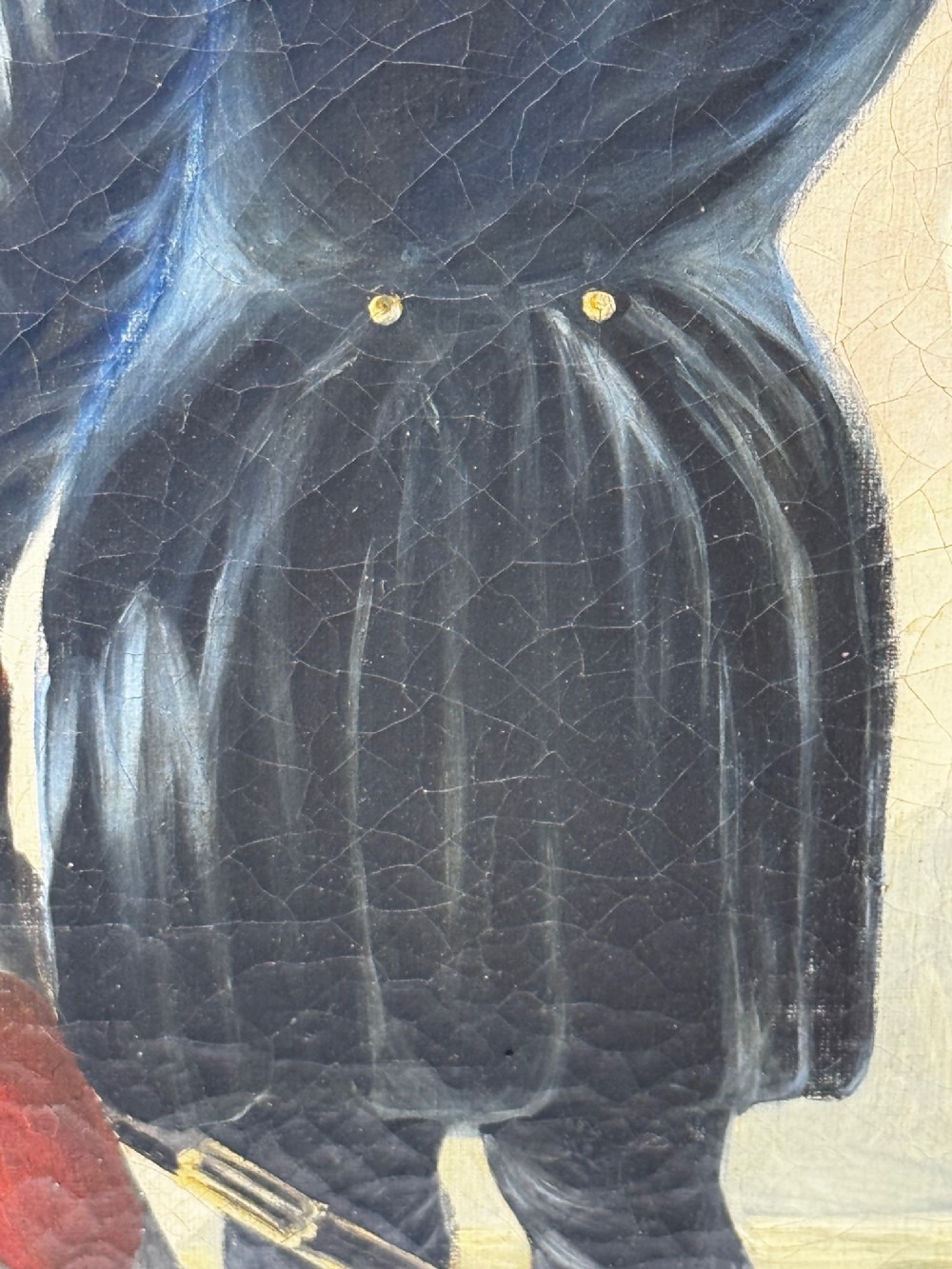
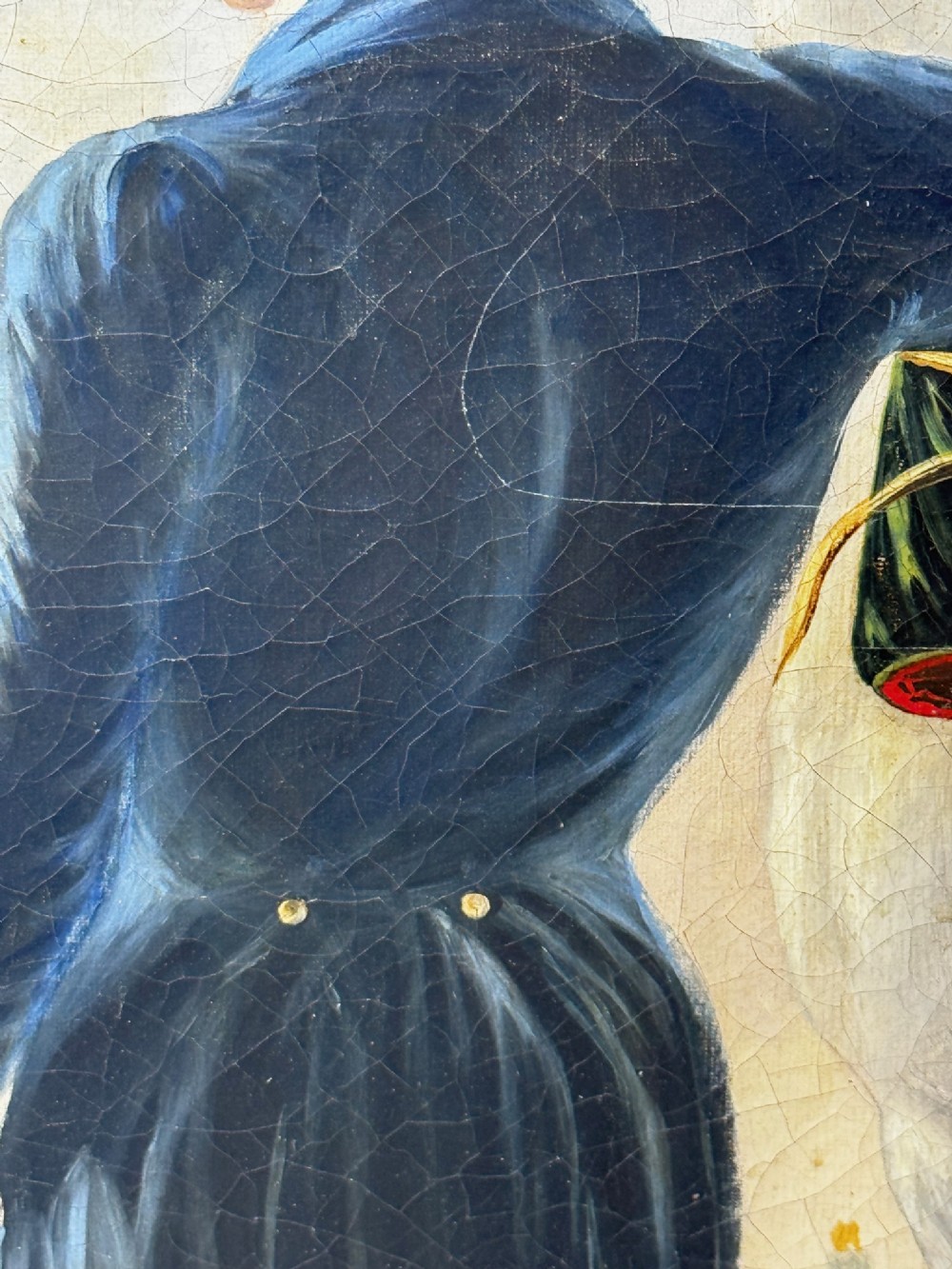
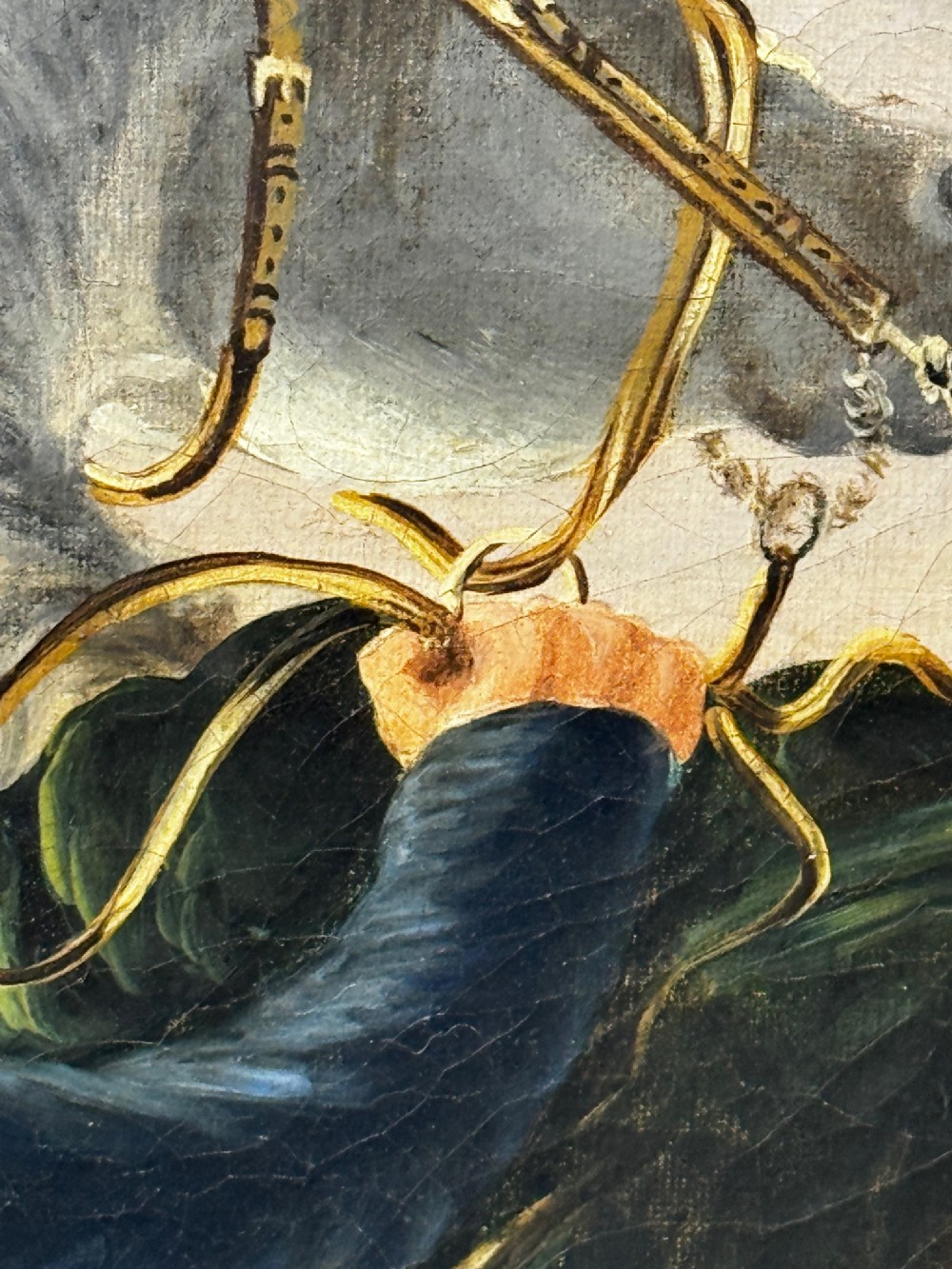
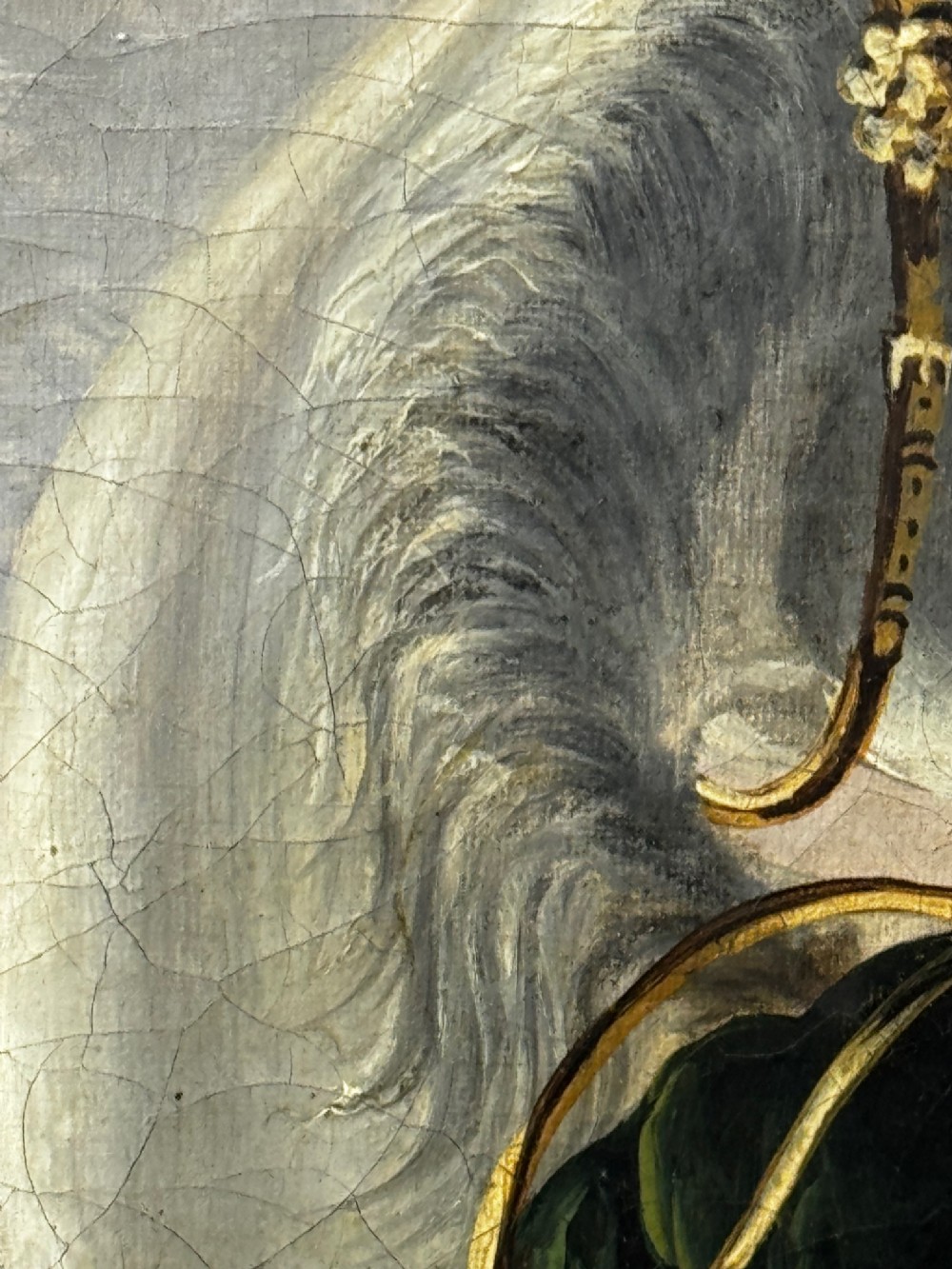
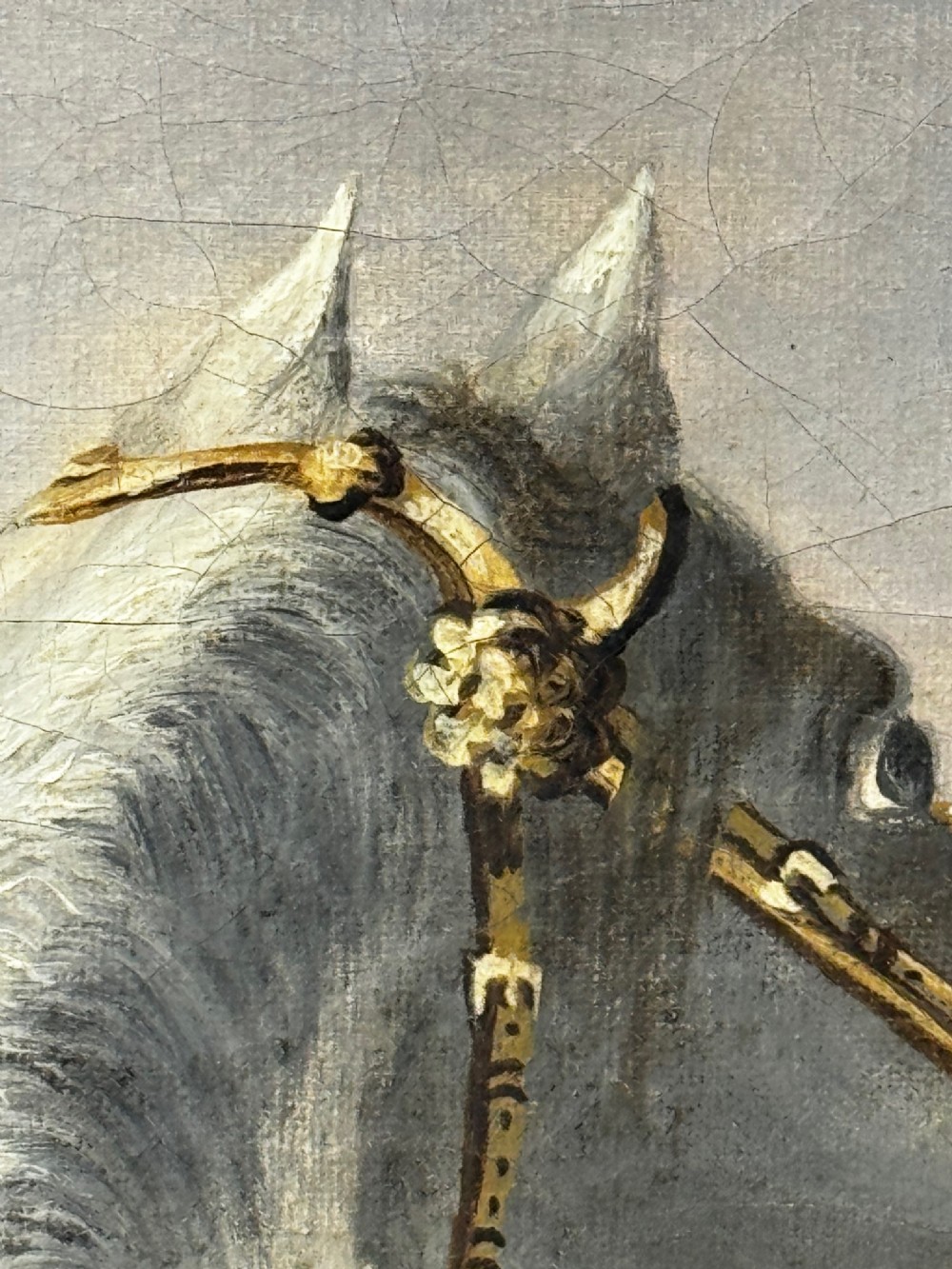
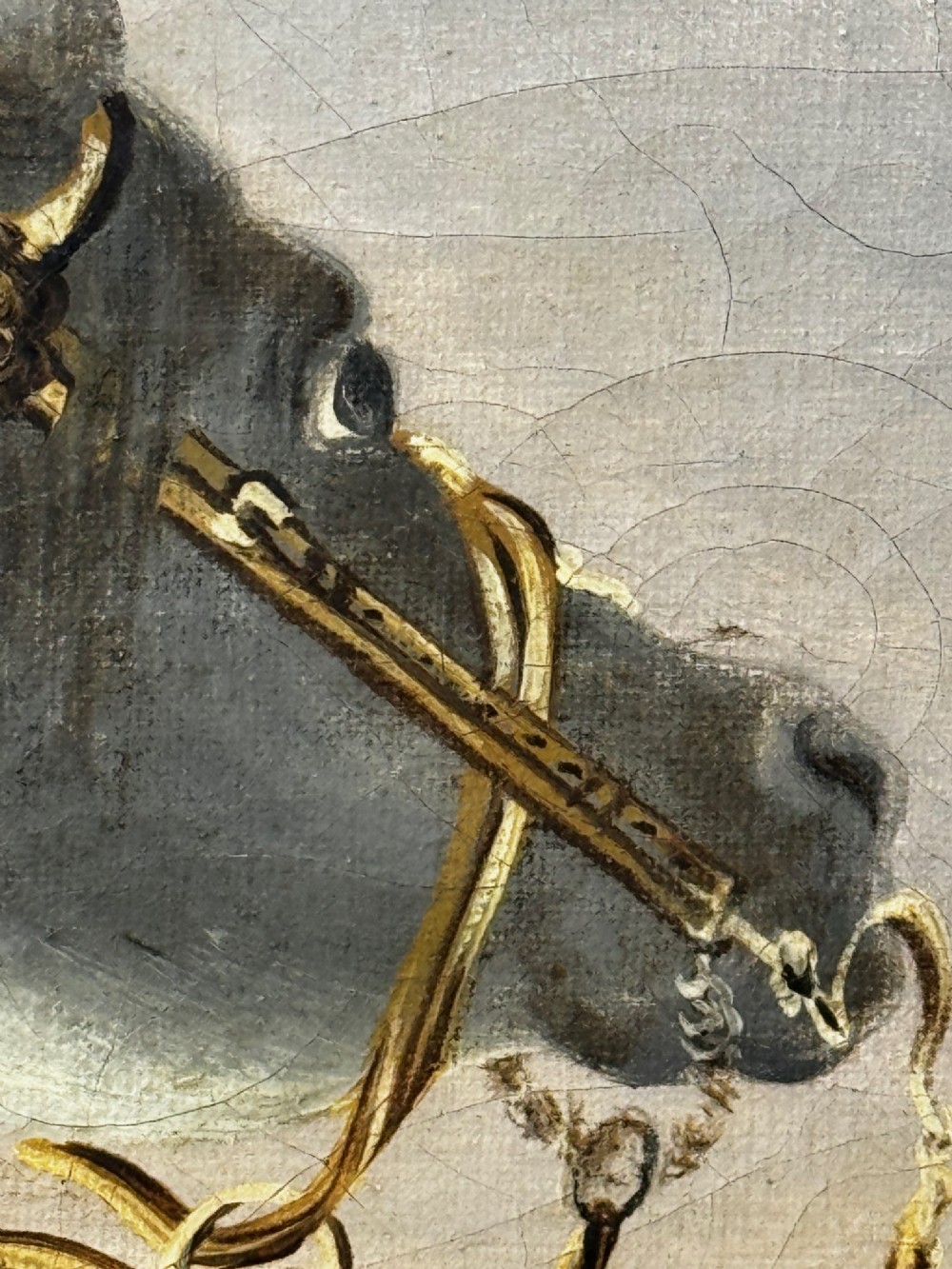
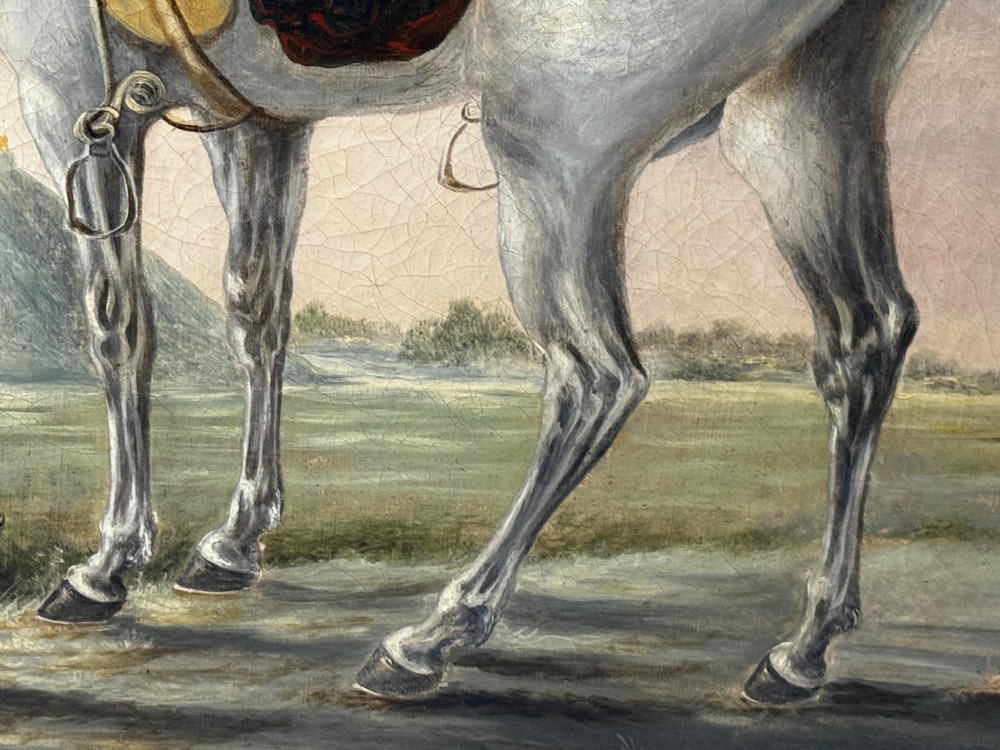
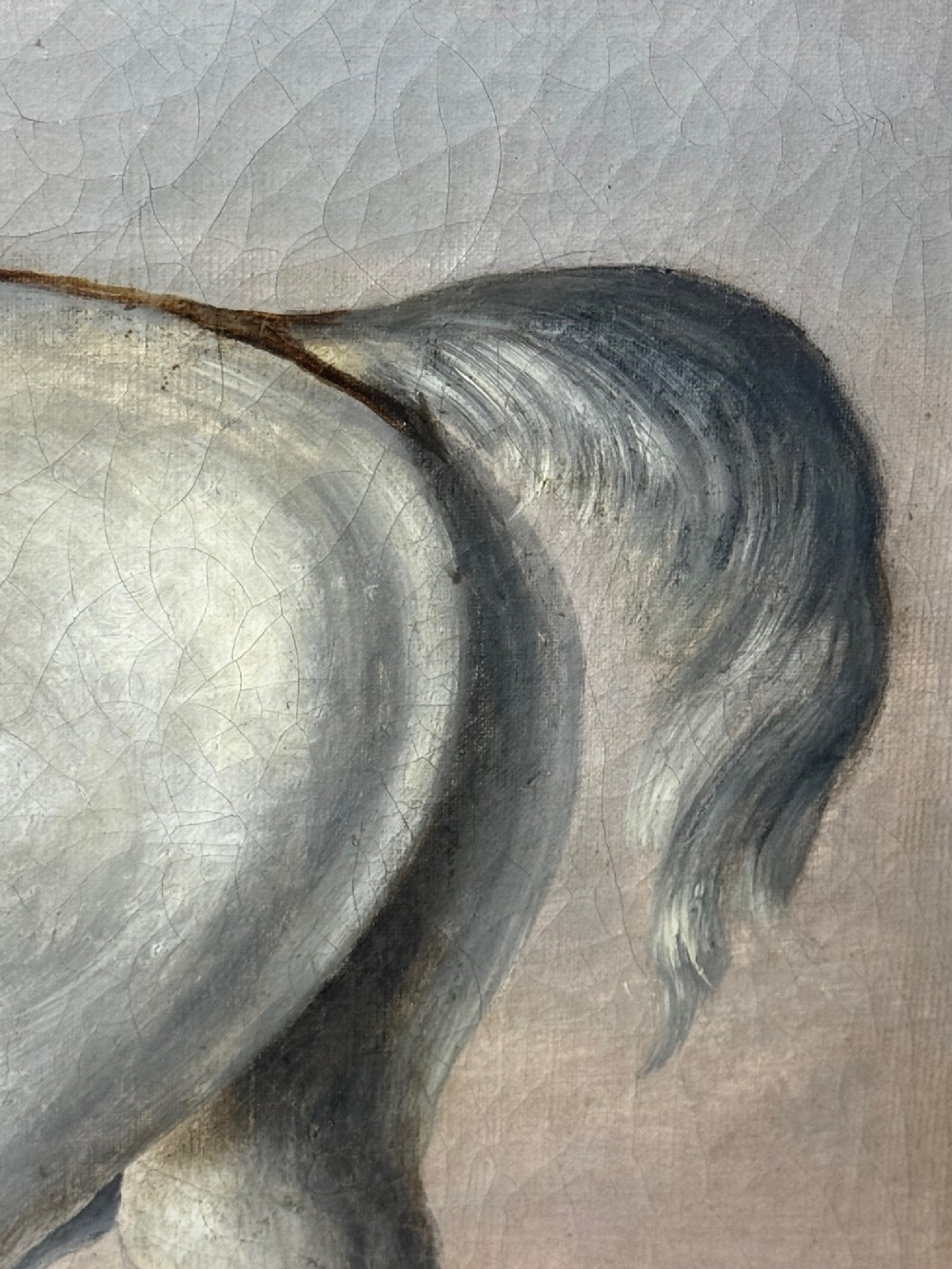
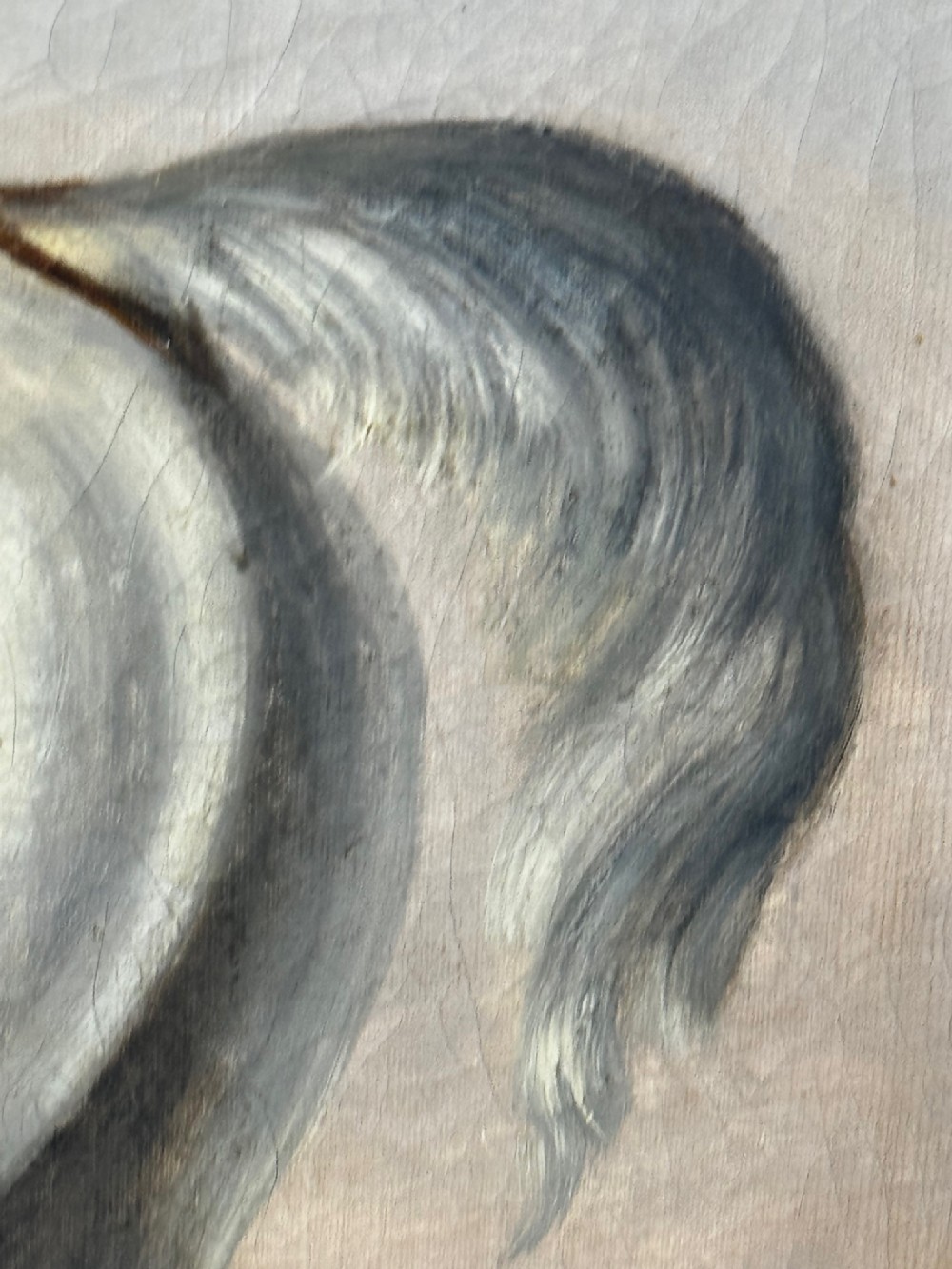
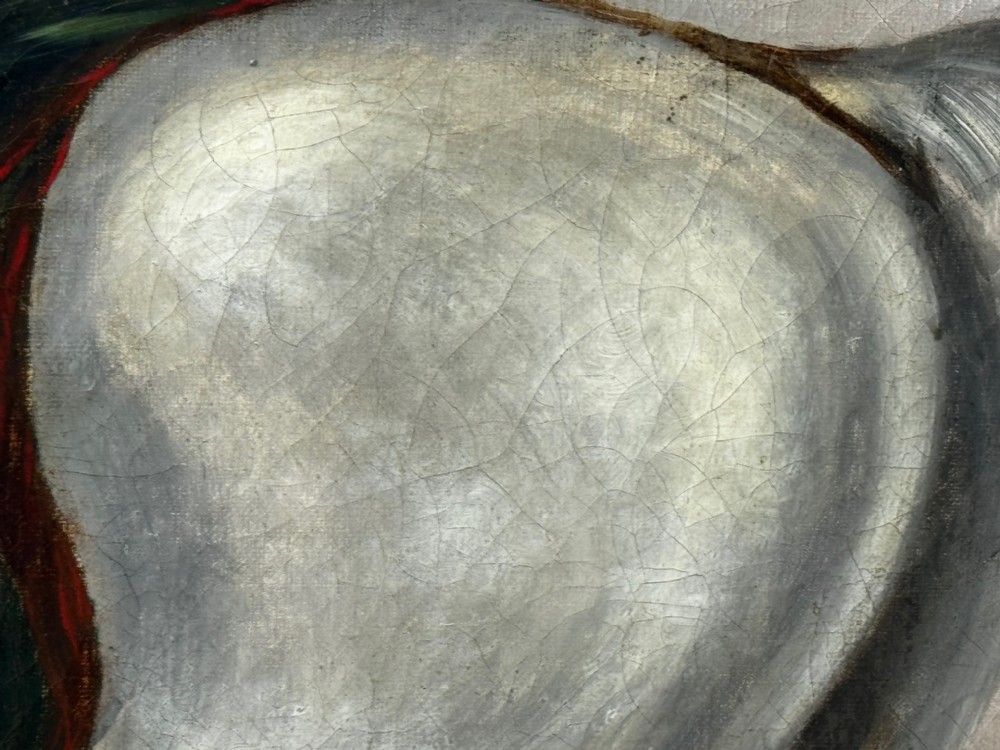
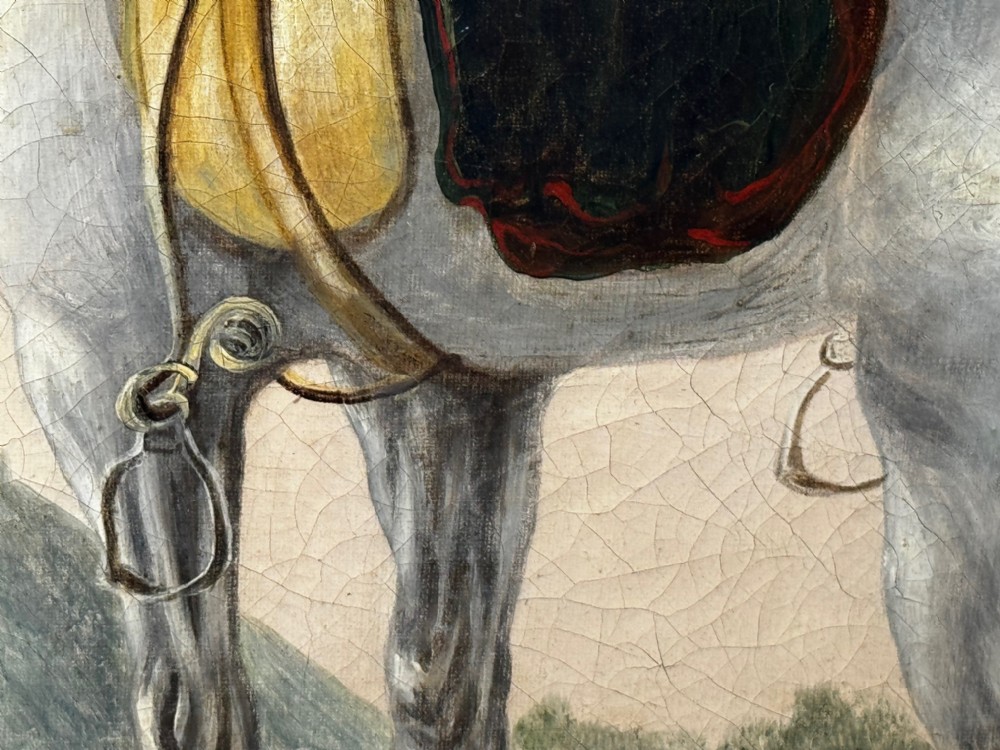
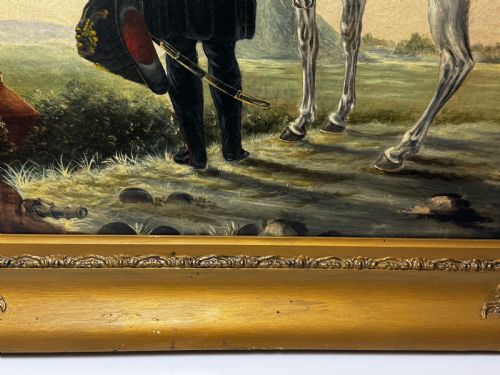
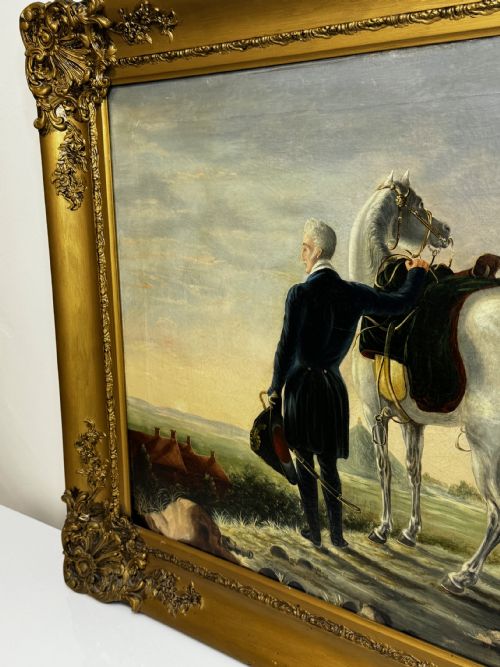
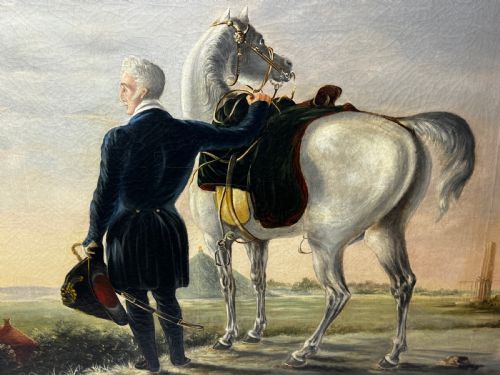
Subject portrait of the known British military leader Field Marshal Duke of Wellington Arthur Wellesley who is shown in full length profile rear side view, he is standing on top of the hill overlooking the open battlefield landscape historical site, towards the distant far left in his quiet contemplation mood as he reflects on his victory years earlier, with period country building seen lower down, in the distance towards the centre is the tall round Lions mound monument, which was believed have been the spot where the Prince of Orange was shot and wounded during the battle. Further over to the left another monument with a hand rail around it can be viewed. Wellington is wearing his military dress uniform & his holding his bicorn hat in his left hand, whilst cluthing the reigns of his white purebred Arabian stallion horse, he is wearing his sabre sword. His horse with saddle, with low grass around & above sunset seen in the sky.
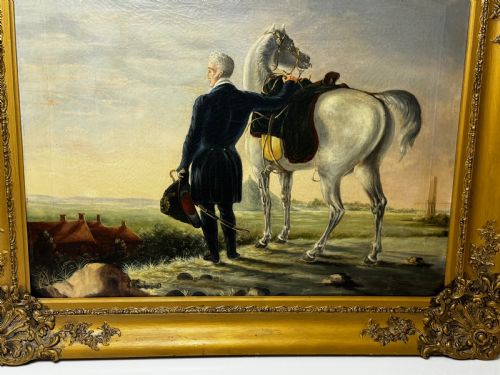
Unsigned British school attributed to Benjamin Robert Haydon.
Circa 1840's mid 19th century early Victorian era.
Origin from the United Kingdom.
Medium oil on canvas
Frame is an impressive size being 95 cm wide and 81 cm high.
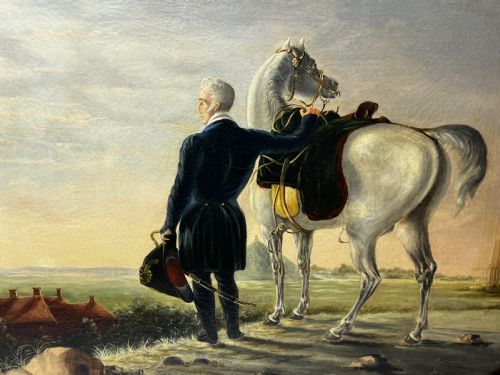
Set in the original traditional gilt frame which enhances this artwork.
Field Marshal Arthur Wellesley, 1st Duke of Wellington, KG, GCB, GCH, PC, FRS(né Wesley; 1 May 1769 – 14 September 1852) was an Anglo-Irish military officer and statesman who was one of the leading military and political figures in Britain during the late 18th and early 19th centuries, serving twice as Prime Minister of the United Kingdom. He is among the commanders who ended the Anglo-Mysore Wars when Tipu Sultan was killed in the fourth war in 1799 and among those who ended the Napoleonic Wars in a victory when the Seventh Coalition defeated Napoleon at the Battle of Waterloo in 1815. Wellesley was born into a Protestant Ascendancy family in Ireland.
He was commissioned as an ensign in the British Army in 1787, serving in Ireland as aide-de-camp to two successive lords lieutenant of Ireland. He was also elected as a member of Parliament in the Irish House of Commons. Rising to the rank of colonel by 1796, Wellesley saw service in the Low Countries and India, where he fought in the Fourth Anglo-Mysore War at the Siege of Seringapatam. He was appointed governor of Seringapatam and Mysore in 1799 and, as a newly appointed major-general, won a decisive victory over the Maratha Confederacy at the Battle of Assaye in 1803.
Rising to prominence as a general officer during the Peninsular War, Wellesley was promoted to the rank of field marshal after leading British-led forces to victory against the French at the Battle of Vitoria in 1813. Following Napoleon's first exile in 1814, he served as the British ambassador to France and was made Duke of Wellington. During the Hundred Days campaign in 1815, Wellington commanded another British-led army which, together with the Prussian Army under Field Marshal Gebhard von Blücher, defeated Napoleon at Waterloo.
Wellington's battle record is exemplary; he ultimately participated in some 60 battles during the course of his military career. Wellington is famous for his adaptive defensive style of warfare, resulting in several victories against numerically superior forces while minimising his own l
Cheshire Antiques Consultant Ltd has dated this piece to the 19th Century.
Source the historic in 17th, 18th, 19th & 20th century fine arts, painting, sculptures & collectibles
You can view the stock and full dealer information on the Cheshire Antiques Consultant Ltd Profile Page
19th Century Oil Painting Duke of Wellington Surveying Field of Waterloo