27,353  PAGES BROWSED TODAY PAGES TODAY • 81 ANTIQUES UPLOADED TODAYNEW ARRIVALS
GIFTS
81 ITEMS ADDED TODAY
Sort Order
Items Per Page
Antiques dealer?
Join as a Seller
Browse Categories
Sort order
Relevant Links
Items per page
ID #SA1082684
SOLD
Email Phone
Save
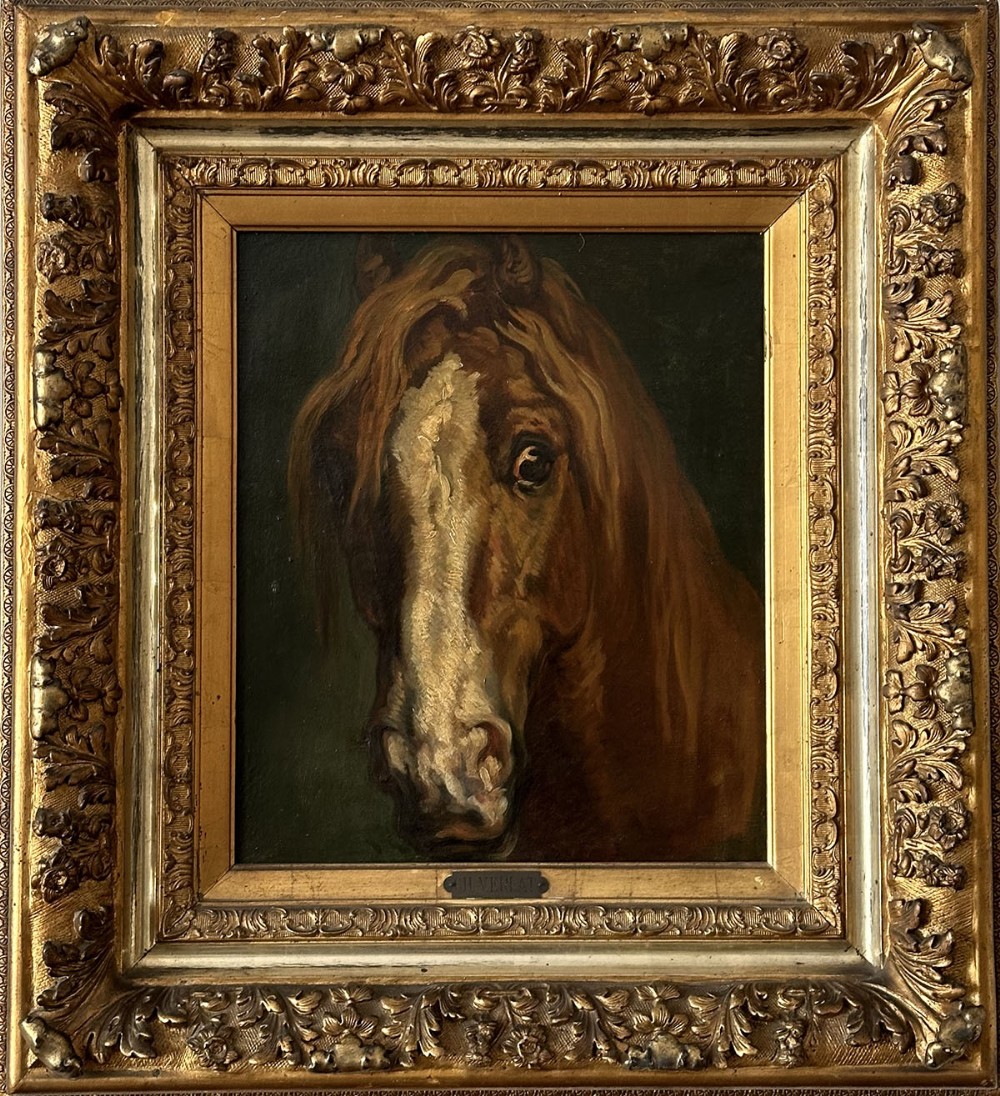
Chestnut Horse - Antique Oil Painting
Sold by Rue des Fontenelles
sold SA1082684
Sorry, but this item has been sold.

Rue des Fontenelles

Sellingantiques Verified Since Mar 2015
Browse dealers 147 items
  • About Us
    Specialists in french antiiques, decorative objects and french and european paintings.
Id #SA1082684
PDF SHARE
SAVE

Chestnut Horse - Antique Oil Painting

19th century
Sold 14 August 2024 · Rue des Fontenelles
This “Chestnut Horse - Antique Oil Painting” found a buyer.

It was listed by Rue des Fontenelles. Sold pieces stay on Sellingantiques as a record of what has passed through, and the next one is rarely far away.

Description

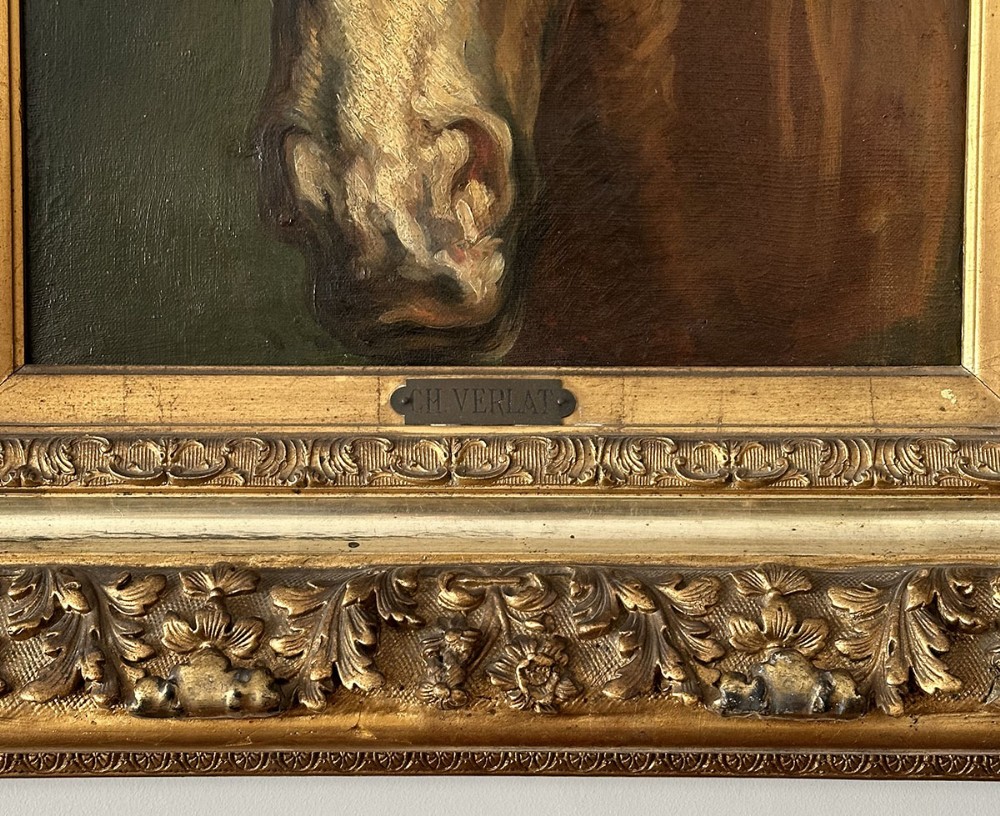
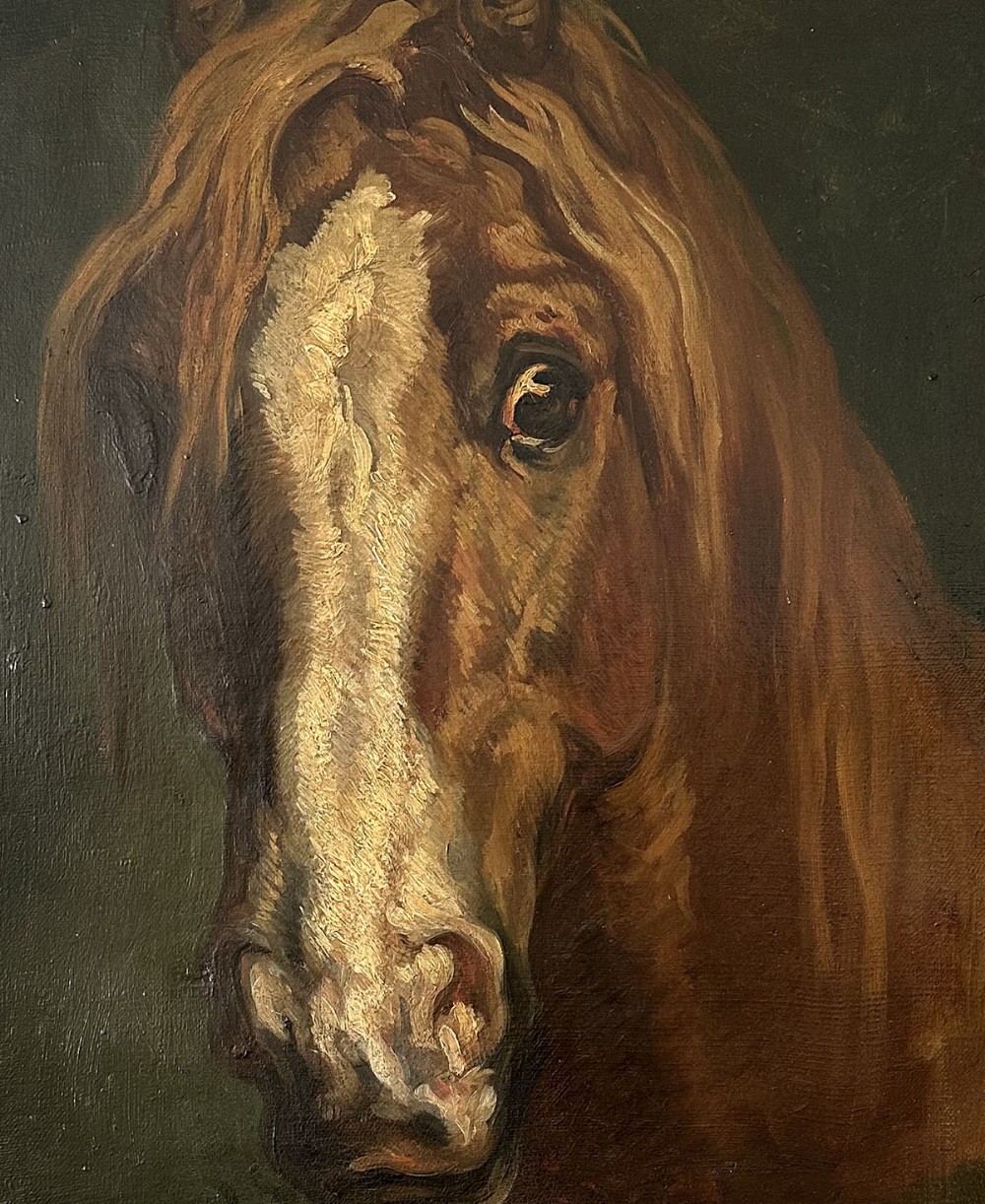
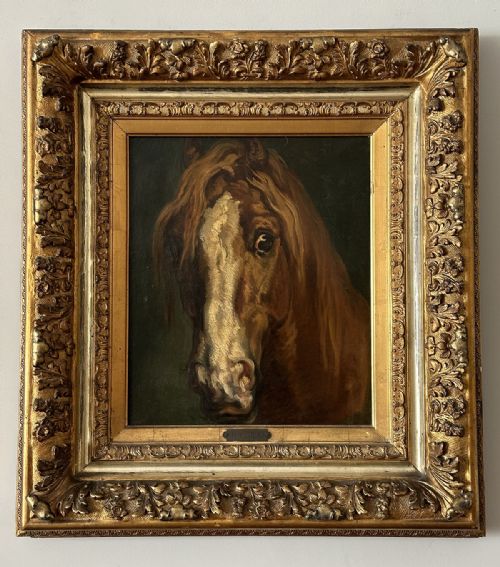
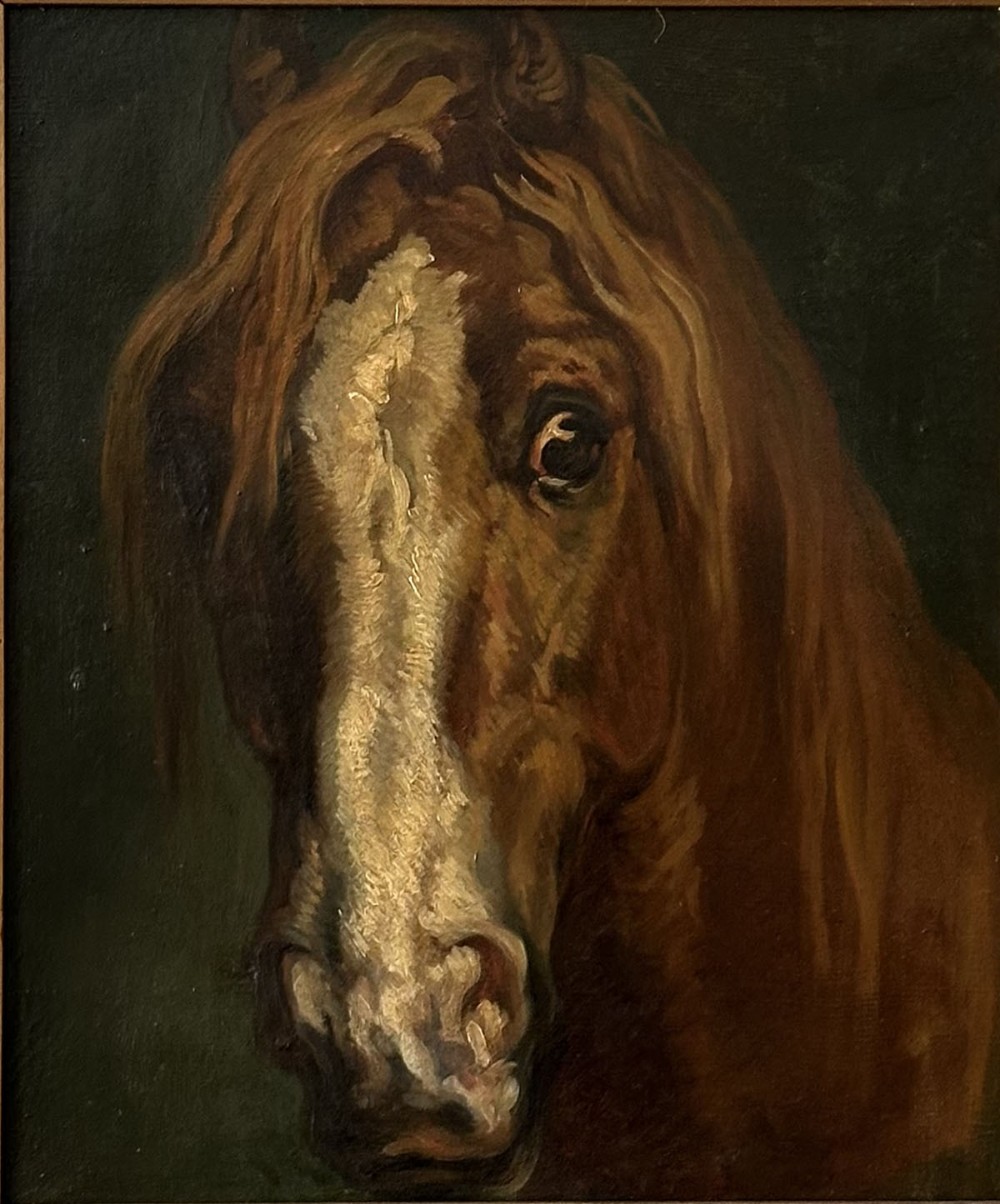
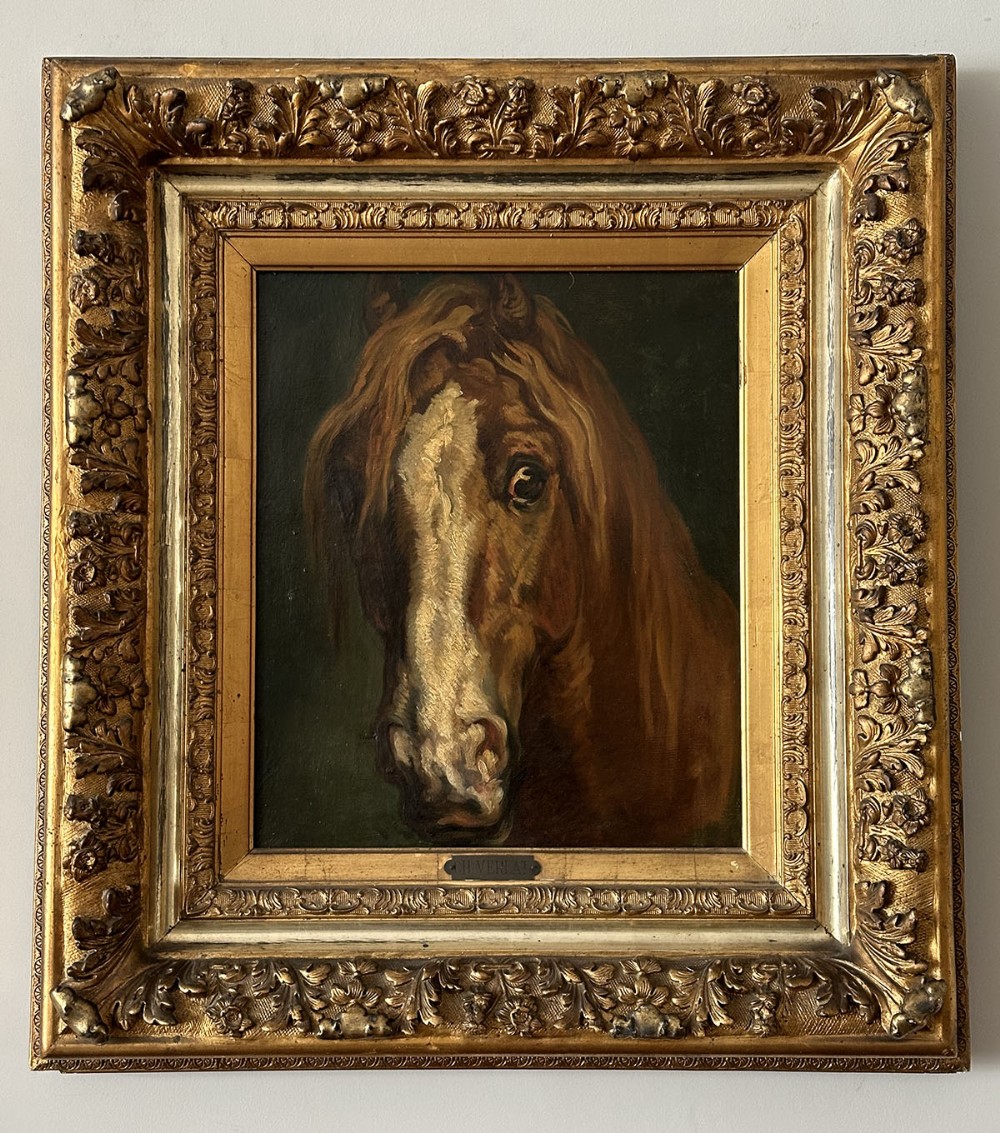
Stunning portrait of a chestnut horse with a white blaze mounted in a beautiful 19th century gilt frame and slip. The painting dates from the 19th Century and is attributed to Charles Verlat and has plaque with his name on the front of the painting.

Verlat (25 November 1824 – 23 October 1890) was a Belgian painter, watercolorist, engraver (printmaker), art educator and director of the Antwerp Academy. He painted many subjects and was particularly known as an animalier and portrait painter. He also created Orientalist works, genre scenes, including a number of singeries, religious compositions and still lifes. He was educated at the Academy in Antwerp under the direction of G. Wappers and N. De Keyser. He was a professor of drawing and director of the Antwerp Academy when Vincent van Gogh spent a brief period as a student at the Academy in 1886. The two men got into arguments about van Gogh's unconventional style of drawing. He was also a student of E. Hamman and J. Lies.

Verlat stayed in Paris from 1850 to 1868 and took lessons there under the guidance of A. Scheffer, H. Flandrin and Th. Couture and came into contact with G. Courbet. He was teacher and director at the Kunstschule in Weimar from 1869 to 1874. He traveled to Egypt, Syria and Palestine between 1875 and 1877 and exhibited the works created during this trip in 1877 in a specially built hall in Antwerp. After his return from the Near East, he played an eminent role in Antwerp's art scene. He has realized historical compositions, genre scenes, portraits and animals. As a follower of realism à la Courbet, he developed into a proponent of naturalism in art. The genre painting was raised to monumental dimensions. In this regard, one should look at his grandiose panoramas such as The Battle of Waterloo (1881) and the Panorama of Moscow.

As a satirist he painted, watercolors and etched, including, depictions of animals behaving like people. He initially took a progressive stance and gradually evolved towards a traditionalist view, which was highly resented by the newcomers. In 1877 he became an honorary member of the Société Royale Belge des Aquarellistes, in 1877 a teacher and in 1885 director of the Academy in Antwerp. His class included R. Baseleer, L. Brunin, E. Chappel, L. and P. Van Engelen, E. Larock, H. Luyten, Ch. Mertens, J. Rosier, H. Van De Velde, Ch. Tree. He is mentioned in the Biography Nationale of the Royal Academy of Belgium, volume XXXII. He is also mentioned in BAS I and Two Centuries of Signatures of Belgian Artists. (piron)

During his lifetime he was recognised as an important animal painter. He was able to paint animals in a lively and realist manner. One of his early animal works was acquired by the English animal painter Edwin Landseer. One of the best known examples of his art in this area is 'The defense of the Herd' (1878, Royal Museum of Fine Arts Antwerp). Painted during his Palestine residence it has the muted palette that he adopted during this period. It shows the kind of dynamic representation of animals only interactions that can be seen in the animal paintings of earlier Flemish animaliers such as Frans Snyders. Verlat painted many works in the genre of the singeries, i.e. humoristic renderings of monkeys engaging in human activities.

He also painted religious subjects and his Pietà of 1866 was so successful that it earned him the distinction of being appointed a knight in the French Legion of Honour. There are several of his works in Museums.

Dimensions - 76 x 69 x 9 cm

Date of Manufacture

Rue des Fontenelles has dated this Antique Horse Oil Painting to the 19th Century.
Physical Dimensions
Height
76cm (29.92")
Width
69cm (27.17")
Depth
9cm (3.54")
Reference Numbers
Sellingantiques Reference
SA1082684
Description
Stunning portrait of a chestnut horse with a white blaze mounted in a beautiful 19th century gilt frame and slip.
“
The painting dates from the 19th Century and is attributed to Charles Verlat and has plaque with his name on the front of the painting.
Rue des Fontenelles
fig 1. An antique oil painting depicting a close-up portrait of a chestnut horse with a prominent white blaze against a dark background.
fig 1. Chestnut Horse - Antique Oil Painting

Verlat (25 November 1824 – 23 October 1890) was a Belgian painter, watercolorist, engraver (printmaker), art educator and director of the Antwerp Academy. He painted many subjects and was particularly known as an animalier and portrait painter. He also created Orientalist works, genre scenes, including a number of singeries, religious compositions and still lifes. He was educated at the Academy in Antwerp under the direction of G. Wappers and N. De Keyser. He was a professor of drawing and director of the Antwerp Academy when Vincent van Gogh spent a brief period as a student at the Academy in 1886. The two men got into arguments about van Gogh's unconventional style of drawing. He was also a student of E. Hamman and J. Lies.
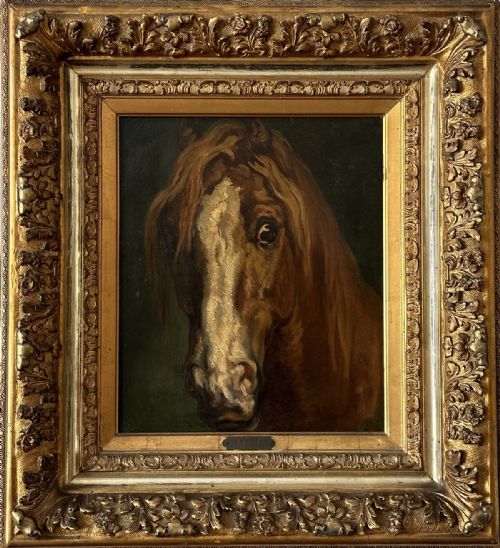
fig 2. An antique oil painting depicting a close-up portrait of a chestnut horse with a prominent white blaze against a dark background.
fig 2. Chestnut Horse - Antique Oil Painting

Verlat stayed in Paris from 1850 to 1868 and took lessons there under the guidance of A. Scheffer, H. Flandrin and Th. Couture and came into contact with G. Courbet. He was teacher and director at the Kunstschule in Weimar from 1869 to 1874. He traveled to Egypt, Syria and Palestine between 1875 and 1877 and exhibited the works created during this trip in 1877 in a specially built hall in Antwerp. After his return from the Near East, he played an eminent role in Antwerp's art scene. He has realized historical compositions, genre scenes, portraits and animals. As a follower of realism à la Courbet, he developed into a proponent of naturalism in art. The genre painting was raised to monumental dimensions. In this regard, one should look at his grandiose panoramas such as The Battle of Waterloo (1881) and the Panorama of Moscow.
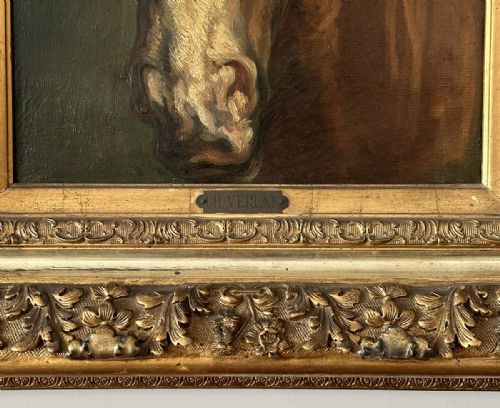
fig 3. An antique oil painting depicting a close-up portrait of a chestnut horse with a prominent white blaze against a dark background.
fig 3. Chestnut Horse - Antique Oil Painting

As a satirist he painted, watercolors and etched, including, depictions of animals behaving like people. He initially took a progressive stance and gradually evolved towards a traditionalist view, which was highly resented by the newcomers. In 1877 he became an honorary member of the Société Royale Belge des Aquarellistes, in 1877 a teacher and in 1885 director of the Academy in Antwerp. His class included R. Baseleer, L. Brunin, E. Chappel, L. and P. Van Engelen, E. Larock, H. Luyten, Ch. Mertens, J. Rosier, H. Van De Velde, Ch. Tree. He is mentioned in the Biography Nationale of the Royal Academy of Belgium, volume XXXII. He is also mentioned in BAS I and Two Centuries of Signatures of Belgian Artists. (piron)
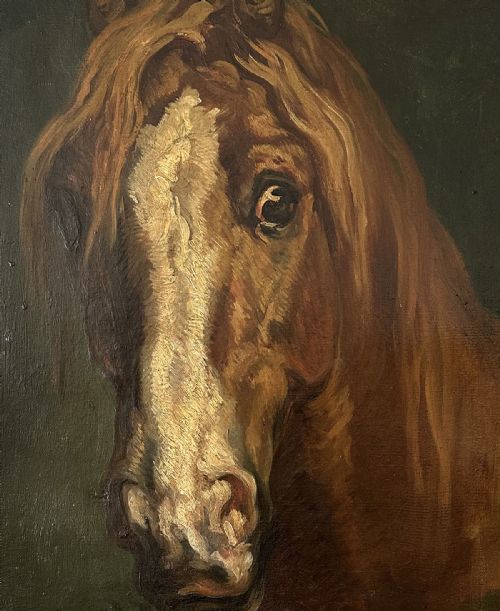
fig 4. An antique oil painting depicting a close-up portrait of a chestnut horse with a prominent white blaze against a dark background.
fig 4. Chestnut Horse - Antique Oil Painting

During his lifetime he was recognised as an important animal painter. He was able to paint animals in a lively and realist manner. One of his early animal works was acquired by the English animal painter Edwin Landseer. One of the best known examples of his art in this area is 'The defense of the Herd' (1878, Royal Museum of Fine Arts Antwerp). Painted during his Palestine residence it has the muted palette that he adopted during this period. It shows the kind of dynamic representation of animals only interactions that can be seen in the animal paintings of earlier Flemish animaliers such as Frans Snyders. Verlat painted many works in the genre of the singeries, i.e. humoristic renderings of monkeys engaging in human activities.

He also painted religious subjects and his Pietà of 1866 was so successful that it earned him the distinction of being appointed a knight in the French Legion of Honour. There are several of his works in Museums.

Dimensions - 76 x 69 x 9 cm

Date of Manufacture

Rue des Fontenelles has dated this Antique Horse Oil Painting to the 19th Century.

Height
76cm (29.92")
Width
69cm (27.17")
Depth
9cm (3.54")
Reference Numbers
Sellingantiques Ref
SA1082684
Rue des Fontenelles
Sellingantiques verified Since Mar 2015

Specialists in french antiiques, decorative objects and french and european paintings.

Dealer Profile

You can view the stock and full dealer information on the Rue des Fontenelles Profile Page
PDF SHARE
SAVE
An antique oil painting depicting a close-up portrait of a chestnut horse with a prominent white blaze against a dark background. SOLD6+ MONTHS AGO
1 / 5
Archive I An antique oil painting depicting a close-up portrait of a chestnut horse with a prominent white blaze against a dark background. SOLD6+ MONTHS AGO

Chestnut Horse - Antique Oil Painting
Archive II An antique oil painting depicting a close-up portrait of a chestnut horse with a prominent white blaze against a dark background. View II
Archive III An antique oil painting depicting a close-up portrait of a chestnut horse with a prominent white blaze against a dark background. View III
Archive IV An antique oil painting depicting a close-up portrait of a chestnut horse with a prominent white blaze against a dark background. View IV
Archive V An antique oil painting depicting a close-up portrait of a chestnut horse with a prominent white blaze against a dark background. View V
Enlarged Archival View
Location
Chagford
Devon
United Kingdom
Verified Since Mar 2015
Items For Sale 147
Items Sold 1,202
Rue des Fontenelles
Verified Since Mar 2015
View Dealer Info
Location: Chagford, Devon, United Kingdom
Verified
Mar 2015
For Sale
147
Sold
1,202
An antique oil painting depicting a close-up portrait of a chestnut horse with a prominent white blaze against a dark background.
Chestnut Horse - Antique Oil Painting
Ref: SA1082684
An antique oil painting depicting a close-up portrait of a chestnut horse with a prominent white blaze against a dark background.
Detail View 1
Detail View 2
Detail View 3
Detail View 4
Archival Detail
Every single antique dealer on our platform is individually approved by our internal team. We verify their professional trade history, ethical standards, and photographic quality to ensure a secure, high-standard buying environment. Upon joining, every dealer agrees to a strict 9-point code of conduct. While issues can occasionally arise, our dealers typically resolve them swiftly and directly with the buyer. In fact, since our founding in 2002, Sellingantiques has only had to step in to help resolve an issue on roughly five occasions—a true testament to the quality of our dealers and their dedication to your happiness.
Our dealers are highly experienced in packing and shipping fragile, high-value antiques. Because you are in direct contact with the dealer, you will be able to easily go through all available shipping and insurance options together to ensure your item arrives safely.
Antiques are the ultimate green purchase. By choosing historical pieces over newly manufactured goods, you completely eliminate the carbon footprint of modern mass production while preserving exceptional, timeless craftsmanship.
Written by Sellingantiques from the dealer’s photographs and listing
  • ObjectFine Art
  • Period19th century
  • StyleTraditional
  • MaterialOil paint, Canvas, Wood
  • ColourWarm Brown
  • MotifsEquestrian subject, Impasto highlights, Dark tonal background
  • SizeH 76 cm (30 in) x W 69 cm (27 in) x D 9 cm (4 in)

Equine art has a long tradition in European homes, particularly in country houses, where paintings of prized horses, hunters, and pets were frequently commissioned to celebrate lineage and sporting culture.

Traditional oil paintings of this era typically utilize finely ground pigments suspended in linseed oil, applied to hand-stretched linen or canvas, and mounted on wooden stretcher frames.

Authenticity is determined by examining canvas ageing, craquelure in the paint layer, hand-planed wooden stretcher wedges, historical framing techniques, and pigment composition under magnification.

Such artwork can be anchored on a dark painted wall to create depth or hung amidst contemporary pieces to introduce a sense of historic narrative and texture to the room.

Preservation requires maintaining stable relative humidity and temperature, avoiding direct sunlight to prevent pigment fading, and periodically dusting the canvas with a soft, dry brush.
items
Add keywords to the filter
Price
£100
£250000
Era
Period
Style
Material
Origin
Stock Location
Recently Added
Online Payments
Categories