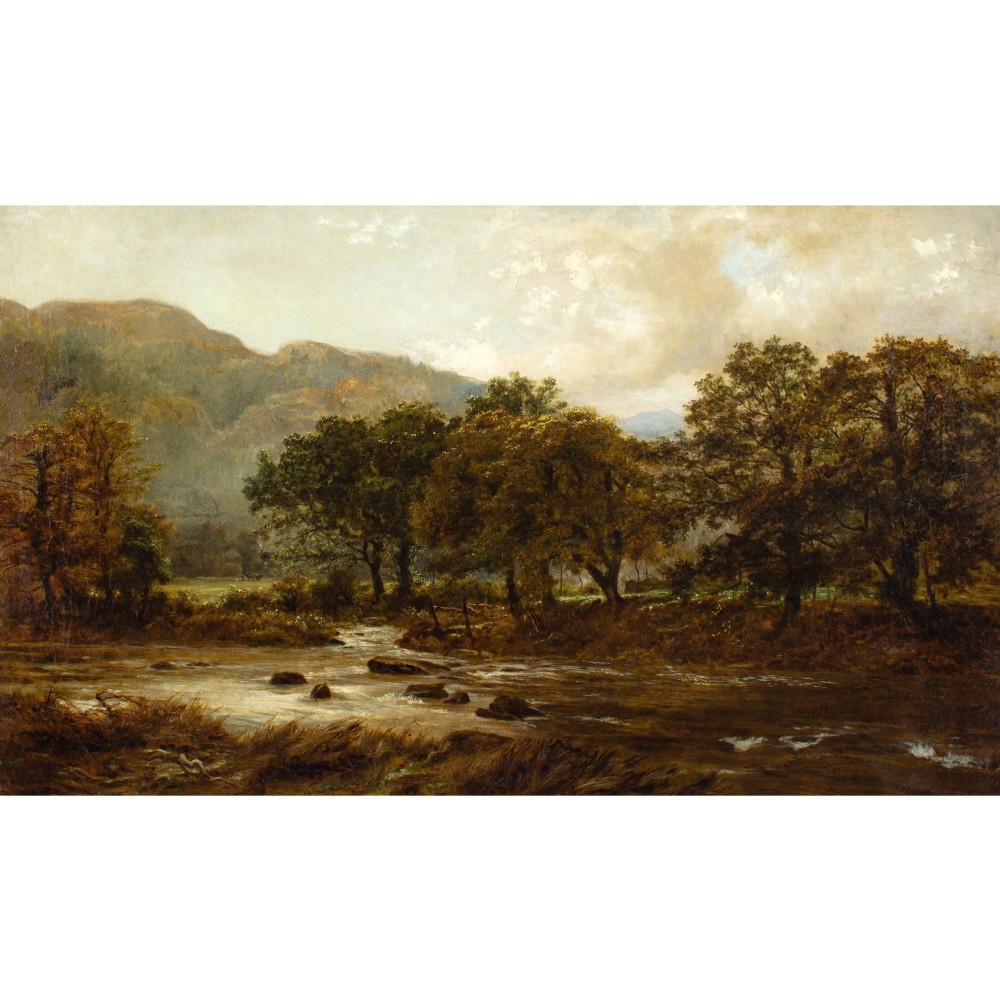
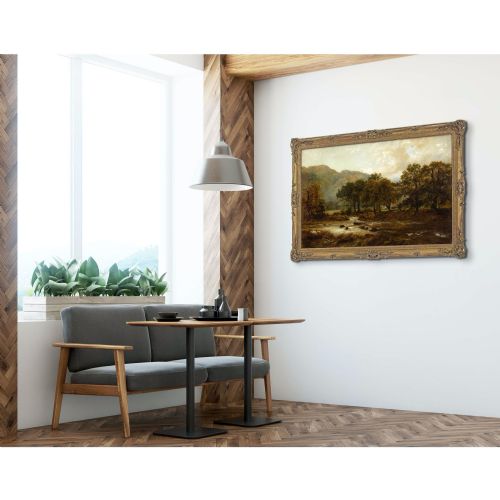
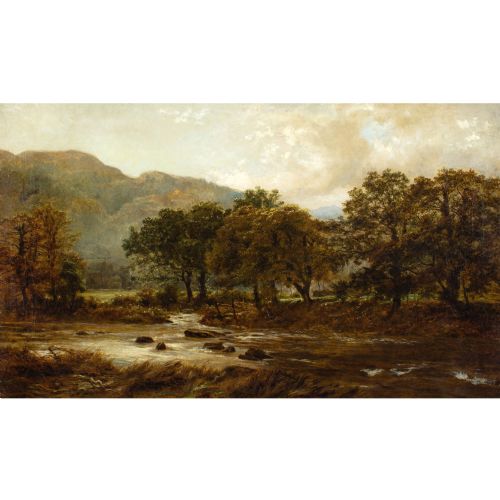
Brave Fine Art has dated this piece to the 1870s.
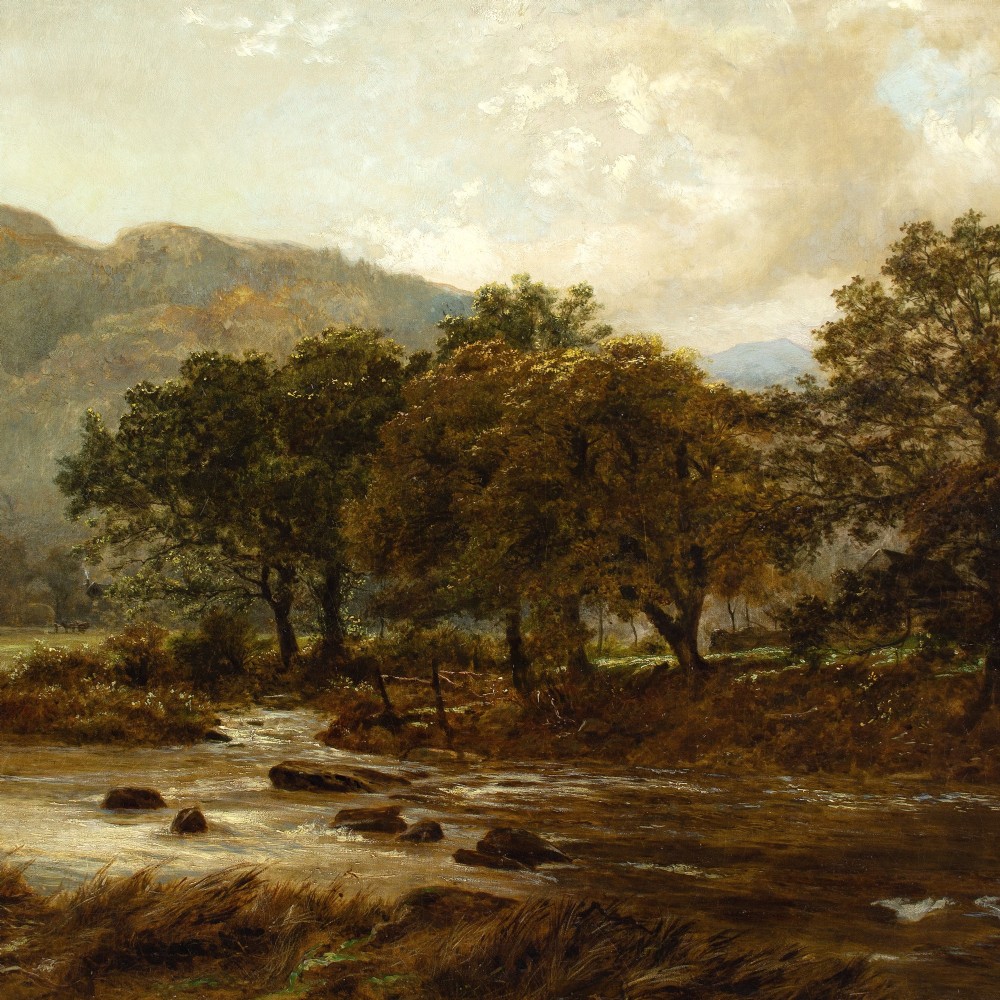
For centuries, the old masters were expected to ‘idealise’ - study the elements, yet arrange them in a manner befitting the divine, essentially as God intended. While in the late 18th and early 19th-century, the Romantics tried to allude to the sensation of being among nature, whipping up its melodrama for emotional effect. But during the mid-19th century, the emphasis switched to something entirely different - painting the truth. Every craggy rock, mossy hillside, rutted path, and sullen cloud. Hordes of British painters gathered up their kit and headed for the countryside, painting from life as faithfully as possible.
John Ruskin, the celebrated art critic, coined the term ‘Truth to Nature’ and set out his naturalistic mantra in a gargantuan five-volume thesis titled ‘Modern Painters’. It’s critical of those who seek to embellish a view for aesthetic reasons, favouring instead the policy of ‘rejecting nothing, selecting nothing’.
Robert Gallon was a student of naturalism, inspired by some of the foremost painters of this genre such as Benjamin Williams Leader (1831-1923) and George Vicat Cole (1833-1893). He was good friends with John Brett ARA (1831-1902) and the two would’ve surely discussed Ruskin’s ideas at length during sketching trips.
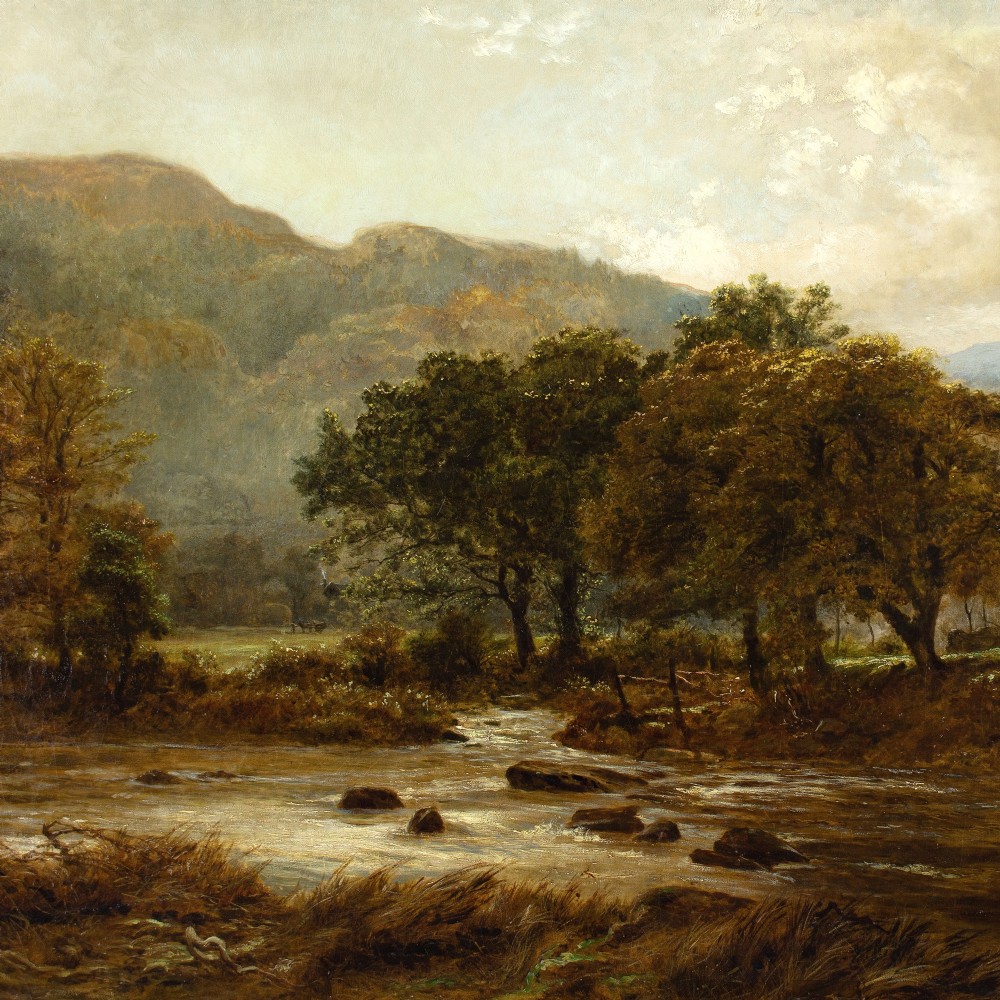
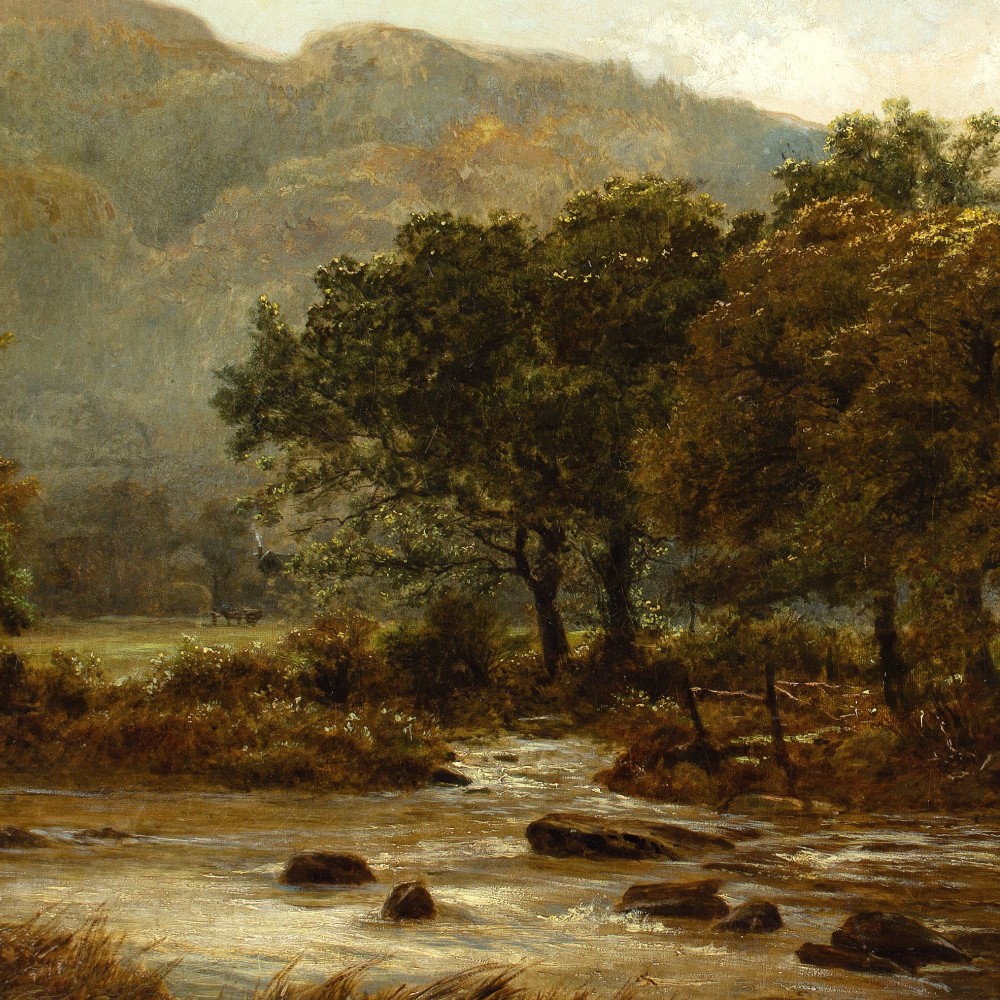
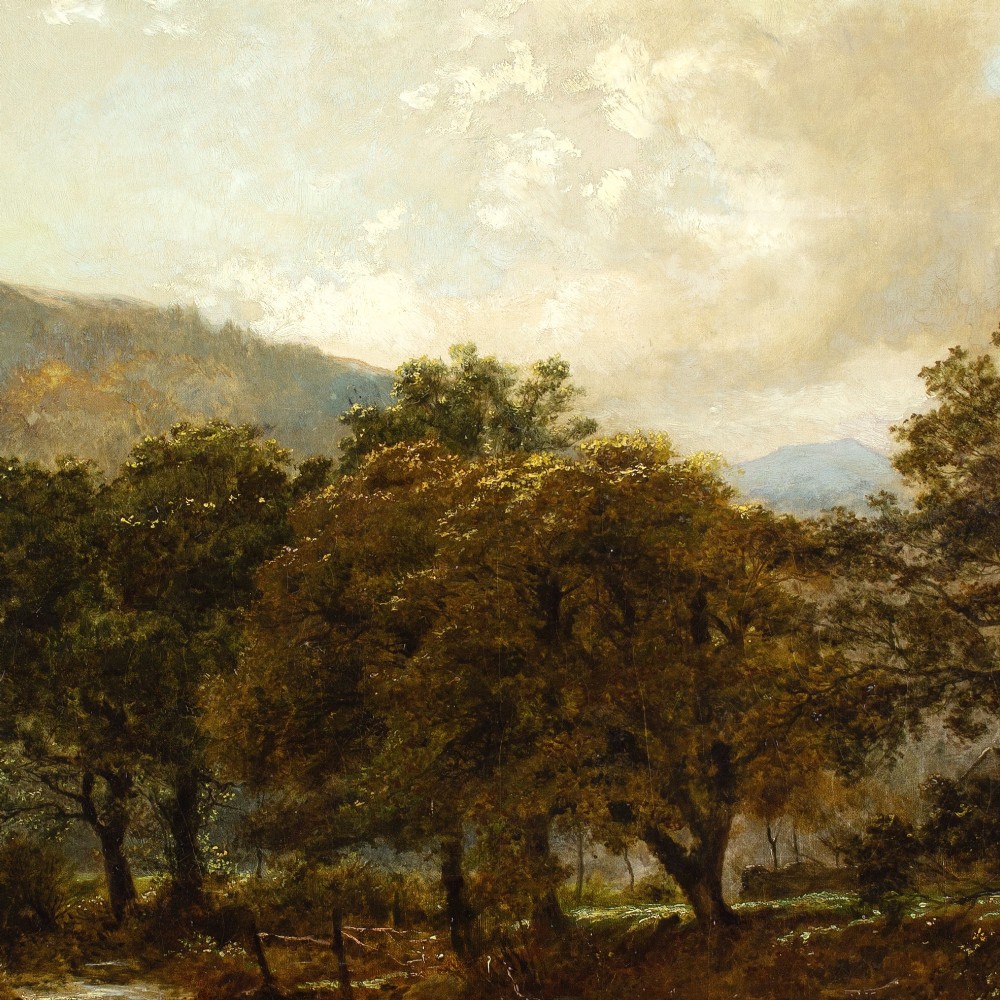
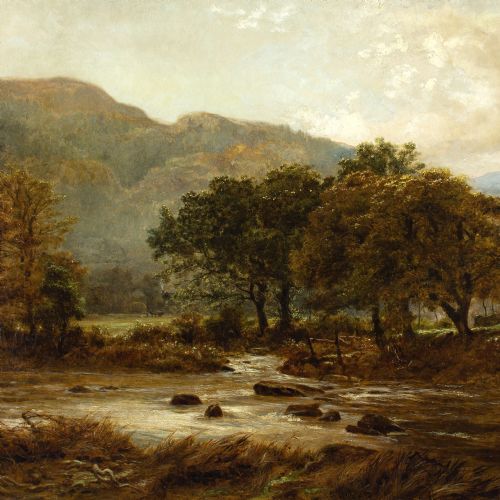
Gallon’s early works, particularly those in Wales, are gritty, muddy, and often quite brutal in their realism. Overcast skies are peppered with impasto while the rivers are grey-gold. Mountains are unbeautified and tower over us with an imposing presence. At times, his compositions lack balance, as nature does. He painted what he saw, irregular or otherwise.
His approach was rather controversial in his formative years but as time passed, the critics began to favour the way he captured the British Isles. Industrialisation brought with it a new class of buyer, one who sought accurate representations of local views. In 1873, he debuted at the Royal Academy and continued to exhibit until 1903. He won medals for paintings shown at Crystal Palace and provided numerous works to London galleries.
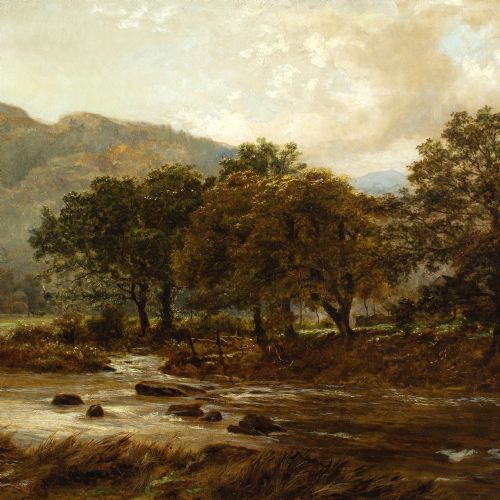
Well into his 70s, he was still painting - recording his occupation in the 1921 census as ‘Artist. Landscape, Cattle & Portrait’. By this point, his style had evolved to become somewhat more refined - but much like Leader before him, he never lost sight of reality.
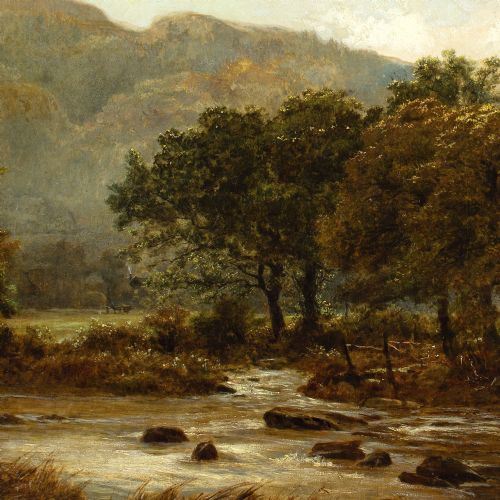
Robert Gallon is represented in numerous public collections including the National Library of Wales.
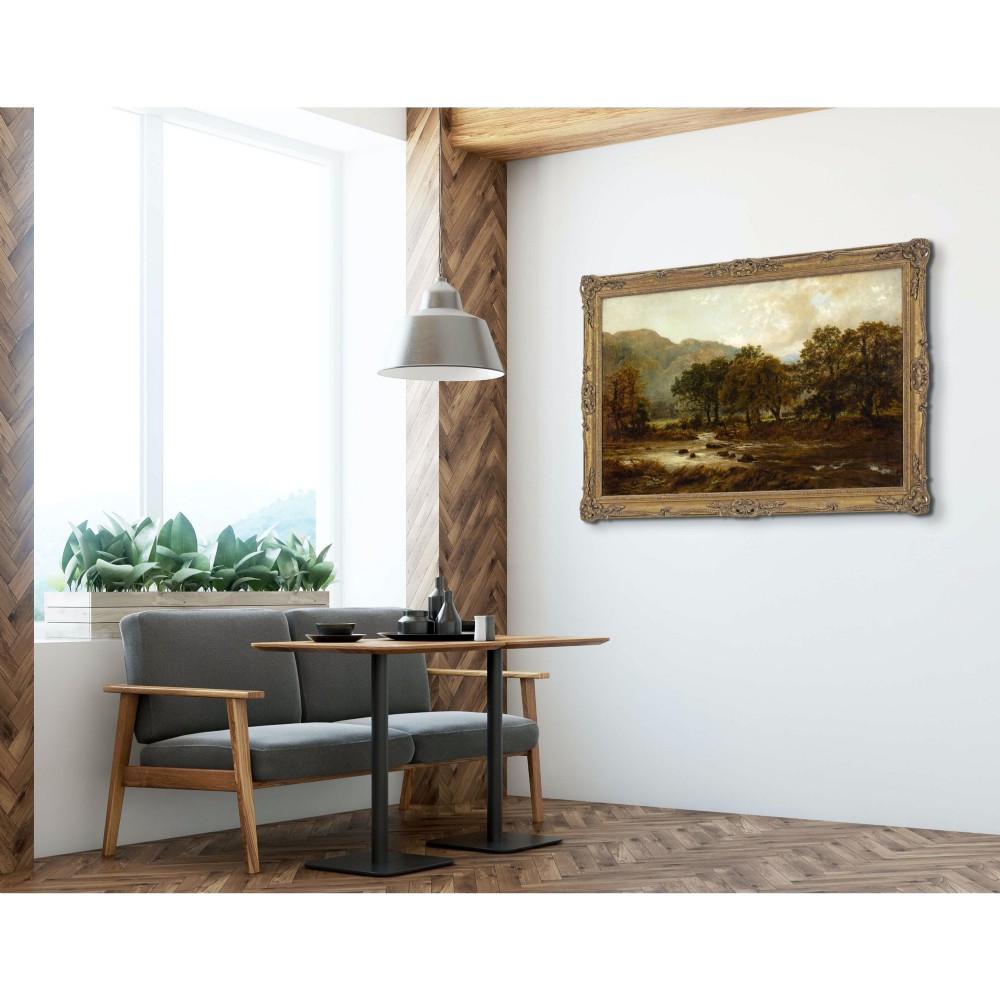
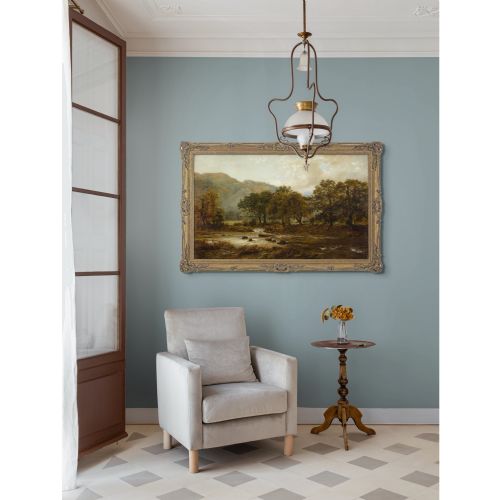
Signed/dated lower right and held within a later frame.
Learn more about Robert Gallon in our directory.
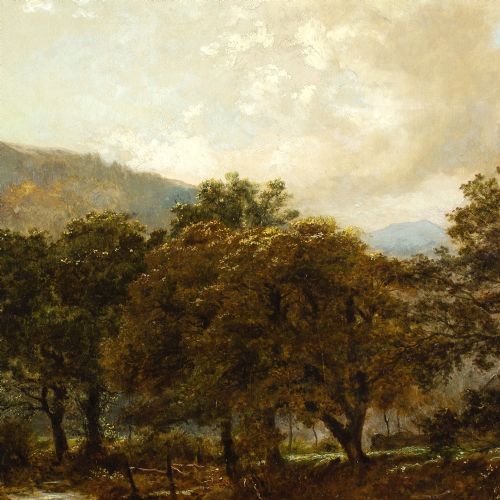
Medium: Oil on canvas
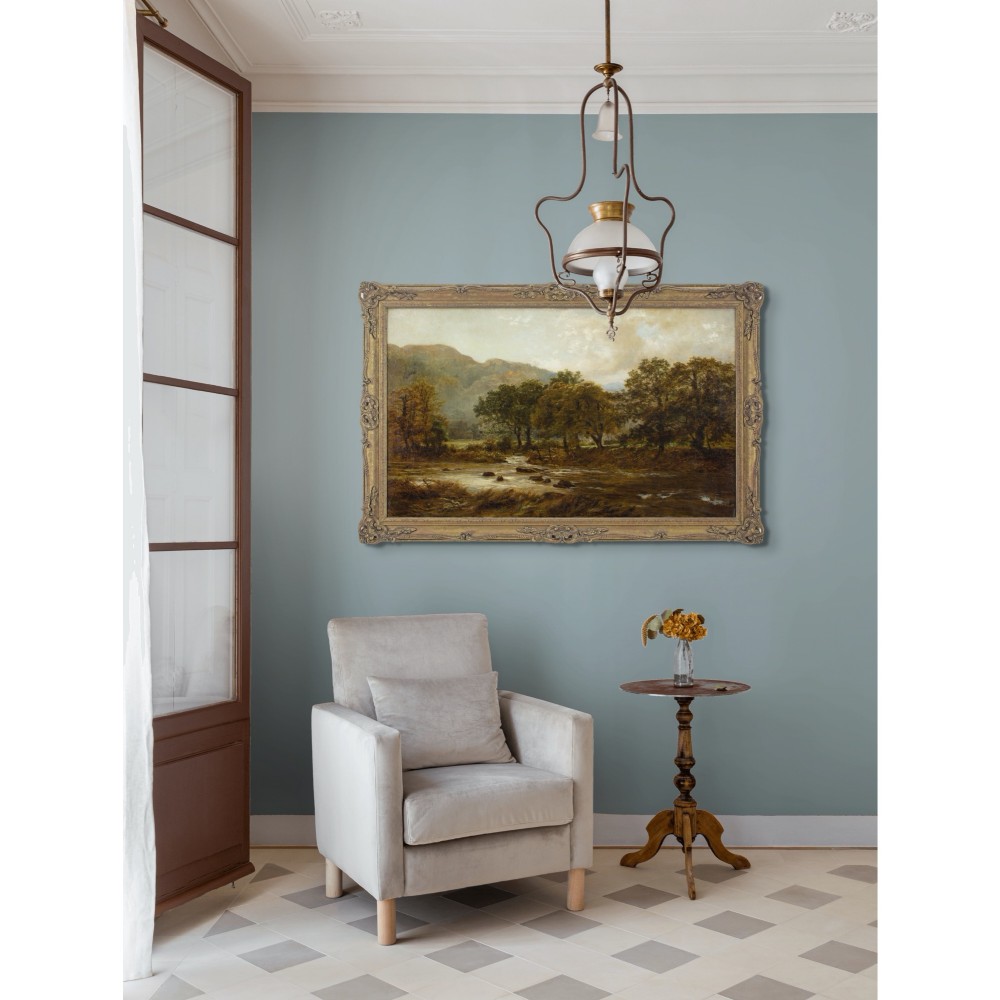
Overall size: 56” x 36” / 143cm x 92cm
Year of creation: 1878
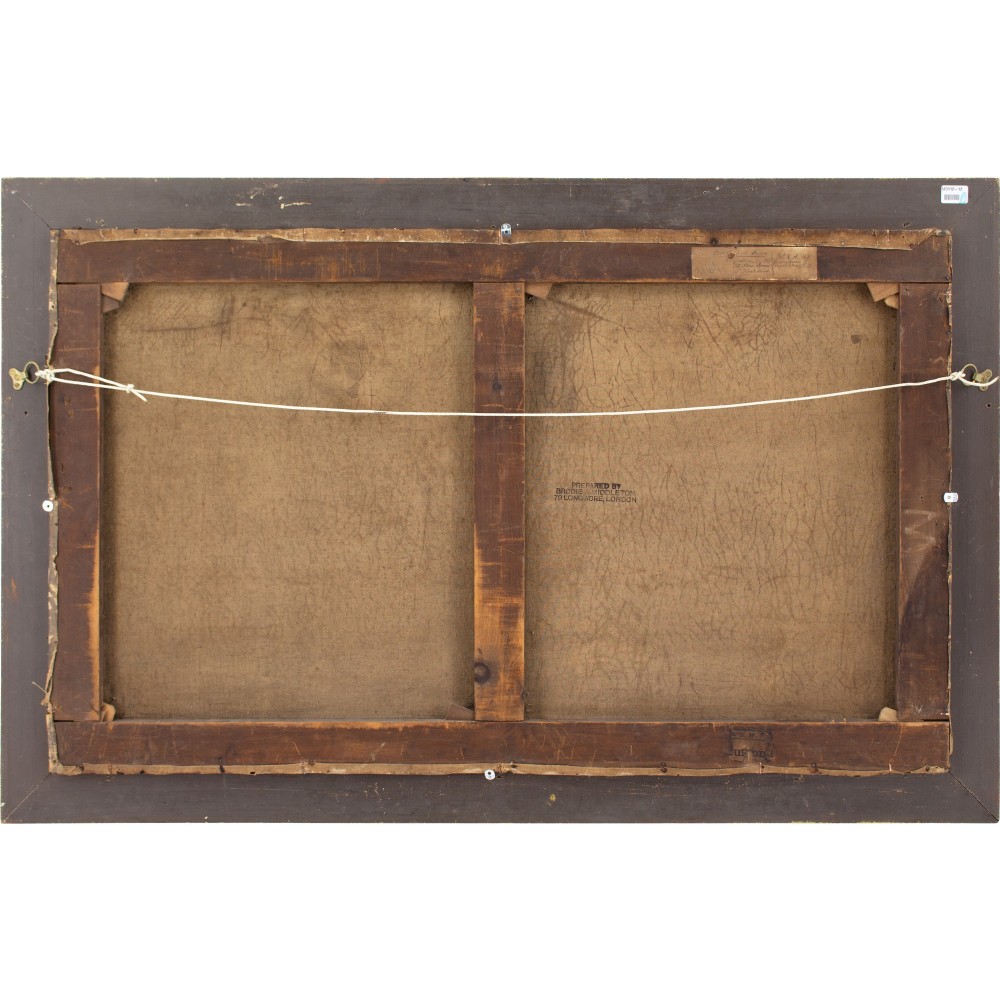
Labels & Inscriptions: Exhibition label on reverse. Brodie & Middleton supplier’s stamp.
Provenance: Dealer, Leicestershire (1993) / Private collection, UK.
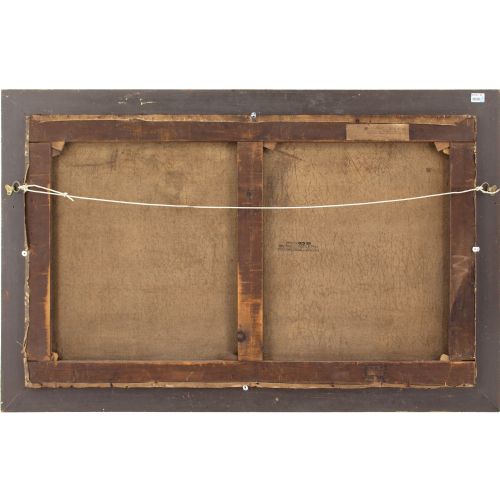
Exhibited: London, Royal Academy, 1878, no. 420 / London, Crystal Palace, 1879.
Condition: Assessed and approved by our conservator. Cleaned. Revarnished. Settled craquelure, as you would expect. The paint layer is stable.
Artist’s auction maximum: £27,025 for ‘Woman and Child Crossing a Bridge by a Lake’, Oil on canvas, Christie’s, Victorian Pictures, London, 2000 (lot 72).
Our reference: BRV1831
Brave Fine Art has dated this piece to the 1870s.
Exquisite antique paintings that capture the imagination.
You can view the stock and full dealer information on the Brave Fine Art Profile Page
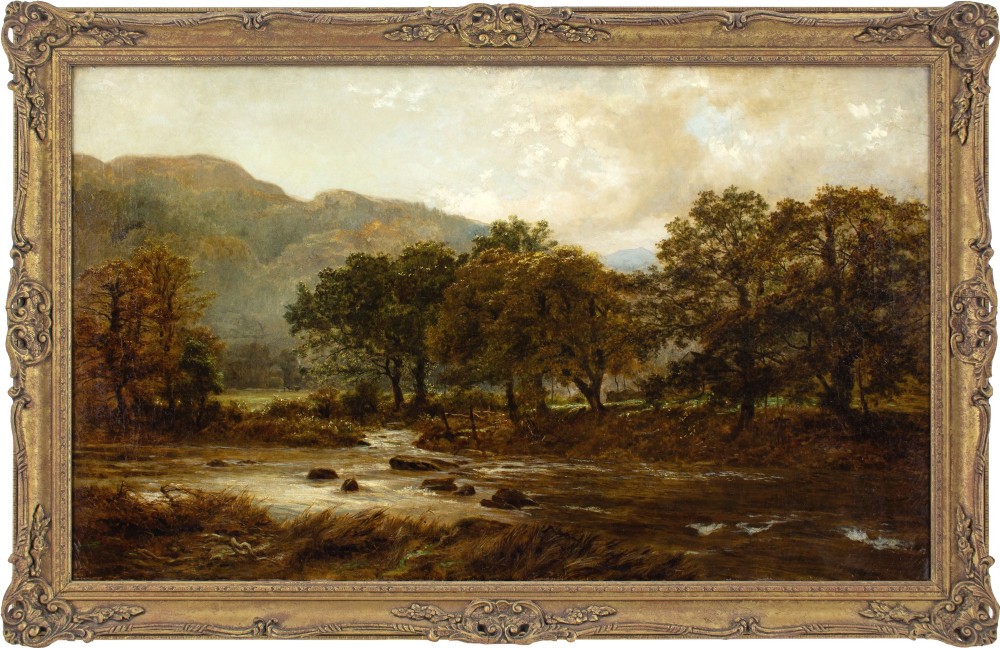
Robert Gallon, Brook & River - Antique Oil Painting