26,223  PAGES BROWSED TODAY PAGES TODAY 88 ANTIQUES UPLOADED TODAYNEW ARRIVALS
88 ITEMS ADDED TODAY
Sort Order
Items Per Page
Browse Categories
Sort order
Items per page
ID #SA1058333
SOLD
Email
Save
Portrait of a Noble Girl Aged 9 in a Black Dress, Lace Ruff & Cuffs, Dated 1619; Circle of Cornelis Van Der Voort (1576- 1624), Oil on Cradled Panel Painting
Titan Fine Art
sold SA1058333
Sorry, but this item has been sold.
Titan Fine Art

Titan Fine Art

Sellingantiques Verified Since Jul 2016
View Dealers Stock Page
  • About Us
    Specialist in 17th & 18thc portraits. Highly curated selection, museum-level research & pro conservation. Exceptional art, expertly vetted.
Id #SA1058333
PDF SHARE
SAVE

Portrait of a Noble Girl Aged 9 in a Black Dress, Lace Ruff & Cuffs, Dated 1619; Circle of Cornelis Van Der Voort (1576- 1624), Oil on Cradled Panel Painting

17th century
Description

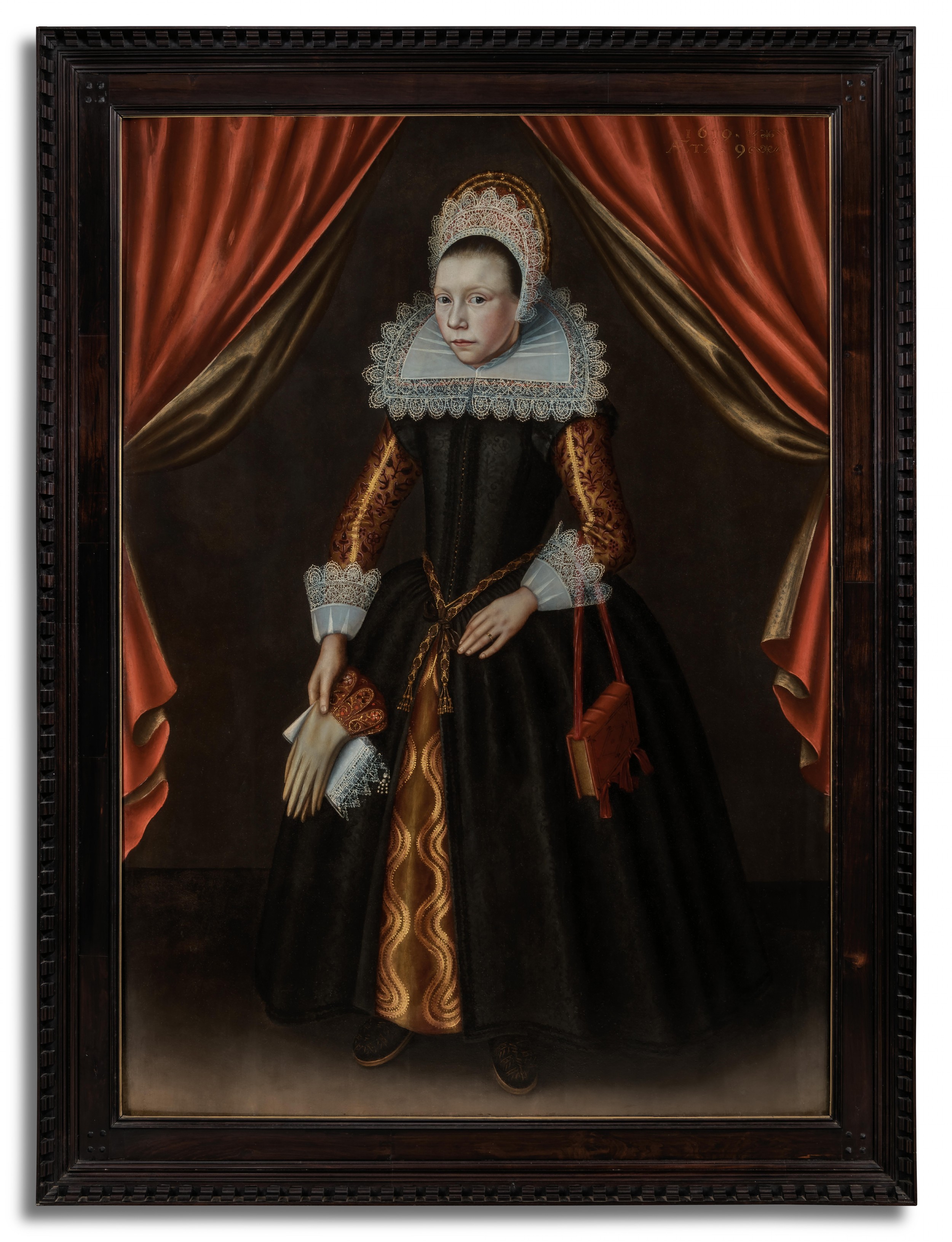
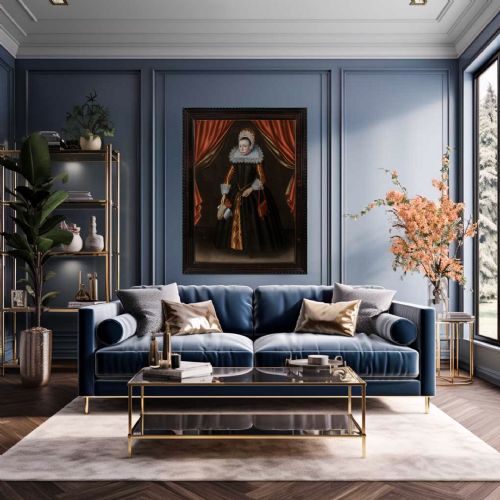
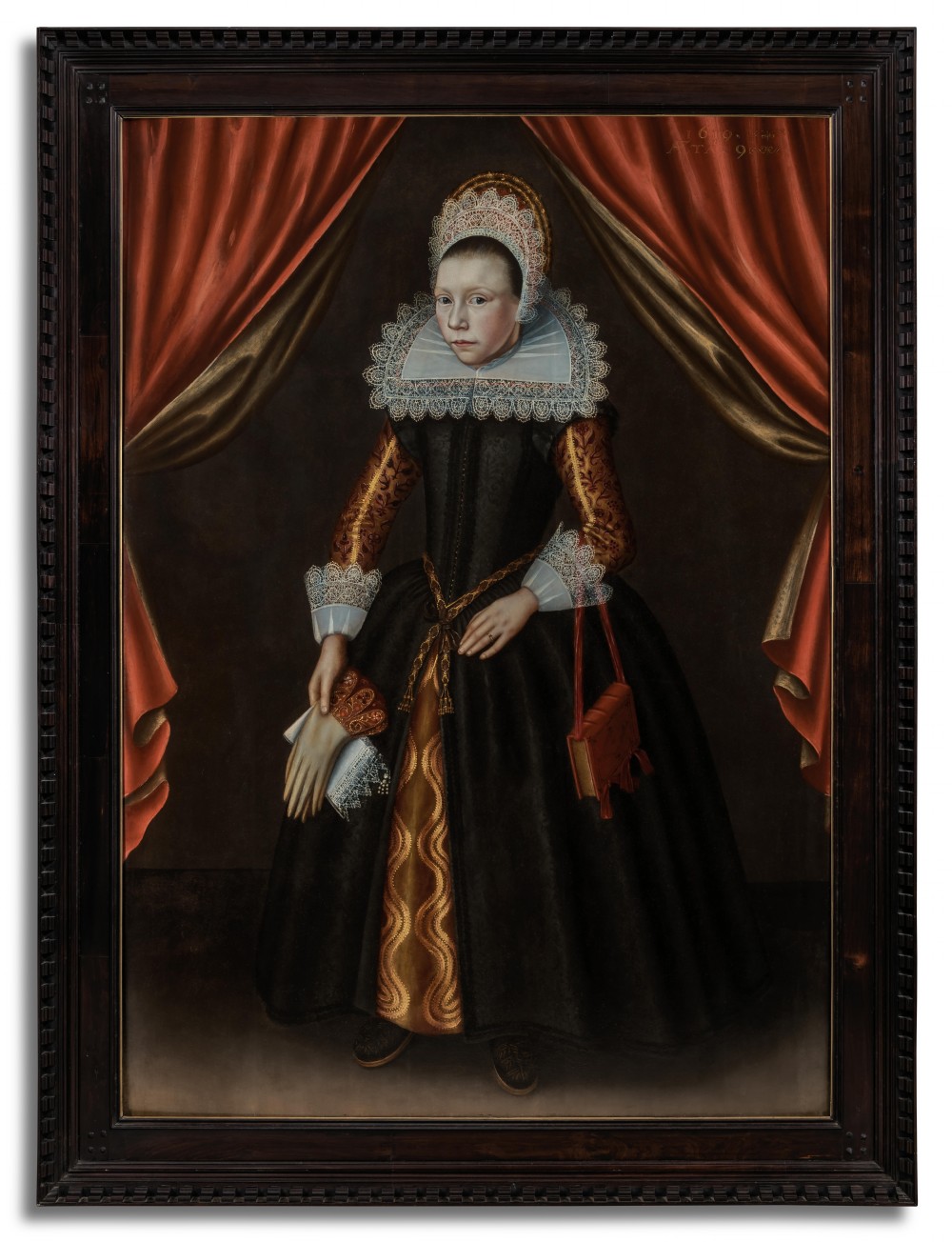
This exquisite full-length portrait depicts a young lady wearing a Dutch coif or coronet of lace, a wired sheer lawn collar, and an elaborate black dress. The inscription on the upper right indicates that the girl was nine years of age when the portrait was painted in 1619.

Like rhetoricians, seventeenth-century artists were bound by rules and expectations for proper decorum, even in matters of dress. Costume was carefully chosen to suit the ideals of a particular culture or sitter and was used to convey a multitude of meanings. Knowledge of its associations and the history of costume can be crucial to the interpretation of portraiture. Furthermore, a long history of sumptuary laws bears witness to the presence of a codified etiquette so much that instruction manuals on appropriate dress began to appear as early as 1528.

The wealth of the sitter is apparent in the extraordinary textiles – the expensive lace, the dress with its gold detail, and the crimson canopy. A ruff as extravagant as this was an extraordinarily costly item, and were prized possessions listed in inventories and handed down in families as heirlooms. Black garments signified a certain social and moral status and consequently, this desirable attire dominated the elite portraiture of Britain and the Netherlands during this period. The whiteness of her skin serves as a marker of her social background and status, highlighting how physical appearance can often play a significant role in how individuals were perceived in society.

She holds a handkerchief trimmed with reticella needle lace and a pair of bridle gloves of cream wash leather, with scalloped caps of gold thread and multi-coloured embroidery. On their wedding day, women wore gloves specially made for the occasion and the bride only removed them at the moment the marriage was solemnised, when the couple shook each other’s right hand. The right facing stance, suggests that the portrait probably served as a pendant to a portrait of her husband, in which case he would be inclined towards our left according to the traditional rules of marriage portraiture. Even at the tender age of nine the sitter had reached ‘marriage age’. This portrait was thus, probably, painted to mark this important event in the sitter’s life and was a very common reason portraits to be commissioned.

The well-preserved condition of this portrait provides a unique opportunity for us to admire the intricacy and details of the attire that may not always be possible in portraits from a similar age. The dark pigments used to depict the expensive black silk, along with the intricate lace, have remarkably stood the test of time, allowing us to appreciate the craftsmanship and artistry that went into creating them over four centuries ago.

Cornelis van der Voort was a Dutch portrait painter from the early 17th century who was active in Amsterdam. He painted individual portraits as well as group portraits including schuttersstukken depicting local militia members. Very little is known about the early life of Cornelis van der Voort, who was born in Antwerp as the son of painter Pieter van der Voort. The family later moved to the Northern Netherlands, possibly due to being Calvinists. Van der Voort is believed to have studied under Cornelis Ketel. His association with Rembrandt is seen through the history of the house where they lived together, which is now the Rembrandt House Museum. Around 1613 he was a member of the schutterij and painted a few schuttersstukken. In 1619 he was the head of the Guild of St. Luke. Van der Voort probably had seven children and married twice: in 1598 with Geertrui Willems, who died in 1609, and in 1613 with Cornelia Brouwers. He died in Amsterdam and was buried on 2 November 1624. In August 1625 his inventory was sold.

Measurements: Height 146cm, Width 109cm framed (Height 57.5”, Width 43” framed)

Physical Dimensions
Height
146cm (57.48")
Width
109cm (42.91")
Depth
7cm (2.76")
Declaration

Titan Fine Art has dated this piece to the 17th Century.
Reference Numbers
Sellingantiques Reference
SA1058333
Dealers Notes

Much more info about this item at: www.titanfineart.com

In a market saturated with available paintings, Titan Fine Art offers a distinct advantage: we sift through thousands of works to provide a specially curated selection. Each piece is meticulously chosen based on technical merit, provenance, and decorative appeal, ensuring our clients view only the finest examples of British and European art.

With over 20 years of expertise and 1,000+ works placed with collectors and institutions, we are one of the most prolific specialists in 17th and 18th-century portraiture. We combine a scholarly approach with museum-level rigor to replace the uncertainty of the open market with absolute confidence.

Why Buy From Titan Fine Art?

• Expertly Curated Selection

We act as your expert eye, selecting only high-quality works that offer genuine historical and artistic value.

• Museum-Level Research

Each portrait is supported by extensive academic research, often exceeding 40 hours, to establish attribution, sitter identity, and historical context.

• Professional Conservation

All paintings are carefully cleaned and stabilised by professional conservators, and are presented ready to hang.

• Transparent Pricing

No buyer’s premium or hidden fees—unlike auction houses, where additional costs can add 25–35%.

• Export Pricing Advantage

Reduced pricing is available for works exported outside the UK.

• Specialist Global Shipping

We manage the entire process, including custom crating, export documentation, and fully tracked delivery worldwide.

• Buy with Confidence

A 7-day return policy and the option to pay in GBP, USD, or EUR for convenience and transparency.

• Original Period Frames

Many works retain their original carved and gilded frames, which are works of art in their own right and enhance both historical authenticity and decorative impact.

• Personal Advisory Service

We work directly with collectors and interior designers, offering guidance on selection, scale, and placement—including bespoke room mock-ups on request.

Subscribe to our monthly 'new item alert' to be the first to hear about new works

Description
This exquisite full-length portrait depicts a young lady wearing a Dutch coif or coronet of lace, a wired sheer lawn collar, and an elaborate black dress.
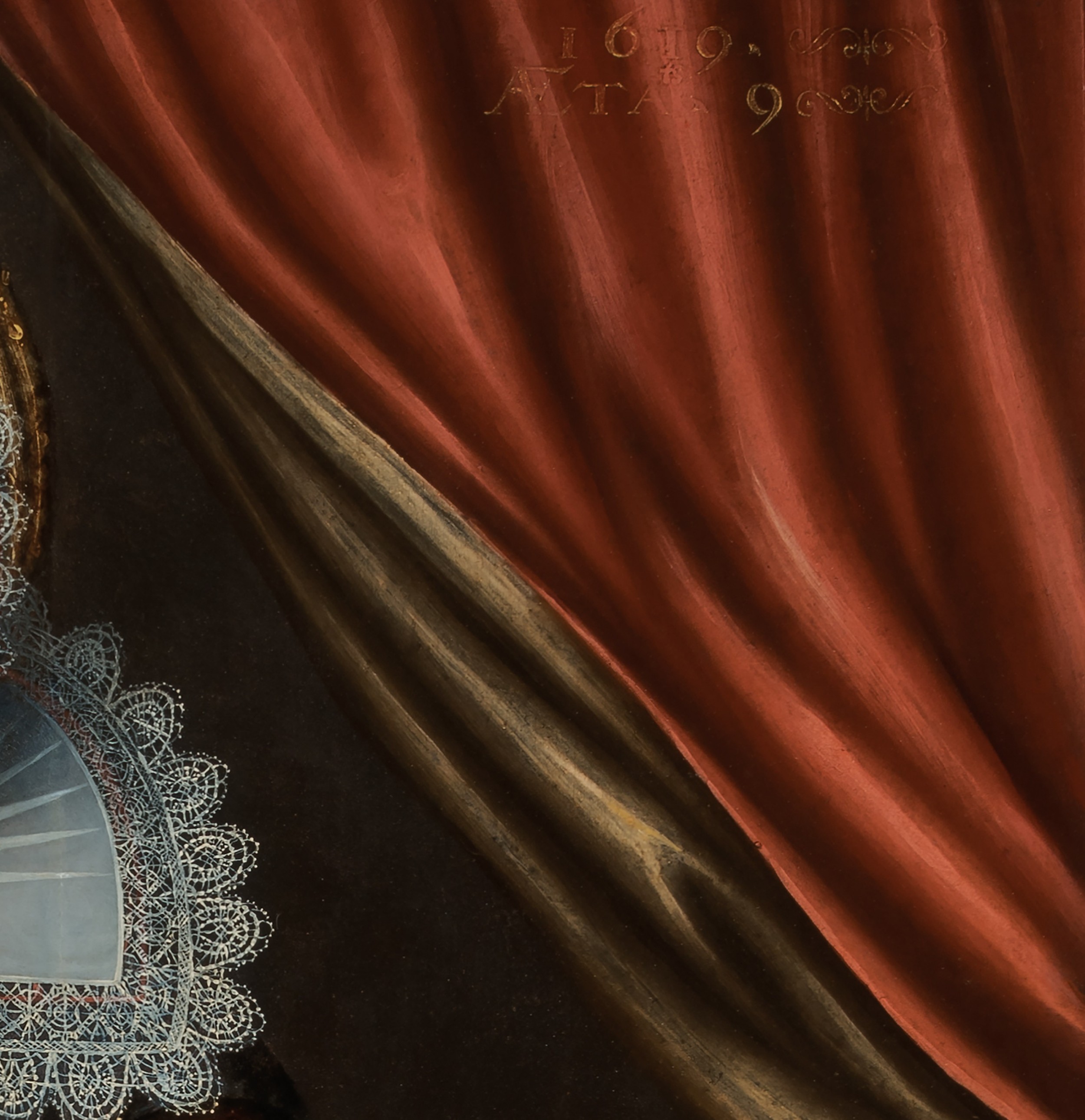
The inscription on the upper right indicates that the girl was nine years of age when the portrait was painted in 1619.
Titan Fine Art
fig 1. Portrait of a Noble Girl aged 9 in a Black Dress, Lace Ruff & Cuffs, dated 1619; Circle of Cornelis van der Voort (1576- 1624), Oil on cradled panel painting
fig 1. Portrait of a Noble Girl Aged 9 in a Black Dress, Lace Ruff & Cuffs, Dated 1619; Circle of Cornelis Van Der Voort (1576- 1624), Oil on Cradled Panel Painting

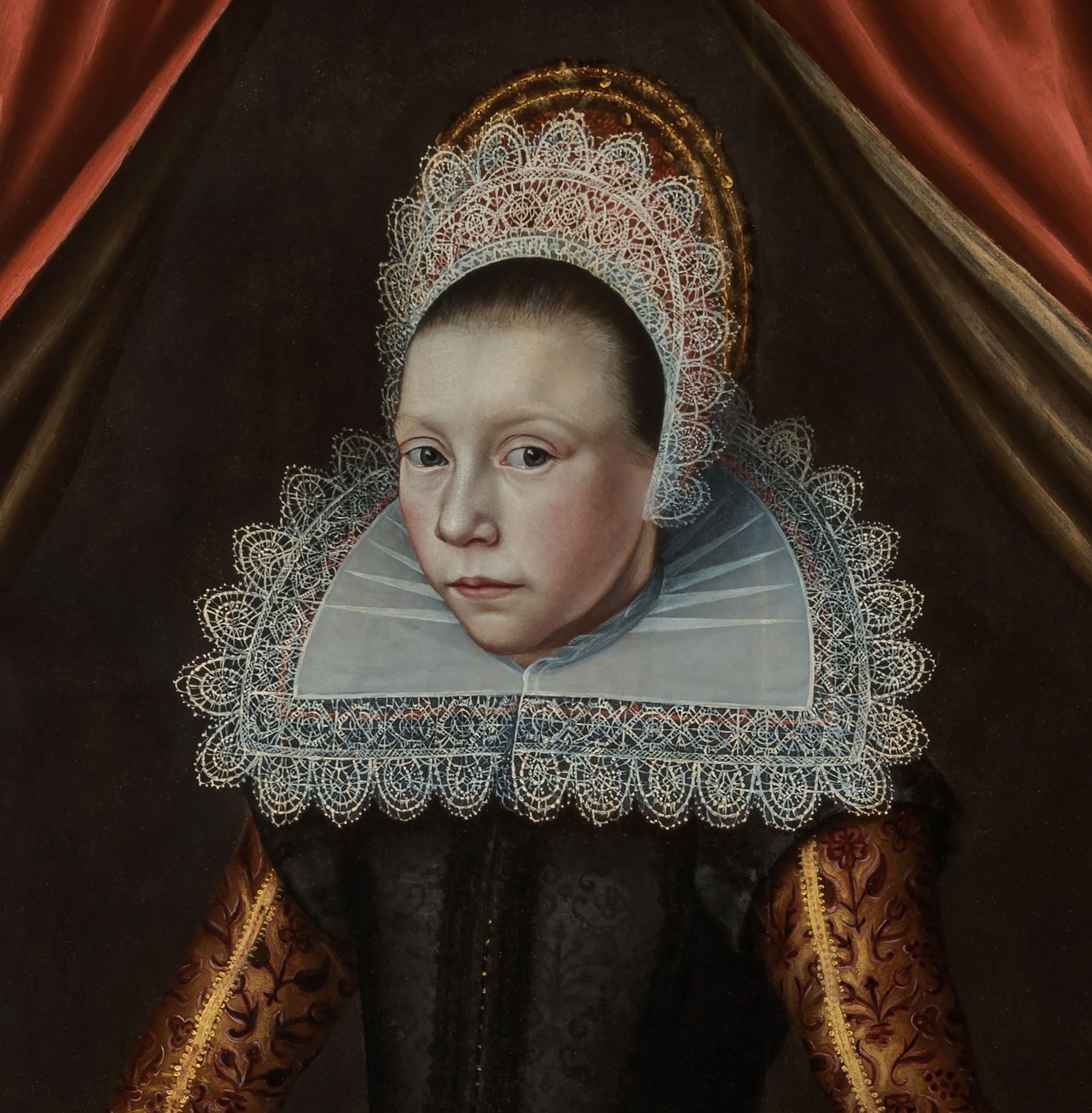
Like rhetoricians, seventeenth-century artists were bound by rules and expectations for proper decorum, even in matters of dress. Costume was carefully chosen to suit the ideals of a particular culture or sitter and was used to convey a multitude of meanings. Knowledge of its associations and the history of costume can be crucial to the interpretation of portraiture. Furthermore, a long history of sumptuary laws bears witness to the presence of a codified etiquette so much that instruction manuals on appropriate dress began to appear as early as 1528.
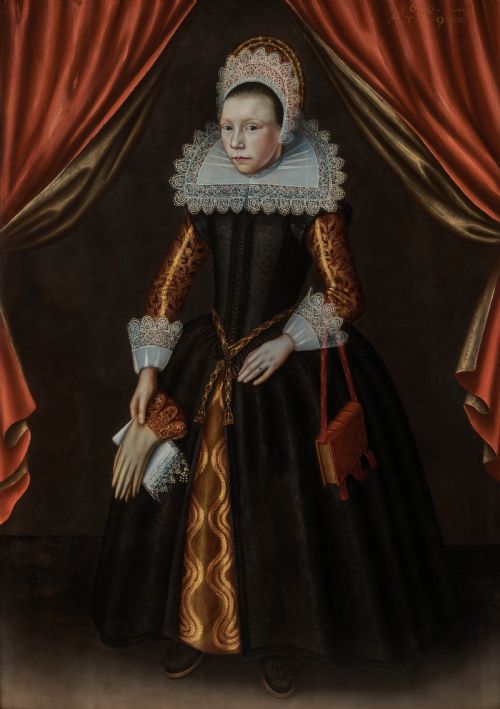
fig 2. Portrait of a Noble Girl aged 9 in a Black Dress, Lace Ruff & Cuffs, dated 1619; Circle of Cornelis van der Voort (1576- 1624), Oil on cradled panel painting
fig 2. Portrait of a Noble Girl Aged 9 in a Black Dress, Lace Ruff & Cuffs, Dated 1619; Circle of Cornelis Van Der Voort (1576- 1624), Oil on Cradled Panel Painting

The wealth of the sitter is apparent in the extraordinary textiles – the expensive lace, the dress with its gold detail, and the crimson canopy. A ruff as extravagant as this was an extraordinarily costly item, and were prized possessions listed in inventories and handed down in families as heirlooms. Black garments signified a certain social and moral status and consequently, this desirable attire dominated the elite portraiture of Britain and the Netherlands during this period. The whiteness of her skin serves as a marker of her social background and status, highlighting how physical appearance can often play a significant role in how individuals were perceived in society.
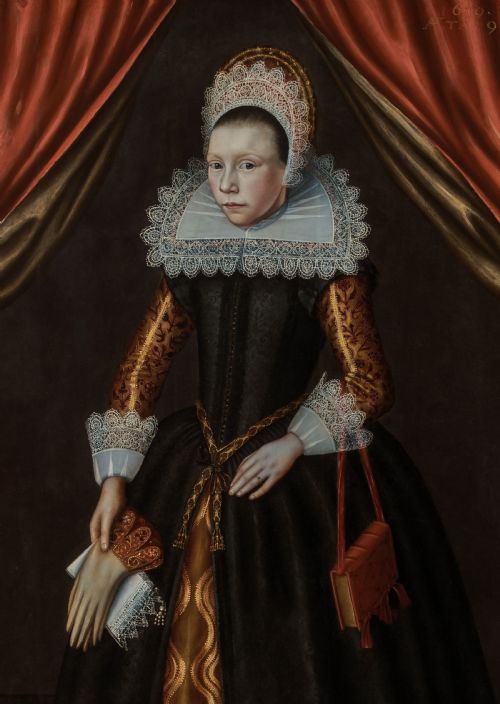
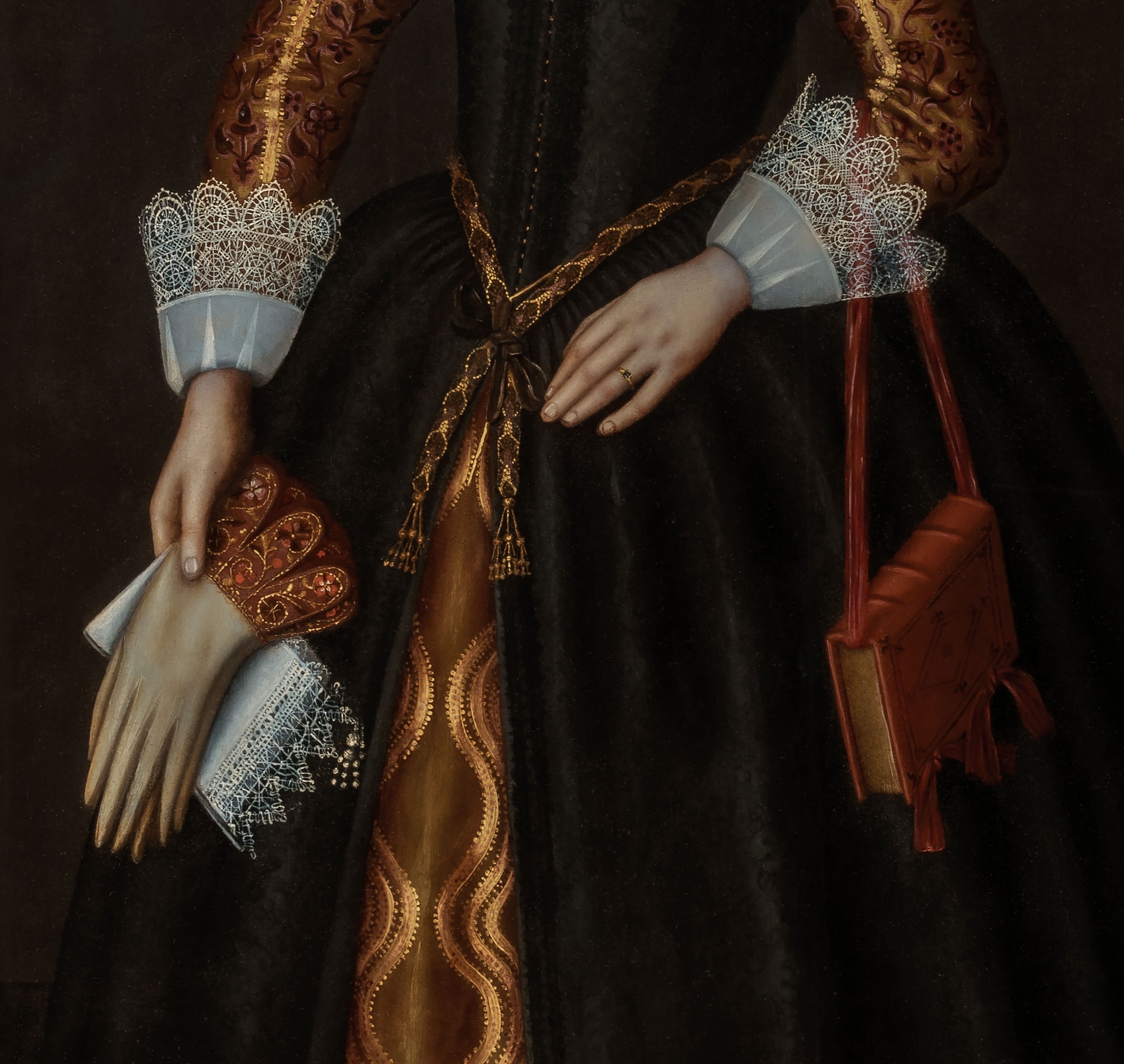
fig 3. Portrait of a Noble Girl aged 9 in a Black Dress, Lace Ruff & Cuffs, dated 1619; Circle of Cornelis van der Voort (1576- 1624), Oil on cradled panel painting
fig 3. Portrait of a Noble Girl Aged 9 in a Black Dress, Lace Ruff & Cuffs, Dated 1619; Circle of Cornelis Van Der Voort (1576- 1624), Oil on Cradled Panel Painting

She holds a handkerchief trimmed with reticella needle lace and a pair of bridle gloves of cream wash leather, with scalloped caps of gold thread and multi-coloured embroidery. On their wedding day, women wore gloves specially made for the occasion and the bride only removed them at the moment the marriage was solemnised, when the couple shook each other’s right hand. The right facing stance, suggests that the portrait probably served as a pendant to a portrait of her husband, in which case he would be inclined towards our left according to the traditional rules of marriage portraiture. Even at the tender age of nine the sitter had reached ‘marriage age’. This portrait was thus, probably, painted to mark this important event in the sitter’s life and was a very common reason portraits to be commissioned.
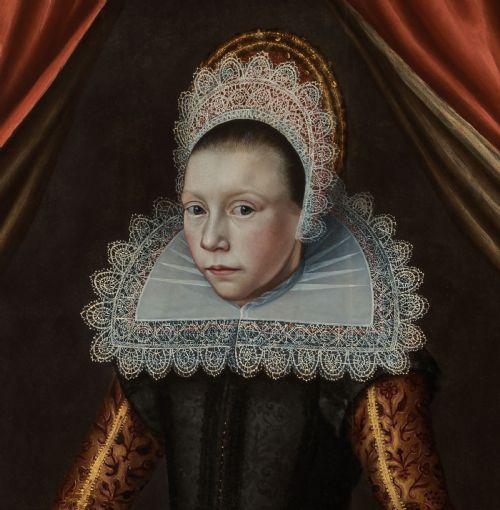
fig 4. Portrait of a Noble Girl aged 9 in a Black Dress, Lace Ruff & Cuffs, dated 1619; Circle of Cornelis van der Voort (1576- 1624), Oil on cradled panel painting
fig 4. Portrait of a Noble Girl Aged 9 in a Black Dress, Lace Ruff & Cuffs, Dated 1619; Circle of Cornelis Van Der Voort (1576- 1624), Oil on Cradled Panel Painting

The well-preserved condition of this portrait provides a unique opportunity for us to admire the intricacy and details of the attire that may not always be possible in portraits from a similar age. The dark pigments used to depict the expensive black silk, along with the intricate lace, have remarkably stood the test of time, allowing us to appreciate the craftsmanship and artistry that went into creating them over four centuries ago.
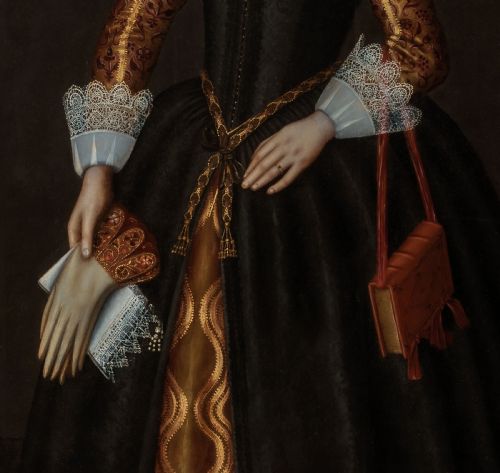
fig 5. Portrait of a Noble Girl aged 9 in a Black Dress, Lace Ruff & Cuffs, dated 1619; Circle of Cornelis van der Voort (1576- 1624), Oil on cradled panel painting
fig 5. Portrait of a Noble Girl Aged 9 in a Black Dress, Lace Ruff & Cuffs, Dated 1619; Circle of Cornelis Van Der Voort (1576- 1624), Oil on Cradled Panel Painting

Cornelis van der Voort was a Dutch portrait painter from the early 17th century who was active in Amsterdam. He painted individual portraits as well as group portraits including schuttersstukken depicting local militia members. Very little is known about the early life of Cornelis van der Voort, who was born in Antwerp as the son of painter Pieter van der Voort. The family later moved to the Northern Netherlands, possibly due to being Calvinists. Van der Voort is believed to have studied under Cornelis Ketel. His association with Rembrandt is seen through the history of the house where they lived together, which is now the Rembrandt House Museum. Around 1613 he was a member of the schutterij and painted a few schuttersstukken. In 1619 he was the head of the Guild of St. Luke. Van der Voort probably had seven children and married twice: in 1598 with Geertrui Willems, who died in 1609, and in 1613 with Cornelia Brouwers. He died in Amsterdam and was buried on 2 November 1624. In August 1625 his inventory was sold.

Measurements: Height 146cm, Width 109cm framed (Height 57.5”, Width 43” framed)

Height
146cm (57.48")
Width
109cm (42.91")
Depth
7cm (2.76")
Date of Manufacture

Titan Fine Art has dated this piece to the 17th Century.

Reference Numbers
Sellingantiques Ref
SA1058333
Titan Fine Art
Titan Fine Art
Sellingantiques verified Since Jul 2016

Specialist in 17th & 18thc portraits. Highly curated selection, museum-level research & pro conservation. Exceptional art, expertly vetted.

Dealer Profile

You can view the stock and full dealer information on the Titan Fine Art Profile Page
PDF SHARE
SAVE
Portrait of a Noble Girl aged 9 in a Black Dress, Lace Ruff & Cuffs, dated 1619; Circle of Cornelis van der Voort (1576- 1624), Oil on cradled panel painting
1 / 7
Archive I Portrait of a Noble Girl aged 9 in a Black Dress, Lace Ruff & Cuffs, dated 1619; Circle of Cornelis van der Voort (1576- 1624), Oil on cradled panel painting

Portrait of a Noble Girl Aged 9 in a Black Dress, Lace Ruff & Cuffs, Dated 1619; Circle of Cornelis Van Der Voort (1576- 1624), Oil on Cradled Panel Painting

Archive II Portrait of a Noble Girl aged 9 in a Black Dress, Lace Ruff & Cuffs, dated 1619; Circle of Cornelis van der Voort (1576- 1624), Oil on cradled panel painting View II
Archive III Portrait of a Noble Girl aged 9 in a Black Dress, Lace Ruff & Cuffs, dated 1619; Circle of Cornelis van der Voort (1576- 1624), Oil on cradled panel painting View III
Archive IV Portrait of a Noble Girl aged 9 in a Black Dress, Lace Ruff & Cuffs, dated 1619; Circle of Cornelis van der Voort (1576- 1624), Oil on cradled panel painting View IV
Archive V Portrait of a Noble Girl aged 9 in a Black Dress, Lace Ruff & Cuffs, dated 1619; Circle of Cornelis van der Voort (1576- 1624), Oil on cradled panel painting View V
Archive VI Portrait of a Noble Girl aged 9 in a Black Dress, Lace Ruff & Cuffs, dated 1619; Circle of Cornelis van der Voort (1576- 1624), Oil on cradled panel painting View VI
Archive VII Portrait of a Noble Girl aged 9 in a Black Dress, Lace Ruff & Cuffs, dated 1619; Circle of Cornelis van der Voort (1576- 1624), Oil on cradled panel painting View VII
Enlarged Archival View
Telephone 07875 412 111
Location
London
United Kingdom
Dealer Profile Page sellingantiques.co.uk/titan
Verified Since Jul 2016
Items For Sale 16
Items Sold 401
Titan Fine Art
Titan Fine Art
Verified Since Jul 2016
View Dealer Info
Location: London, United Kingdom
Verified
Jul 2016
For Sale
16
Sold
401
Portrait of a Noble Girl aged 9 in a Black Dress, Lace Ruff & Cuffs, dated 1619; Circle of Cornelis van der Voort (1576- 1624), Oil on cradled panel painting
Ref: SA1058333
Portrait of a Noble Girl aged 9 in a Black Dress, Lace Ruff & Cuffs, dated 1619; Circle of Cornelis van der Voort (1576- 1624), Oil on cradled panel painting
Detail View 1
Detail View 2
Detail View 3
Detail View 4
Detail View 5
Detail View 6
Archival Detail
Every single antique dealer on our platform is individually approved by our internal team. We verify their professional trade history, ethical standards, and photographic quality to ensure a secure, high-standard buying environment. Upon joining, every dealer agrees to a strict 9-point code of conduct. While issues can occasionally arise, our dealers typically resolve them swiftly and directly with the buyer. In fact, since our founding in 2002, Sellingantiques has only had to step in to help resolve an issue on roughly five occasions—a true testament to the quality of our dealers and their dedication to your happiness.
Our dealers are highly experienced in packing and shipping fragile, high-value antiques. Because you are in direct contact with the dealer, you will be able to easily go through all available shipping and insurance options together to ensure your item arrives safely.
Antiques are the ultimate green purchase. By choosing historical pieces over newly manufactured goods, you completely eliminate the carbon footprint of modern mass production while preserving exceptional, timeless craftsmanship.
items
Add keywords to the filter
Price
£100
£250000
Era
Movements
Material
Origin
Stock Location
Freshness
Online Payments
Categories