Cheshire Antiques Consultant Ltd has dated this piece to the 19th Century.
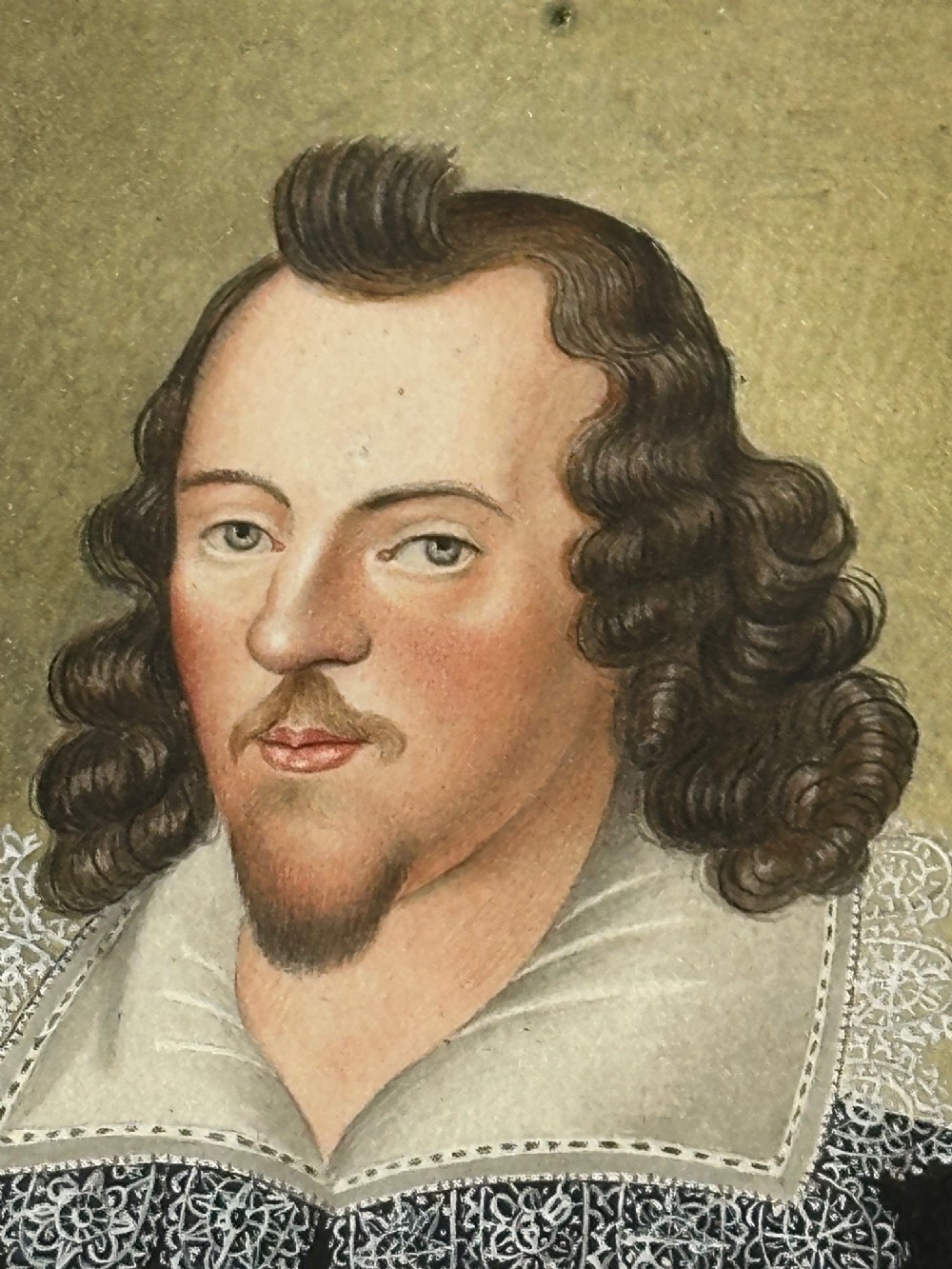
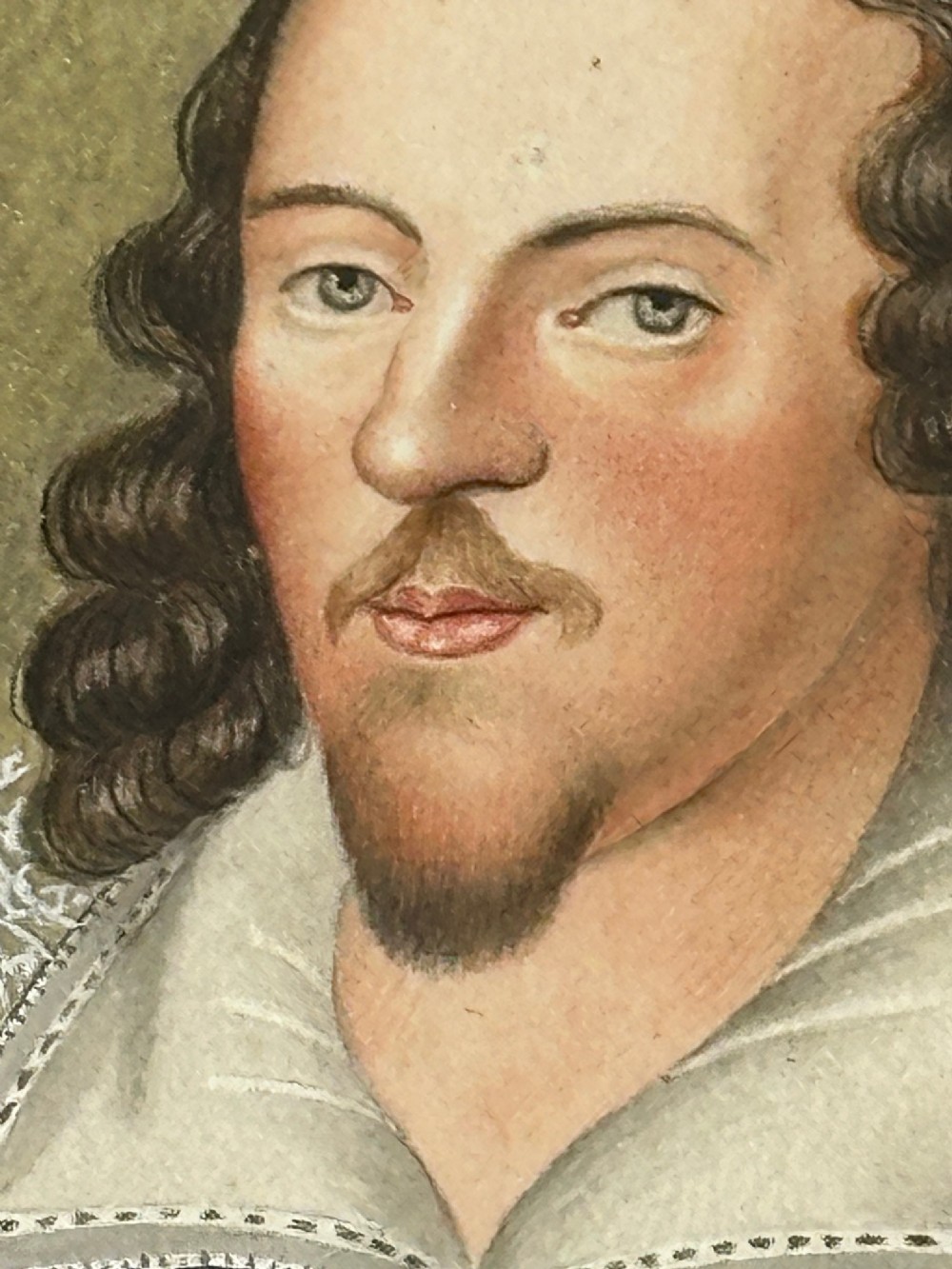
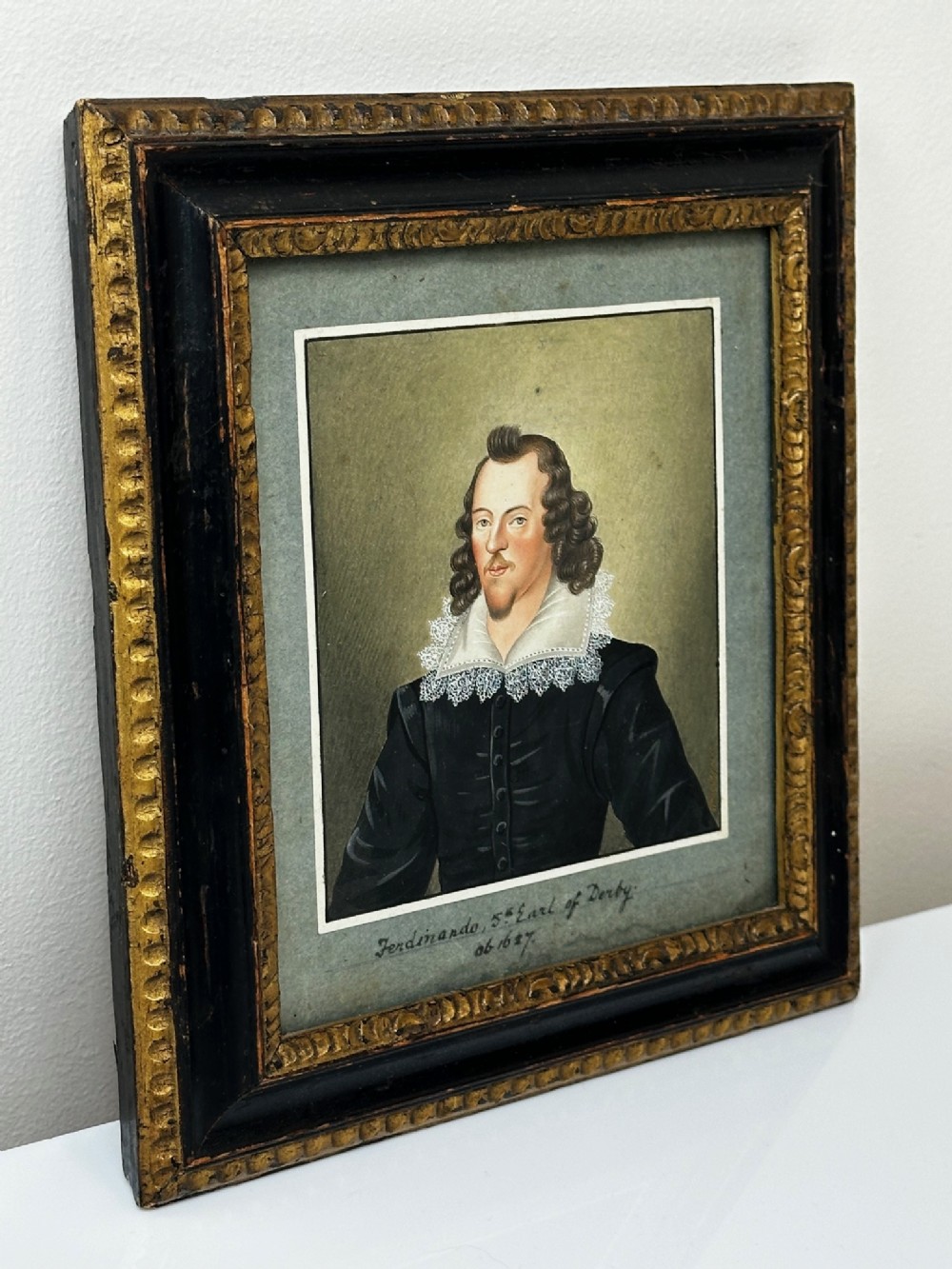
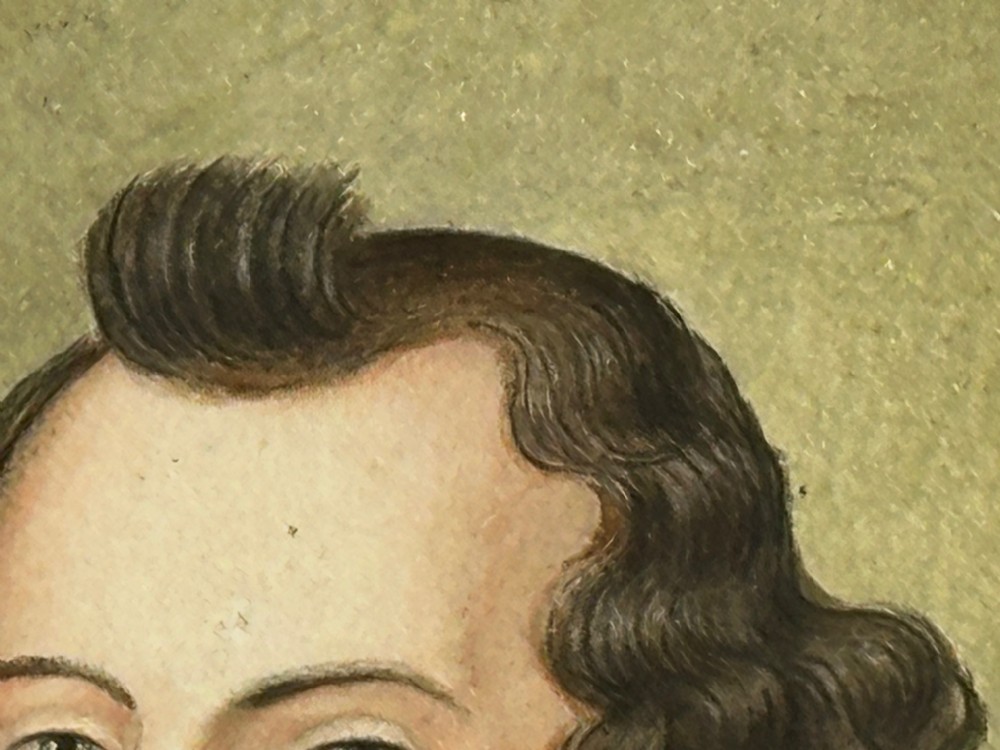
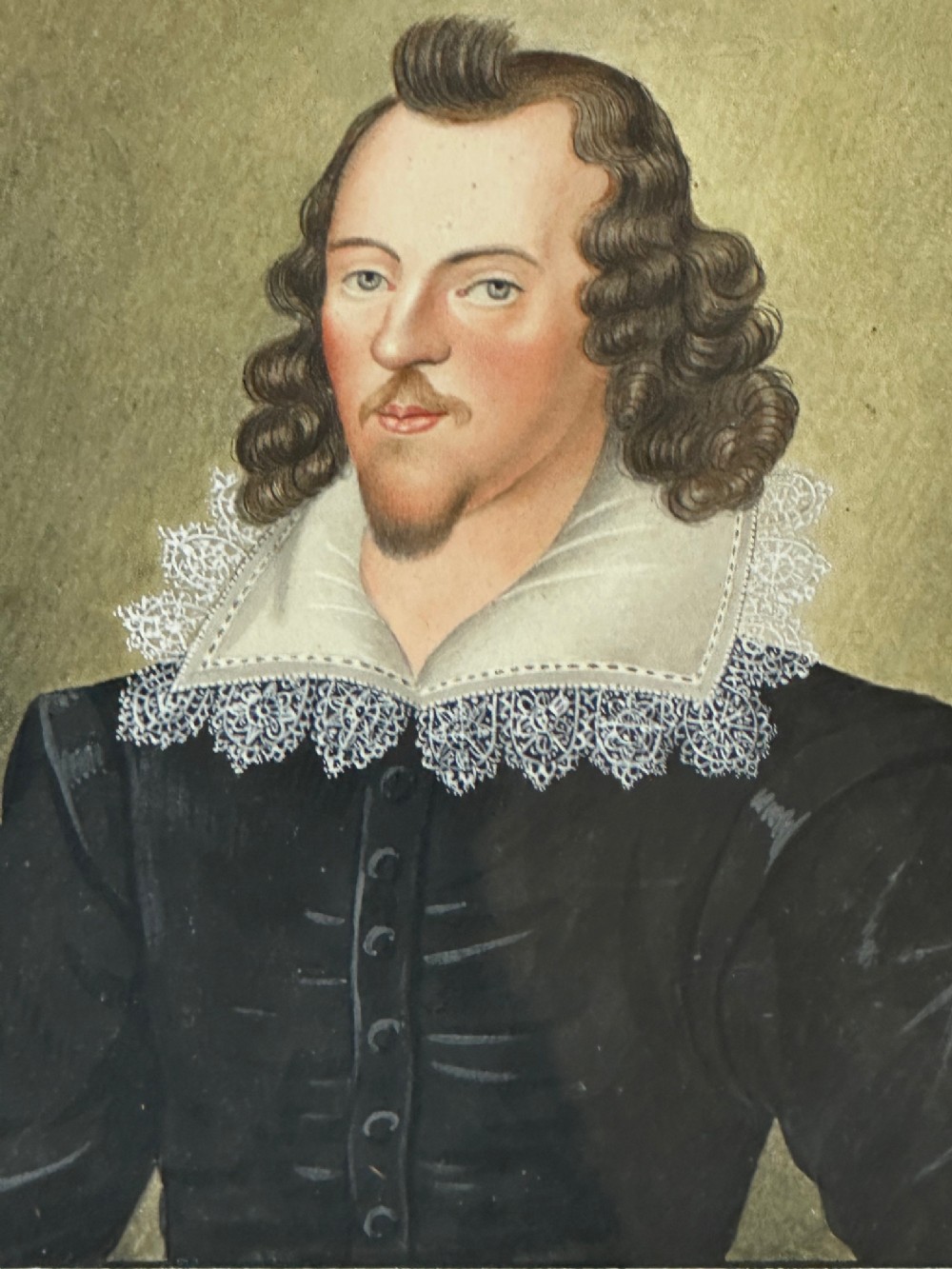
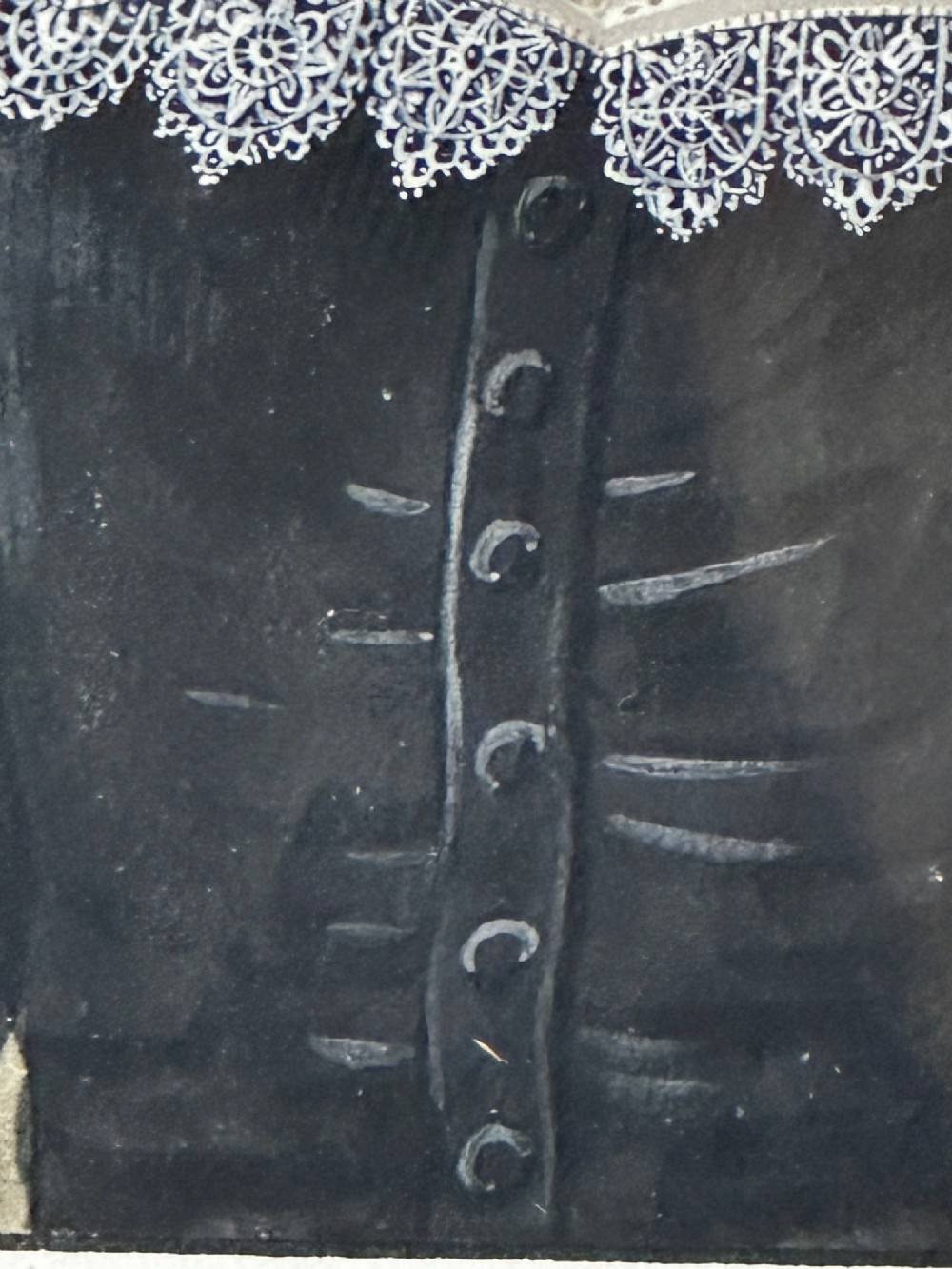
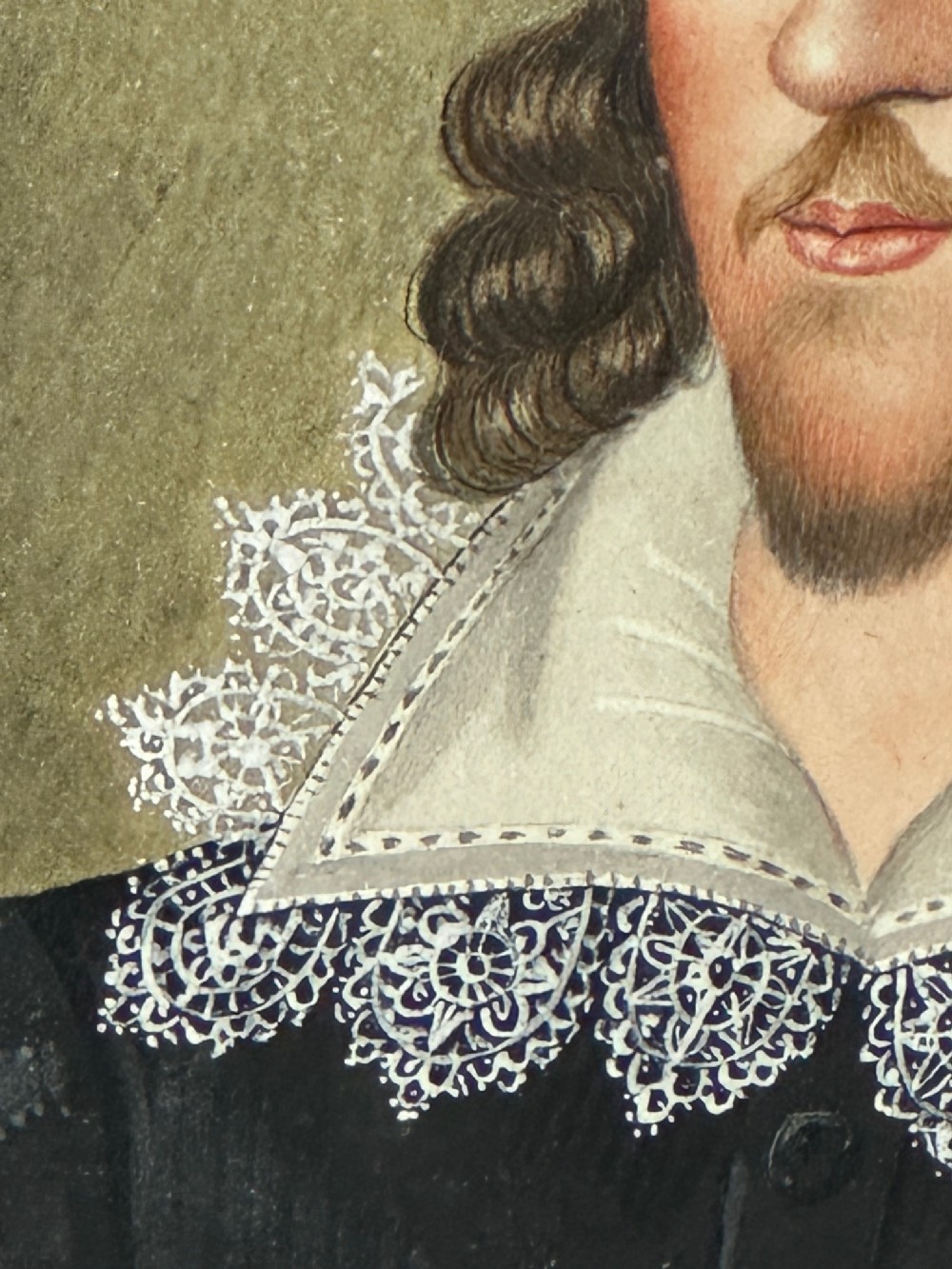
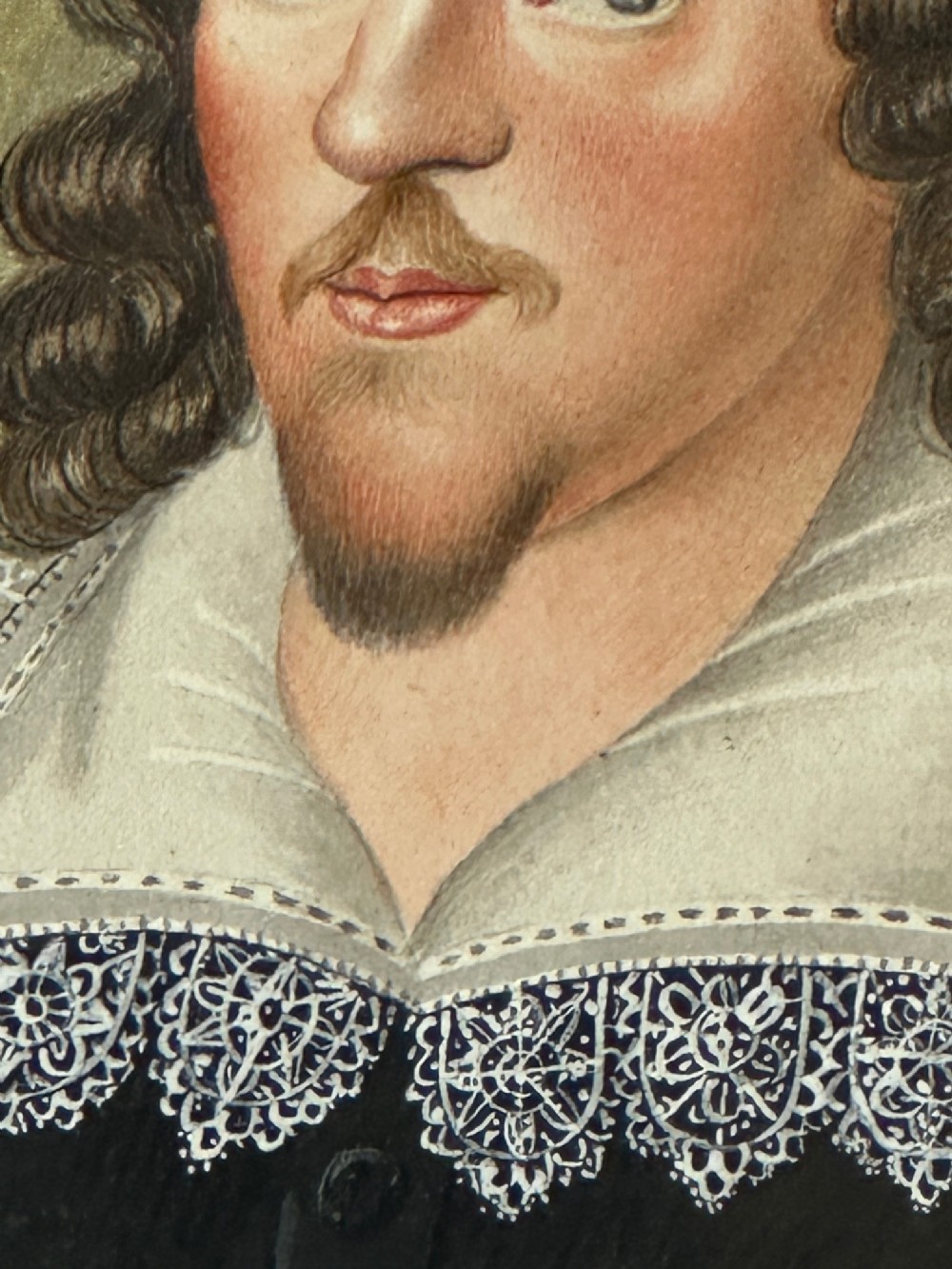
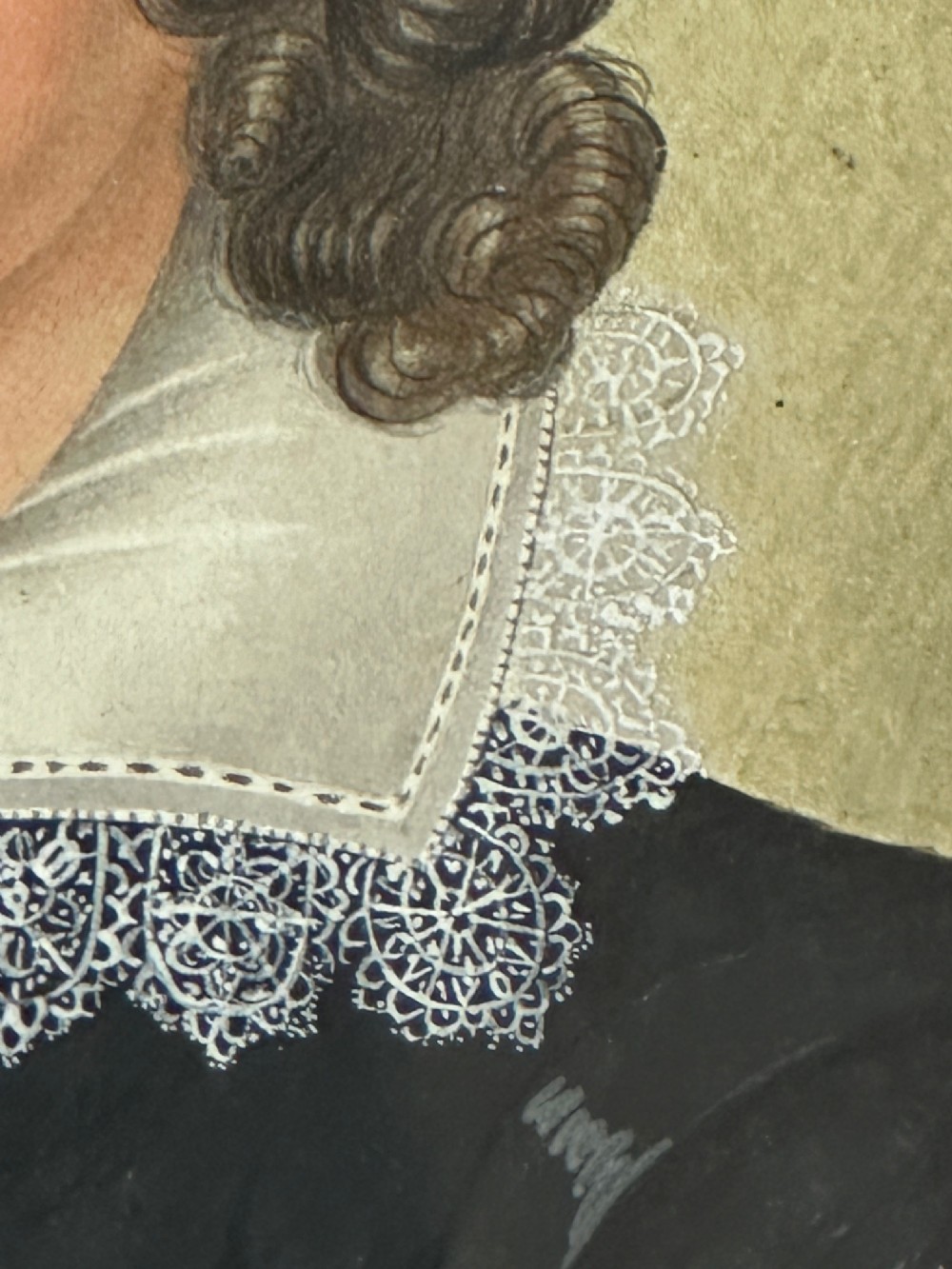
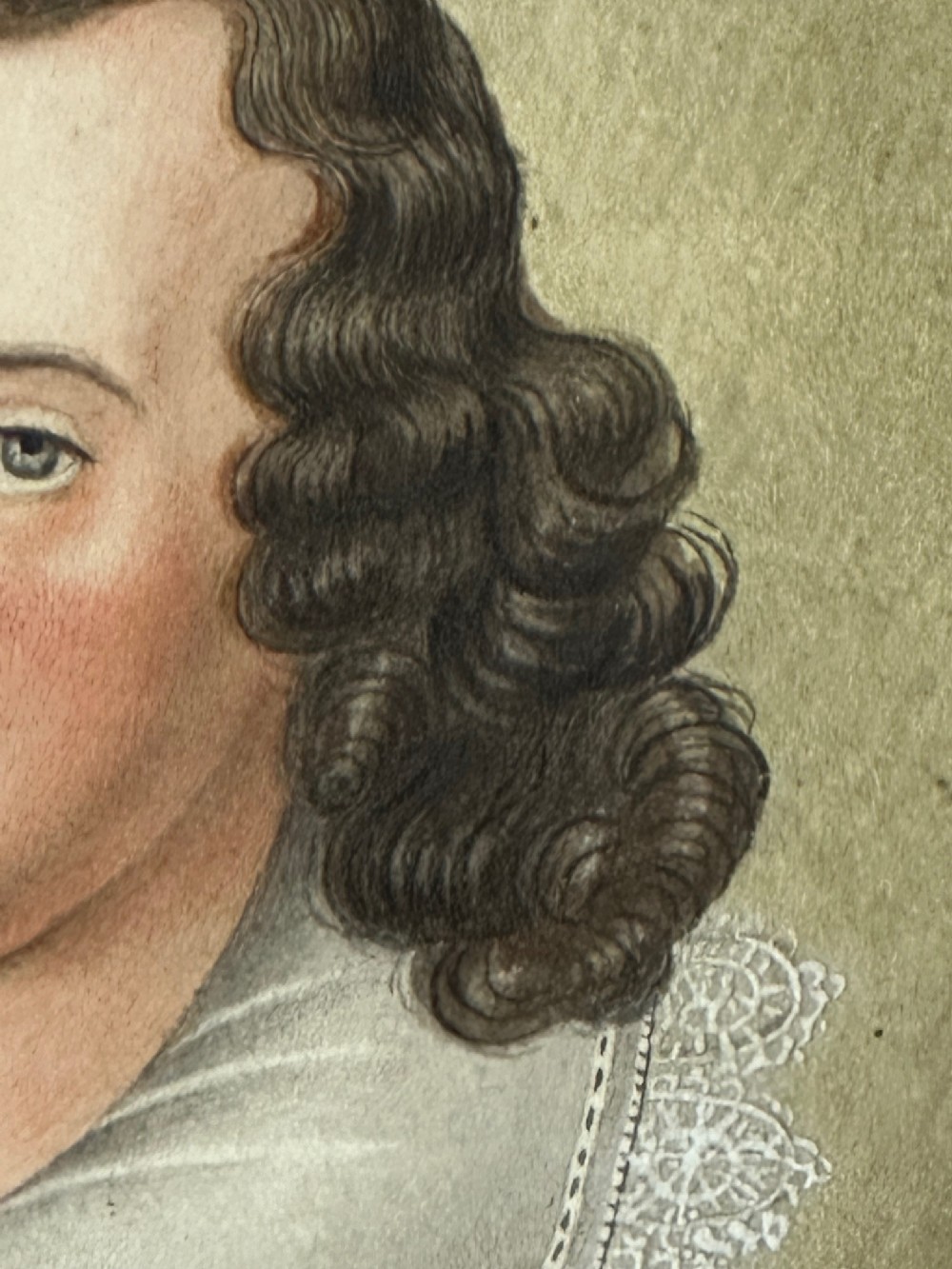
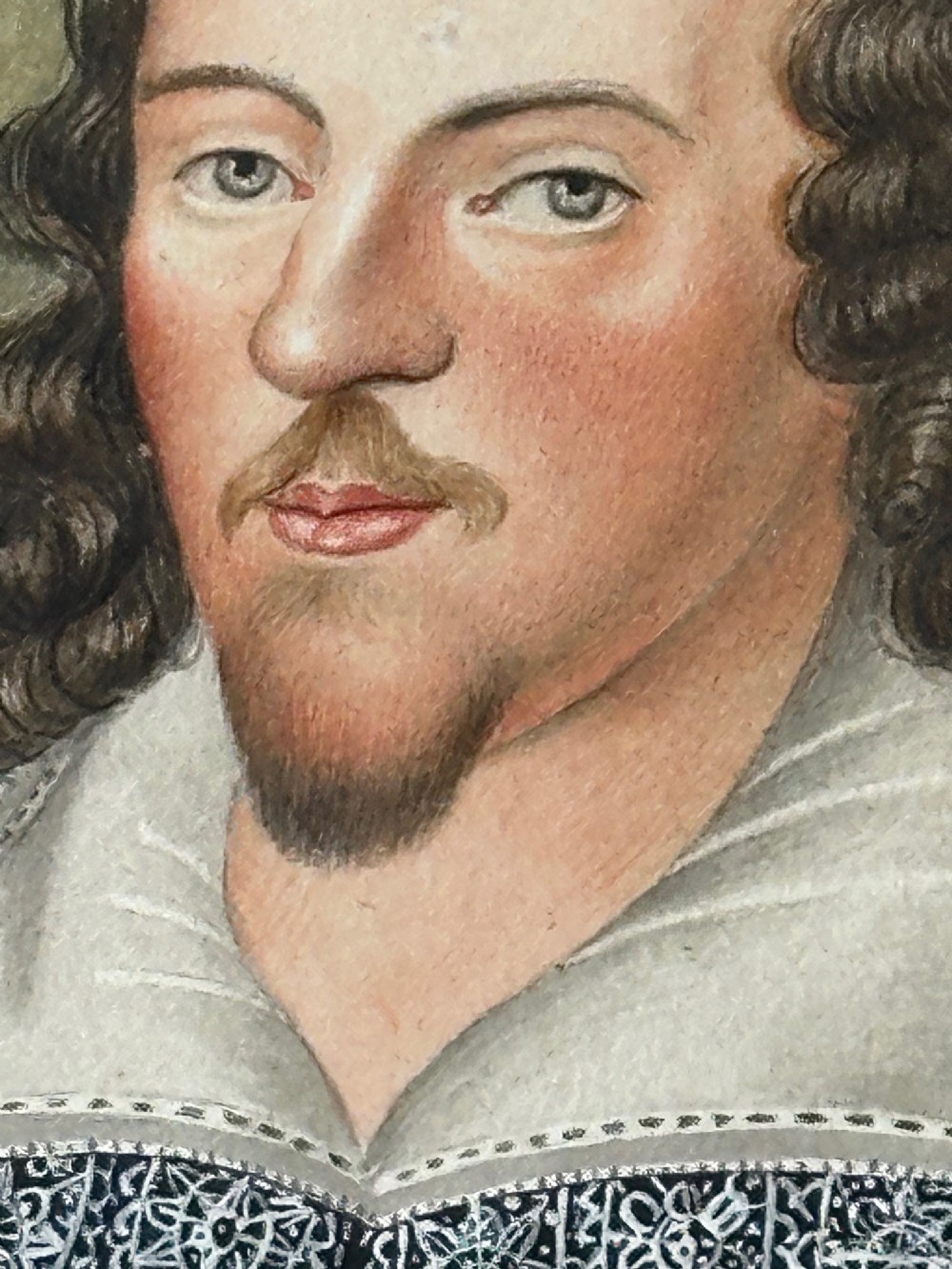
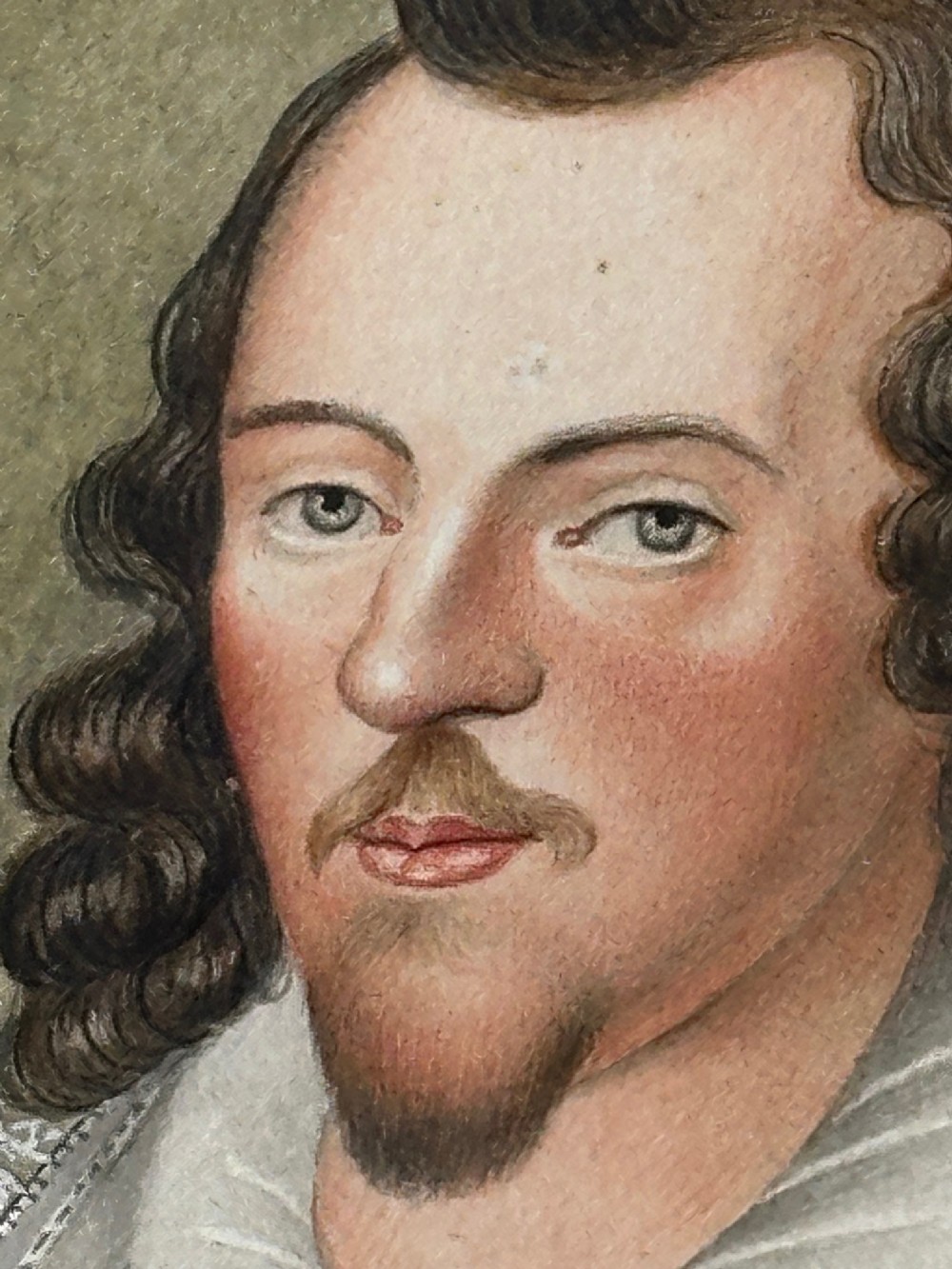
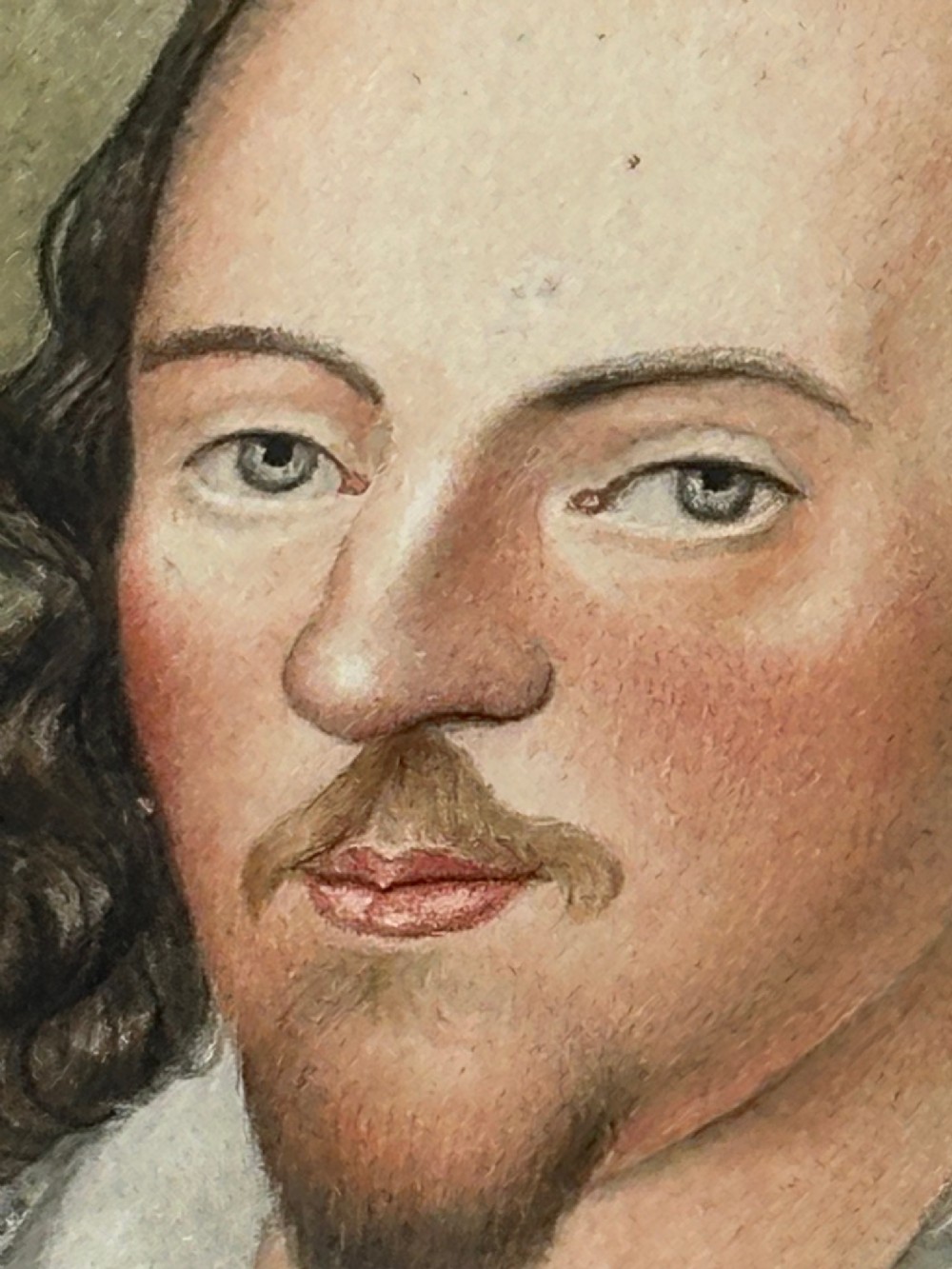
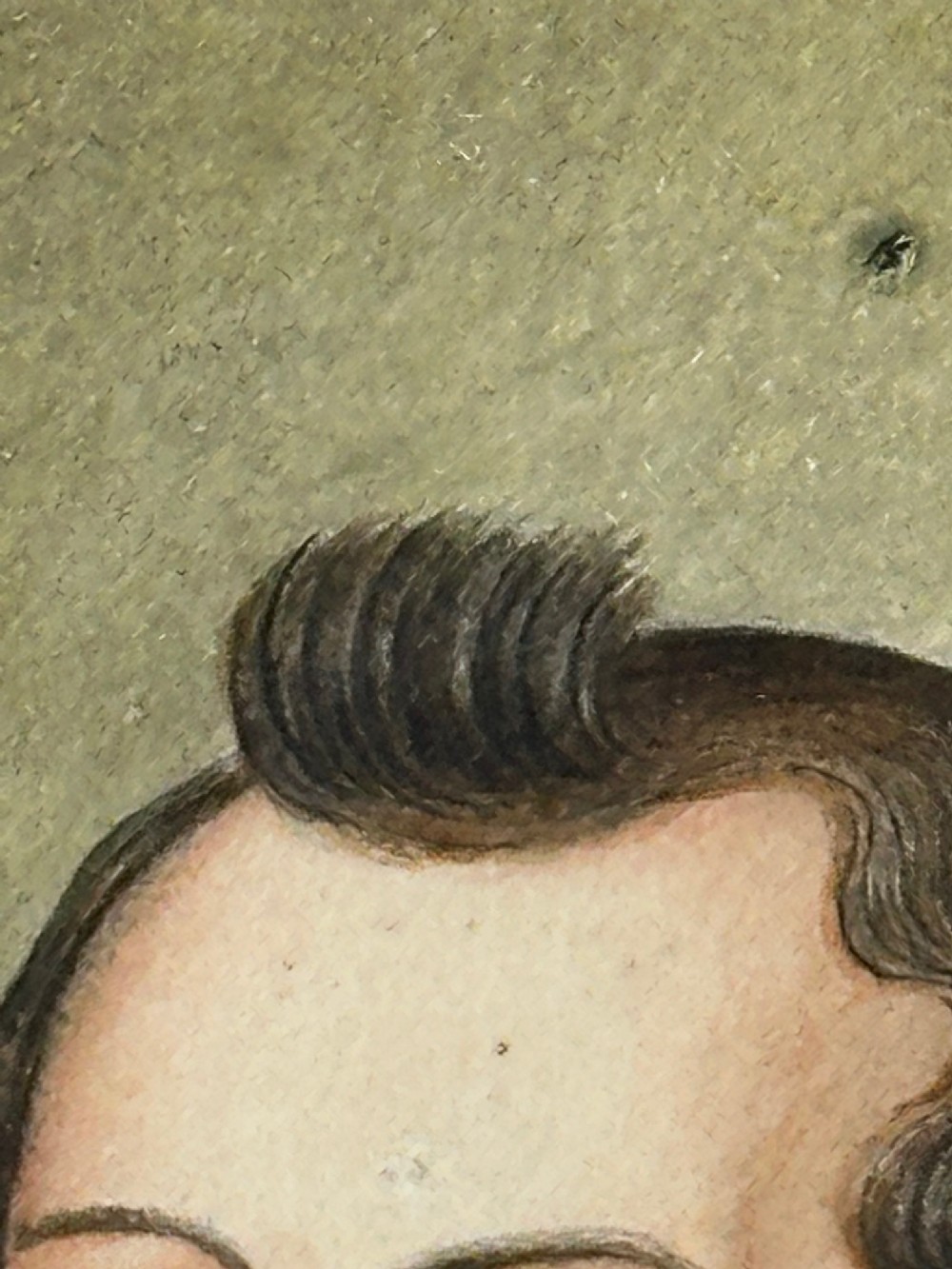
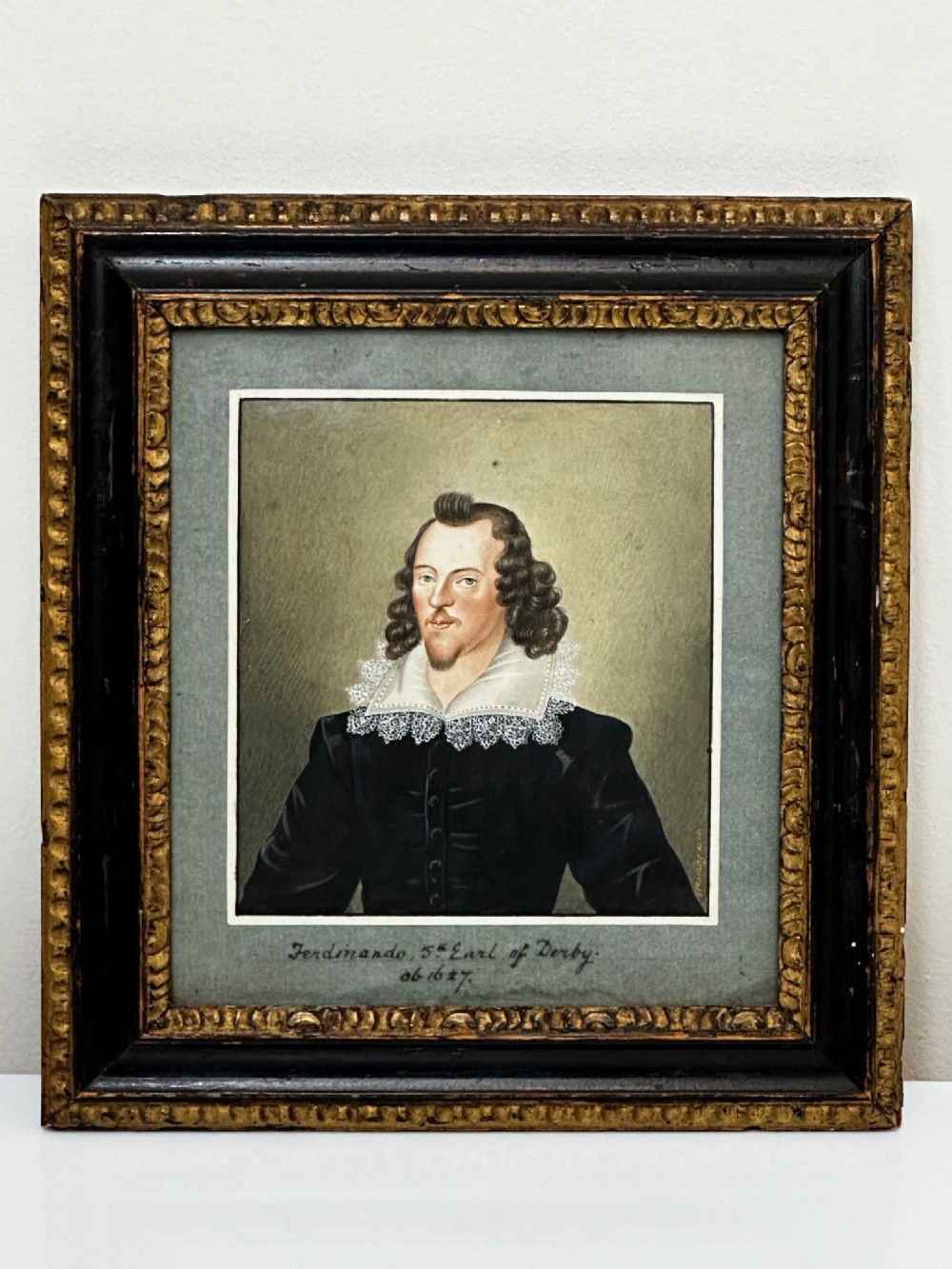
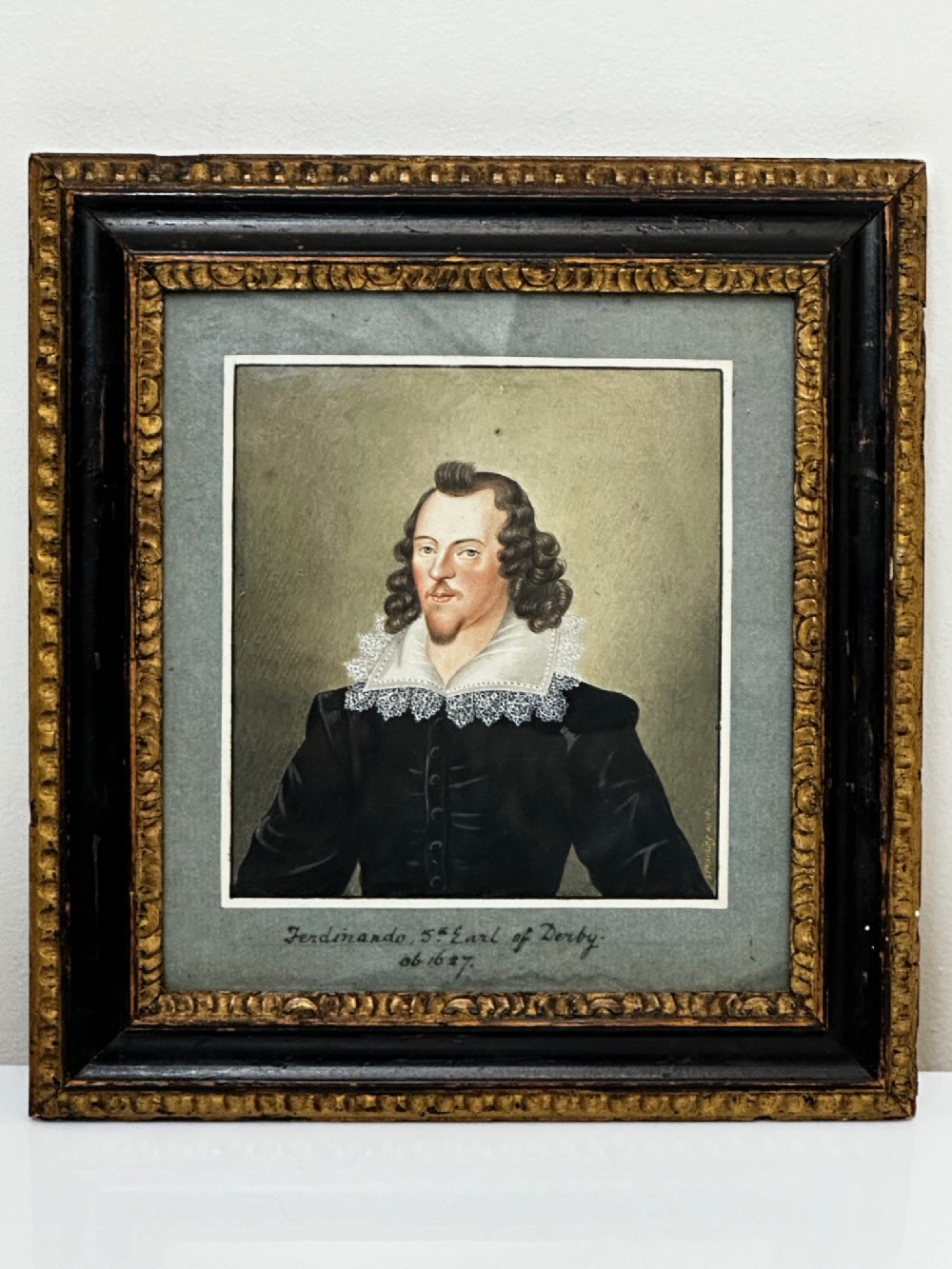
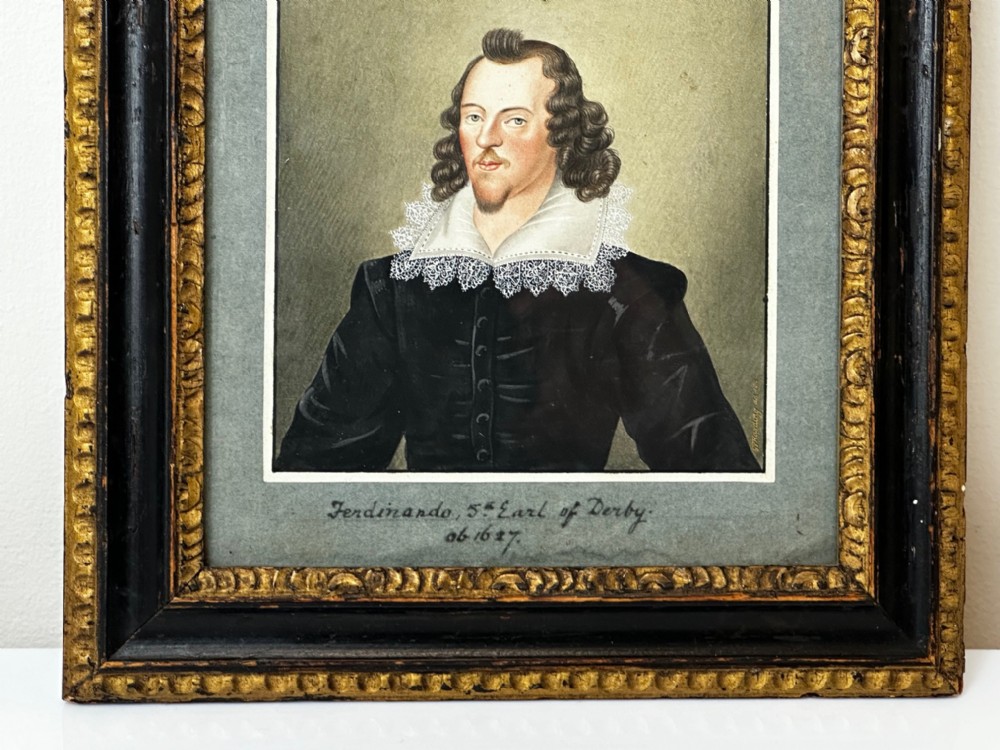
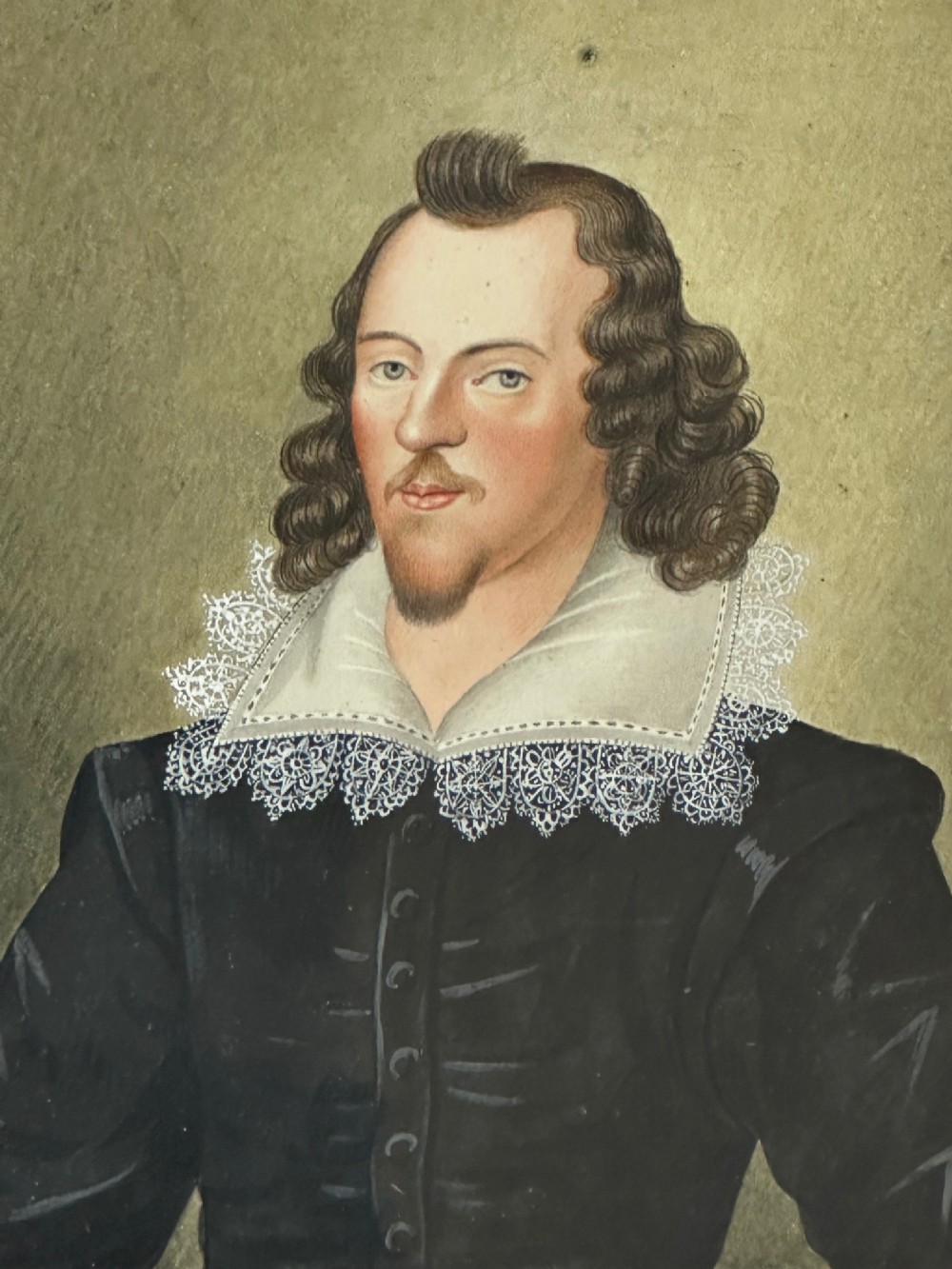
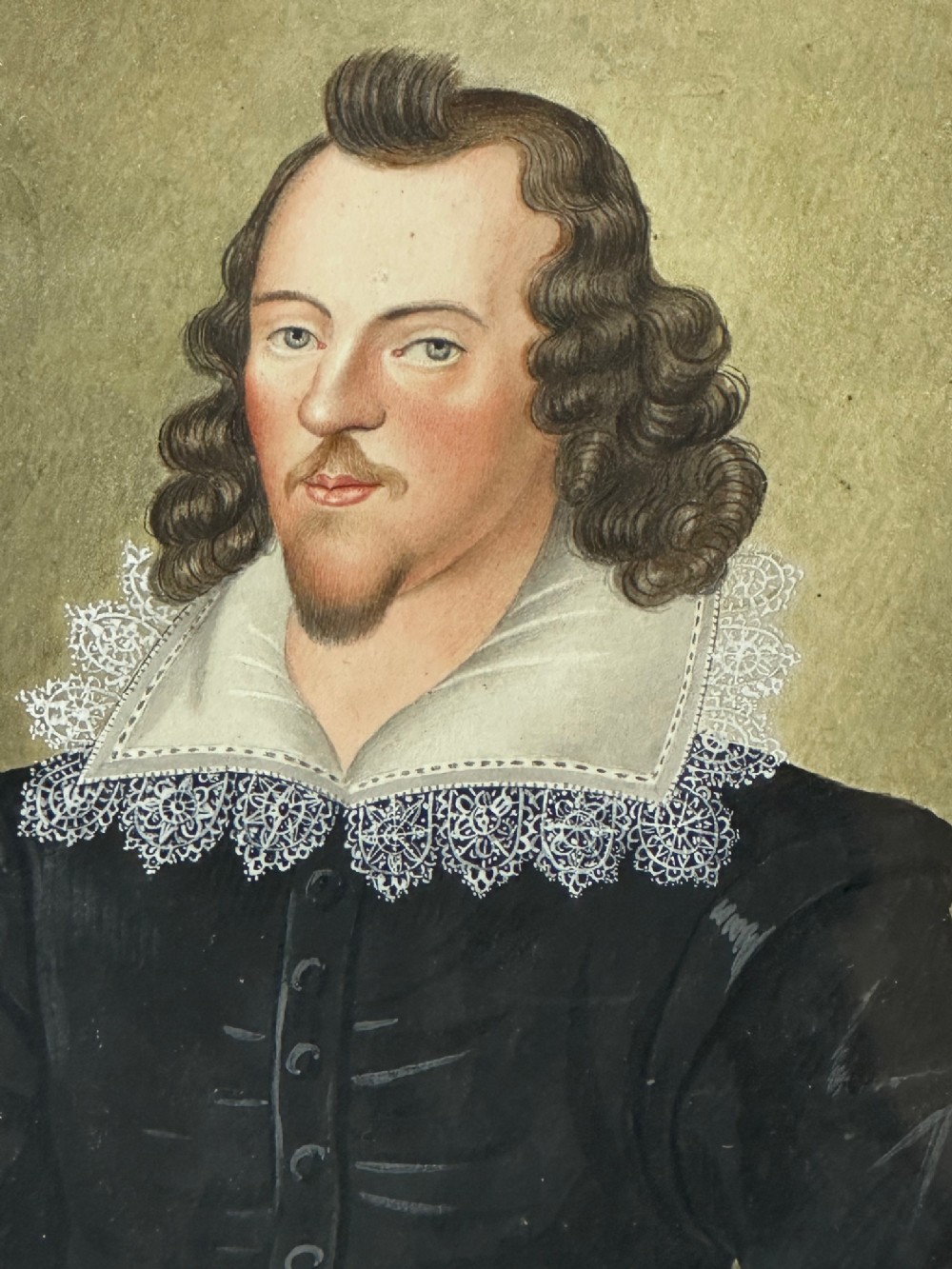
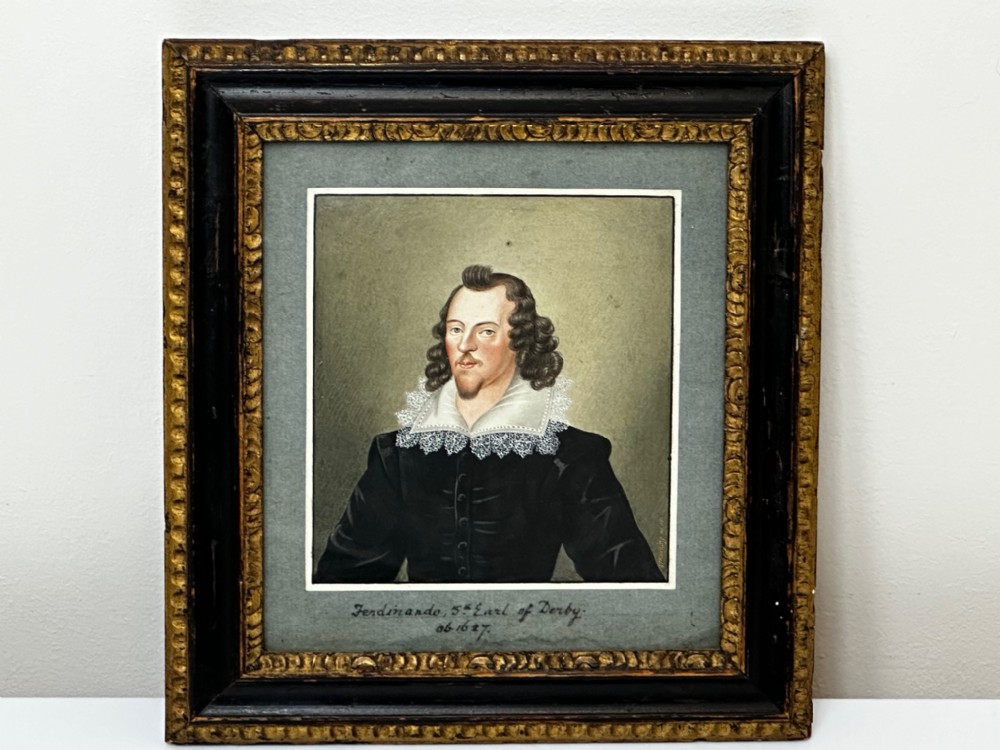
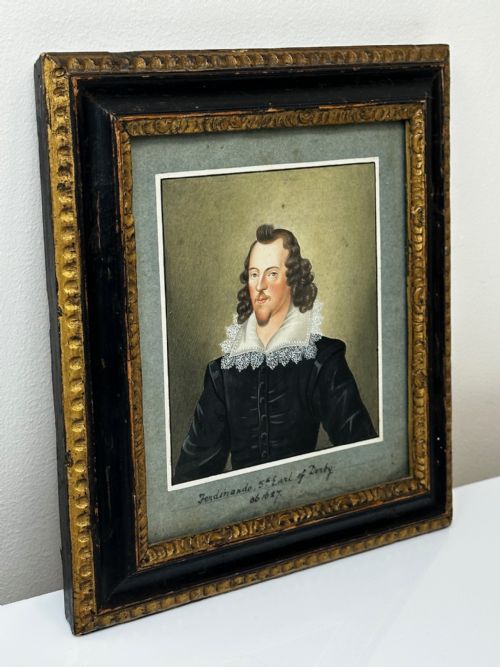
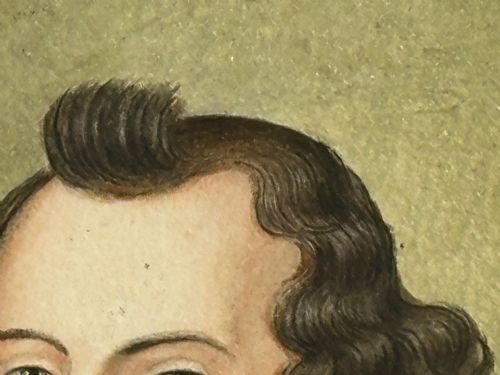
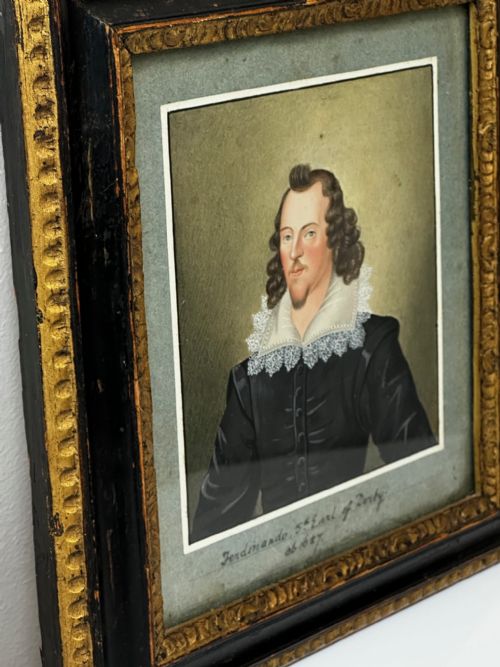
He is wearing a magnificant gothic black Elizabethan tight fitting jacket doublet, an opulent white lace ruff neck collar. He has thick brown fair curly hair, with light blue-grey eyes, a moustache and thin goat beard, he is projecting his high status in his dress & posture pose.
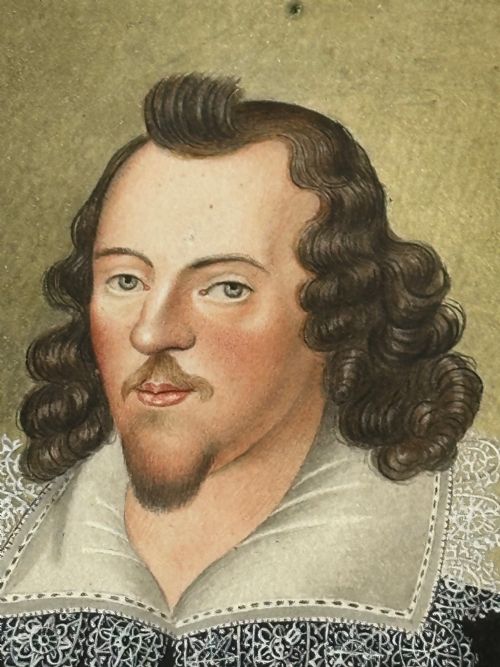
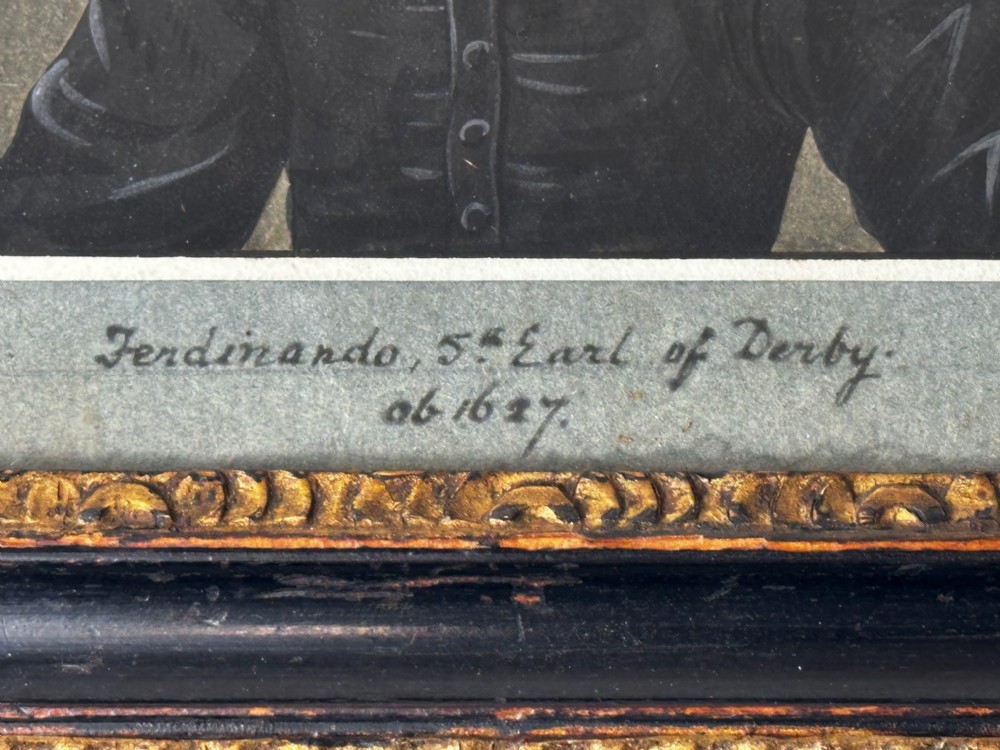
Title "Portrait of Ferdinando Stanley, 5th Earl of Derby (1559-1594)".
Medium watercolour & goauche.
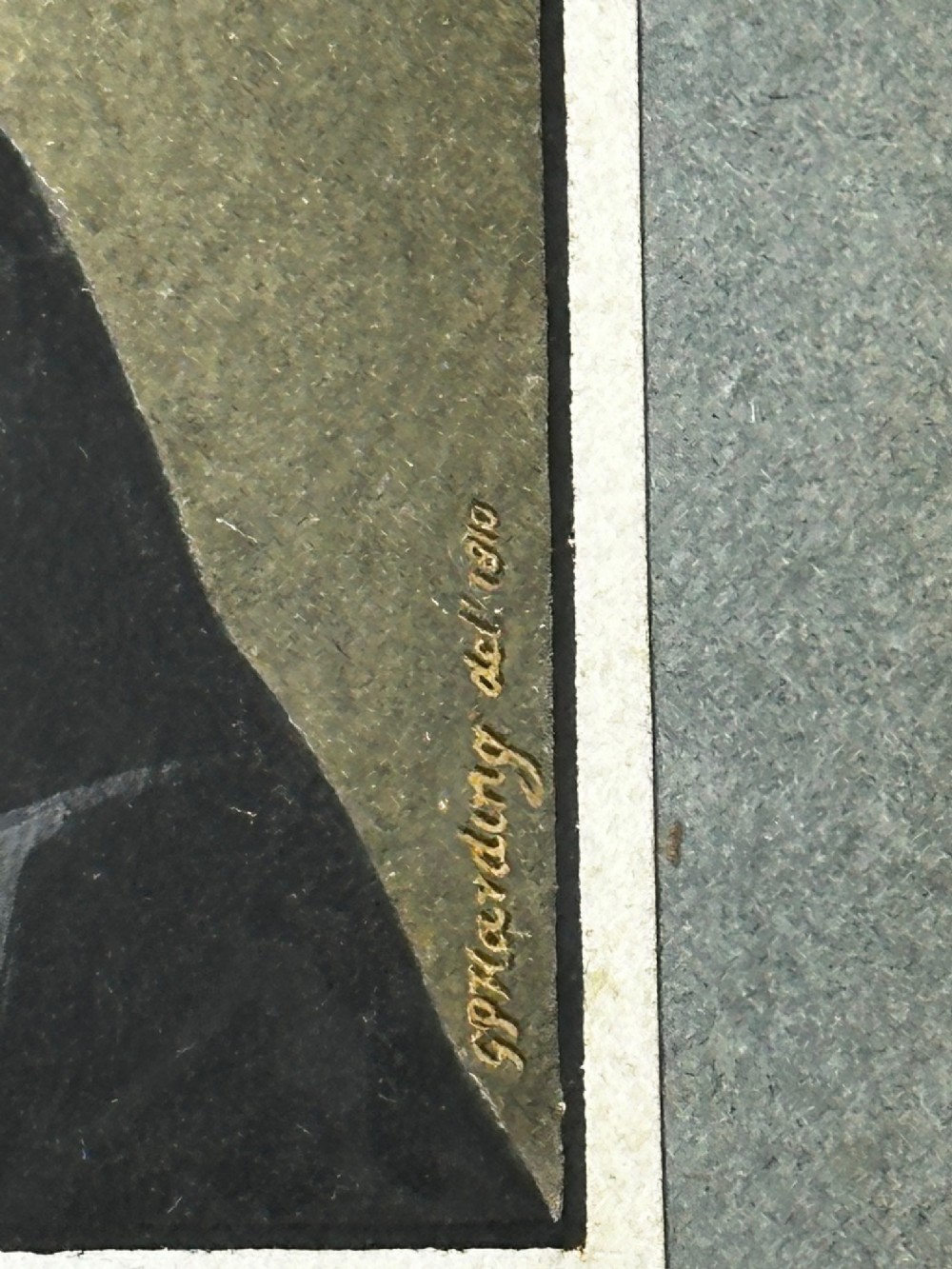
Circa early 19th century dated 1810.
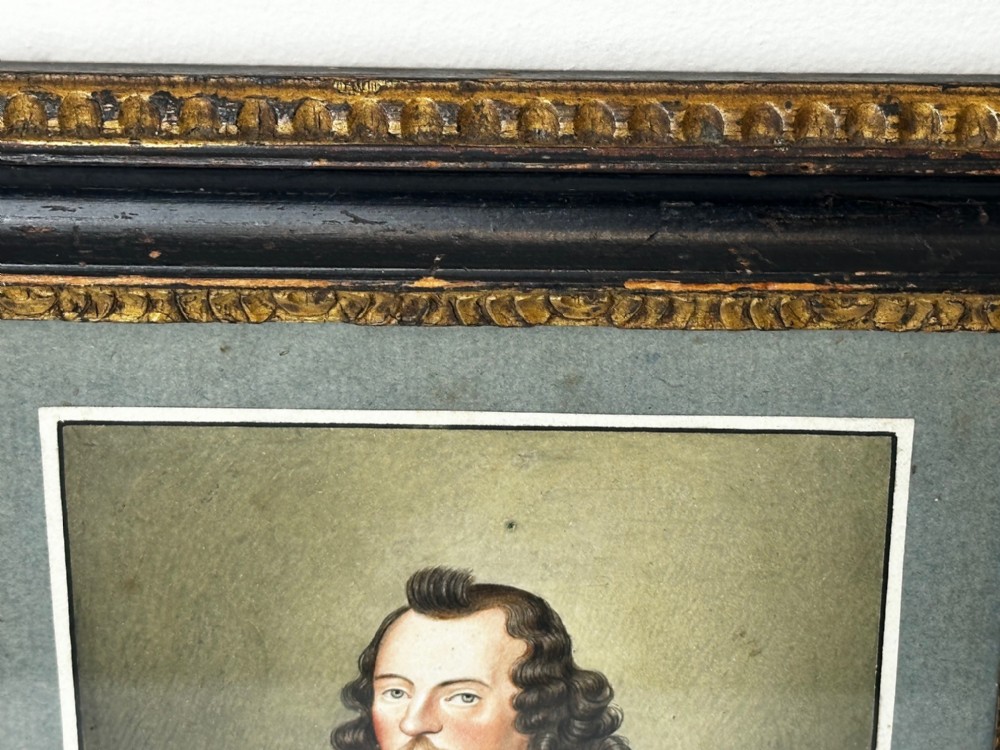
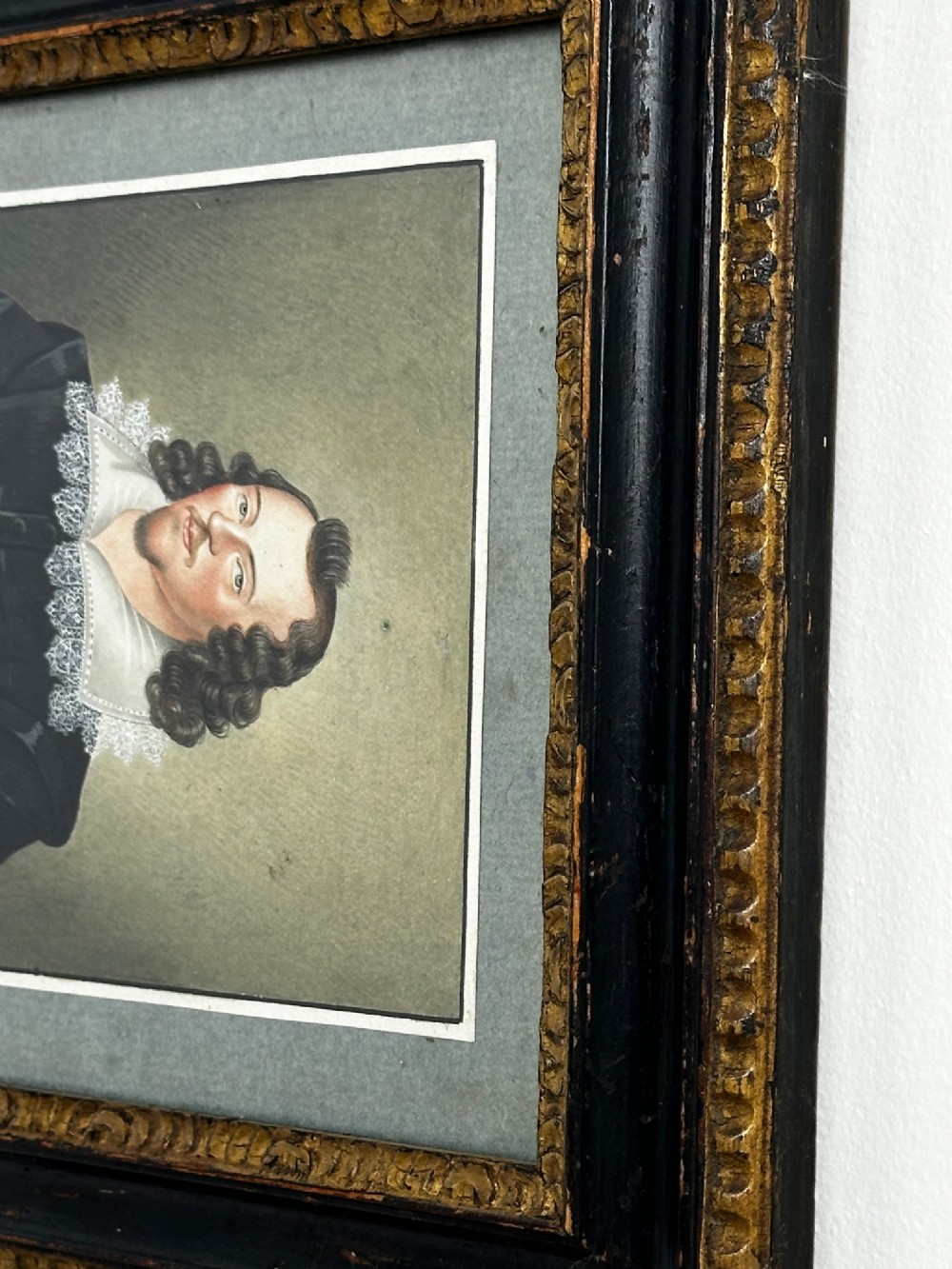
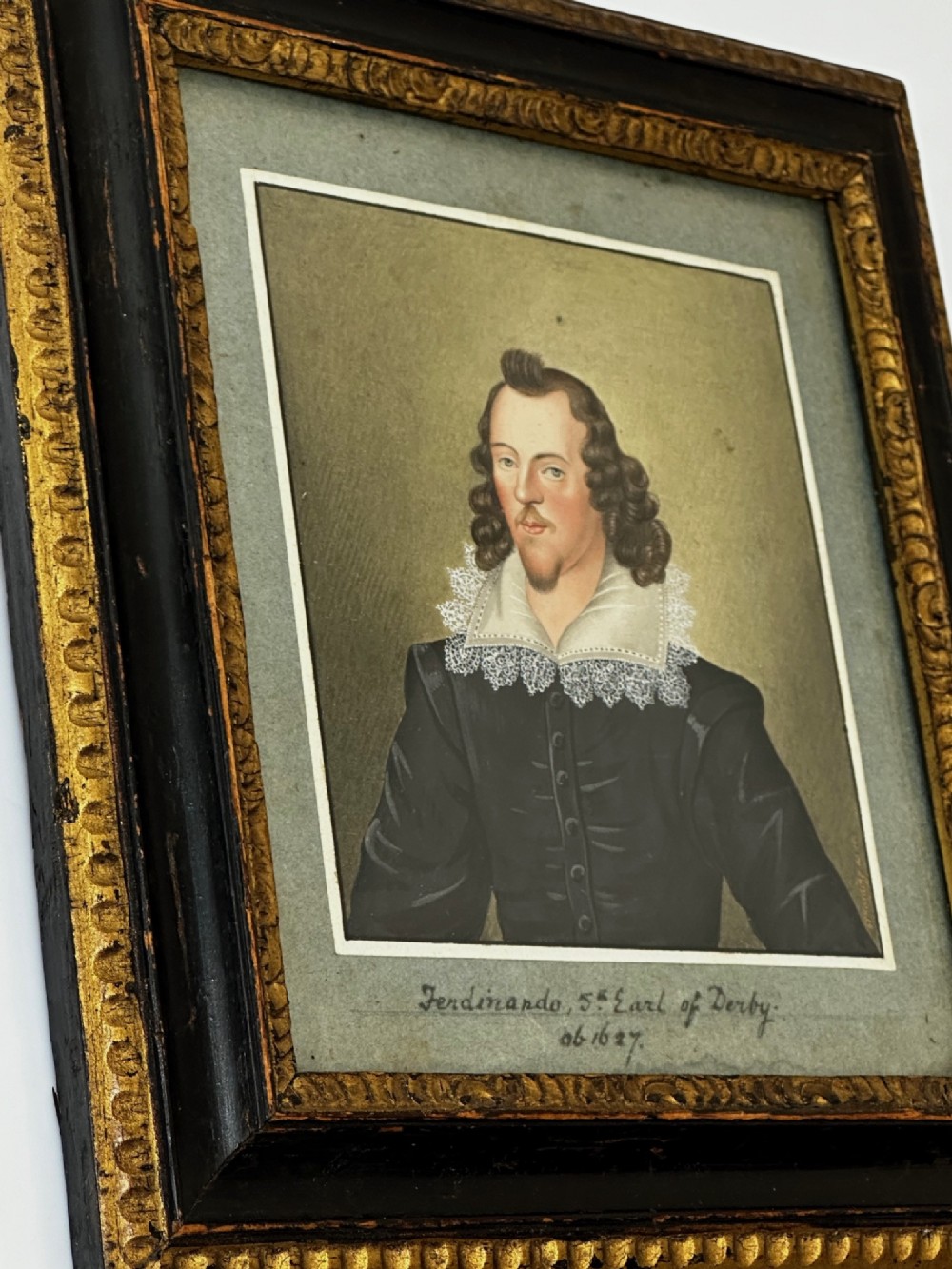
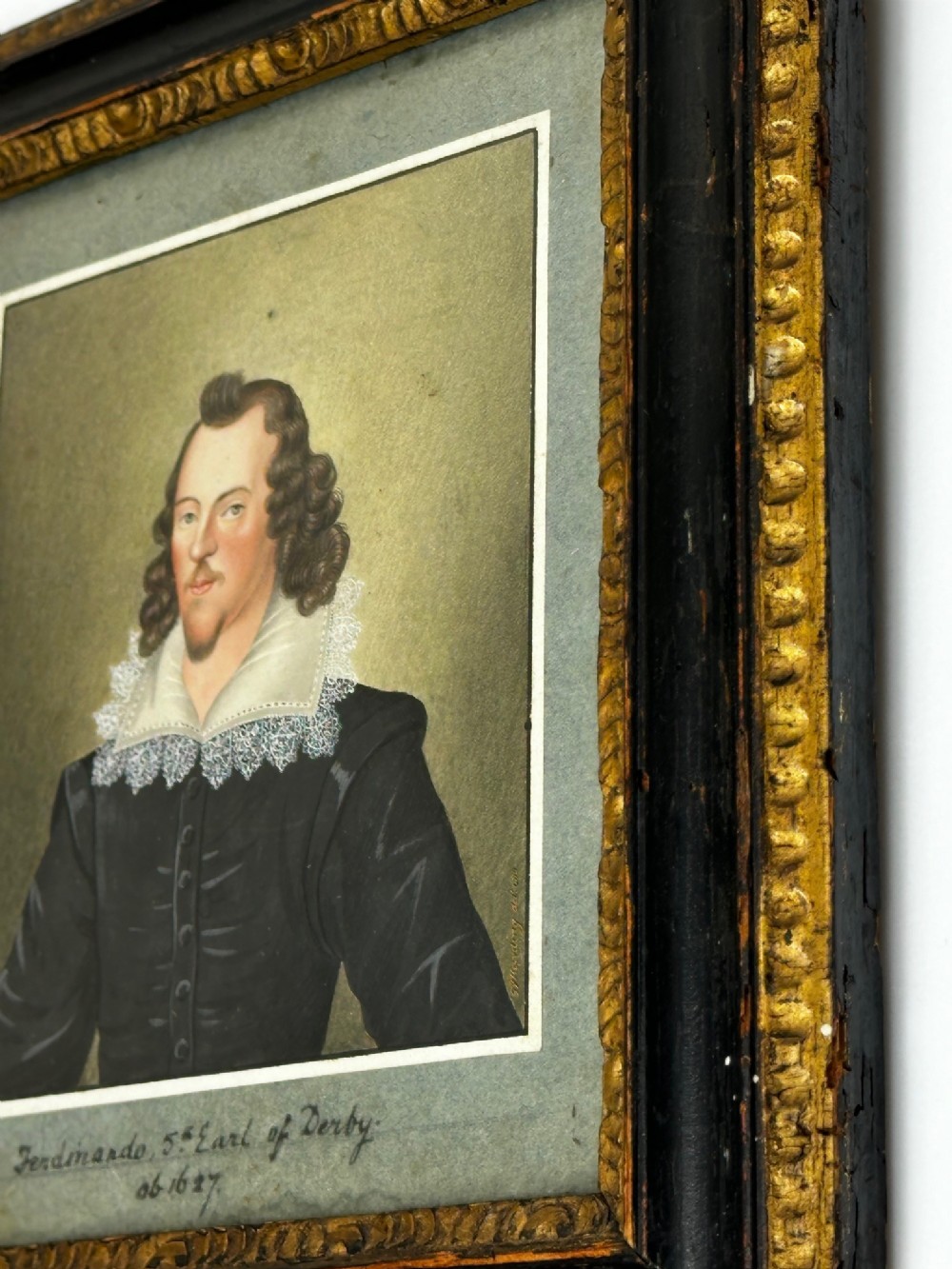
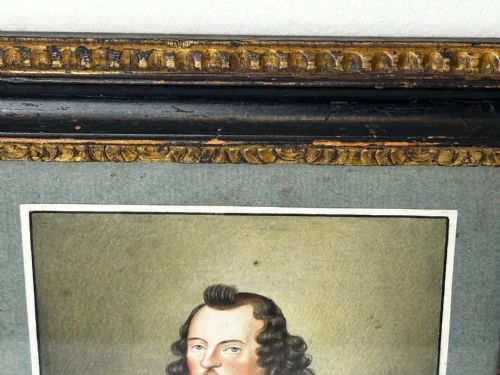
Set in a rather traditional decorative later black & gilt frame & mounted which enhances this work of art, the frame size being 21.5 cm high and 20 cm wide.
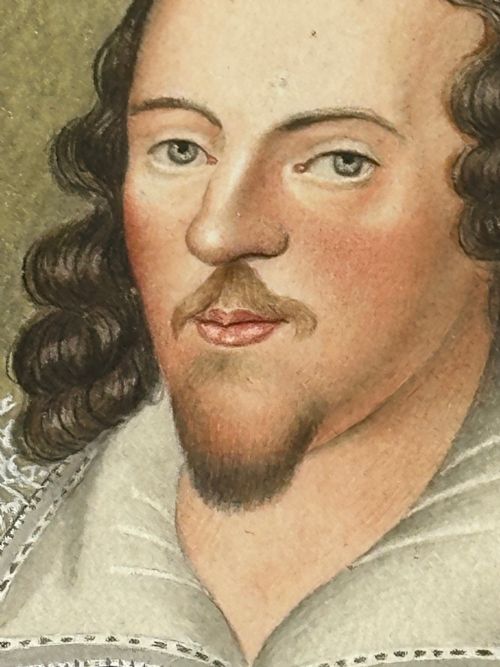
So collectible and sought after the subject portraiture matter.
Signed by the known artist George Perfect Harding 1781-1853.
Biography of the artist George Perfect Harding a well known British 19th Century artist who was born in the year 1781. It is known that the National Portrait Gallery which is London featured George Perfect Harding's work in the past. His paintings have sold at auctions around the world with the current highest sold price been 8,074 US dollars which was for a portrait of James I King of Scotland as James VI and King of England, which sold at Christie's.
George Perfect Harding (1781 – 23 December 1853) was an English portrait painter and copyist. He was a son of Silvester Harding of Pall Mall, London. Adopting his father's profession, he practised miniature-painting, and exhibited at the Royal Academy at intervals between 1802 and 1840; but, like his father, he mainly devoted himself to making water-colour copies of historical portraits. Harding visited family seats of the nobility, royal palaces, and college halls. He produced highly finished copy portraits. He was elected a fellow of the Society of Antiquaries of London in 1839, but withdrew in 1847. Towards the end of his life he had money troubles, and sold his collections of drawings.
Harding died at Hercules Buildings, Lambeth, where he had resided for more than thirty years, on 23 December 1853. He left a large family by a second wife. His portrait was engraved by J. Brown, from a miniature by himself, in 1826. A collection of his works went to the print room of the British Museum.
In 1822–3 Harding published a series of eighteen portraits of the Deans of Westminster, engraved by James Stow, R. Grave, and others, to illustrate John Preston Neale and Edward Wedlake Brayley's History of Westminster Abbey. This was followed in 1825 by Ancient Oil Paintings and Sepulchral Brasses in the Abbey Church of St. Peter, Westminster, with descriptions by Thomas Moule. Among other historical works to which he supplied the plates was John Heneage Jesse's Memoirs of the Court of England during the Reign of the Stuarts, 1840. He gave much time to the preparation of a manuscript account of the Princes of Wales, illustrated with portraits and heraldic devices.
In 1840 Harding took a leading part in establishing the Granger Society, the object of which was the publication of previously unengraved historical portraits; through lack of support the society came to an end, after publishing a few prints, early in 1843. Harding carried on the work on his own account, and during the next five years issued a series of fifteen plates, engraved by Joseph Brown and William Greatbach, with biographical notices by Moule. The copperplates of these afterwards passed into the hands of John Russell Smith of Soho Square, who reissued the work in 1869.
References "Harding, George Perfect" . Dictionary of National Biography. London: Smith, Elder & Co. 1885–1900.
Biography of Ferdinando Stanle
Cheshire Antiques Consultant Ltd has dated this piece to the 19th Century.
Source the historic in 17th, 18th, 19th & 20th century fine arts, painting, sculptures & collectibles
You can view the stock and full dealer information on the Cheshire Antiques Consultant Ltd Profile Page
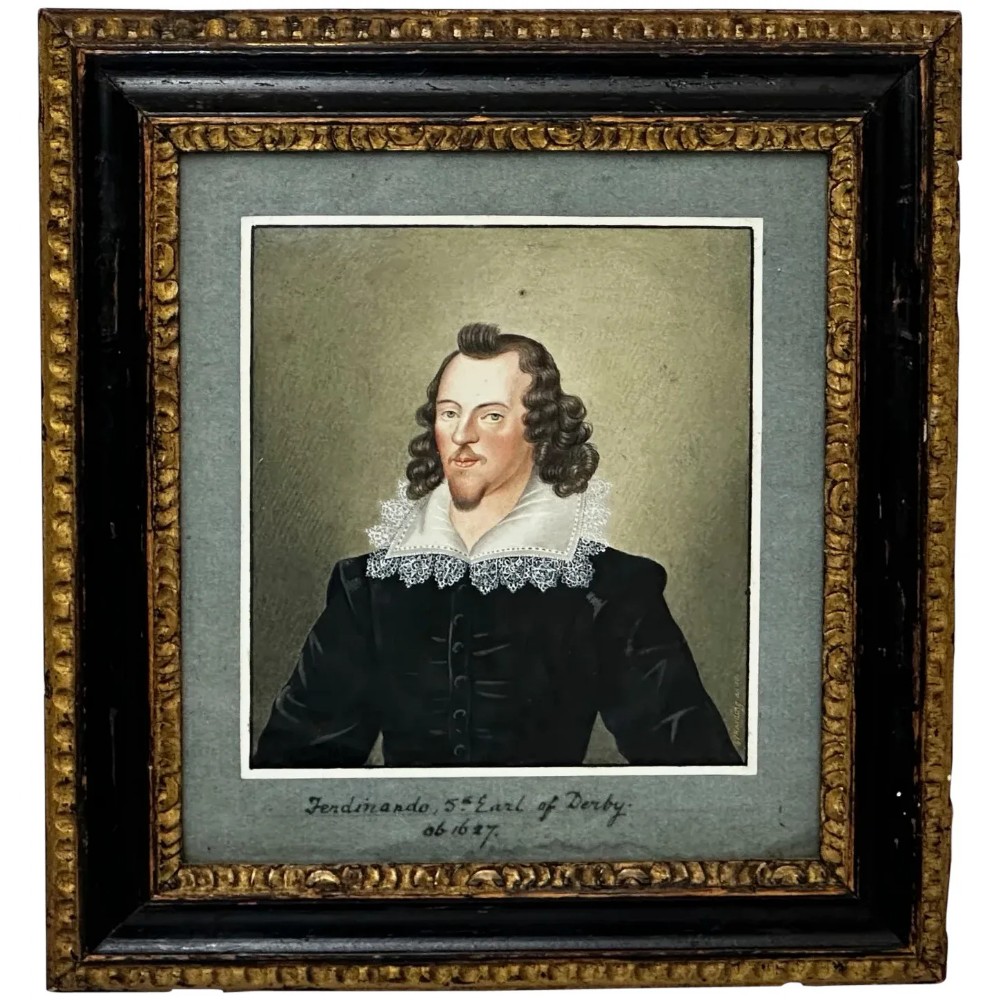
Painting Ferdinando Stanley 5th Earl Derby by George Perfect Harding